- The paper establishes uniform exponential mixing for congruence covers of geometrically finite thin subgroups of SO(n,1), even in the presence of cusps.
- It develops a novel symbolic dynamics framework that handles infinite coding challenges, enabling the extraction of finitely generated Zariski-dense subgroups.
- The results yield effective applications to the affine sieve and spectral analysis, bridging gaps in the critical exponent regime for thin groups.
Generalization of Selberg’s 3/16 Theorem for Thin Subgroups of SO(n,1)
Introduction and Context
This paper presents a definitive generalization of Selberg’s $3/16$ theorem to the setting of geometrically finite, Zariski dense, thin subgroups Γ of arithmetic lattices in G=SO(n,1). The author closes a long-standing gap regarding the existence of uniform spectral gaps and uniform exponential mixing for the frame flow on congruence covers associated to Γ when Γ is geometrically finite with nontrivial parabolic elements, particularly in higher rank and over arbitrary totally real number fields.
Previously, strong spectral gap and exponential mixing results were obtained for convex cocompact or lattice subgroups, with breakthrough works such as Bourgain–Gamburd–Sarnak covering n=2 and δΓ>1/2, and subsequent generalizations by Mohammadi–Oh, Oh–Winter, and others for higher rank and convex cocompact cases. However, for n≥3, in the critical exponent regime SO(n,1)0, especially with the presence of cusps, the literature lacked a full treatment.
Main Results
The central achievement is the establishment of uniform exponential mixing for the frame flow on congruence covers SO(n,1)1 over all ideals SO(n,1)2 coprime to a finite set for any Zariski dense, geometrically finite "thin" subgroup SO(n,1)3, including cases with parabolic elements, and critically, for SO(n,1)4 but allowing SO(n,1)5. The core technical innovation is an extension of symbolic coding methods (specifically countably infinite coding in the presence of parabolic elements) leading to expansion-based machinery in the analysis of congruence transfer operators.
The main theorems can be summarized as follows:
- Uniform Exponential Mixing: There exist uniform constants SO(n,1)6 such that for all sufficiently well-behaved levels SO(n,1)7 (or ideals SO(n,1)8),
SO(n,1)9
where $3/16$0 are test functions, $3/16$1 is the flow, and $3/16$2 is the ideal norm.
- Applications to the Affine Sieve and Resonance-Free Regions: These analytic results imply strong uniform bounds for prime (resp. $3/16$3-almost-prime) values in the affine sieve (effective uniform counting for prime values in orbits), as well as the existence of uniform resonance-free half planes for the Laplacian resolvent on congruence covers in the thin, infinite-volume setting.
- The above results hold beyond $3/16$4 (the rational case), provided a mild assumption on the trace field generated by the symbolic coding holds, which is always met for small-degree number fields.
Technical Contributions
The resolution of the critical regime $3/16$5 (for $3/16$6) in the presence of parabolic elements required several technical advances:
- Symbolic Dynamics for Cusps: The author synthesizes a countable-state symbolic model for the frame flow on the frame bundle $3/16$7 that can accommodate the infinite coding arising due to cusps. This extends the finite alphabet models applicable to convex cocompact settings.
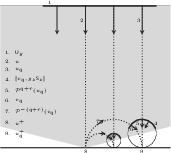
Figure 1: Structure of the proof exploiting symbolic codings, illustrating how the return trajectory subgroups and their Zariski density underpin the expander machinery for uniform spectral gaps.
- Expansion for Infinite Generators: A primary challenge is that the “return trajectory” subgroups underlying the symbolic coding are infinitely generated, so standard expander machinery (applicable to finitely generated groups) does not apply directly. The author develops methods to extract, for each finite window, a finitely generated Zariski dense subgroup with full trace field, enabling the application of Golsefidy–Varjú expansion theorems and He–de Saxcé’s results.
- Spectral Analysis of Transfer Operators: The paper introduces congruence transfer operators with holonomy, acting over spaces of vector-valued functions indexed by congruence cosets and $3/16$8-types, and establishes robust spectral bounds (uniform in the level and representation type) via a sophisticated combination of Dolgopyat’s method (for high frequencies/large unitary dual parameters) and expansion machinery (for low frequencies).
- Zariski Density and Trace Field Transfer: Key is establishing that the return trajectory subgroups inherit both Zariski density and the full trace field property from $3/16$9—this is crucial for enabling strong approximation and super-approximation, necessary for expansion. This uses “weak commensurability” ideas from Prasad–Rapinchuk and geometric arguments showing that radial limit sets for these subgroups are large.
- Large Deviation Estimates in Cusp Geometry: Analysis of the symbolic coding in the presence of cusps leverages novel large deviation principles and non-concentration properties for cylinders in the coding, ensuring sufficient “mass” is present in “well-behaved” pieces to exploit expansion and contraction mechanisms.
Noteworthy Numerical/Analytic Claims
- The mixing rate Γ0 and the polynomial bound Γ1 in the level (norm of the ideal/congruence level) are absolute and effective—no spectral degeneracy or escape of mass phenomena are present for the class of thin, infinite volume, geometrically finite subgroups considered.
- The spectral bounds for transfer operators act uniformly over all congruence covers (levels coprime to a finite set), meaning global families of expanders and correlation decay are achieved.
- Applications to the affine sieve yield explicit upper and lower bounds of the format:
Γ2
and similarly for Γ3-almost primes, highlighting the effective control in orbits.
Implications
Theoretical
These results complete the program of obtaining uniform spectral gap and exponential mixing (and thus uniform resonance-free regions for the Laplacian resolvent) for all congruence covers of geometrically finite (including thin, non-lattice) subgroups of Γ4 for all critical exponent values Γ5, in any dimension and over arbitrary totally real number fields (up to the trace field assumption).
This substantially broadens the toolbox for analytic number theory on thin orbits, representation theory of infinite volume locally symmetric spaces, and the study of resonance/fine spectral structure in non-lattice settings.
Practical
The uniformity in level is crucial for applications to sieve methods (affine sieve), arithmetic quantum chaos, and possible L-function and counting problems in infinite volume. This framework thus unlocks new avenues to “sieve in thin orbits” and to control spectral phenomena across global families of infinite covers, facilitating analytic tools otherwise limited to the lattice case.
Future Speculative Directions
- The methods suggest the robustness of expander/correlation decay phenomena to further generalizations, including possible analytic families of groups/geometries (e.g., beyond orthogonal type, to general higher rank groups with parabolic subgroups).
- Removing the mild trace field assumption in the higher degree number field case via further refinements in symbolic coding and weak commensurability theory.
- Potential extensions to spectral gaps and mixing for "thin" families arising in Γ6-adic and mixed real places, or non-arithmetic settings.
Conclusion
This work delivers a powerful framework unifying spectral gap, exponential mixing, and expansion machinery for families of congruence covers of geometrically finite thin subgroups of Γ7, conclusively filling the gap for the critical exponent regime in higher-rank, thin, and arithmetically rich contexts. The technical developments—particularly in the symbolic dynamics of cusps, expansion for infinite generators, and the structural analysis of “return trajectory” subgroups—are poised to have a lasting influence on the analytic theory of thin groups, sieve in orbits, and resonance phenomena in infinite volume geometry.
Figure 1: Schematic capturing the key strategy: symbolic coding provides infinite but locally finite alphabets, enabling the identification of finitely generated Zariski-dense subgroups to which expansion theorems apply, yielding uniform bounds essential for mixing and sieve.