- The paper demonstrates that a DCF-based SPADE instrument statistically outperforms classical direct imaging in binary source hypothesis testing below the diffraction limit.
- It employs quantum measurement theory with spatial mode demultiplexing to significantly lower type II error rates, even under photon-starved conditions.
- Experimental on-sky validation, including tests on Alpha Centauri, confirms the method’s potential for improved stellar multiplicity surveys despite practical implementation challenges.
Binary Source Hypothesis Testing Beyond the Diffraction Limit with SPADE
Introduction
This paper reports the first on-sky demonstration of sub-diffraction binary source hypothesis testing using spatial mode demultiplexing (SPADE) with a double clad fiber (DCF)–based instrument (2606.18025). The study addresses the fundamental limitations of traditional direct imaging (DI) techniques in resolving binary or extended astronomical sources separated by less than the classical diffraction limit, especially in photon-starved regimes. Leveraging advances in quantum measurement theory, the authors deploy and validate a practical SPADE instrument capable of binary mode sorting to enable hypothesis testing that outperforms classical DI with respect to type II error rates for binary source detection.
Theoretical Framework
The SPADE approach builds upon quantum optical measurement theory, which shows that alternative basis projections can extract more spatial information from detected photons than DI, especially for resolving sub-Rayleigh separations [TsangSuperresolution]. In the context of the binary hypothesis test, the null hypothesis H0 corresponds to a single point source, with expected photon position statistics determined by the instrument's point spread function (PSF). The alternative hypothesis H1 postulates two incoherent point sources with a specified brightness ratio and angular separation. By matching the PSF to the fundamental mode of the fiber, the DCF-based SPADE system effectively sorts optical modes such that the single-mode and multi-mode ports respond differentially to these hypotheses, enabling a likelihood ratio test on the resultant mode statistics.
Instrument Design and Implementation
The deployed instrument integrates a DCF-based mode sorter with single-photon avalanche photodiodes (SP-APDs) on both output ports to facilitate real-time photon counting. Careful optical alignment ensures the system PSF matches the DCF's fundamental mode. The device operates robustly without the stringent alignment and cost overhead of multi-plane light converters (MPLC), making it well-suited to field deployment for binary mode sorting tasks.
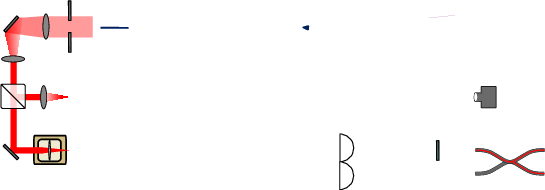
Figure 1: Optical and electronic architecture of the DCF-based on-sky SPADE instrument, showing the key pathways for spatial mode filtering and detection.
Experimental Results
The major experimental focus was sub-diffraction separation detection in the photon-starved regime, targeting binary stars with fewer than 5000 photons per measurement—far below the threshold for image formation via DI. Calibration was performed using laboratory beam-splitting to characterize the single-mode to multi-mode isolation for a range of separations and intensity contrasts, followed by on-sky validation on the Alpha Centauri system. The experimental scaling of type II error (β) was measured across various separations and brightness ratios.
Quantitative results reveal that while the practical DCF-SPADE instrument is limited by non-ideal loss and port imbalance—remaining above ideal quantum limits—the type II error is systematically lower than that of DI for all tested separations and contrasts. The greatest improvements manifest at small separations and in photon-starved regime, with experimental performance bounded by fiber isolation and detection losses.
Discussion and Implications
These results experimentally confirm predictions from quantum measurement theory concerning the information-theoretic optimality of SPADE over DI for binary source discrimination. The DCF implementation provides a pragmatic balance: simplicity, field robustness, and performance improvement over DI in the critical sub-diffraction regime. However, the authors note that scaling to larger apertures and longer integrations will require further attention to atmospheric turbulence, which is expected to further degrade mode-sorting performance, especially for ground-based telescopes. The inherently asymmetric nature of the hypothesis test approach is well-suited for astronomy, where rare binary or extended objects must be discriminated against a bright population of isolated point sources.
Theoretical and Practical Outlook
The instrument's architecture positions binary-SPADE as a valuable adjunct to classical imaging for stellar multiplicity surveys and exoplanet candidate discrimination—identifying the presence of companions (or extended sources) that cannot be reliably resolved classically. The DCF device is particularly suited to rapid field deployment and upgrading existing observatories due to its low complexity and the absence of active stabilization requirements. Broader implications extend to exoplanet direct detection and the disentangling of close black hole binary/trinary systems, supporting both parameter estimation and scientific model selection in the quantum-limited imaging regime.
Conclusion
This work offers a technical verification of SPADE's superiority over DI for binary source discrimination below the diffraction limit under photon-limited conditions. The proof-of-principle DCF-based instrument demonstrates robust on-sky operation with statistical error rates exceeding classical approaches, confirming key theoretical predictions and establishing a practical pathway for quantum-limited source discrimination in astronomical imaging tasks.

