- The paper presents a neuro-symbolic framework that integrates LLM-driven strategy generation with formal verification for bounded NatATL synthesis in multi-agent systems.
- It introduces the first expert-validated benchmark dataset of 4,211 instances to evaluate synthesis accuracy and scalability.
- The approach achieves a 92% synthesis accuracy and scalable performance, effectively bridging theoretical strategy logics with practical MAS implementations.
Neuro-Symbolic Strategy Synthesis for Strategic Logics: A Study on Bounded Natural Ability
Introduction
This paper presents a neuro-symbolic framework for strategy synthesis in Natural Alternating-time Temporal Logic (NatATL), targeting multi-agent systems (MAS) where agents select strategies that are syntactically bounded, interpretable, and human-aligned. Leveraging recent advances in LLMs, the proposed architecture integrates an LLM-based strategy generation oracle with formal verification, enabling sound, scalable strategy synthesis. This approach circumvents the combinatorial blow-up intrinsic to explicit enumeration in traditional NatATL verification by coupling LLM-guided candidate generation with verifier certification.
Natural Strategic Ability and Bounded Synthesis
NatATL extends Alternating-time Temporal Logic by constraining strategies to those representable by compact guarded-action lists, enforcing limits on logical complexity (measured by propositional guard size). This bounded-rationality regime emulates cognitive constraints present in practical agent implementations, as traditional strategy logics, while expressive, admit strategies of unfeasible complexity.
However, these restrictions induce severe verification bottlenecks. The explicit search space of all memoryless natural strategies is exponential in the complexity bound and coalition size:
Nnr(k)=O((∣Prop∣+∣Bool∣)k2∣Act∣k)
For strategies with recall—admitting regular expressions as guards—the blow-up is even starker:
NnR(k)=O((∣Prop∣+∣Bool∣+∣Con∣)k2∣Act∣k)
Even for moderate bounds, exhaustive model checking becomes intractable, motivating the need for methods that can efficiently navigate the combinatorial space of admissible strategies.
Benchmark Dataset for Natural Strategy Synthesis
A critical contribution of this work is the release of the first expert-validated dataset for NatATL strategy synthesis, covering 4,211 instances. The construction process involves ideation via LLM support, manual modeling by domain experts, consistency validation, controlled augmentation, and verifier-guided coverage analysis. The dataset encompasses a diversity of interaction patterns (e.g., safety, reachability, adversarial control) and systematically varies model size, coalition cardinality, and complexity bounds. Each instance is accompanied by a concurrent game structure, coalition, objective, and complexity bound, with associated certification metadata.
This benchmark closes a foundational gap, enabling reproducible evaluation of learning-based and neuro-symbolic strategy generation paradigms, and provides a standardized substrate for future advances.
Neuro-Symbolic Verification Framework
The framework operationalizes a generate-and-certify pipeline:
- Strategy Generation: Given a MAS instance specified in NatATL, an LLM (Qwen3-32B) translates the structure and objective into a candidate memoryless natural strategy formatted as an agent-wise list of guarded actions.
- Syntactic Validation: Generated strategies are pre-screened for schema compliance (well-formed JSON, correct agent/action references, presence of default rule).
- Formal Certification: The VITAMIN verifier evaluates candidate strategies against the NatATL objective, checking admissibility, respect for the complexity bound, and satisfaction of the temporal property.
- Iterative Refinement: If verification fails but an unconstrained ATL analysis indicates potential feasibility, diagnostic feedback is provided to the LLM for a second query.
Output cases are classified as true positive, false positive, true negative, or false negative, enabling fine-grained analysis of pipeline efficacy.
Empirical Results and Scalability
The certified pipeline achieves a 92% synthesis outcome accuracy over the benchmark, significantly mitigating the symbolic state explosion besetting traditional tools (e.g., NatSTV). In the confusion matrix (Figure 1), false positives and false negatives are limited to 41 and 72 out of 1,411 evaluated cases, respectively.
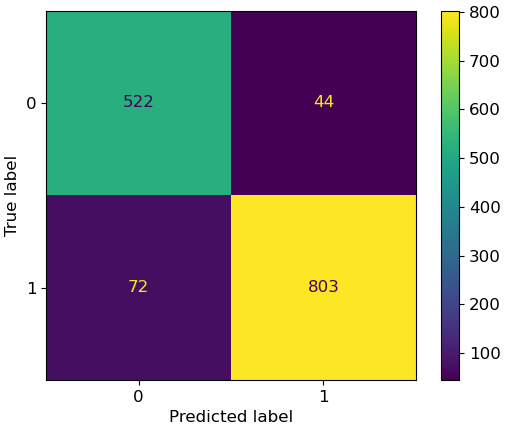
Figure 1: Confusion matrix for the LLM-driven strategy synthesis pipeline, highlighting the distribution of true/false positives and negatives.
On runtime, the time distribution per instance follows a gamma law, with median inference times remaining well below the exponential trend of explicit search-based verifiers. Specifically, the VITAMIN-Qwen3 toolchain scales smoothly to models with up to 50 states, coalitions of size 11, and complexity bounds up to k=100, whereas NatSTV suffers exponential runtime growth, exceeding practical limits beyond models with just 14 states or k=10.
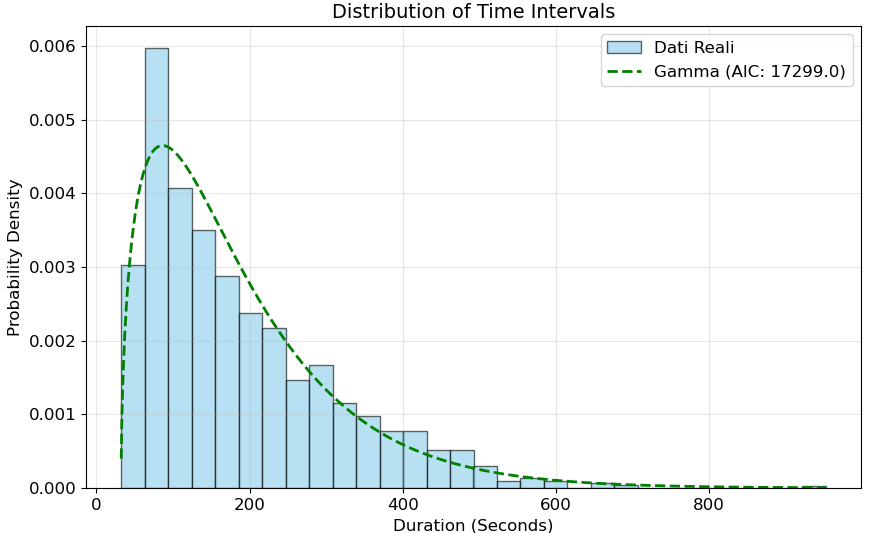
Figure 2: Distribution of verification times for individual instances, fit to a gamma distribution, demonstrating robust scalability across the dataset.
A practical limitation emerges from token and memory constraints: a cap of 8,192 tokens restricts the size of MAS instances that may be serialized for LLM input, resulting in 51 undecidable cases attributed to parsing errors. Nevertheless, these constitute a minor portion of the evaluation.
Implications and Future Directions
The framework exemplifies a pragmatic neuro-symbolic AI integration: while LLMs lack formal guarantees, their use as candidate generators—tethered to formal certification—enables both scalability and soundness in bounded-rationality strategic reasoning. This approach is particularly relevant where cognitive or computational resource constraints must be formally respected, bridging a critical gap between theory-driven MAS synthesis and implementable agent strategies.
The establishment of a reusable NatATL benchmark provides a foundation for systematic progress measurement and comparative analysis. Several promising research directions are indicated:
- Prompt optimization and encoding compression: Further reduction of context length to address LLM window limitations.
- Fine-tuning and distillation: Specializing LLMs for NatATL synthesis could boost raw generation accuracy and reduce schema errors.
- Model class and objective expansion: Inclusion of broader strategic logics, recall-based strategies, and richer temporal objectives.
- Automated strategic reasoning benchmarking: The dataset supports standardized, cross-model evaluation of LLMs' strategic synthesis capacities across both open-weight and proprietary models.
Conclusion
Integrating LLMs with formal model-checking provides an effective, scalable method for strategy synthesis under bounded rationality as formalized by NatATL. The architecture avoids the combinatorial intractability of explicit strategy enumeration, maintaining soundness guarantees via formal verification. The creation and open release of a systematic, expert-validated benchmark will catalyze further advances in learning-based and neuro-symbolic reasoning for strategic logics. The framework is both methodologically robust and practically relevant for MAS domains where strategy interpretability and bounded complexity are prerequisites.

