- The paper introduces a hierarchical screening process (JRCRC) that refines training datasets for more accurate RTL synthesis.
- It integrates rule-based toolchains to extract logical relations, addressing LLM weaknesses in handling tabular and combinatorial data.
- Tool augmentation improves PASS@1 accuracy from ~0.53 to 0.60, nearly matching larger commercial LLMs on logic-intensive tasks.
Problem Context and Motivation
LLMs have shown increasing capability in code generation tasks spanning from high-level programming languages to Hardware Description Languages (HDLs) such as Verilog. Despite this, extant open datasets for (text, Verilog) pairs possess persistent issues in correctness, representational coverage, and syntactic/semantic alignment. Existing literature demonstrates that LLM-generated code for hardware lags behind that for software, primarily due to the poor quality and scarcity of verified training samples, and the known limitations of LLMs in handling rule-based logical reasoning, in particular over tabular or combinatorial data representations.
The paper "LLM4RTL: Tool-Assisted LLM for RTL Generation" (2606.15500) systematizes improvements in two critical directions: (1) dataset curation via a hierarchical LLM pipeline to extract high-quality training samples under resource constraints, and (2) the explicit integration of rule-based toolchains to mitigate logic-driven failures of pure LLM approaches, especially in translation from tabular representations (e.g., truth tables, waveforms, Karnaugh maps) to Verilog modules.
Hierarchical Data Screening and Refinement
The authors introduce a cost-effective sample refinement workflow, termed "judge-renew-check-renew-check" (JRCRC), integrating multiple LLMs with complementary cost-performance profiles (specifically DeepSeek-V3-671B and GPT-5). The pipeline aims to iteratively screen, renew, and validate samples from an initial corpus (OriGen: 222K samples) without discarding legacy, high-quality examples produced by prior LLM generations.
Key steps include:
- Data Screening: An efficient but strong LLM (DeepSeek-V3) acts as a 'judge,' filtering out low-quality or corrupt samples. A significant overlap with top-tier commercial LLMs (like GPT-5) in identifying invalid samples was empirically validated, reducing computational cost.
- Data Renewal: Rejected samples are regenerated using the same LLM and compiled with IVerilog for syntax validation; residual failures are then escalated to GPT-5 for both solution and testbench synthesis.
- Quality Preservation: All renewed, syntax-correct, and semantically diverse solutions are admitted to the fine-tuning pool, even those not passing the testbench, to maintain coverage and robustness.
This pipeline enables practical curation with a total cost below \$300 for full dataset processing, demonstrating that state-of-the-art data generation for code synthesis does not necessitate brute-force use of frontier LLMs at scale.
LLM Weaknesses in Logical/Tabular Reasoning
Empirical evaluation confirms an intrinsic limitation: even well-finetuned 7B class models show consistent failures across tasks demanding deduction from non-textual/tabular specifications (e.g., waveform translation to logic). This is clearly illustrated by task-level performance bubbles comparing model and dataset combinations, which reveal a static cluster of unsolved tasks regardless of model improvements, thus indicating irreducible logical/chain-of-thought failures.
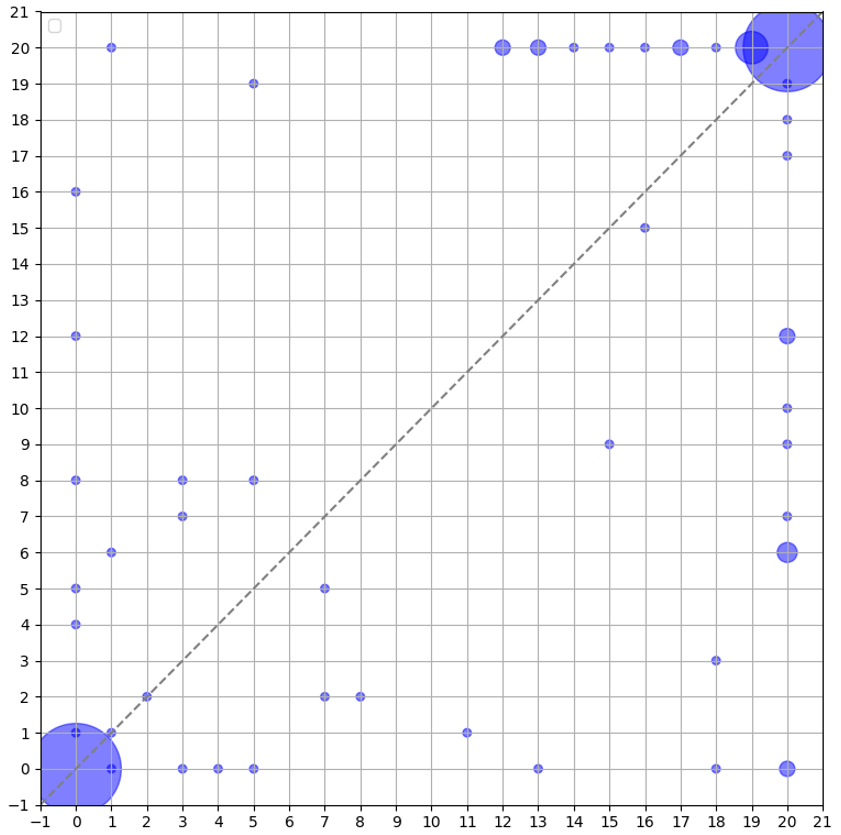
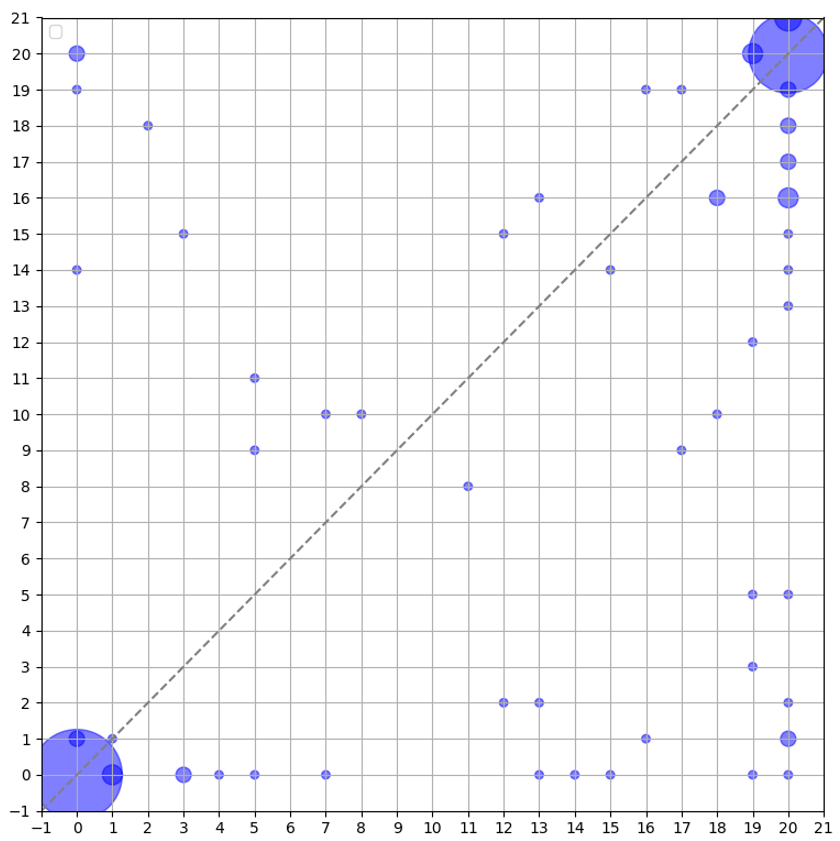
Figure 1: Empirical task performance comparing DS-Coder-7b-Instruct-V1.5 with Qwen2.5-Coder-7B-Instruct, demonstrating non-trivial learning bias and consistent hard-negative clusters for logic-intensive tasks.
To address these observed failures, the authors present a modular toolchain to preprocess input tasks with tabular or logic-specific structures. The toolchain parses task descriptions and non-textual representations to extract explicit logical relations, which are then supplied to the LLM as context for code generation.
- Combinational Logic Tasks: Tools analyze state-invariant tabular representations, perform SOP/POS extraction, and derive canonical expressions without assumption of clock/state semantics.
- Sequential Logic Tasks: Tools identify state/output variables, infer clock or edge-triggered dependencies, and construct temporal logic mappings, leveraging structured algorithms for flip-flop/latch inference.
The final architecture delegates tool selection via heuristics (keywords), but the framework is extensible to agent-mediated or RL-driven tool dispatch. Post-processing iteratively validates generated code, correcting syntax errors until convergence.
Quantitative Results and Comparative Analysis
The efficacy of the approach is benchmarked on VerilogEval-human (156 tasks), utilizing PASS@1 and PASS@5 as metrics. Major findings include:
- Baseline 7B LLMs: Without adaptation, best performing models achieve ~0.36 PASS@1.
- Dataset Refinement: The JRCRC pipeline raises PASS@1 from 0.49 (original OriGen) to 0.53 (fully refined), with strong sensitivity to erroneous code shown—quality trumps quantity, as evidenced by the smallest dataset yielding the best performance.
- Tool Augmentation: Introducing tool-assisted logic extraction boosts PASS@1 from 0.528 to 0.60 (PASS@5 to 0.663), nearly saturating the performance gap with much larger, more expensive LLMs (e.g., GPT-4O).
- Task-Specific Impact: The most significant improvements are concentrated on tabular-driven logic tasks, where baseline models uniformly failed; tool assistance raises these from zero to perfect or near-perfect solution rates.
Discussion and Implications
The findings underscore that high-quality, logic-focused data and tool assistance can enable sub-10B parameter LLMs to closely match the performance of parameter- and cost-mismatched commercial LLMs on RTL synthesis. The effect size is most pronounced for tasks where inductive pattern learning is insufficient, and explicit deductive/algorithmic toolchains are necessary. Tool augmentation is model-agnostic and does not require retraining, thus serving as a plug-in solution for existing models and pipelines.
Several important implications arise:
- Data Curation: Curation with selective, hierarchical LLM pipelines can outperform naïve full-teacher distillation on both cost and quality axes, facilitating sustainable open-source dataset growth.
- Hybrid Reasoning Architectures: Model-mediated reasoning for logic synthesis cannot yet supplant procedural, rule-based tools—especially when tasked with combinatorial or temporal deduction from tables, a well-documented shortcoming in LLM reasoning [wolff2025well, cheng2024inductive, cai2024role].
- Extensibility: The modular toolchain can be generalized to more complex circuit topologies, additional non-textual description formats, and alternative HDLs.
- Tool Selection Policies: The present heuristic approach can benefit from meta-learning strategies (e.g., RL agents for optimal tool dispatch), as suggested for future work.
Conclusion
LLM4RTL demonstrates that pairing systematic data screening with pre-generation logical inference tools produces significant increases in RTL generation accuracy, pushing lightweight LLMs to near parity with state-of-the-art commercial alternatives. The work substantiates the core limitation of current LLMs in deductive logic tasks and provides a practical architecture for real-world, production-quality HDL synthesis pipelines under resource constraints. Future work should target adaptive tool selection, broader tool coverage, and the integration of post-synthesis validation circuits to further raise both semantic correctness and industrial applicability.

