- The paper demonstrates that a high-scale mirror SM extension yields viable dark matter candidates with variations in atomic formation.
- It uses two scenarios with different Yukawa couplings to explore second-order and weak first-order electroweak-like phase transitions, impacting gravitational wave spectra.
- The analysis shows that mirror dark matter properties can resolve small scale structure issues while offering potential gravitational wave signatures for detection.
High-scale Mirror SM Dark Matter, Dark Phase Transitions, and Gravitational Wave Signatures
Introduction and Model Construction
The work "High-scale Mirror Standard Model Dark Matter, Dark Phase Transitions and Gravitational Waves Implications" (2606.14385) investigates an extension of the Standard Model (SM) incorporating a mirror sector with a higher symmetry-breaking scale and disparate Yukawa couplings. In this framework, the mirror sector only interacts gravitationally with the visible sector, resulting in a viable candidate for dark matter (DM) with distinctive cosmological and astrophysical implications.
The central consideration is a Universe described by the gauge group G⊗GM with GM=SUM(3)×SUM(2)×UM(1), mirroring the SM but with its own set of couplings and a vacuum expectation value (vev) vM≫vSM. The mirror sector maintains a lower temperature than the visible sector (T′<0.5T) to respect Big Bang nucleosynthesis constraints on extra relativistic species. This scenario enables varied possibilities for DM composition, atomic structure formation, and phase-transition dynamics in the early Universe.
Mirror Sector Abundance and Atomic Structure
The relic abundance and detailed composition of the high-scale mirror sector depend critically on the mirror Higgs self-coupling, Yukawa couplings, and the scale vM. Two regimes are emphasized:
- Scenario I: Yukawa couplings in the mirror sector are much smaller than the SM values, resulting in light mirror fermions but a small fine-structure constant and negligible atomic binding energies. Atomic mirror DM does not form, but the sector still accounts for the majority of the DM density.
- Scenario II: Yukawa couplings are close to the SM, leading to heavier mirror particles and sizable atomic binding energies, permitting early recombination and atomic mirror DM.
The analysis demonstrates that for suitable parameters, the mirror sector may comprise all or a fraction of the DM, with abundance sensitive to the mirror Higgs self-coupling λH′ and the sector’s temperature ratio.
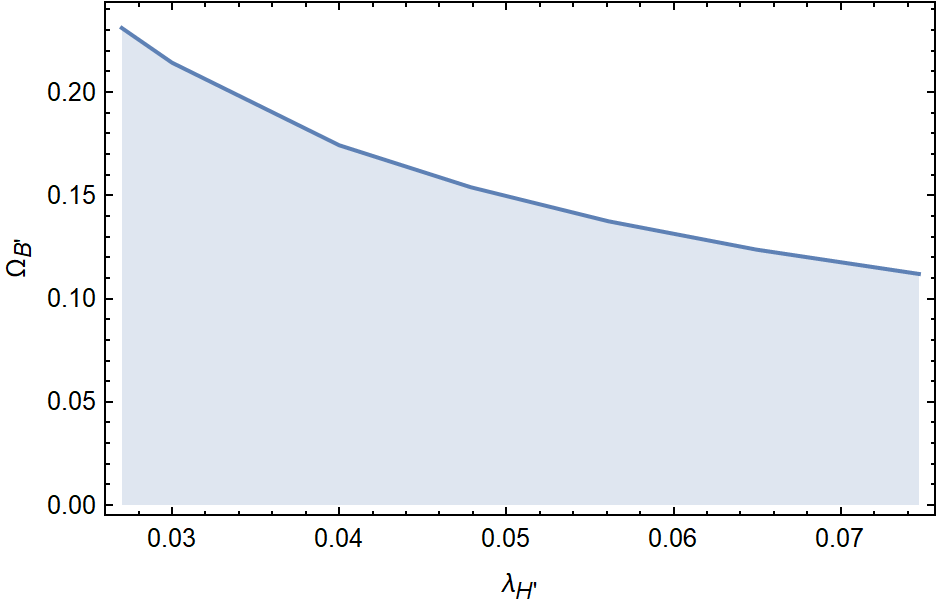
Figure 1: Abundance of mirror DM particles versus the mirror Higgs self-coupling λH′.
Atomic structure is addressed via the binding energy formula:
EB′=2me′α′2
Calculations show that, with low Yukawas in Scenario I, the mirror hydrogen binding energy is sub-eV, inhibiting atom formation. In Scenario II, heavier mirror electrons and a larger α′ lead to binding energies ∼100 eV, promoting early and efficient recombination, with possible implications for mirror baryonic structures such as dark atoms and compact objects.
High-Temperature Mirror Electroweak Phase Transitions
The nature of the mirror sector’s electroweak-like phase transition is dictated by the choice of scale and Yukawas:
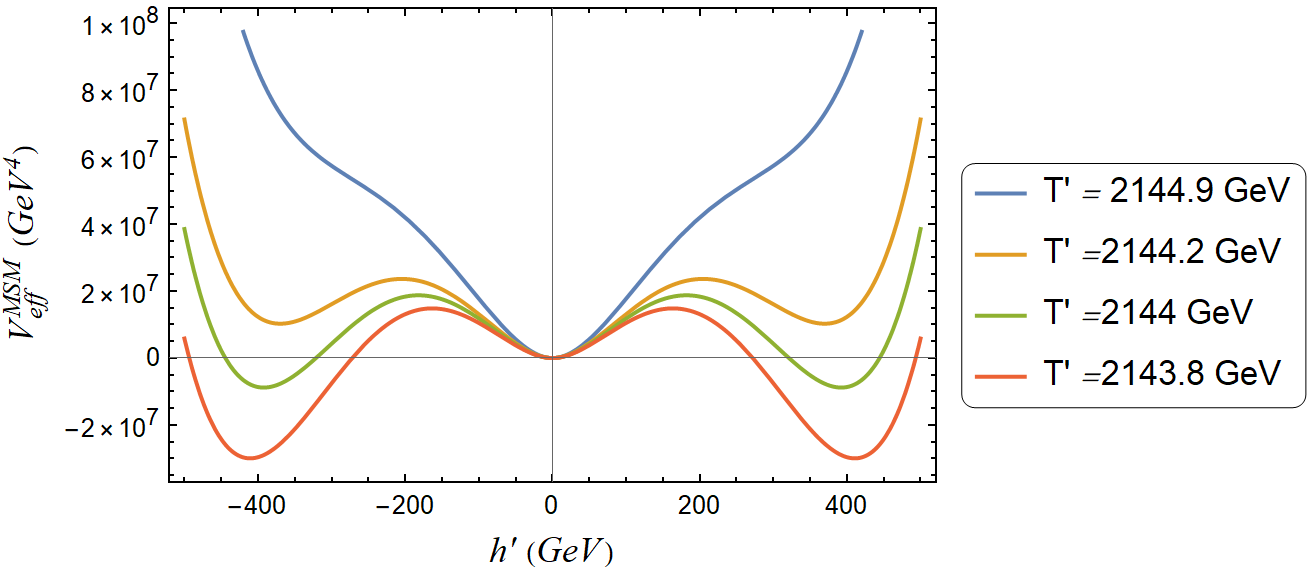
- Scenario I: Exhibits a second-order phase transition with no potential barrier at the critical temperature (GM=SUM(3)×SUM(2)×UM(1)0 GeV), as evident from the form of the finite-temperature effective potential.
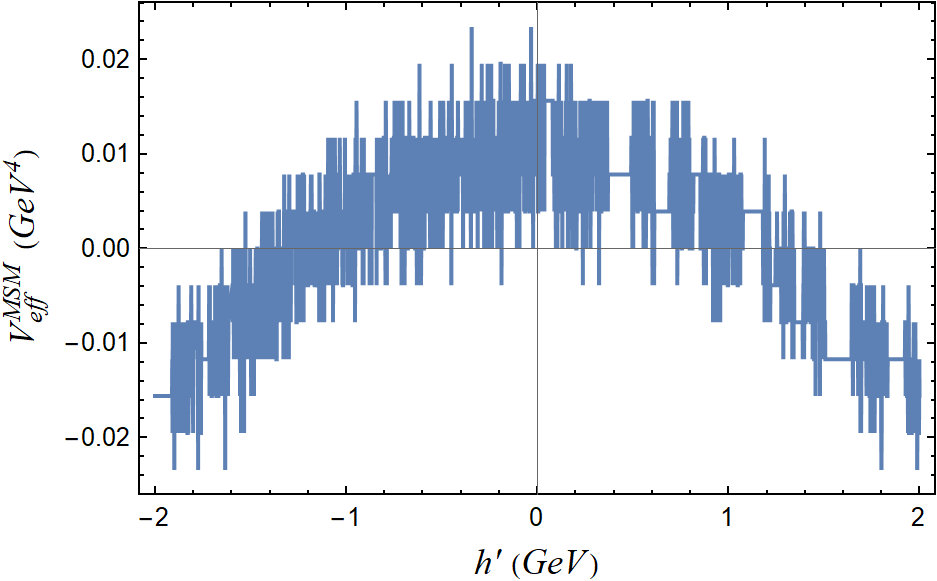
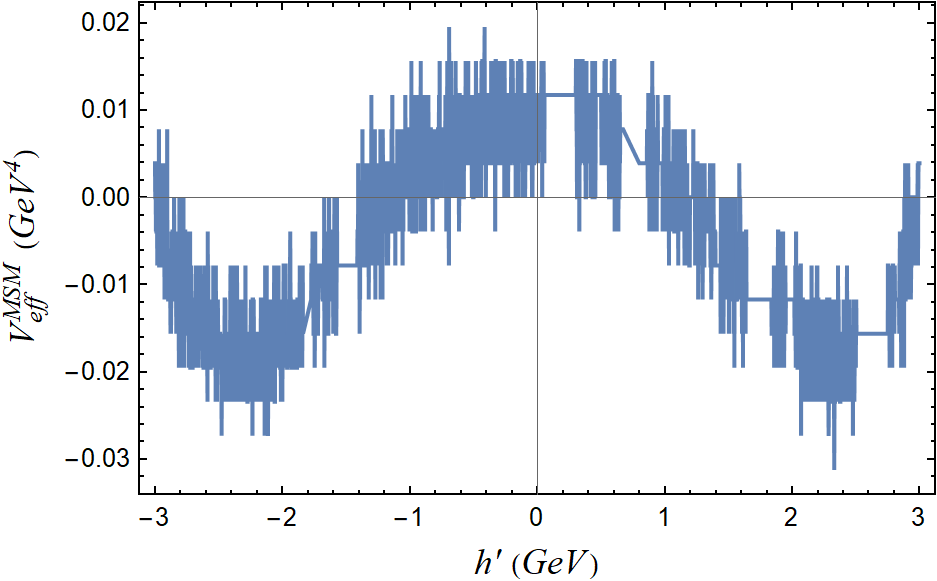
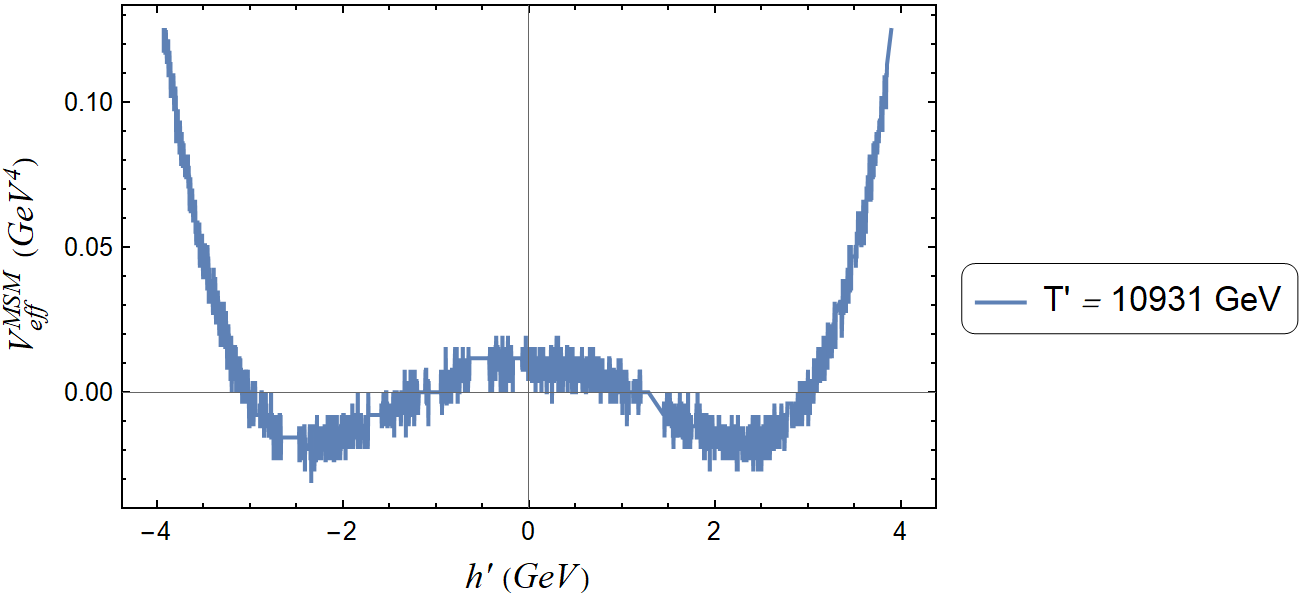
Figure 2: Effective potential of the high-scale mirror SM at GM=SUM(3)×SUM(2)×UM(1)1 GeV, showing the typical characteristics of a second-order phase transition.
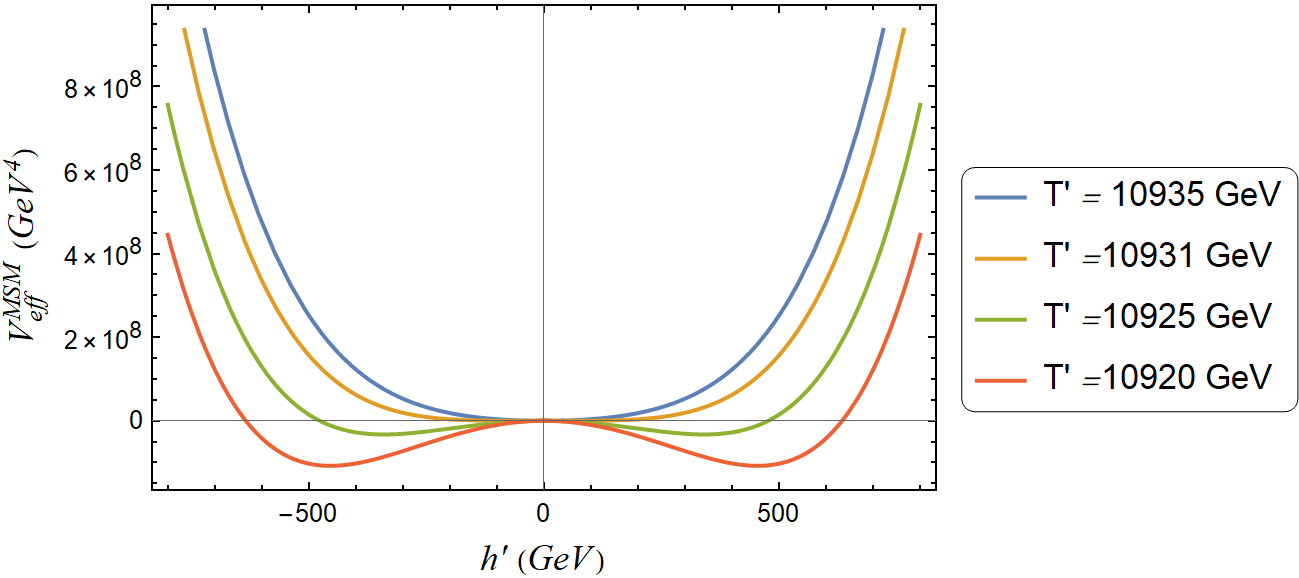
Figure 3: Evolution of the mirror SM effective potential near the critical temperature GM=SUM(3)×SUM(2)×UM(1)2, confirming the second-order nature.
The order and strength of these transitions have direct consequences for cosmological signatures, notably in gravitational wave backgrounds.
Stochastic Gravitational Wave Signatures
The authors analyze the imprint of dark phase transitions on the stochastic gravitational wave (GW) background, emphasizing that the detectability and spectra are highly sensitive to the transition order and DM abundance.
- Scenario I (Second-order transition):
The rolling of the mirror Higgs significantly modifies the background equation of state (EoS) during the radiation-dominated era. For parameter choices where the entire DM is mirror sector, the transition can substantially deform the stochastic GW spectrum described by
GM=SUM(3)×SUM(2)×UM(1)5
with GM=SUM(3)×SUM(2)×UM(1)6 determined by the altered EoS. Different values of GM=SUM(3)×SUM(2)×UM(1)7 (the effective EoS parameter) correspond to fast or slow rolling of the mirror Higgs field.
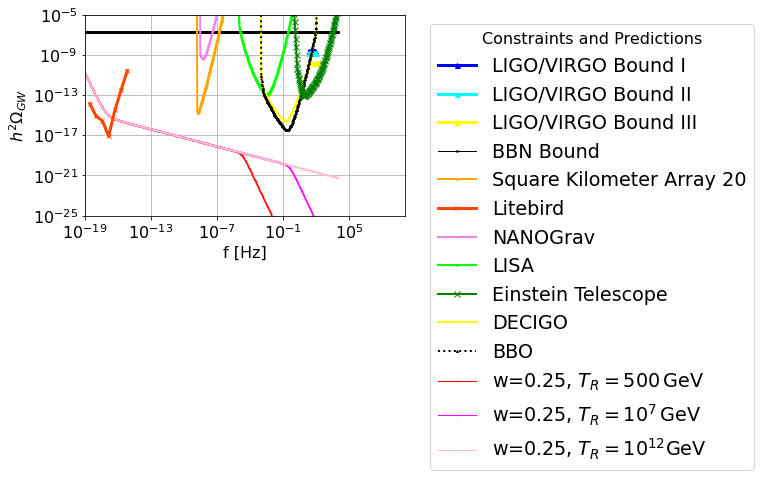
Figure 5: GM=SUM(3)×SUM(2)×UM(1)8-scaled GW energy spectrum for GM=SUM(3)×SUM(2)×UM(1)9 (slow-roll), showing impact in the LISA/BBO/DECIGO frequency range.
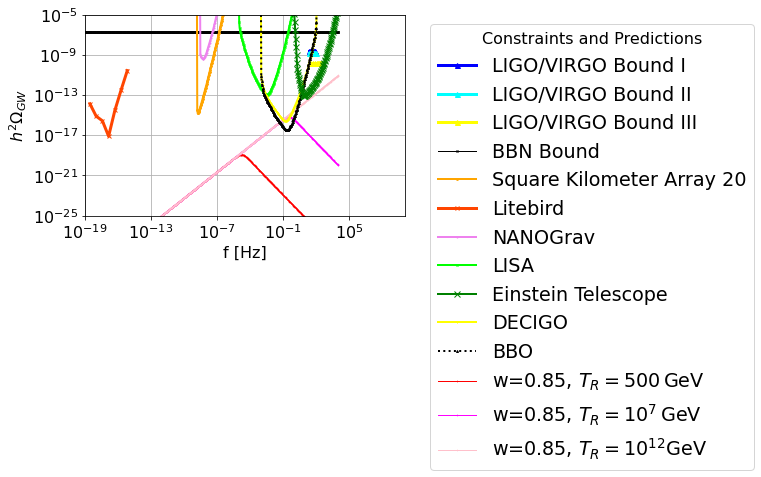
Figure 6: GW spectrum for vM≫vSM0 (fast-roll), with enhanced detectability by BBO.
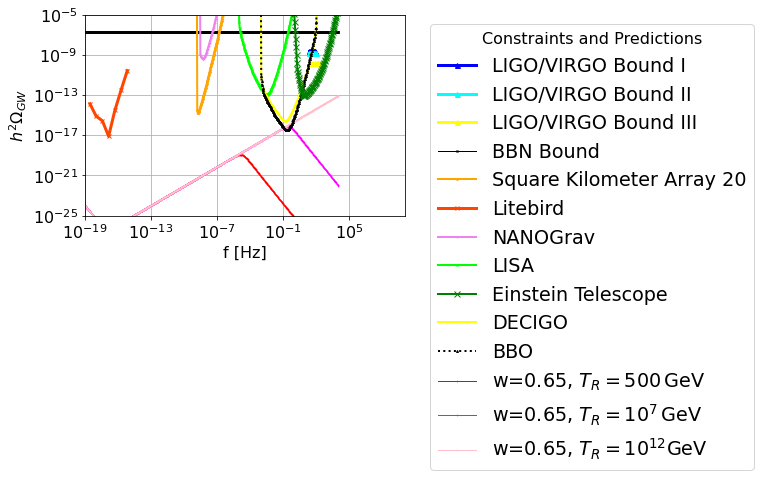
Figure 7: GW spectrum for vM≫vSM1, with substantial signal in both DECIGO and BBO sensitivity bands.
- Scenario II (First-order transition):
Despite the presence of a first-order transition and possible bubble nucleation, the analysis reveals that for a high-scale mirror sector, the predicted gravitational wave signal is far too weak for detection in any upcoming GW experiment due to excessively small vM≫vSM2 and unphysically large vM≫vSM3.
Mirror DM Equation of State and Astrophysical Implications
The composition of DM in this framework can range from predominantly atomic to a hybrid vector of atomic and collisionless components, affecting the effective EoS,
vM≫vSM4
and hence the adiabatic sound speed vM≫vSM5 and the Jeans scale vM≫vSM6. Notably, even a small residual ionization could significantly raise vM≫vSM7, modifying structure formation and potentially alleviating the CDM small-scale crisis.
The dual nature—collisionless in low-density environments, collisional where partial ionization occurs—enables the model to naturally reconcile contradictory constraints such as the Bullet Cluster and Abell 520. The presence of atomic DM also allows for dissipative phenomena, possibly leading to dark compact objects or dark disks, broadening the phenomenological landscape for DM.
Conclusion
This work demonstrates that a high-scale mirror SM sector with distinct gauge and Yukawa parameters constitutes a flexible DM paradigm. For appropriate values:
- The mirror sector may account for all or part of the DM density, with or without prolific dark atoms.
- The order of the dark electroweak-like phase transition is tunable; a second-order transition in a DM-dominant mirror sector can imprint a measurable signature on the primordial GW background in the LISA/DECIGO/BBO frequency band. In contrast, first-order transitions in this regime yield undetectable GW signals.
- The effective EoS of the mirror sector allows for a spectrum of behaviors, offering possible simultaneous solutions to astrophysical puzzles requiring both collisionless and collisional DM components.
Future research directions include precise predictions for mixed CDM and mirror DM scenarios and targeted searches for GW signals resulting from early-universe dark sector phase transitions. The analysis underscores the rich phenomenology available in high-scale mirror matter constructions and offers quantitative targets for both gravitational wave and cosmological observations.