- The paper introduces a synergy-inspired design that integrates human kinematic data with optimized linkage transmissions to achieve human-like dexterity.
- It utilizes motion capture and PCA analyses to map joint synergies, enabling precise actuator allocation and compact, underactuated mechanics.
- Experimental results demonstrate robust in-hand manipulation, multi-grasp capabilities, and effective tool operation at a cost-effective scale.
SyLink Hand: A Synergy-Inspired Linkage-Driven Anthropomorphic Hand for Human-Like Dexterity
Motivation and Conceptual Foundation
The enduring challenge in robotic hand design involves reconciling dexterity, anthropomorphic fidelity, and mechanical simplicity. The "SyLink Hand" leverages neuroscientific principles of hand synergies to drive an integrated approach: a reduced but functionally critical DOF layout, distributed underactuation, and biomechanically optimized linkage transmissions (2606.14250). By conducting motion capture-based correlation and PCA analyses on human grasping kinematics, the study preserves essential coordination patterns while avoiding the structural intractability of fully actuated hands.
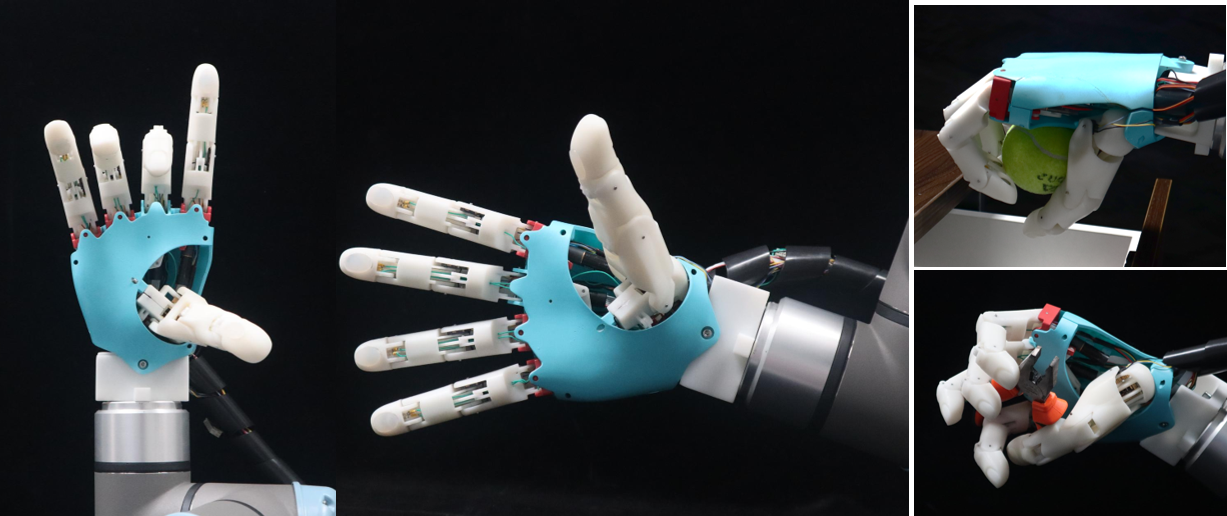
Figure 1: The SyLink Hand prototype exhibiting human-like morphology and dexterous grasp capability.
Biomechanical Synergy Analysis
Motion capture studies with Metagloves quantified angular trajectories across 20 hand joints for representative grasp types. The authors report strong intra-group correlations—particularly PIP–DIP couplings in fingers, and CMC–MCP–IP for the thumb—supported by correlation matrices and PCA biplots, which characterized synergistic independence and inter-group orthogonality. This empirical mapping enables targeted mechanical coupling, informing actuator allocation, and layout.
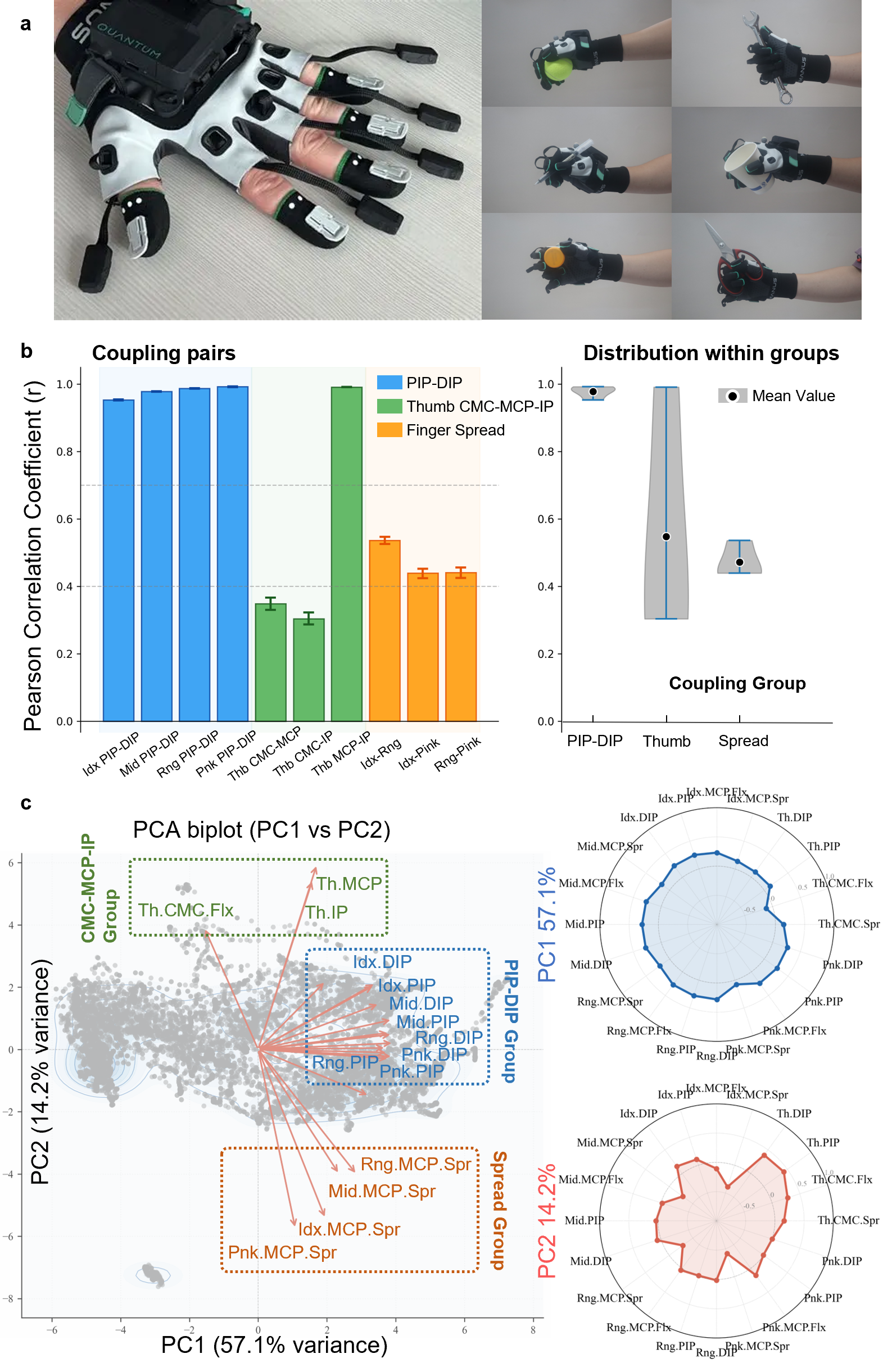
Figure 2: (a) Motion capture protocol; (b) inter-joint synergy statistics; (c) principal component visualization discriminating coupling groups.
Kinematic and Mechanical Architecture
The SyLink Hand embodies a modular anthropomorphic structure encompassing 19 joints, actuated via 11 motors—yielding anthropomorphic kinematics within a compact 520g form factor. Mechanical simplicity is achieved through linkage-driven coordination: crossed four-bar linkages for PIP–DIP and thumb Flex/Ext, worm-gear self-locking for positional robustness, and a novel spatial spherical four-bar linkage enabling decoupling of MCP Flex/Ext and Abd/Add within constrained spatial volumes.
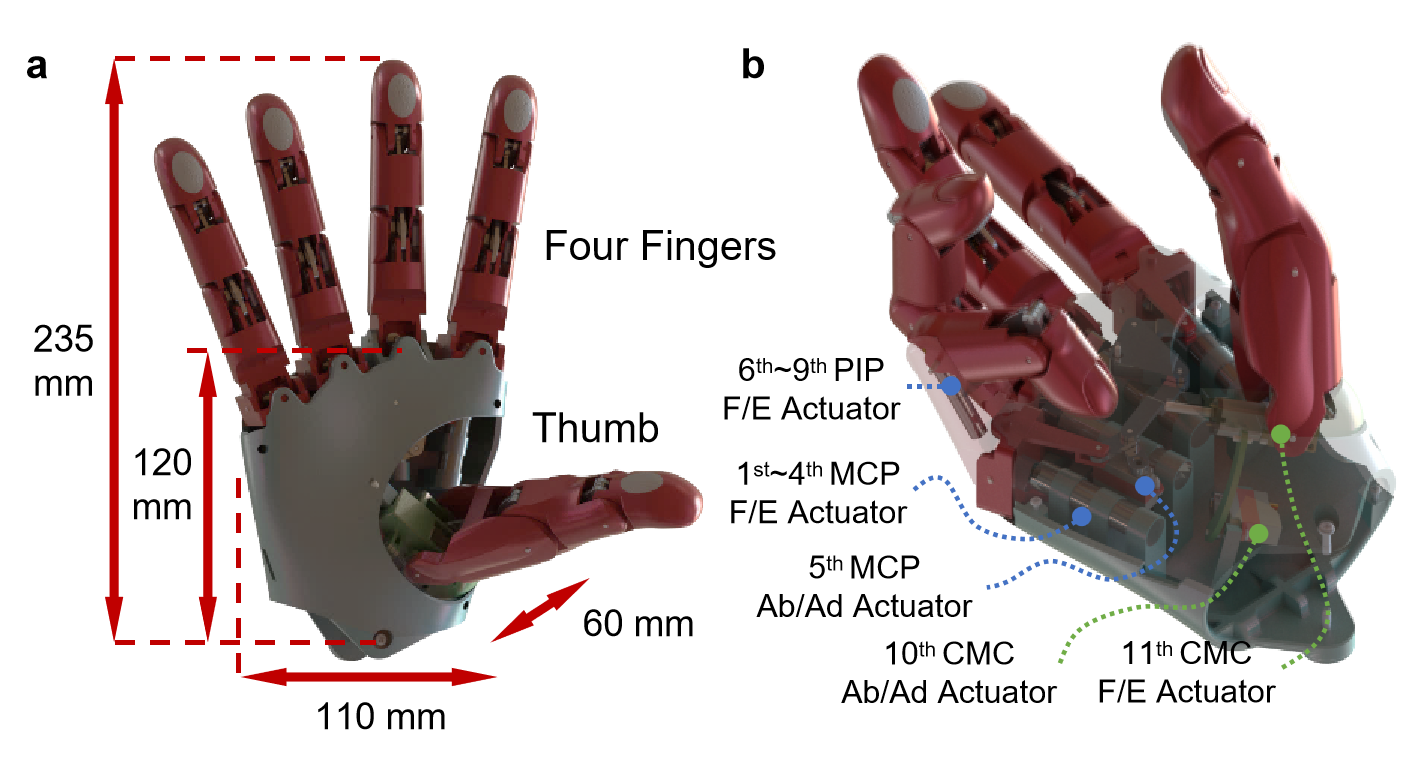
Figure 3: (a) CAD model specifying dimensions; (b) actuator distribution and joint assignments.
Finger and Thumb Mechanisms
Fingers are identical modules incorporating coupled PIP–DIP actuation, with actuators placed proximally and worm-gear transmissions maximizing spatial efficiency. Thumb biomechanics are replicated by a three-joint linkage system providing coordinated Flex/Ext, paired with an independently actuated planar four-bar for Abd/Add.
Linkage kinematics are mathematically formalized, and PSO-based nonlinear optimization is employed to fit analytical linkage models to empirical motion trajectories, enforcing anatomical bounds and Grashof’s criteria for practical linkage operation.
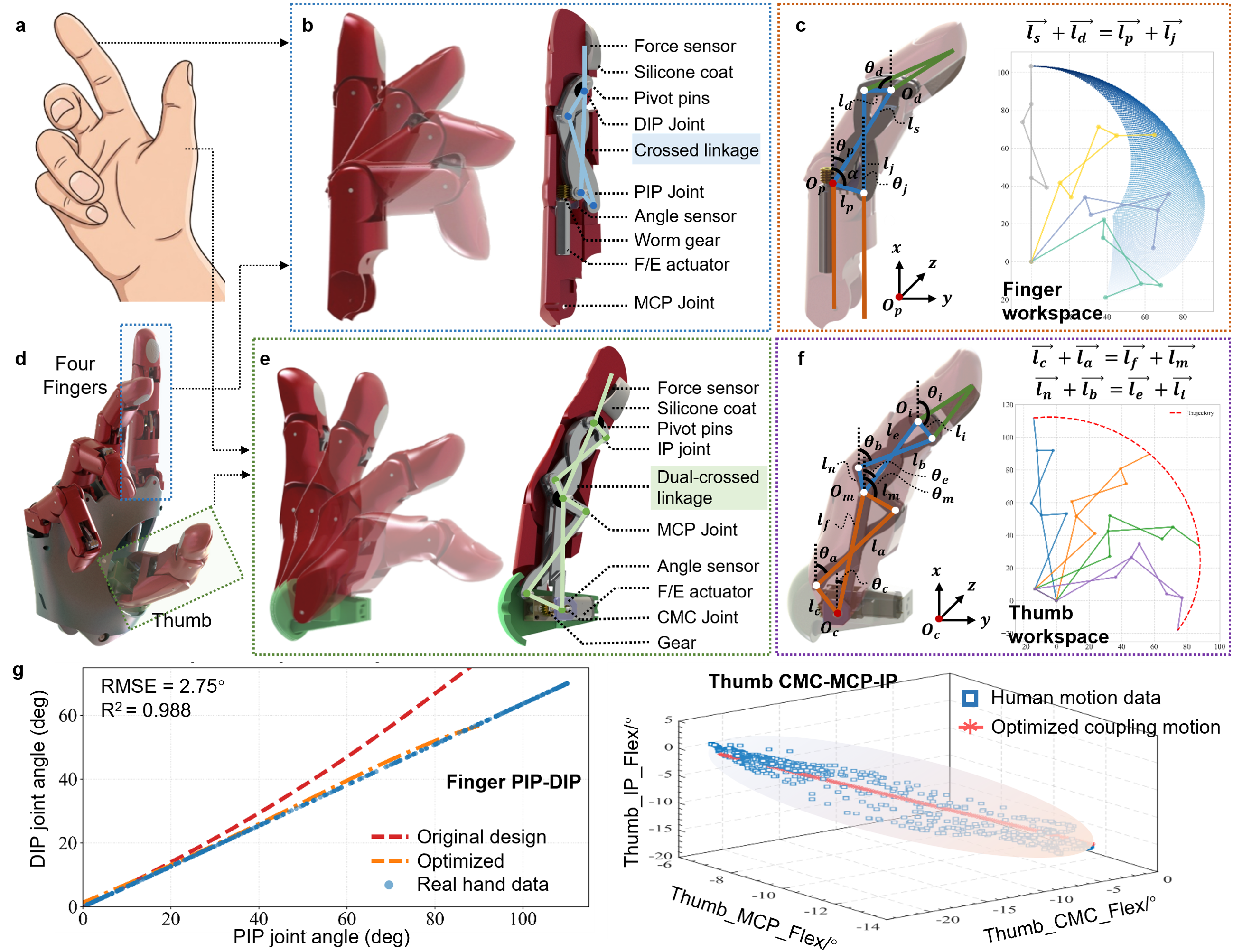
Figure 4: (a) Human morphology reference; (b–d) finger module and workspace; (e–g) thumb module, schematic, and linkage trajectory fitting results.
Actuation and Lateral Motion Coordination
A single servo actuates coordinated lateral (Abd/Add) motion across index, ring, and little fingers via optimized four-bar and five-bar linkage assemblies, reproducing natural synchronous deviation patterns observed in everyday hand postures. Middle finger is fixed, consistent with minimal lateral excursion in human kinematics.
Spherical Four-Bar Mechanism for 2-DOF Control
Conventional differential gear designs require redundant motorization and increased spatial footprint. The proposed spatial spherical four-bar linkage accomplishes compact, decoupled 2-DOF actuation at the MCP joint, enabling independent Flex/Ext and Abd/Add within constrained geometry. Analytical kinematic relationships demonstrate minimal crosstalk and nonlinear torque transmission—rapid closure for pre-grasp, increased output for stable grasp, and inherent positional self-locking.
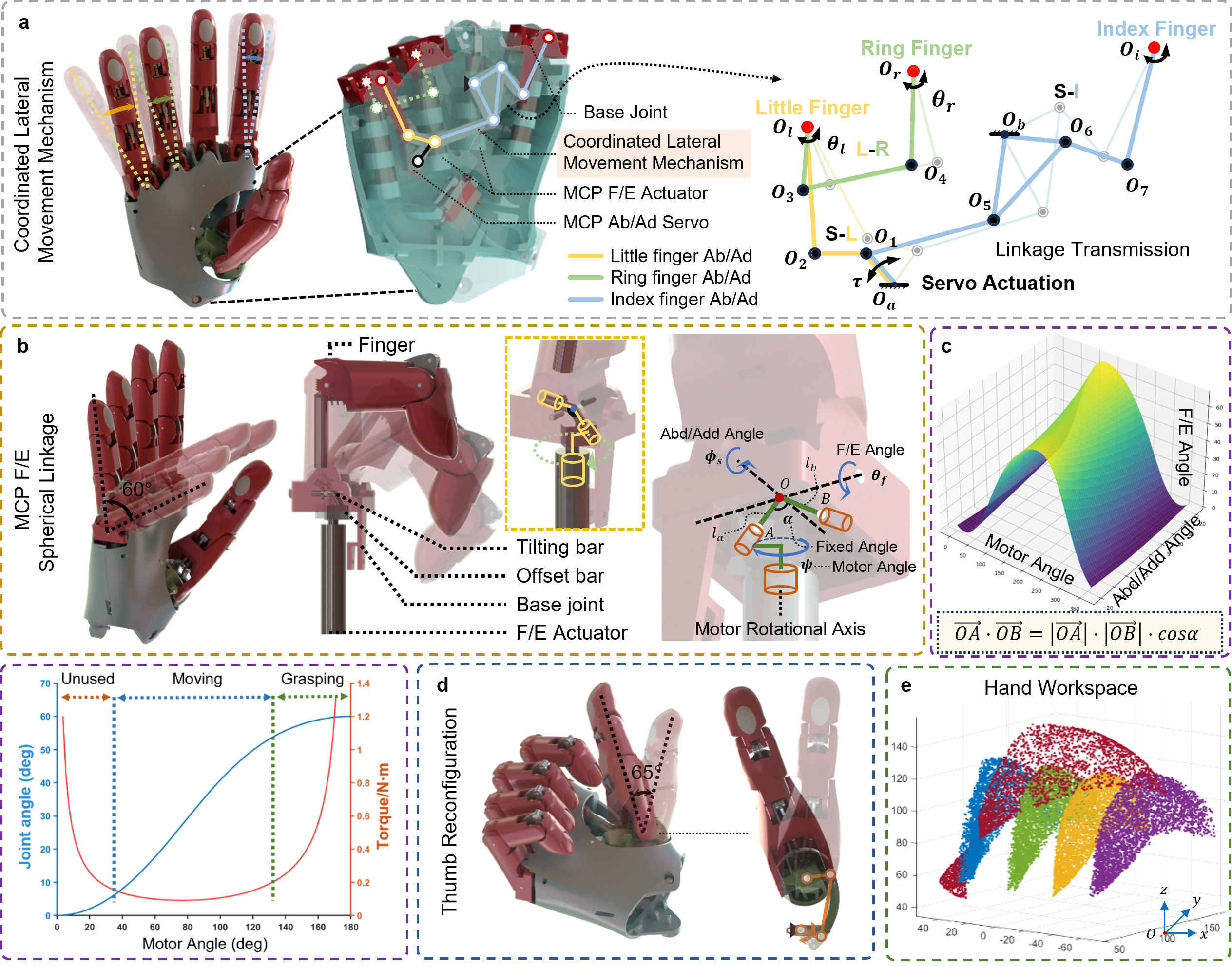
Figure 5: (a) Lateral motion mechanism; (b) spherical four-bar for 2-DOF MCP actuation; (c) motor–joint angle relationships; (d) thumb Abd/Add; (e) overall workspace mapping.
Sensor Integration
Rotation angle sensors at joints, encoder-based angular reconstruction, and thin-film FSRs at fingertips provide real-time feedback for closed-loop position and force control. Silicone coatings on fingertips optimize contact mechanics for high-fidelity tactile measurement.
Dexterity and Motion Fidelity
Empirical evaluation demonstrates that SyLink Hand’s joint range and workspace are comparable to human standards. The thumb achieves maximal Kapandji opposability scores, and coordinated multi-joint gestures are replicated accurately.
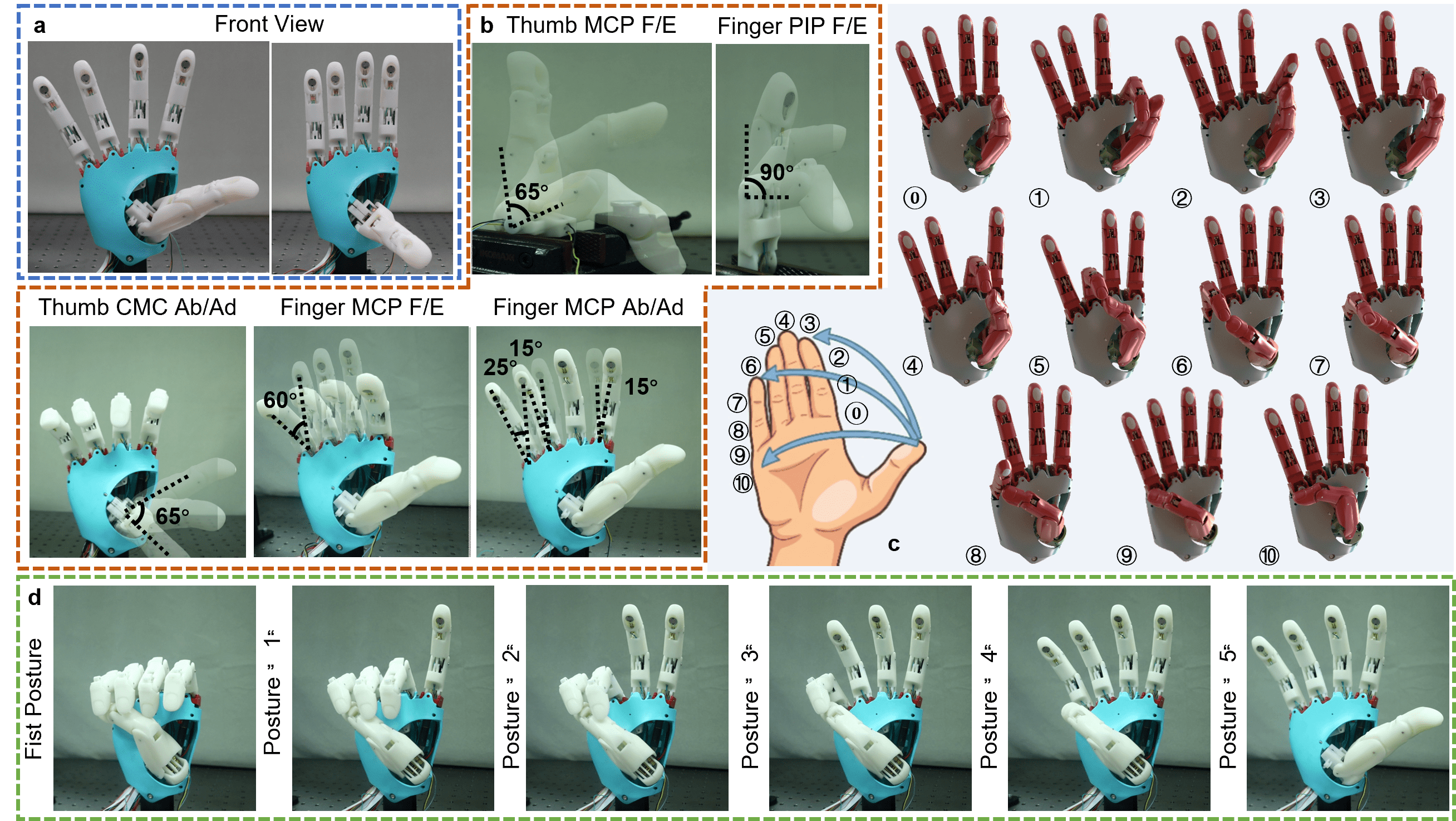
Figure 6: (a) Prototype; (b) joint motion ranges; (c) Kapandji test; (d) numerals 1–5 gestures.
Force, Load, and Tactile Sensitivity
A single finger achieves >5N tip force, sufficient to lift 500g. The hand passively supports a 2.5kg dumbbell, enabled by self-locking linkages. Fingertip FSRs provide sensitive, repeatable force measurements across manipulation cycles.
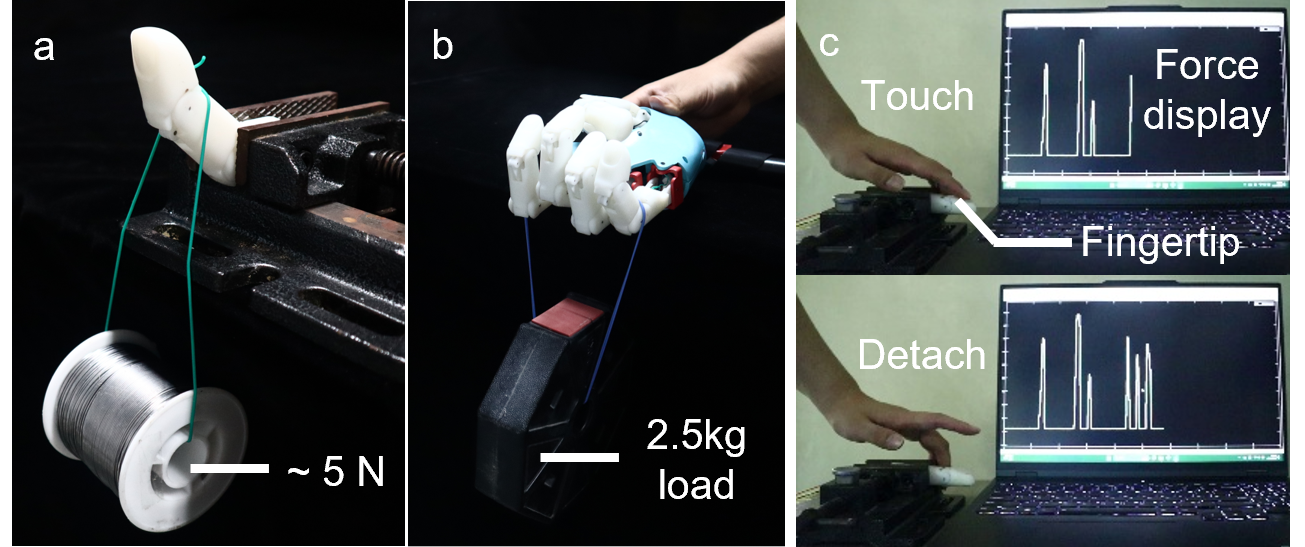
Figure 7: (a) Finger lifting 500g object; (b) passive dumbbell grip; (c) fingertip contact force sensing.
Grasping and In-Hand Manipulation
Six canonical grasp types are stably executed on diverse objects; in-hand manipulation (repositioning and rotational adjustment) achieved via coordinated finger actuation, driven by reference human kinematic data.
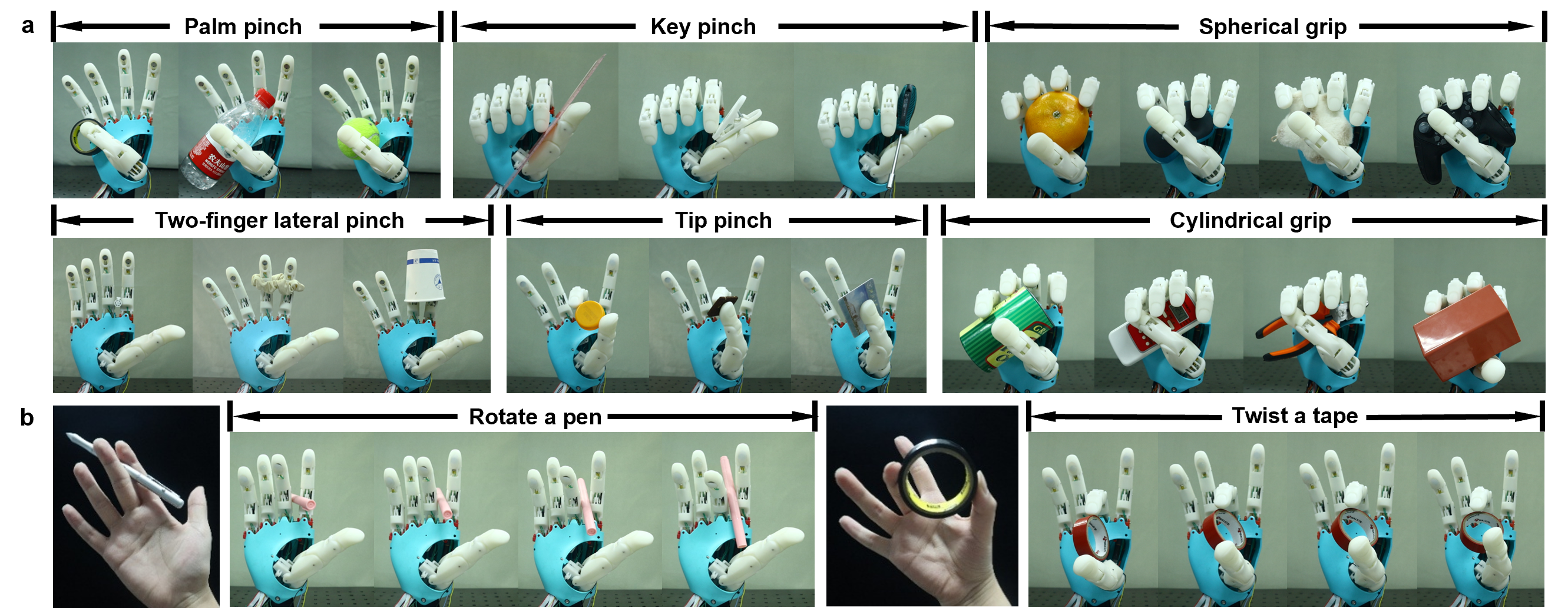
Figure 8: (a) Grasp types on objects; (b) pen repositioning and tape rotation during in-hand manipulation.
The hand demonstrates successful tool use: paper cutting, liquid pipetting, and screw gripping. Experiments validate multi-finger coordination, precision control, and adaptive force regulation.
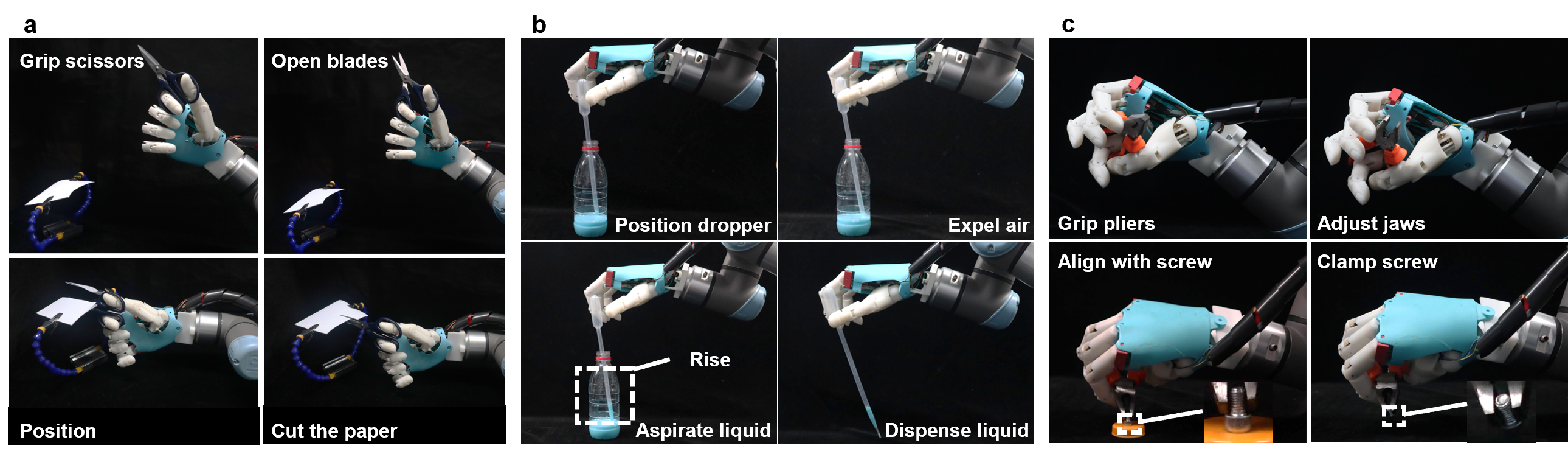
Figure 9: (a) Scissors operation; (b) pipette aspiration/dispensing; (c) pliers manipulation for screw gripping.
Implications and Future Directions
The results substantiate the thesis that synergy-based underactuated mechanical architectures, supported by empirical kinematic optimization, offer a pragmatic alternative to tendon-driven or fully-actuated hands. The SyLink Hand achieves human-like dexterity with reduced complexity and cost—approximately USD 400—and is thus positioned as an accessible platform for teleoperation, robot learning, and dexterity-demanding manipulation.
Continued research may incorporate distributed high-resolution tactile sensors, structural miniaturization for enhanced anthropomorphism and integration, and policy learning algorithms to exploit synergistic kinematic configurations for generalized manipulation across object domains.
Conclusion
The SyLink Hand exemplifies a mechanistically efficient, synergy-inspired approach to anthropomorphic robotic hand design, integrating empirical biomechanical analysis with optimized linkage architectures. The system delivers robust dexterity, force capacity, tactile sensing, and versatile manipulation—all within a cost-effective, lightweight, and compact platform. This paradigm supports practical deployment in real-world robotic manipulation and suggests a scalable trajectory for future developments in dexterous hand design and AI-driven robot learning.