- The paper quantifies the rise of undisclosed LLM-generated content in parliamentary texts using an interpretable linear classifier with high accuracy.
- It employs n-gram feature extraction and confidence calibration to distinguish between human-written and AI-generated texts across UK and Swedish legislatures.
- Results indicate a significant, accelerating trend in AI usage with implications for transparency and governance in political discourse.
Detecting Undisclosed LLM-Generated Content in Parliamentary Texts
Introduction
"Detecting undisclosed LLM-generated content in parliamentary texts" (2606.14209) addresses the pressing issue of transparency in the use of LLMs for generating parliamentary written statements and motions. With LLMs such as ChatGPT and Gemini becoming widely deployed in many high-stakes domains, including politics, this paper seeks to quantify and analyze the real-world prevalence of undisclosed AI-generated content in the parliaments of the United Kingdom and Sweden. Utilizing a fully interpretable linear classifier (ICON), the authors provide a rigorous operationalization of AI use detection, demonstrating a marked and accelerating rise in undisclosed LLM incorporation from 2022 onward.
Methodology
Data Acquisition and Preparation
Two corpora of parliamentary texts were compiled: one from the UK Parliament (Hansard) and one from the Swedish Riksdag. Human-written texts were selected from a period preceding the mainstream deployment of LLMs (2014–2020); these comprised the negative class. To construct a controlled positive class, the authors generated synthetic parliamentary texts by prompting LLMs (Gemini and GPT-5 mini) to expand on summaries drawn from real parliamentary material, using carefully engineered zero-shot prompts to maximize plausibility and style fidelity. The Swedish dataset relied entirely on Gemini, while the UK dataset contained a balanced mix of Gemini and GPT outputs.
Forward test sets encompassed parliamentary statements and motions from 2021 onward, including post-LLM adoption texts for out-of-distribution detection analysis. These test sets were strictly preprocessed, tokenized, and filtered for minimum and maximum sample lengths.
Model Architecture: ICON
The Interpretable CONfidence-enhanced Perceptron (ICON) is a glass-box linear classifier tailored for detecting LLM-generated text. Input representations comprise n-gram features (unigrams and bigrams), weighted by empirical frequency discriminating between human- and LLM-authored corpora. The classifier outputs a real-valued classification score s, with sign and magnitude reflecting label and classification confidence, respectively.
Feature weights are initialized from class-conditional token frequency differences, then optimized via a global update rule akin to, but distinct from, standard perceptron training. This transparent model structure supports exact, introspectable attribution of classification decisions at both the feature and sample levels.
For confidence calibration, the magnitude ∣s∣ is binned and cross-referenced with empirical accuracy from a held-out validation set, yielding a robust measure of classification certainty as a function of s.
Results
ICON achieves high discriminative accuracy on held-out test sets, with F1 scores of 0.940 (UK) and 0.969 (Sweden), and test accuracies of 0.950 and 0.972, respectively. False positive rates remained low at 6.2% (UK) and 4.3% (SWE), confirming robust separation between classes in the target parliamentary domains. Confidence scores, evaluated as a function of ∣s∣, show near-perfect accuracy above ∣s∣=6.
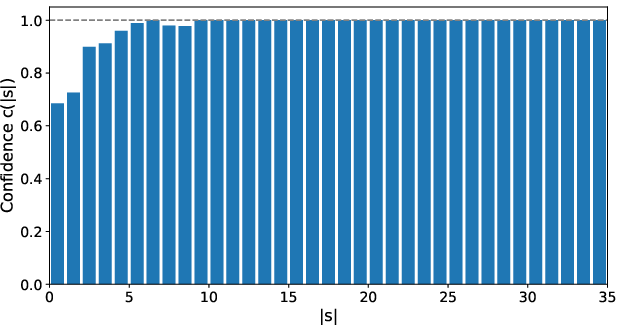
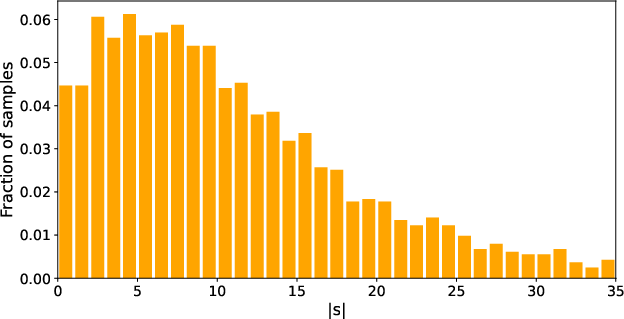
Figure 1: Validation set accuracy (“confidence score”) for human-vs-LLM classification over the UK parliament base set, as a function of classification score magnitude ∣s∣.
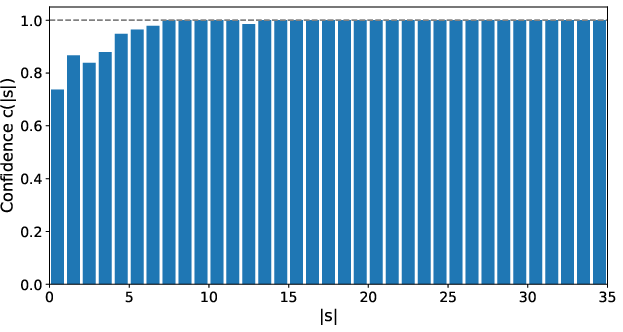
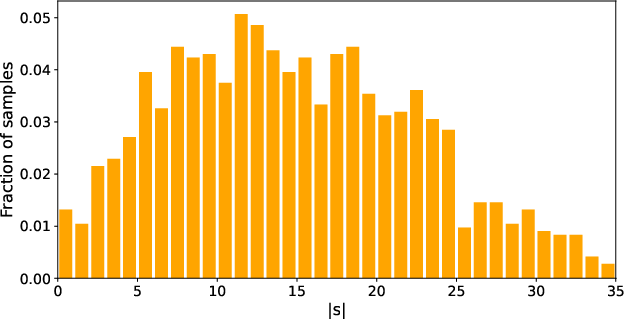
Figure 2: Analogous confidence calibration for the Swedish parliamentary corpus reveals a similar dependency on classification magnitude.
Temporal Dynamics of LLM Use in Parliament
Applying the classifier to real, unlabeled forward test sets (i.e., recent parliamentary texts), the estimated prevalence of LLM-generated content in full parliamentary motions/texts was computed for each year/session. The rate is almost negligible before late 2022, but rises nonlinearly afterwards. By 2026, the detection rate reaches 2.1% for the UK and 6.5% for Sweden when classifying entire motions as a unit.
Classification at finer granularity—flagging any motion containing at least one detected LLM-generated paragraph—increased these rates to 15.5% for the UK and 9.4% for Sweden in their latest respective periods.
No instances of self-disclosure of LLM use were found in parliamentary records, despite strong public and institutional recommendations for transparency.
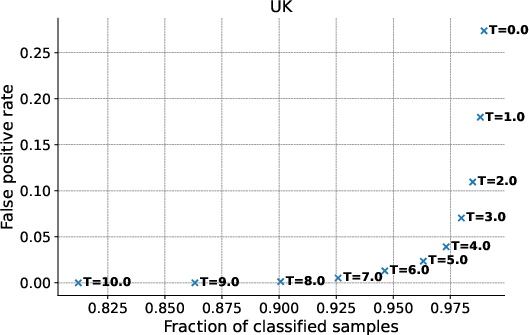
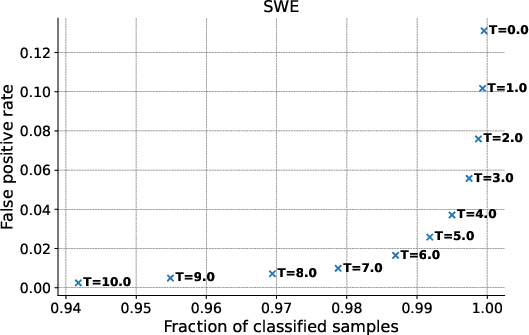
Figure 3: False positive rate versus classified fraction as the confidence threshold T is varied, showing trade-offs between coverage and error; low false positive rates can be maintained for a substantial classified proportion.
Interpretability and Feature Visualization
ICON’s core advantage is interpretability: classification outcomes are decomposable to their feature contributions. Visualizations of classified samples demonstrate that—even for confident LLM-origin attributions—the decision is determined by a distributed pattern of discriminative n-grams, not by any single telltale token or phrase.
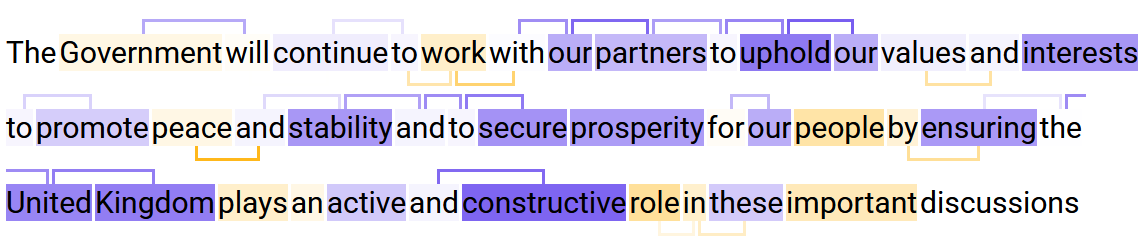
Figure 4: Visualization of an LLM-generated UK parliamentary text, with purple (positive) weights contributing to LLM classification and yellow (negative) weights contributing to human classification.
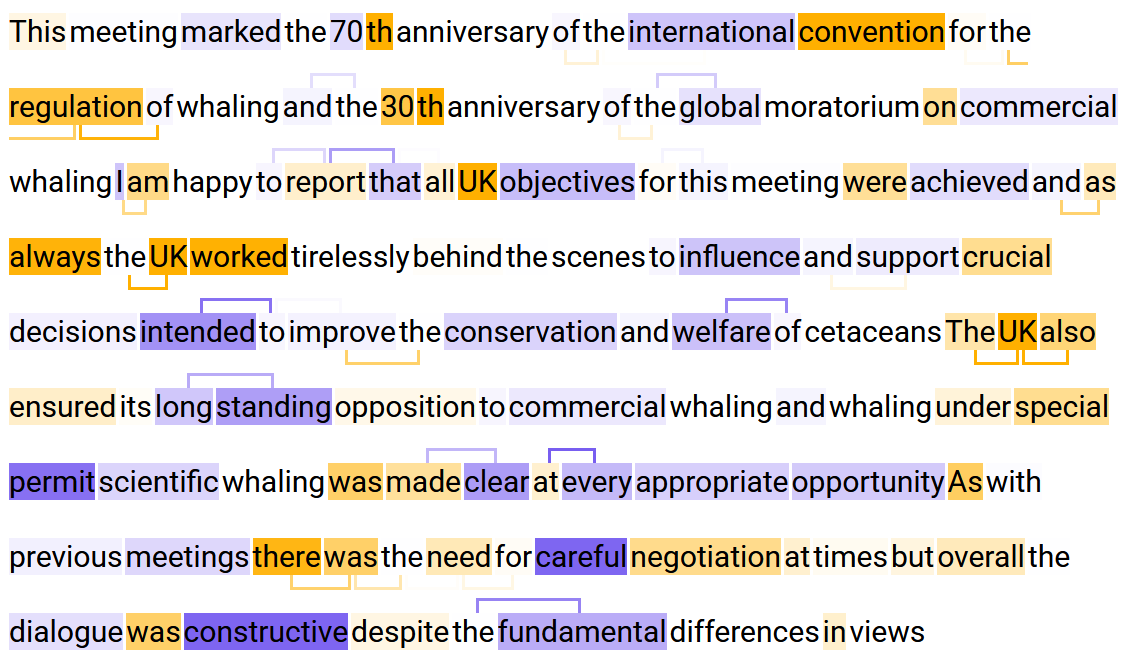
Figure 5: Visualization of a correctly classified human-authored UK parliamentary text. The effect arises from a confluence of negative (human-associated) features, but some “LLM-like” tokens are also present.
Adversarial testing—synonym replacement, and use of popular AI “dehumanizers”—proved largely ineffective at flipping ICON predictions unless the entire text was comprehensively restructured, suggesting substantial robustness to feature-level evasion.
Implications and Theoretical Considerations
The results expose a rapidly accelerating, but fully undisclosed, use of LLMs in the production of formal parliamentary texts. This finding directly contravenes the guidelines and recommendations of international governing bodies (e.g., the Interparliamentary Union), which stress transparency, disclosure, and human responsibility in AI-assisted parliamentary processes.
From a practical standpoint, the ability to identify LLM-generated content with high accuracy and low false positive rates—using an interpretable linear model—offers a tool for audit and oversight that is far more transparent than black-box neural alternatives. The demonstrated robustness to adversarial paraphrasing and the apparent infeasibility of trivial evasion reinforce trust in such interpretable detectors for high-stakes domains.
Theoretically, the steady increase in detected rates (particularly at sub-document granularity) suggests an institutional normalization of AI usage, and highlights the need for new procedural, social, and technical frameworks around authenticity, authorship, and AI intervention in political communication.
Widespread, undisclosed LLM usage in governance contexts raises questions about authenticity, representation, and information integrity. Empirical work also shows that cognitive offloading and de-skilling in the presence of AI assistants is real, measurable, and unaccounted for by current transparency codes [StadlerEtal2024; kosmyna_your_2025; klein_extended_2025]. Disclosure alone may be insufficient to capture the epistemic and social risks induced by LLM use [maynard_ai_2026].
Limitations and Future Directions
Several caveats apply. The model’s definition of “LLM-generated” is contingent on training data and model versions used for generating synthetic positive samples; future LLM architectures may reduce detectability or manifest different distributional signatures. Mixing of human and LLM edits may result in hybrid texts problematic for binary classification frameworks. More granular attribution and quantification of LLM-generated content within documents remains an area for future research.
Cross-linguistic differences and the use of different LLMs for Swedish and English corpora limit direct cross-country comparability. Incorporation of more, and more diverse, LLM-generated training samples—across time and language—would further anchor these findings. Systematic adversarial evaluation, including deliberate attempts to conceal LLM authorship in parliamentary contexts, remains for future work.
Conclusion
This work demonstrates that undisclosed LLM-generated content is a rapidly emerging feature of contemporary parliamentary discourse in both the United Kingdom and Sweden. Using an interpretable n-gram-based classifier, the authors find a significant increase in detected LLM use post-2022, reaching over 15% of UK parliamentary motions by 2026 at the paragraph level. The study highlights the inadequacy of current disclosure practices and confirms that interpretable detectors remain highly effective for high-stakes, real-world domains. These findings have salient implications for procedural transparency, authenticity in political communication, and the future governance of generative AI technologies.