- The paper demonstrates that global measurements yield a higher maximum confidence than separable operations for antiparallel qubit state discrimination.
- It introduces maximum-confidence measurements to generalize state discrimination and provides SDP-based criteria for certifying nonlocality under device imperfections.
- The study shows that certifiable confidence gaps and outcome rate analyses enable robust experimental verification of nonlocality without entanglement even in noisy settings.
Semi-Device-Independent Certification of Nonlocality Without Entanglement
Introduction
The phenomenon of nonlocality without entanglement (NLWE) underscores that quantum correlations and measurement-induced advantages can emerge even in the absence of entangled input states. Traditionally, NLWE is exhibited by demonstrating that global (non-separable) measurements outperform local operations and classical communication (LOCC) or separable (SEP) measurements in specific quantum information tasks. The paper "Semi-Device-Independent Certification for Nonlocality without Entanglement" (2606.13667) systematically investigates the semi-device-independent (sDI) certification of NLWE in the context of quantum state discrimination, harnessing the maximum-confidence measurement (MCM) strategy. This approach generalizes minimum-error and unambiguous discrimination and enables robust experimental verification of NLWE even under practical noise and detector inefficiencies.
Framework: Maximum-Confidence Measurements and Certification
In quantum state discrimination, the task is to identify a prepared quantum state, sampled from a known ensemble {qx,ρx}, as accurately as possible given the measurement outcome. The conventional approaches—minimum-error and unambiguous discrimination—are subsumed by the MCM strategy, which maximizes, per detection event, the conditional probability (confidence) that the correct state is identified. MCMs thus generalize the discrimination frameworks while providing a natural metric linking physical measurement outcomes to inferential success, even in the presence of noise or inconclusive events.
The optimization of confidence, Cx,max, is formulated as:
Cx,max:=Mx≥0maxTr[ρMx]qxTr[ρxMx]
where ρ=∑xqxρx is the ensemble state and Mx is the POVM element associated with outcome x. The operational significance is that outcome-dependent post-processing is permitted (i.e., the confidence is computed after obtaining a specific outcome).
Global vs. Separable Measurements
By constraining Mx to either general (GLOBAL) or SEP measurements, NLWE manifests as a strict separation between the achievable confidences:
- GLOBAL: No constraint on Mx (can be entangled across subsystems).
- SEP/LOCC: Mx is a tensor product or a convex mixture of product operators.
A pivotal structural criterion (Proposition 1) asserts that for a given outcome x, the GLOBAL and SEP measurements yield the same maximum confidence if and only if the complementary operator Cx,max0 (arising from duality in the optimization) vanishes on some product vector. Otherwise, Cx,max1, establishing NLWE for the ensemble and measurement in question.
Demonstration of NLWE: Antiparallel Qubit States
The paper concretely analyzes an ensemble of two-qubit antiparallel states formed from symmetric, informationally complete (SIC) vectors:
Cx,max2
It is shown:
- For GLOBAL measurements, Cx,max3, i.e., unambiguous discrimination is possible.
- For SEP measurements, Cx,max4, strictly less than the GLOBAL value.
This exhibits a robust instance of NLWE, as no SEP measurement can achieve the same perfect confidence as the optimal GLOBAL measurement for this ensemble.
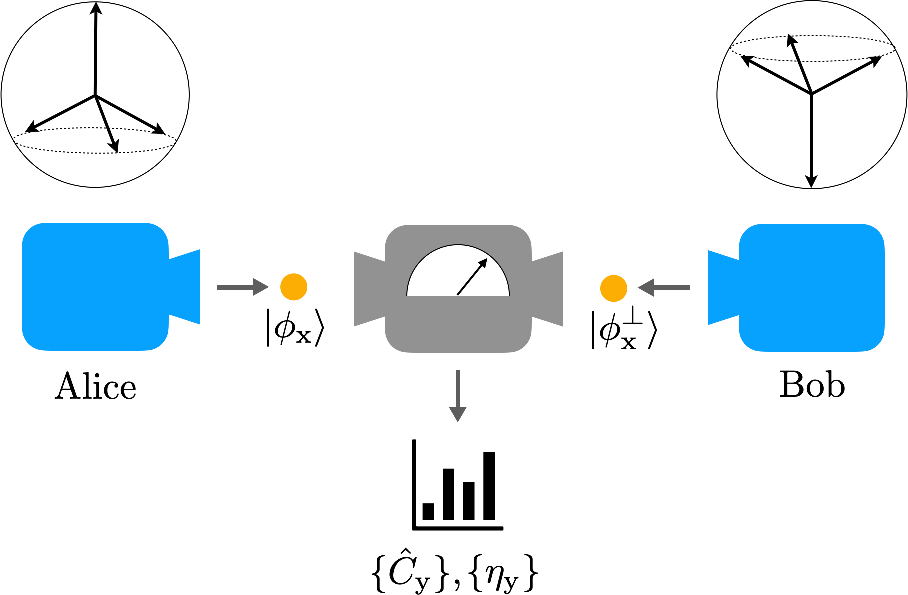
Figure 1: Measurement capabilities in GLOBAL and SEP compared for antiparallel state discrimination; a confidence gap certifies NLWE.
Semi-Device-Independent Certification Protocol
Certifiable Confidence and Outcome Rates
To certify NLWE in an sDI scenario, where the only trusted element is state preparation and detectors may be uncharacterized or noisy, the procedure comprises:
- Preparation: Input states Cx,max5 are prepared.
- Outcome Collection: Probabilities (outcome rates) Cx,max6 are observed.
- Confidence Estimation: Certifiable confidence Cx,max7 is constructed from experimental statistics:
Cx,max8
where Cx,max9 is the frequency with which outcome Cx,max:=Mx≥0maxTr[ρMx]qxTr[ρxMx]0 is observed when Cx,max:=Mx≥0maxTr[ρMx]qxTr[ρxMx]1 is prepared.
- Certification Test: By solving an SDP (with or without imposing the SEP constraint on Cx,max:=Mx≥0maxTr[ρMx]qxTr[ρxMx]2), one determines the largest confidence values compatible with SEP (Cx,max:=Mx≥0maxTr[ρMx]qxTr[ρxMx]3) and with GLOBAL (Cx,max:=Mx≥0maxTr[ρMx]qxTr[ρxMx]4) for the observed outcome rate. If
Cx,max:=Mx≥0maxTr[ρMx]qxTr[ρxMx]5
then the measurement is certified to be non-separable.
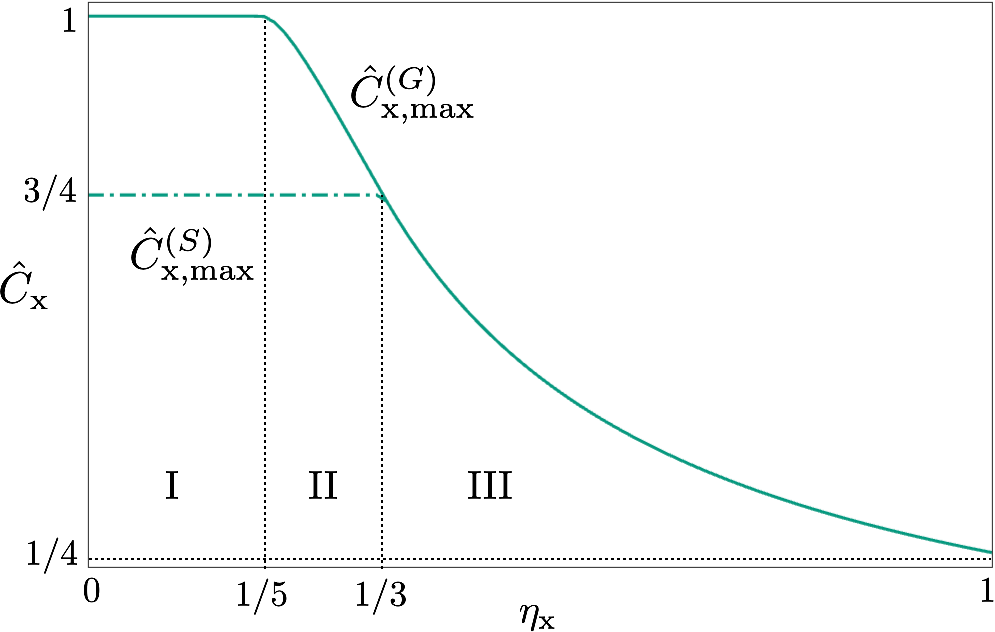
Figure 2: Certifiable maximum confidence for antiparallel states as a function of outcome rate Cx,max:=Mx≥0maxTr[ρMx]qxTr[ρxMx]6, with regions where NLWE can be certified indicated.
Outcome Rate Regimes and Noise Robustness
The capacity to certify NLWE is sensitive to the detected outcome rates:
- For Cx,max:=Mx≥0maxTr[ρMx]qxTr[ρxMx]7, NLWE can be certified as the achievable confidence with SEP falls short of that with GLOBAL.
- For Cx,max:=Mx≥0maxTr[ρMx]qxTr[ρxMx]8, SEP measurements suffice to attain the optimal confidence, precluding certification.
The paper further extends these results to noisy state preparation (local depolarizing noise), demonstrating that the critical values of outcome rate and achievable gaps in confidence persist for nonzero noise levels, thereby confirming experimental feasibility.
Certification Using Inconclusive Outcomes
When the rate of conclusive outcomes cannot certify NLWE, as sometimes occurs due to imperfections, the analysis shifts to inconclusive outcomes. The minimum achievable rate of inconclusive results under SEP, Cx,max:=Mx≥0maxTr[ρMx]qxTr[ρxMx]9, is computed via SDP. If the experimentally observed inconclusive rate ρ=∑xqxρx0 with a (possibly noisy) GLOBAL measurement is
ρ=∑xqxρx1
NLWE is certified. The analysis provides explicit values for both rates in the context of noisy antiparallel ensembles.
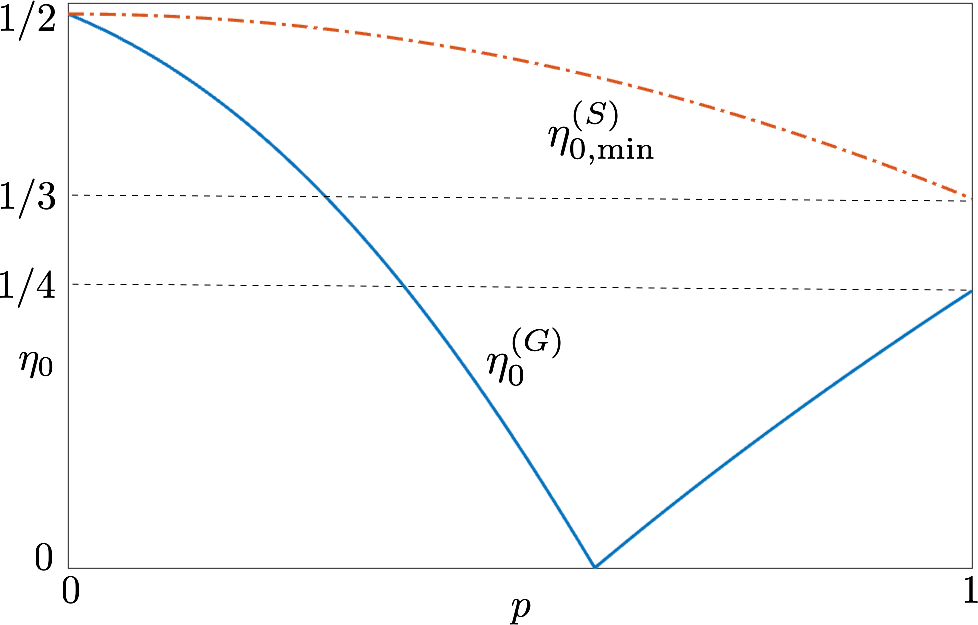
Figure 3: Rate of inconclusive outcomes for noisy GLOBAL versus SEP measurements; a lower rate in GLOBAL certifies nonlocality without entanglement.
Practical and Theoretical Implications
This framework advances the characterization and certification of measurement-induced quantum nonlocality in experimentally realizable, semi-device-independent settings. It enables the detection of NLWE under realistic noise and detector inefficiency without requiring detailed modeling or trust in measurement devices, as long as the state preparation is trusted. The approach is robust to noise in both state preparation and detection, broadening the class of certifiable quantum information advantages available for practical implementation. Notably, it unifies conclusive and inconclusive outcome-based certification and leverages SDP-based criteria that are efficiently computable.
From a theoretical perspective, the work demonstrates that fine-grained, outcome-specific confidence measures are operationally meaningful witnesses of nonclassicality, even in the absence of entanglement resources. Furthermore, it provides structural conditions under which state ensembles can or cannot demonstrate NLWE.
The methodology is well poised for future exploration in tasks such as joint measurement, quantum data hiding, secure communication via adversarial quantum repeaters, and potentially as a quantitative resource within generalized contextuality frameworks.
Conclusion
The paper establishes a comprehensive sDI framework for the certification of nonlocality without entanglement using MCMs. By demonstrating confidence gaps between GLOBAL and SEP measurements and extending the analysis to practical noise regimes and inconclusive outcomes, it achieves a robust protocol for experimental NLWE verification. The results suggest promising avenues for deploying NLWE-based primitives in quantum information applications and for generalizing the criterion to a broader class of quantum discrimination and certification problems (2606.13667).