- The paper introduces protocols using hot quantum states to enhance displacement sensitivity by leveraging parity filtering and branch coherence.
- It details quantitative benchmarking of quantum Fisher information scaling with thermal occupation and analyzes noise susceptibility across various models.
- The study shows that minimal cooling combined with engineered state preparation can optimize sensor performance in bosonic systems.
Hot Quantum States as Metrological Resources: Displacement Sensing Beyond Ground-State Cooling
Introduction and Motivation
Quantum-enhanced displacement sensing with bosonic systems traditionally relies on initializing the oscillator near its ground state before nonclassical state preparation. This work (2606.13650) interrogates the necessity of this cooling stage and explores the metrological potential of "hot" quantum states—those derived from nonclassical state-preparation applied directly to thermal (mixed) states without prior cooling.
The central questions examined include: Under which circumstances can states prepared from thermal ensembles retain, or even enhance, displacement sensitivity? What structural properties of such hot states enable quantum-enhanced metrology? The study systematically classifies preparation protocols according to the underlying mechanisms protecting metrological sensitivity, analyzes their decoherence properties, and addresses the experimentally relevant trade-off between cooling overhead and hot-state preparation.
Framework and Mechanisms of Quantum Enhancement
A quantum bosonic sensing cycle typically involves cooling, state preparation, signal interaction, and measurement. The operational structure is illustrated in (Figure 1).
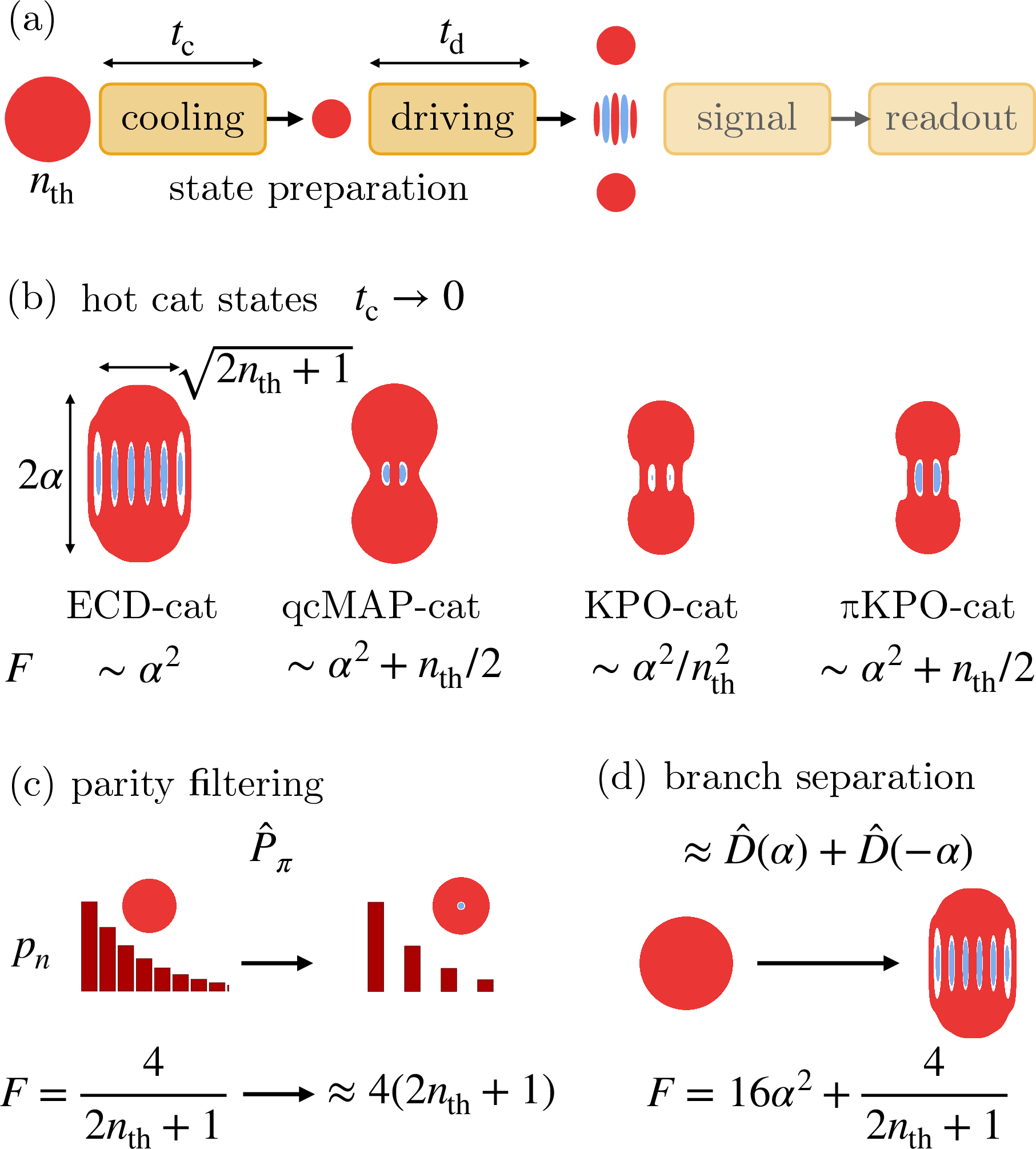
Figure 1: Summary of hot-state bosonic sensing protocols, mechanisms for quantum-enhanced sensitivity, and schematic resource scaling for various nonclassical state-preparation methods.
Rather than the ground state, a "hot" protocol applies squeezing, photon-adding, or cat-state generation directly to a thermal state. The analysis covers families of hot squeezed states, hot Fock states (via creation operators, Jaynes–Cummings (JC) ladder climbing, or Susskind–Glogower shifts), and hot Schrödinger cat states (produced by Echoed Conditional Displacement (ECD), qcMAP, and Kerr-parametric oscillator (KPO) protocols).
Two nontrivial mechanisms by which thermal mixedness remains compatible with enhanced displacement sensitivity are identified:
- Parity-Sector Engineering: Projection onto a definite photon-number parity sector suppresses mixed-state overlap that would otherwise limit the quantum Fisher information (QFI) for displacement sensing. In effect, displacement acts as a parity-flipping operation, so occupation-conserving processes within a parity sector allow population in one sector to contribute directly to QFI, with a scaling that increases with thermal occupation rather than being purity-limited.
- Coherent Branch Superposition (Branch Engineering): Coherence between macroscopically distinct phase-space branches (e.g., displaced thermal lobes in a cat state) can survive even when the underlying state is mixed. For the ECD protocol, such coherent superpositions may dominate the QFI independently of the initial thermal occupation, as long as the phase coherence between branches is preserved.
Protocol Classification and Physical Structure
States prepared from a thermal ensemble are classified by whether their displacement sensitivity is protected by parity exclusion, branch coherence, or both. The impact of parity filtering and its interplay with different state-preparation routes is analyzed.
- Without Parity Filtering: Squeezing or photon addition directly on a thermal state increases energy but does not circumvent thermal suppression of QFI—excitation remains spread over both parity ladders, limiting metrological gain.
- With Parity Filtering: Applying a parity filter before or after nonclassical state preparation can invert the scaling: thermal occupation, far from being detrimental, enhances the QFI. For instance, squeezing or multi-photon-adding in a definite parity sector yields QFI that grows linearly with thermal occupation.
- Hot Cat States: ECD-generated hot cats utilize the branch-coherence mechanism, enabling robust QFI enhancement even when starting from thermal states. In contrast, certain "cat" protocols (e.g., KPO without parity filtering) are susceptible to parity mixture and, thus, their branch contribution to QFI is thermally suppressed. Parity-filtered cat protocols (e.g., qcMAP or πKPO) recover the branch-enhanced scaling.
Representative state structures are visualized in (Figure 2). The Wigner functions demonstrate that parity filtering modifies phase-space occupation substantially, and branch interference survives even in mixed states, making these resource states fundamentally distinct from pure-state metrology.
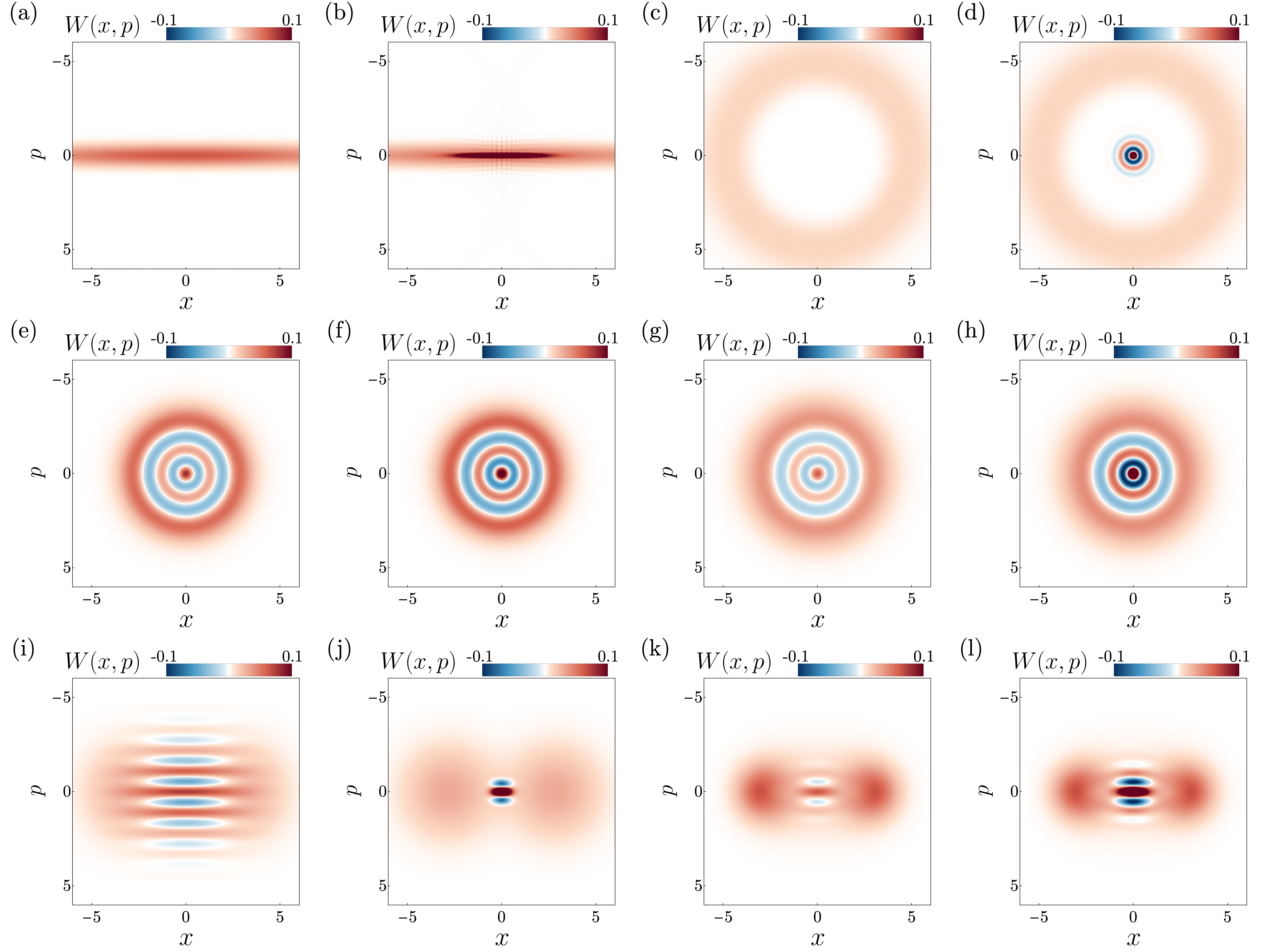
Figure 2: Wigner functions for various hot-state resources, showing the impact of parity filtering and excitation addition on phase-space coherence and structure.
Quantitative Results and Numerical Benchmarking
The study performs comprehensive analytical and numerical benchmarking of QFI scaling with thermal occupation for several families:
- Phonon-Added Hot-Fock States: Without parity filtering, QFI is asymptotically independent of the number of additions—thermal suppression dominates. With parity filtering, QFI enhancement is restored, scaling as the product of occupation and the number of added quanta (see Figure 3).
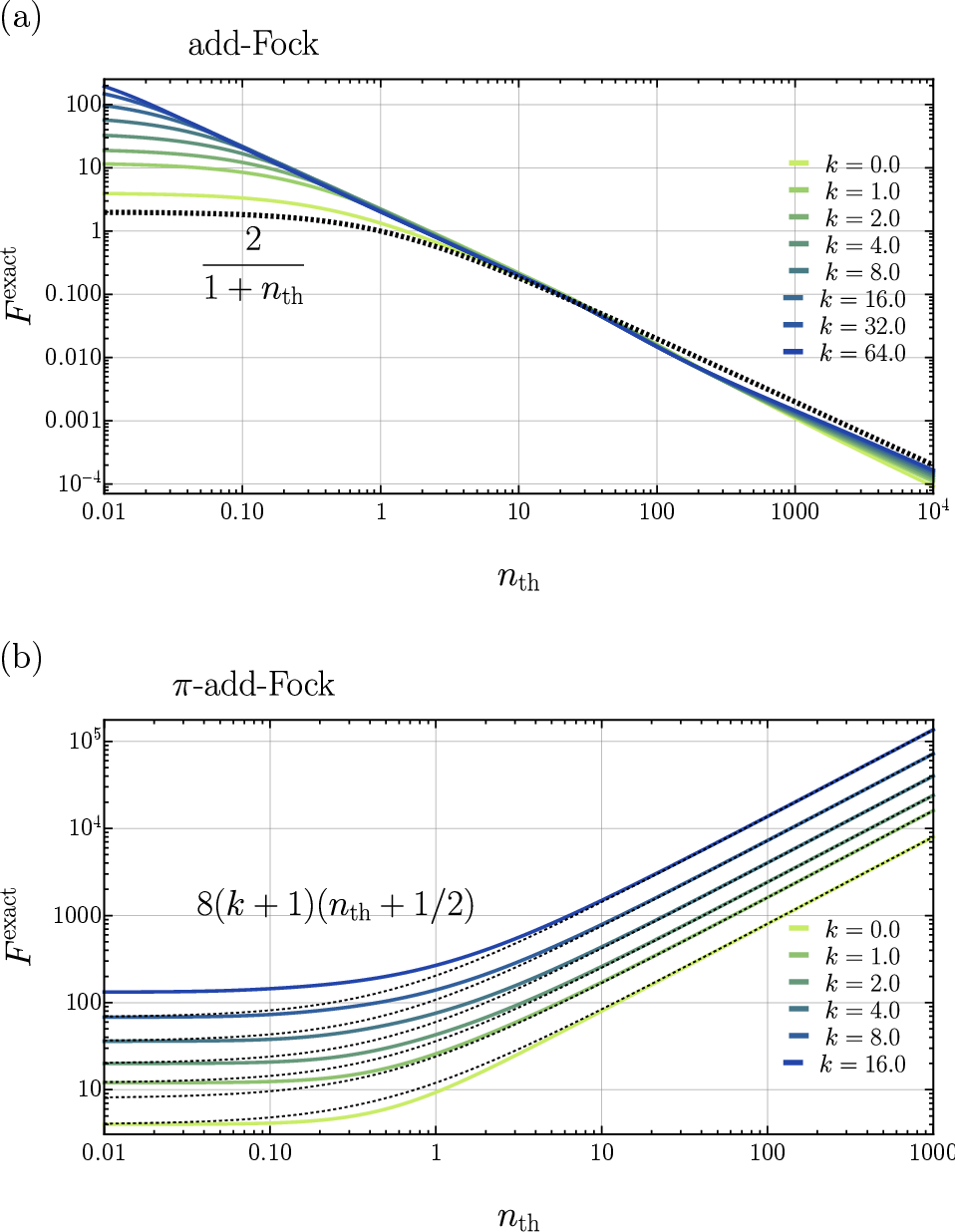
Figure 3: QFI for displacement sensing as a function of initial occupation and number of added excitations; parity filtering reverses the thermal scaling.
- JC-Ladder Climbing: Calibrated JC sequences applied to thermal states similarly fail to break thermal suppression. While parity filtering initially enhances QFI for shallow ladders, as the sequence progresses, population leaks to the opposite parity sector, and enhancement is eventually lost (Figure 4).
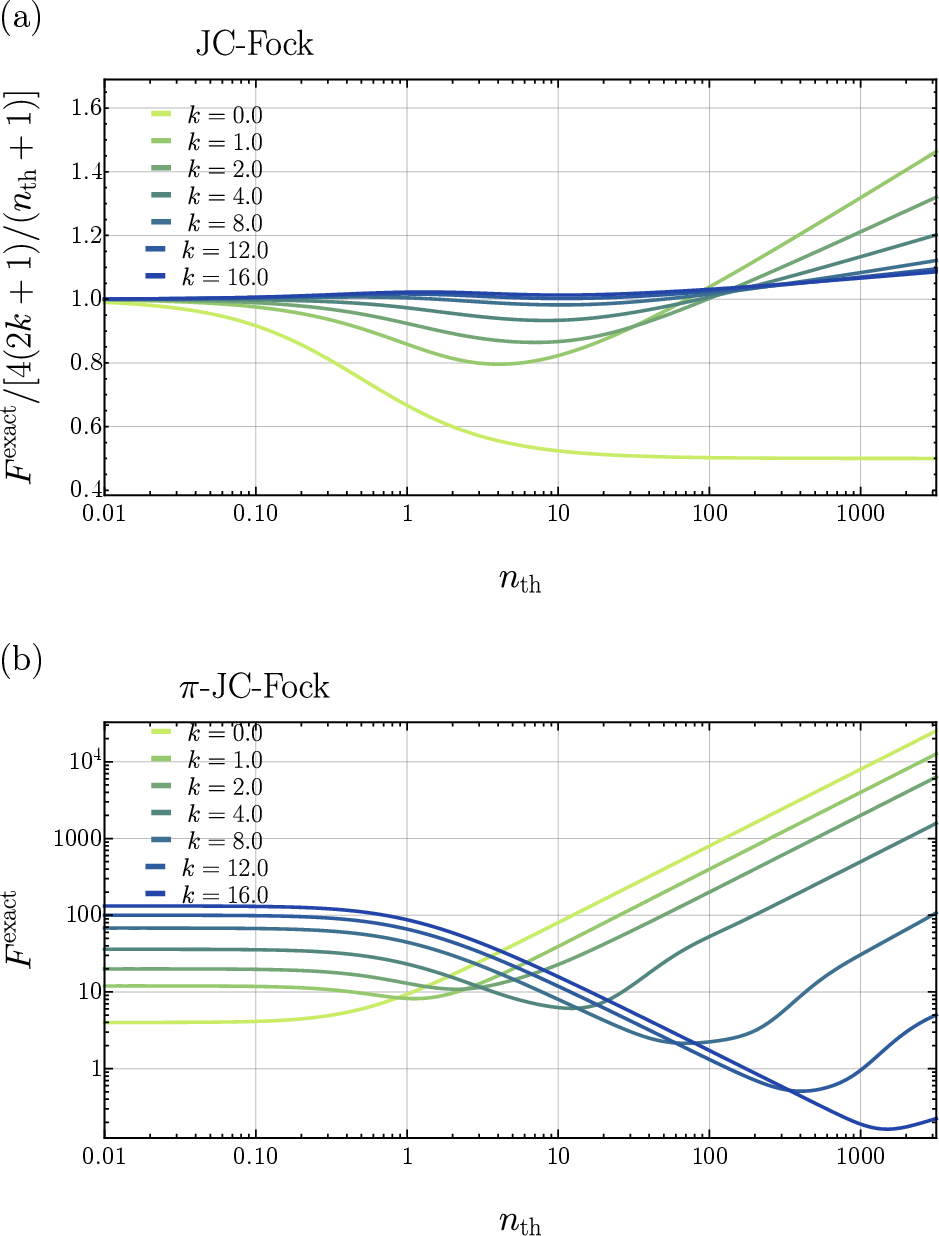
Figure 4: QFI scaling for JC-ladder-hot-Fock states, demonstrating loss of parity protection for deep ladders.
- Hot Cat States: The analytical large-separation expressions for ECD, qcMAP, and KPO cats are verified against direct numerics (Figure 5), confirming the regime of validity and the mechanisms of sensitivity retention.
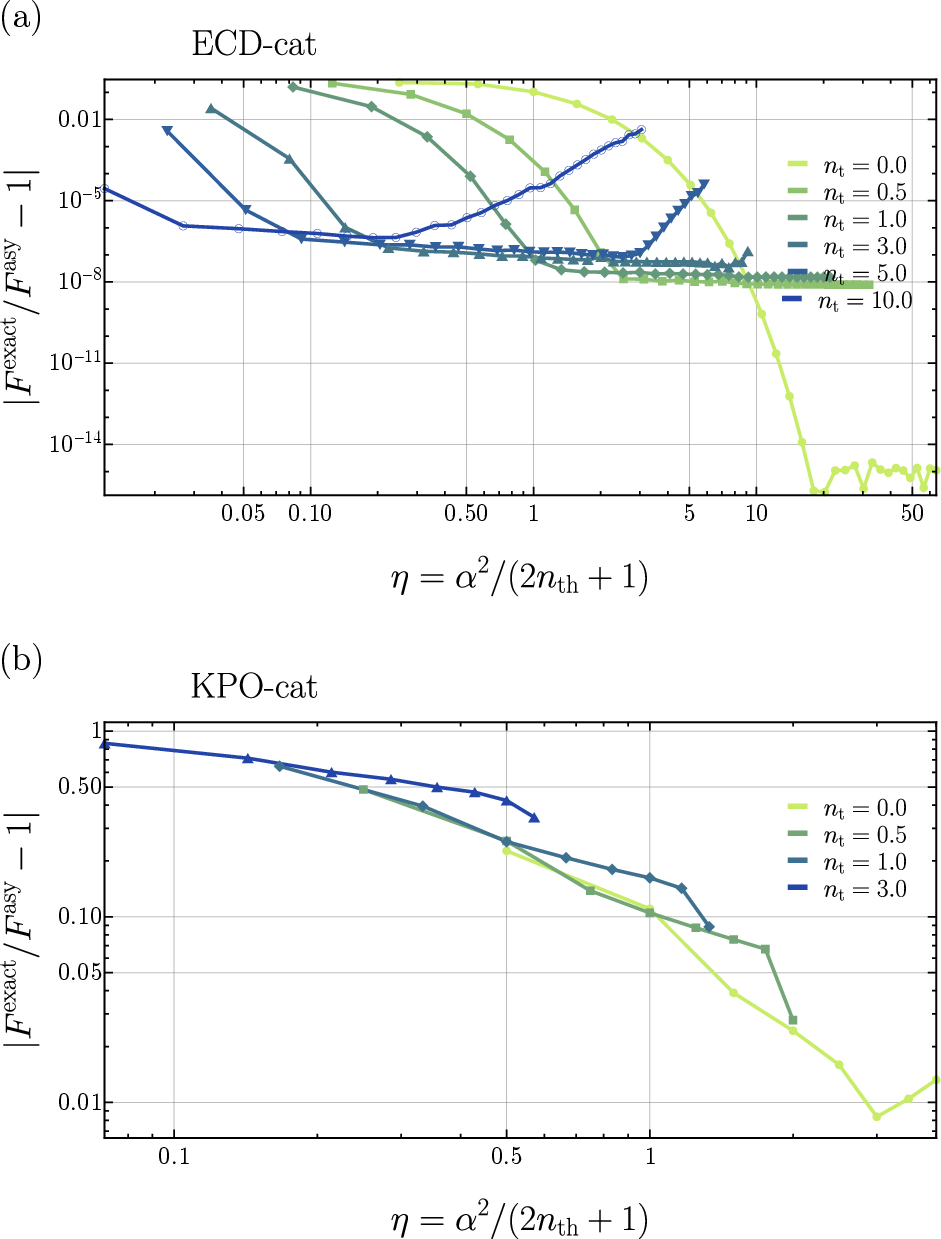
Figure 5: Relative error between full mixed-state QFI and asymptotic analytic expressions for large-separation hot cats.
Noise Susceptibility and Structure-Dependent Fragility
The fragility of hot-state metrological resources under realistic bosonic noise channels—loss, phase-insensitive heating, and number dephasing—is quantitatively analyzed, both using general QFI inequalities and detailed Lindblad simulations (Figure 6).
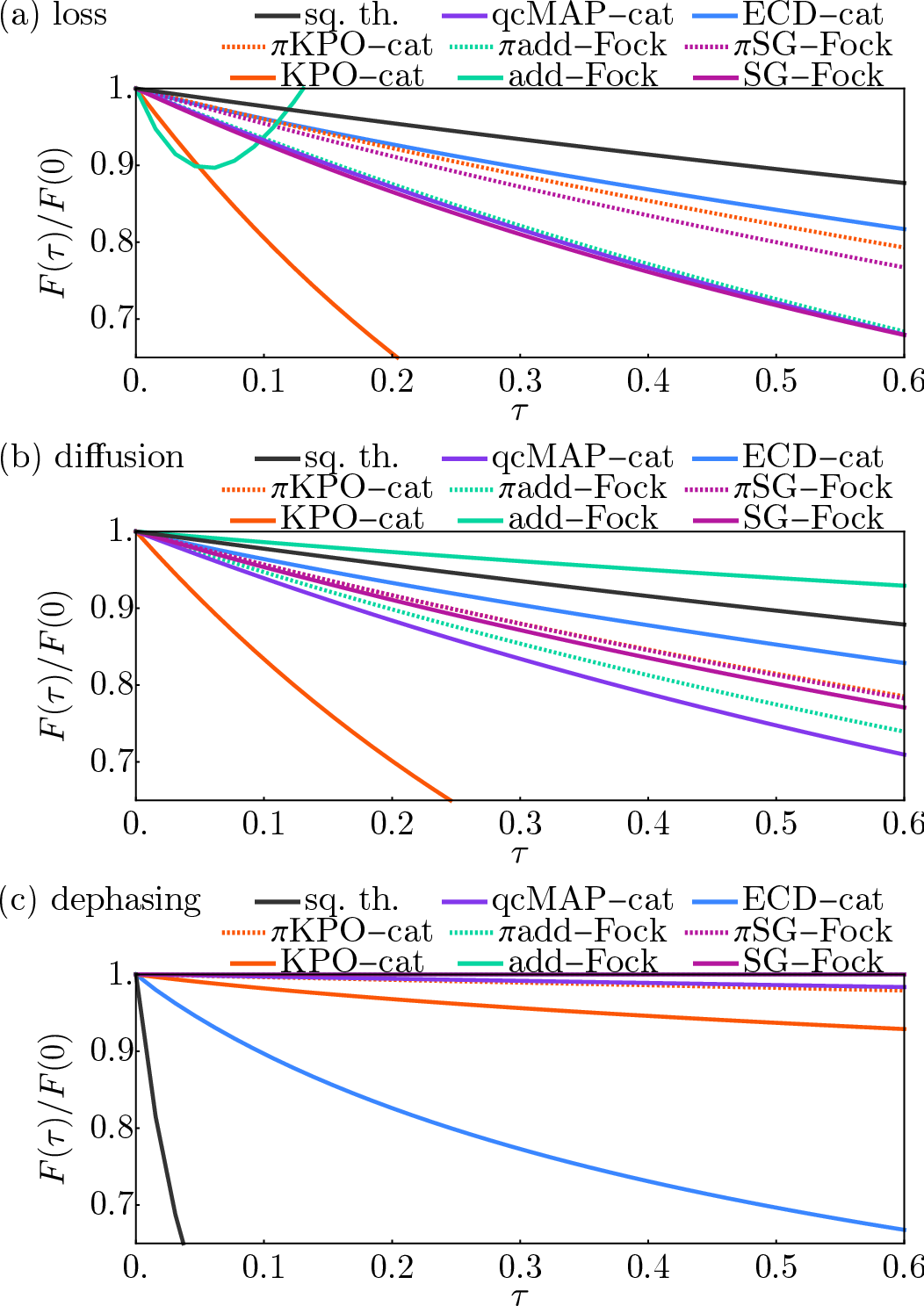
Figure 6: Comparative decay of QFI for various hot-state resources under (a) bosonic loss, (b) heating, and (c) dephasing; ECD-cat states show maximal robustness under loss and heating at fixed QFI.
Key findings include:
- Parity-Engineered States: Fragile to parity-breaking channels (loss, heating), as population leaks to the opposite ladder, eroding the structure supporting QFI. Resistant to number dephasing, as Fock-diagonal parity states have vanishing initial dephasing susceptibility.
- Branch-Coherence-Dominated States: ECD-cats lose QFI mainly via suppression of branch visibility; both loss and motional heating act strongly for large cat size, consistent with the quadratic scaling of susceptibility with the coherent separation. However, such states can reach higher QFI for fixed total preparation time due to initial resource location in the branch coherence rather than energy alone.
- Protocol Comparisons: For fixed initial QFI, ordinary KPO cats are especially fragile to loss due to large mean occupation. Parity-filtered KPO and ECD cats provide intermediate and superior robustness, respectively, under loss and heating, but ECD cats are more sensitive to dephasing.
Optimal Sensing Strategies: To Cool, or Not to Cool?
The core operational question—whether to invest resources in initial cooling or to prepare hot metrological states directly—is addressed by formulating and optimizing the figure of merit: QFI generated per unit total experimental time. The optimization incorporates cooling time, state-preparation time, and decoherence effects.
Full master-equation simulations for realistic trapped-ion experimental parameters confirm the analytical predictions (Figure 7): maximizing branch-coherence per unit protocol time often renders extensive pre-cooling non-optimal.
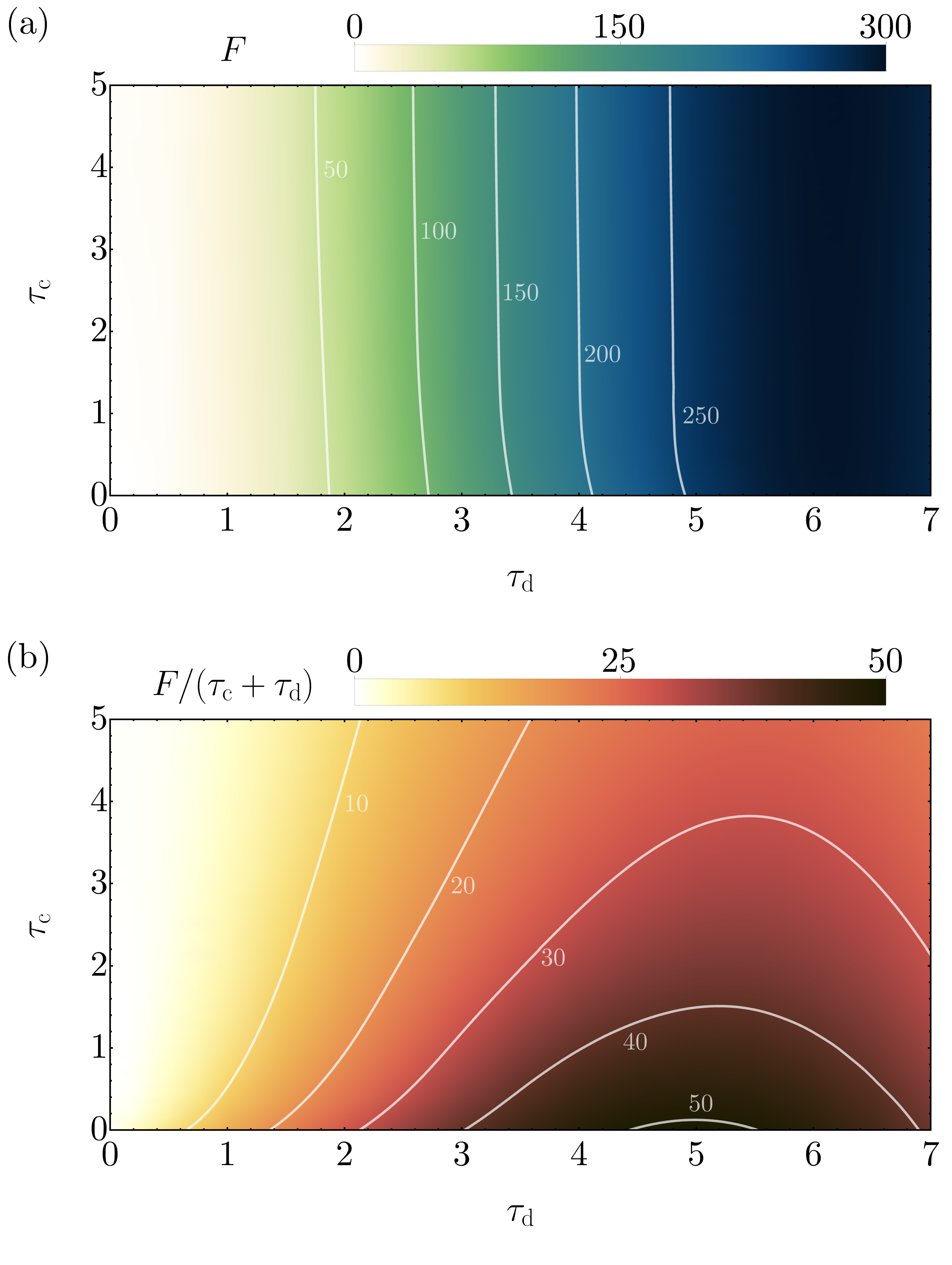
Figure 7: (a) QFI as a function of cooling and cat-generation time in a trapped-ion model. (b) QFI per protocol time; optimal sensitivity is obtained with minimal cooling and finite preparation time in the branch-dominated regime.
The optimal protocol involves preparing a large-separation (large α) hot cat in minimal cooling time, up to a point where additional preparation time incurs decoherence exceeding sensitivity gain. Cooling investment is only beneficial when the thermal (local) contribution to QFI is comparable to the branch (interference) term, or when decoherence/readout is thermal-occupation dependent.
Implications, Outlook, and Theoretical Connections
This work establishes that quantum-enhanced bosonic sensing does not require ground-state initialization, provided the metrological resource is appropriately structured within the thermal ensemble. The location of resource—parity sector or branch coherence—determines both sensitivity and the principal noise channels dictating fragility. This paradigm parallels noiseless subsystem and decoherence-free subspace approaches, leveraging symmetry or relational degrees of freedom instead of requiring global control over the full Hilbert space.
The hot-state approach is relevant to a broad class of platforms, including ions, circuit QED, optomechanics, and levitated systems, where full ground-state cooling is costly or impractical. The findings suggest both practical routes to more efficient quantum sensors and conceptual links to quantum information theory and symmetry-protection mechanisms.
Prospective research avenues include extending these concepts to phase-insensitive and distributed estimation, optimizing hot-state generation via Hamiltonian engineering, and the study of hot-state protocols in nonlinear and many-body bosonic systems.
Conclusion
Through analytical and numerical analysis, this study demonstrates that thermal occupation in bosonic systems can be transmuted from a source of metrological suppression into a resource when the sensing protocol is tailored to protect or structure quantum coherence in key subspaces. The results prescribe that maximal metrological utility is attained by engineering the location of quantum resources, rather than insisting on global state purity. This reframing has both immediate experimental relevance and deep theoretical significance for continuous-variable quantum metrology and the architecture of quantum sensors.

