- The paper demonstrates that multi-time quantum correlations in black hole evaporation explicitly encode pre-collapse information, challenging conventional thermal descriptions.
- It employs the Quantum Temporal Probabilities formalism and complex analysis in a 1+1-dimensional collapse model to resolve limitations of the Hawking-Wald theorem.
- Results show that energy-resolved, non-stationary oscillatory joint detection probabilities reveal information hidden in single-time thermal observables.
Introduction
The investigation of the black hole information paradox has historically relied on the thermality of Hawking radiation, whose predictions are rooted in the Hawking-Wald (HW) theorem. This formalism, however, primarily constrains single-time observables evaluated at null infinity. The paper "Beyond the Unruh vacuum: multi-time correlations in black hole collapse and evaporation" (2606.13383) demonstrates that such a formulation overlooks crucial structure in temporal quantum correlations accessible through multi-time measurements. By leveraging the Quantum Temporal Probabilities (QTP) formalism within a two-dimensional black hole collapse and evaporation model, the authors rigorously establish that multi-time quantum field correlations retain explicit dependence on the pre-collapse state—offering a concrete mechanism by which information survives the apparent thermalization of Hawking radiation.
Limitations of the Hawking-Wald Theorem
The cornerstone of traditional analyses is the HW theorem, which asserts that for observers at future null infinity, the reduced quantum field state generated by black hole evaporation is precisely thermal at the Hawking temperature. Consequently, the reduced density matrix for single-time observables at late asymptotic times is Gibbsian; this property underpins entropy-based arguments (e.g., the Page curve) and predictions of information loss. The authors dissect the split of the field Hilbert space corresponding to Cauchy surfaces and highlight that reduced density matrices encode only single-time (Markovian) statistics. They show that such reductions obscure the system–environment entanglement dynamics crucial for multi-time (non-Markovian) measurements, which makes the paradox’s conventional statement incomplete—multi-time correlations are generically non-thermal.
The QTP Framework and Model Specification
The authors employ the QTP program to assign joint probabilities to n detection events via $2n$-point field correlators, generalizing Glauber theory to curved spacetime QFT. A central result is that the probability for single or double excitation of Unruh-DeWitt detectors at given spacetime points is determined by functionals of the basic Wightman and higher $2n$-point correlation functions.
The concrete setting is a collapsing null shell in a 1+1-dimensional spacetime, with field quantization carried out using positive-frequency modes selected at past null infinity, supplemented by Dirichlet boundary conditions at the origin. The system is solved exactly, with the key function p(u) capturing the mapping from retarded coordinate u to the shell’s internal null coordinate; p(u) encodes pre-collapse details (parametrized by D0, a function of the shell’s initial data and collapse velocity).
Single-Time Detection and Emergence of Thermality
Analyzing a static detector outside the collapsing black hole, the authors confirm that the probability of single excitation, P1(t,E), displays universal thermality at late times:
P1(t,E)=2E(e8πME−1)1
The calculation explicitly reveals that pre-collapse-dependent terms in the Wightman function do not contribute to the static detector’s late-time signal. This is directly in line with the HW theorem: asymptotic detection rates become insensitive to the initial state, provided one considers only single-time observables.
The crucial departure from standard lore emerges from the analysis of joint excitation probabilities, P2(t1,E1;t2,E2), and the second-order coherence function $2n$0. The authors decompose $2n$1 into three additive contributions:
- $2n$2: the Unruh vacuum (baseline) term, functional only of the two-point functions appropriate to an eternal black hole in the Unruh vacuum
- $2n$3: non-memory corrections, independent of initial state, not present in the Unruh vacuum
- $2n$4: memory contributions, carrying explicit dependence on the pre-collapse parameter $2n$5
They show that late-time multi-time correlators, particularly $2n$6, are sharply sensitive to $2n$7. This manifests as energy-resolved, non-stationary oscillatory correlations between detector events, with a support structure in the $2n$8 space that is not present in either thermal or Unruh vacuum expectations.
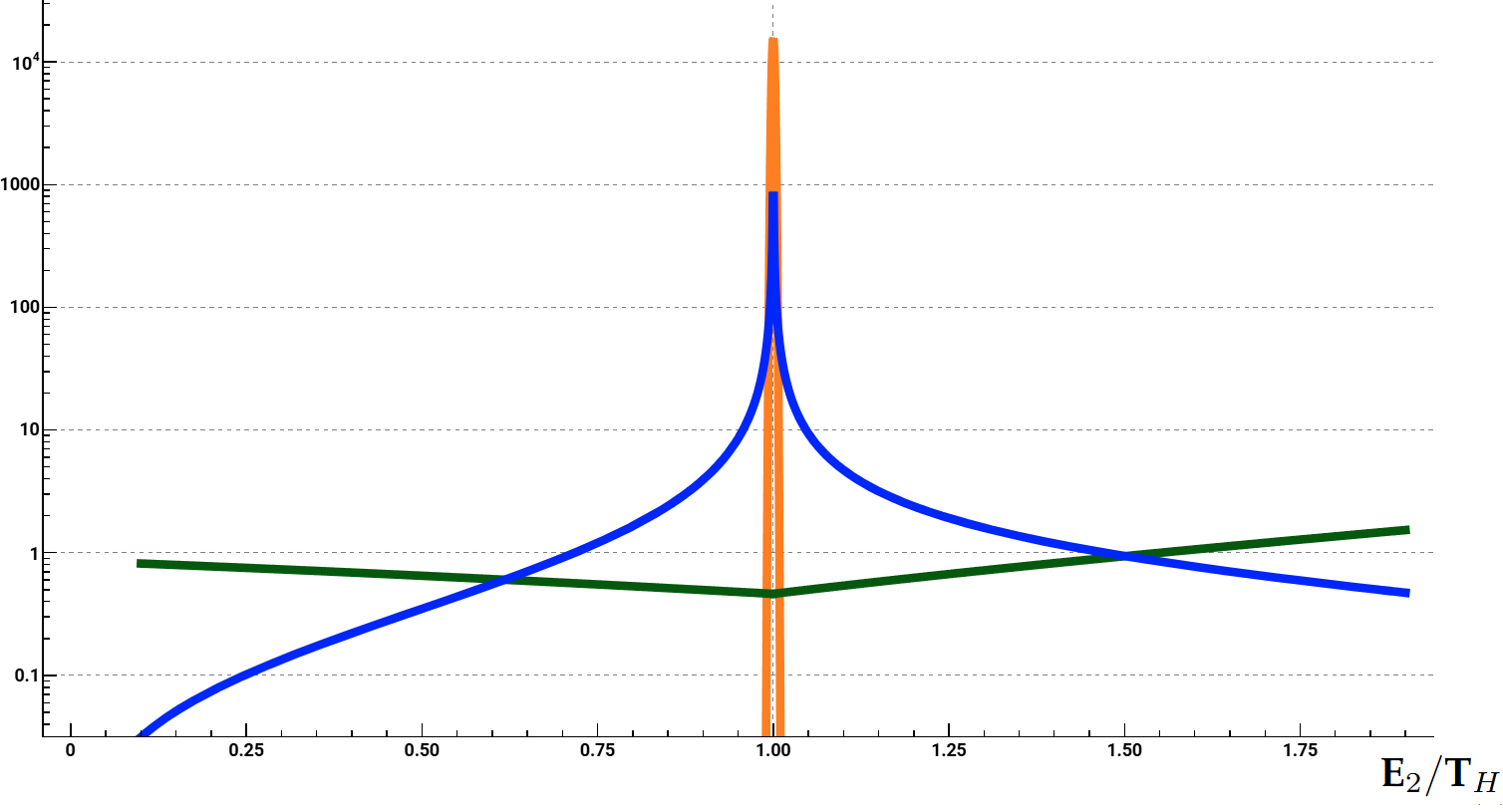
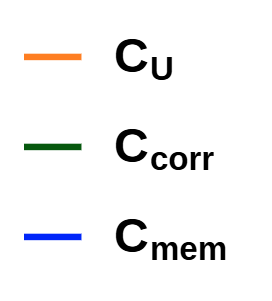
Figure 1: Amplitudes of the three contributions $2n$9, $2n$0, and $2n$1 to the second-order coherence function, as a function of $2n$2 with fixed $2n$3.
The peak and structure of $2n$4 are directly modulated by $2n$5—an explicit gauge of the pre-collapse configuration. Importantly, the memory term is not parametrically suppressed relative to the Unruh contribution at late times, and its energy structure ensures that it contributes only in cross-correlations ($2n$6), a regime not accessible to conventional single-time observables.
Analytical Structure and Integration Techniques
The analytic tractability of the model is enabled by contour deformation and complex analysis, with several multi-dimensional Fourier-type integrals over the detector switching times. The mathematical structure features infinite families of branch points, branch cut contributions, and uses special functions derived from the analytic properties of the Wightman function and logarithmic integrals. The non-trivial dependence on $2n$7 is traced to the functional form of $2n$8 in the wavepacket overlap integrals.
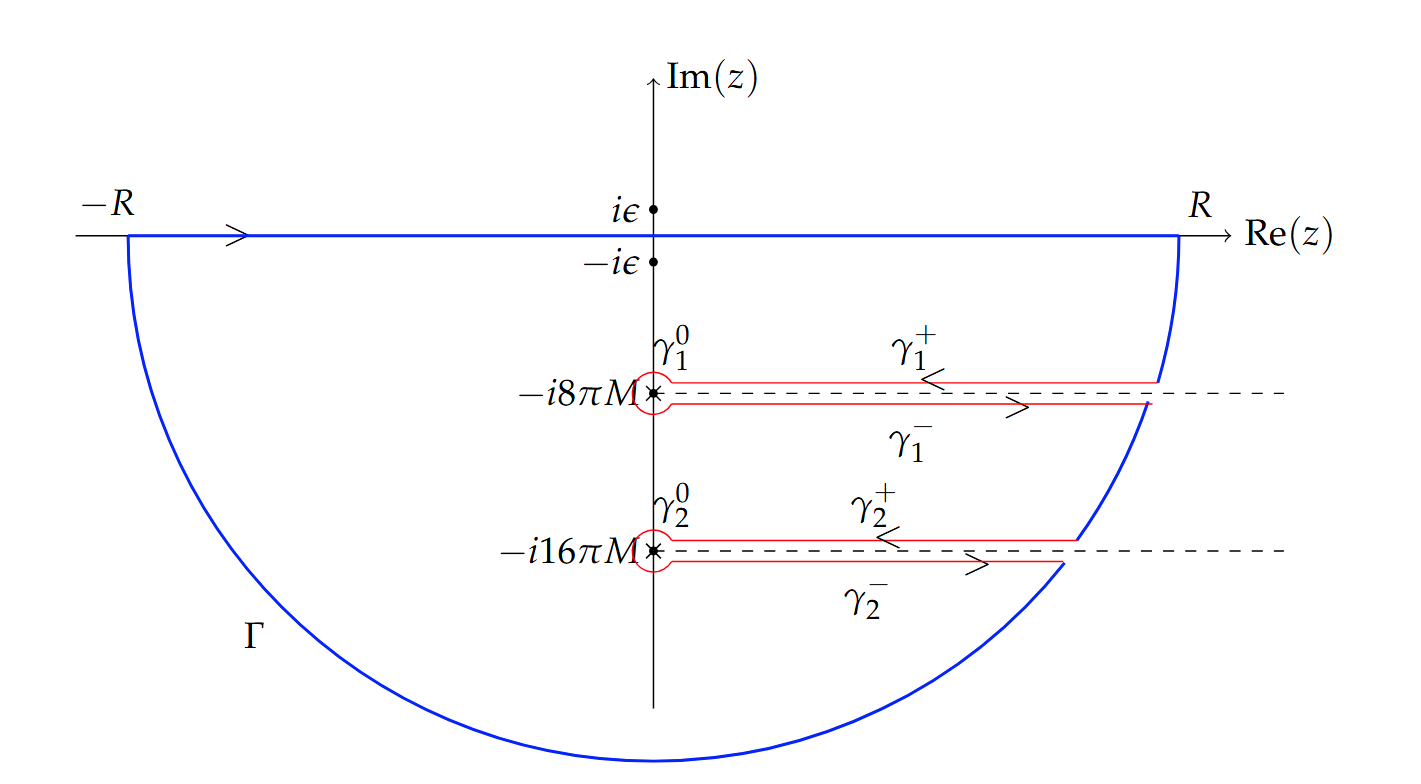
Figure 2: The contour used for the integration of $2n$9 via complex analysis, showing avoidance of branch cuts from logarithmic singularities.
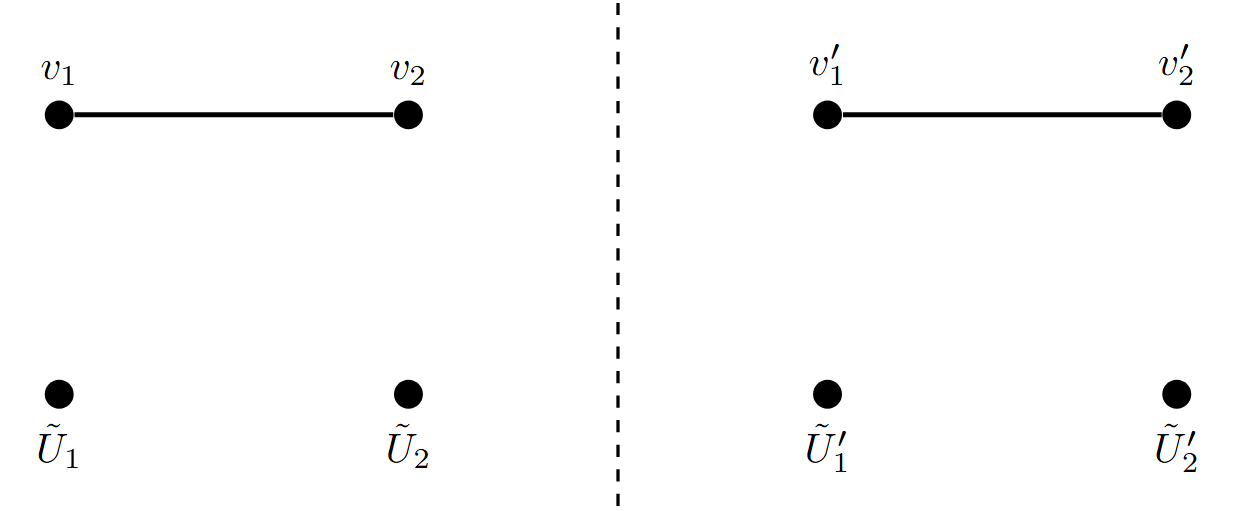
Figure 3: Diagrammatic representation of double-logarithmic integral contributions in the joint probability, essential in classifying the Unruh vs. non-Unruh components.
Physical Interpretation and Implications
This work demonstrates that, contrary to entropy-based or single-time detector arguments, the quantum field theoretical description of black hole evaporation admits accessible temporal quantum correlations carrying explicit imprints of initial-state information. The authors clarify that this information is not of the "fine-grained entropy" or "entanglement wedge" type; rather, it is physically extracted via multi-time, energy-resolved detector measurements—i.e., via quantities definable and, in principle, measurable within standard QFT in curved spacetime.
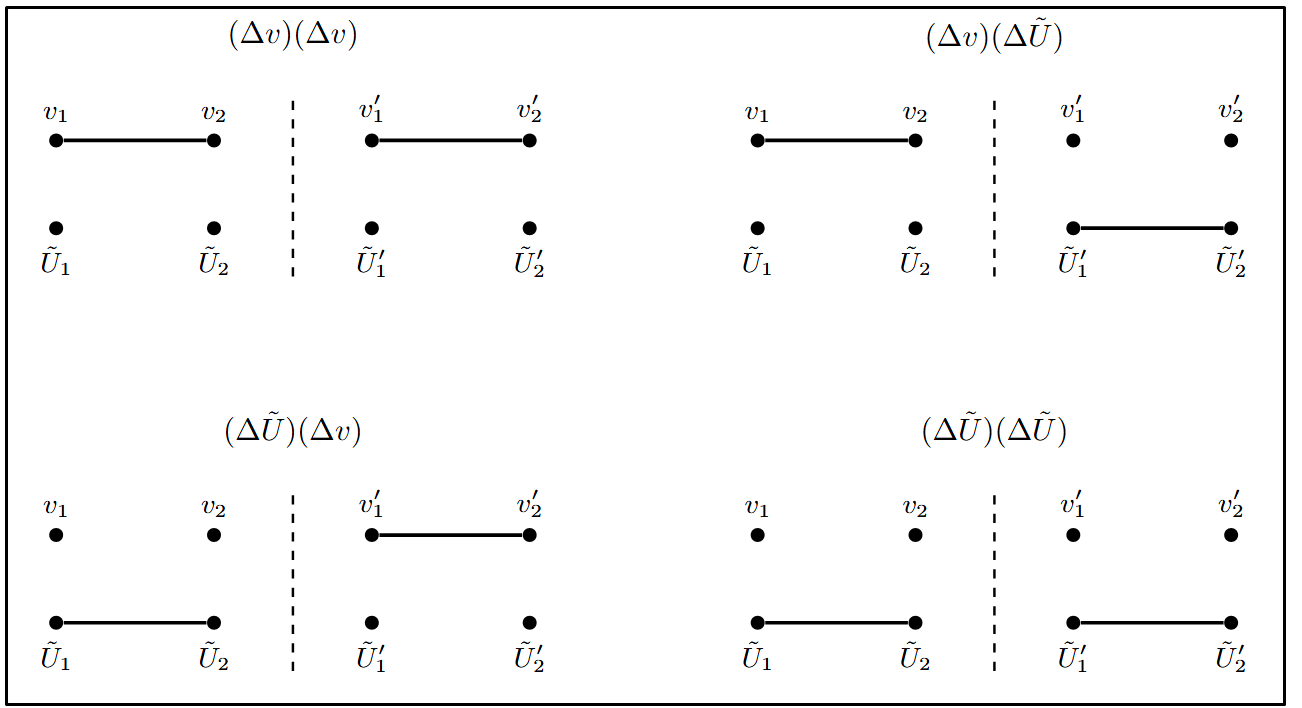
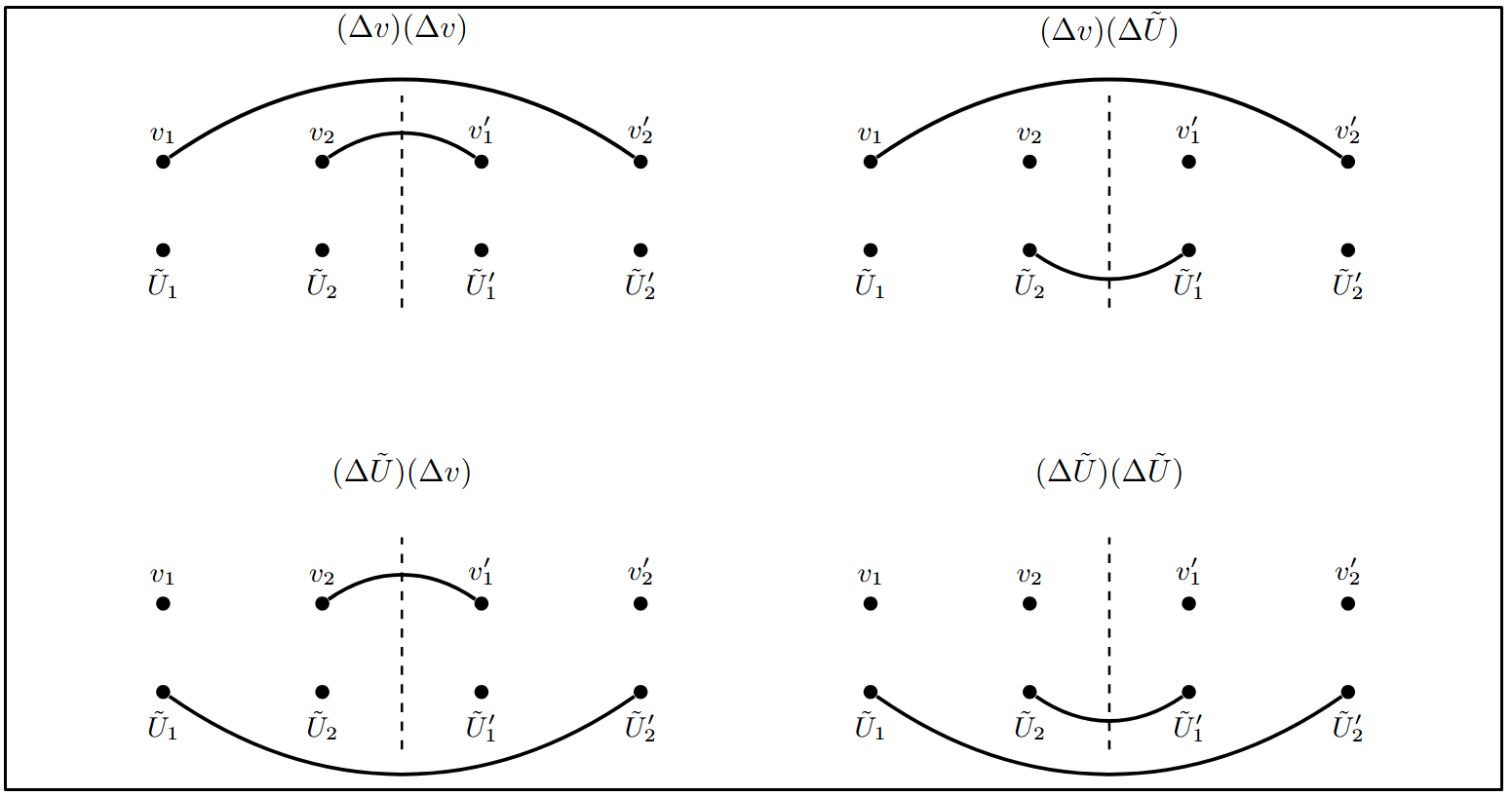
Figure 4: Schematic showing the Unruh-vacuum (thermal) and non-Unruh (memory) correlator structures in the joint detection probability.
While practical recovery is obstructed by the non-stationary and rapidly oscillating phase structure, theoretically the information is present and not eliminated by quantum gravitational or nonlocal phenomena. The authors emphasize that attempts to resolve the information paradox or to justify unitarity loss solely via the thermality of the reduced state are fundamentally incomplete without considering higher-order temporal correlations.
Future Perspectives
The results suggest that the landscape of information retention in QFT on curved backgrounds is richer than previously formulated. The fine structure of temporal correlators, including their dependence on initial data, may play a central role in clarifying the black hole information problem. Extensions to higher dimensions, inclusion of gravitational backreaction, and the role of environmental decoherence in the extraction (and possible obfuscation) of memory terms in realistic detection schemes constitute compelling extensions of the present analysis. The explicit QTP framework provides a rigorous operational toolkit for the systematic investigation of information persistence mechanisms beyond the reach of traditional S-matrix or entropy-based approaches.
Conclusion
This work establishes that multi-time quantum field correlations in black hole evaporation encode explicit, measurable traces of pre-collapse information. Such information is inaccessible to single-time observables and eludes the constraints of the Hawking-Wald theorem. Thus, fundamental claims regarding black hole unitarity, entropy increase, and the completeness of thermalization require a revision that incorporates the full hierarchy of quantum correlations. The multi-time approach opens new pathways to address the information paradox and guides future theoretical and experimental investigations of quantum fields in dynamical spacetime backgrounds.