Theoretical Study for Generating Optical GKP State via a Single-Photon-Added Squeezed Vacuum
Published 9 Jun 2026 in quant-ph, physics.app-ph, and physics.optics | (2606.12467v1)
Abstract: A theoretical framework is developed to analyze the generation of the optical GKP state using a single-photon-added squeezed vacuum. This state, defined by the squeezing parameter $r$, is injected into a 50:50 beam splitter, and the optical GKP state is obtained through conditional measurement at one output port. The single-photon-added squeezed vacuum is especially prominent in this context because it provides a simpler and more experimentally accessible ingredient than Schrodinger cat states, while conditional measurement ensures projection onto a state that closely approximates the finite-energy GKP form. Fidelity is employed to quantify this closeness, and the analysis demonstrates that the scheme achieves a maximum fidelity of 85% at a squeezing level of $3.76 \ \text{dB}$. This performance surpasses approaches based on squeezed optical odd Schrodinger cat states, underscoring the single-photon-added squeezed vacuum as a practical and effective pathway toward fault-tolerant photonic quantum computing.
The paper demonstrates a method for generating optical GKP states using conditional measurements on photon-added squeezed vacua, achieving around 85% fidelity with moderate squeezing.
It employs a beam splitter and optimized phase settings to transform the single-photon-added squeezed vacuum into a negative-parity GKP candidate state.
The proposed protocol simplifies resource requirements compared to cat-state approaches, offering a scalable pathway for fault-tolerant continuous-variable quantum computing.
Theoretical Analysis of Optical GKP State Generation via a Single-Photon-Added Squeezed Vacuum
Introduction
This work provides a rigorous theoretical treatment of the probabilistic generation of optical Gottesman–Kitaev–Preskill (GKP) states through a conditional measurement protocol, using a single-photon-added squeezed vacuum as a resource state. The motivation arises from the need for practical, experimentally accessible methods for the creation of high-fidelity optical GKP states, which are foundational for fault-tolerant quantum error correction in continuous-variable quantum information processing. Prior approaches employing optical Schrödinger cat states face significant experimental barriers. By substituting the cat state with a single-photon-added squeezed vacuum—simpler to synthesize experimentally—the presented framework proposes a more pragmatic path toward photonic GKP encodings with promising achievable fidelities.
Mathematical Structure and Physical Context of GKP States
GKP states encode discrete variable (qubit) information into the continuous variables of a bosonic mode, stabilizing against displacement errors via non-commuting displacement operators. The ideal GKP codewords are nonphysical Dirac combs of period 2π, exhibiting infinite energy and zero width. Physical realizability is restored via convolution with a finite-width Gaussian envelope, yielding normalizable, finite-energy GKP states (Figure 1).
*Figure 1: Physical GKP states from the Gaussian envelope approximation, showing basis states ψGKP′0(x) and ψGKP′1(x). *
The stabilizer formalism for optical GKP states leverages the identification of the logical displacement operators D^(α), D^(β), with enforced anticommution analogous to the Pauli operator structure. The corresponding physical GKP states, after envelope regularization, exhibit a comb structure modulated by Gaussians with variable width parameter Δ.
Single-Photon-Added Squeezed Vacuum as a GKP Resource State
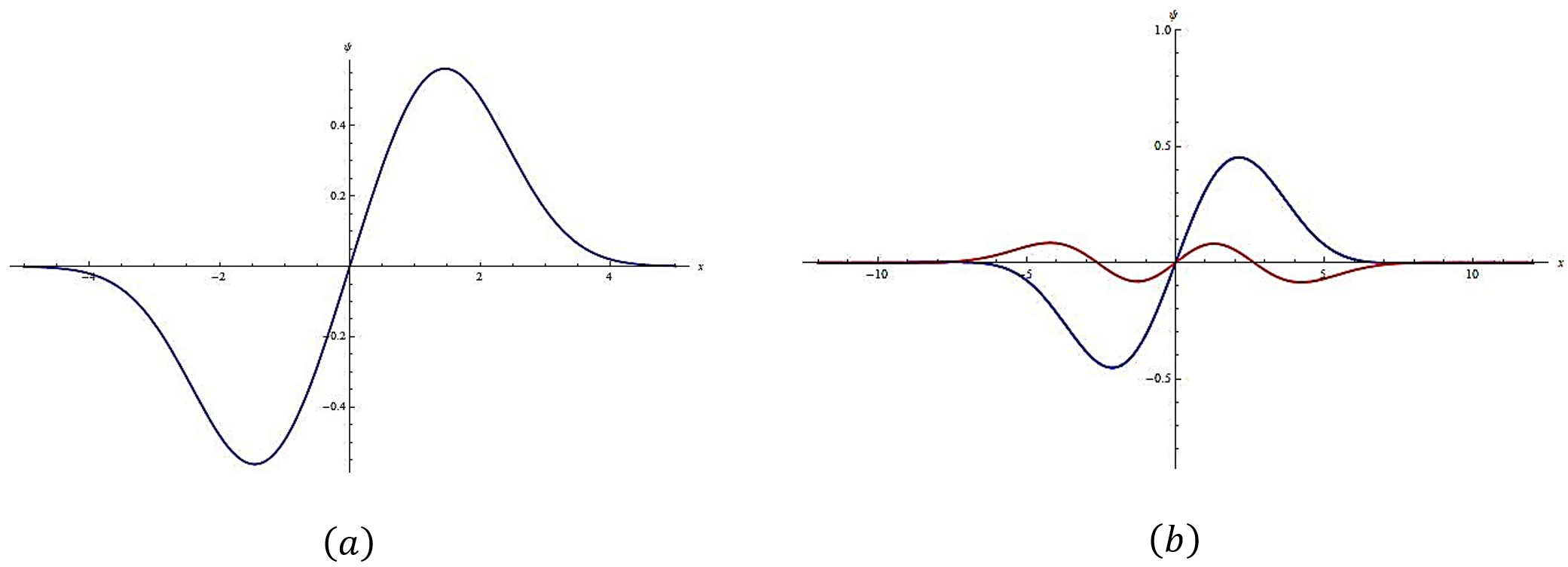
The single-photon-added squeezed vacuum is constructed by applying a bosonic creation operator to the squeezed ground state. For squeezing parameter r and phase ϕ, the analytical form involves odd quantum harmonic oscillator eigenstates. This state approximates an optical Schrödinger cat state (odd parity) for specific parameter regimes. Compared with the cat state, however, single-photon-added squeezed vacua are more experimentally tolerant—particularly for photon addition with modest squeezing.
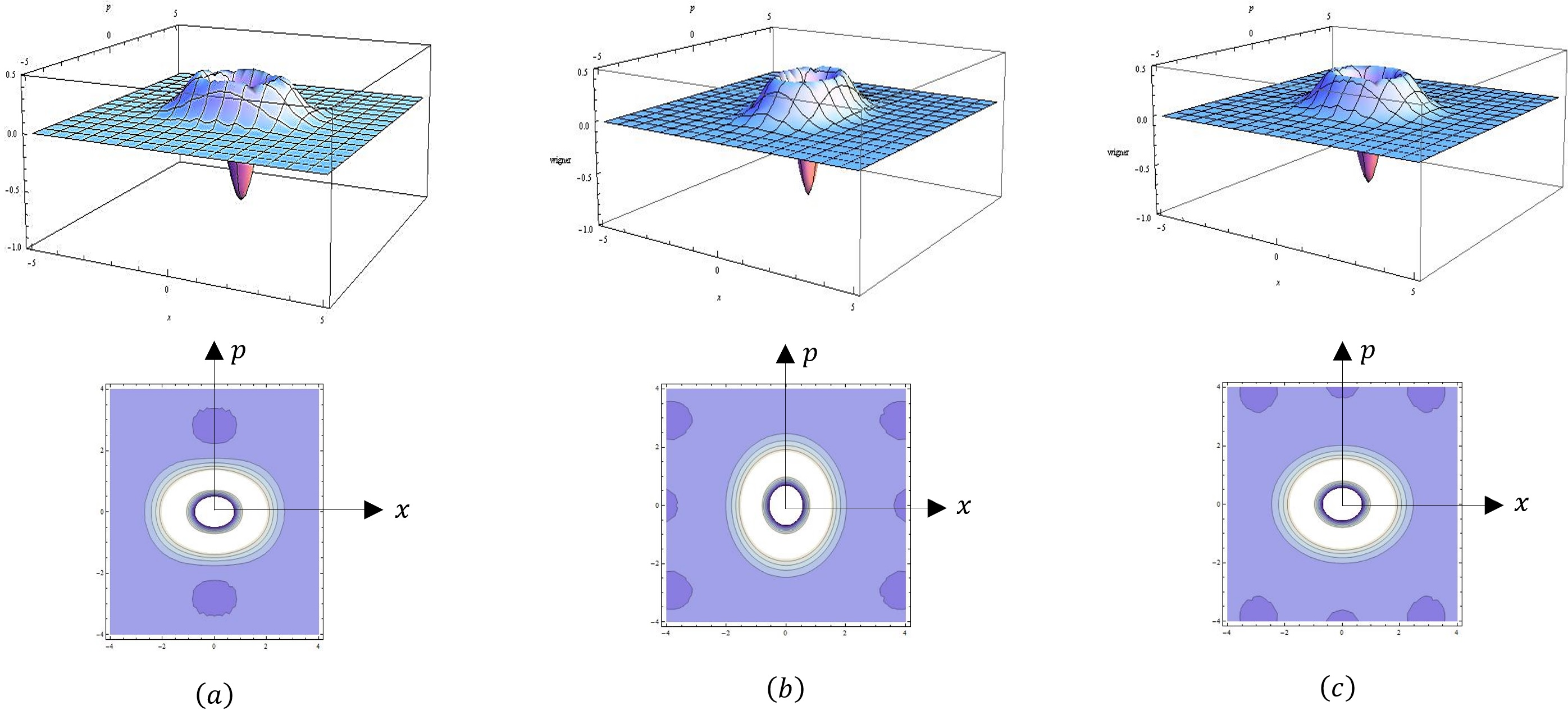
The comparison of phase-space structures reveals that setting ϕ=π optimizes resemblance to the odd cat for GKP construction (Figures 2 and 3).
Figure 2: Comparison between the (a) odd Schrödinger cat state and (b) single-photon-added squeezed vacuum (ϕ=π/3).
Figure 3: Wigner functions for (a) the optical odd-Schrodinger cat state, (b) single-photon-added squeezed vacuum with ψGKP′0(x)0, and (c) with ψGKP′0(x)1.
Conditional Generation Scheme: Beam Splitter and Measurement Protocol
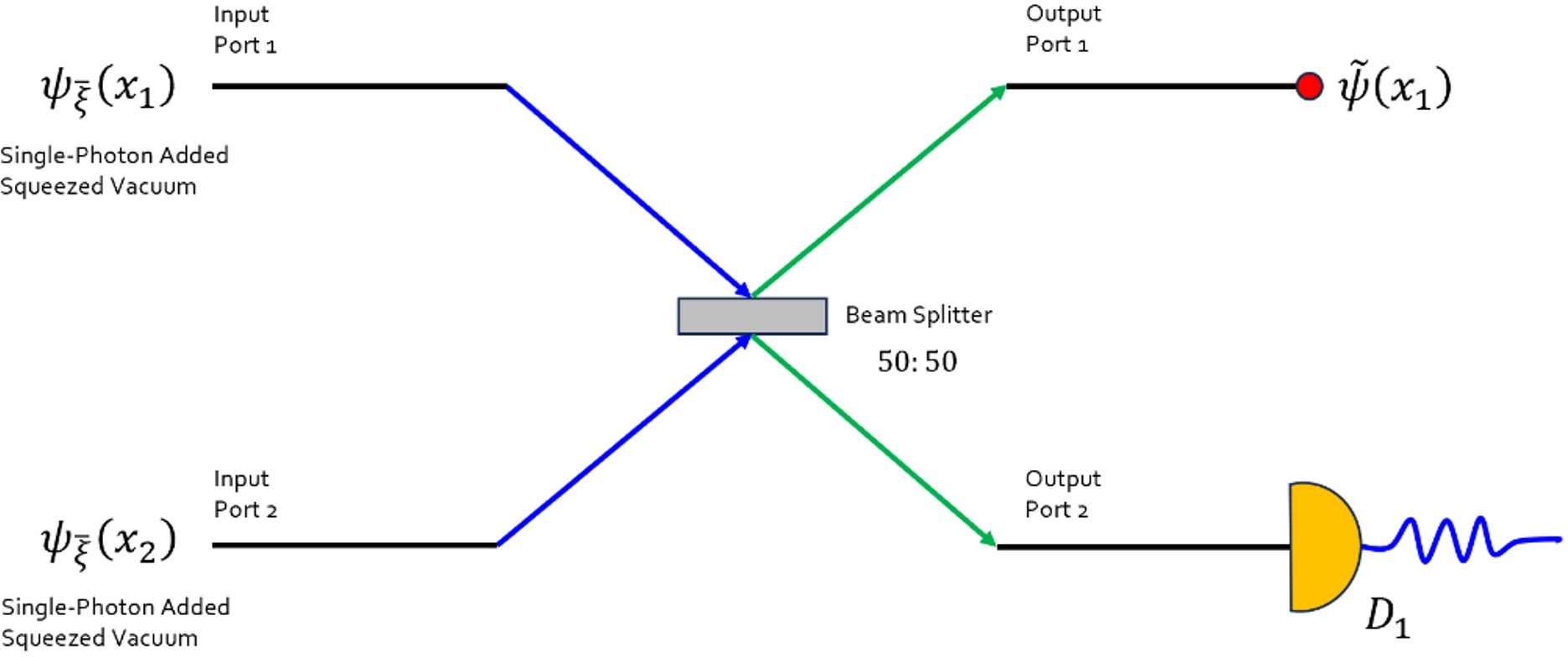
Following the Vasconcelos method, two identical single-photon-added squeezed vacua serve as inputs to a ψGKP′0(x)2 beam splitter. The output state is subjected to a conditional measurement (photon number detection or homodyne sampling) at one output port, projecting the state in the remaining mode onto a GKP candidate—now dependent only on the single squeezing parameter ψGKP′0(x)3. The mathematical framework encapsulates generalized coordinate transformations (Figure 4, Appendix), with the net effect of correlating the quadratures for optimal state engineering (Figure 5).
Figure 5: Schematic diagram for optical GKP state generation via two single-photon-added squeezed vacua, a ψGKP′0(x)4 beam splitter, and conditional measurement.
The resultant state, after conditioning, is a superposition dominated by odd Fock states with squeezing-imposed correlations, whose overall wavefunction approximates a negative-parity GKP codeword under suitable parameter tuning.
Structural and Morphological Analysis
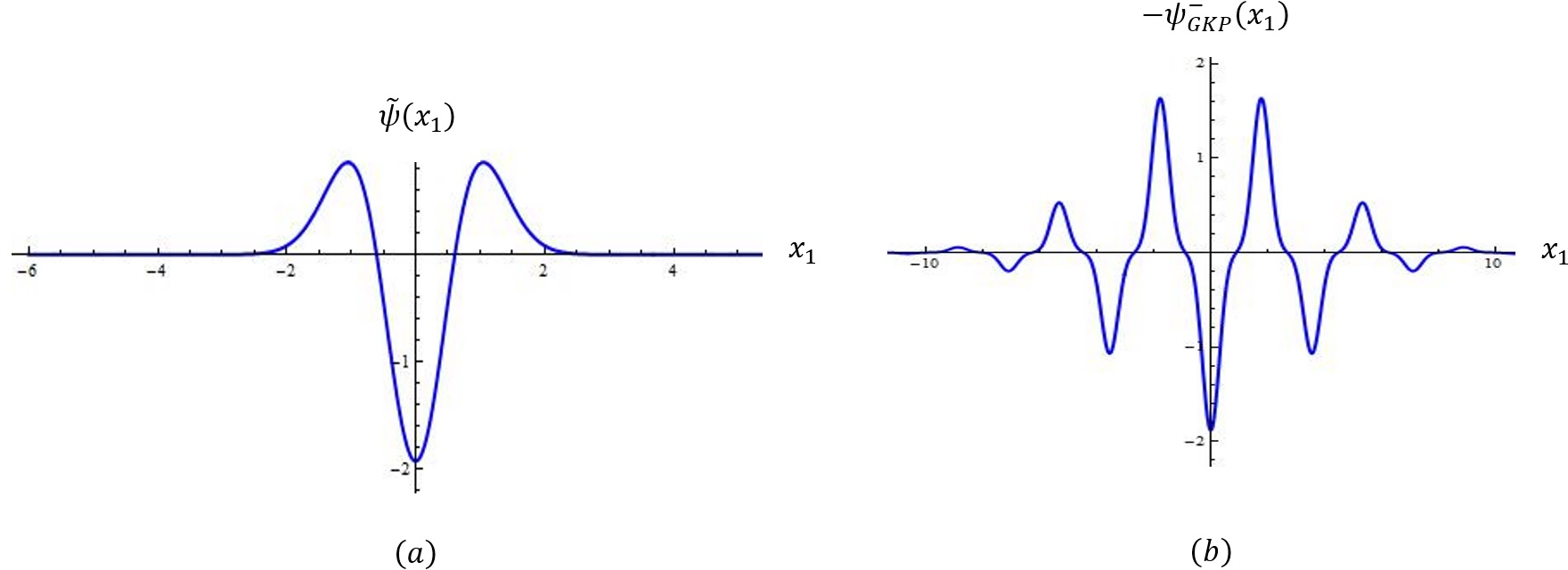
A comparative spectral and phase-space analysis is undertaken, contrasting the candidate output with the normalized, finite-energy GKP states. For moderate truncation (ψGKP′0(x)5 up to 8 and ψGKP′0(x)6 up to 10), the resultant wavefunctions and Wigner contours visually map onto the ideal negative GKP basis state, with minor shift and scaling differences adjustable via ψGKP′0(x)7 and ψGKP′0(x)8.
Figure 6: Wavefunction comparison between the conditioned output state and the negative GKP codeword (ψGKP′0(x)9, ψGKP′1(x)0).
Figure 7: Wigner function comparison between (a) the candidate state and (b) the negative GKP codeword, evidencing strong qualitative agreement in pattern.
Fidelity Benchmarking and Parameter Optimization
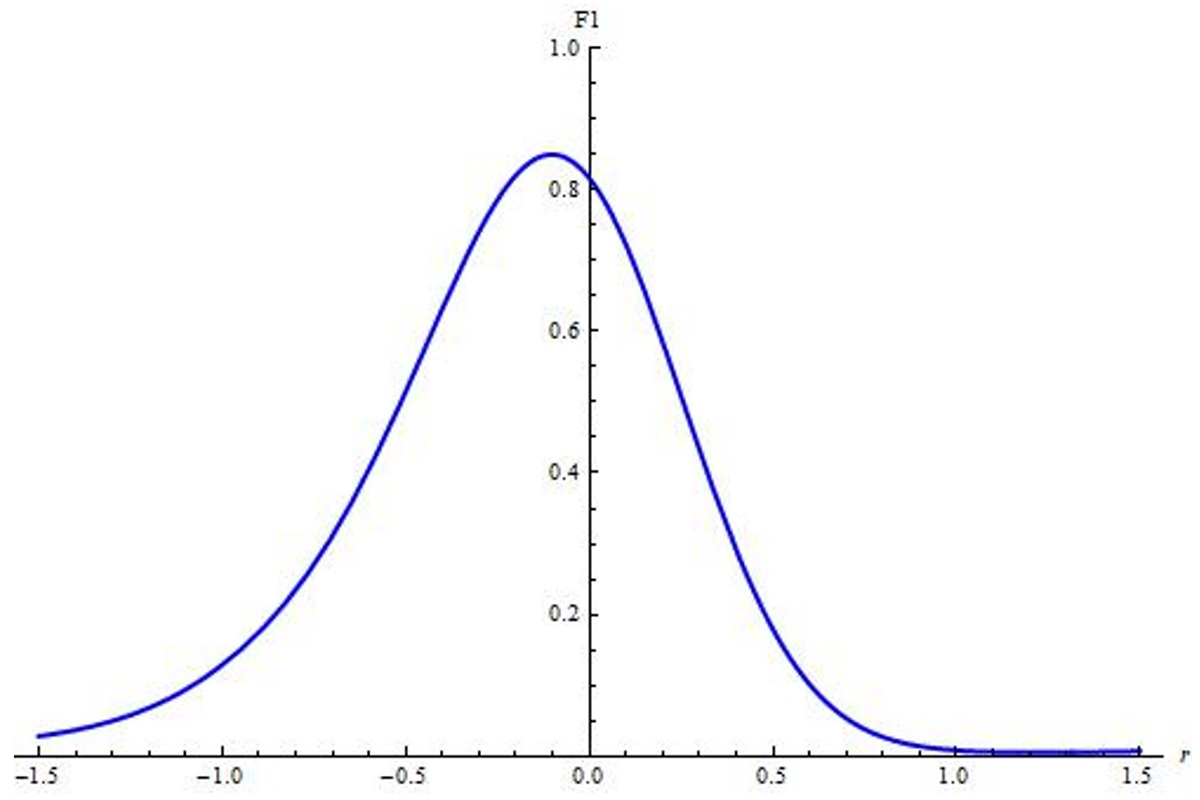
The fidelity metric ψGKP′1(x)1 quantifies the overlap between the single-photon-added squeezed vacuum protocol output and the negative GKP basis state. Constraining the envelope ψGKP′1(x)2 to yield states with three dominant peaks, a single-parameter fidelity landscape is mapped. The maximum practical fidelity, ψGKP′1(x)3, is realized at ψGKP′1(x)4 (3.76 dB of squeezing)—a regime within reach of current photonic experimental platforms.
Figure 8: Relationship between the fidelity ψGKP′1(x)5 and squeezing parameter ψGKP′1(x)6, confirming optimality at ψGKP′1(x)7.
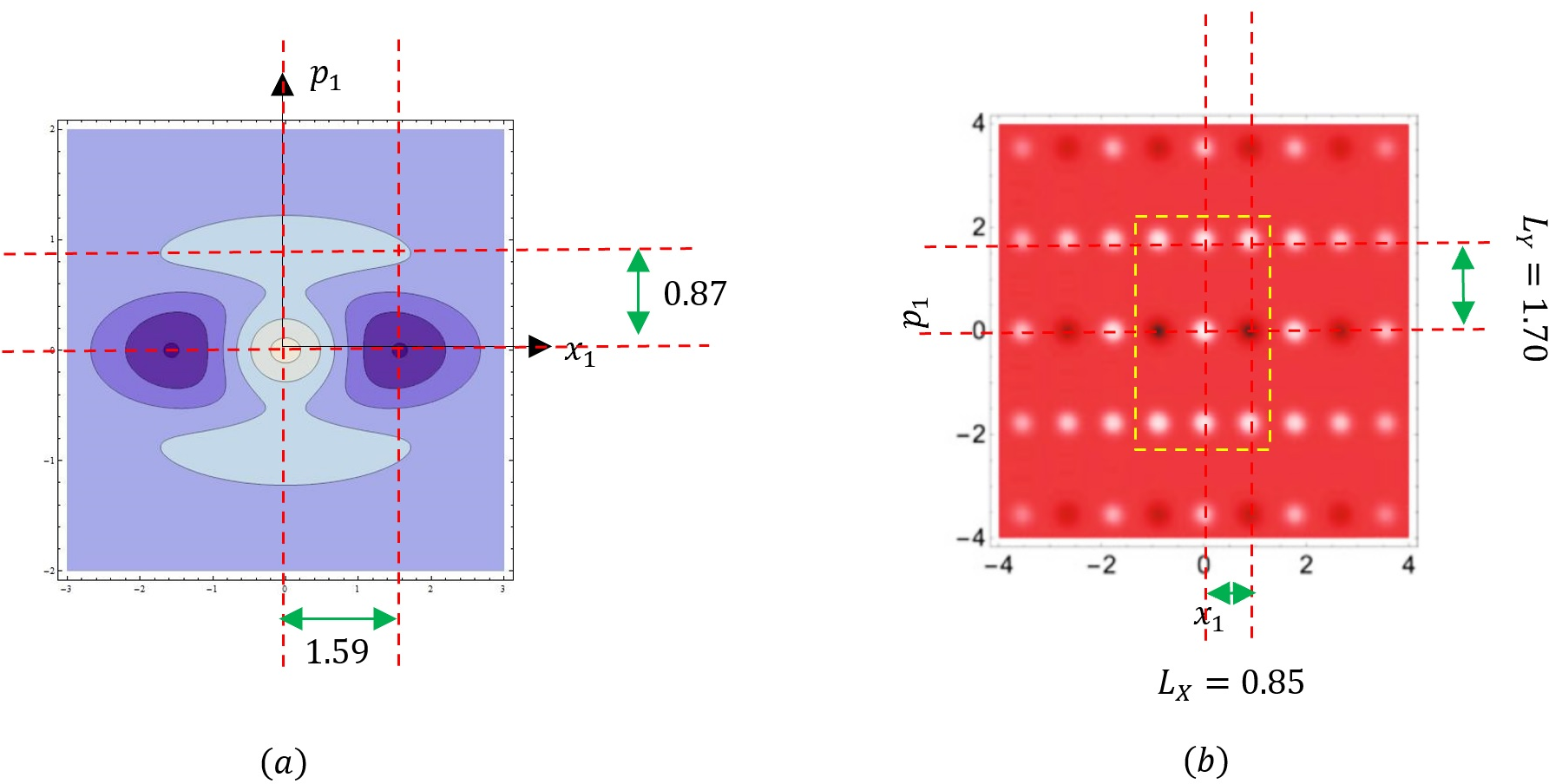
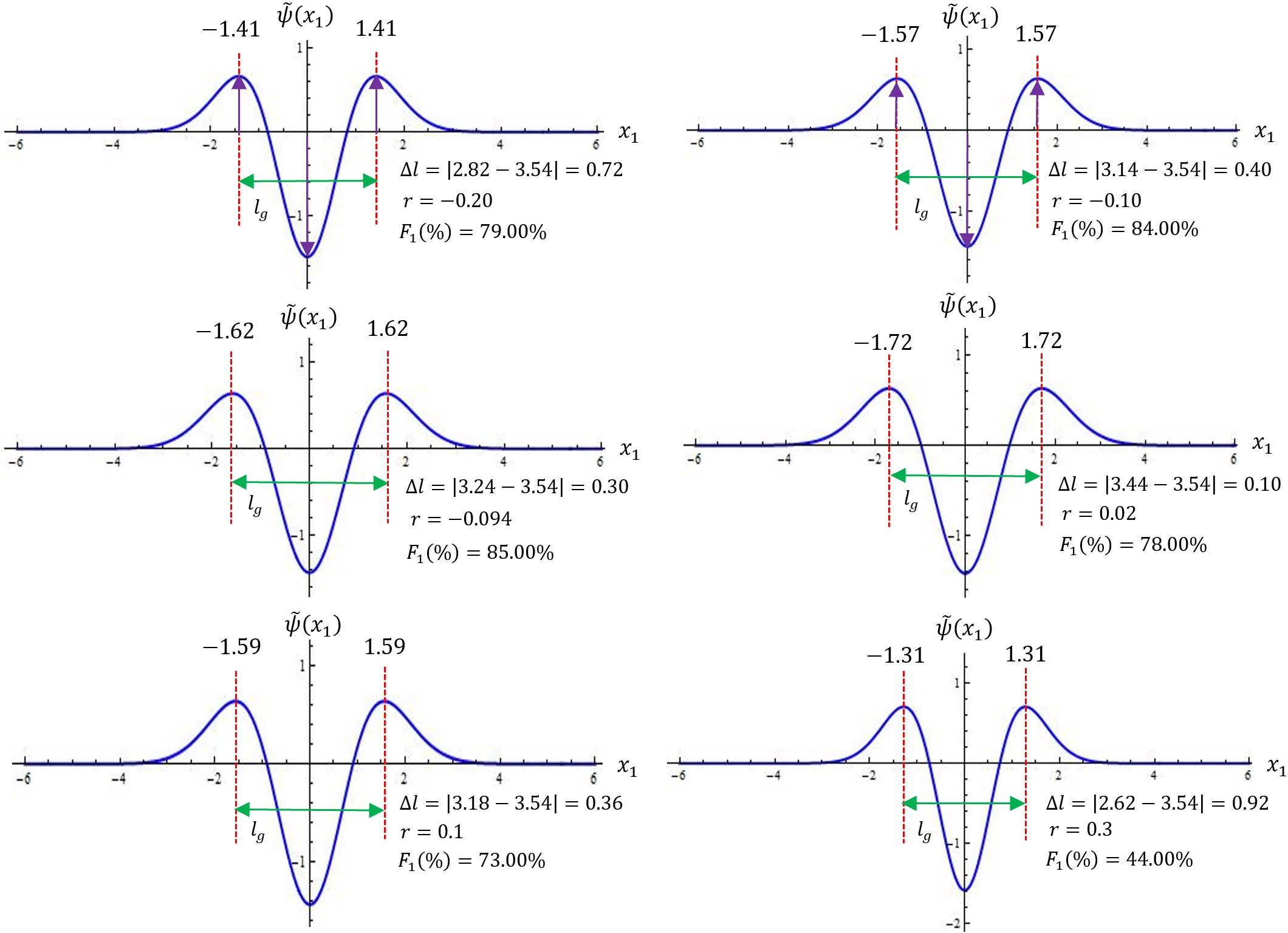
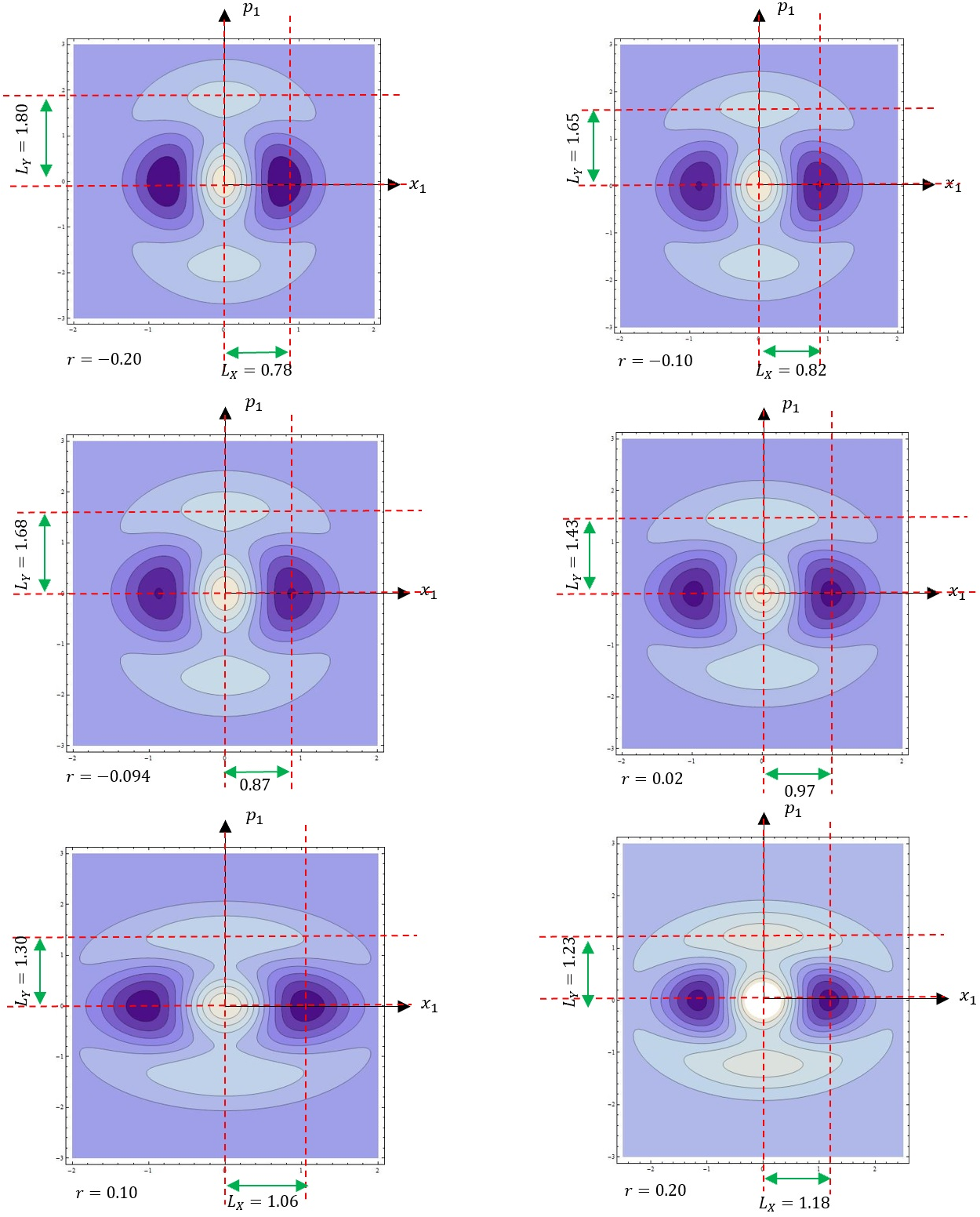
The fidelity remains above ψGKP′1(x)8 across a robust interval (ψGKP′1(x)9), with phase-space periodicity and inter-peak spacing of the candidate state closely matching the idealized GKP structure at optimality (Figures 10 and 11).
Figure 9: Output state wavefunctions for different D^(α)0, illustrating the effect of squeezing on periodicity and resemblance to GKP codewords.
Figure 10: Wigner function contours as a function of D^(α)1, confirming phase-space agreement at optimal squeezing.
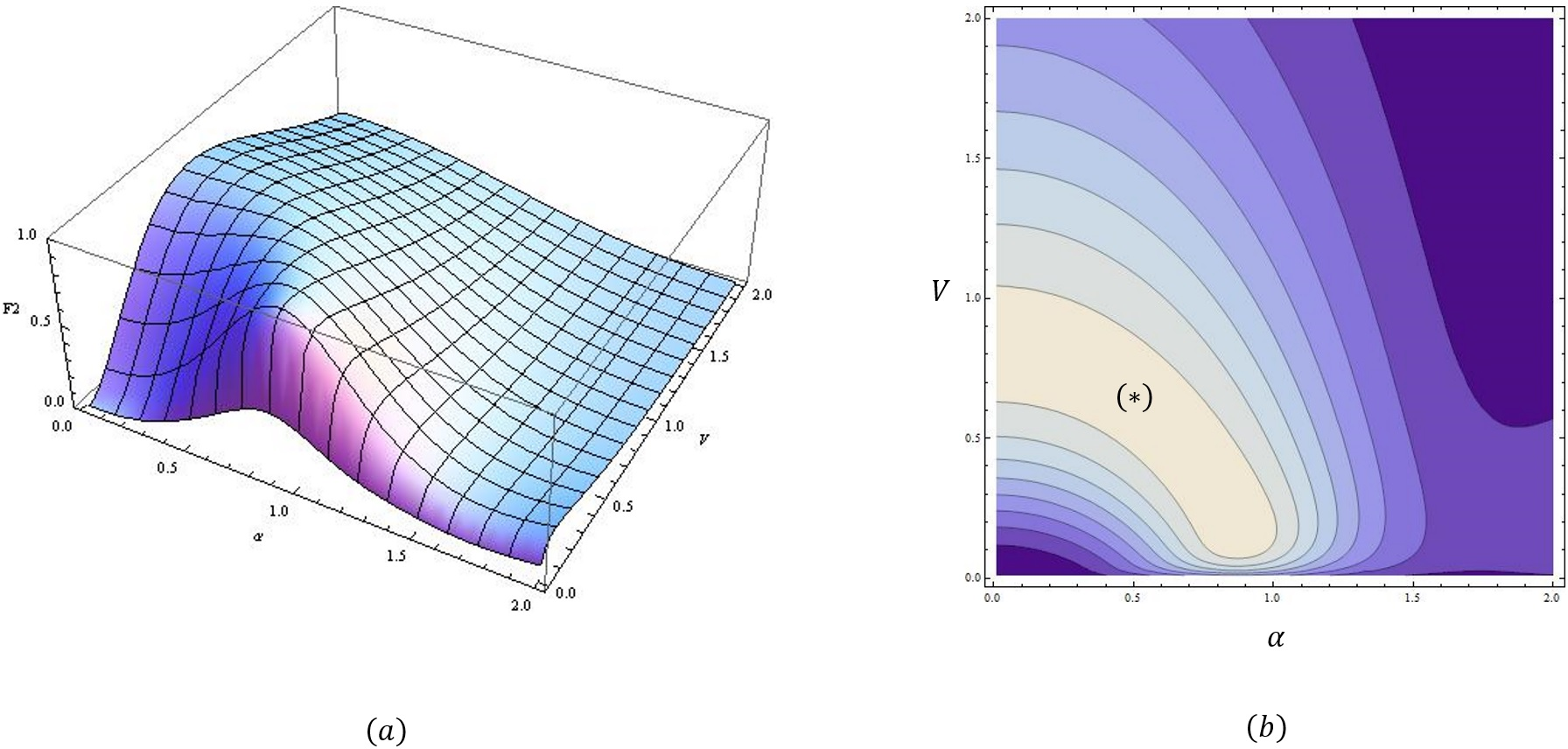
In direct comparison, the prior protocol utilizing squeezed optical odd Schrödinger cat states as input achieves only D^(α)2 and requires fine-tuning of both D^(α)3 and D^(α)4, often in regimes unattainable due to the experimental fragility of "cat kitten" states (Figure 11).
Figure 11: (a) Fidelity surface for the Vasconcelos method, and (b) 2D fidelity contour showing the limited accessible region for high fidelity.
Practical and Theoretical Implications
Primary implications include:
Demonstration that practical GKP state fidelities can be achieved using only moderate optical squeezing (3–4 dB), circumventing the demanding requirements for cat state generation and manipulation.
Simplification of resource state requirements—single parameter dependence on D^(α)5 versus multi-parameter regimes in alternative schemes—lowering the experimental threshold for fault-tolerant bosonic encodings.
Adequacy for error correction: a fidelity of D^(α)6 is competitive for near-term hardware, enabling implementation in cluster-state quantum computing and concatenated error-correcting codes.
The protocol's modular construction is compatible with further extensions: e.g., multi-photon-added squeezed vacuum inputs or hybrid concatenation with other continuous-variable encodings may enable fidelity enhancement and superior robustness against optical noise.
Conclusion
The analysis confirms that conditional measurement following the interference of two single-photon-added squeezed vacua enables the realization of high-fidelity optical GKP states, achieving D^(α)7 at moderate squeezing (D^(α)8dB). This protocol outperforms the more resource-intensive cat-state methods and is compatible with current experimental toolsets. As a result, it offers a scalable, experimentally viable pathway toward photonic GKP state preparation, advancing the development of measurement-based, fault-tolerant continuous-variable quantum computing. Future directions should address multi-photon addition, concatenations with other codes, and the integration of such sources into larger cluster-state or gate-based architectures for robust encoded quantum information processing (2606.12467).
References
Detailed references are provided in the original manuscript and include seminal works on GKP codes, optical continuous-variable quantum information, and state engineering techniques relevant for practical realization.
“Emergent Mind helps me see which AI papers have caught fire online.”
Philip
Creator, AI Explained on YouTube
Sign up for free to explore the frontiers of research
Discover trending papers, chat with arXiv, and track the latest research shaping the future of science and technology.Discover trending papers, chat with arXiv, and more.
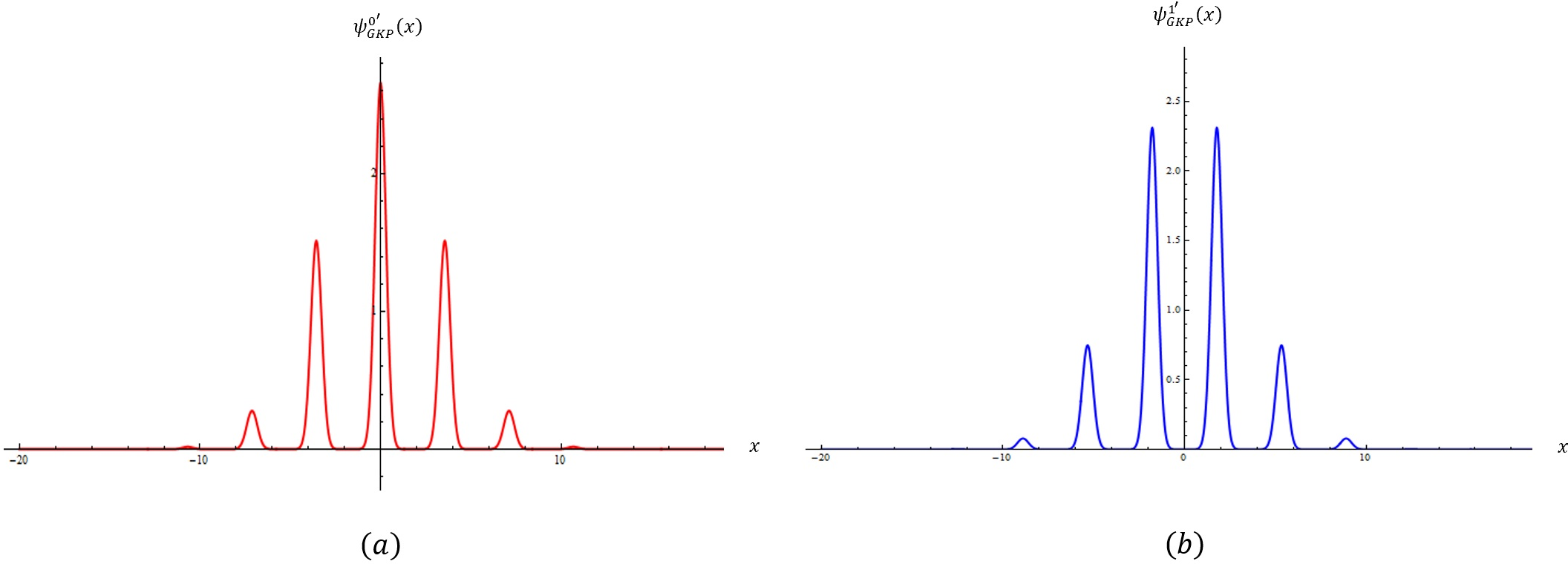 *Figure 1: Physical GKP states from the Gaussian envelope approximation, showing basis states