- The paper reveals that while 10,000 ERC-8004 agents are registered, only a tiny fraction exhibit full operational readiness across multiple layers.
- Methodology employs a layered binary indicator system and network analysis to map service records, reputation, and cross-chain activity.
- Findings highlight that robust decentralization remains elusive, emphasizing the need for broader, more active ecosystem participation.
Measuring Operational Readiness in ERC-8004 AI Agents: From Identity to Agent Economy
Introduction
The paper "From Agent Identity to Agent Economy: Measuring the Operational Readiness of ERC-8004 AI Agents" (2606.12128) provides an empirical evaluation of the ERC-8004 Ethereum standard for AI agent identities. The primary objective is to distinguish between mere on-chain identity registration and the actual operationalization of an agent economy, evaluating observable signals such as service provision, reputation formation, and networked interactions among agents, owners, and clients.
Conceptual Framework and Methodological Approach
Building on prior work on decentralized agent infrastructure, the paper develops a layered operational readiness framework where agents progress from basic identity registration—anchored in ERC-721 style NFTs—toward higher-order ecosystem participation. Readiness layers are defined hierarchically: identity registration (baseline), metadata provision, explicit service declaration, reception of reputation feedback, transfer history, and evidence of cross-chain registration.
These layers yield several binary readiness indicators. Agents are scored by the number of readiness evidence layers they possess, enabling distinction between static registrations and agents with active ecosystem presence. Empirical evaluation leverages the first 10,000 ERC-8004 agents on Ethereum, mapping their observable features, activity records, and relational structure through extensive network analysis.
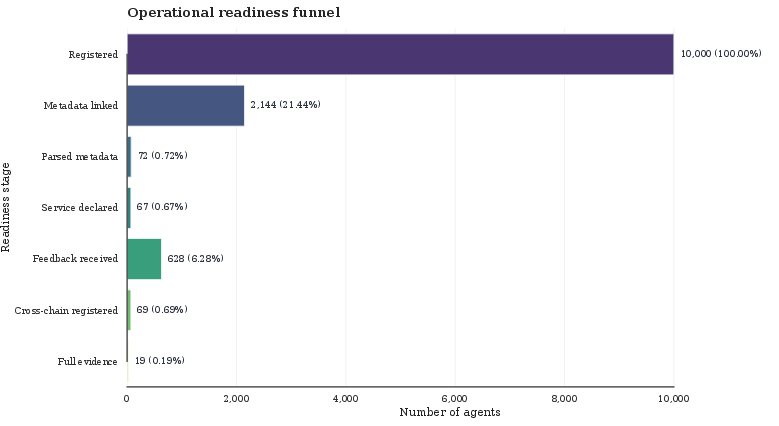
Figure 1: ERC-8004 operational readiness funnel, illustrating population narrowing from registration through to agents demonstrating multi-dimensional evidence.
Quantitative Findings and Empirical Patterns
A decisive finding is the pronounced gap between the scale of ERC-8004 agent registration and higher-order operational readiness. Of 10,000 registered agents, only 67 exposed service records, 628 received feedback, and only 19 had evidence across all readiness layers. This pattern denotes a nascent ecosystem where large-scale registration is not matched by commensurate service or economic participation.
Furthermore, the distribution of both agent ownership and feedback provision is extremely concentrated. The top 10 wallets control 51.4% of agents. Feedback is even more skewed, with a single client accounting for 65.8% of all feedback records, and the top five clients together providing over 92% of feedback.
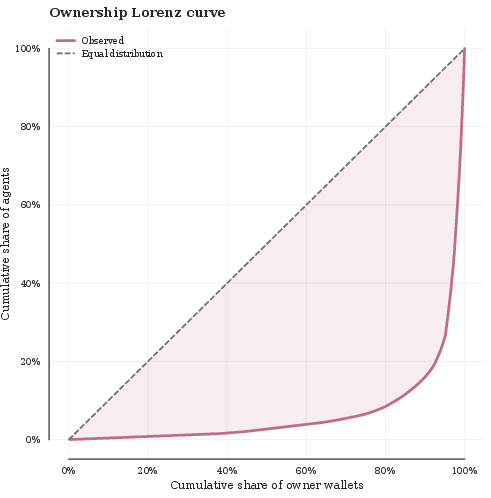
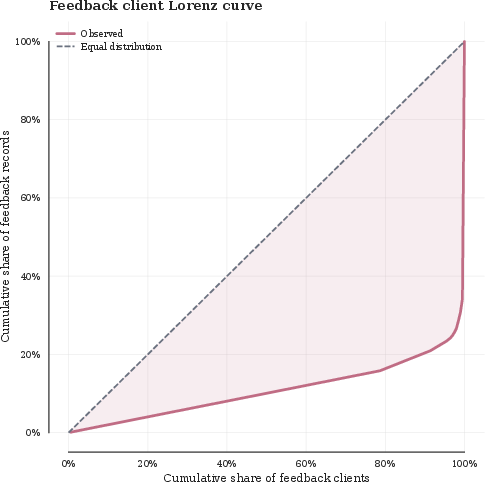
Figure 2: ERC-8004 agent ownership distribution, revealing that a small number of wallets accumulate the majority of agent identities.
A logistic regression model confirms that agents displaying cross-chain registration and lifecycle-metadata linkage are most likely to attract feedback. However, feedback itself remains scarce due to the limited number of clients providing it and the restricted set of agents being interacted with.
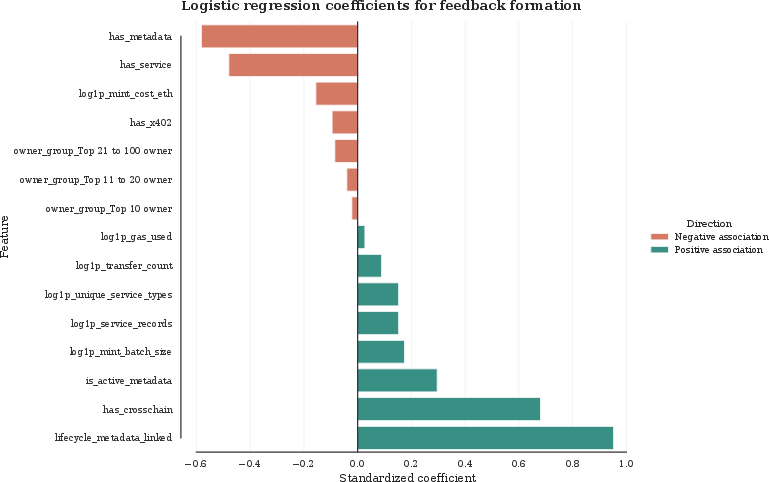
Figure 3: Standardized logistic regression coefficients, showing strongest association between feedback reception and agents' cross-chain and lifecycle-linked metadata.
Network Topology and Ecosystem Structure
Network analysis further substantiates the ecosystem's registration-heavy yet operationally shallow profile. The owner-to-agent bipartite network is hub-dominated, with many agents minted and held by a few wallets, likely reflecting early deployers and not yet decentralized participation.
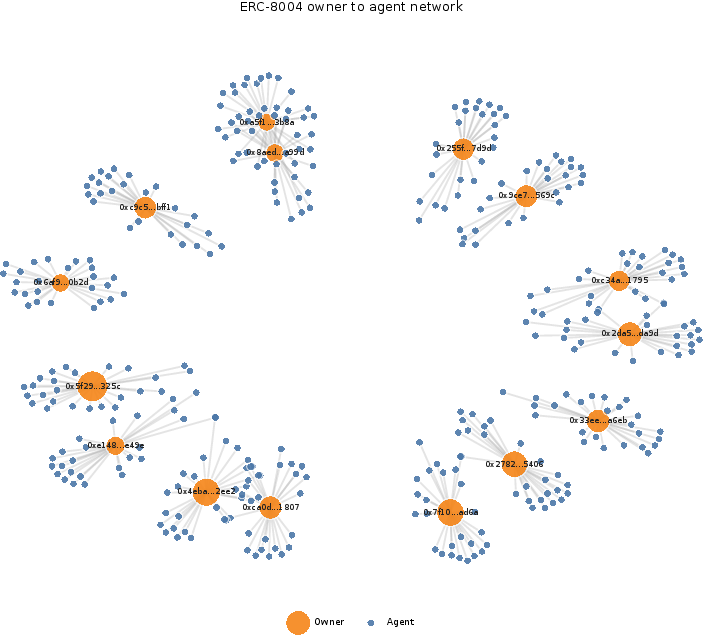
Figure 4: Owner-to-agent network structure, where owner hubs control large clusters of agent identities.
Similarly, the feedback client-to-agent network is highly centralized. Transfer network examination shows only occasional movement of agents between wallets, with no evidence that such transfers correspond to autonomous agent activity.
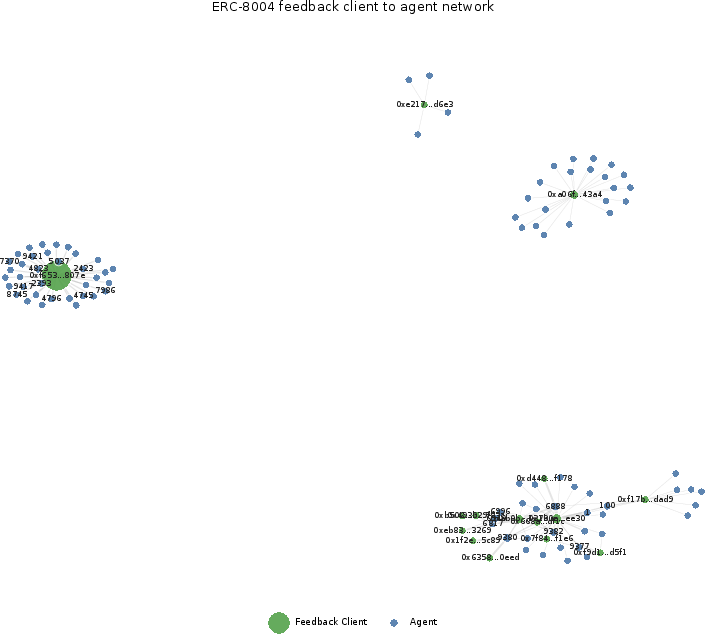
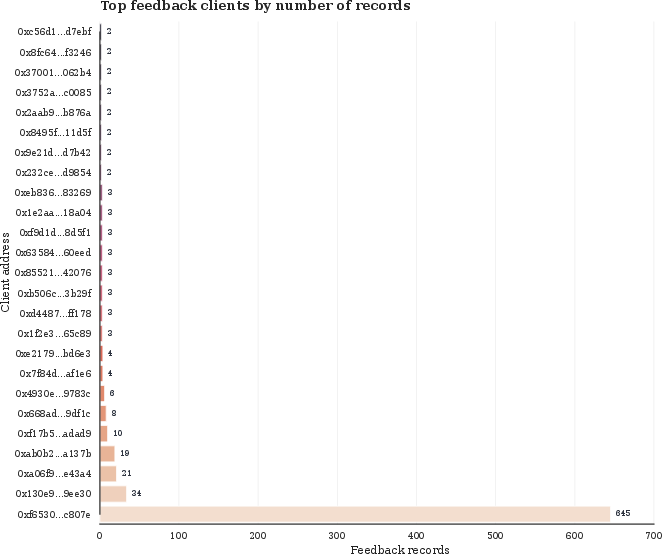
Figure 5: Feedback network visual, displaying concentrated relationships between a few dominant clients and many agents.
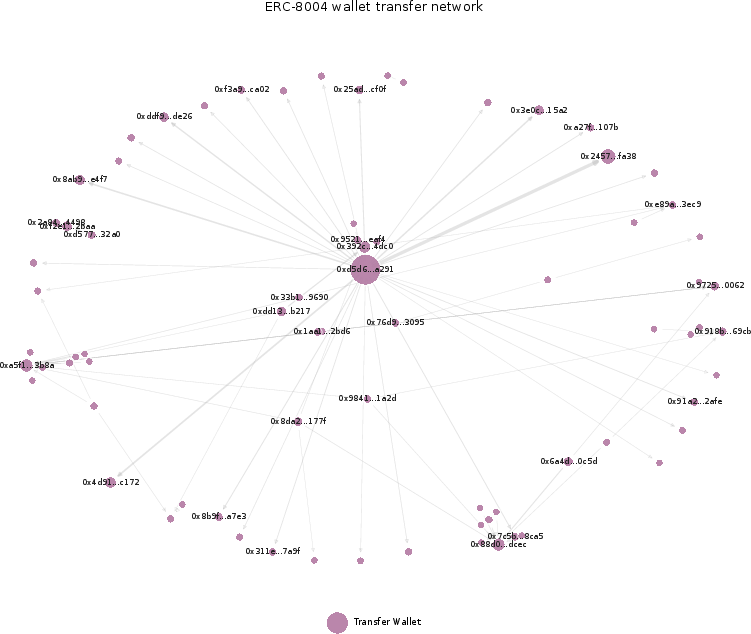
Figure 6: Wallet transfer network highlights limited inter-wallet movement, with no strong signal of autonomous economic coordination.
The combined evidence network, linking agents to owners, feedback clients, live services, and cross-chain anchoring, displays clear evidence clustering: only a minority of agents are connected to multiple readiness layers, while most agents remain single-layer identities.
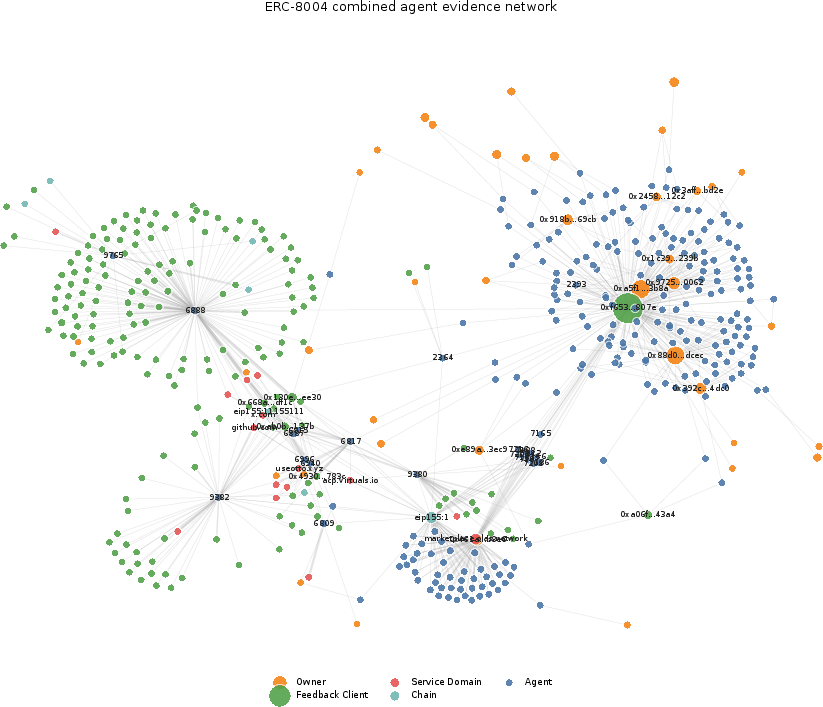
Figure 7: Combined agent evidence network, demonstrating that only a small subset of agents aggregate multi-layer operational signals.
Service-type analysis finds that web endpoints are dominant, with limited use of agent-native protocols such as MCP, OASF, or A2A interfaces. Endpoint domains are heavily concentrated, with most service declarations attached to a handful of known platforms.
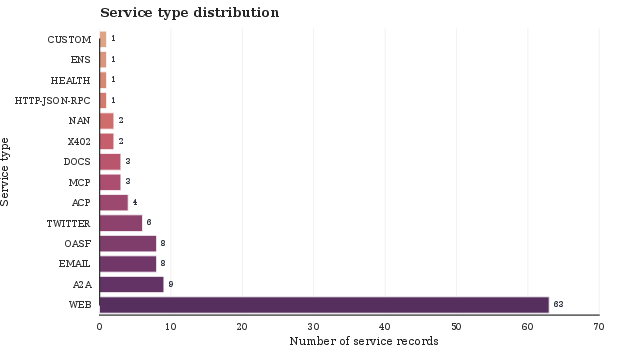
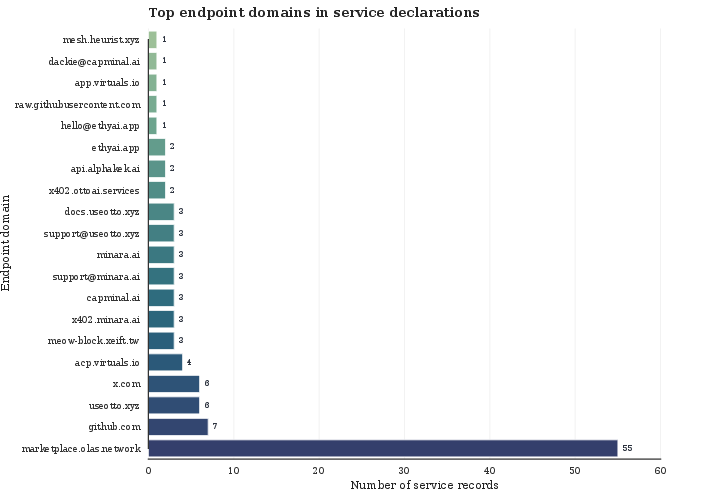
Figure 8: Service type distribution, illustrating that web endpoints predominate, while agent-native protocol usage remains limited.
Theoretical and Practical Implications
The findings yield strong empirical evidence that ERC-8004 currently acts as an identity bootstrapping mechanism rather than as a functional agent economy. Theoretical expectations for decentralized agent economies—distributed service offerings, diverse reputation formation, and peer-level interaction—are not realized in operational data. Instead, observable activity is narrow and frequently isolated to developer wallets, speculative holders, or automated infrastructure.
This situation is not unique to ERC-8004; early-stage decentralized agent systems recurrently display nominal decentralization (identity proliferation) in advance of substantive economic or coordination functionality. The illusion of decentralization is thus empirically evident, consistent with observations in related work concerning DeFi agents and tokenized AI infrastructure.
The paper provides a pragmatic and auditable framework for measuring the maturity of any blockchain-based agent protocol by distinguishing between mere registration and verifiable engagement with the agent economy. This distinction is theoretically significant, serving as a baseline for future work on scalable agent deployment, robust reputation systems, and incentive-compatible agent service markets.
Outlook and Future Developments
The transition from static identity registration to operational agent economies remains incomplete. Future progress on ERC-8004 or similar standards will require:
- Dramatic increases in agent service endpoints, endpoint diversity, and support for agent-native protocols (e.g., MCP, A2A)
- Robust, distributed reputation mechanisms with low concentration and high feedback quality
- Ecosystem-level incentives that foster owner and client diversity, rather than developer- or speculative-driven concentration
- Mechanisms for continuous auditability, security, and verifiable proofs-of-action to mitigate trust and risk concerns
Empirical monitoring of registry evolution and readiness progression will be essential. The framework established in the paper is well positioned for longitudinal studies of agent infrastructure maturation, real-world adoption, and cross-chain agent interoperability.
Conclusion
The study rigorously documents the current limitations and concentration risks of the ERC-8004 agent ecosystem, emphasizing that identity registration at scale is a necessary but insufficient condition for robust agent economies. Real-world operational readiness—robust service exposure, distributed trust formation, and rich networked interactions—remains sparse and concentrated. The paper's framework, dataset, and empirical findings represent a foundational reference for evaluating and guiding the next generation of decentralized agent infrastructure.

