- The paper introduces a protocol that deterministically prepares non-Gaussian quantum states in levitated particles using optimal control of weak cubic nonlinear potentials.
- It employs transient wave-function delocalization to amplify weak nonlinear effects, achieving infidelities as low as 0.5% for the first excited Fock state.
- The methodology extends to multimode entanglement generation, offering a scalable framework for high-fidelity quantum state synthesis in experimental settings.
Universal Non-Gaussian State Synthesis in Levitated Mechanics via Optimal Control of Weak Hybrid Potentials
Introduction and Context
The deterministic synthesis of non-Gaussian quantum states in massive mechanical systems is a longstanding challenge, with direct relevance for quantum information processing, metrology, and foundational tests of quantum mechanics. While strong nonlinearity is essential to break the limitations of Gaussian dynamics, most macroscopic oscillators, and in particular levitated nanoparticles, remain highly harmonic, with intrinsic nonlinearities many orders of magnitude below decoherence rates and typical trap frequencies. The work "Quantum Non-Gaussian State Preparation of Levitated Particles via Time-Dependent Control of Weakly Nonharmonic Hybrid Potentials" (2606.10042) provides a comprehensive theoretical framework and protocol for the coherent preparation of non-Gaussian motional states, including Fock and Schrödinger cat states, in levitated mechanical systems by leveraging transient wave-function delocalization and optimal time-dependent control of weak, static cubic nonlinearities. The protocol circumvents the need for auxiliary two-level systems and is extensible to multimode entanglement generation, including mechanical Bell states.
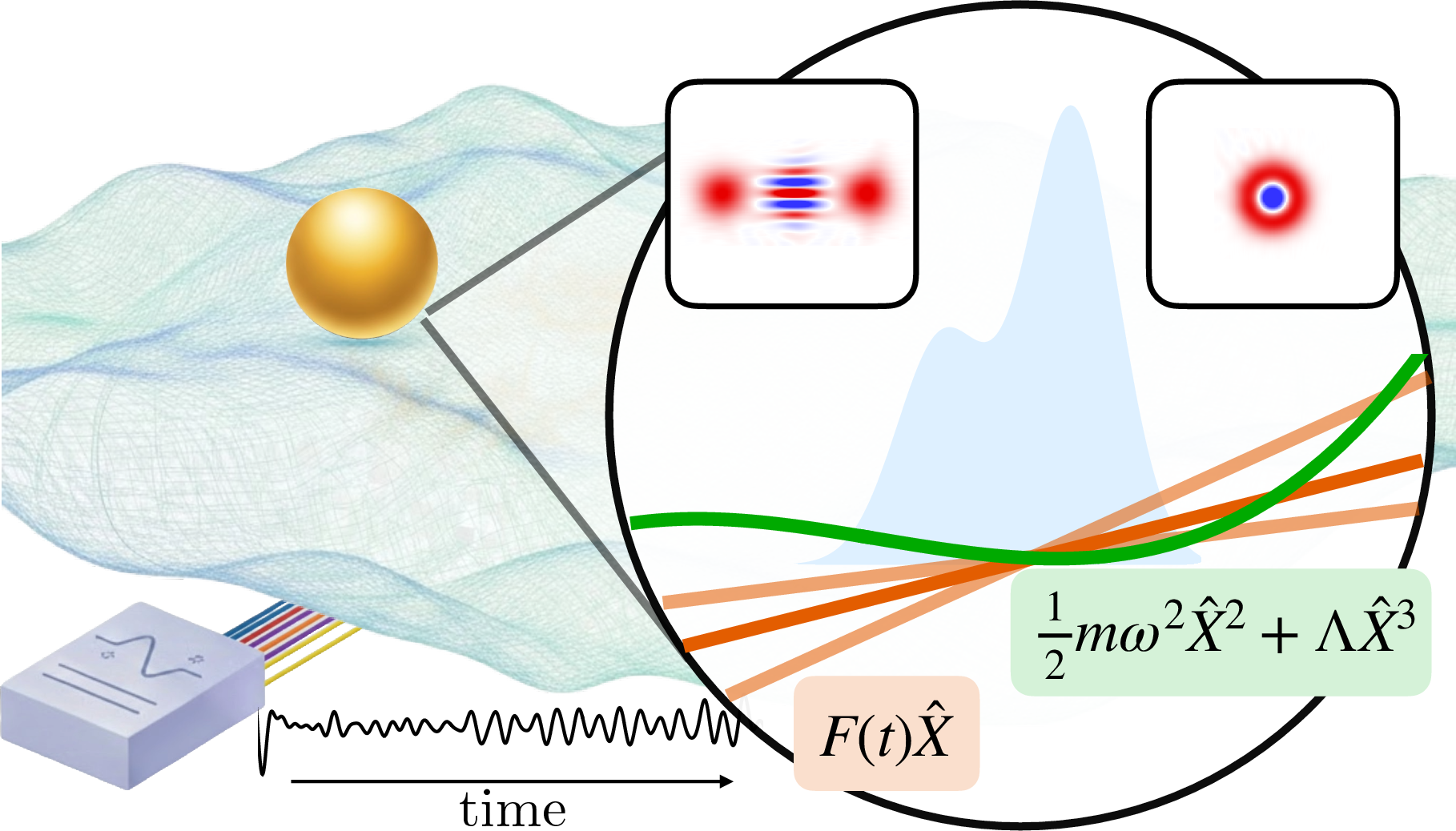
Figure 1: Quantum non-Gaussian state preparation via temporal modulation of a weakly nonharmonic potential with a cubic term, exploiting transient delocalization and control of the linear component.
Physical Scenario and Control Strategy
The protocol is premised on modulating the linear term of a trapping potential with a static cubic (third-order) nonlinearity. The Hamiltonian for a single motional degree of freedom is
H(t)=2mp^2+21mΩ2x^2+g3x^3+F(t)x^,
where g3 is the static cubic coefficient and F(t) is the optimal time-dependent force. Because typical g3 values are extremely small, the authors propose and microscopically analyze a key amplification strategy: before applying the optimal control, the wave function is coherently expanded into a shallow potential, maximizing its spatial extent, thereby enhancing sensitivity to and efficacy of the cubic nonlinearity. After optimal control, the non-Gaussian state is adiabatically compressed back to the tightly confining potential for protection against noise and compatibility with high-fidelity measurement.
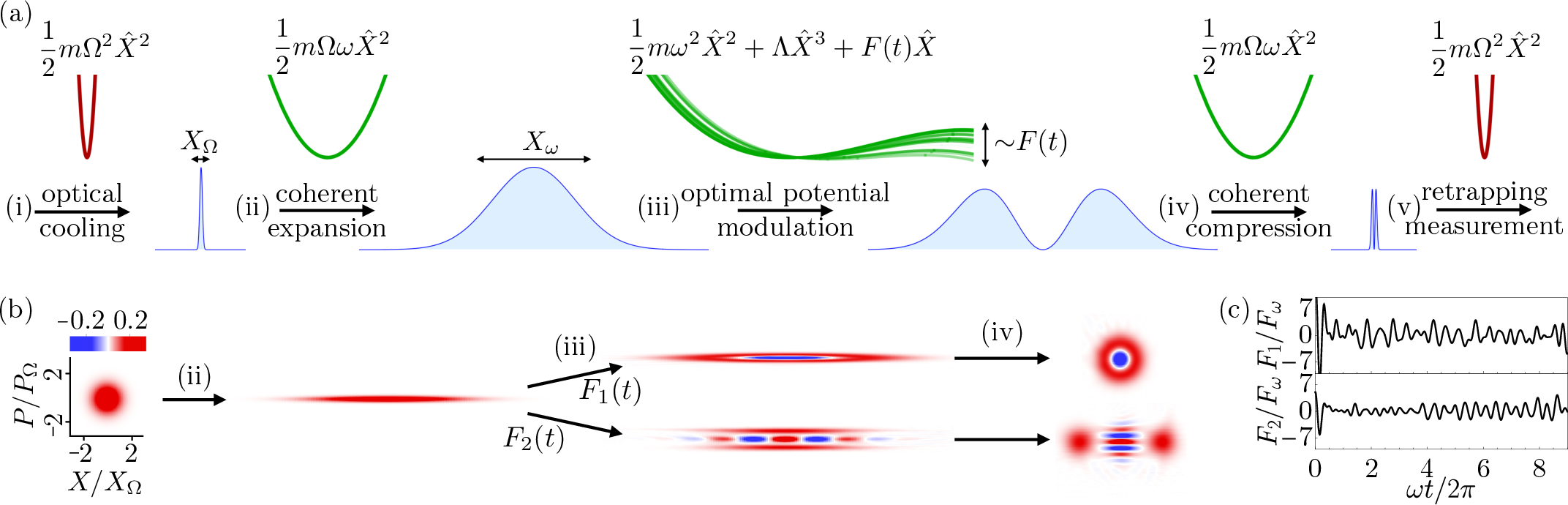
Figure 2: (a) Multi-step protocol: ground-state cooling in a tight trap, expansion into a shallow potential, optimal non-Gaussian state preparation, recompression, and measurement. (b) Wigner functions for first excited Fock and even cat states at protocol milestones. (c) Realizations of optimized linear control pulses.
Fidelity and Scaling of State Preparation
A central result is the demonstration of high-fidelity preparation of non-Gaussian states, quantified via geometric mean infidelity over multiple optimization runs. For the first excited Fock state, the protocol achieves infidelities as low as 0.5% in realistic parameter regimes where the dimensionless nonlinearity λ (defined via g3 and trap parameters) exceeds $0.04$. Interestingly, performance saturates beyond this threshold; further increases in nonlinearity yield negligible fidelity gains, indicating a practical coherence-limited regime. Temporal scaling of infidelity reveals an initially exponential decrease with optimal control duration, later saturating due to decoherence or control bandwidth. Preparation of higher-lying Fock states and large-amplitude cat states remains possible, but infidelity increases with target energy, particularly as the spatial extent of the target approaches the validity limit of the truncated cubic potential.
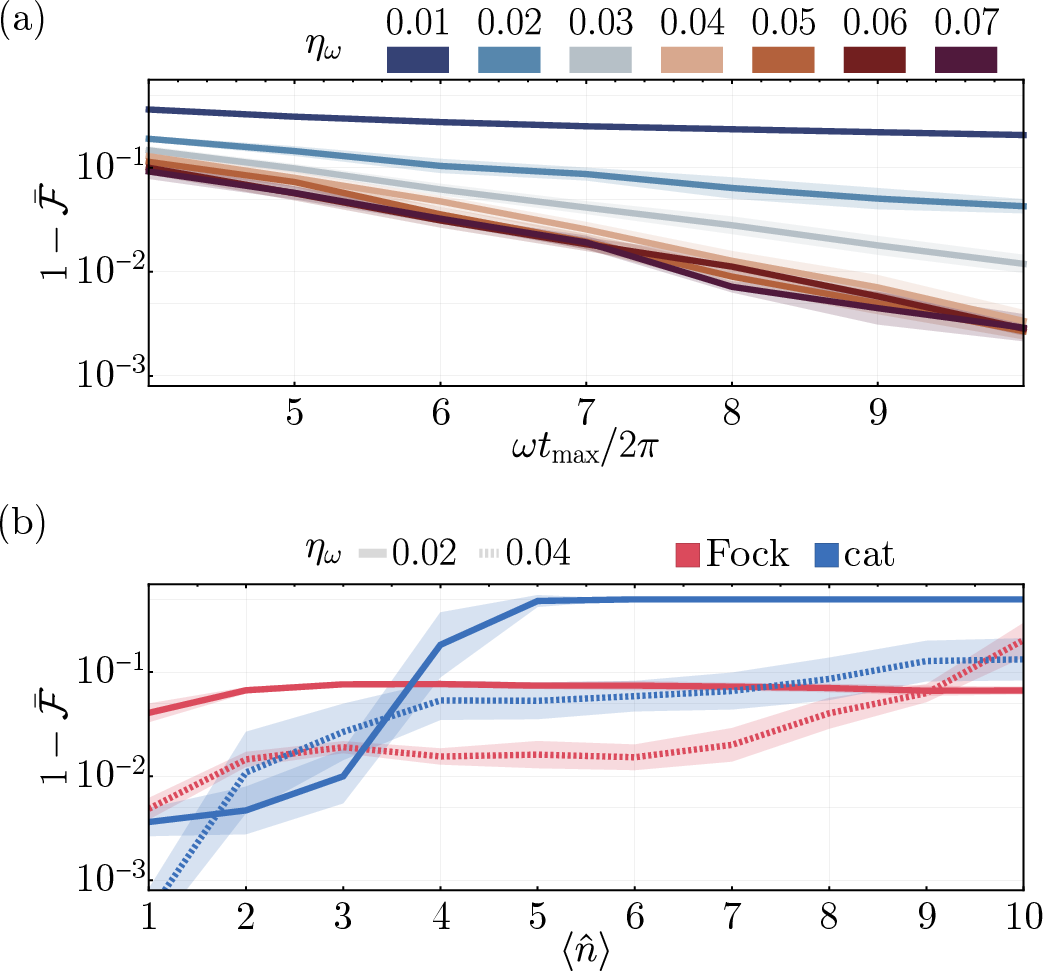
Figure 3: (a) Geometric-mean infidelity for first excited Fock state as function of control duration and nonharmonicity. (b) Infidelity scaling for Fock and cat states as a function of target energy and nonlinearity.
Robustness and Error Modeling
The analysis systematically quantifies the effects of experimental imperfection: (1) decoherence channels, including mechanical diffusion and higher-order noise, and (2) static control errors and calibration drifts. Decoherence scaling with delocalization and target state energy reveals that infidelity grows as a power law in the ratio of expansion (shallow trap) to compression (tight trap) frequencies and as a function of Fock number or phase-space separation for cat states. Notably, the diffusion-induced error in the control step grows with the square of the delocalization, setting a practical limit on how much expansion can be used before noise dominates, especially for macroscopic superpositions. In the presence of static errors in linear and nonlinear Hamiltonian terms, the fidelity degrades polynomially, with explicit dependence provided for both Fock and cat targets.
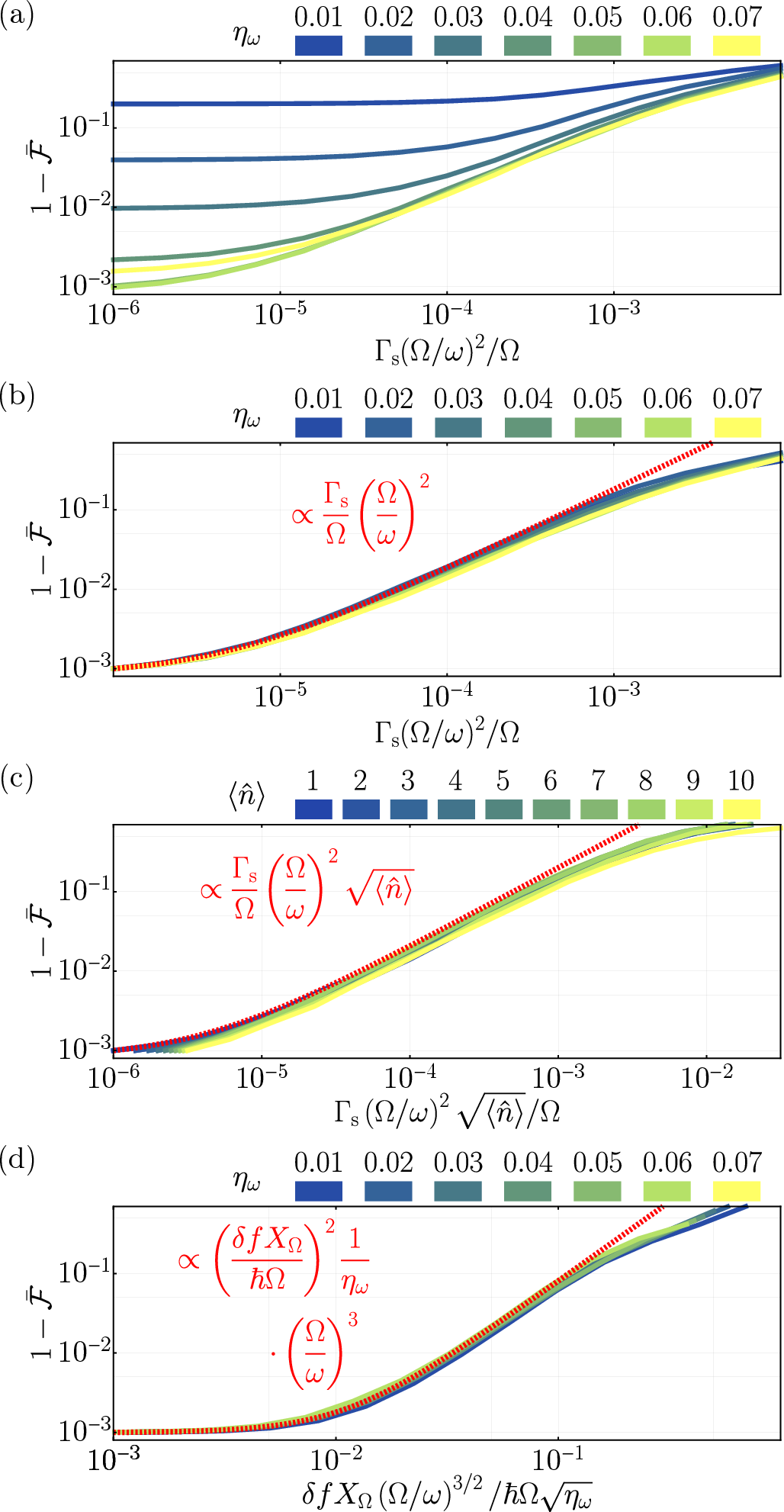
Figure 4: (a) Minimum geometric-mean infidelity vs. diffusion rate and nonlinearity. (b–d) Excess infidelity scaling: common power-law dependence on diffusion and target occupation, and sensitivity to static errors.
Multimode Extensions and Entanglement Generation
A major theoretical advance is the explicit extension of the control paradigm to two-mode systems, relevant both for generating entanglement between two levitated particles (via long-range, e.g., Coulomb or gravitational, interactions) and for creating entanglement between distinct motional modes of a single massive object. The interaction remains Gaussian (bilinear), while local cubic terms on each mode or cross-cubic couplings provide the requisite non-Gaussianity. The protocol demonstrates preparation of symmetric and antisymmetric Bell states with over 96% fidelity under realistic constraints—remarkable given that the native intermode coupling is only enhanced via delocalization, not direct engineering of strong nonlinearity, and without qubit mediation.
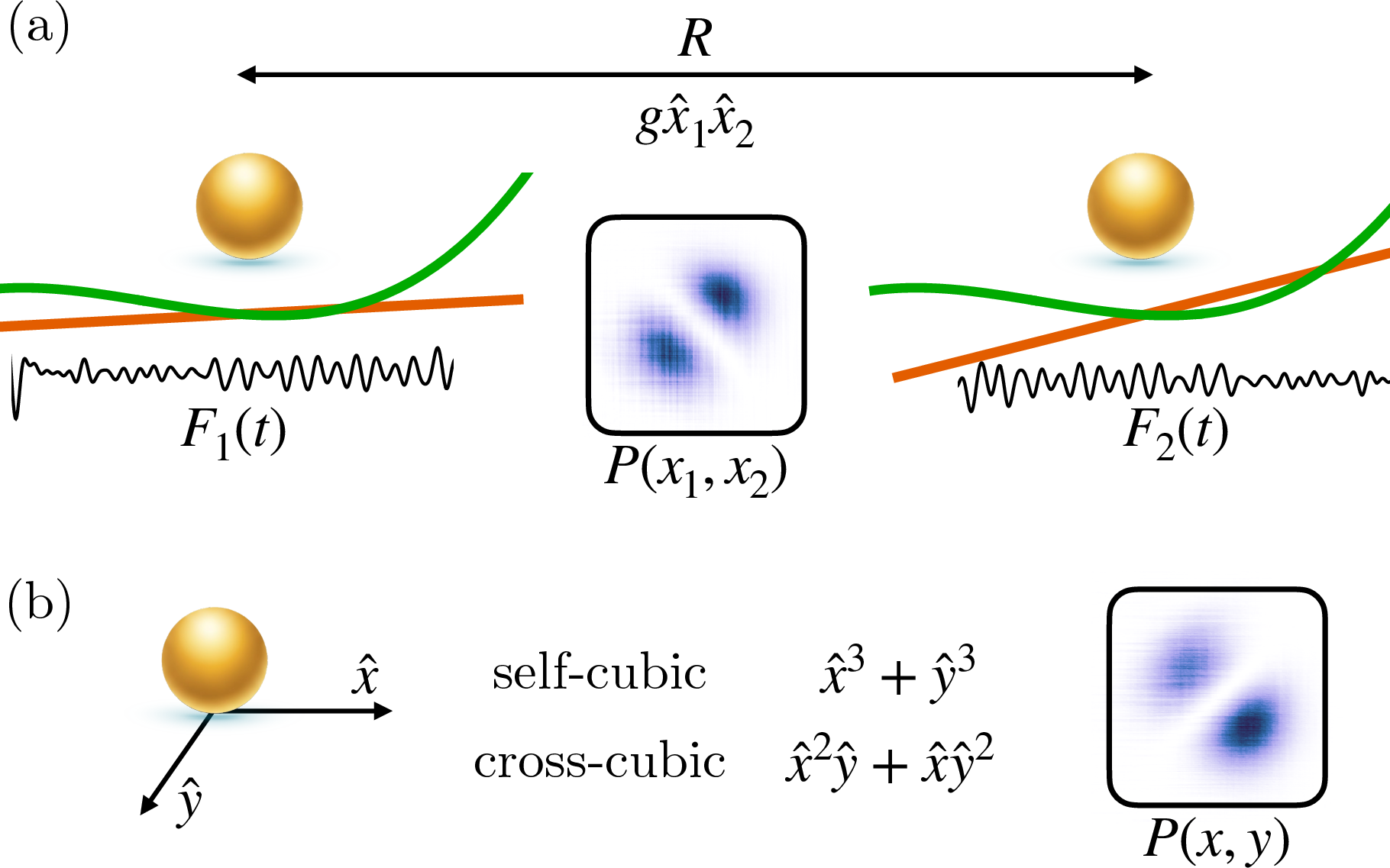
Figure 5: (a) Independent cubic control of two Coulomb-coupled particles yields symmetric Bell states. (b) Cross-cubic coupling of two motional modes in a single particle enables antisymmetric Bell state synthesis; insets: optimized joint position distributions.
Numerical Landscape and Optimization
The optimal control landscapes are explored via ensemble statistics over ∼103 optimization runs per protocol. The distribution of infidelities is well described by a log-normal profile, reflecting the stochastic nature of convergence in high-dimensional control landscapes. This statistical approach yields robust median performance metrics for experimental planning and quantifies the computational resource requirements for scalable state synthesis.
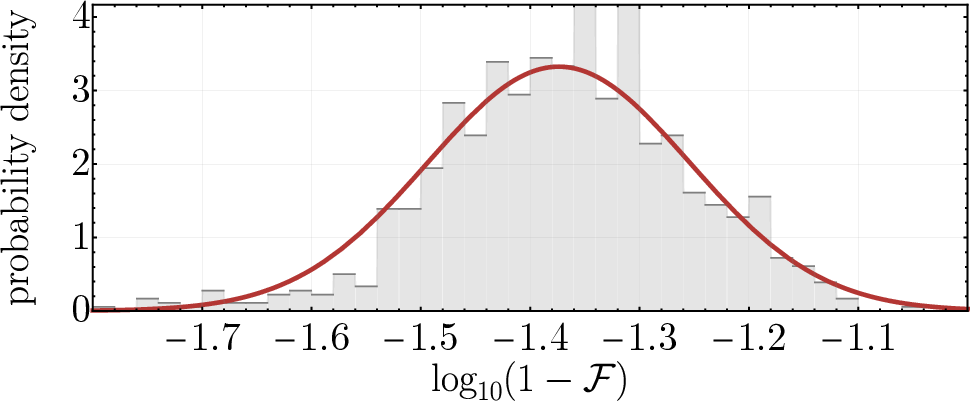
Figure 6: Histogram of Fock preparation infidelities for g30 optimizations; log-normal fit (red) demonstrates typical landscape structure.
Practical Considerations and Implementation Feasibility
The protocol is operationally compatible with hybrid optical–nonoptical platforms, wherein expansion, compression, and readout are performed optically, while slow, optimized control leveraging cubic nonlinearity proceeds in a low-noise, nonoptical potential. Considerations of achievable g31 for typical Paul or magnetic traps, optical readout, feedback cooling, and environmental noise suppression are thoroughly addressed. For moderate delocalizations (g32 30 dB of expansion), characteristic protocol durations range from milliseconds to hundreds of milliseconds, balancing enhanced nonlinearity with exposure to decoherence. Theoretical and numerical estimates provide explicit requirements for vacuum, temperature, and technical noise for quantum advantage in state preparation.
Implications, Limitations, and Outlook
This work establishes that universal, high-fidelity control of non-Gaussian bosonic states is possible even in the deep weak-nonlinearity regime, provided that wave-function delocalization and optimized time-dependent control are carefully combined. The approach is applicable to a wide array of physical systems, including center-of-mass motion, librational degrees of freedom, neutral atom optical tweezers, and superconducting/magnetically levitated circuits. The implications are substantial for continuous-variable error correction, bosonic codes, and macroscopicity-focused quantum tests—especially those where non-Gaussian states are a resource for metrology or foundational investigations.
A limitation is that very large non-Gaussian states (e.g., macroscopically separated cats) remain out of reach unless higher-order nonlinearities can be engineered or the deleterious scaling of decoherence with delocalization is mitigated. Practical realization will require further improvements in trap design, coherence times, and control bandwidth. Extensions to feedback-based hybrid schemes and real-time adaptive control, as well as platform-specific optimizations (e.g., photonic, circuit QED, or BEC dynamics) are natural directions.
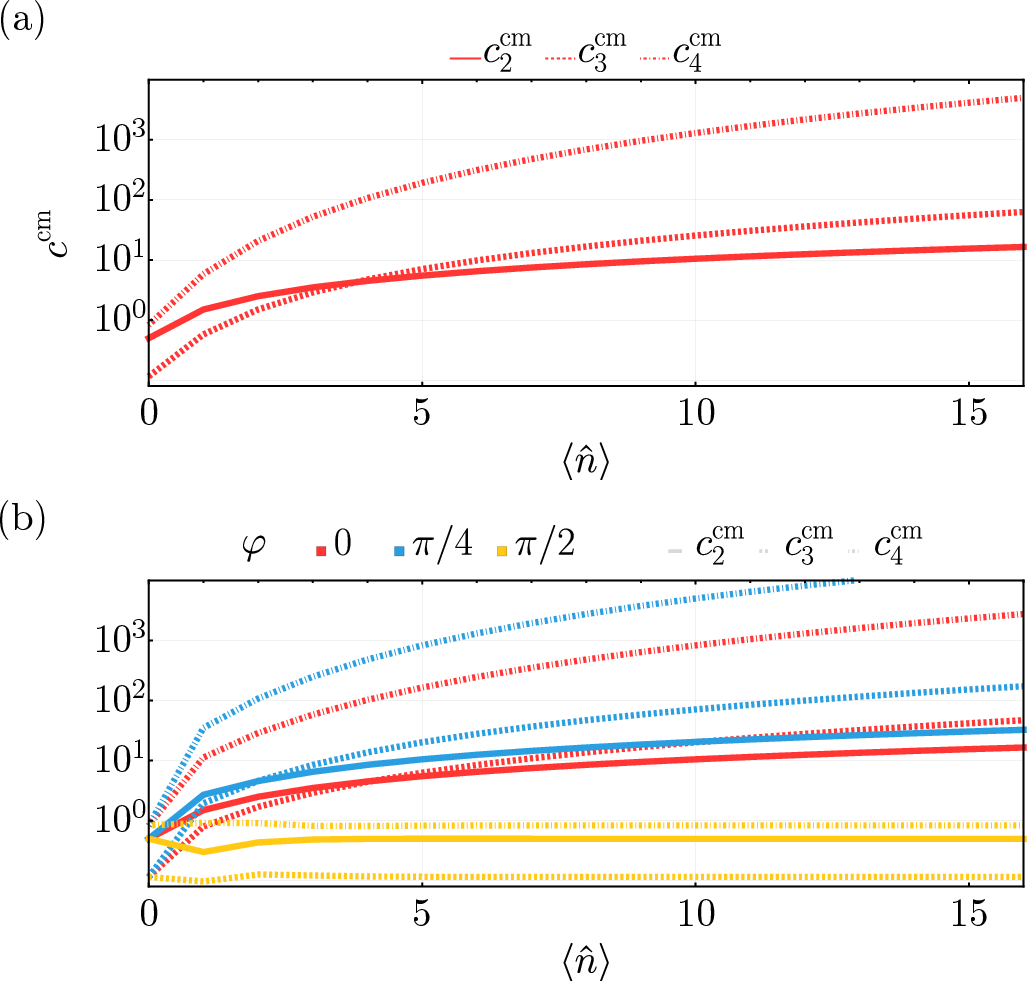
Figure 7: State-dependent coefficients quantifying sensitivity to static errors for various target states.
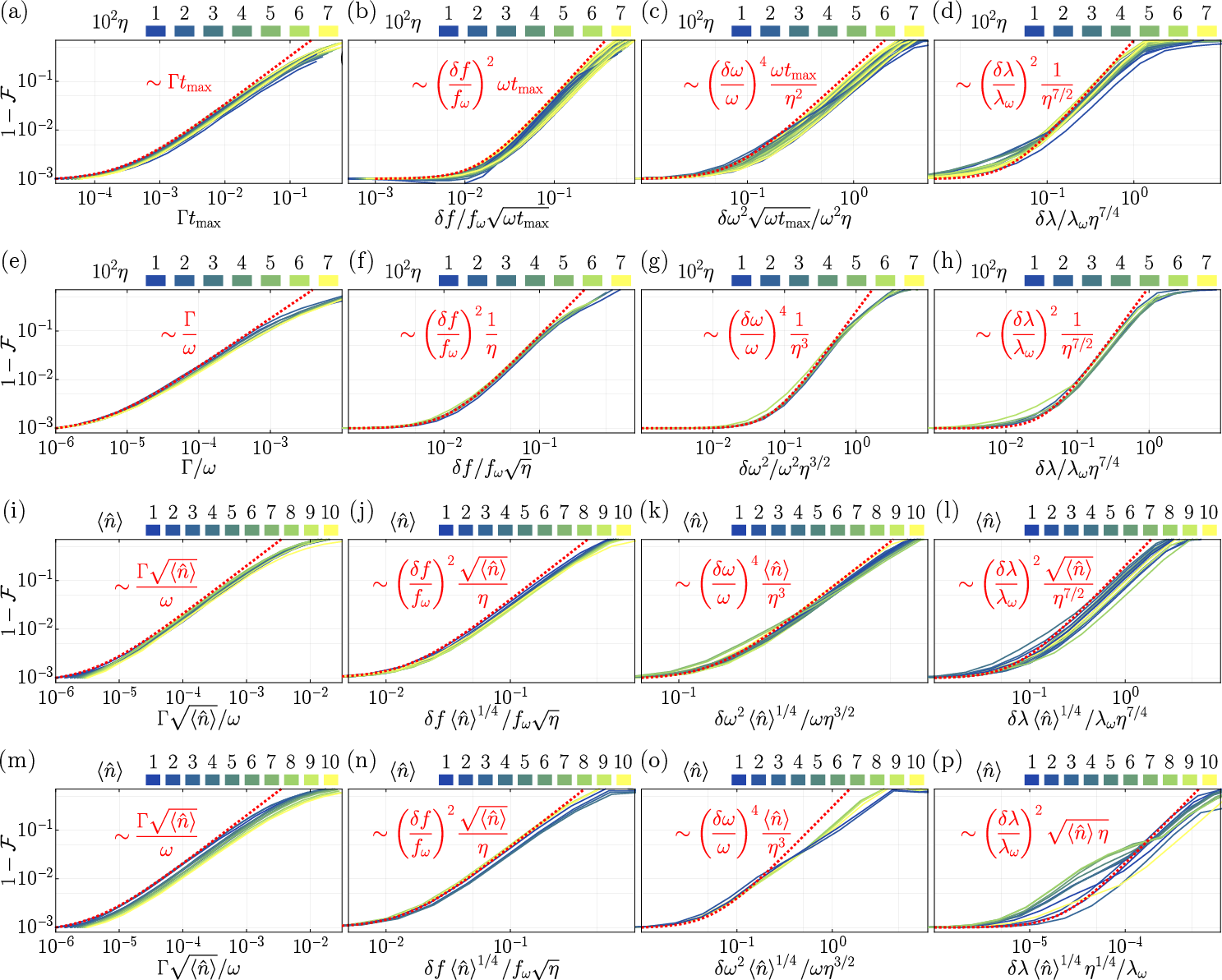
Figure 8: Data and fits encapsulating the dependence of fidelity loss on noise, error, and protocol parameters for different targets.
Conclusion
This paper provides a comprehensive, quantitatively grounded protocol for the coherent deterministic preparation of non-Gaussian motional states in levitated particles and other weakly nonlinear bosonic systems. Through a combination of transient delocalization, optimal time-dependent control, and robust error modeling, a practical route to high-fidelity state preparation and universal control is established. The method extends naturally to the synthesis of entangled multimode states relevant for quantum information and quantum metrology. The work forms a unifying framework linking advances in optimal control, levitated optomechanics, and non-Gaussian continuous-variable quantum science, with broad applicability across physical platforms and for future explorations of macroscopic quantum phenomena (2606.10042).