- The paper introduces a comprehensive, multi-code framework for ARC that self-consistently couples impurity transport with detachment conditions.
- It demonstrates that optimal argon seeding maintains robust H-mode access and achieves high fusion power (up to 900 MW) by mitigating DT dilution.
- Systematic sensitivity scans reveal that separatrix density and pedestal stability are crucial for balancing fusion performance and impurity control.
Core-Edge Integrated Modeling of ARC: Impurity Transport and Detachment Conditions
Overview of Modeling Framework
The paper presents a comprehensive integrated modeling study of H-mode operation in the ARC fusion pilot plant, focusing on the interplay between impurity transport and detachment requirements for divertor protection (2606.09359). A multi-code architecture is deployed: ASTRA is used for 1D transport, SPIDER and FreeGS for equilibrium calculations, TRANSP and associated models for sawtooth dynamics and ICRH power deposition, TGLF for core turbulent transport, FACIT for neoclassical impurity transport, and STRAHL for atomic physics and radiation. The pedestal structure is predicted via an EPED-trained neural network, and impurity seeding is linked self-consistently between the scrape-off layer (SOL), pedestal, and core via feedback algorithms, incorporating the extended Lengyel (X-Lengyel) model for detachment.
Particular attention is paid to the choice of impurity seeding species (Ar vs. Ne), core enrichment factors (ϵ), separatrix and pedestal densities, and their collective impact on fusion power, local heat fluxes, and plasma parameters. The framework is designed to minimize assumptions and quantify uncertainties through systematic sensitivity scans, while maintaining computational tractability via reduced models.
Design Exploration and Fusion Power Scaling
A parametric scan of ARC-class design variables (magnetic field, plasma current, pedestal pressure, minor/major radius, plasma volume, shaping) reveals the expected scaling of fusion power with these quantities. Notably, ARC's high magnetic field and plasma current enable robust pedestal performance and high fusion power output, with the red point in the design space corresponding to ARC V3A achieving Pfus≈900 MW under detachment and impurity transport constraints.
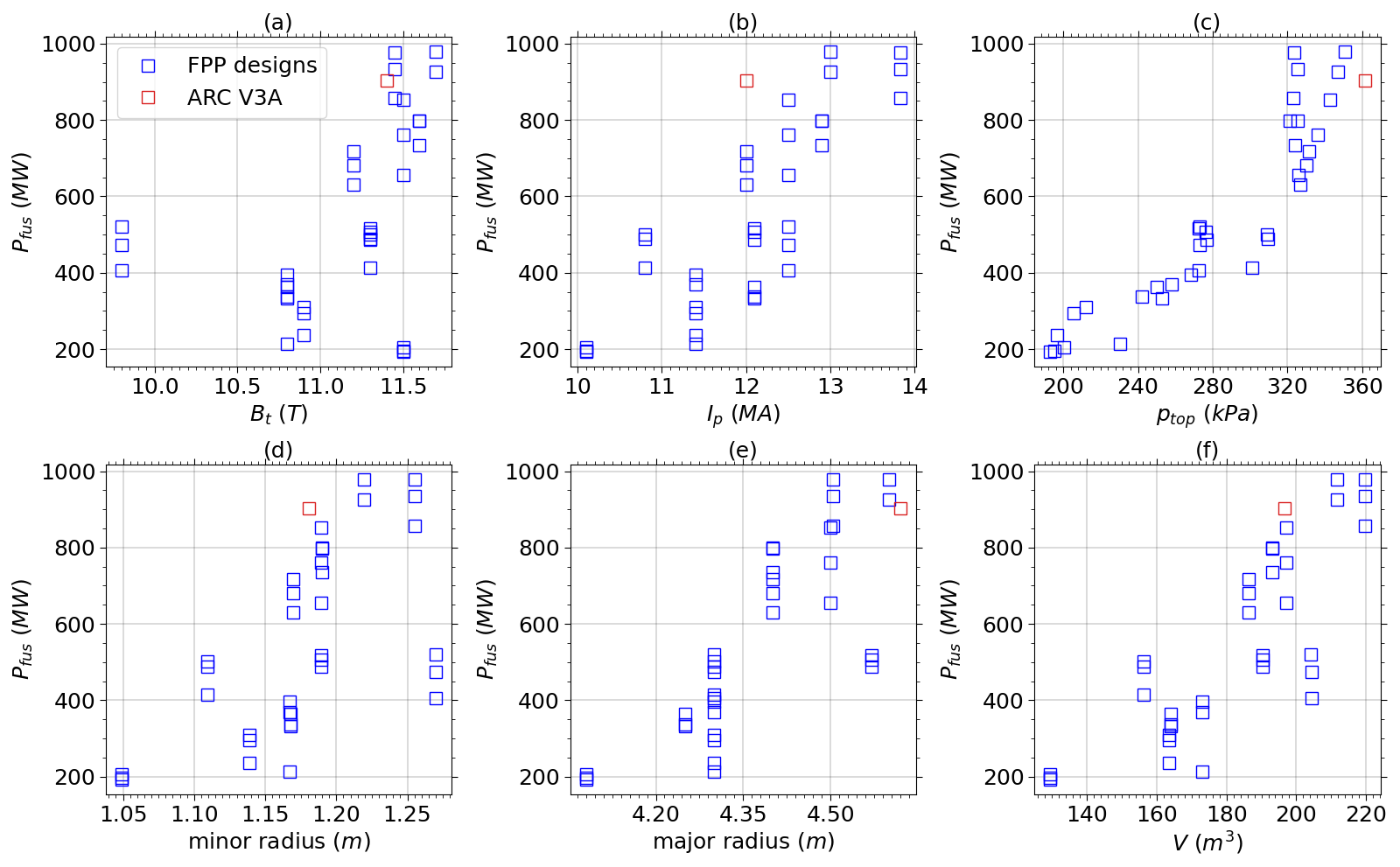
Figure 1: Fusion power as a function of key machine parameters across ARC-class designs, with the V3A configuration highlighted in red.
Peeling-limited pedestals show higher sensitivity to elongation, while triangularity primarily shifts the density threshold for stability transitions. The results validate that ARC configurations can target the desired power density, but highlight the necessity to scrutinize core-edge boundary parameters, especially nsep/nped, in subsequent sensitivity studies.
Pedestal and Separatrix Density Sensitivity
Systematic scans in pedestal density (nped) at fixed nsep/nped reveal only minor variations in fusion power and pedestal pressure. Variations in nped primarily shift average density and temperature rather than pedestal stability. Impurity concentrations at the pedestal top and in the SOL, separatrix temperature, and electron/ion profiles are shown to be resilient to changes in nped, given constant nsep/nped. Impurity transport profiles for W and Ar are flat, with moderate peaking and turbulence dominantly regulating transport.
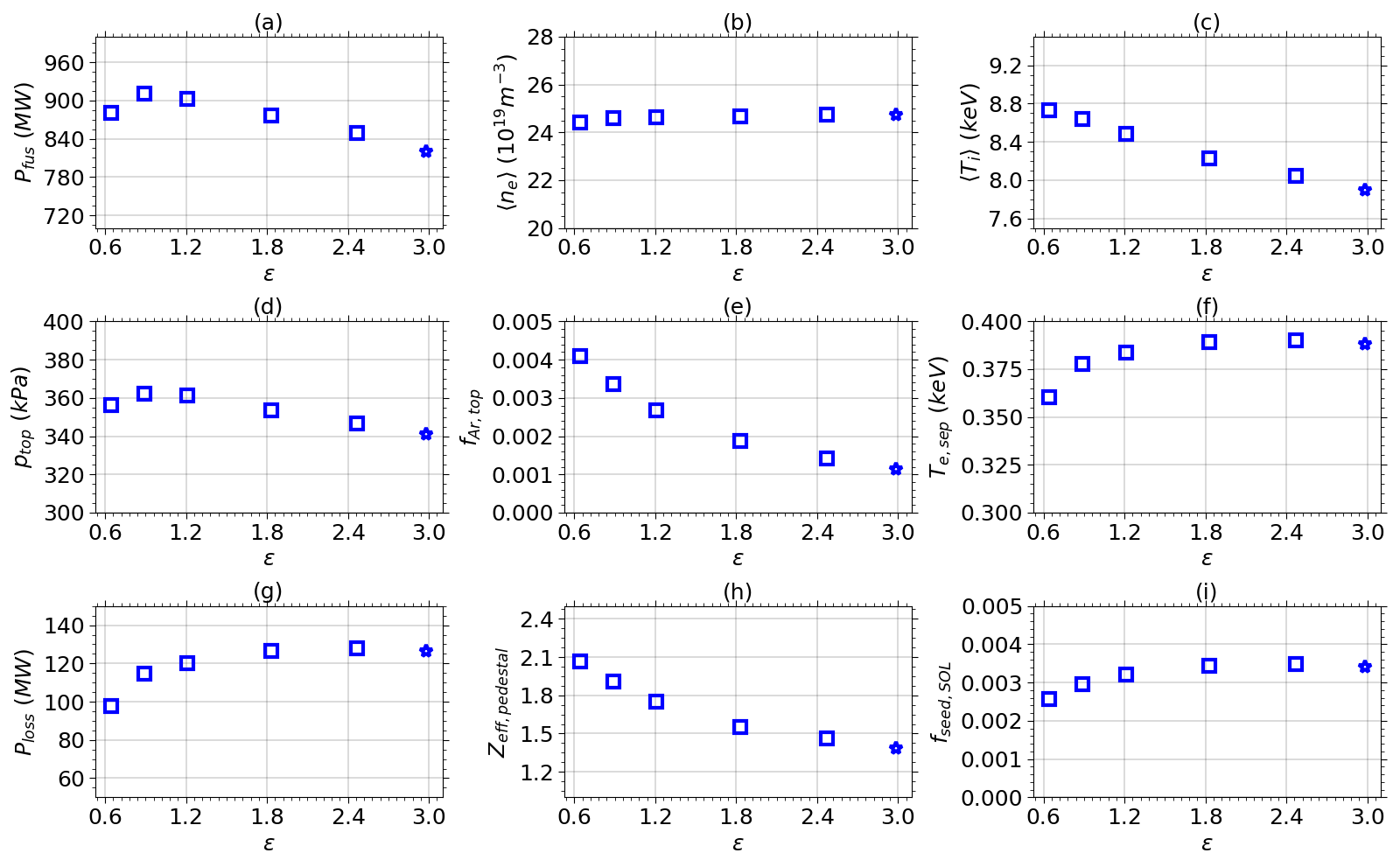
Figure 2: Global plasma parameters and impurity concentrations as a function of pedestal density; detachment requirements and fusion performance are mostly insensitive for peeling-limited regimes.
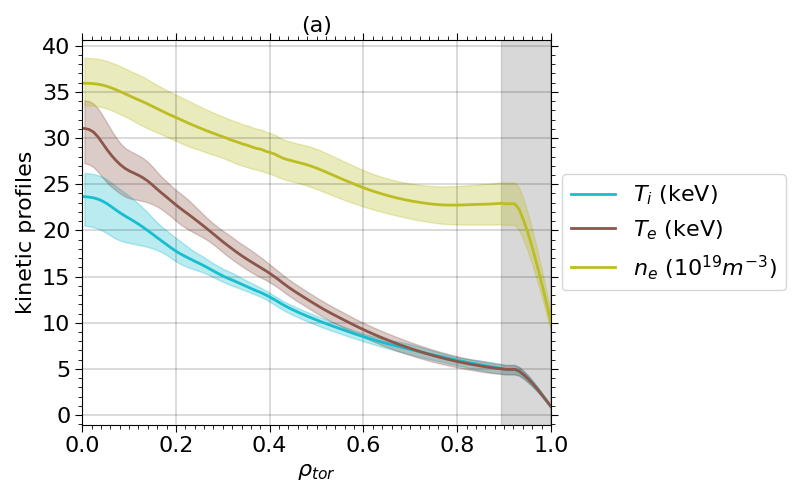
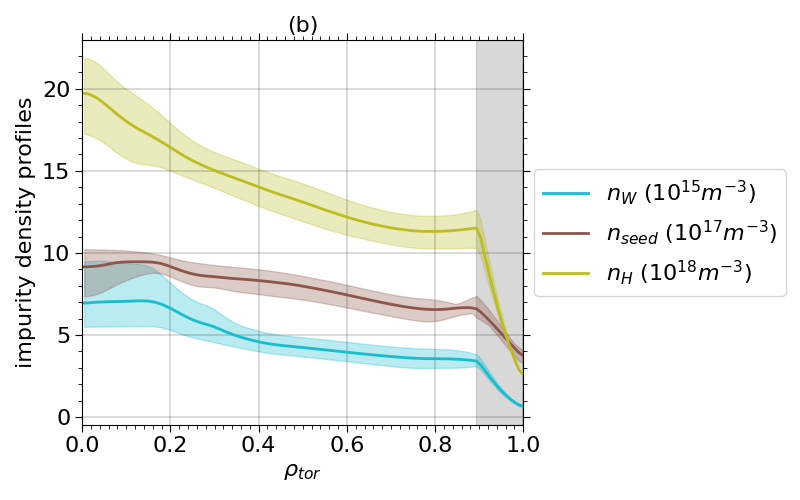
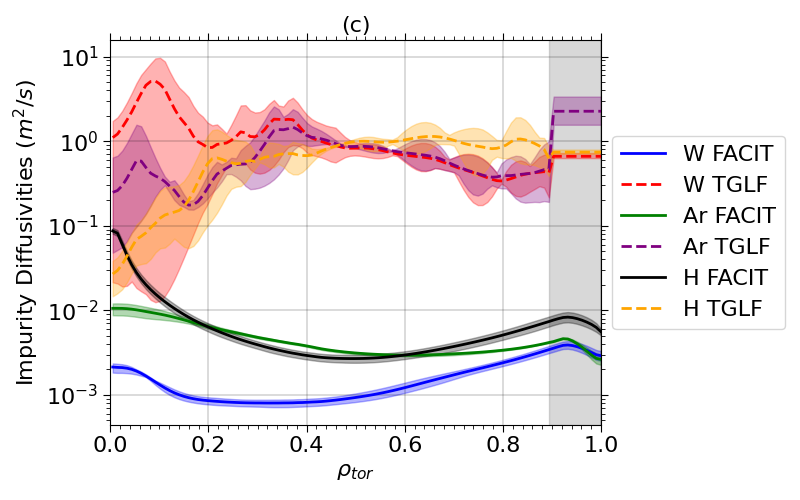
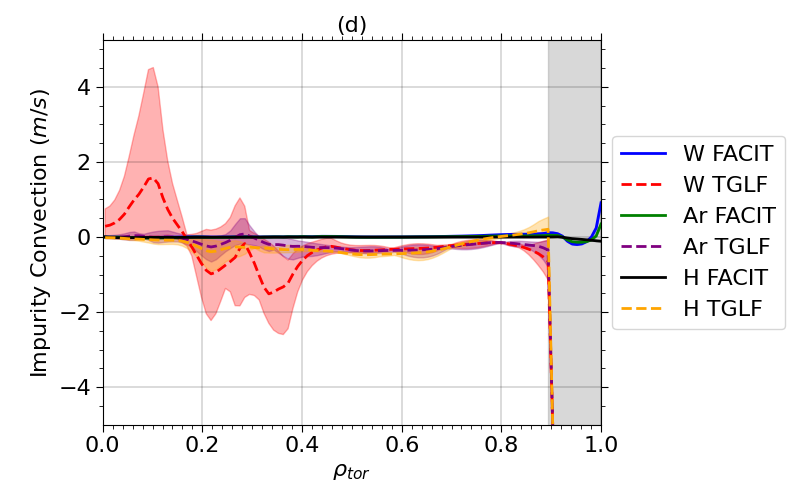
Figure 3: Electron density, ion/electron temperature, and impurity transport profiles showing minimal variance across pedestal density scans; turbulence dominates over neoclassical transport throughout the core.
In contrast, varying separatrix density (nsep) results in a strong fusion power dependence, particularly when nsep/nped approaches ballooning-limited regimes. The top of pedestal pressure and fusion power can drop appreciably (by Pfus≈9000 kPa and 150 MW) as Pfus≈9001 increases from 0.4 to 0.5.
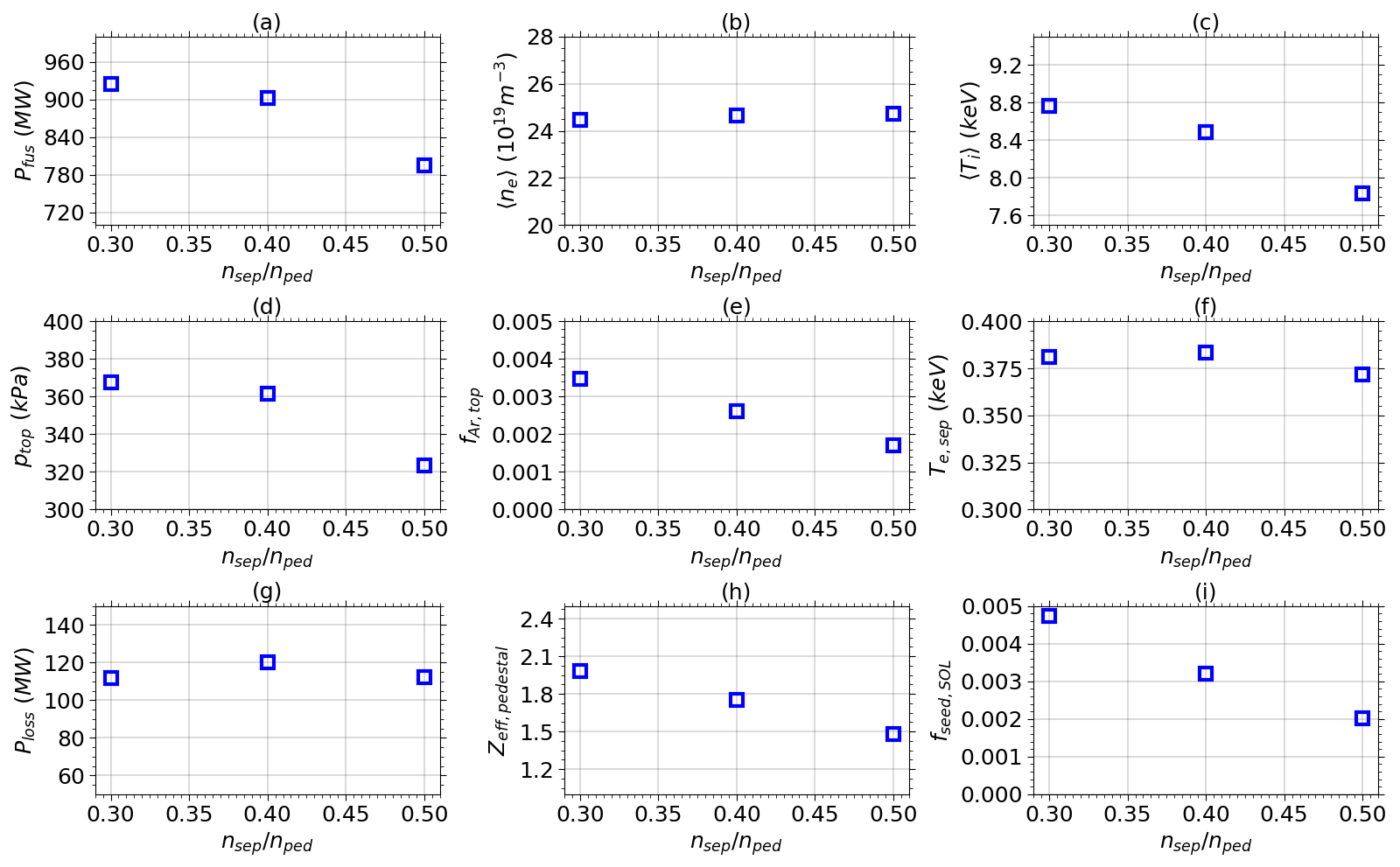
Figure 4: Global parameters as a function of separatrix density; performance decreases substantially at higher Pfus≈9002.
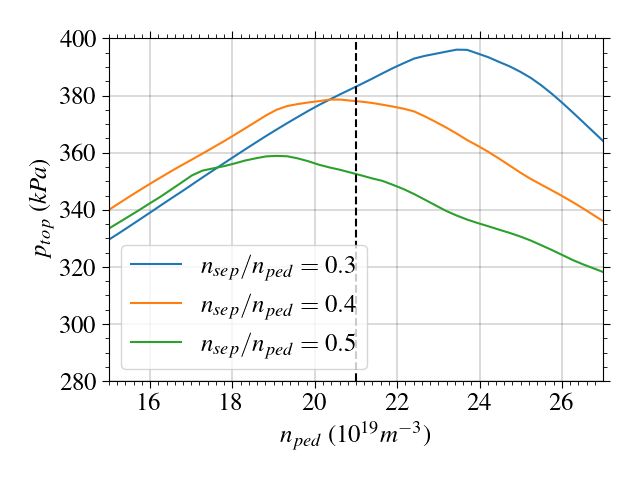
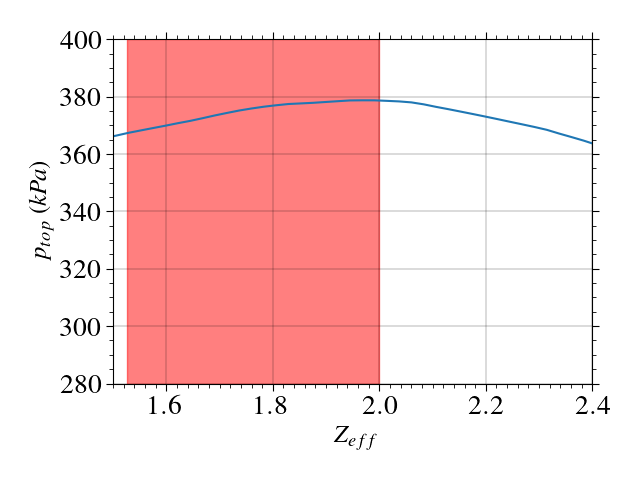
Figure 5: Pedestal stability curves illustrating the pressure drop for increased Pfus≈9003 and the insensitivity to Pfus≈9004 within practical ranges.
Enrichment Factor and Impurity Seeding Strategies
Impurity enrichment factor (Pfus≈9005) scans demonstrate that fusion power and pedestal pressure are remarkably robust to variations in enrichment for Ar seeding. Fusion power varies by less than Pfus≈9006 MW across a broad Pfus≈9007 range (50–200% of nominal), indicating that detachment conditions and core impurity accumulation can be balanced without major penalties.
Figure 6: Small fusion power deviations across enrichment factor scans; pedestal and separatrix parameters are resilient due to self-consistent core-edge coupling.
Exploring alternative seeded impurities, Neon is found to drive higher Pfus≈9008 due to lower enrichment, causing excessive core accumulation and significant DT dilution. This results in reduced fusion power (600–850 MW) and marginal H-mode access. Argon is identified as the optimal seeding species, maintaining detachment and high performance with robust access to H-mode, even under stringent detachment and seeding requirements.
(Figures 7–9)
Figure 7: Fusion power, pedestal pressure, and H-mode margin for Ar- and Ne-seeded cases as a function of pedestal density.
Figure 8: Same quantities as Figure 7, plotted against enrichment factor; Ar-seeded cases dominate performance and H-mode access.
Figure 9: Performance as a function of separatrix density; exacerbated losses for Ne seeding.
DT fuel fraction directly correlates with fusion power, and its reduction via excessive Ne accumulation is not compensated by improved confinement (higher Pfus≈9009), as the dilution dominates. Radiation power is comparable between species, as accumulation offsets charge differences.
Impurity Transport: Turbulence and Neoclassical Analysis
Volume-averaged impurity peaking and transport ratios confirm that turbulent transport overwhelmingly dominates impurity dynamics in the core, irrespective of rotation, density, or temperature gradient perturbations. Neoclassical diffusivity and convection are consistently subdominant, with only minor enhancement under extreme rotation or gradient assumptions.
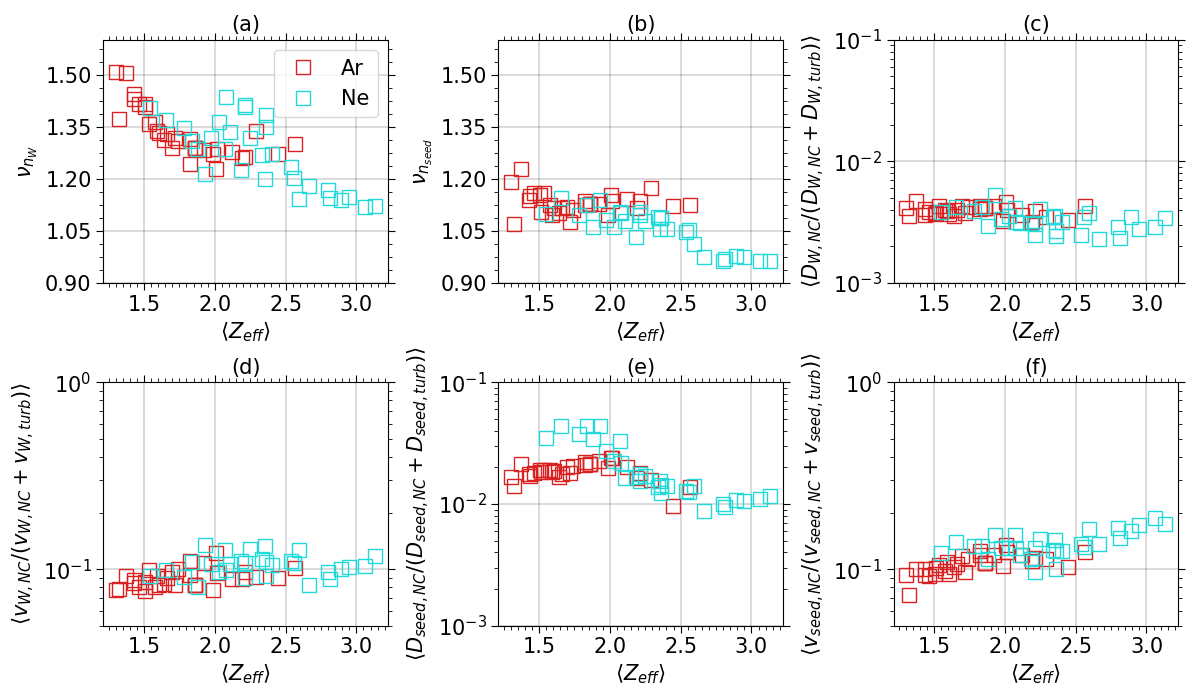
Figure 10: Impurity peaking and neoclassical/turbulent transport ratios as a function of nsep/nped0 for W and seeded species; turbulence is dominant throughout.
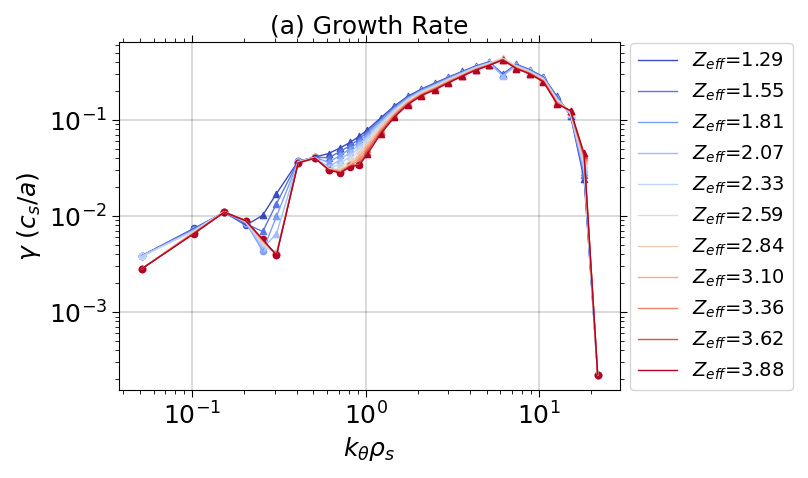
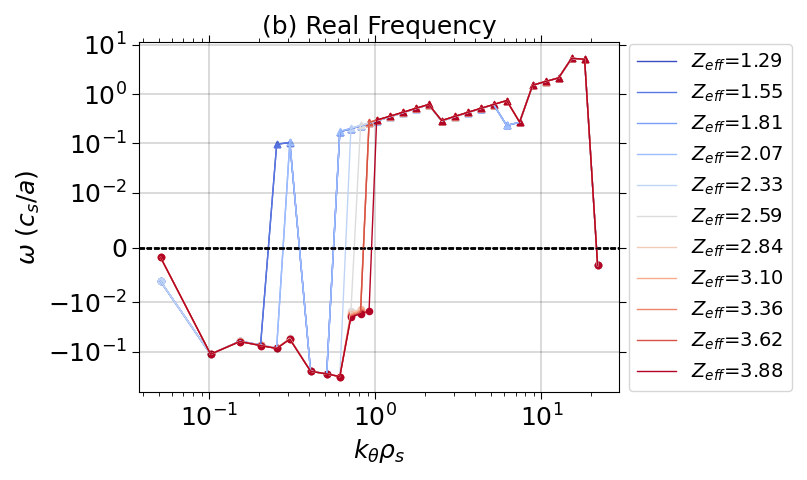
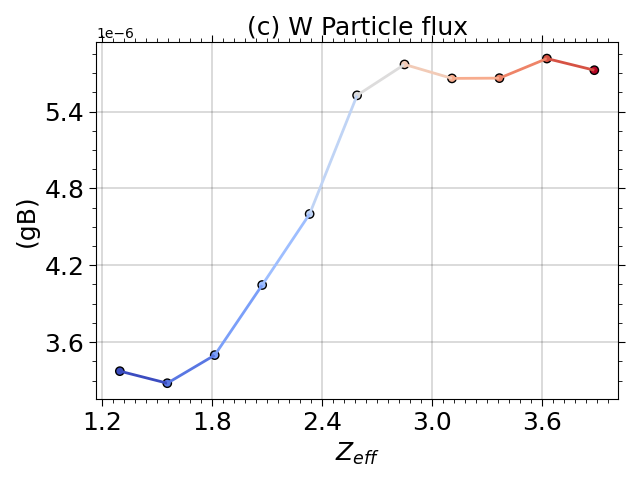
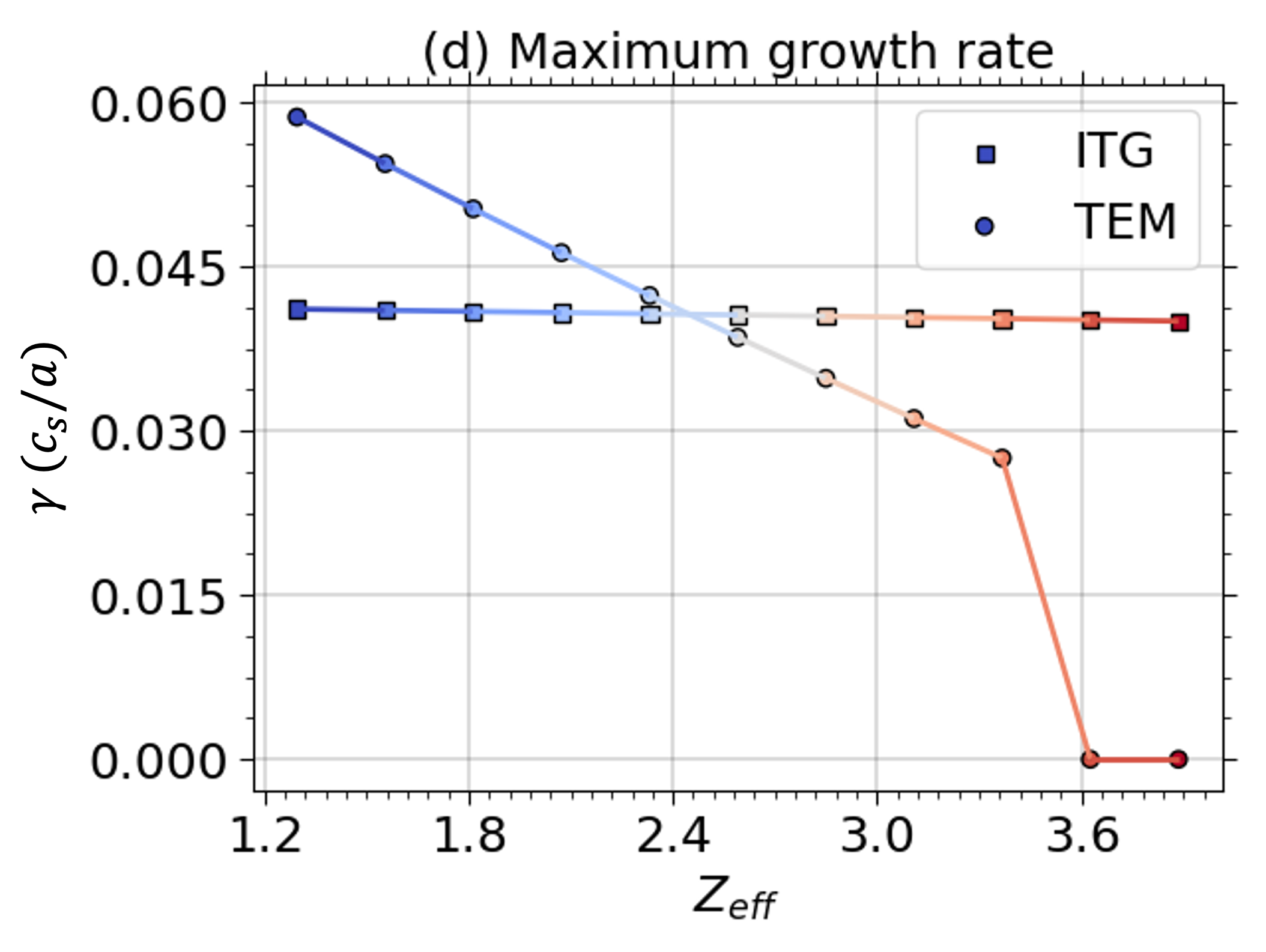
Figure 11: TGLF analysis shows ITG/TEM mode spectrum and W fluxes increasing with nsep/nped1, supporting reduced peaking at higher effective charge.
Radial impurity profiles further validate that a constant concentration assumption is reasonable, providing practical guidance for reduced model databasings.
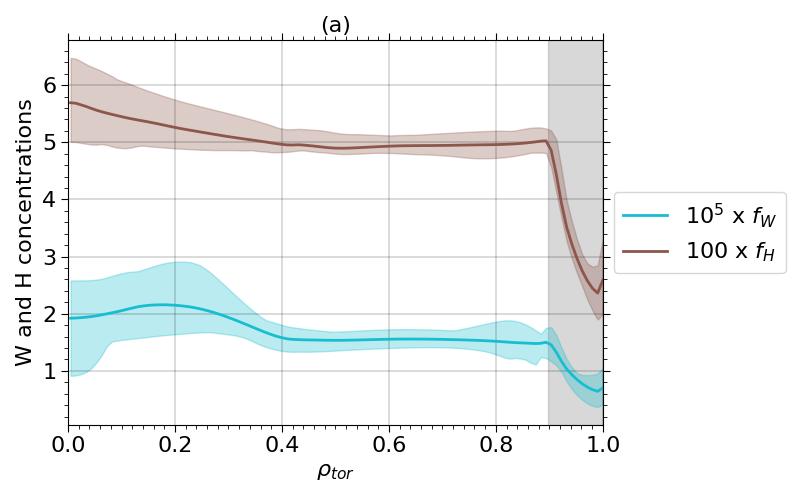
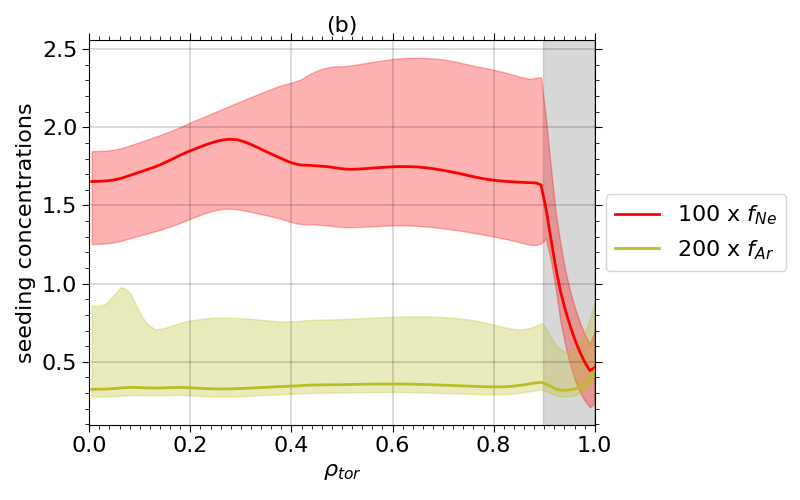
Figure 12: Radial profiles for W, H, and seeding species exhibit flat concentrations, supporting simplified prescriptions for future simulations.
Momentum Transport, Rotation, and Robustness
Inclusion of a reduced momentum transport model for core rotation (Zimmermann) demonstrates negligible impact on both fusion power and impurity peaking. Even under substantial edge rotation scans, core velocities remain in agreement with experiment (Alcator C-Mod, AUG), and only modest increases in neoclassical diffusivity are observed.
(Figures 14–15)
Figure 13: Toroidal velocity and diffusivity profiles across rotation scans; kinetic profiles and impurity transport remain nearly unchanged.
Figure 14: Neoclassical-to-turbulent convection ratios remain low except for extreme rotation or gradients; turbulent transport robustly dominates.
These findings are reinforced through FACIT standalone scans, confirming that impurity transport is insensitive to plausible variations in ion density gradients, temperature gradients, or Mach number.
Conclusion
The study establishes the viability of high-performance, detached H-mode operation in ARC, enabled by self-consistent core-edge modeling and impurity transport analysis. Argon seeding is shown to provide optimal detachment and fusion performance, with robust H-mode access and minimal DT dilution. Neon-only scenarios are less favorable due to lower enrichment and excessive fuel dilution, which cannot be compensated by marginal gains in confinement. Turbulent transport dominates impurity dynamics in the core, validating reduced modeling approaches and simplifying assumptions for future studies. The impact of separatrix density and pedestal stability on fusion power underscores the importance of careful boundary parameter control for reactor optimization. The results contribute predictive guidance for future integrated modeling and experimental design in compact, high field fusion pilot plants.

