- The paper presents a tuning-free method that applies fixed and adaptive logit boosts to target-language tokens, drastically reducing language confusion in LLM outputs.
- It demonstrates LATB and Adaptive-LATB on models like Llama3, achieving near-complete suppression of non-target tokens with improvements measured via ROUGE metrics.
- The study highlights minimal runtime cost and simple Unicode-based lexicon engineering, making the method practical for scalable multilingual deployment.
Language-Aware Token Boosting: Tuning-Free Mitigation of Language Confusion in LLMs
Introduction
Language confusion, wherein LLMs intermittently produce output in an unintended language during non-English generation, persists even in state-of-the-art systems that lack explicit multilingual fine-tuning. Traditional solutions—temperature control, few-shot prompting, and downstream fine-tuning—are often inadequate, either incurring a loss in generative diversity or requiring expensive model retraining. This paper introduces a practical, inference-time control: Language-Aware Token Boosting (LATB) and its adaptive variant, demonstrating that straightforward logit perturbations can align English-centric LLMs to a target language without any model parameter updates or external supervision (2606.08994).
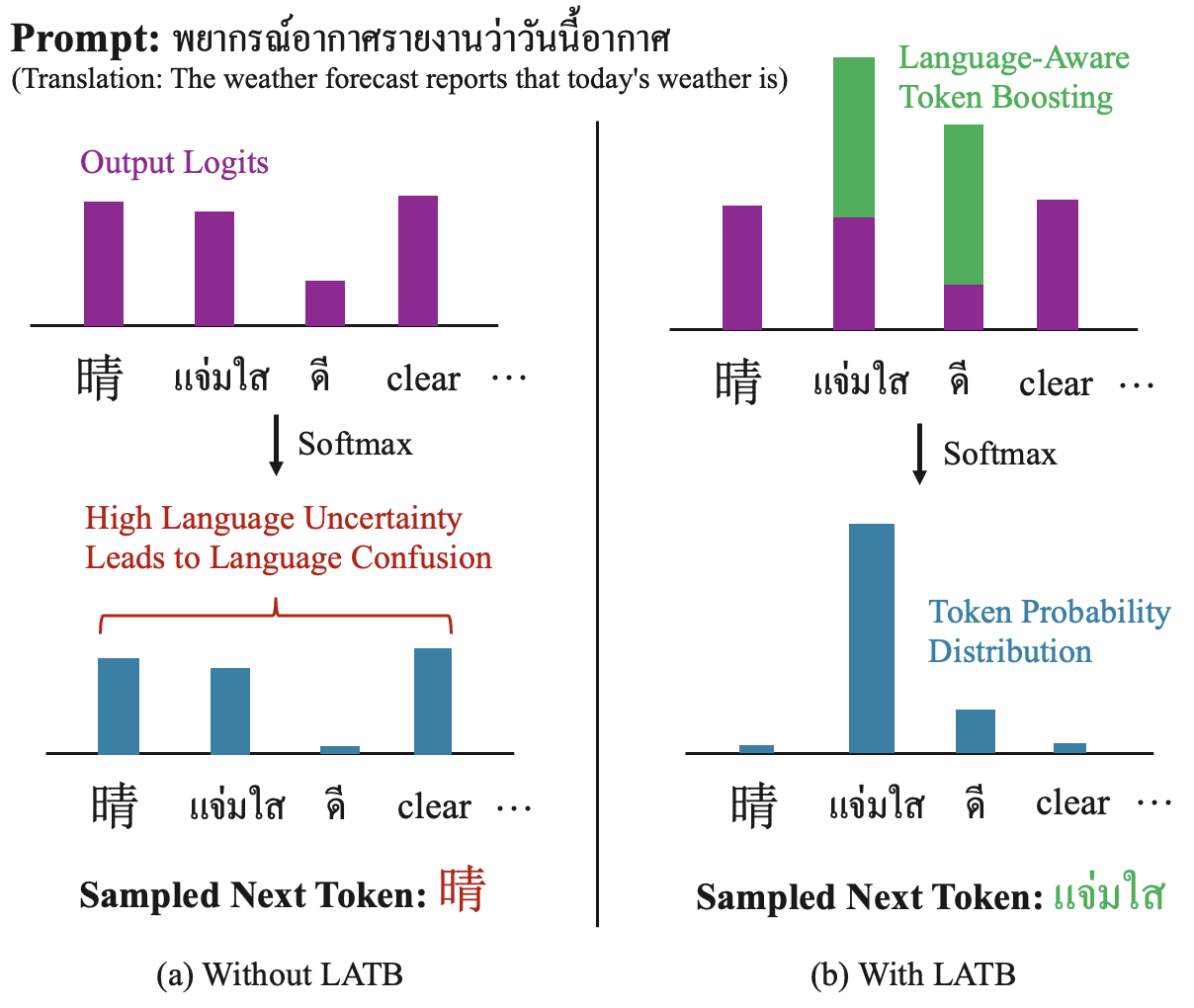
Figure 1: LATB improves target language generation by directly boosting the confidence of target-language tokens at the logit level.
Methodology
The central technique applies a fixed (LATB) or dynamically gated (Adaptive-LATB) positive scalar α to the logits of tokens that belong to the Unicode-defined set for the desired output language. This set is constructed by filtering the LLM's vocabulary, ensuring only target language tokens (and universally permitted tokens like numbers, punctuation, and control symbols) receive the perturbation. Formally, LATB adds α to the logit of each qualifying token, which increases their pre-softmax likelihoods relative to all others, but importantly, it does not alter the ranking among boosted tokens themselves; this theoretical invariance ensures that intra-language token distributions are maintained.
Adaptive-LATB introduces the hyperparameter β, measuring the LLM's confidence difference between target and non-target tokens (max probability per set, post-softmax). If this confidence difference is below β, the boost is activated, otherwise, the model produces output unguided. This mechanism enables code-mixing or technical term inclusion when necessary, mitigating the over-constraint observed with excessive static biasing.
Experimental Setup
Evaluations leveraged XLSUM—an abstractive summarization benchmark spanning eight languages (Russian, Chinese, Japanese, French, Korean, Thai, Hindi, Arabic)—and two backbone models: Llama3 8B-Instruct (English-centric) and Qwen3 4B-Instruct (robust multilingual baseline). For Llama3, strict and standard prompt templates were compared against LATB and Adaptive-LATB at inference.
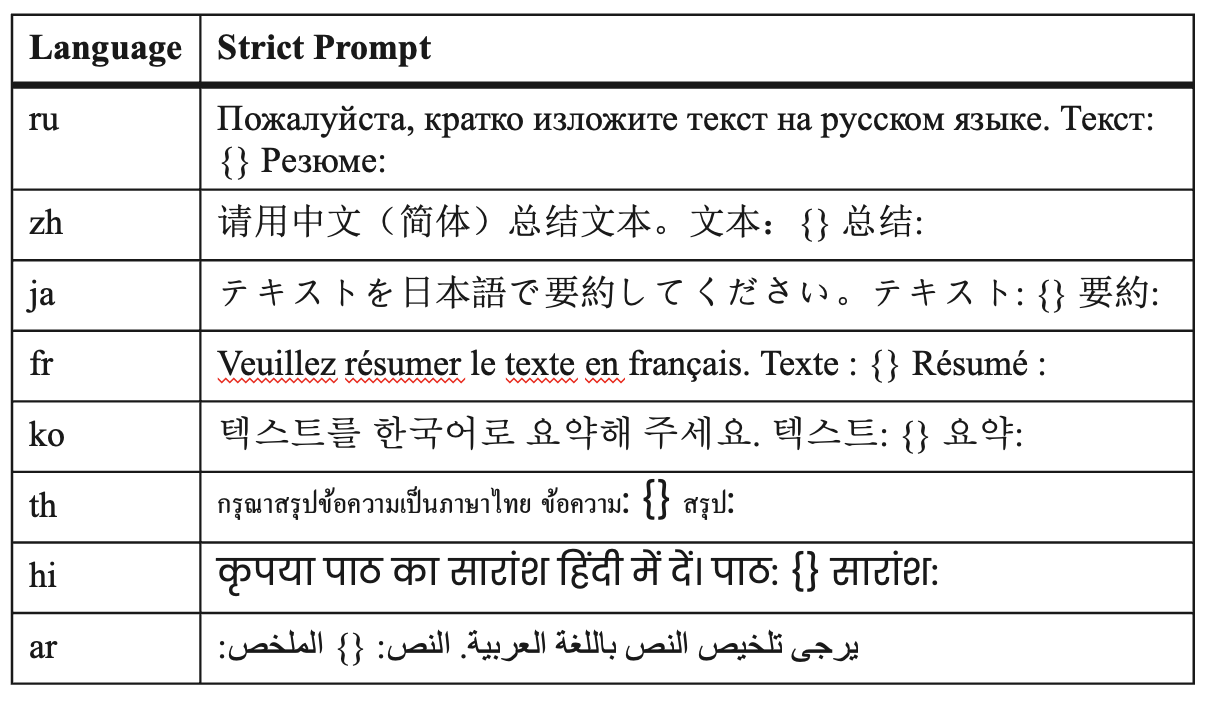
Figure 2: Strict prompt templates enforce the target output language.
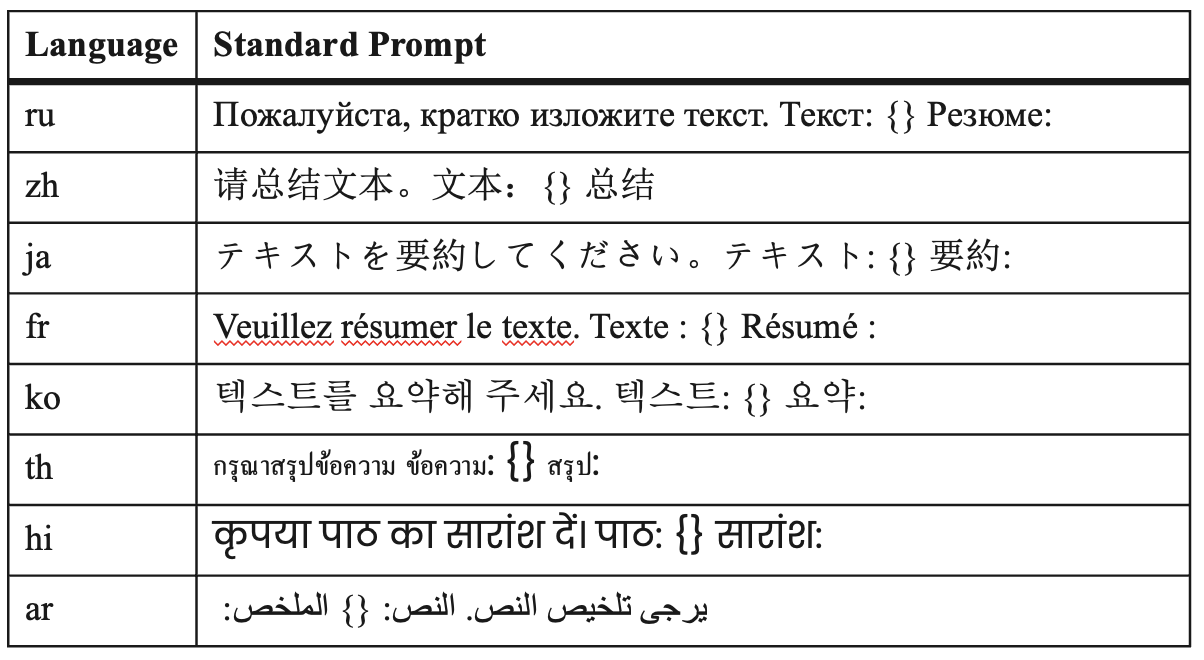
Figure 3: Standard prompt templates lack explicit language enforcement.
Performance was measured using ROUGE-1, -2, and -L scores, while language confusion was quantified at the token, line, and response levels using Unicode-set alignment and FastText LID.
Results
Language Confusion Suppression
LATB and Adaptive-LATB yielded significant reductions in language confusion, achieving near-complete elimination (e.g., Russian: from 80.66% token-level confusion with vanilla prompting to 0.28% with LATB). These gains are robust across both high-resource and medium-resource languages, outperforming even strictly prompted or supervised multilingual models.
Summarization Quality and Trade-offs
ROUGE metrics were maintained or modestly improved post-intervention. The strongest improvements correlated directly with prior confusion levels (Figure 4), confirming that mitigating confusion restores generation quality lost to code-mixing rather than introducing a generic bias.
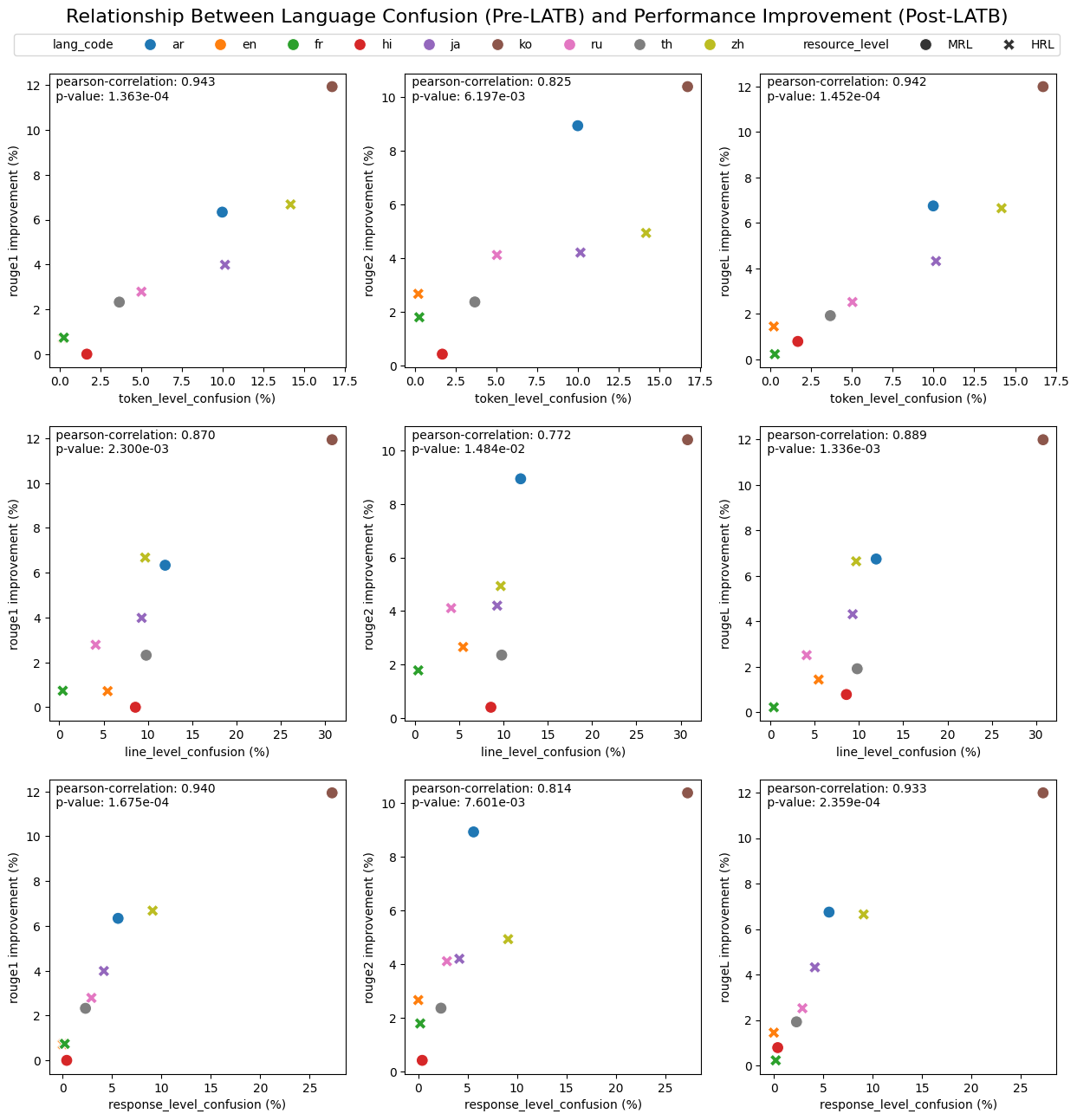
Figure 4: Performance improvements scale with the initial degree of language confusion mitigated by LATB.
Hyperparameter Sensitivity
Ablations on α show that moderate values optimally suppress confusion without impinging on essential non-target language token generation. Excessive α values (static boosting) lead to suppression of all non-target tokens, sometimes producing unnatural dubbed outputs when direct foreign term inclusion would be preferable (Figure 5).
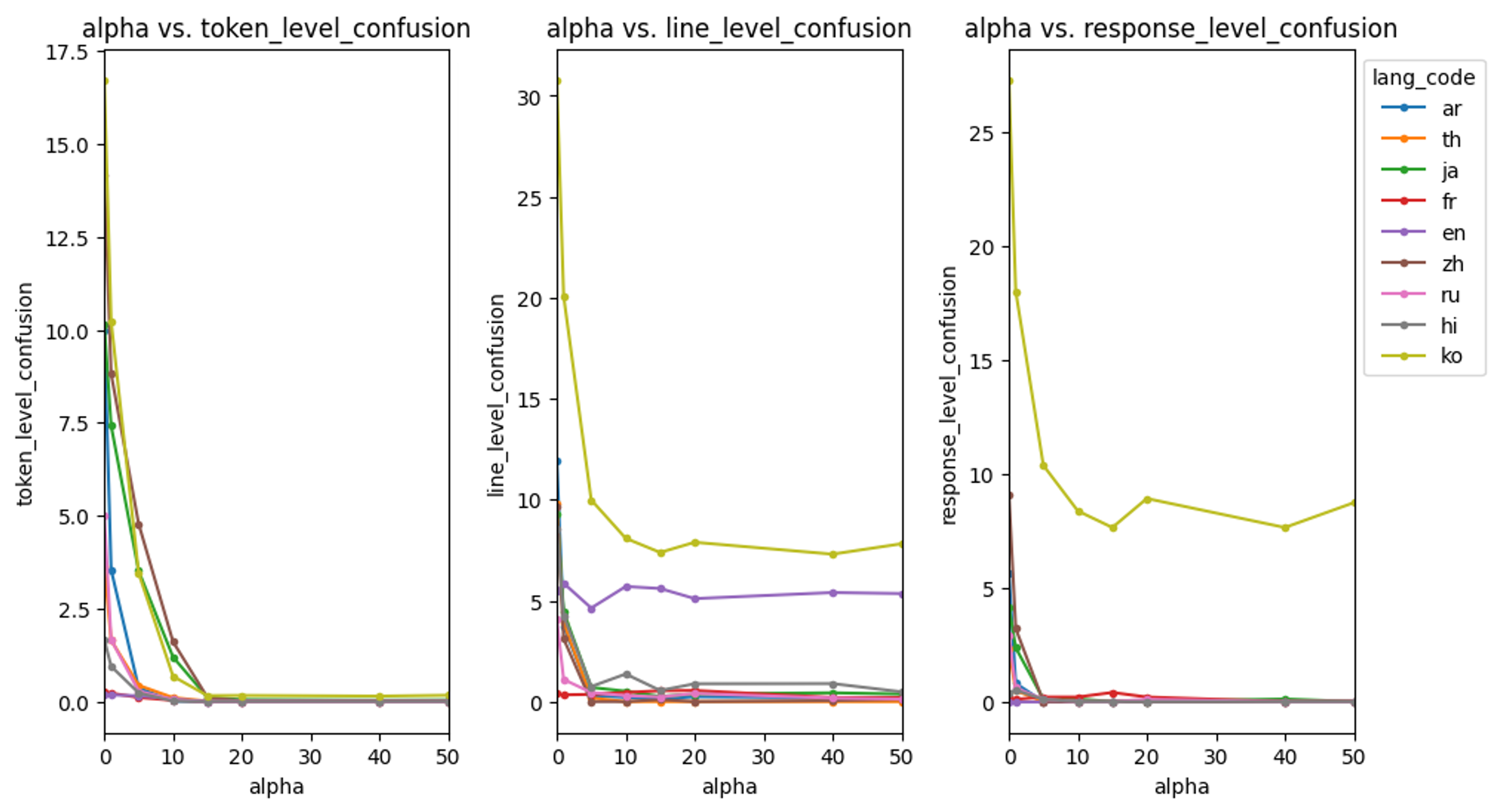
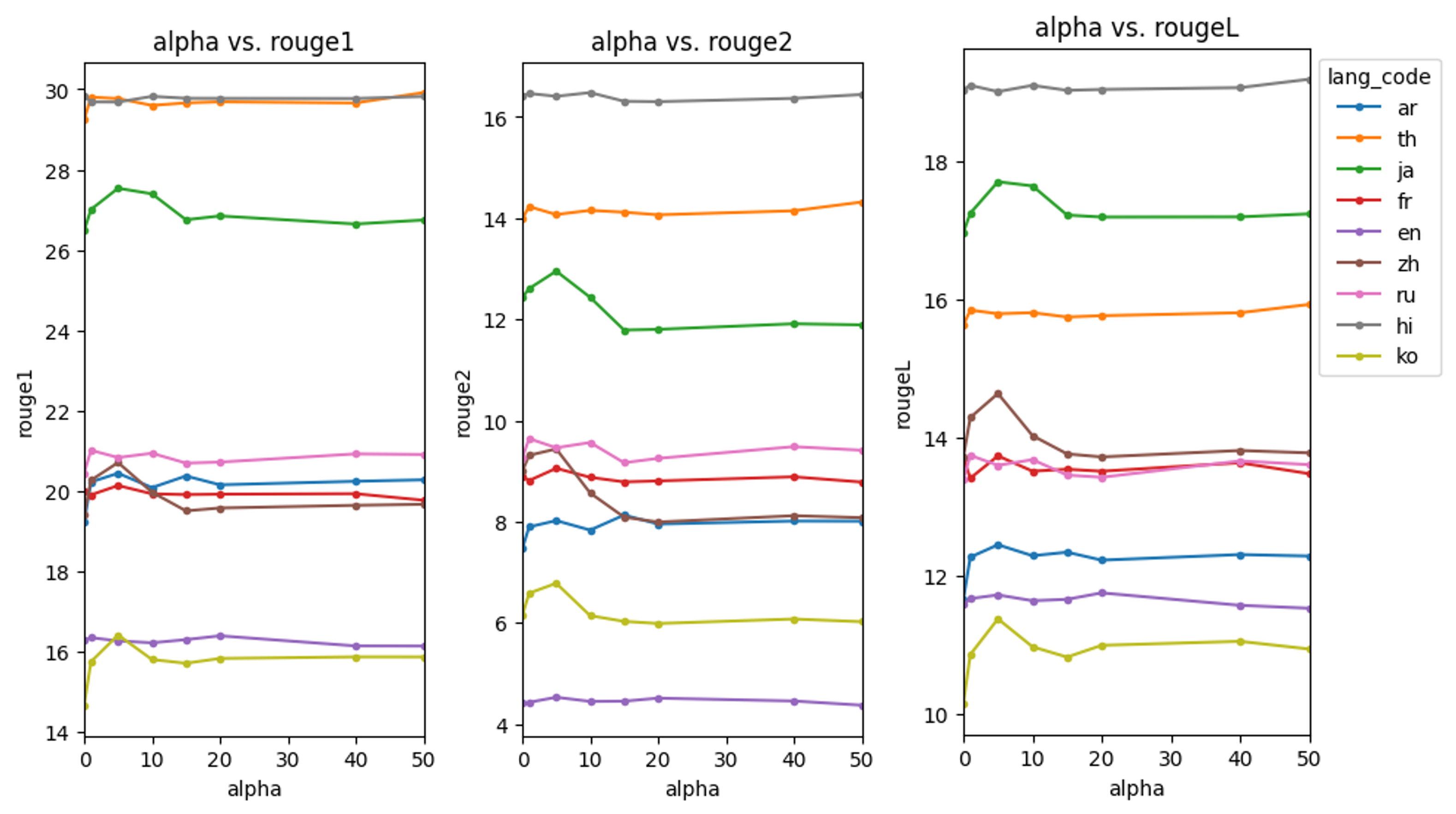
Figure 6: Varying α in LATB reveals a trade-off between confusion suppression and performance; there exists an optimal regime before degradation sets in.
Adaptive-LATB abrogates this brittleness, as its β threshold allows selective activation only when necessary, reducing the risk of over-constraint and preserving valid cross-lingual insertions (Figure 7, Figure 5).
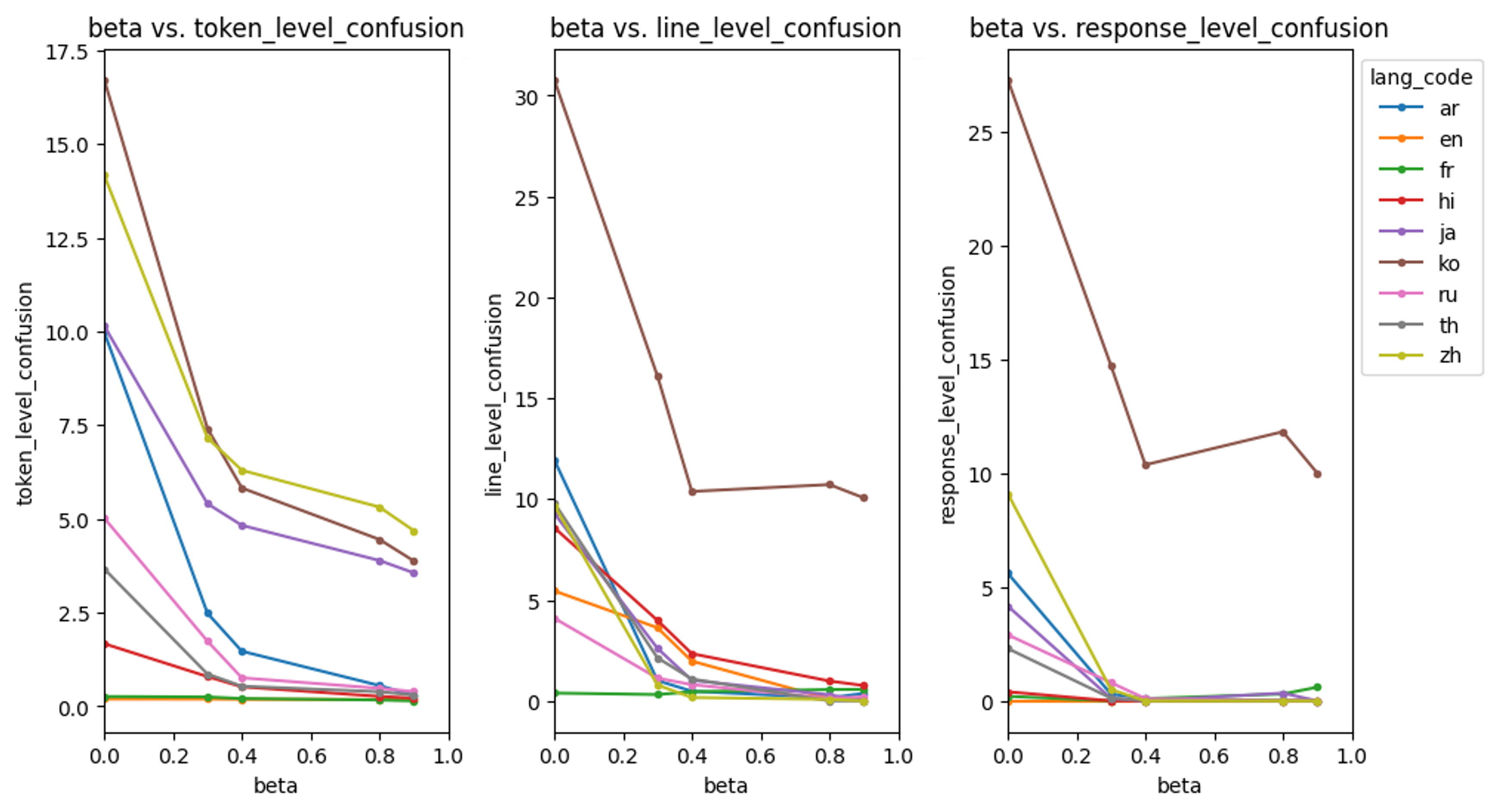
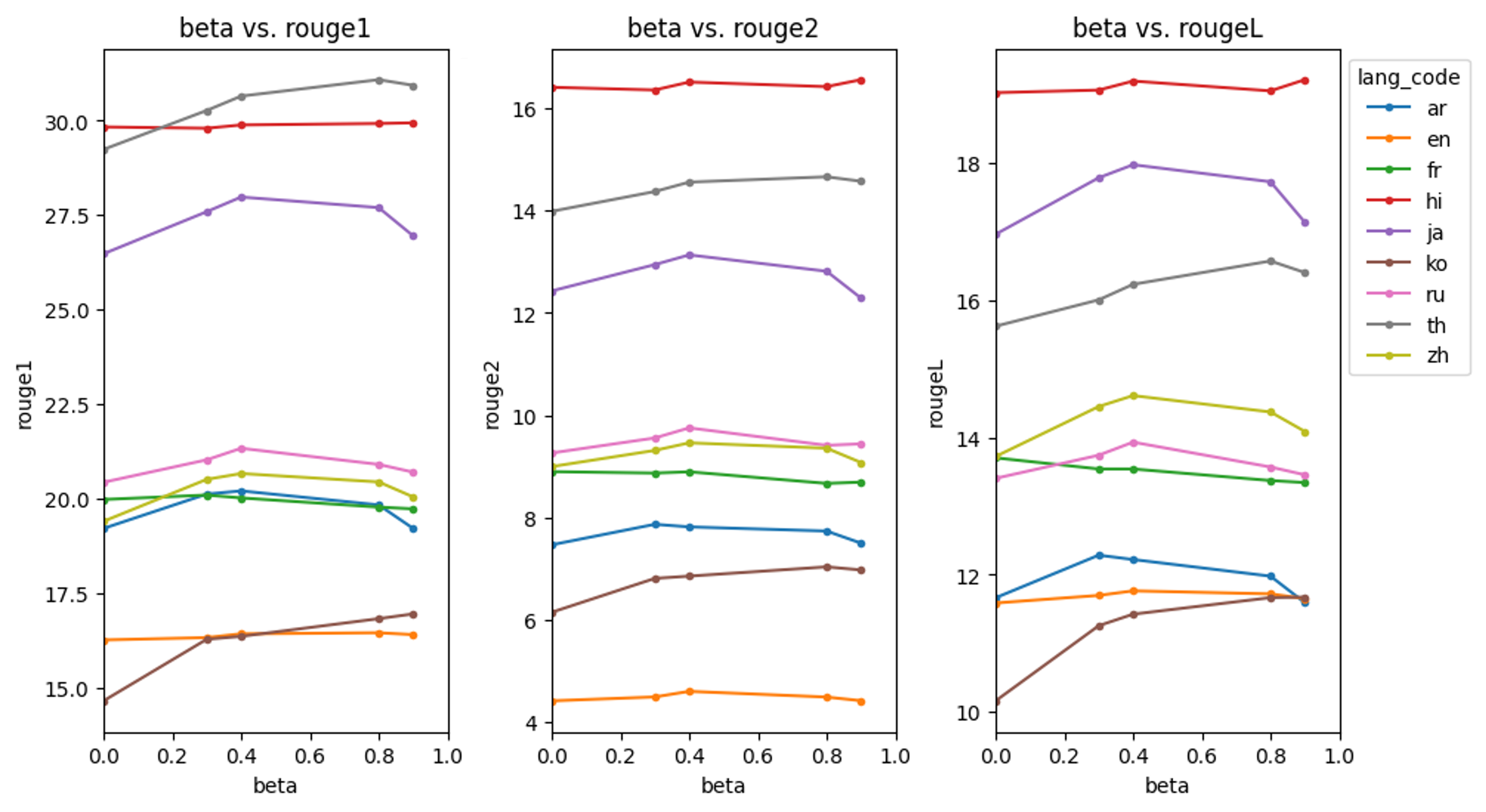
Figure 7: Tuning β in Adaptive-LATB demonstrates flexible trade-off control between language confusion and task accuracy.
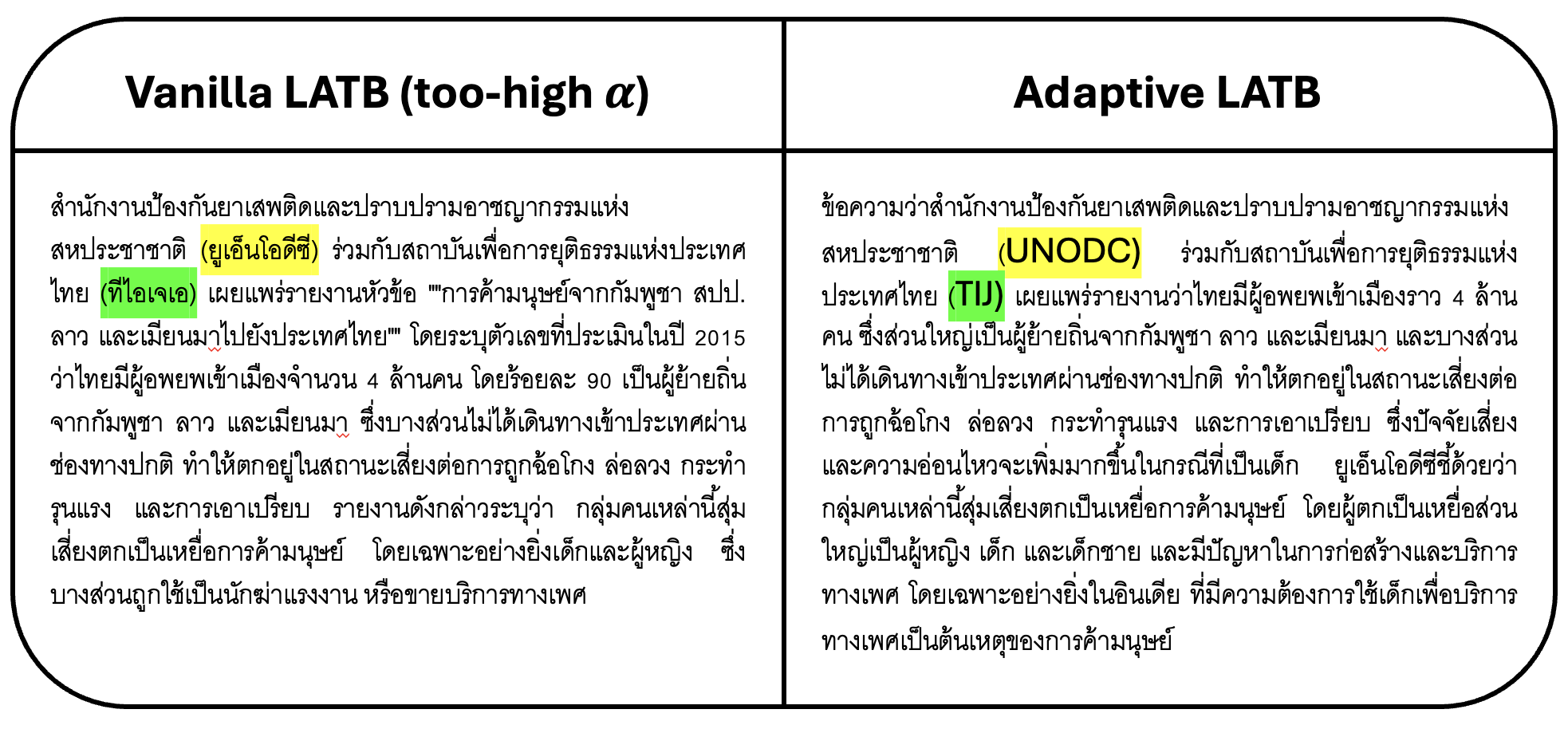
Figure 5: Comparative outputs show how Adaptive-LATB avoids overconstraining, producing more natural code-mixed or specialized output than high-α static boosting.
Theoretical Analysis
The invariance of the intra-language token ranking under boosting ensures that task performance—conditional on correct language usage—remains unchanged. This is empirically verified: when tested on a well-aligned multilingual model (Qwen3 4B-I), LATB neither induced confusion nor decreased ROUGE. The method thus adapts gracefully depending on the backbone's alignment status.
Practical Implications
LATB and its adaptive extension are parameter-free, lightweight, and require only a small amount of Unicode-based lexicon engineering per target language. Because they operate directly on the logit tensor prior to sampling, no gradient-based adaptation is needed and they impose negligible runtime cost (analyzed throughput shows practically unaltered generation speed for vanilla LATB).
These properties make LATB highly suitable for production LLM deployments where inference-time language control is desired without the overhead of continual retraining for each language addition or adaptation.
Limitations and Future Directions
LATB and Adaptive-LATB exhibit reduced efficacy for aligning OOV tokens and in language contexts with high overlap in Unicode sets, e.g., Latin-script code-mixing. Future research could combine boosting with improved, context-sensitive language identification at the subword level, or extend the dynamic gating mechanism to utilize additional confidence metrics or meta-linguistic features. Automated, language-agnostic approaches to hyperparameter selection and multi-language alignment are also promising directions.
Conclusion
This work introduces a rigorous, tuning-free approach to abate language confusion in LLMs, shifting language control into the inference process via Language-Aware Token Boosting. The adaptive variant provides robustness against over-constraining, and both approaches enable scalable, on-the-fly multilingual control. The demonstrated results on diverse languages and models underscore their effectiveness and practicality for expanding the real-world applicability of monolingually-biased LLMs.
Reference: "Language-Aware Token Boosting: LLM Language Confusion Reduction Without Tuning" (2606.08994).