- The paper introduces a generalized model by incorporating stochastic fluctuations in both position and momentum, yielding a comprehensive formulation of heat conduction.
- The methodology employs coupled harmonic oscillators and stochastic differential equations to derive Fourier’s law and analyze transient phenomena.
- Numerical and analytical results confirm the emergence of macroscopic heat conduction properties, including Kapitza resistance at thermal interfaces.
Time Evolution of Heat Conduction in a Generalized Model of Brownian Motion
Introduction and Motivation
The study "Time Evolution of Heat Conduction in a Generalized Model of Brownian Motion" (2606.08839) addresses the derivation of macroscopic heat conduction laws from microscopic dynamics, focusing on achieving a thermodynamically consistent framework that naturally reconciles with quantum open system descriptions. The work extends the classical Brownian motion paradigm by incorporating fluctuation and dissipation directly into both position and momentum equations, ensuring compatibility with the Gorini-Kossakowski-Sudarshan-Lindblad (GKSL) equation and the CPTP condition required for quantum master equations.
This generalized approach entails that position and momentum exhibit continuous but nowhere differentiable stochastic trajectories, a qualitative departure from standard models where only momentum is subject to stochastic influences. The paper rigorously studies whether such modified microscopic dynamics sustain macroscopic principles such as Fourier’s law and whether the approach faithfully encapsulates non-trivial phenomena like Kapitza resistance at thermal interfaces.
Theoretical Framework
Building on a network of linearly coupled harmonic oscillators interacting with individual heat reservoirs, the authors use a set of stochastic differential equations where both q~i and p~i evolve under independent Wiener processes. The dissipation coefficients γqi (position) and γpi (momentum) encode the balance between fluctuation and relaxation mechanisms. This setting interpolates between the traditional Brownian case (γqi→0) and the fully generalized model.
Heat is consistently defined via stochastic energetics, including both the position and momentum noise contributions. This extension is essential due to the breakdown of the conventional velocity-momentum correspondence when noise acts on position. The heat current expressions thus ensure compliance with the first and second laws at the trajectory level, even for nowhere-differentiable stochastic paths.
Emergence of Fourier’s Law and Steady-State Analysis
The analysis focuses first on the N=2 oscillator system, providing tractable algebra and facilitating detailed analytical treatment. Linearization and dimensional reduction reveal that, in steady state, the heat current J1ss between the baths is strictly proportional to the temperature difference ΔT:
J1ss=κΔT
where an explicit analytical expression is derived for the thermal conductivity κ as a function of model parameters. The solution incorporates finite p~i0, confirming that Fourier-type linear thermal response persists within the generalized framework.
For the non-interacting limit (p~i1), equipartition is satisfied and each oscillator thermalizes with its respective bath. For nonzero interaction, the effective temperature discontinuity between oscillators and baths naturally arises, embodying microscopic thermal boundary resistance—a robust manifestation of Kapitza resistance observed experimentally.
Stochastic Trajectories: Differentiability and Dynamics
The inclusion of position noise induces dramatic structural changes in the system's stochastic trajectories. For p~i2, only momentum exhibits jagged, nowhere-differentiable paths, while position remains smooth. When p~i3, both momentum and position are rendered continuous but nowhere differentiable.
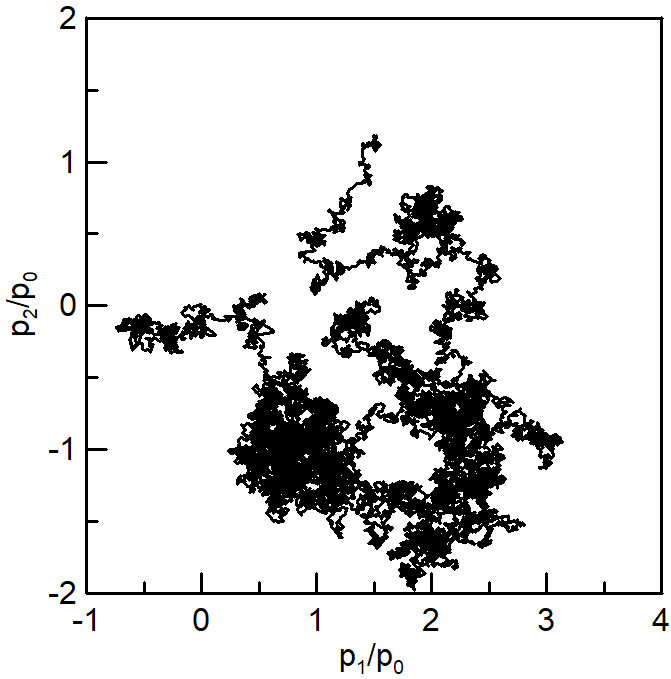
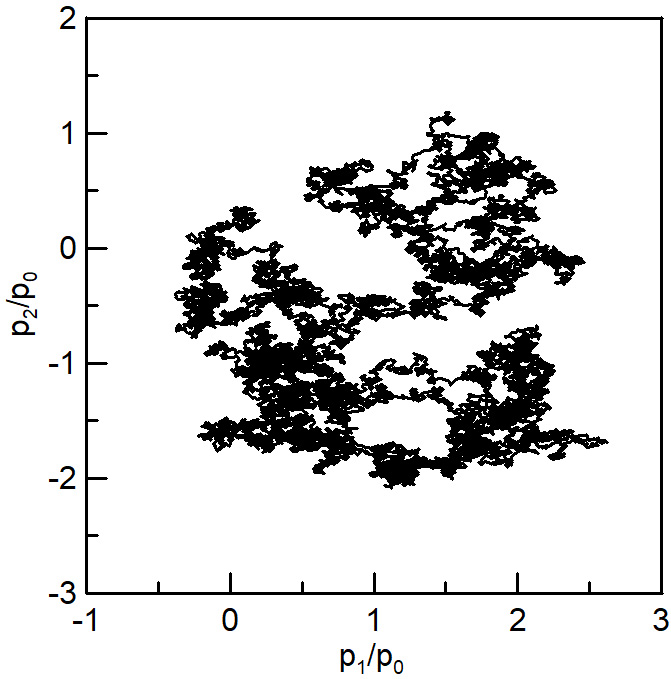
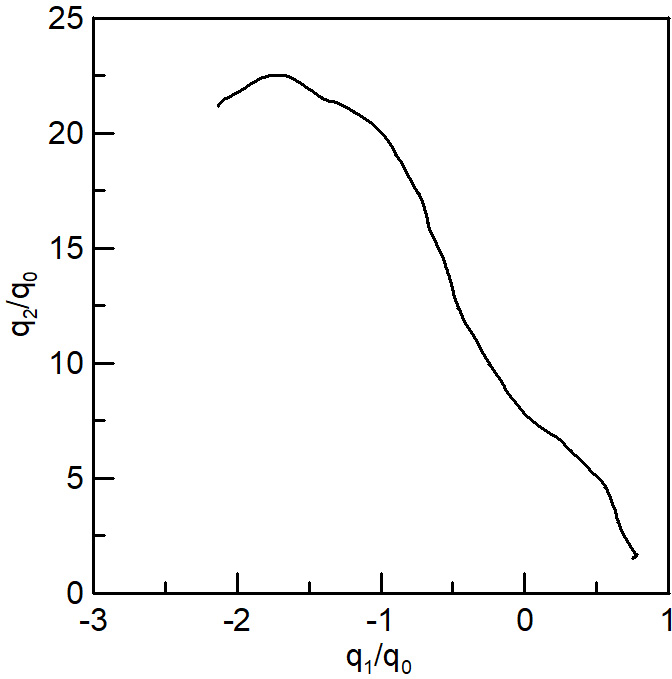
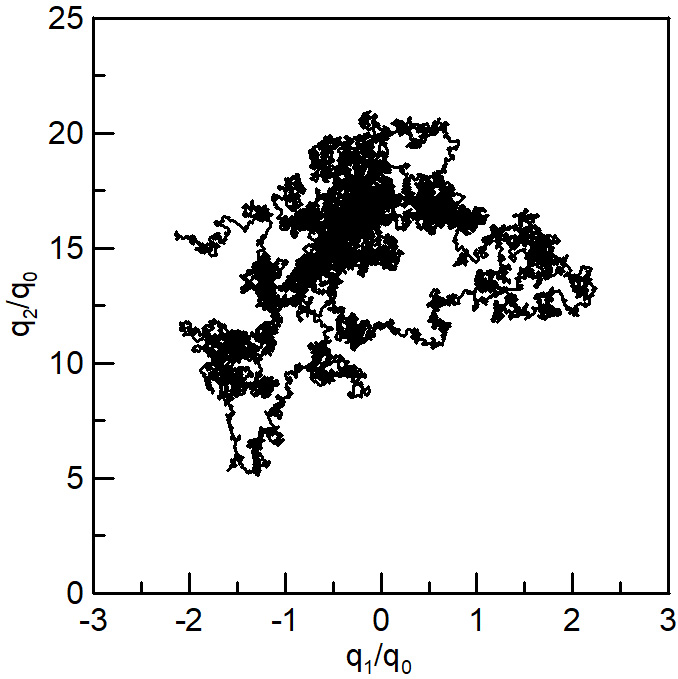
Figure 1: Trajectories obtained by solving the generalized stochastic differential equations—momentum (top) and position (bottom) for p~i4 (left, smooth position) and p~i5 (right, both zigzag).
This feature is crucial, as the stochastic calculus no longer supports the simplistic association of velocity with momentum, making RLL-type current definitions (force-velocity products) ill-posed.
Transient Regimes and Non-equilibrium Effects
Numerical integration of the correlation function evolution equations exposes rich transient dynamics upon sudden activation of interparticle interaction:
- For standard Brownian motion (p~i6), immediately after interaction onset, heat backflows from both baths due to a sudden increase in system potential energy.
- With p~i7, the heat current exhibits a finite instantaneous response, whose sign is dictated by the nature of the interaction—negative for attractive, positive for repulsive. This “instantaneous jump” arises from direct stochastic energy transfer mediated by position noise, distinct from standard models.
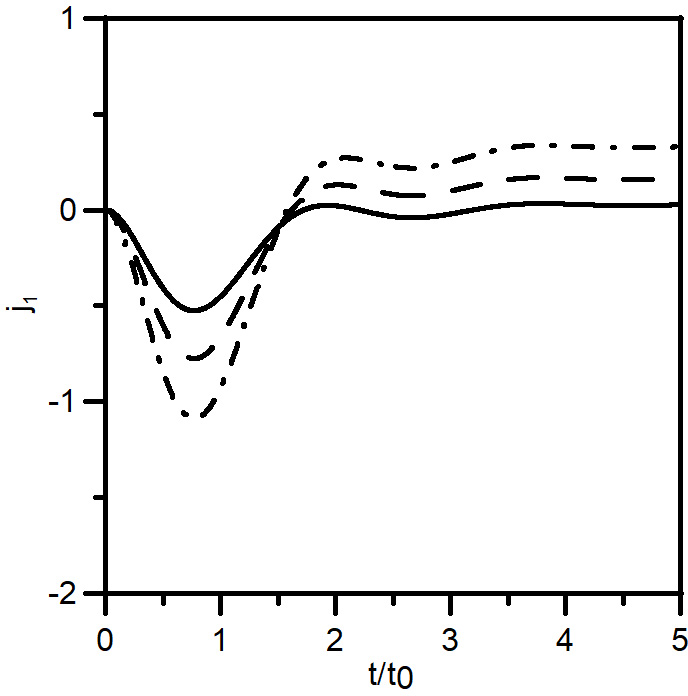
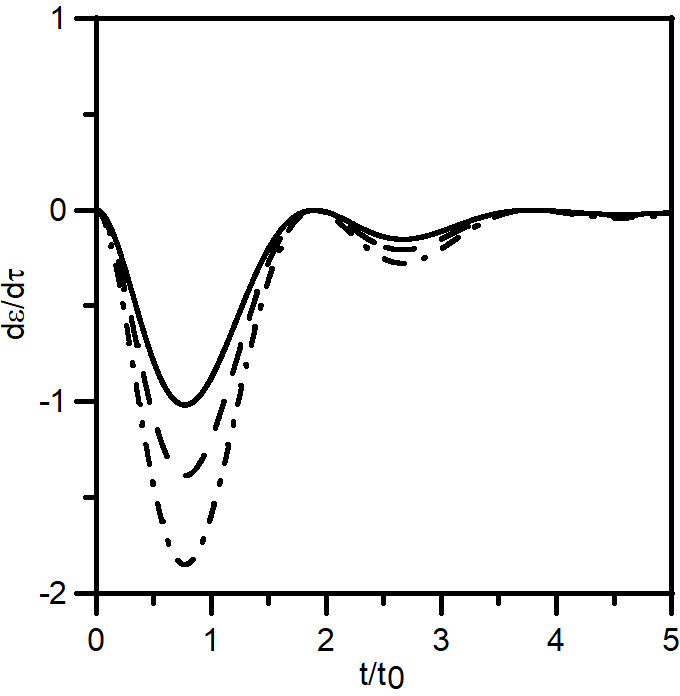
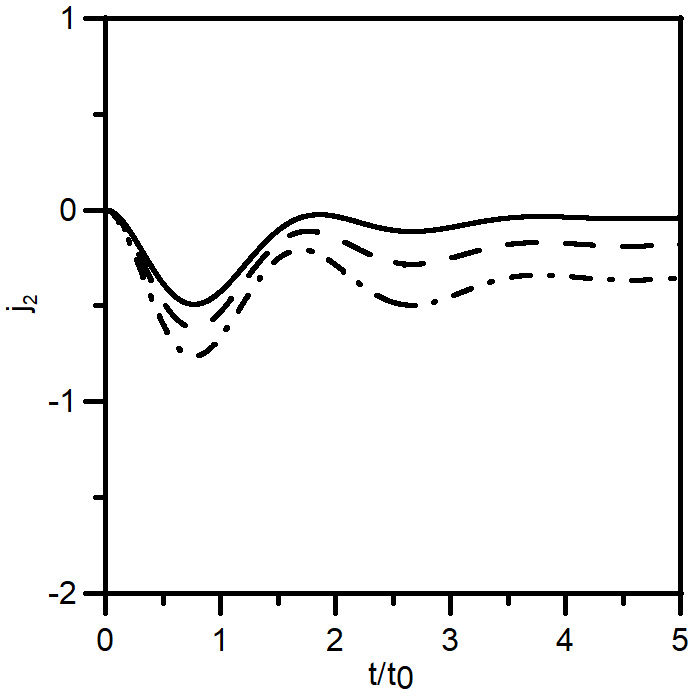
Figure 2: The time evolution of the heat current p~i8, system energy derivative p~i9, and heat current γqi0 for standard Brownian motion (γqi1) with various temperature biases.
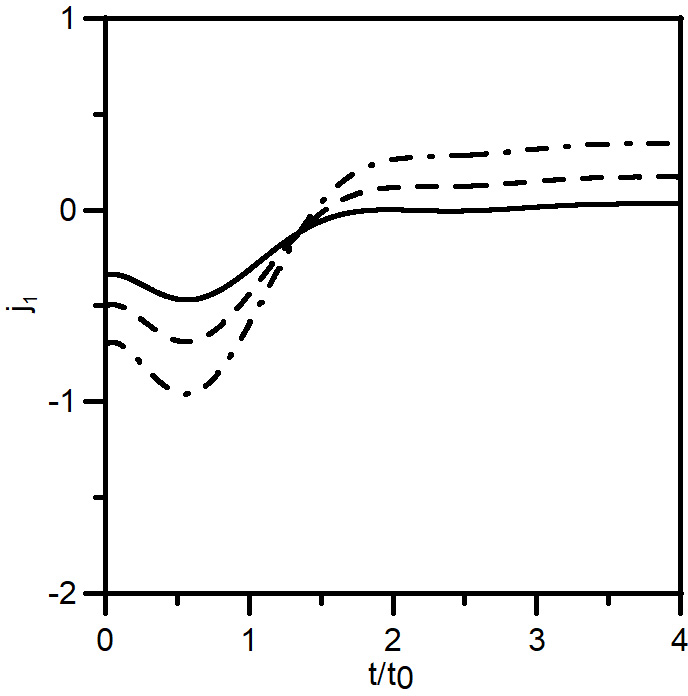
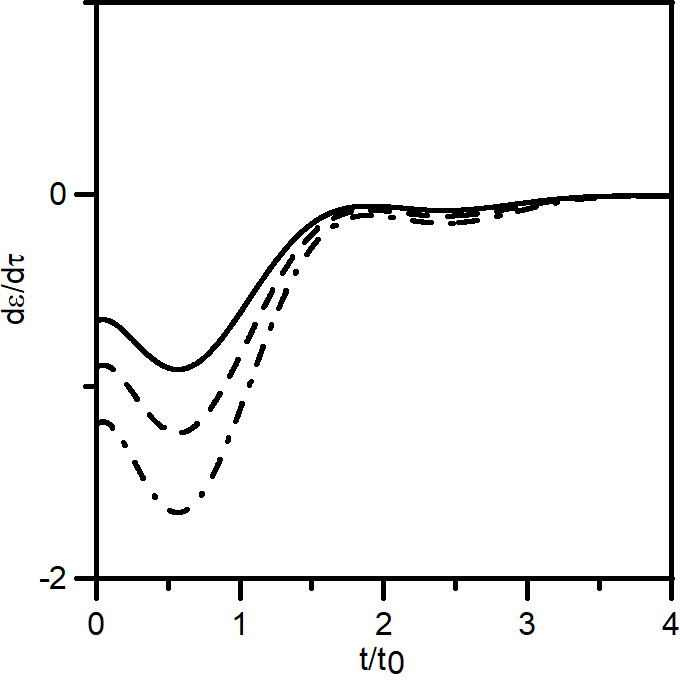
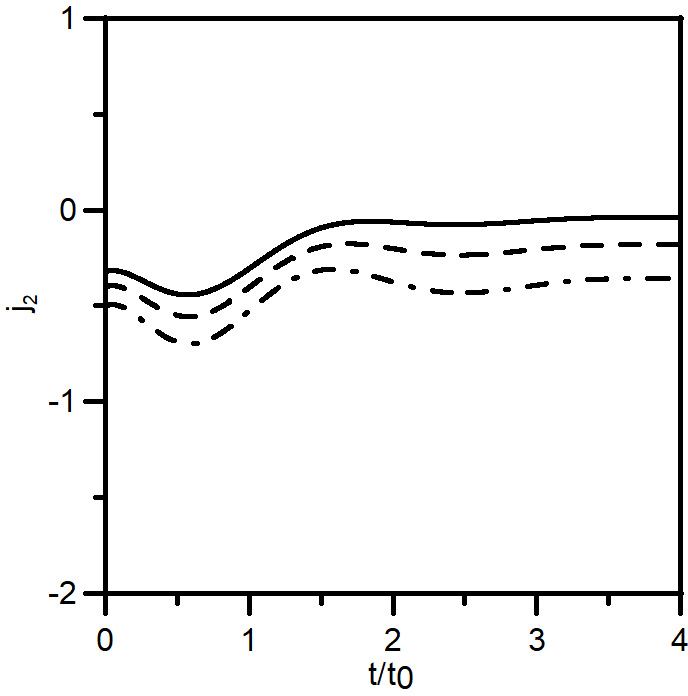
Figure 3: The time evolution of the heat current and energy derivative for the generalized model with γqi2 demonstrates the initial heat current jump and the subsequent relaxation to steady-state.
As γqi3 increases, the transient minimum in γqi4 disappears, yielding monotonic relaxation. The theoretical dependence of initial currents on interaction sign and strength is quantitatively accounted for by the analytically derived expressions.
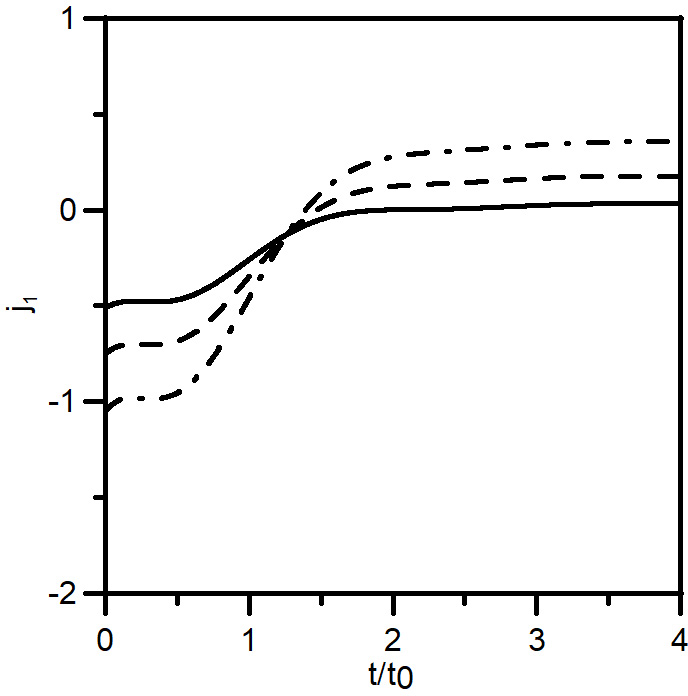
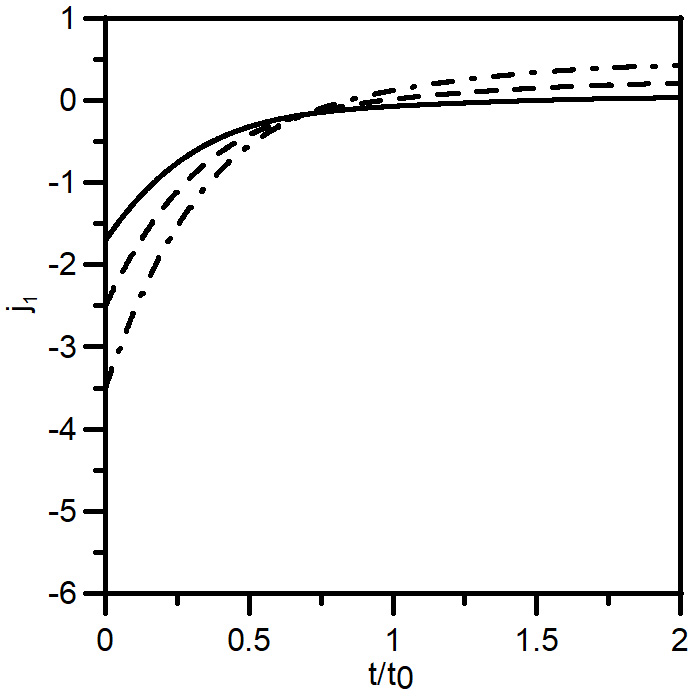
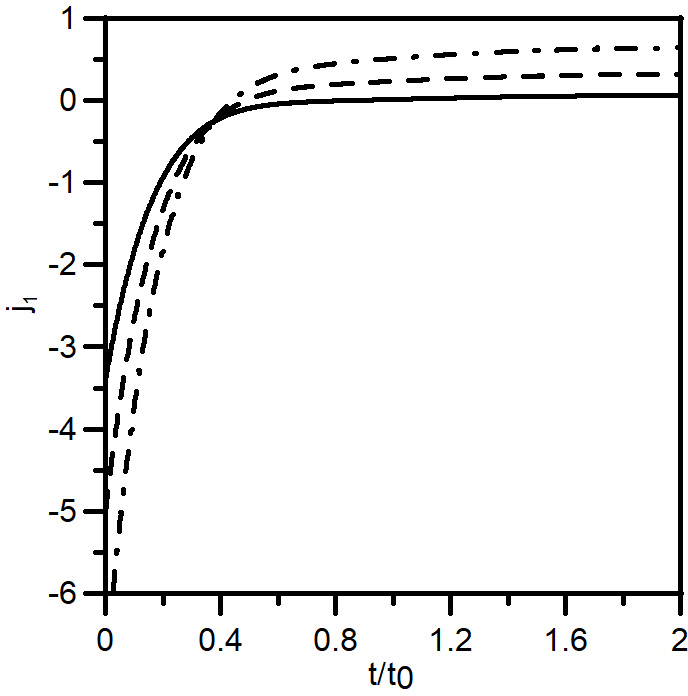
Figure 4: The time evolutions of γqi5 for increasing γqi6, showing monotonic approach to steady state without the minima observed for smaller γqi7.
For repulsive couplings, the energy change and heat flows reverse direction as predicted; the framework captures these energy-budget determinants in full generality.
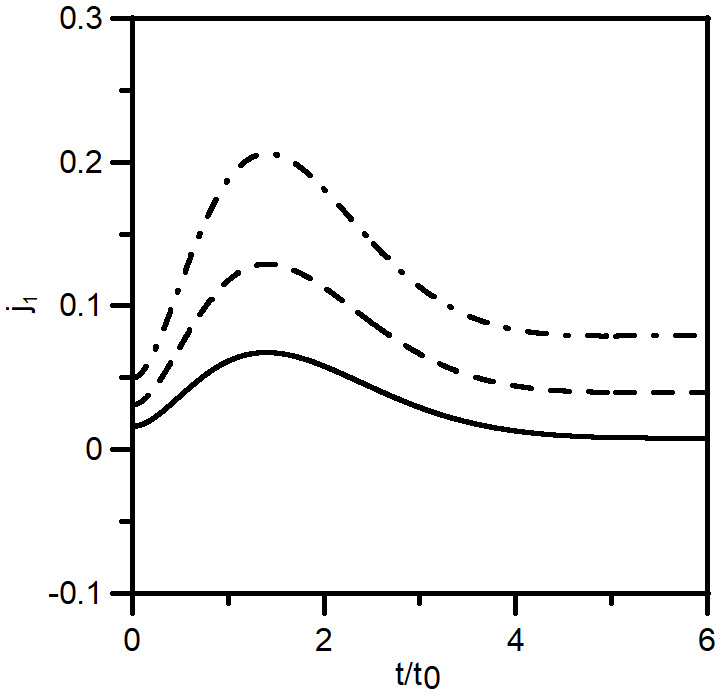
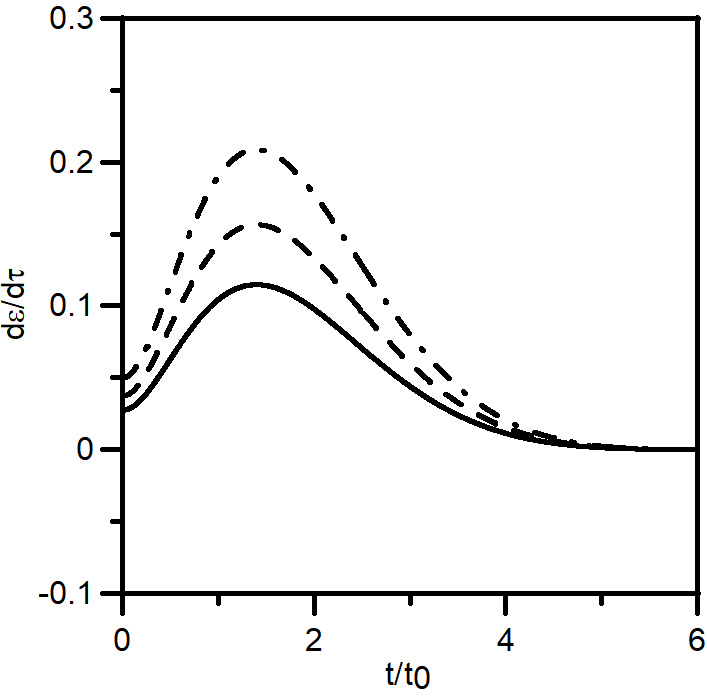
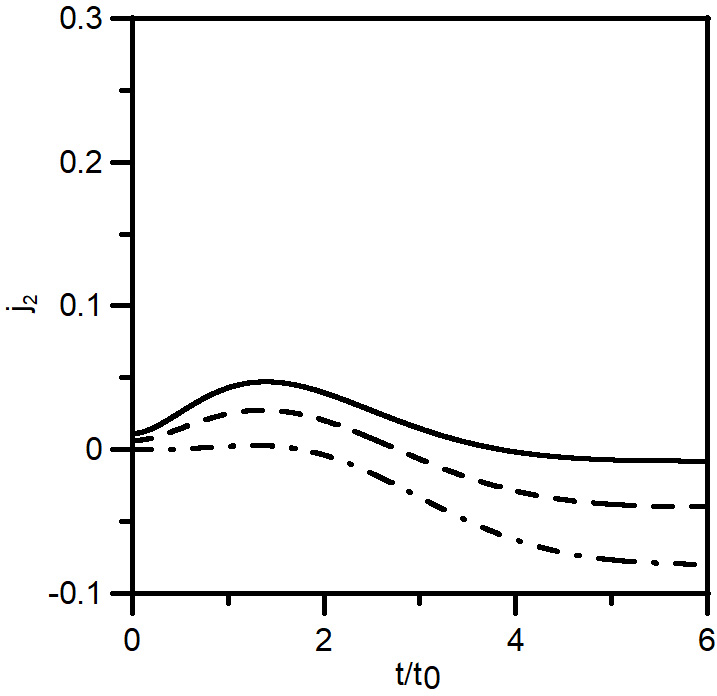
Figure 5: Heat current, energy rate, and counter-current plots for repulsive coupling (γqi8), demonstrating energy absorption at γqi9.
Comparison with Standard Approaches and Implications
By referencing the RLL model, which assumes smooth velocity fields and defines heat current as force-velocity products, the article stresses the breakdown of these constructs in the generalized setting. The generalized model’s definition—via stochastic energetics—remains robust under nowhere-differentiable paths and upholds rigorous first and second law consistency even when force-velocity products become mathematically ill-defined.
Implications and Future Directions
The work demonstrates that generalized Brownian motion, when endowed with stochasticity and dissipation in both position and momentum, is fully compatible with linear-response phenomena and interfacial resistances observed in real systems. Importantly, the formulation sustains strong consistency with quantum thermodynamic requirements. The approach also resolves known deficiencies of overdamped stochastic models (e.g., divergence of conductivity in the strong-coupling limit).
The framework is positioned as a benchmark for exploring quantum-to-classical correspondence in thermodynamic transport, with implications for ongoing debates between global and local master equation implementations in open quantum systems. The natural emergence of a global dynamical structure in the quantized version underscores the validity of this approach for modeling realistic system-bath interplay.
A pivotal open question concerns the persistence of anomalous transport (e.g., ballistic vs. diffusive behavior) in extended one-dimensional chains (γpi0) with non-zero positional dissipation. The presence of position noise could act as an intrinsic scattering mechanism, potentially suppressing long-range correlations and reestablishing normal, size-independent conductivity.
Conclusion
This paper provides a mathematically rigorous and physically consistent framework for analyzing heat conduction in systems described by generalized Brownian motion, ensuring compatibility with both stochastic thermodynamics and open quantum system theory. By analytically and numerically investigating both steady-state and transient phenomena, the work validates the emergence of Fourier’s law and microscopic interfacial resistance beyond the reach of standard Brownian models. The approach establishes essential foundations for studying mesoscopic and quantum-classical nonequilibrium phenomena and suggests promising future directions for investigating anomalous and normal transport in extended systems.

