- The paper introduces a sequential, parameter-free beamforming algorithm that optimally switches between piecewise-stationary models.
- It leverages a linear transition diagram to efficiently update model weights, achieving logarithmic regret bounds and low computational complexity.
- Empirical evaluations on simulations and real acoustic data validate its robust performance against classical fixed-memory beamformers.
Beamforming is fundamental in array signal processing, facilitating spatial filtering to enhance desired sources while suppressing interference. The practical efficacy of adaptive minimum power distortionless response (MPDR) and related beamformers in real-world non-stationary environments hinges on dynamic covariance estimation. Classical protocols—such as sliding-window or exponentially weighted averaging—operate under a fixed and manually tuned memory horizon, introducing an inherent bias-variance compromise: shorter windows offer rapid change tracking but amplify estimation variance, whereas longer windows yield stable nulling yet sluggish adaptation to abrupt environmental shifts. The optimal adaptation timescale is scenario-dependent and unpredictable, rendering fixed-memory strategies fundamentally sub-optimal.
Heuristic schemes (e.g., subspace tracking, adaptive forgetting, explicit change-point detection) improve adaptability, but all depend on ad-hoc parameterization or statistical regularities, which collapse in adversarial or highly variable situations. This impasse motivates a shift toward a sequential prediction-theoretic framework, assessing performance not with respect to stationary statistics but in competitive terms against the best possible algorithm chosen in hindsight.
The Universal Switching Beamformer (USB) formalizes a theoretically principled, sequentially optimal beamforming algorithm rooted in the competitive sequential prediction literature. The USB leverages a linear transition diagram (LTD) (Figure 1) to implicitly represent an exponentially large ensemble of piecewise-stationary beamforming strategies, each defined by a switching schedule and a corresponding local MPDR weight vector. By recursively updating a probabilistic mixture over all state histories, the USB dynamically reweights candidate models according to real-time output power performance, effectively learning the optimal segmentation and memory length on-line.
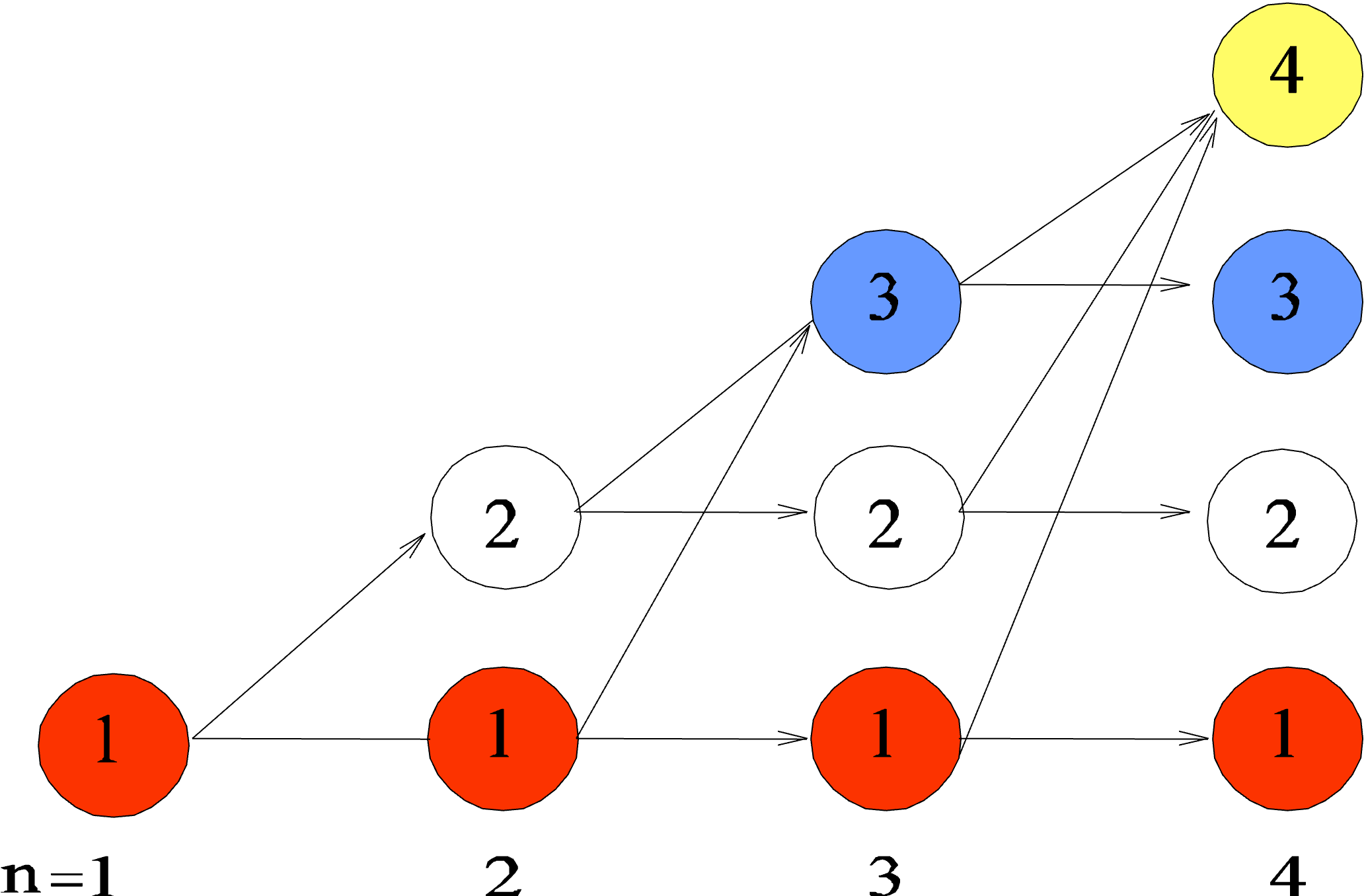
Figure 1: Linear transition diagram for four time-steps: states can transition (upward) or persist (horizontal) at each step.
The regret analysis extends the loss redundancy construction of Krichevsky–Trofimov style mixture code (KT estimator) to this switching ensemble. The paper proves an explicit logarithmic-in-time regret bound between the cumulative output power of the USB and the best (oracle) piecewise-stationary beamformer selected in hindsight:
RW[n]≤2AxAw(k+1)ln(D+1)+AxAw(3k+1)ln(kn)+O(k)
where k is the number of true transitions, Ax and Aw are upper bounds on snapshot and weight vector norm, and D is beamformer rank. This guarantee is distribution-free and holds for arbitrary non-stationarity.
The architecture permits exact, low-complexity sequential updates via pruning and efficient recursion (Woodbury identity for covariance inversion), ensuring practical implementation scalability (O(Nm2) per update).
Simulation Study: Characterization Across Diverse Non-Stationary Regimes
Extensive simulation validates the theoretical claims and exposes USB’s advantageous properties relative to classical and state-of-the-art competitors. The demonstrative example constructs an array scenario with sudden interferer transitions. Compared to an omniscient Capon beamformer, the USB efficiently tracks target signals and actively reallocates probability among competing state models as switch points are encountered. The progression of state probabilities (Figure 2) and their argmax (Figure 3) confirm real-time adaptation and dynamic model selection.
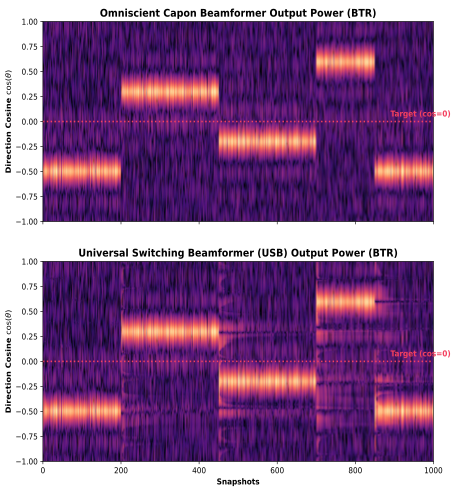
Figure 4: USB and omniscient Capon bearing-time record for the controlled demonstrative scenario.
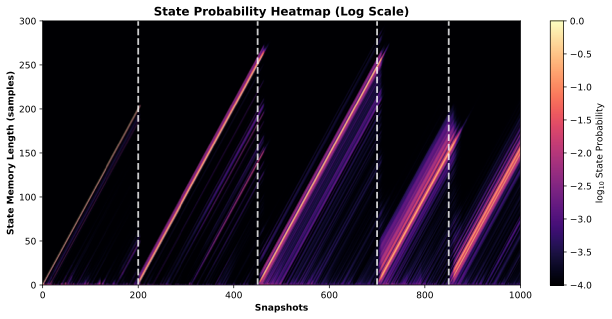
Figure 2: State probability heatmap: weights assigned to outdated states rapidly diminish after true environmental switches.
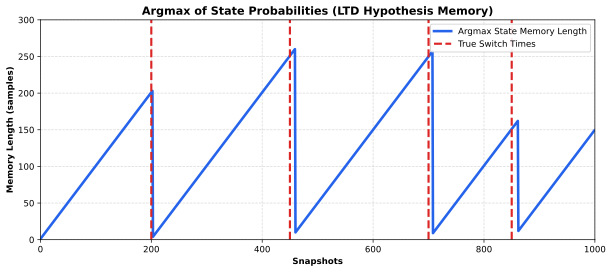
Figure 3: Argmax of state probabilities aligns closely with ground truth transition events.
Visualizing USB beampatterns at key analysis times illustrates its ability to swiftly adjust null directions in response to spatial transitions (Figure 5).
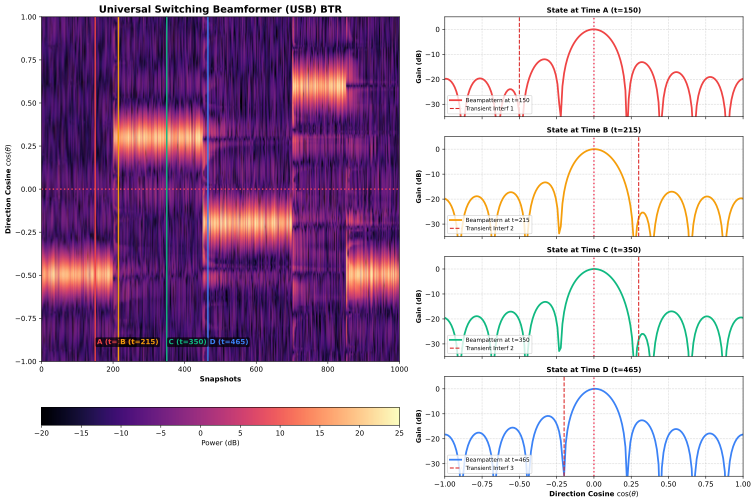
Figure 5: USB’s spatio-temporal adaptation, including rapid null repositioning in response to new interferers.
For piecewise-stationary and temporally variable environments (Figures 6, 7, 9, 10), USB matches or exceeds the lowest achievable mean-squared error (MSE) for both fixed short- and long-memory methods—navigating the bias-variance tradeoff in real-time without parameter tuning.
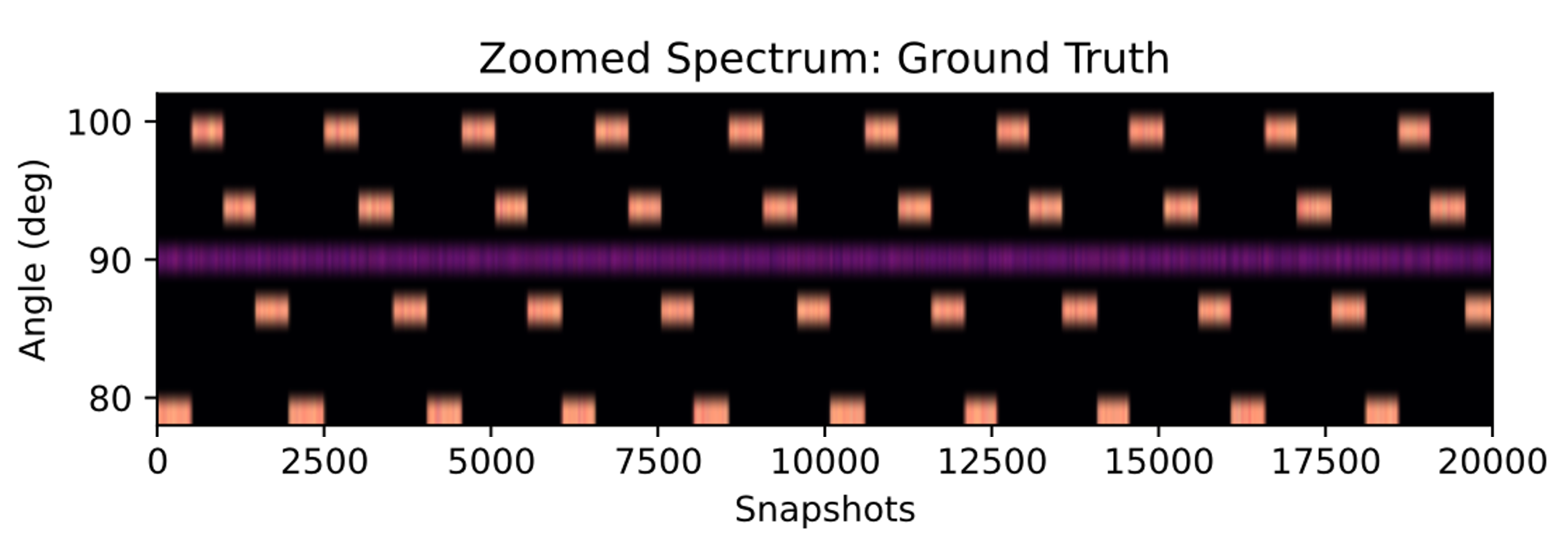
Figure 6: Piecewise-stationary-in-bearing environment, characterized by abrupt angular transitions.
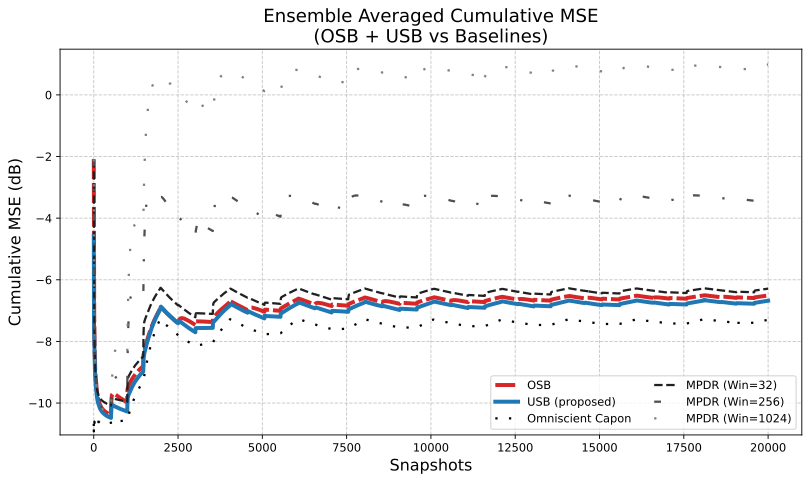
Figure 7: Cumulative MSE indicates seamless bridging between the bias and variance extremities inherent to fixed memory beamformers.
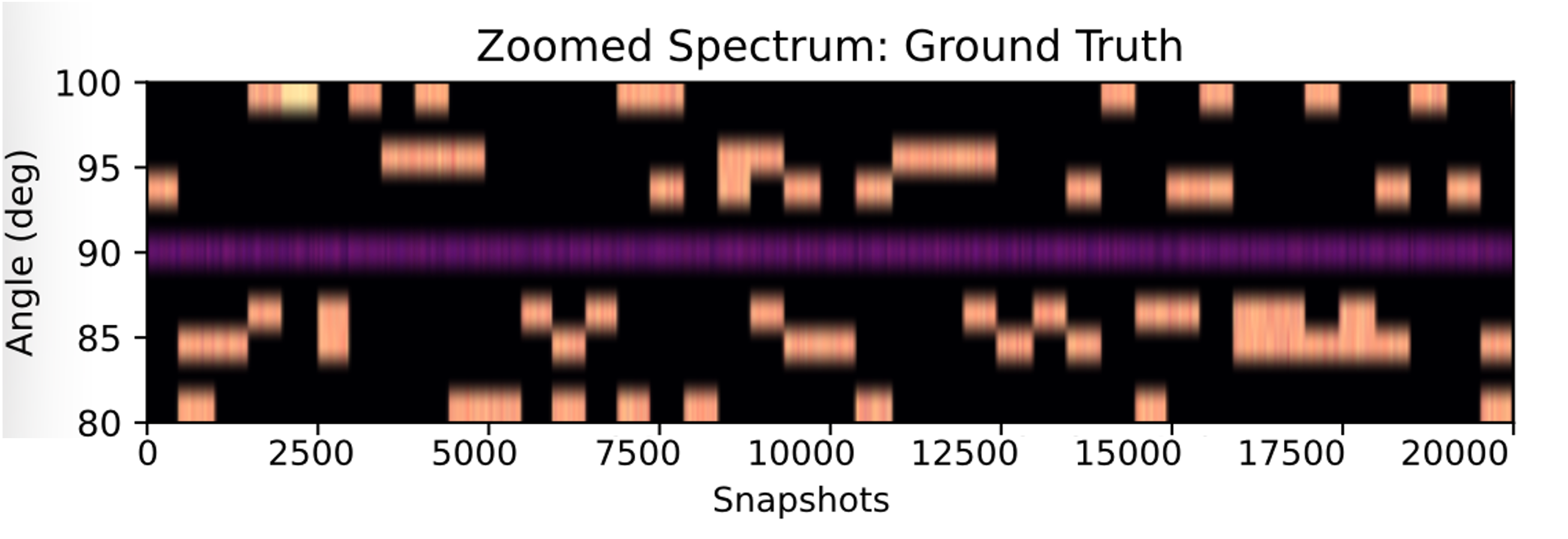
Figure 8: Temporally variable scenario with unpredictable stationary block durations.
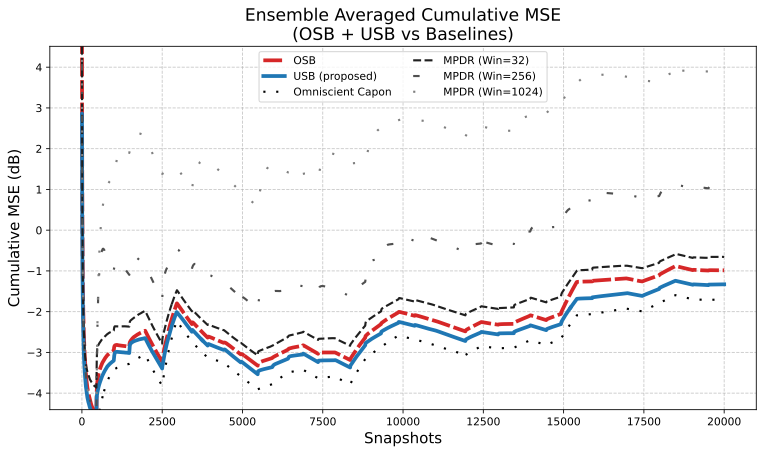
Figure 9: Cumulative MSE for the temporally variable scenario: USB adapts its integration window length natively.
Monte Carlo results in stochastic birth-death interference settings further corroborate USB’s rapid SINR recovery (Figure 10) and cumulative target estimation error (Figure 11) that tracks the best possible dynamic oracle.
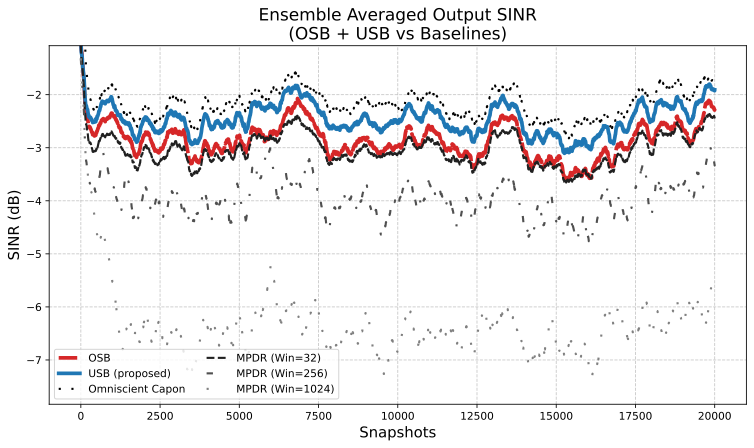
Figure 10: Output SINR in birth-death scenario; USB rapidly redirects probability to optimal states as new interferers arise.
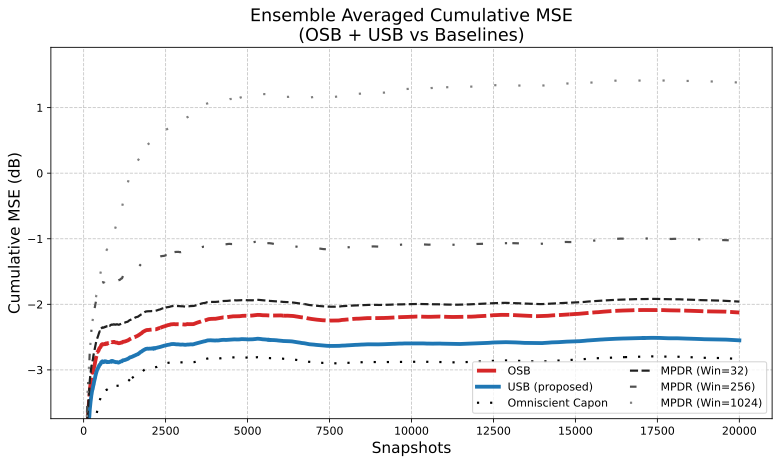
Figure 11: Cumulative MSE over 200 Monte Carlo trials demonstrates regret minimization.
Experimental Evaluation on Real Acoustic Data
The SwellEx-96 S59 naval acoustic dataset provides a high-fidelity benchmark. On this operational data, USB realizes high spatio-temporal contrast while maintaining robust noise suppression (Figure 12), consistently outperforming the best fixed sliding window, online segmented, and conventional beamformers in cumulative output power (Figure 13), and achieving reliable white noise gain across broadside and off-broadside look directions (Figure 14).
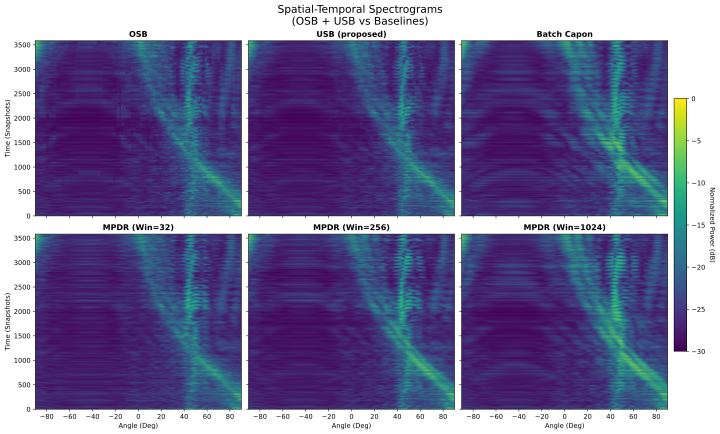
Figure 12: SwellEx-96 acoustic data: USB retains strong noise suppression (short-window regime) and high angular resolution (long-window regime) even with source motion.
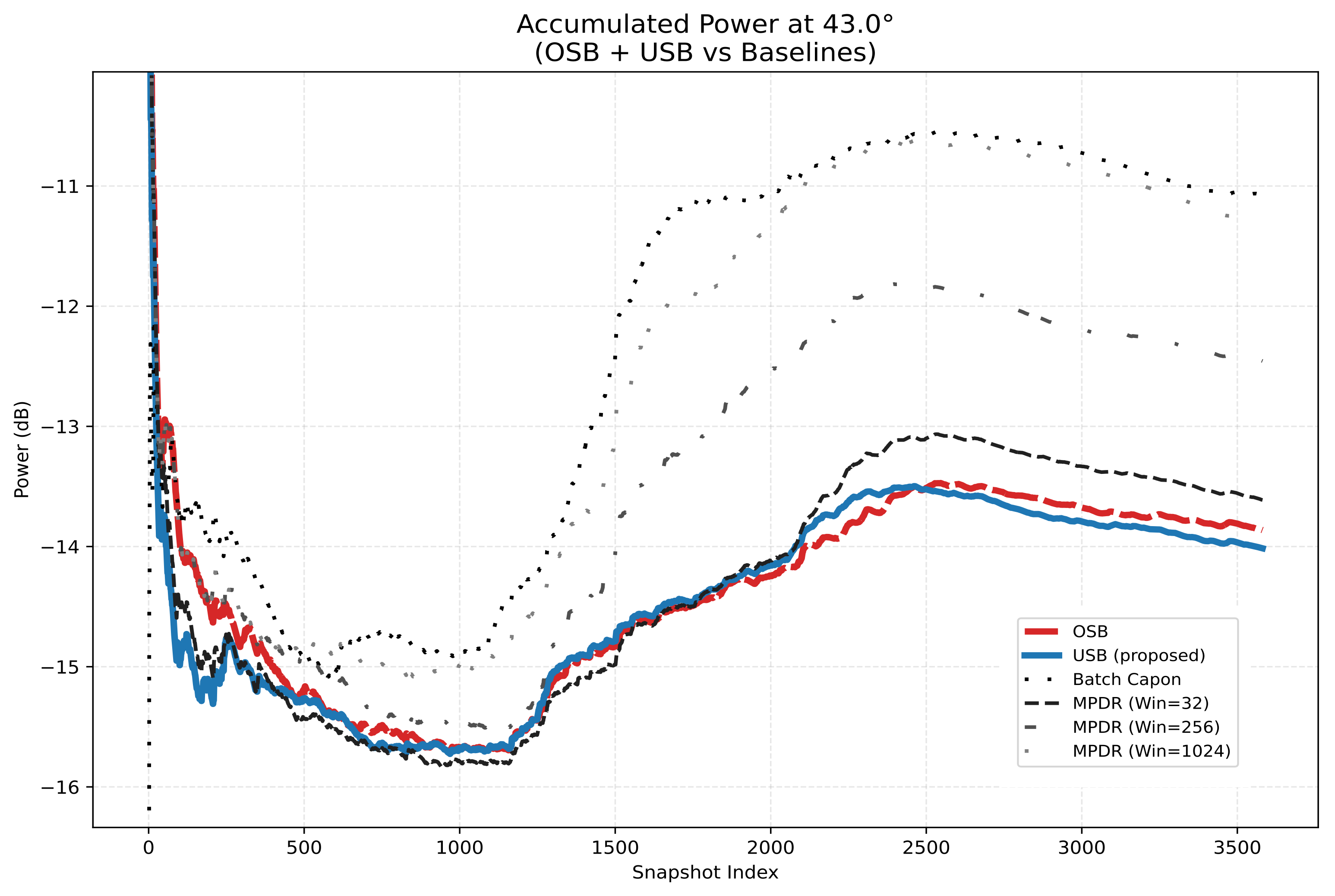
Figure 13: Cumulative output power at 43∘: USB dominates all sliding window and OSB alternatives.
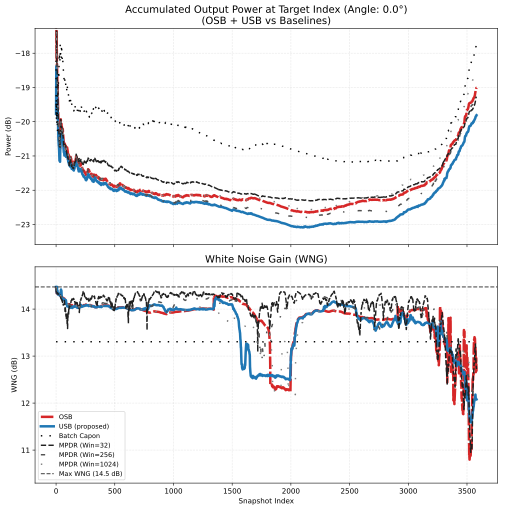
Figure 14: Accumulated power and white noise gain at 0∘: USB performs reliably on both robustness and resolution metrics.
Accompanying beampattern visualizations (Figure 15) confirm that the USB dynamically places spatial nulls in line with interferer movements, with mixture weights adapting in accordance with the incident field’s evolution.
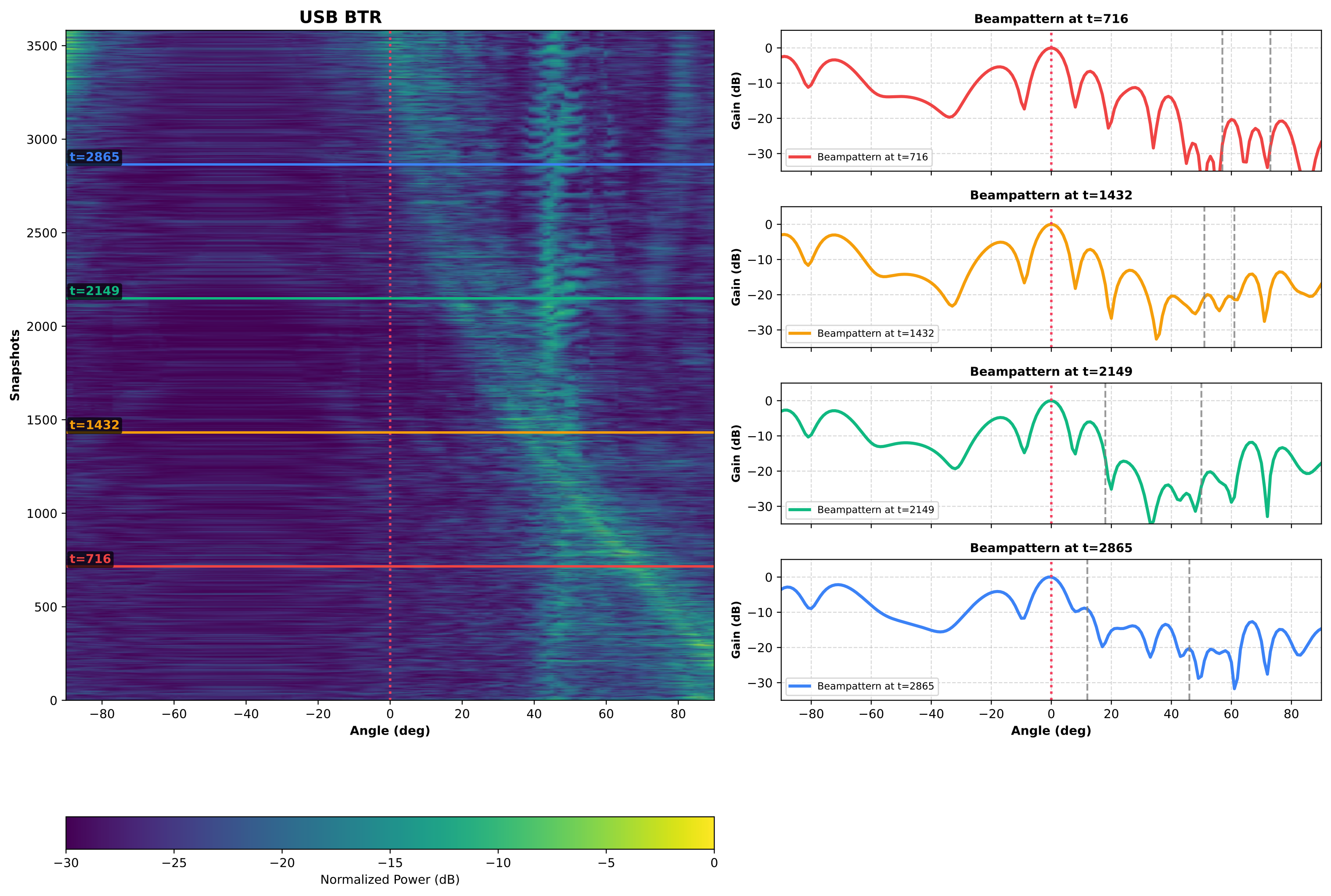
Figure 15: BTR and beampattern snapshots for SwellEx-96: mixture weights dynamically adapt to place spatial nulls at interference directions as required.
Theoretical and Practical Implications, and Future Directions
The USB’s methodological contribution lies in unifying sequential competitive prediction and robust adaptive beamforming, establishing data-driven, parameter-free performance guarantees previously unattainable under classical bias-variance analytic models. Insofar as the regret bounds are logarithmic and do not rely on statistical ergodicity, USB is robust to environments with complex, adversarial, or highly nonstationary evolution.
Practically, the approach obviates costly parameter tuning and adapts seamlessly to both stationary and non-stationary regimes—significant for large-scale, autonomous, or mission-critical sensing platforms. The recursive implementation makes it suitable for low-latency, computationally constrained applications.
Moving forward, extensions to multi-target tracking, integration with non-Gaussian objective functions, and generalization to distributed/federated array processing are all natural developments. The competitive framework also aligns with online learning and continual adaptation advances in broader machine learning, suggesting promising cross-domain generality.
Conclusion
The Universal Switching Beamformer effectively resolves the long-standing memory trade-off in adaptive array signal processing for highly non-stationary environments. By synthesizing theoretical regret minimization with practical recursive algorithms, USB achieves robust, parameter-free performance that adapts to arbitrary change patterns, and is substantiated both by strong theoretical bounds and comprehensive empirical evidence.
Reference: "A Switching Beamformer for Highly Non-Stationary Environments" (2606.08385)