- The paper identifies a dome-like Tc evolution under pressure, revealing an emergent local attraction as the key mechanism driving Cooper pairing in Hg1223.
- Ab initio cGW Hamiltonian derivations combined with variational Monte Carlo techniques capture layer-resolved self-doping and the coexistence of superconducting and antiferromagnetic orders.
- Results benchmark experimental Tc trends and propose materials design strategies by optimizing the balance between onsite repulsion and reduced off-site Coulomb interactions.
Microscopic Mechanism of High-Temperature Superconductivity in HgBa2Ca2Cu3O8: Ab Initio Insights Under Pressure
Introduction
The paper performs an ab initio computational analysis of the triple-layer cuprate HgBa2Ca2Cu3O8 (Hg1223), which holds the record for highest ambient pressure superconducting critical temperature (Tc) among all known cuprates. The study utilizes recently developed constrained GW (cGW)-based Hamiltonian derivation and highly accurate variational Monte Carlo (VMC) solvers augmented with neural networks. The investigation encompasses ambient and pressurized Hg1223, treating layer-resolved properties, self-doping phenomena, and competition between superconducting (SC) and antiferromagnetic (AF) orders.
A primary finding is the identification of a dome-like pressure dependence of Tc, consistent with experiment, and the uncovering of a local, instantaneous attraction emerging from strong onsite Coulomb repulsion as the root of Cooper pairing in this material. The results are benchmarked against other cuprates, single-, double-, and infinite-layer, and interpreted in terms of interaction parameters U/∣t1∣ and the role of non-local Coulomb repulsion V.
The effective Hamiltonian is derived using cGW with self-interaction correction and level renormalization feedback, yielding parameter-free layer-resolved model descriptions for the antibonding states formed by strongly hybridized Cu 3dx2−y2 and O 20 orbitals. The Hamiltonian structure includes:
- 21: Long-range hopping terms capturing intralayer and interlayer transfers;
- 22: Layer-dependent onsite Coulomb repulsion;
- 23: Long-range off-site Coulomb interactions;
- 24: Layer-dependent chemical potentials reflecting self-doping.
The ground state is solved using variational wavefunctions with Gutzwiller, Jastrow, doublon-holon, and RBM factors. System sizes up to 25 are accessed, facilitating extrapolation to the thermodynamic limit and accurate treatment of competing orders.
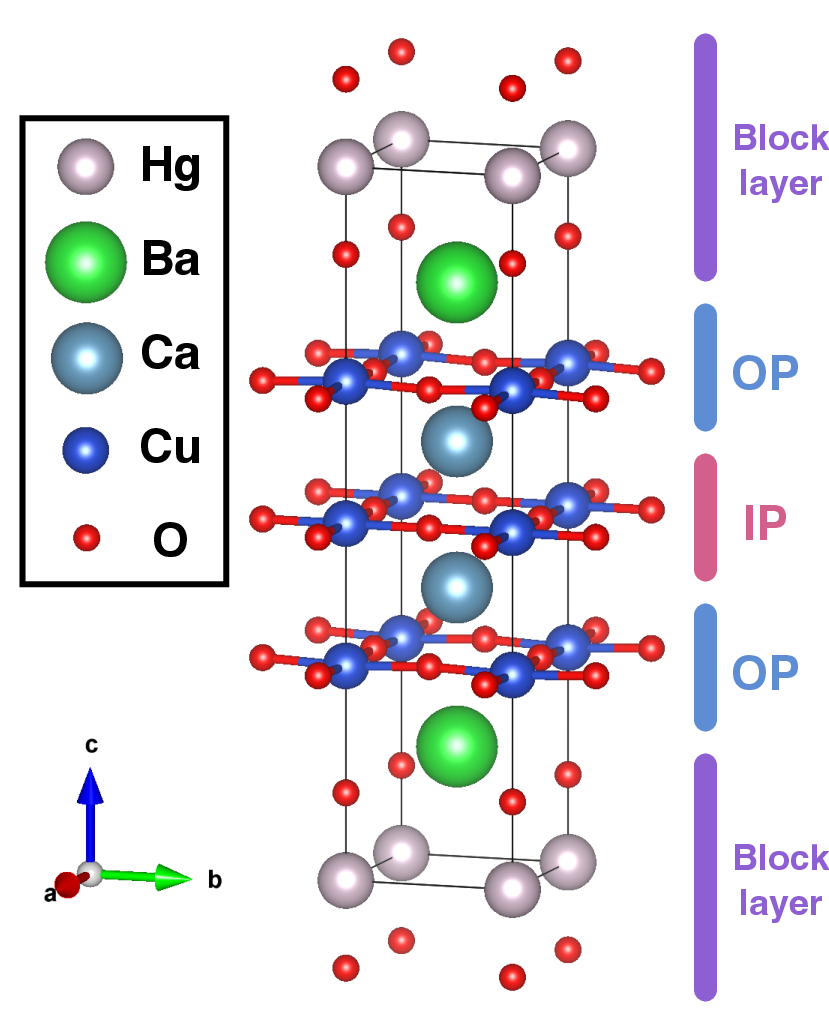
Figure 1: Crystal structure of Hg1223, revealing the arrangement of inner and outer CuO26 planes and primitive cell directions 27.
Ambient Pressure Results: Layer-Resolved Self-Doping, SC Domes, and Order Competition
A distinct aspect of multilayer cuprates like Hg1223 is self-doping, leading to differential hole concentrations between inner (IP) and outer (OP) CuO28 layers. Ab initio calculations quantitatively reproduce this effect, finding lower hole density in the IP.
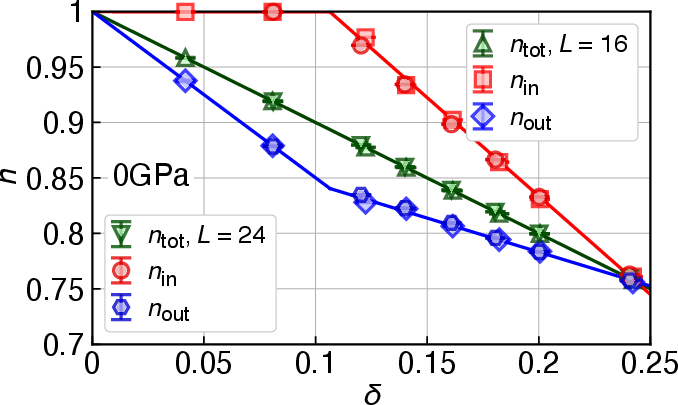
Figure 2: Inner and outer-layer hole densities versus total hole density 29, illustrating self-doping in Hg1223 at ambient pressure.
The SC order parameter 30 exhibits a conventional dome structure, with its maximum for IP (310.14) exceeding that of other cuprates (e.g., Bi2212). The doping position of the dome aligns with experimental measurements. A key observation is the layer proximity effect—despite the IP and OP having differing intrinsic optimal doping, strong interlayer coupling synchronizes their SC domes.
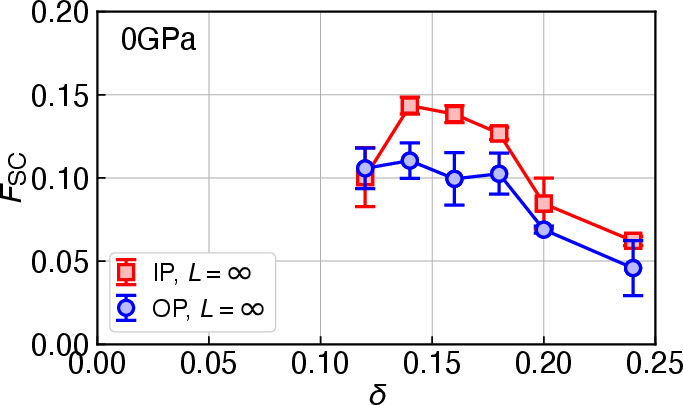
Figure 3: Doping dependence of the SC order parameter 32 for IP and OP after size extrapolation.
A characteristic feature is the coexistence of AF and SC orders in the underdoped regime, especially in the IP close to half-filling. When chemical potential differences are appropriately tuned, proximity-induced coexistence is observed, consistent with experiment.
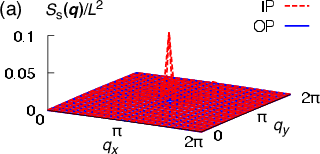
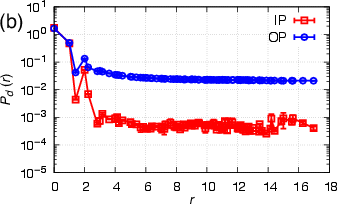
Figure 4: Spin structure factors and SC correlations in the IP and OP, supporting AF–SC coexistence in multi-layer Hg1223.
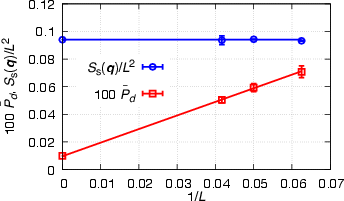
Figure 5: Size extrapolation of AF order parameter 33 and SC order parameter 34 in the IP, both nonzero in the ground state.
Pressure Dependence: Origin and Quantitative Analysis of Enhanced 35
Ab initio calculations under pressure reveal dome-like 36 evolution, peaking near 30 GPa (experimental maximum 37 K), and confirm that the observed enhancement is not solely attributable to increased bandwidth or reduced 38. The role of off-site Coulomb repulsion 39 is pronounced: pressure reduces 80 more efficiently than 81. The interplay of increased hopping, reduced 82, and substantially decreased 83 yields the observed pressure-dependent dome.
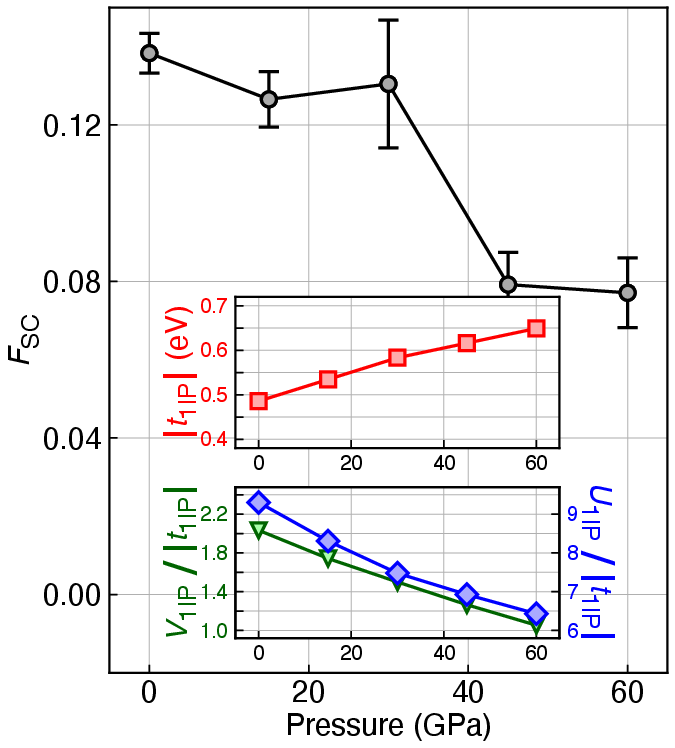
Figure 6: Pressure dependence of SC order parameter in the IP, showing stability up to 8430 GPa then reduction at higher pressures; inset tracks 85, 86, 87 across pressures.
A universal scaling for 88 is found to apply: 89, confirmed for Hg1223 under pressure and ambient conditions. Comparison across cuprates, including theoretical and experimental values, demonstrates the necessity of accounting for HgBa2Ca2Cu3O80 reduction under pressure for accurate HgBa2Ca2Cu3O81 prediction.
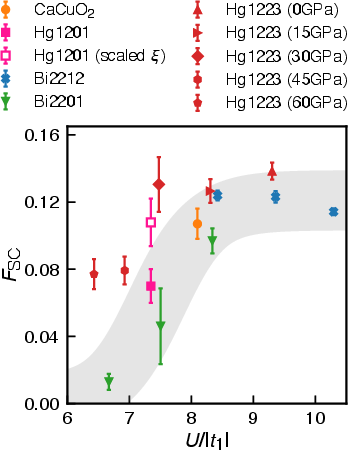
Figure 7: HgBa2Ca2Cu3O82 versus HgBa2Ca2Cu3O83 across cuprates; Hg1223 under pressure deviates from ambient-pressure universal trends, highlighting reduced HgBa2Ca2Cu3O84.
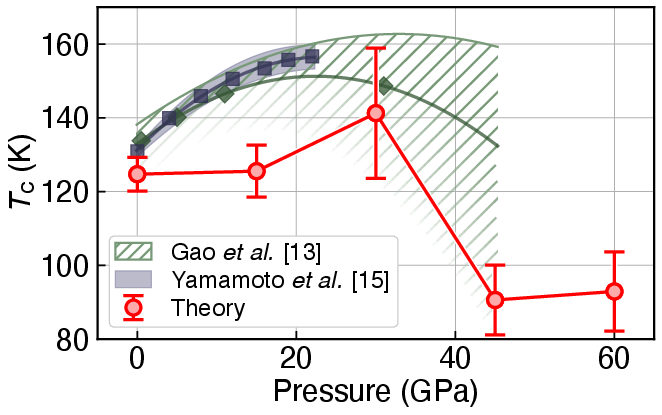
Figure 8: Comparison of theoretical and experimental HgBa2Ca2Cu3O85 versus pressure for Hg1223, exhibiting the pressure-induced HgBa2Ca2Cu3O86 dome.
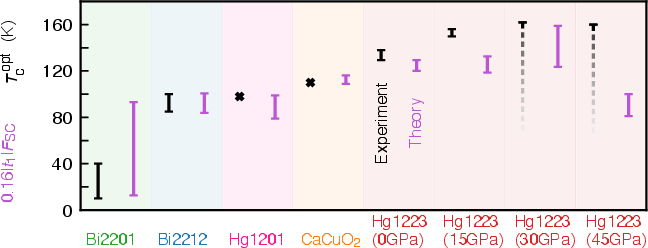
Figure 9: Cross-material comparison of theoretical and experimental HgBa2Ca2Cu3O87, demonstrating quantitative accuracy of ab initio approach.
Emergent Local Attraction: Origin of Cooper Pairing
The paper provides a microscopic mechanism for Cooper pairing: “attraction by reduced repulsion” in a strongly correlated, doped Mott insulator. Quadratic fits to layer-resolved onsite energy HgBa2Ca2Cu3O88 yield an effective attraction parameter HgBa2Ca2Cu3O89, peaking near optimal Tc0 (Tc19 for cuprates, Tc26-8 for Hubbard model). The dependence of Tc3 on Tc4, and further on Tc5, is emphasized. Pressure effects are consistent with enhanced SC by reduced off-site repulsion.
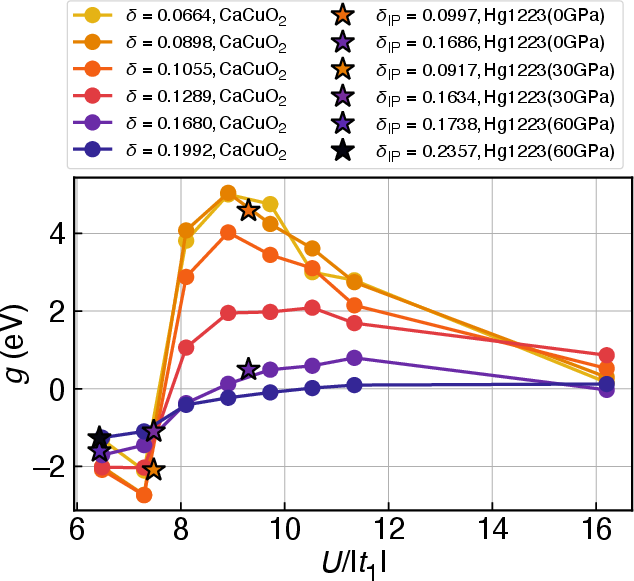
Figure 10: Tc6 (effective attraction) versus Tc7 for Hg1223 and CaCuOTc8, demonstrating universality in emergent attraction among cuprates.
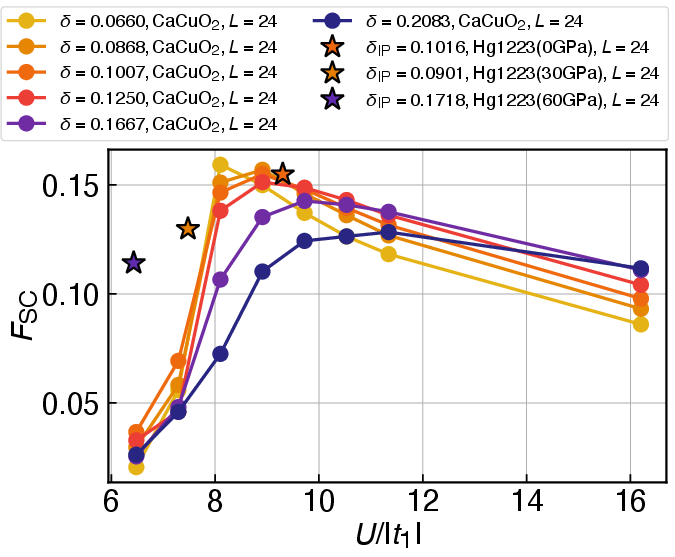
Figure 11: Tc9 versus Tc0 at various dopings, marking the optimal interaction and pressure-induced enhancement.
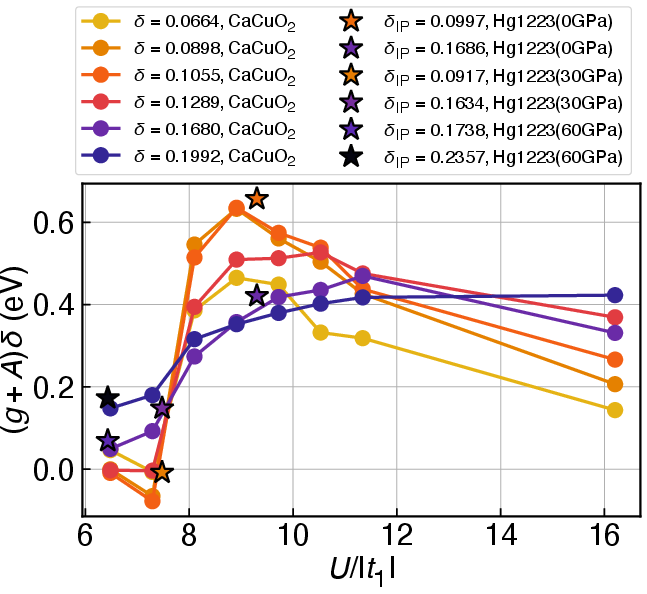
Figure 12: Product Tc1 as a function of interaction, capturing the dome-like structure of Tc2.
The instantaneous, local attraction, derived from negative curvature in Tc3, is distinct from BCS retarded pairing via bosonic mediators. Dynamical spin correlations are discussed as broader contributors, but the analysis emphasizes spatial-temporally local origins.
Discussion: Implications and Materials Design
The results imply that Tc4 optimization within the cuprate paradigm hinges on maximizing Tc5 near the optimal value, while simultaneously minimizing Tc6 through lattice engineering or external pressure. Higher Tc7 could be realized by materials where bandwidth and reduced off-site interactions coexist with strong onsite repulsion.
The findings are consistent with empirical scaling relations (e.g., Uemura plot), but offer quantitative microscopic justification. Comparisons with previous DMFT and ML-guided studies underline the necessity of treating spatial/temporal quantum fluctuations and layer-dependent effects to capture Tc8 variations, particularly in multi-layer compounds.
Conclusion
This paper provides an authoritative ab initio account of high-Tc9 superconductivity in Hg1223, reproducing experimental trends in U/∣t1∣0 and SC order under ambient and pressurized conditions. The mechanism is identified as emergent local, instantaneous attraction from reduced repulsion in a strongly correlated background, universal across cuprates. The results refine the materials design strategy for high-U/∣t1∣1 by targeting optimal U/∣t1∣2, enhanced hopping, and minimized off-site repulsion. The methodology sets a benchmark for computational studies seeking to unify microscopic theory and materials optimization in unconventional superconductors.