- The paper demonstrates that superefficiency in Galactic PWNe exceeds pulsar spin-down power during reverberation phases using advanced TIDE+L modeling.
- It shows that the FIR band hosts most superefficiency events, with up to ~315 sources per simulation and significant TeV detections.
- The study underscores the importance of detailed reverberation modeling for interpreting multiwavelength observations in both active and post-compression regimes.
Population Synthesis of Galactic Middle-Aged Pulsar Wind Nebulae: Observational Signatures of Superefficiency
Introduction and Context
The study presented in "Population synthesis of Galactic middle-aged pulsar wind nebulae II. Observational signatures of superefficiency" (2606.08116) develops a comprehensive synthesis of the Galactic population of pulsar wind nebulae (PWNe), probing a key and previously under-characterized phenomenon: superefficiency—the scenario in which the integrated radiative output of a PWN in a given frequency band exceeds its parent pulsar's contemporaneous spin-down power. This state, which arises during the complex dynamical reverberation phase induced by the parent supernova remnant's (SNR) reverse shock, violates the conventional assumption that PWN luminosities are restricted to be below the instantaneous spin-down power, and thus has significant implications for energy budgeting, identification, and interpretation of nebular sources.
Methodology: TIDE+L Framework and Population Synthesis
The analysis employs a synthetic Galactic PWN population modeled with the hybrid TIDE+L framework, which integrates the computational speed of thin-shell analytical descriptions for pre-reverberation stages with a Lagrangian formalism for SNR/PWN reverberation. This allows for self-consistent treatment of both dynamical (radius evolution, shock interaction) and spectral (particle evolution, multi-wavelength emission) properties. Each PWN is assigned physical parameters for both progenitor and environment sampled from empirically-motivated or theoretically-justified distributions, and the population is evolved probabilistically with 1000 random realizations of subsamples of 1600 PWNe—corresponding to the estimated birth rate from core-collapse SNe in the Galaxy.
A critical benchmark is established by comparing results from TIDE+L against the widely used, but less physically detailed, purely thin-shell TIDE model, thereby directly assessing how detailed reverberation physics modifies superefficiency predictions.
Superefficiency Across Frequency and Dynamical Phase
The prevalence and characteristics of superefficiency are dissected across a comprehensive spectral range, from radio up to TeV γ-rays. Superefficiency is classified at the population level by computing the fraction and number of sources in each evolutionary stage—free expansion, reverberation-compressing, and reverberation-post-compression—that surpass the spin-down power in a given band.
The major findings are:
- Superefficiency is most common in the far-infrared (FIR) band, with mean numbers of ∼315 FIR-superefficient sources per realization under TIDE+L assumptions, compared to far fewer at X-ray and TeV energies. This is attributed to the long accumulation times and survival of low-energy electrons, which radiate efficiently after even mild compressions due to enhanced magnetic fields.
- The bulk of low-frequency (FIR, MIR) superefficiency events emerge in the post-compression phase, whereas higher-frequency (soft X-ray, TeV) superefficiency is connected more directly to active or recent compressions, owing to the necessity of freshly energized high-energy electrons.
- Superefficiency in TeV γ-rays appears in dozens of sources (mean ∼25 per realization), with approximately 20 being detectable with current or near-future instruments depending on survey parameters. This has direct ramifications for the interpretation and identification of bright Galactic γ-ray sources.
- Compared to TIDE, the TIDE+L framework predicts dramatically more superefficient sources at most frequencies (up to an order of magnitude higher in some optical/UV/X-ray bands), underscoring the importance of physically consistent reverberation modeling for population studies.
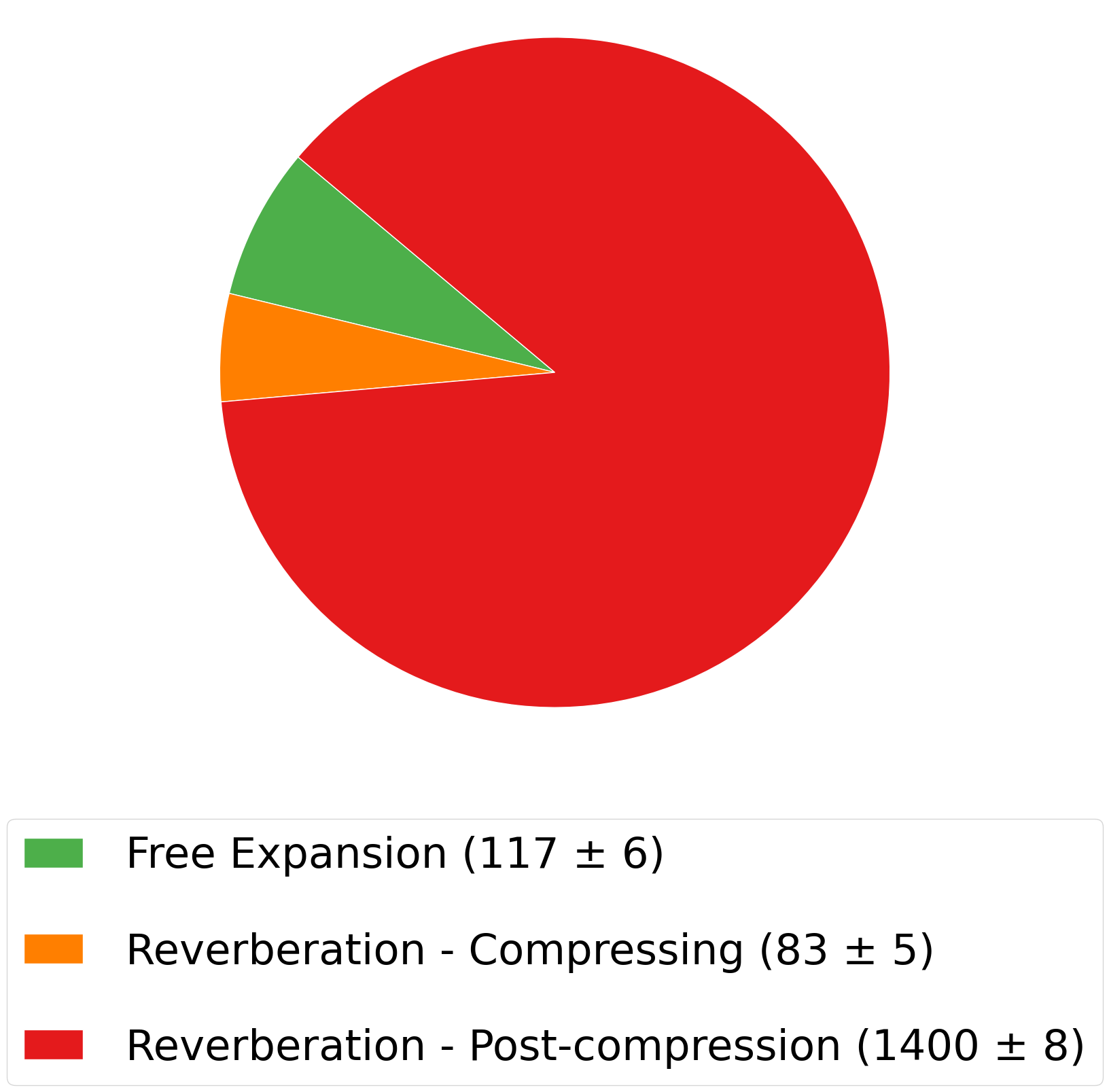
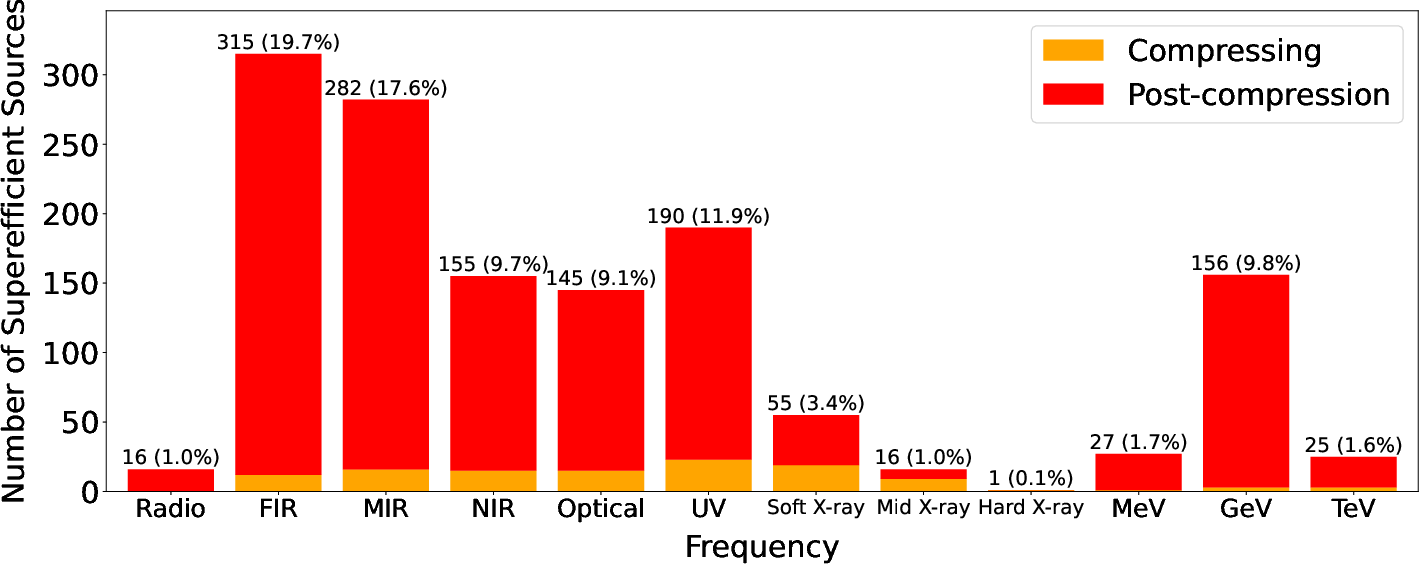
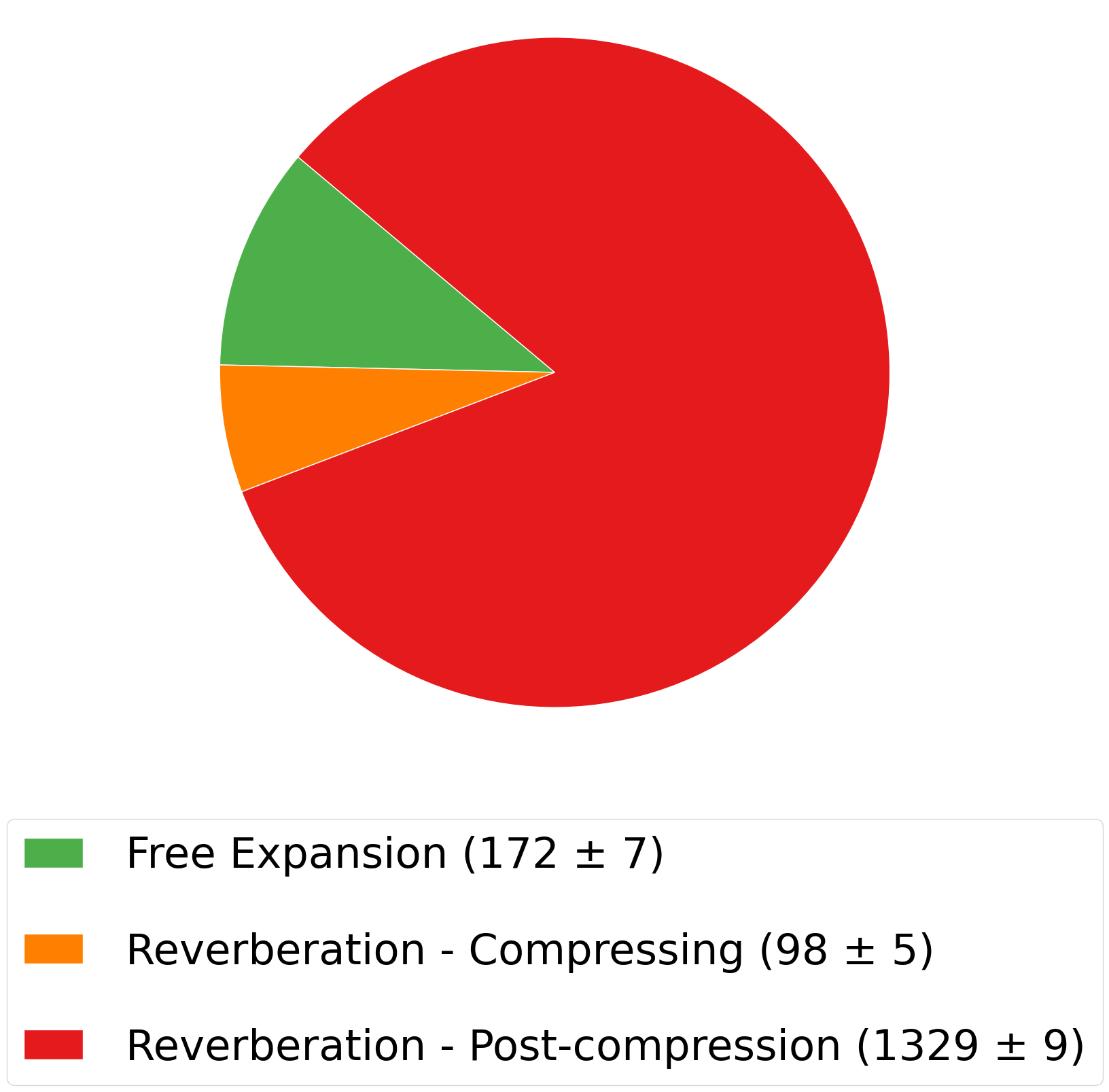
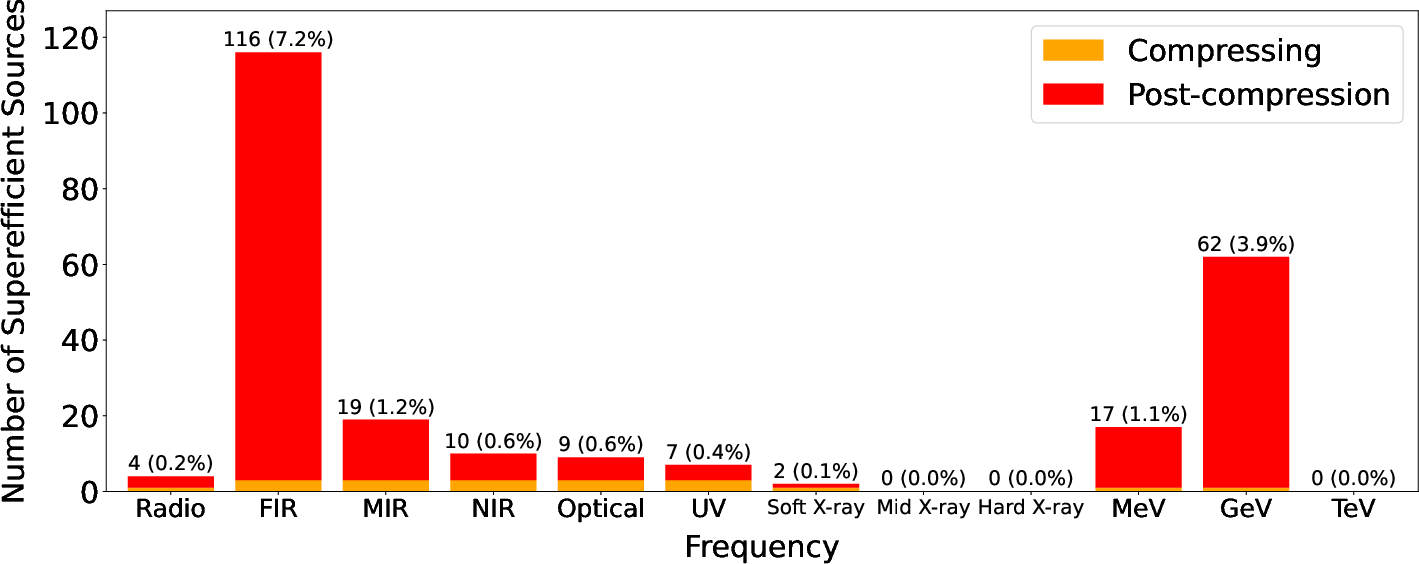
Figure 1: Distribution of evolutionary stages and the frequency-dependent superefficient source counts in the present-day synthetic PWN population, highlighting the enhanced predictions using TIDE+L compared to TIDE.
Statistical and Temporal Evolution
The analysis demonstrates that superefficiency is not only a function of instantaneous population demographics but also strongly modulated by the collective dynamical and radiative history:
- Superefficiency is not rare nor confined to special parameter regions; rather, it emerges naturally across wide swathes of the L0–τ0 phase-space (characteristic spin-down luminosity and timescale). This is illustrated by the broad distribution of superefficient sources in phase-space diagrams.
- Time-resolved population snapshots reveal that the fraction of superefficient sources grows sharply as a cohort ages into the reverberation phase. At fixed evolutionary epochs, the low-frequency superefficiency fraction increases continuously, reflecting ongoing accumulation of radiatively long-lived electrons, while higher-frequency superefficiency episodes are transient and linked to the timing of major compression events.
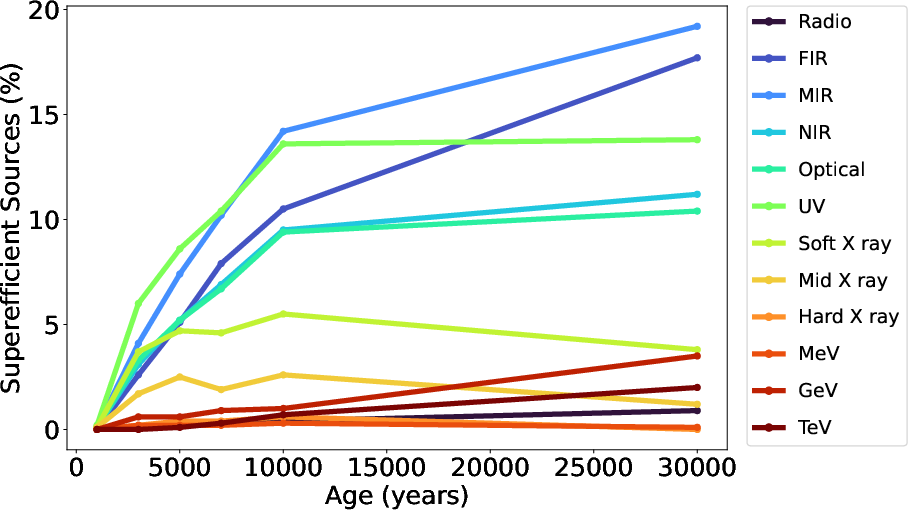
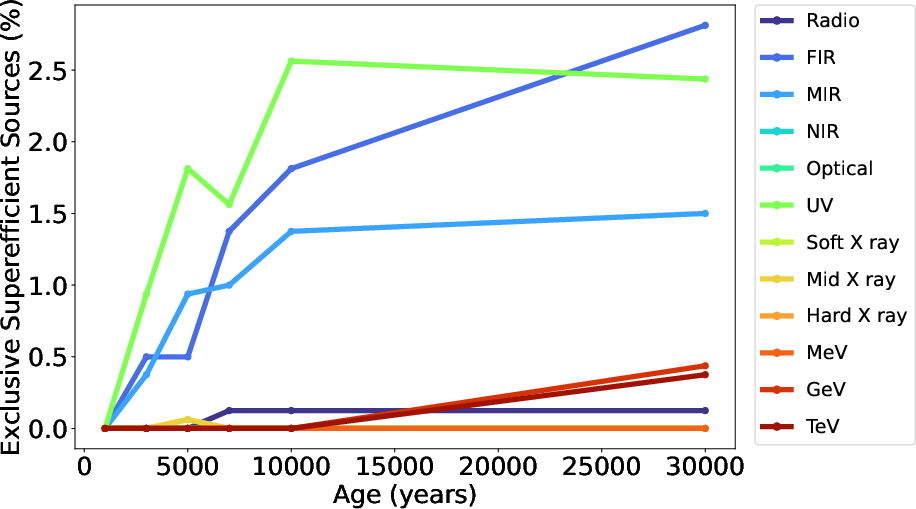
Figure 3: Time evolution of the percentage of superefficient sources across frequency bands, delineating the distinct temporal behaviors driven by cooling and particle accumulation timescales.
Multiwavelength and Compression-Factor-Dependent Spectral Imprints
Strong numerical evidence is provided for the spectral diversity of superefficient PWNe, with distinct physical mechanisms dominating depending on both the observed band and the compression history:
- FIR-superefficient PWNe are governed by the normalization of low-energy electrons, favoring systems with mild or prolonged compressions, while X-ray superefficiency demands contemporaneous, strong compression capable of injecting and amplifying ultra-relativistic electrons but short-lived due to rapid cooling.
- Compression factor (CF) strongly modulates the spectral signatures: higher CFs produce immediate but transient X-ray enhancements (often with subsequent suppression due to catastrophic synchrotron losses), while the FIR superefficiency window is optimized at intermediate compression strengths, where magnetic field amplification does not completely deplete the low-energy reservoir.
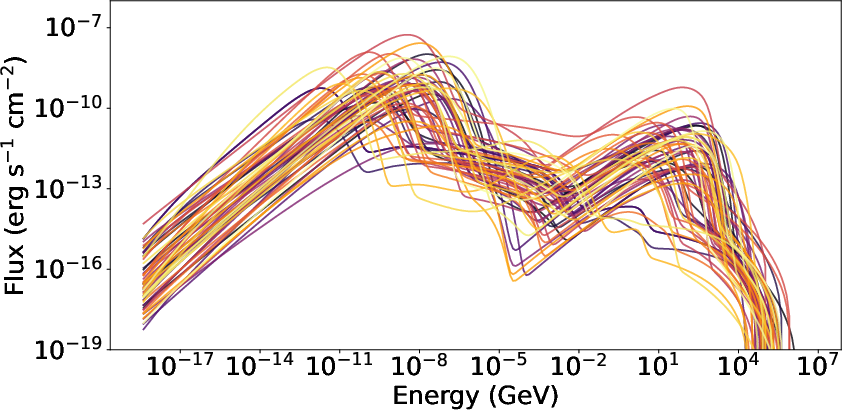
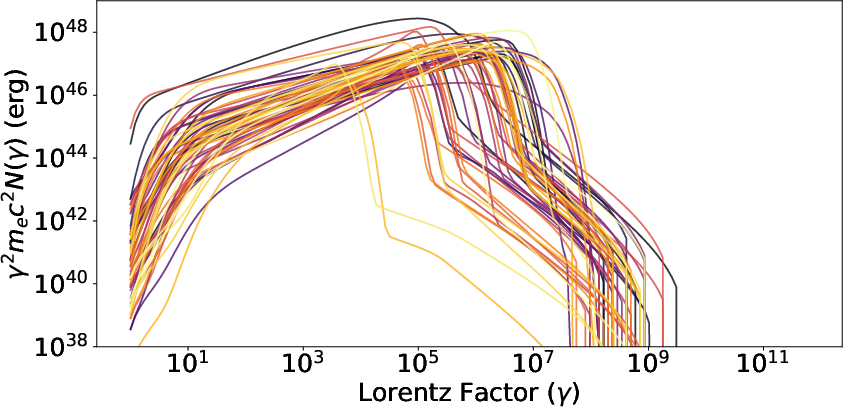
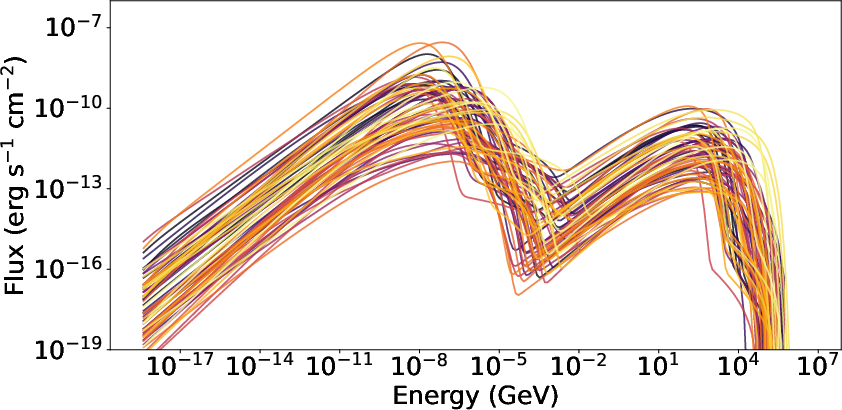
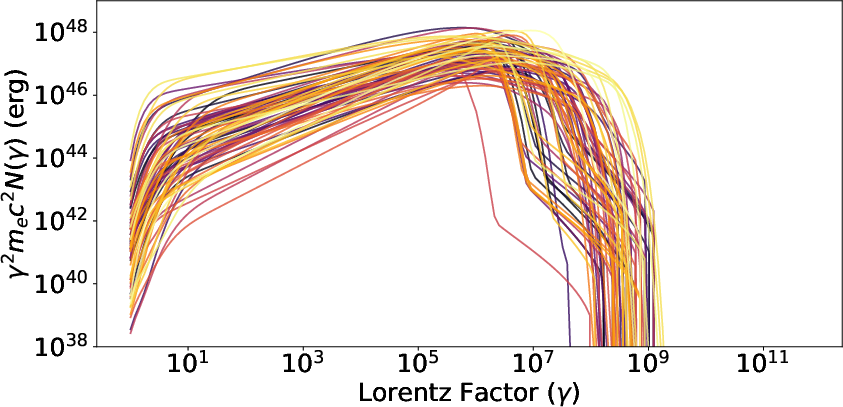
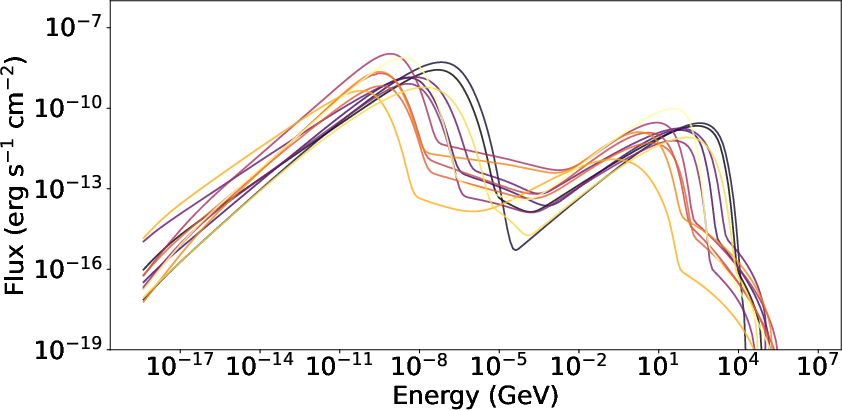
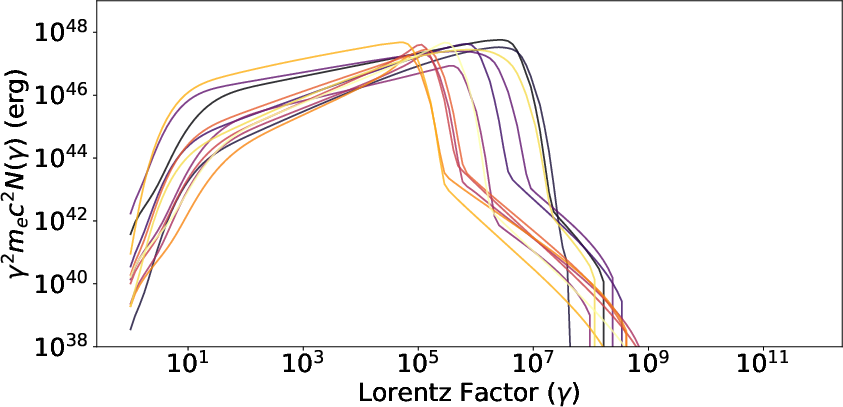
Figure 5: Grouped spectral energy distributions and electron spectra for ensembles superefficient in FIR, X-ray, and GeV bands during active compression.
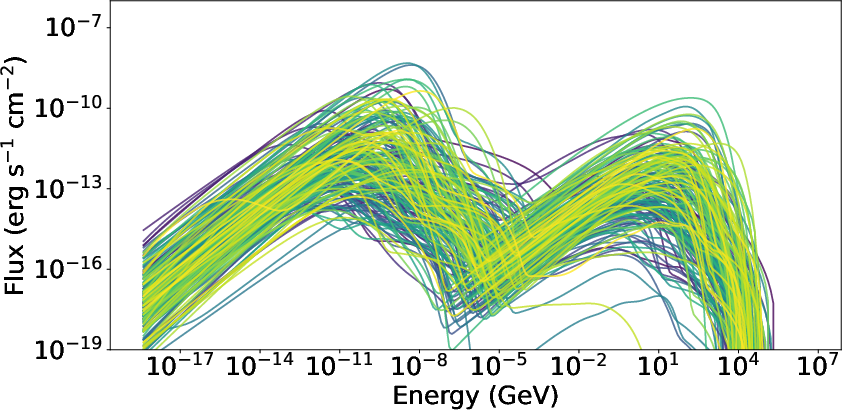
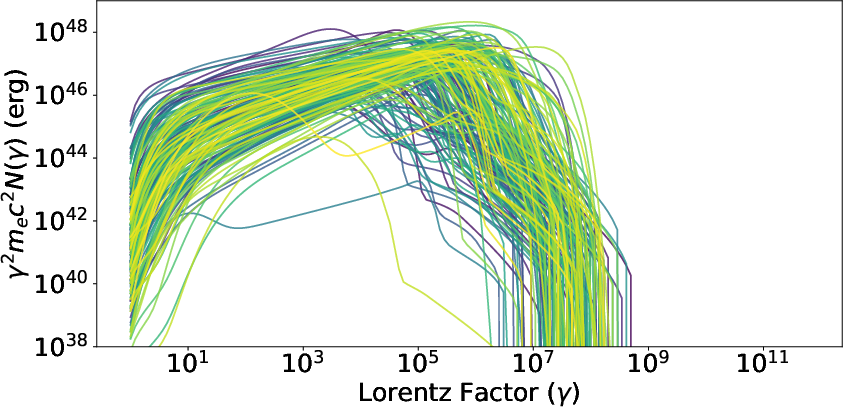
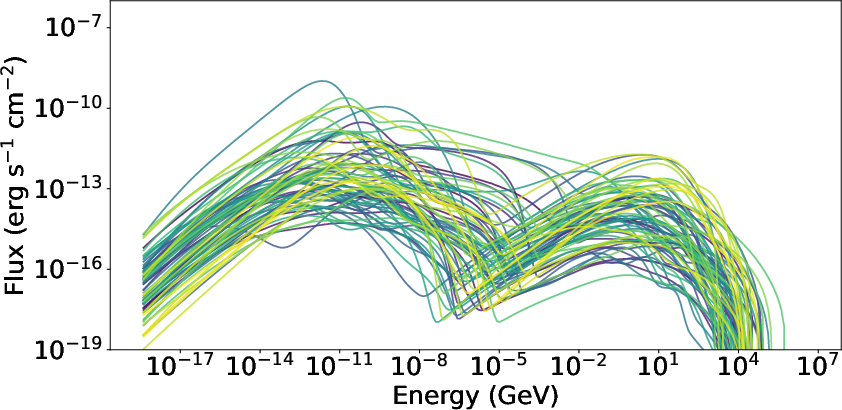
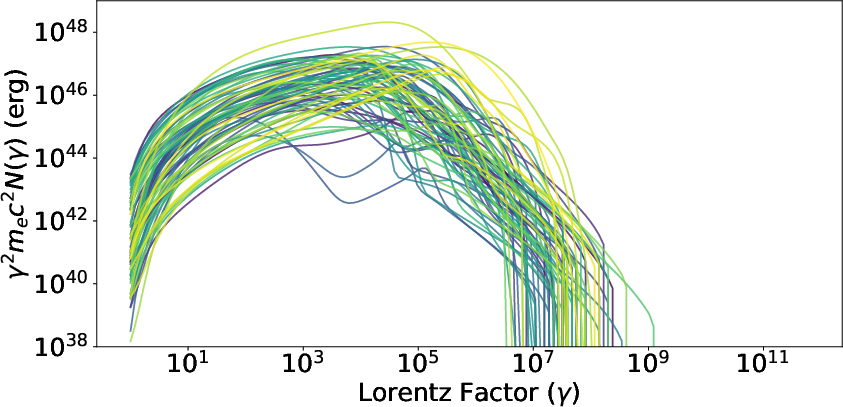
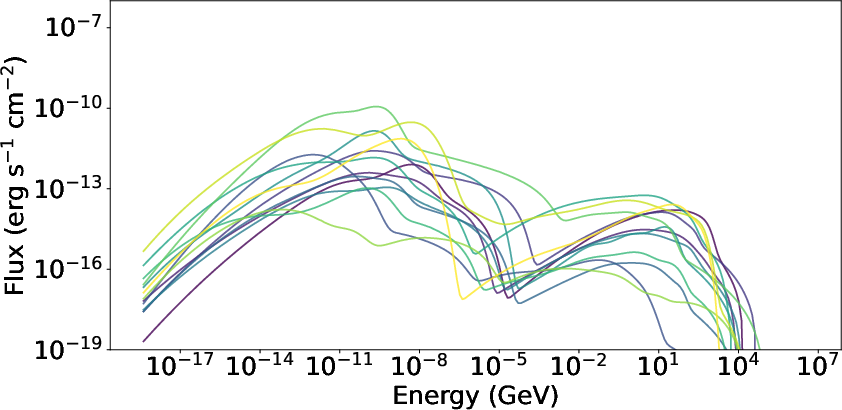
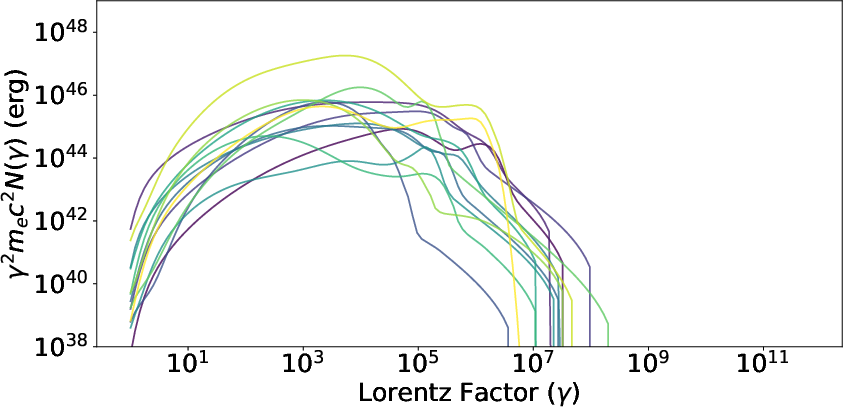
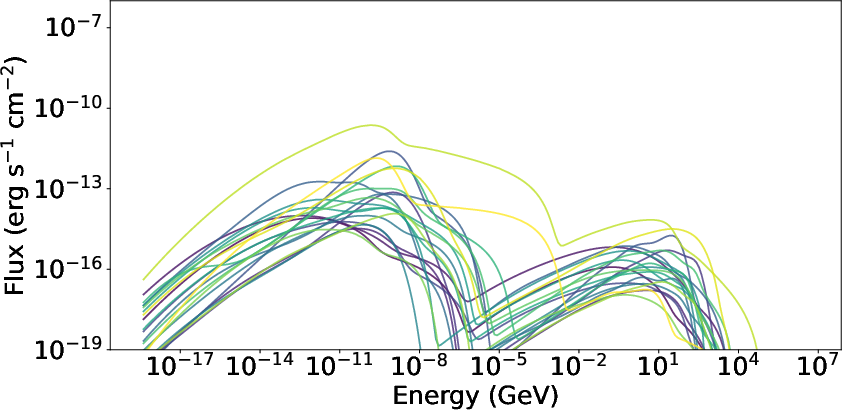
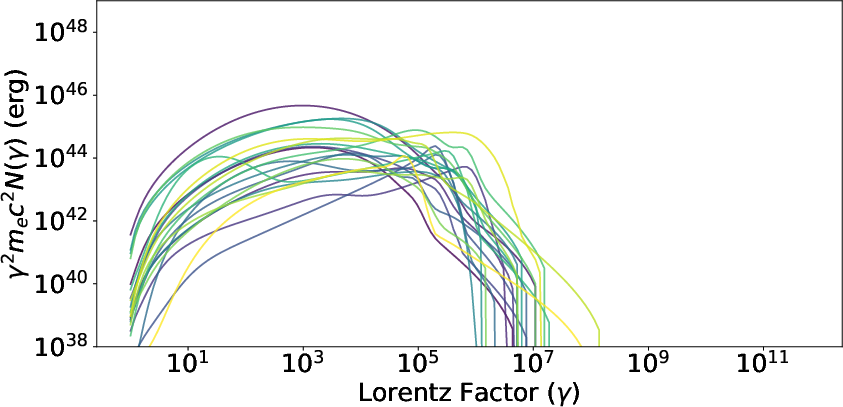
Figure 7: FIR superefficient PWNe binned across four ranges of compression factor, revealing that mild compressions yield the highest number and flux of superefficient sources.
Physical Implications and Theoretical Significance
The demonstration that superefficiency can persist into post-compression phases and is not limited to active reverberation epochs expands the interpretive context for high-luminosity PWNe in surveys, especially for unidentified sources whose nebula-pulsar association is ambiguous. The result that equipartition is not a generic attractor in PWN evolution, but instead is rarely realized except as a transient state, has implications for the interpretation of observed SEDs and for the applicability of minimum energy or equipartition arguments.
The marked discrepancy between predictions for superefficiency from TIDE+L versus thin-shell approaches signals that prior population-level studies may have systematically underestimated the occurrence of superefficient states, especially outside the FIR. This has ramifications for the design and interpretation of next-generation surveys at both low and high photon energies.
Conclusion
This rigorous population synthesis establishes superefficiency as a prevalent and robust feature of Galactic PWN evolution, especially in the FIR-MIR regime but extending to higher energies during or after reverberation. Accurate modeling of SNR PWNe demands detailed treatment of reverberation-driven compression and particle reprocessing, as realized in the TIDE+L approach, to capture the full diversity and statistics of superefficient episodes. These results call for multiwavelength surveys, particularly in the FIR and GeV regimes, to identify and characterize the superefficient PWN population, and for reassessment of previously inferred luminosity constraints and nebular energy budgets in light of the real dynamical complexity uncovered here. Future theoretical developments should focus on further improving the fidelity of SNR-PWN interaction and exploring the observational impact for not only Galactic surveys but also for extragalactic PWN searches.