- The paper establishes a predictive framework linking macroscopic phase dynamics with microscopic vortex nucleation using 3D eGPE simulations.
- It demonstrates that a three-droplet model accurately captures complex vortex behavior near lattice vertices, including phase slips and vortex-antivortex pair dynamics.
- Results reveal quantized vortex entry thresholds and controlled phase-slip processes, with implications for experimental quantum simulation and non-equilibrium superfluids.
Vortex Dynamics in Rotating Dipolar Supersolids: Josephson and Self-Trapping Regimes
Introduction
The study systematically explores vortex nucleation and dynamics in rotating dipolar supersolids arranged in a triangular droplet lattice, with a focus on their behavior across Josephson and macroscopic self-trapping (ST) regimes. By interpreting the supersolid as an array of weakly linked condensates, the work provides a predictive and quantifiable framework for understanding vortex trajectories, nucleation thresholds, and the interplay between macroscopic phase dynamics and microscopic topological excitations. The analysis, grounded in three-dimensional extended Gross-Pitaevskii Equation (eGPE) simulations, highlights the minimal local phase difference information required for a robust description of vortex behavior and demonstrates the necessity of multi-droplet correlational modeling, particularly at lattice vertices.
Physical System and Driving Protocol
The considered system is a quasi-2D supersolid formed by 162Dy atoms, self-organized into seven droplets in a triangular lattice: one central droplet surrounded by six in a ring. This geometry admits six-fold rotational symmetry, enabling the reduction of the macroscopic dynamical variables to the population imbalance Z(t) and phase difference φ(t) between central and ring droplets. The rotation is implemented via a time-dependent potential ("egg-box" form) whose strengths control both the initial population imbalance and the ramping of angular velocity.
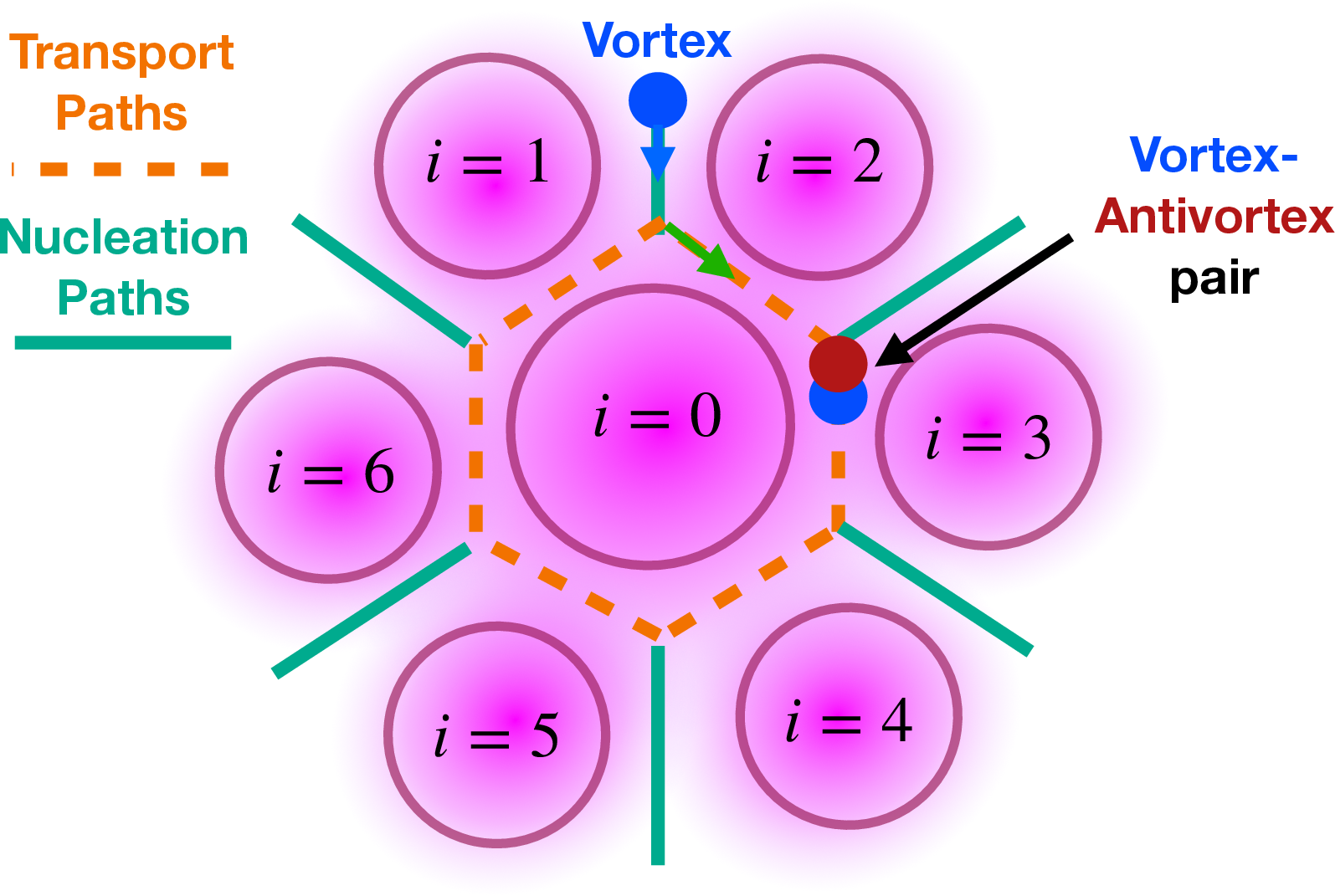
Figure 1: Schematic of the supersolid droplet arrangement and highlighted low-density paths for vortex nucleation and transport.
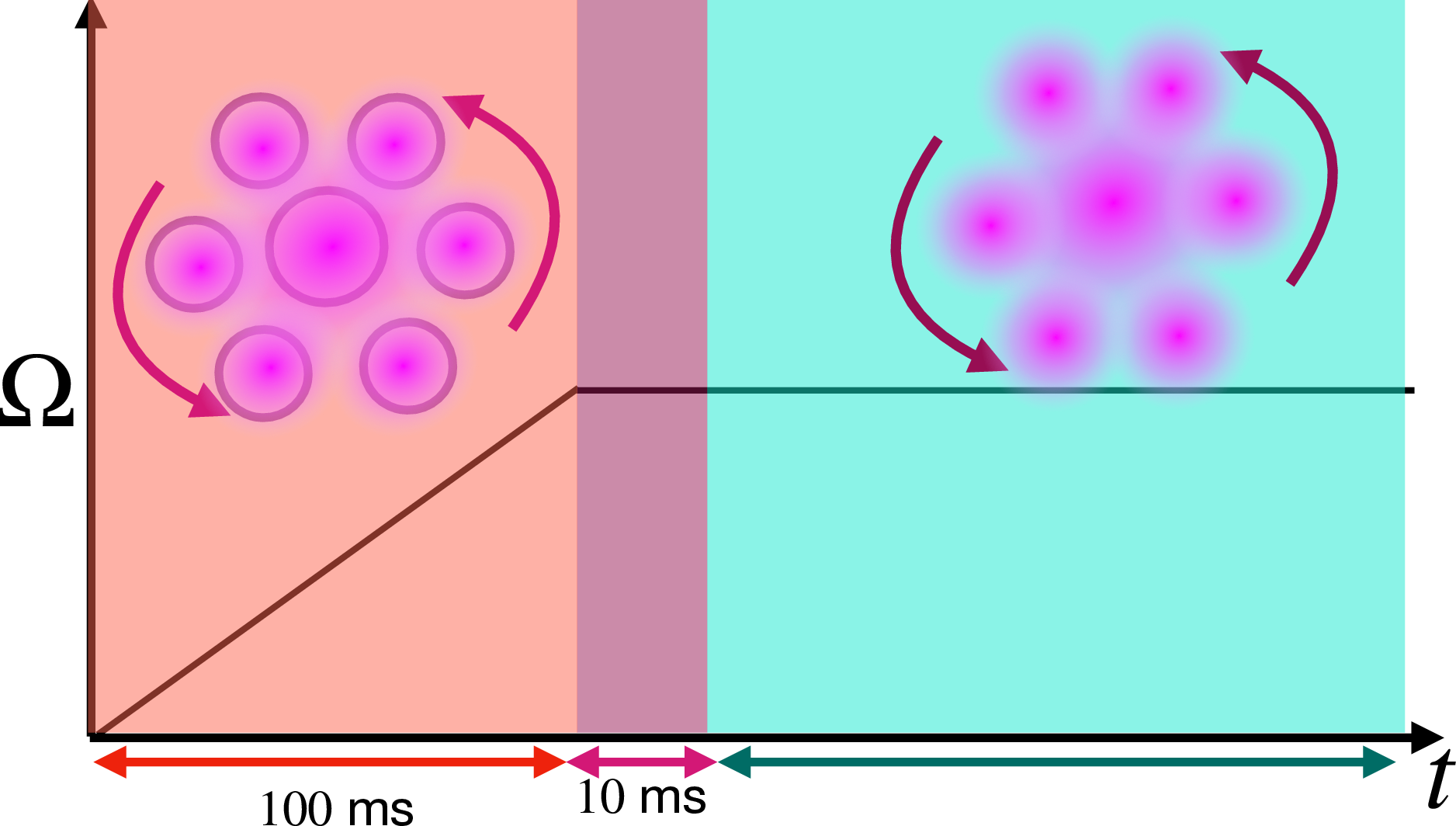
Figure 2: Time sequence—initial preparation with the rotating egg-box potential, ramp-up phase, and free rotation evolution protocol.
Theoretical Modeling of Vortex Localization
The macroscopic wave function is expanded in localized droplet-centered orbitals, each weighted by time-dependent populations and phases, and a geometric rotation-induced term. Vortex positions correspond to zeros of the total wave function, depending primarily on the local phases and populations of neighboring droplets.
- Nucleation Paths: Far from lattice vertices, a two-droplet approximation is sufficient; vortex entry positions are fixed by geometric and rotational parameters, with the critical frequency threshold for penetration displaying quantized steps.
- Vertex and Transport Regimes: Near lattice vertices—intersections of nucleation and lateral transport paths—a three-droplet approximation is necessary due to interference of three adjacent phase contributions. In the ST regime, continuous phase winding leads to phase slips, realized by vortex-antivortex pair creation/annihilation events.
Numerical Results: eGPE Simulations
Comprehensive 3D eGPE simulations reveal dynamical phenomena consistent with the truncated multi-droplet theory.
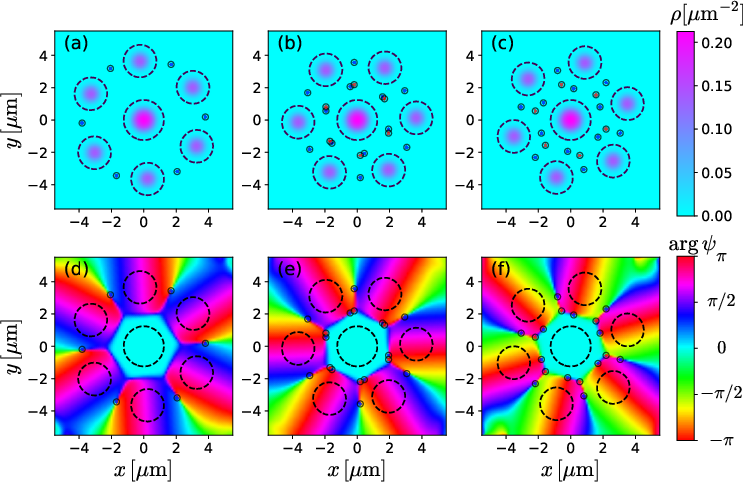
Figure 3: Column density and phase snapshots during the ramp-up and subsequent ST regime, visualizing vortex entry and arrangement.
Josephson Regime
For small initial population imbalances, only nucleation path vortex entry is observed. Oscillations in population imbalance and phase difference remain bounded, and the two-droplet model quantitatively predicts vortex positions with high fidelity.
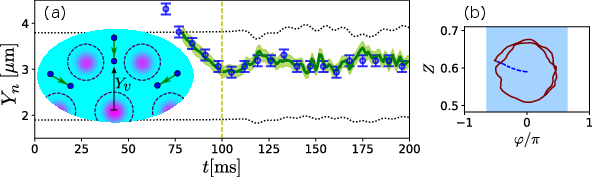
Figure 4: Vortex position along nucleation path and corresponding phase/imbalance oscillations in the Josephson regime; theory matches eGPE.
At elevated rotation frequencies, the threshold for lateral (vertex-adjacent) vortex movement is crossed, allowing for oscillatory vortex migration into transport paths. Here, a three-droplet model accurately tracks vortex motion near vertices, capturing nontrivial oscillatory excursions.
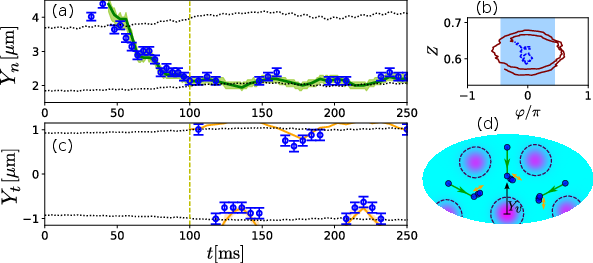
Figure 5: Vortex nucleation and transport path dynamics at higher rotation: phase slips induce oscillations localized near lattice vertices.
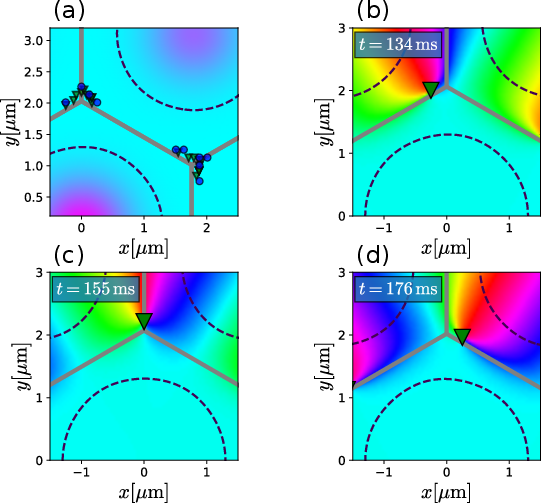
Figure 6: Direct comparison of simulated and three-droplet-predicted vortex trajectories in the xy plane, confirming model precision near vertices.
Self-Trapping Regime and Vortex-Antivortex Dynamics
When the initial imbalance exceeds the critical value for ST, the macroscopic phase difference φ(t) evolves monotonically. This mandates the repeated occurrence of phase slips, realized dynamically by vortex-antivortex pair nucleation and subsequent annihilation in low-density lattice regions.
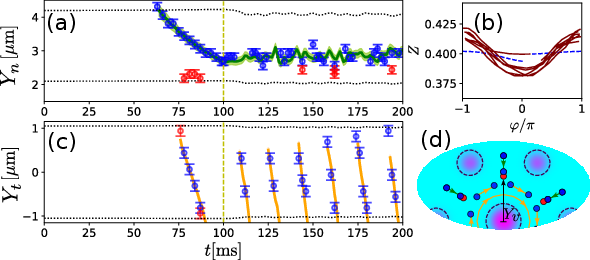
Figure 7: Vortex and antivortex positions during ST oscillations, showing pair creation and distinct motion along nucleation and transport paths.
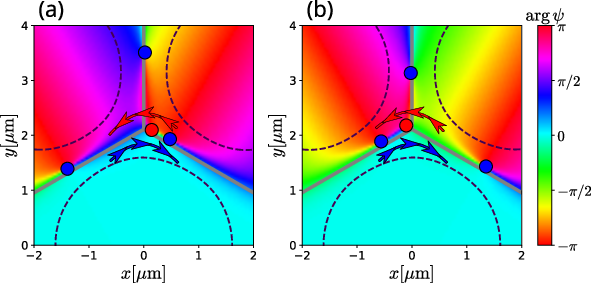
Figure 8: Zoom on vortex-antivortex pair formation and drift near a lattice vertex, as reproduced by the three-droplet approximation.
A reversal of the population imbalance direction modifies vortex circulation polarity and the sequence of pair formation. Vortex-antivortex pairs are observable for sufficiently large imbalance durations, with their lifetimes and paths explicitly quantified by the theory and verified in the simulation.
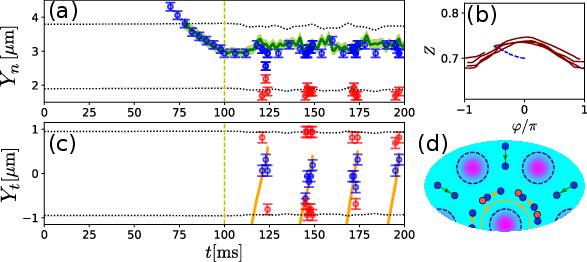
Figure 9: ST regime with reversed imbalance: counter-propagating vortices and antivortices, matching three-droplet theory predictions.
For high rotation and moderate initial imbalance, after an initial transient, vortex passage along lateral paths proceeds at constant speed without further pair nucleation, confirming the theoretical prediction of a fixed vortex velocity proportional to the phase slip rate and inversely to the rotation frequency.
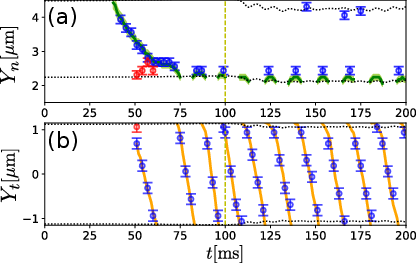
Figure 10: High rotation, moderate initial imbalance: continuous vortex motion along a lateral path after initial pair event, matching theoretical velocity.
Implications and Outlook
This work demonstrates that the essential features of vortex nucleation, transport, and phase-slip processes in rotating dipolar supersolids can be captured using only local phase-difference variables between nearest- and next-nearest-neighbor droplets. Critically, modeling beyond a double-well (two-droplet) paradigm is required to resolve vertex-adjacent dynamics and the complex topology of phase slips enabled by multi-droplet interactions. The explicit link between macroscopic phase winding (ST) and microscopic topological events (vortex-antivortex pairs, annihilation) is firmly established in this system.
On the experimental side, the outlined protocols and detection of vortex dynamics align with quantum droplet supersolid platforms capable of direct imaging. The control afforded by external potential engineering and rotation ramps enables systematic exploration of topological excitations and could serve as a benchmark for validating time-dependent many-body theoretical frameworks or probing quantum turbulence and non-equilibrium superfluid phenomena. Future work may address stronger quantum fluctuations, disorder, finite-temperature effects, or extensions to large-scale lattice arrays and alternate geometries.
Conclusion
The investigation establishes a minimal, predictive framework for describing vortex and antivortex dynamics in rotating dipolar supersolids using only local droplet phase differences, validated by full eGPE simulations. The necessity of the three-droplet approximation near lattice vertices, the explicit control of phase slips via macroscopic ST oscillations, and the protocol for reproducibly generating and tracking vortex-antivortex pairs, provide a methodological foundation for future experimental and theoretical studies. The work has direct implications for quantum simulation, topological quantum matter, and the dynamical manipulation of emergent excitations in dipolar supersolid systems (2606.07266).