- The paper introduces a systematic spline construction ensuring C¹ continuity for unstructured quadrilateral meshes via iterative averaging and refinement.
- It provides tunable spectral properties and explicit eigenvalue control to optimize smoothness near extraordinary vertices.
- Numerical experiments validate optimal L∞ and L² convergence rates, making the approach effective for isogeometric analysis and surface modeling.
C1 Limit Surface Construction from Unstructured Splines via Averaging and Refinement
Introduction and Motivation
The paper "Constructing C1 limit surfaces from unstructured splines via averaging and refinement" (2606.07149) presents a systematic spline construction for quadrilateral meshes with arbitrary topology, targeting robust C1-continuity for isogeometric analysis and geometric modeling. The approach generalizes classical Doo–Sabin and almost-C1 spline subdivision [takacs2023almost] toward arbitrary polynomial degrees, leveraging iterative averaging combined with refinement. Unlike conventional subdivision schemes, which emphasize infinite ring generation around extraordinary vertices, this method offers direct, tunable spectral properties, including explicit subdominant eigenvalue control, ensuring smoothness and optimal approximation near singularities.
Construction Overview and Methodology
The method is grounded in hierarchical multi-patch tensor-product B-splines, associating DOFs with interior patch locations, boundary edges, and corner vertices, but not with interior edges or vertices. Degree p and regularity r are chosen per patch, with degrees r<p allowed, enabling flexible adaptation to local mesh complexity.
The main construction loop comprises three steps per refinement level:
- DOF Assignment and Extraction: Select only face interior, boundary edge, and corner DOFs, filtering the complete set of B-spline coefficients via a sparse extraction operator.
- Iterative Averaging: Edge and vertex-associated B-spline coefficients—omitted from the DOF set—are recomputed as convex or linear combinations (depending on averaging strategy) of surround DOFs. This enforces C1-conditions along patch interfaces and at mesh vertices, including extraordinary cases.
- Refinement: All patches undergo uniform knot insertion (tensor-product B-spline refinement), expanding the mesh with increased resolution but maintaining the consistency of the multi-patch parametrization.
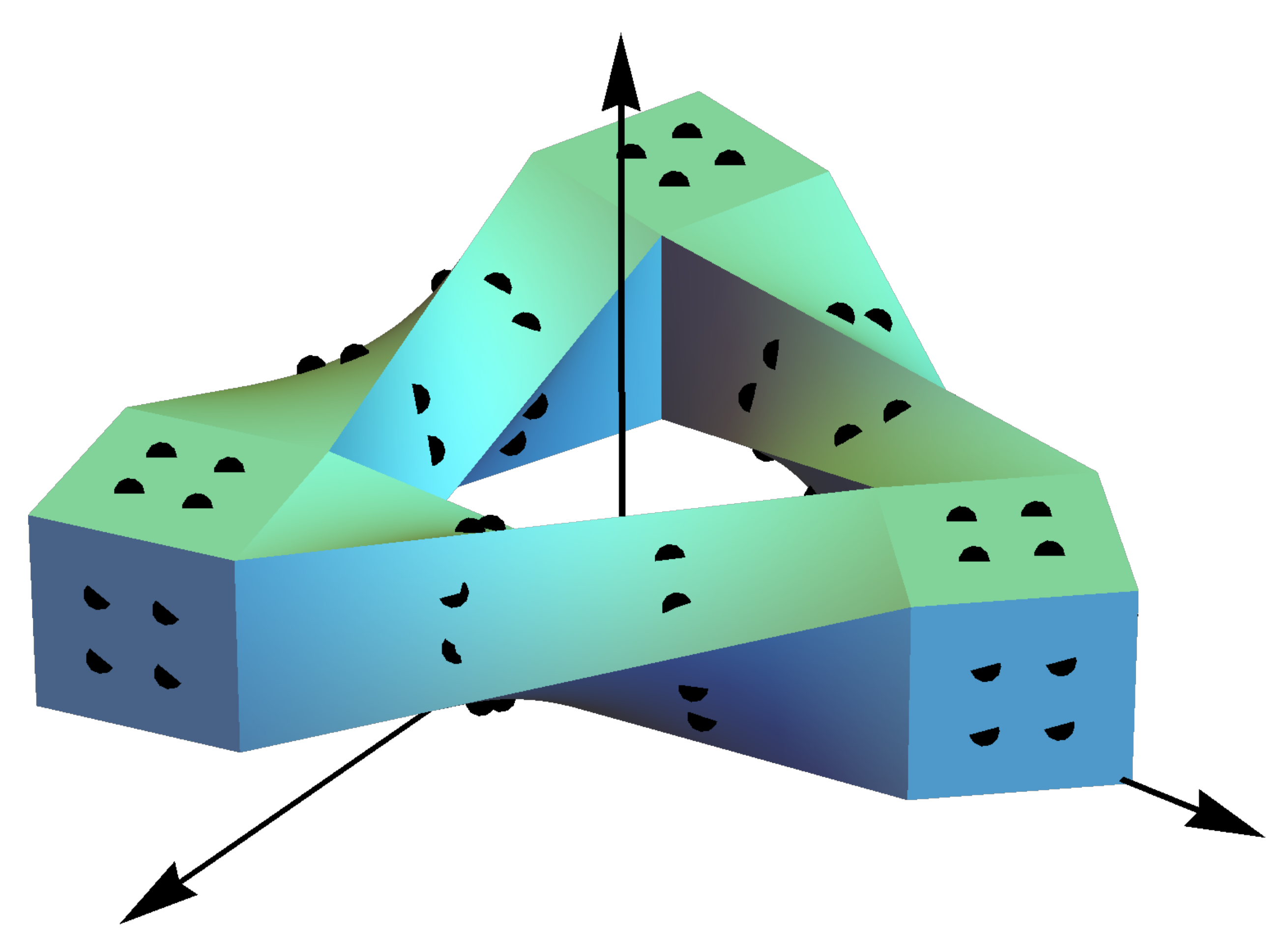
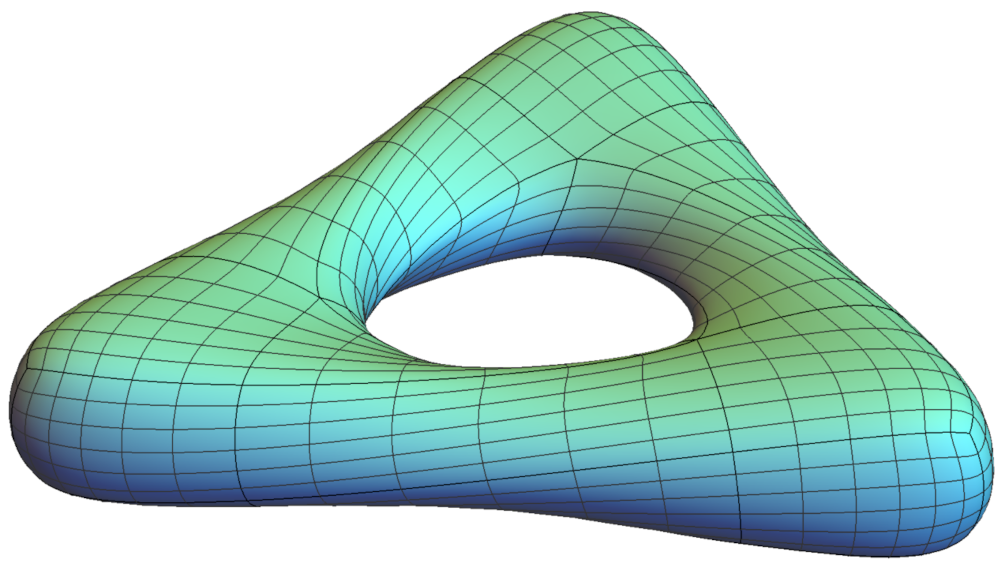
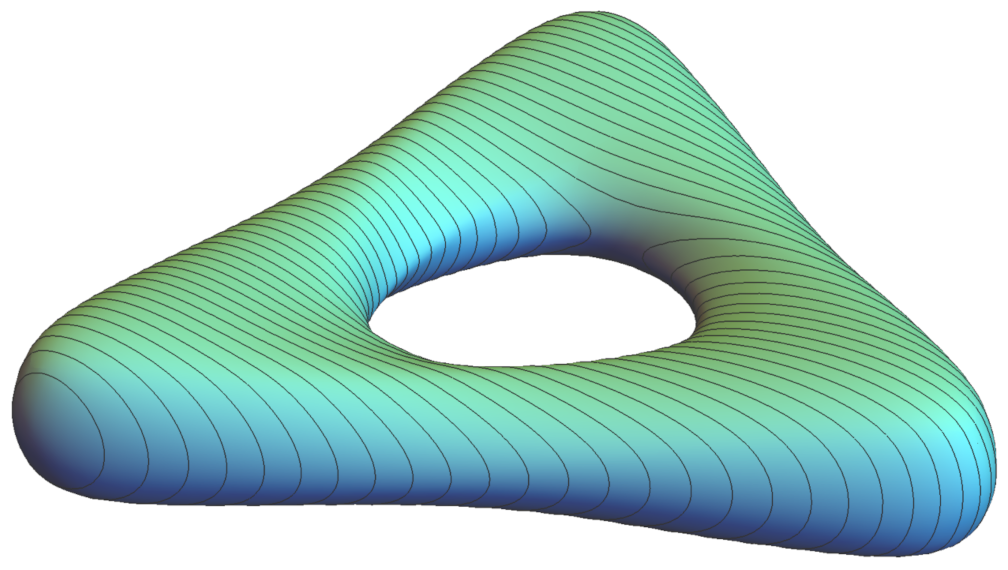
Figure 1: Initial DOFs sampled from a quadrilateral mesh.
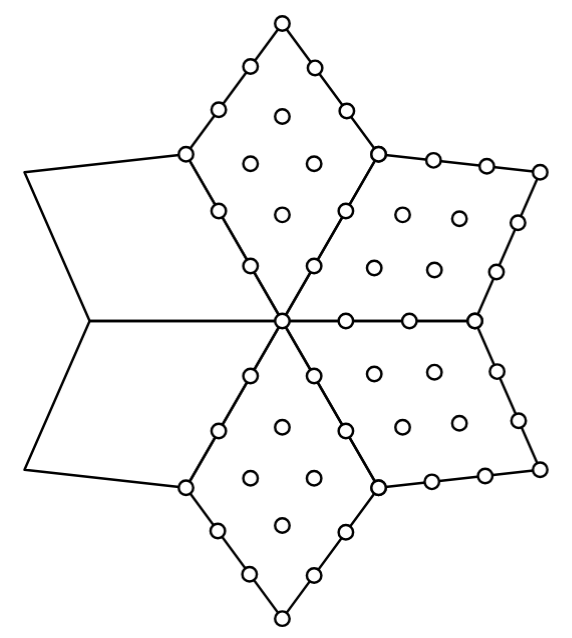
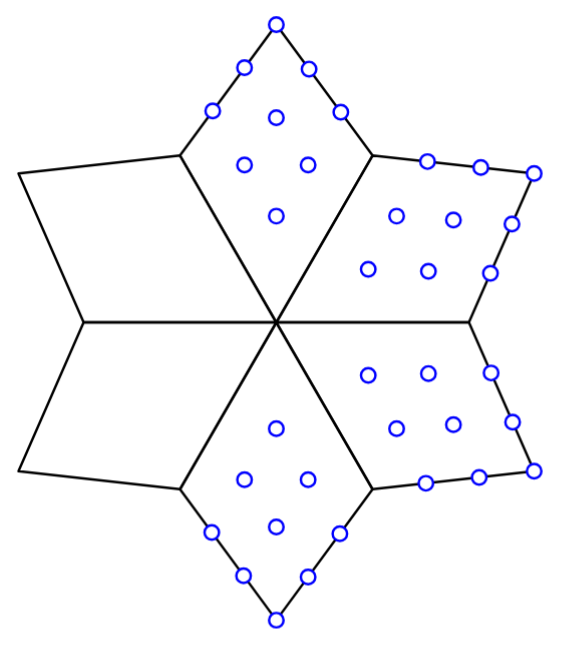
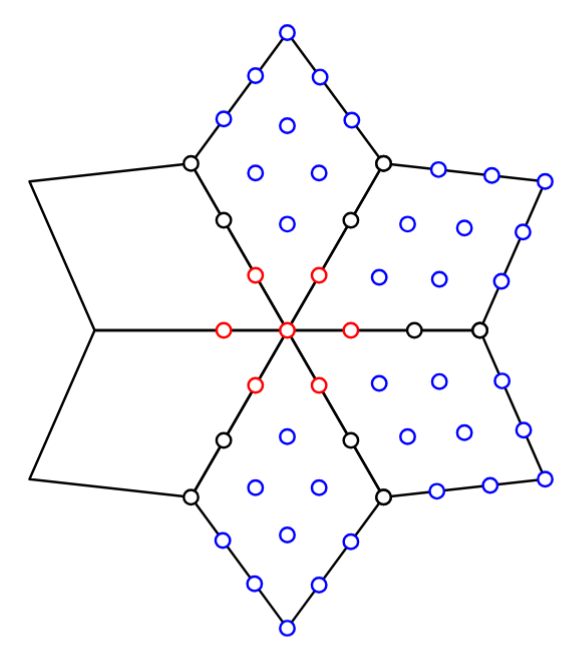
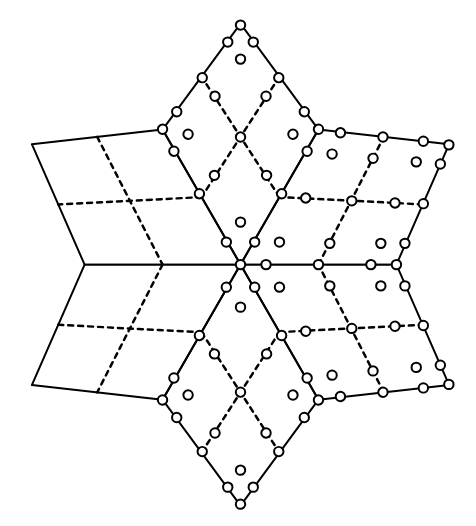
Figure 2: B-spline coefficients at mesh level ℓ, with selected DOFs (blue), new coefficients by averaging (red/black), and refined coefficients at level ℓ+1.
Averaging differentiates between two variants:
- Simple Averaging: Edge and vertex coefficients are simple weighted combinations of local neighbors. Weights can be chosen for convexity and spectral placement, with the only restriction being symmetry and affine partitioning (sum to one).
- Coplanar Averaging: Weights ensure that edge coefficients are coplanar for all extraordinary vertex valences, yielding C10-equivalence at extraordinary vertices on all refinement levels—not just in the limit.
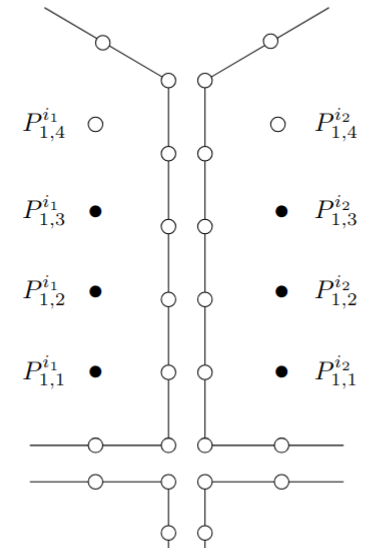
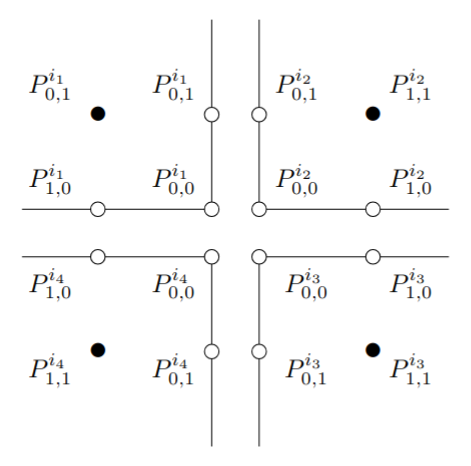
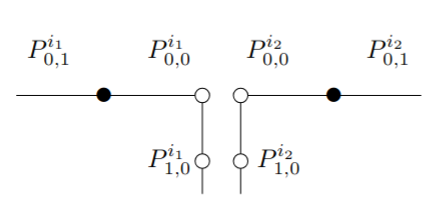
Figure 3: (a) Smooth interior edge coefficients from face DOFs. (b) Regular interior vertex coefficients. (c) Smooth boundary vertex coefficients via edge DOFs.
This hierarchical, refinement-based process can be interpreted as a subdivision scheme, with the key property that, for regular mesh regions, the process exactly reproduces classical B-spline refinement.
Spectral Properties and Smoothness Analysis
The local subdivision matrix around an extraordinary vertex encodes the geometry and smoothness. The paper performs a detailed spectral analysis of this operator, characterizing the (sub-)dominant eigenvalues as a function of the averaging weights and mesh valence C11. Key outcomes include:
- There always is a dominant eigenvalue C12, corresponding to the identity partition of unity.
- The subdominant eigenvalue C13 (with multiplicity two) can be explicitly tuned via the parameter C14 in the averaging weights, ensuring C15 continuity in the limit for C16.
- The remaining eigenvalues are strictly less than C17 in magnitude, ensuring contractive behavior and control-point locality.
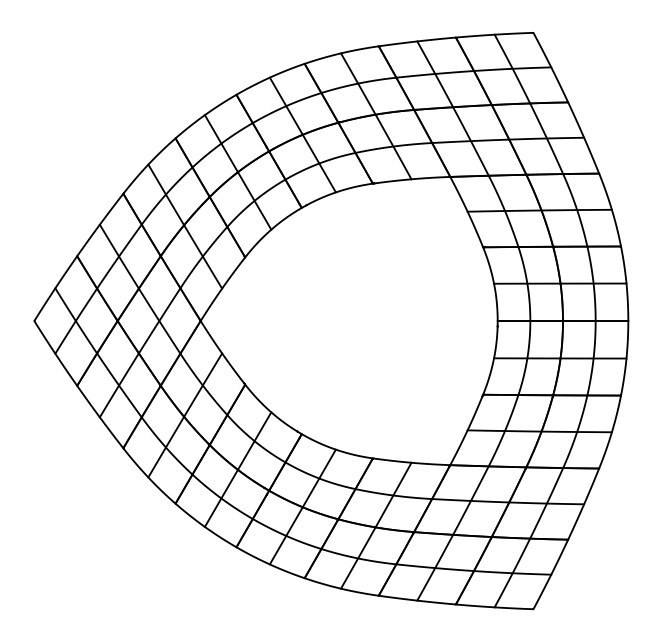
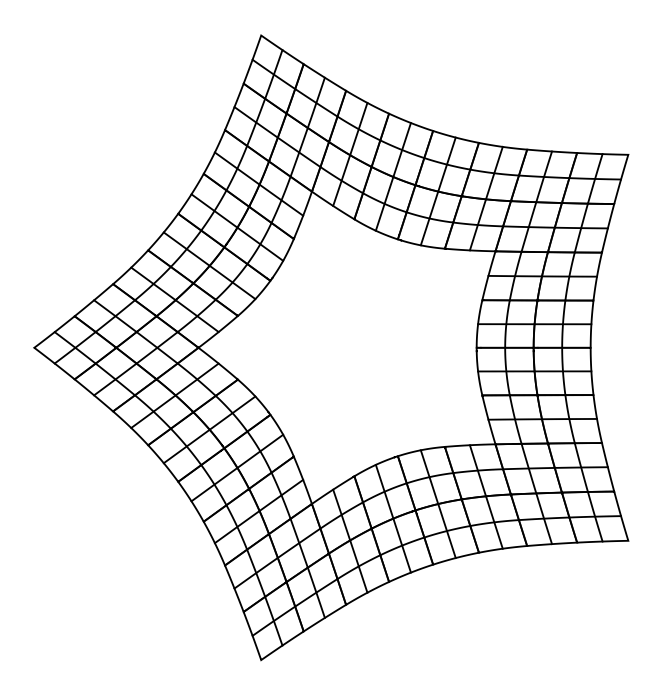
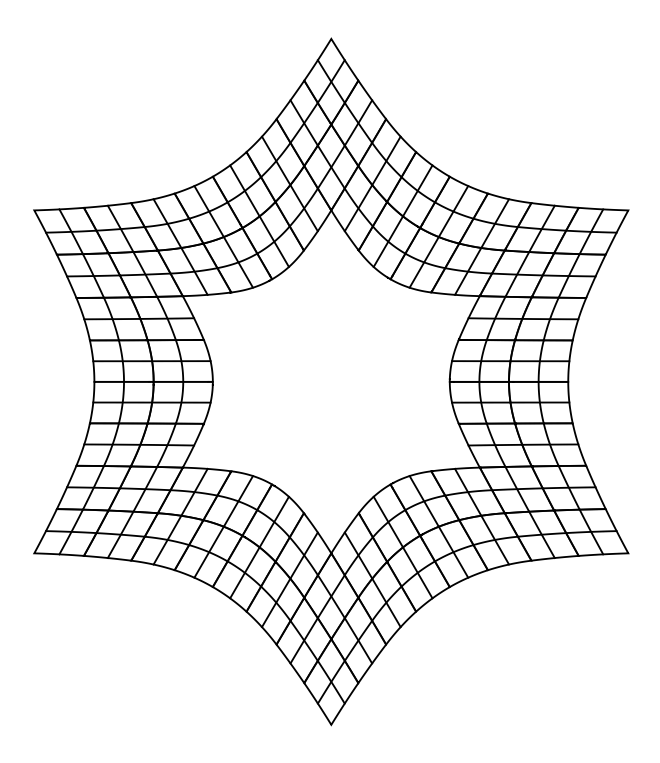
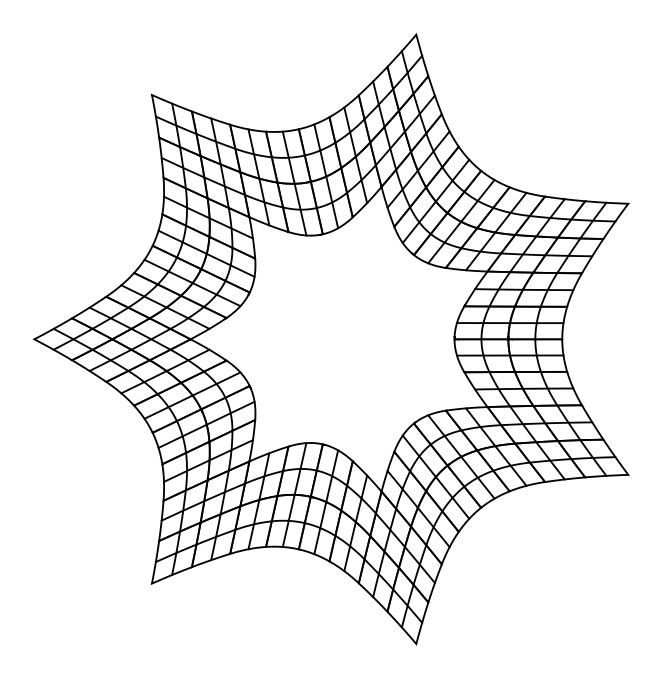
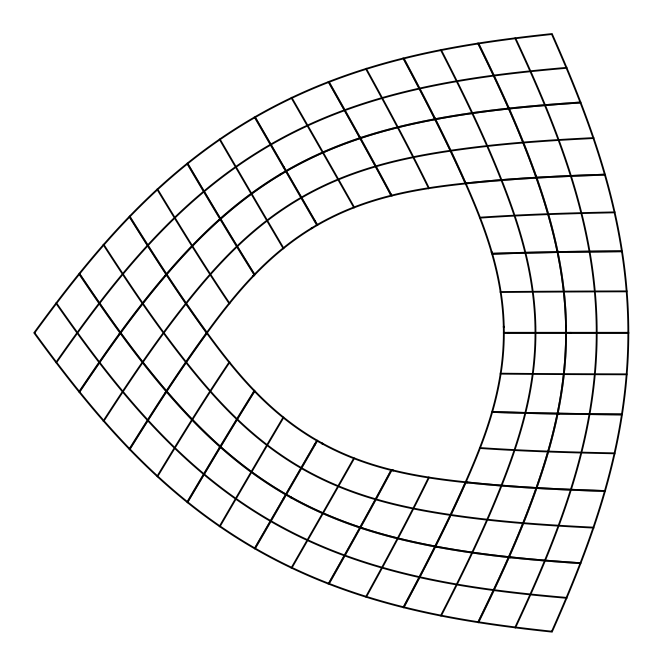
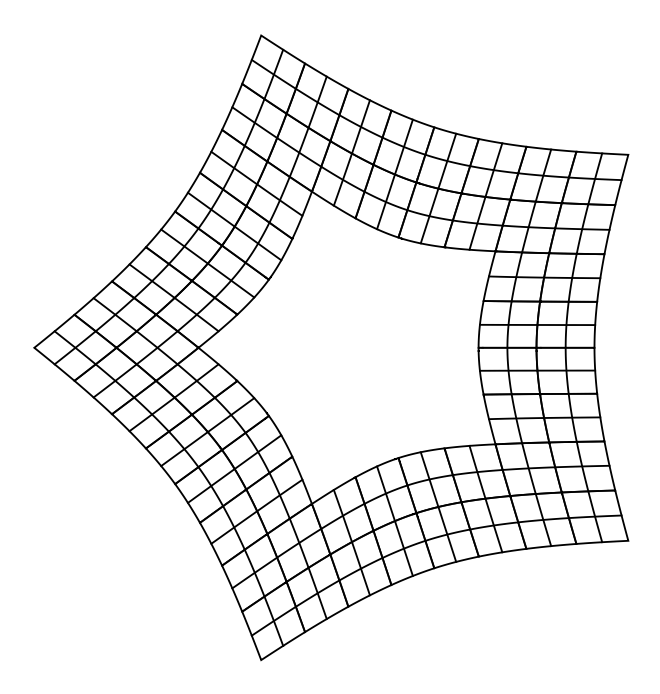
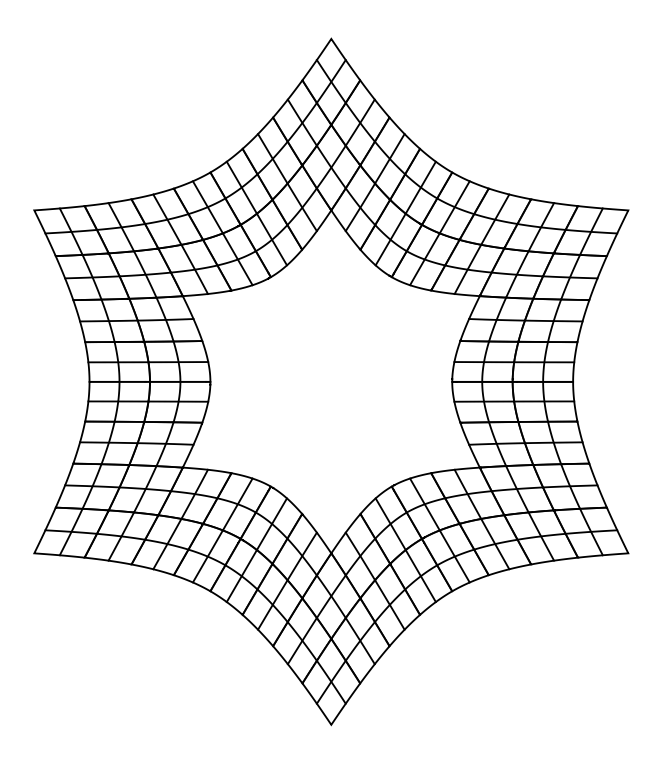
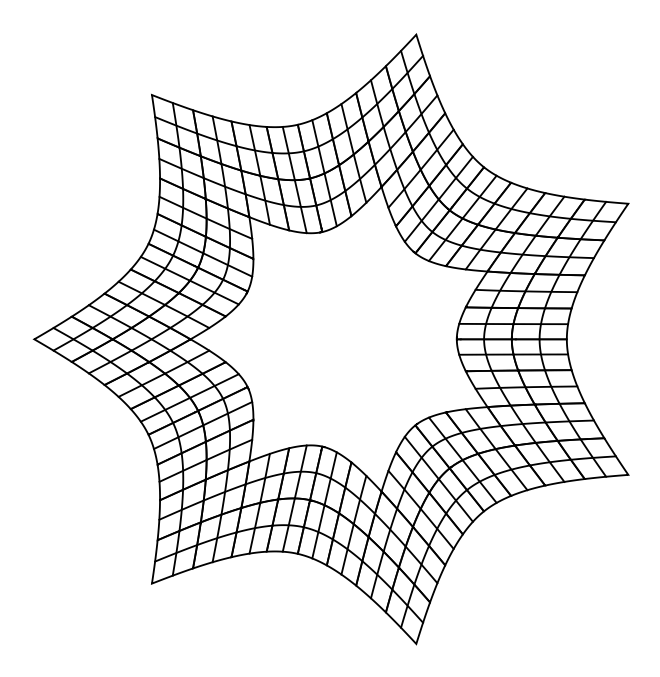
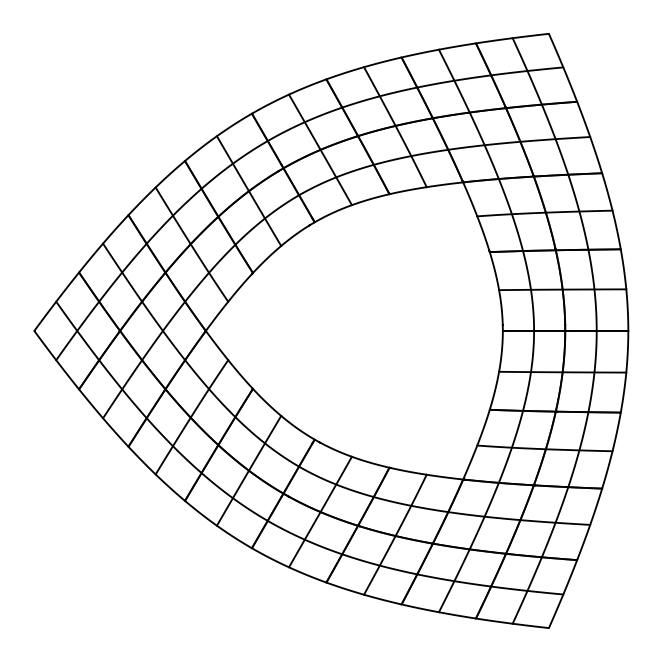
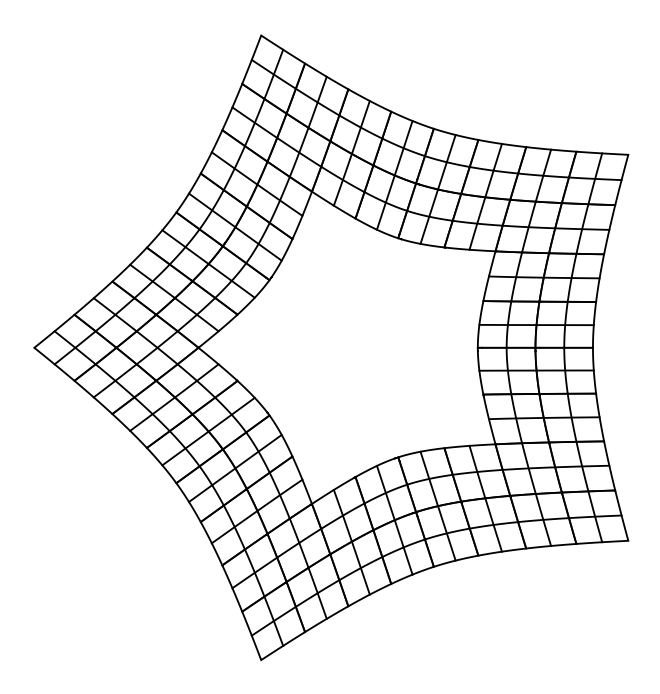
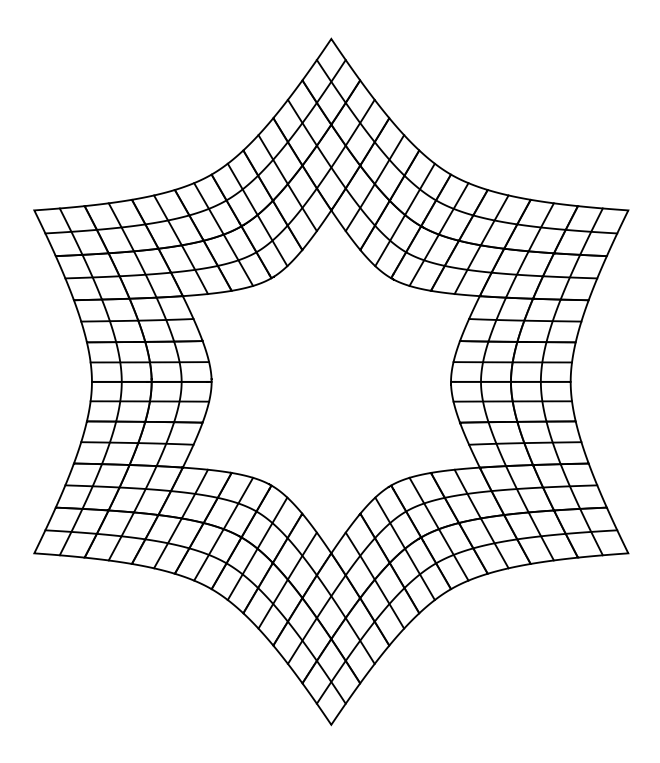
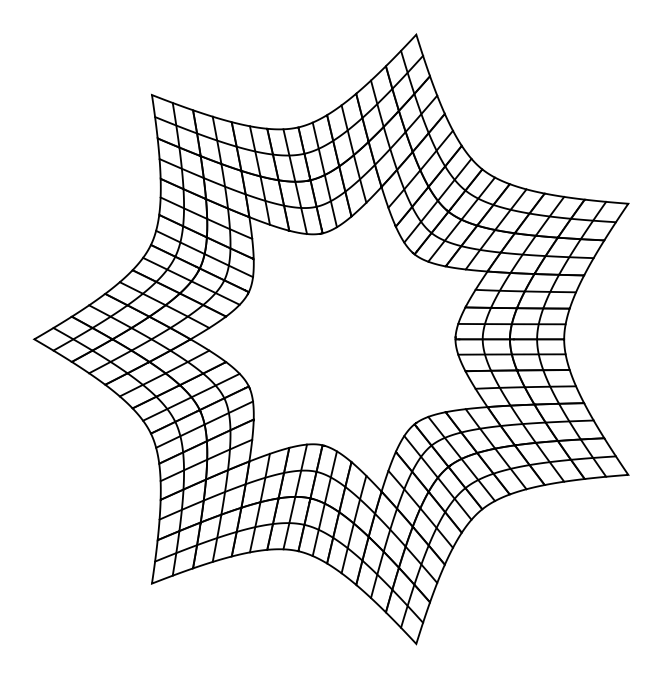
Figure 4: Characteristic rings for degrees C18 and valences C19 with C10 and parameter C11 for C12.
Coplanar averaging (in contrast to simple) always enforces C13 continuity at the extraordinary vertex at any finite refinement level, not just asymptotically, and the construction provides a concrete formula for feasible weights. The explicit connection between weights, subdominant eigenvalue, and continuity ensures that tuning C14 enables trade-offs between local shape quality and approximation power.
Numerical Experiments
Surface Quality Around EVs
The paper validates the construction through extensive tests on neighborhoods of extraordinary vertices with varying valence (e.g., 3, 5, 6) and polynomial degree. An example with valence 5 demonstrates that both simple and coplanar averaging yield C15 surfaces in the limit, but only coplanar averaging guarantees C16 smoothness at the EV on all refinement levels.

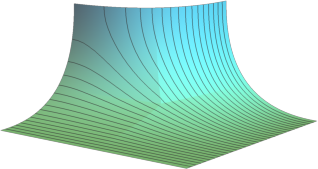
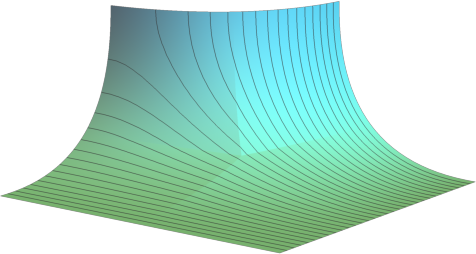
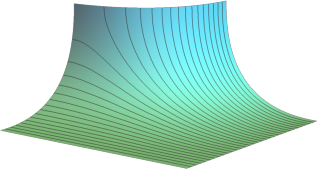
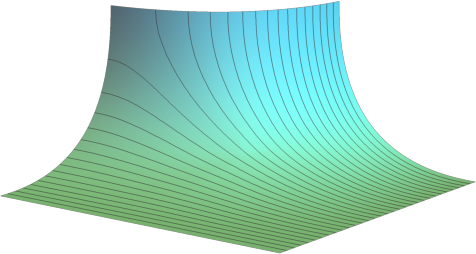
Figure 5: Initial DOFs for valence-C17 configuration.
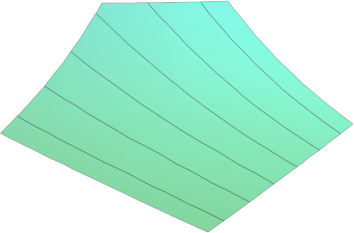
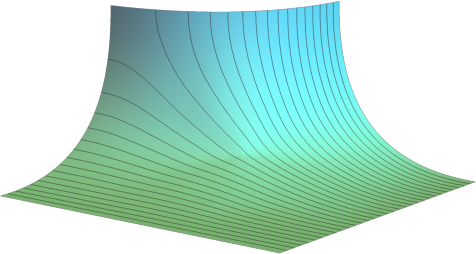
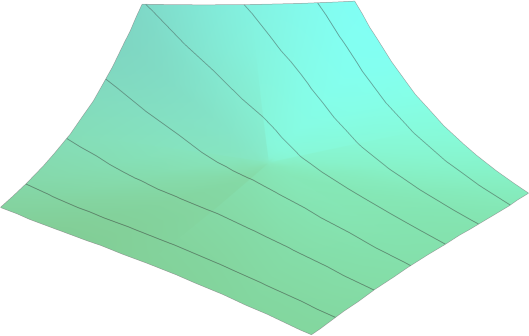
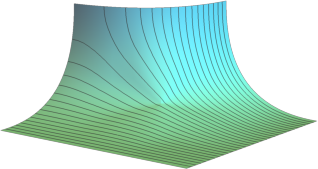
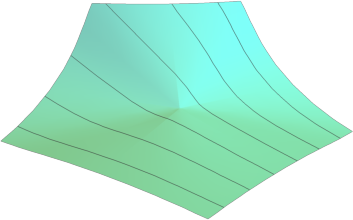
Figure 6: Refined surface for C18 (coplanar averaging, valence-5, C19).

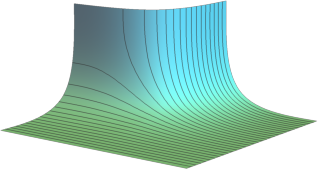
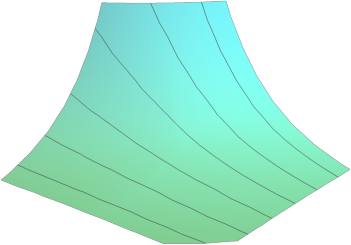

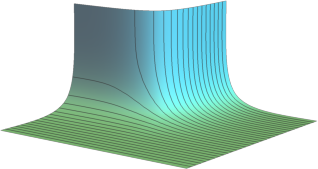
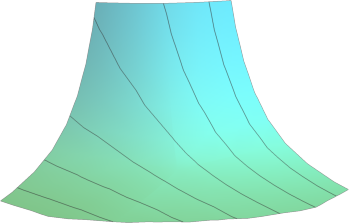
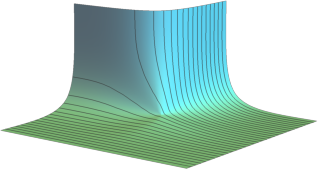
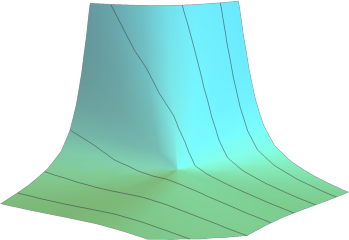
Figure 7: Surface with C10, C11 (coplanar averaging).
A parametric study shows that decreasing C12 causes elements near extraordinary vertices to shrink faster, increasing flattening and potentially reducing C13 jumps, which is reflected in convergence rates of maximum normal deviations.
Convergence Rates: Interpolation & C14-Approximation
On regular domains (unstructured multi-patch square or sphere), the paper interpolates or fits smooth functions and the unit sphere, examining C15 and C16-errors. Results indicate:
- For C17 with optimal choice C18, C19 errors exhibit cubic convergence (p0), the best attainable rate given the smoothness barrier.
- For p1 and higher, optimal convergence in p2 is retained when p3 matches mesh-dependent constraints (p4 for p5), aligning with theoretical predictions [takacs2025approximation].
- For non-optimal p6 (e.g., p7), errors still decrease, but convergence is suboptimal.
- Basis functions always form a partition of unity, and for admitted weight ranges, are pointwise non-negative, guaranteeing convex hull property.

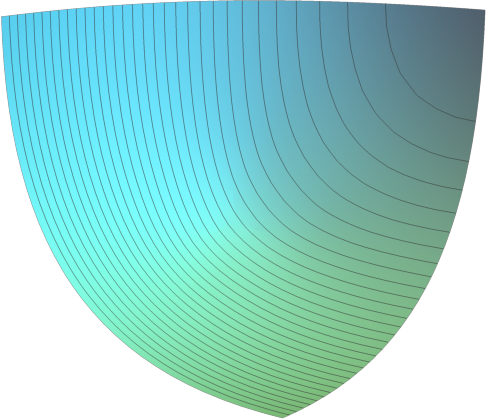
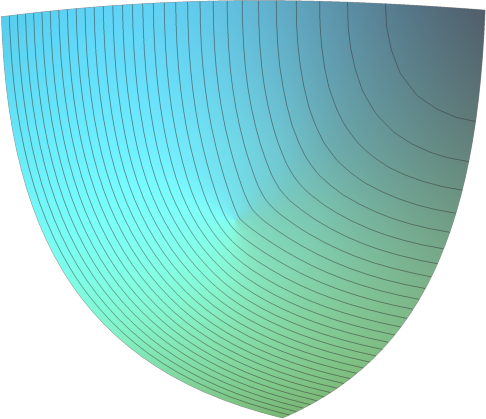

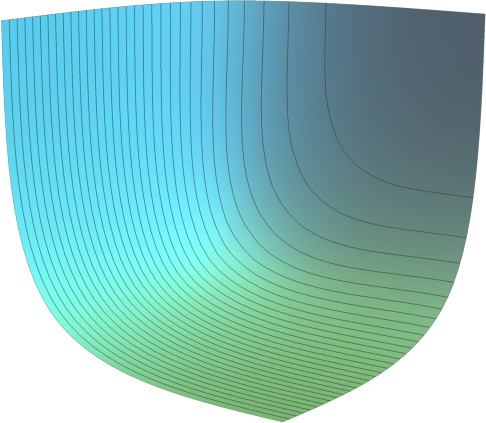
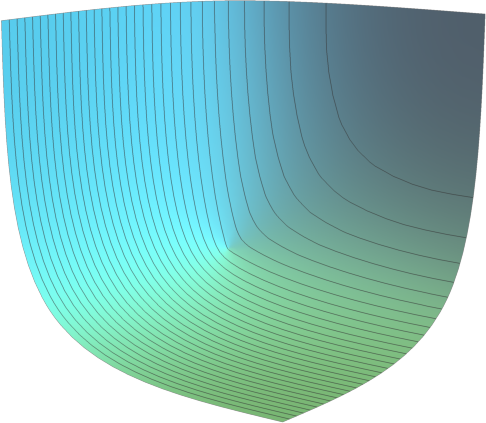

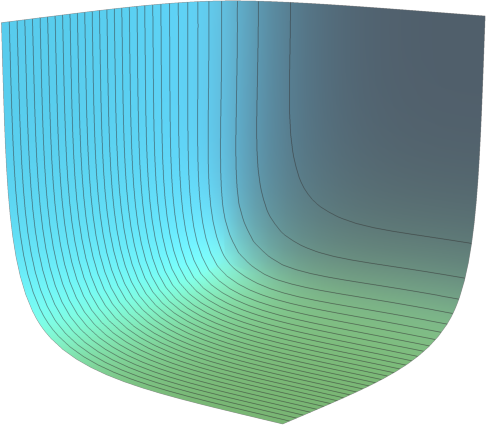
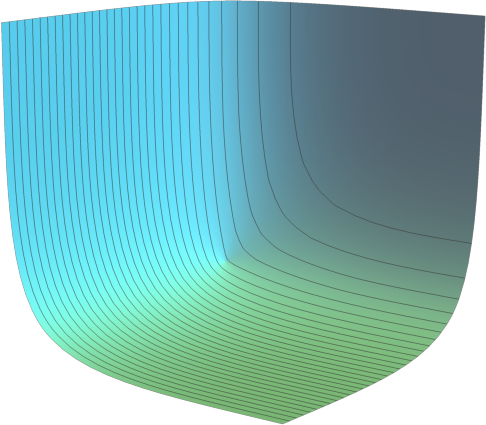
Figure 8: Surfaces for p8 after refinement to level p9 with DOFs, surfaces for r0, and for r1.
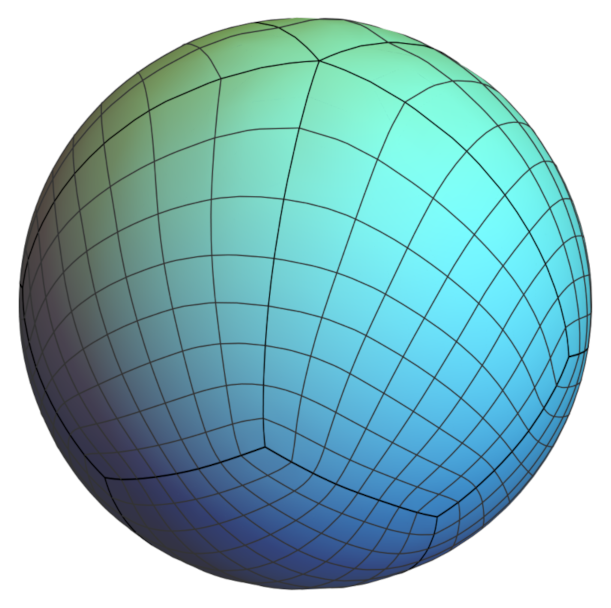
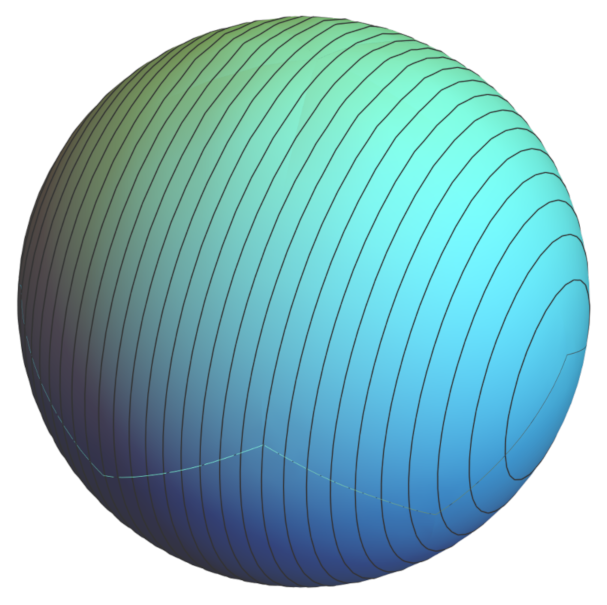
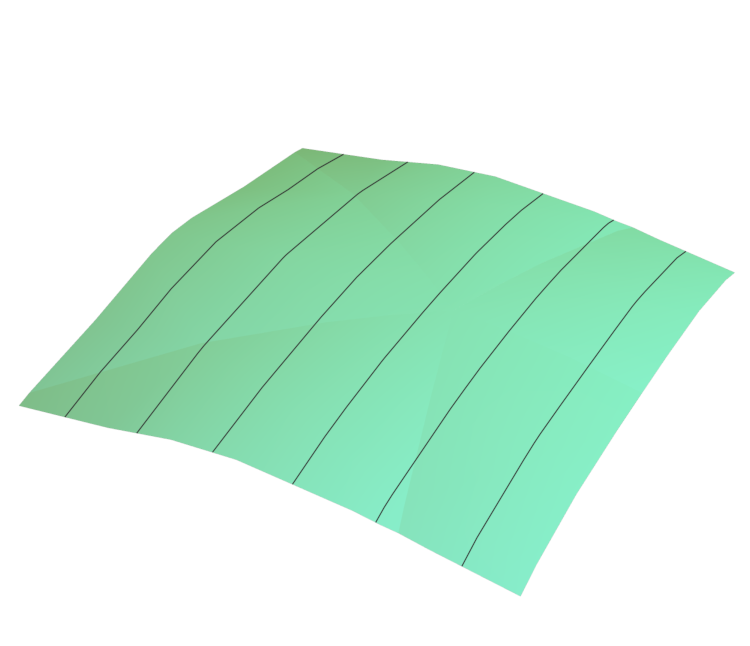
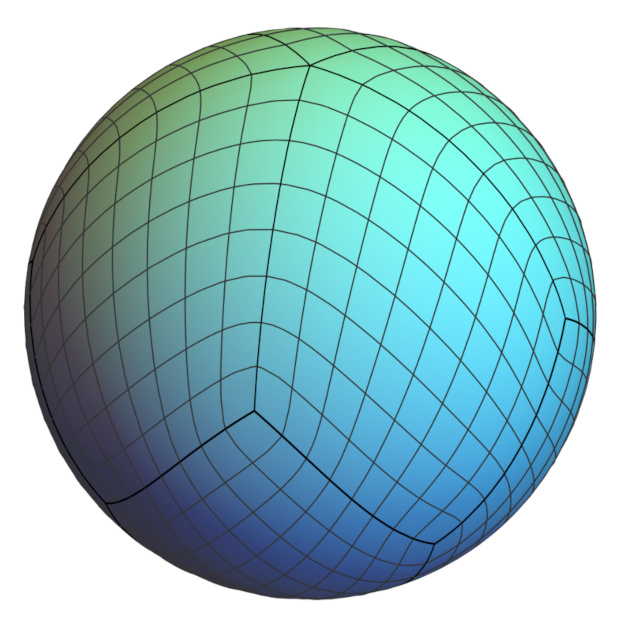
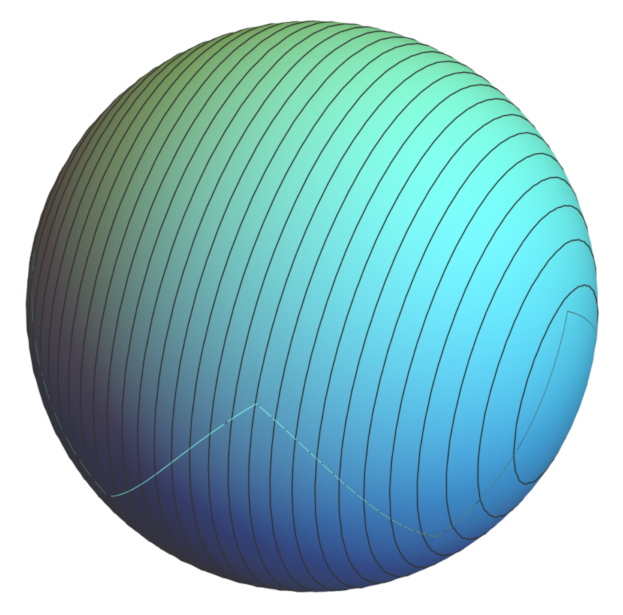
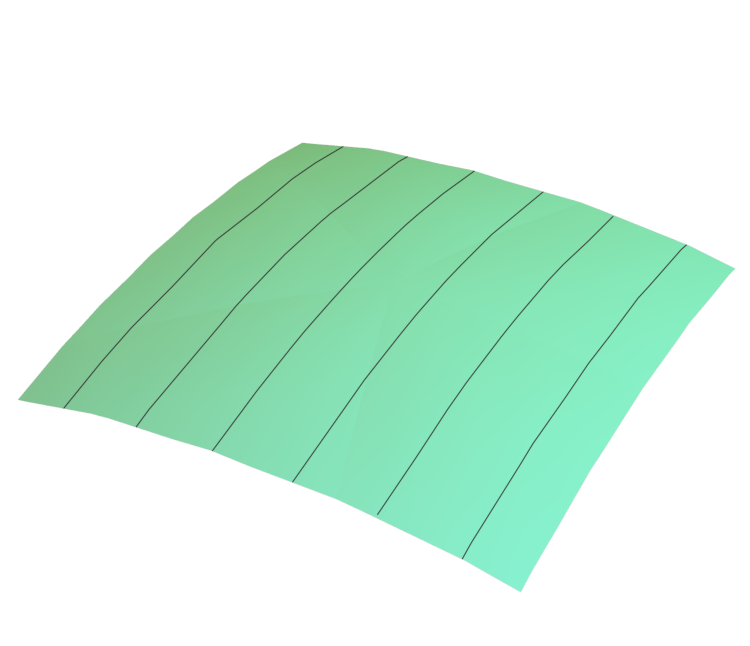
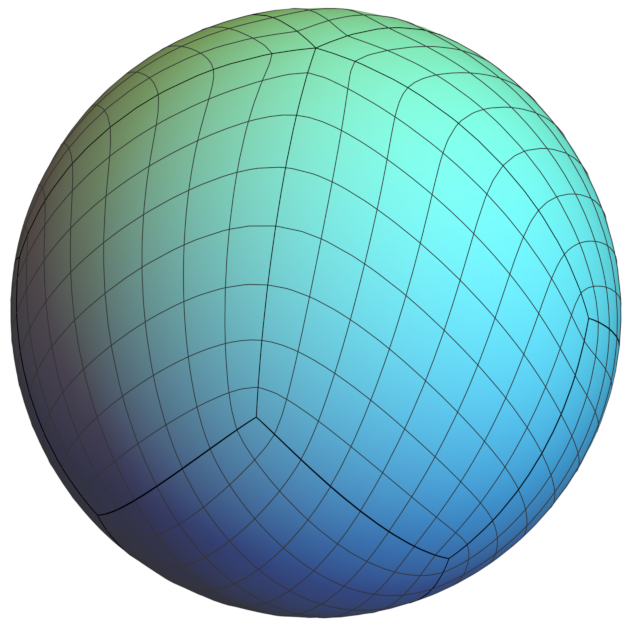
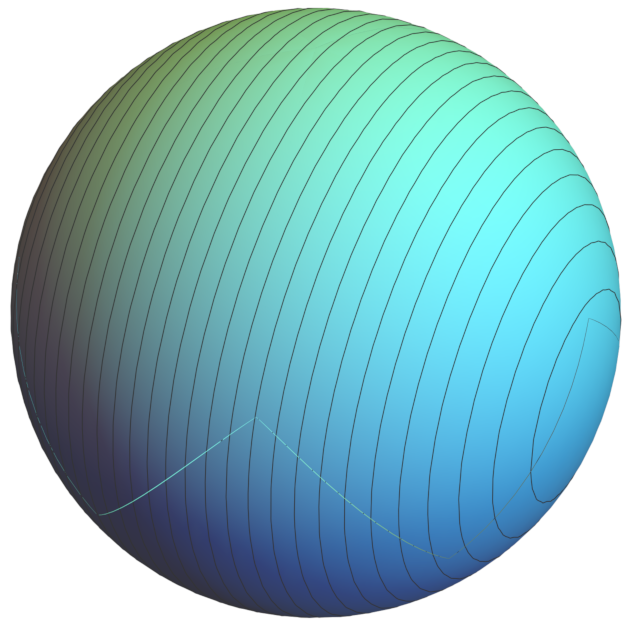
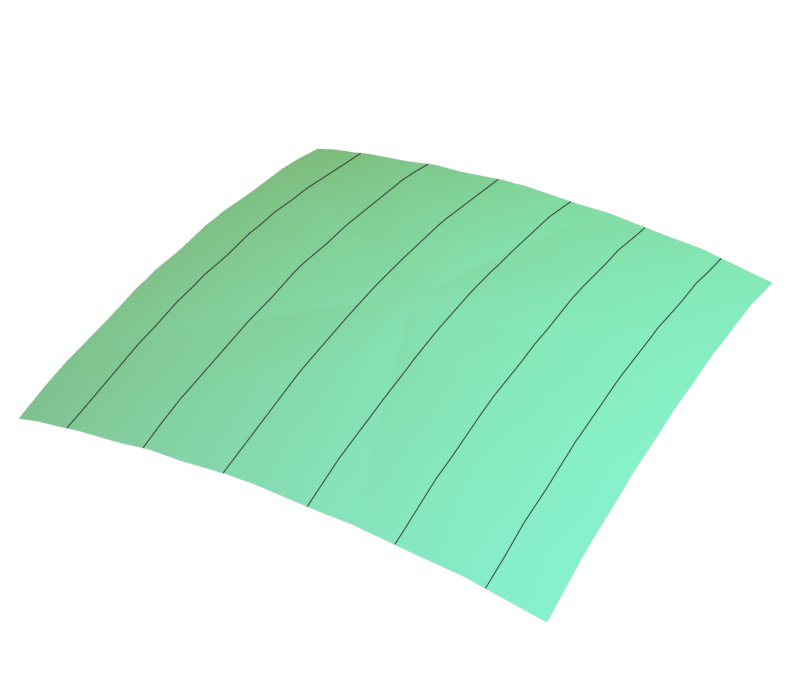
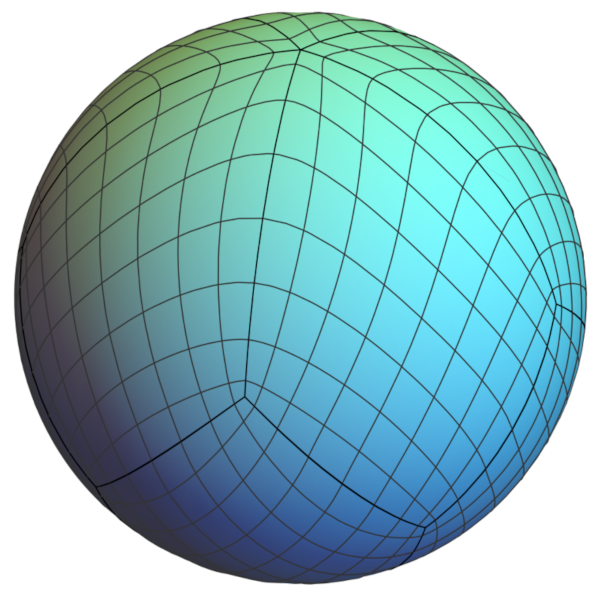
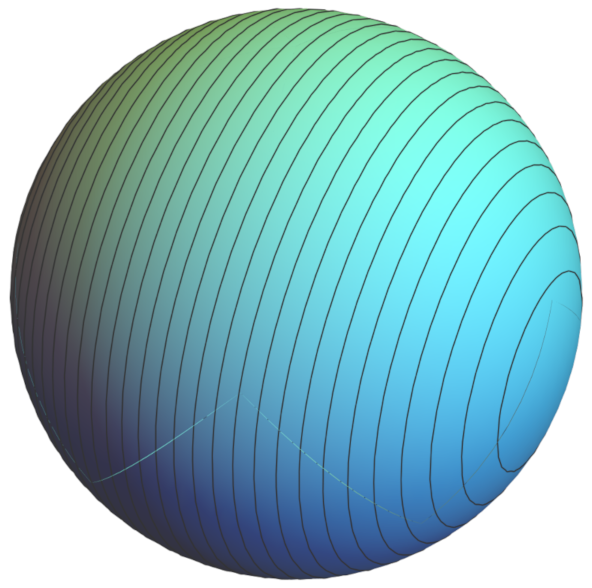
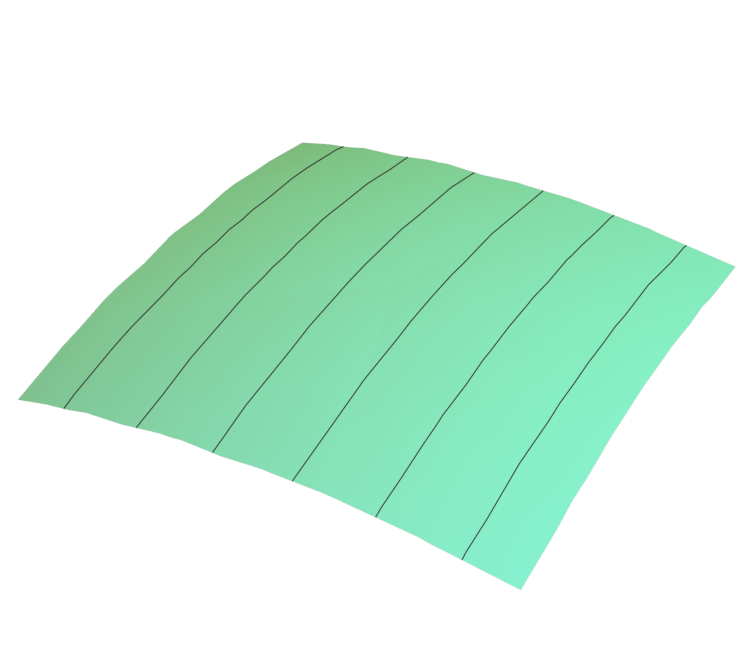
Figure 9: Surface for r2.
Practical and Theoretical Implications
This construction establishes a practical toolkit for r3 isogeometric analysis and surface modeling on unstructured quadrilateral meshes, facilitating high-regularity bases without the artifacts associated with standard subdivision surfaces near EVs. Direct insight into the spectral properties of the refinement operator enables explicit control over surface quality and approximation power.
Key theoretical insights include:
- Locality: All basis functions have compact support. Support size is proportional to r4, controlled by refinement level and EV tuning.
- Partition of Unity & Non-negativity: Satisfies affine invariance and, under parameter restriction, the convex hull property.
The approach seamlessly integrates into IGA pipelines, making it suitable for high-order PDE solvers, especially those requiring globally r5-continuous spaces for thin-shell or Kirchhoff–Love models.
Future Directions
Further directions mentioned in the paper include:
- Extension to almost-r6 (r7) splines and bivariate generalized continuity.
- Localized parameter adjustment for improved smoothness at high-valence EVs.
- Further reduction in r8 jump (e.g., normal variation) near EVs without sacrificing support locality or the convex hull property.
- In-depth comparison with other smooth spline constructions, especially for high-order PDE applications [verhelst2024comparison, hughes2021smooth].
Conclusion
This work offers a principled, extensible framework for constructing globally r9 spline spaces via averaging and refinement on unstructured quadrilateral meshes. The localized, tunable averaging procedures—supported by meticulous smoothness and convergence analysis—enable flexible adaptation to arbitrary degree, valence, and regularity. Applications in geometric design and isogeometric analysis are immediate, with robust numerical evidence for optimal and near-optimal approximation in both r<p0 and r<p1 senses for suitable eigenvalue scaling. The results lay substantial groundwork for future developments in high-order continuity and adaptive spline analysis.

