- The paper demonstrates that tuning quantum dot size to achieve a dominant d_xy orbital character minimizes spin–orbit induced errors, enhancing SWAP fidelity.
- It employs a real-space tight-binding model with full multiorbital structure and configuration interaction to reveal complex spin dynamics and anisotropy in SWAP operations.
- The study introduces a scaled computational approach that preserves critical singlet–triplet energy splitting, offering practical guidelines for high-fidelity oxide-based qubit design.
Spin SWAP Operation in Double Quantum Dots at the LaAlO3/SrTiO3 Interface
Introduction and Motivation
The realization of scalable quantum information processing devices critically depends on platforms that support robust spin qubits with enhanced coherence properties and fast gate operations. Transition-metal oxide heterostructures, particularly the LaAlO3/SrTiO3 (LAO/STO) interface, have emerged as promising materials due to their d-electron character, potentially suppressing hyperfine-induced decoherence. However, the inherent multiorbital band structure and pronounced spin–orbit (SO) interaction introduce nontrivial complexities for quantum dot (QD) spin qubits, especially considering the absence of significant hyperfine coupling.
This work provides a comprehensive theoretical investigation of spin dynamics and the SWAP operation in double quantum dots (DQDs) formed within the two-dimensional electron gas (2DEG) at the LAO/STO interface. The analysis is based on a real-space tight-binding model, incorporating the full multiorbital structure and SO coupling. The central focus is quantifying the influence of orbital character, SO interaction, and dot size on the fidelity and anisotropy of spin SWAP operations—a crucial primitive for universal quantum computation and error correction.
Model Overview
The LAO/STO 2DEG is described using a tight-binding Hamiltonian on the Ti t2g (dxy, dxz, dyz) orbital manifold, incorporating kinetic energy, atomic SO interaction, interface-induced Rashba SO coupling, and coupling to an external magnetic field. The model is discretized on a square lattice, and the quantum dot confinement is defined via tunable external potentials.
For a single electron, quantum evolution is treated exactly; for the two-electron case, a configuration interaction (CI) method is employed, with Slater determinants constructed from single-particle orbitals. Full Coulomb matrix elements—including realistic dielectric screening—are used.
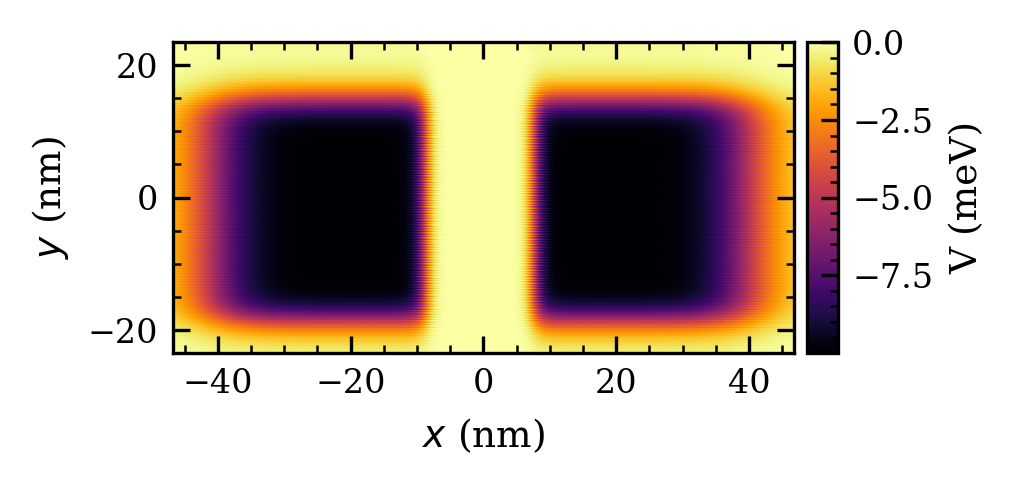
Figure 1: The confining potential in the double LAO/STO QD for typical parameters, showing tunable interdot coupling and dot size.
Single-Electron Spin Dynamics
Single-electron spin dynamics are governed by the interplay between SO interaction and orbital composition. For large QDs, the electronic spectrum is dominated by the dxy orbital, and the SO coupling takes an effective Rashba form. In this regime, spin precession follows the semiclassical Bloch equations with a Rashba effective field, and agreement between semiclassical and full quantum evolution is quantitatively demonstrated.
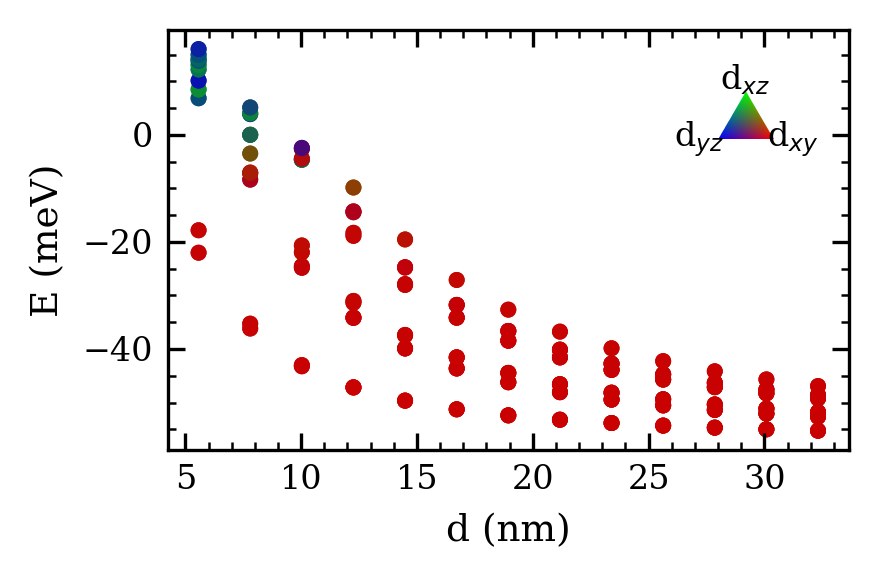
Figure 2: Single-electron spectrum as a function of dot size, with RGB decomposition showing 30, 31, and 32 content.
For small QDs, confinement-induced mixing with 33 orbitals becomes significant, yielding irregular, multi-frequency spin dynamics (beating). Here, Bloch-equation-based descriptions break down, and complex multiorbital quantum evolution is essential.
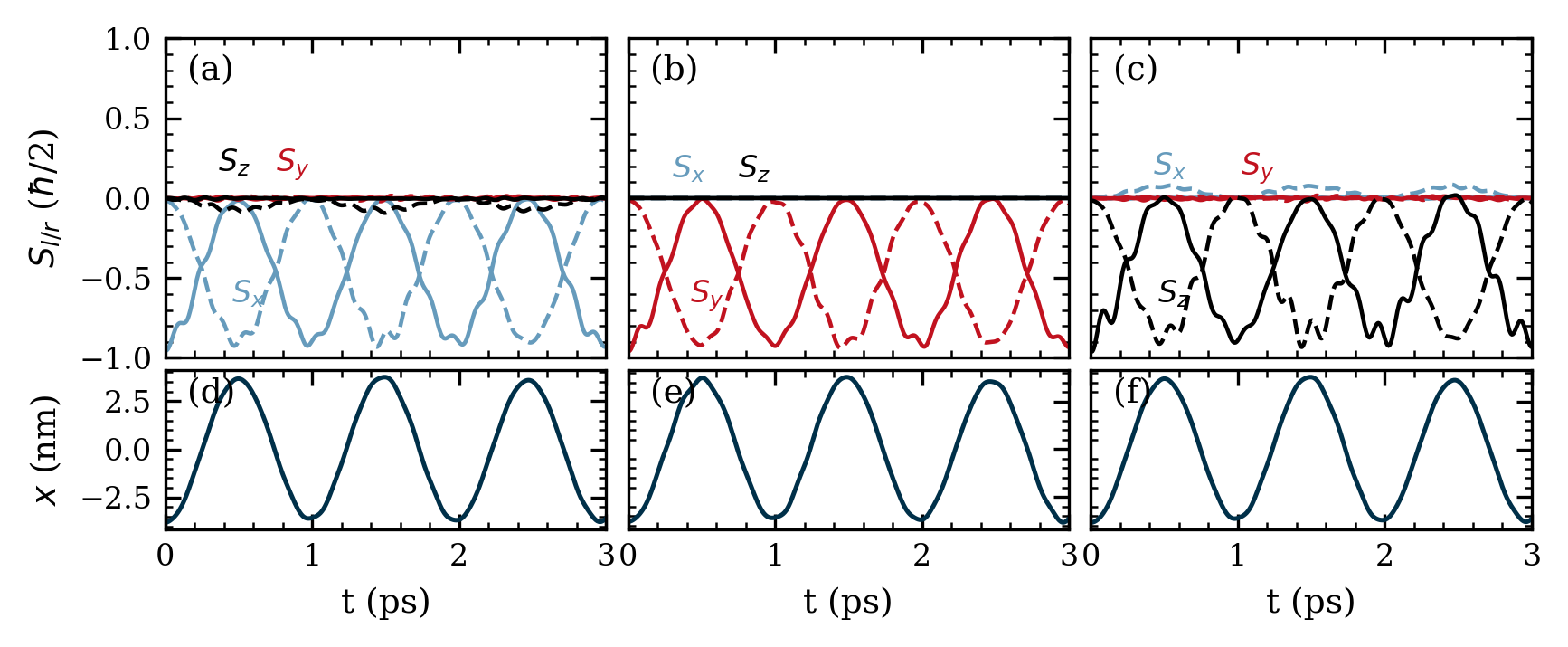
Figure 3: Time evolution of spin components in left/right QD; notable precession and coherent tunneling for 34 nm.
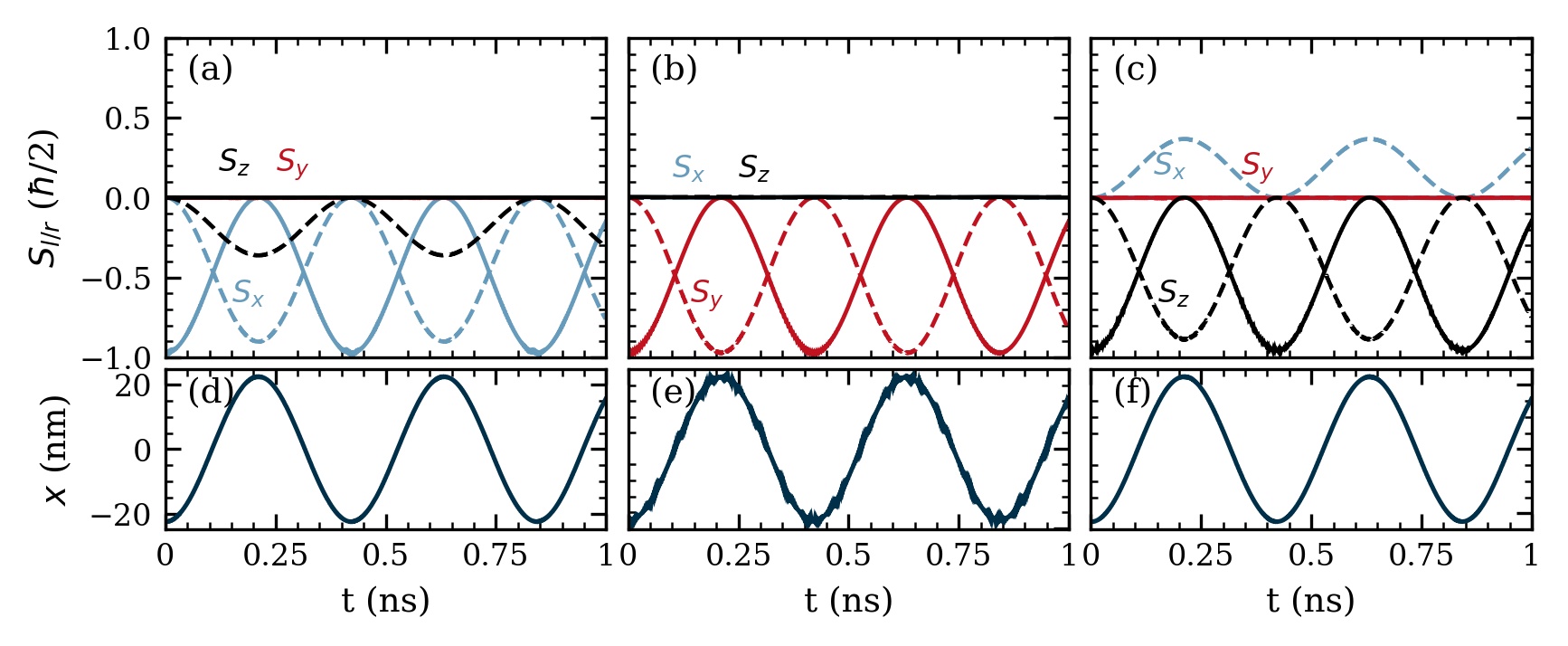
Figure 4: Analogous spin-component time evolution for larger dot size 35 nm, with enhanced amplitude and regularity due to dominant 36 character.
Two-Electron SWAP Dynamics: Regimes and Mechanisms
SWAP dynamics are critically tied to two competing energy scales: the SO energy and the confinement/kinetic energy dictating orbital composition.
- Small QDs (37 nm): Multiple excited states contribute, with 38 admixture producing irregular spin oscillations and reducing SWAP fidelity. Multiple Fourier components are evident in the spin dynamics.
- Intermediate QDs (39 nm): The system reaches an optimal "sweet spot" where spin SWAP is coherent, primarily involving only the lowest singlet and (unpolarized) triplet. Here, SO-induced fidelity loss is minimal due to enhanced level spacing and nearly pure 30 character.
- Large QDs (31 nm): Electronic states are 32-like and SWAP oscillations become regular, but the increasing relative strength of Rashba SO interaction induces significant precession in the transverse spin components (33, 34), limiting maximum SWAP fidelity due to leakage outside the computational spin subspace.
Numerically, SWAP times span from 35 ps for 36 nm to 37 ns for 38 nm, primarily set by the exchange energy 39.
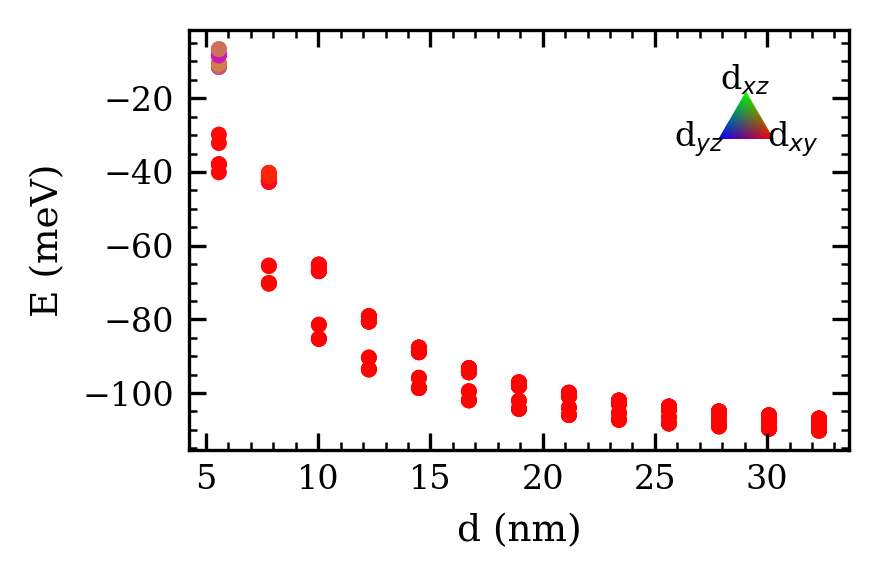
Figure 5: Two-electron energy spectrum as a function of dot size; the admixture of 30 orbitals in small dots is evident.
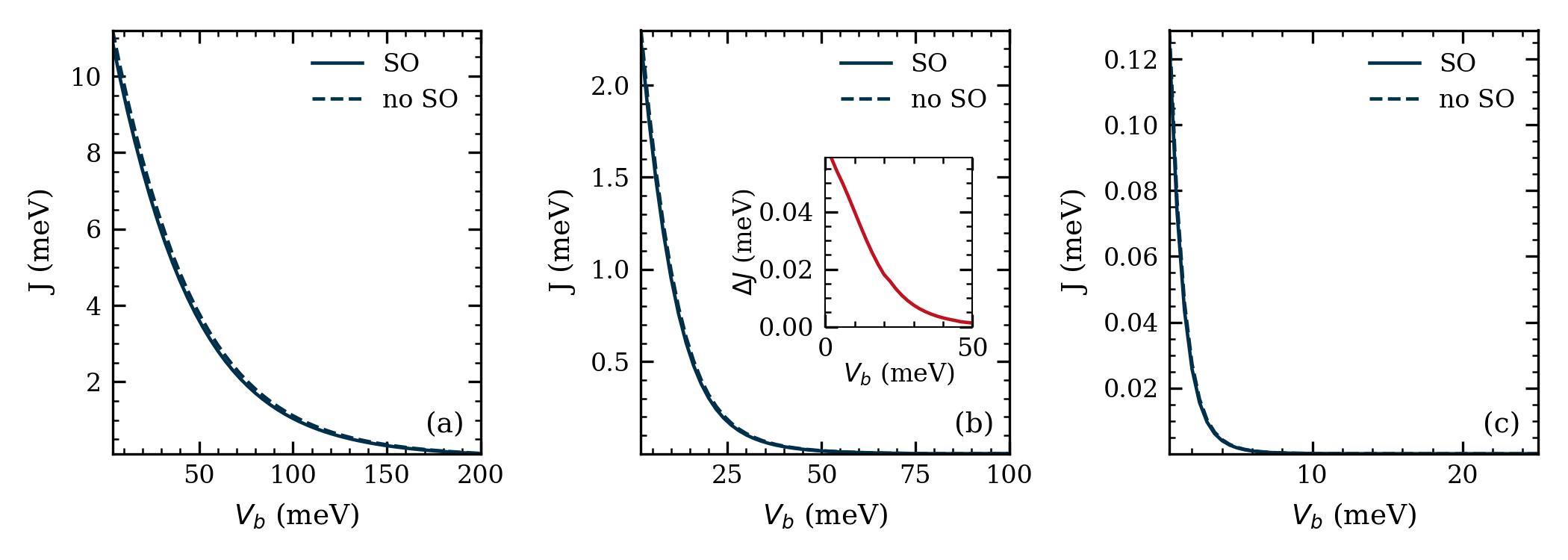
Figure 6: Exchange energy 31 versus barrier height 32 for various 33; pronounced dependence on confinement and SO interaction. Insets highlight singlet–triplet crossings and SO-induced corrections.
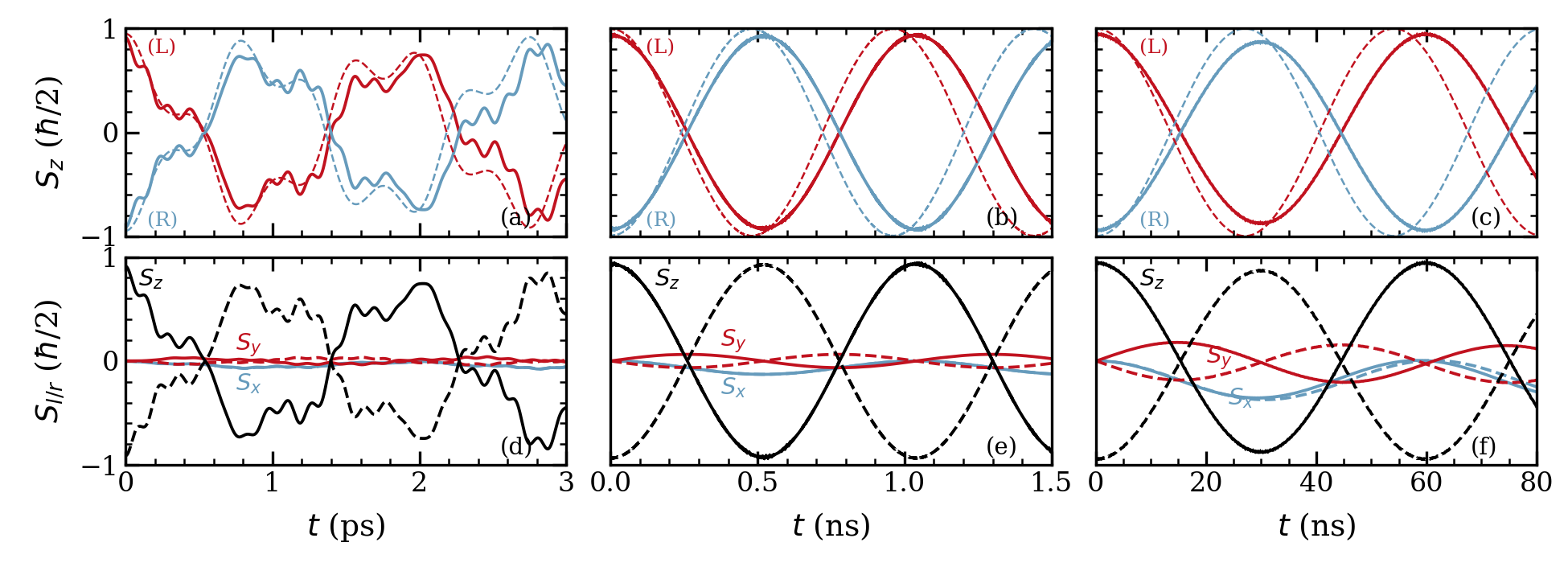
Figure 7: Time evolution of 34 for different 35; contrast between SO-including and SO-free cases reveals SO-driven fidelity loss in large dots and spectral complexity in small dots.
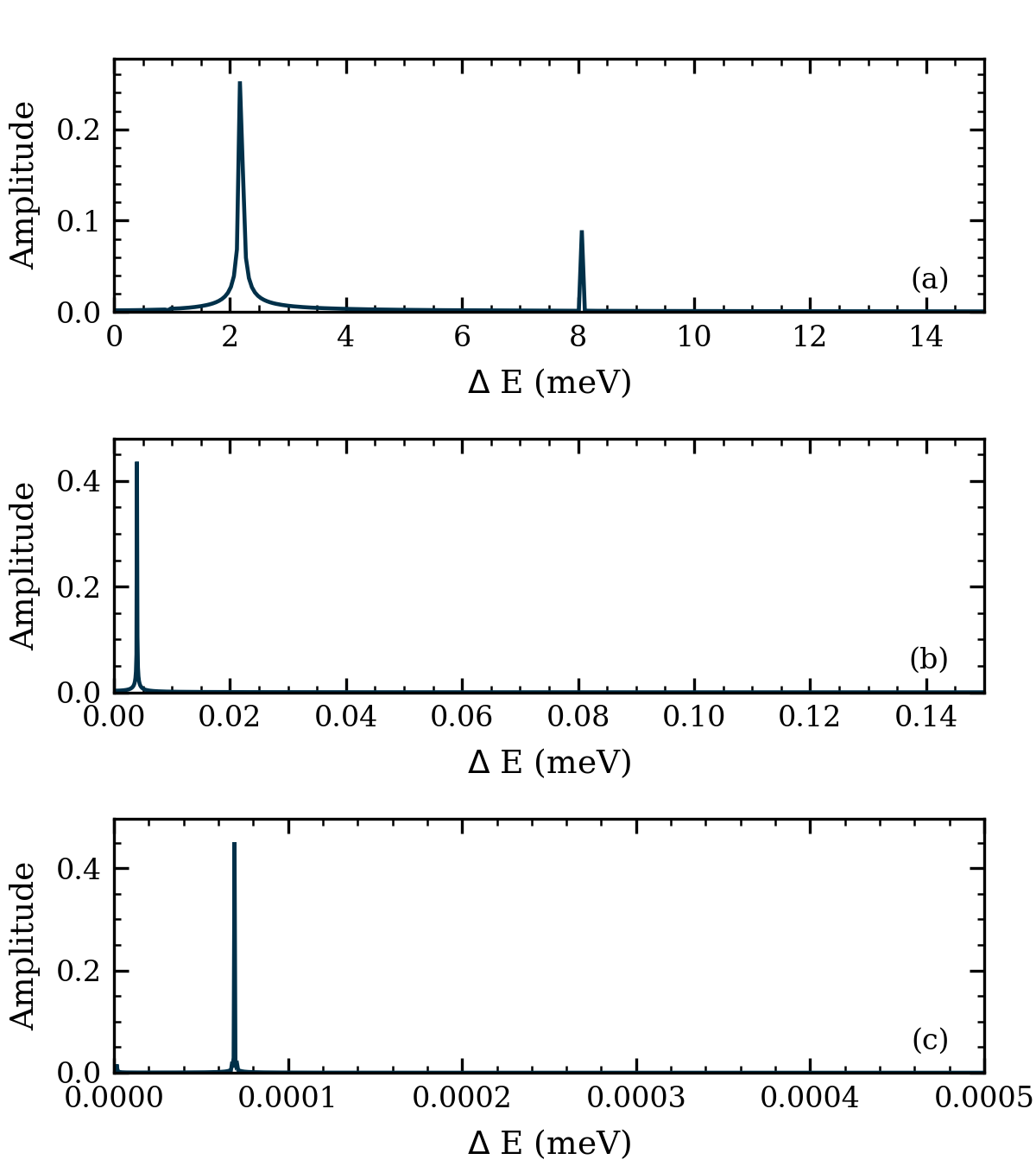
Figure 8: Fourier analysis of 36 reveals dominant energy transitions responsible for SWAP for each dot size regime.
Anisotropy of SWAP Operation
A key result is the clear demonstration of SWAP operation anisotropy induced by SO coupling. In the 37-dominated regime, the effective SO field is oriented along 38 (Rashba field). When the initial spin polarization aligns with this direction, SWAP operation fidelity is maximized, as there is minimal SO-induced leakage into transverse spin subspaces. For spins initialized along the 39 or mixed orientations, SO-induced precession generates nontrivial oscillations in d0 and d1, reducing SWAP fidelity.
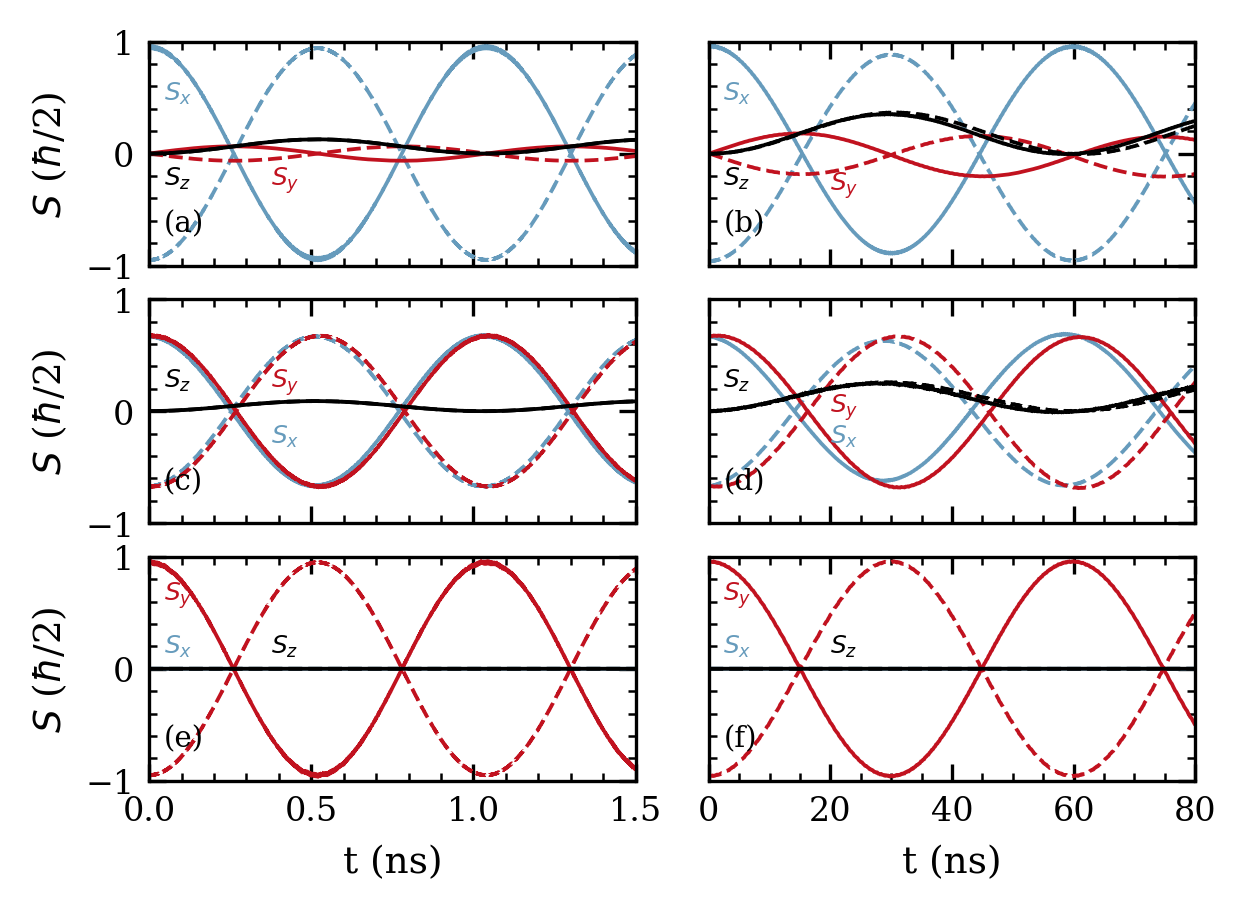
Figure 9: Time evolution of d2 for different initialization axes; the d3-aligned polarization realizes near-perfect SWAP.
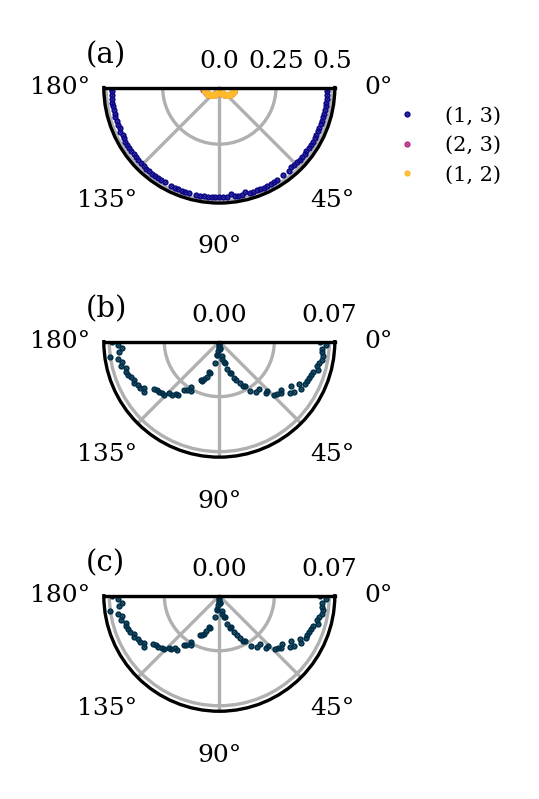
Figure 10: Polarization dependence of key transition coefficients d4, quantifying anisotropy in the SWAP process for d5 nm.
Notably, for strong SO interaction and/or large quantum dots, these anisotropies become pronounced and must be considered in gate design and error correction.
Computational Acceleration: Scaled Tight-Binding Approach
Because the tight-binding lattice for realistic LAO/STO-based DQDs is computationally demanding, a scaling procedure is validated. By scaling the lattice spacing and appropriately renormalizing TB parameters, the essential singlet–triplet energy splitting and SWAP dynamics are preserved down to scaling factors d6–d7. This enables tractable simulation of larger device geometries without significant fidelity loss, as validated by direct comparison of spin dynamics.
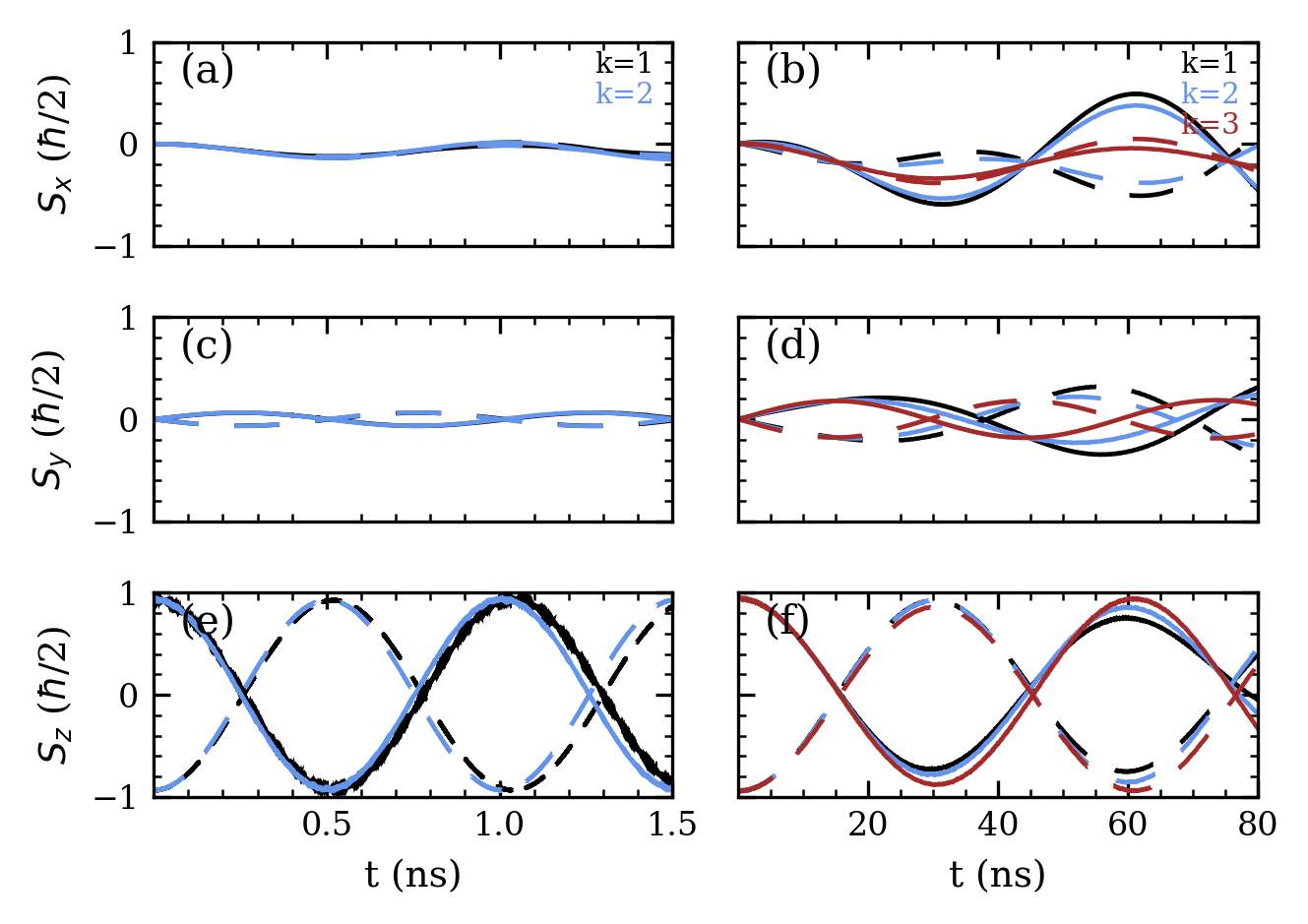
Figure 11: Comparison of spin evolution calculated in the full and scaled TB models; scaling maintains dynamical fidelity of SWAP essential for device design.
Implications and Future Directions
Practically, this work identifies operational regimes in LAO/STO-based spin qubits where high-fidelity SWAPs are feasible. In particular, the interplay of dot size, orbital composition, and SO coupling is mapped in detail, establishing experimental design rules. The quantification of SO-induced anisotropy suggests protocols for optimal qubit initialization and axis choices.
Theoretically, these results underscore the inadequacy of single-orbital effective models to capture fidelity-critical phenomena in oxide 2DEG qubits, especially for realistic device sizes and couplings. Extension beyond Rashba-only or effective single-band models is required.
For future AI-driven quantum control, these findings indicate that automated approaches must embed explicit models of orbital composition and SO-induced anisotropies, particularly in oxide qubit platforms. As experiment advances towards the first demonstration of electrically driven spin control and two-qubit gates in LAO/STO, these insights will inform device design, optimal operation points, and error mitigation protocols.
Conclusion
This study establishes the microscopic limits of SWAP operation fidelity in LAO/STO DQDs by accounting for the full multiorbital band structure and SO interaction. The identification of a robust operational window with suppressed SO-induced errors, and the demonstration of computationally efficient scaled-tight-binding methods, directly supports ongoing experimental and theoretical work in transition-metal-oxide quantum devices. The framework and results presented here offer a reference for the practical implementation and simulation of high-fidelity quantum gates in emerging oxide-based qubit platforms (2606.06948).