- The paper delivers a comprehensive analysis of lepton interactions, detailing deep inelastic scattering, nuclear PDF evolution, and tau polarization effects in both collider and astrophysical environments.
- It employs advanced NLO calculations and simulation frameworks to quantify observable cross sections, highlighting contributions from subleading processes in IceCube and LHC far-forward detectors.
- The research underlines implications for intrinsic charm, nPDF universality, and beyond-Standard-Model searches via Lμ–Lτ Z′ probes, setting the stage for future experimental tests.
Authoritative Summary of "Lepton interactions from GeV to EeV" (2606.06773)
Overview and Motivation
The dissertation “Lepton interactions from GeV to EeV” (2606.06773) delivers a comprehensive phenomenological investigation into neutrino and muon interactions with matter across a vast energy range, from GeV to EeV scales. The analysis is situated within the Standard Model (SM), with targeted studies of deep inelastic scattering (DIS), rare electroweak processes, and the interplay between partonic and nuclear structure in both terrestrial and astrophysical contexts.
A distinguishing feature of this work is its explicit dual focus on two frontiers: the high-luminosity collider environment exemplified by FASER/FASERν at the LHC, and the ultra-high-energy (UHE) regime observed by IceCube. These complementary settings anchor the study of lepton-nucleus cross sections, structure functions, and the observability of rare Standard Model (and beyond) phenomena.
The thesis begins with a rigorous development of the electroweak and QCD sectors. The role of asymptotic freedom in QCD is revisited, emphasizing its implications for the perturbative reliability of DIS calculations at high Q2.
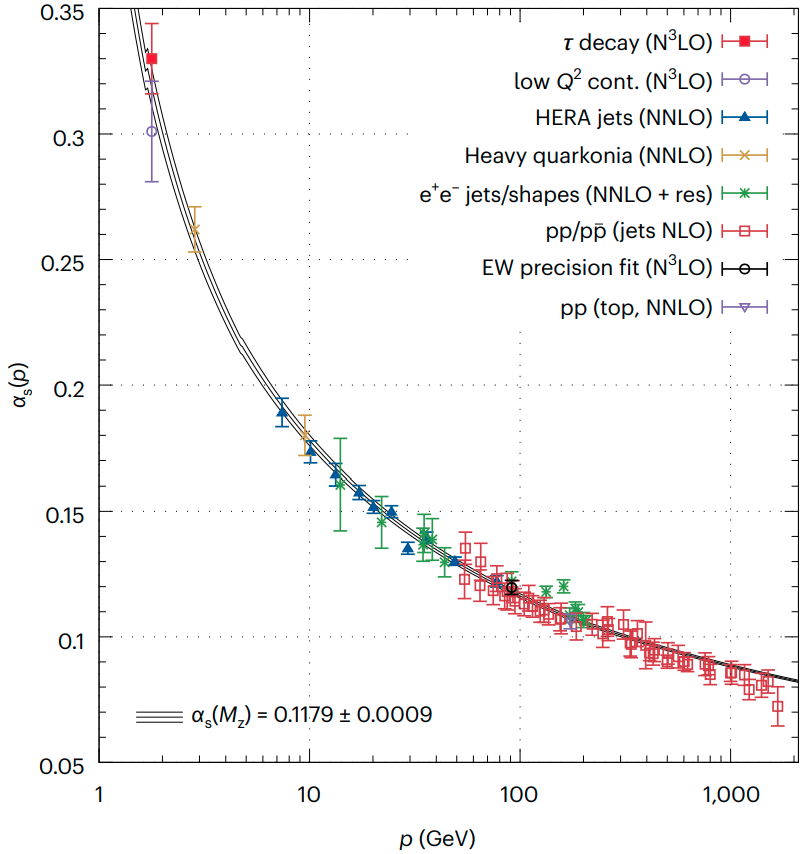
Figure 2: QCD running coupling as a function of the momentum transfer in various processes, highlighting the perturbativity at high Q2.
Detailed attention is devoted to the Lorentz structure and parameterization of the lepton-nucleon DIS cross section. The explicit forms for differential cross sections including all five structure functions F1−5 are retained, enabling precise quantification of mass effects—particularly relevant for ντ interactions.
The evolution and uncertainties of nuclear parton distribution functions (nPDFs) are systematically treated. Multiple global nPDF sets (nCTEQ15HQ, nNNPDF3.0, EPPS21) are compared, elucidating the present limitations in both the strange and gluon sectors at high x and low Q2.
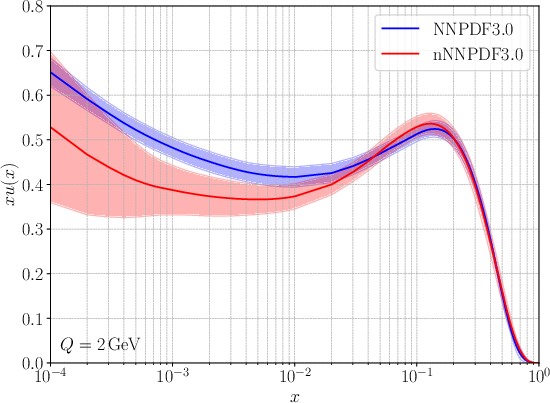
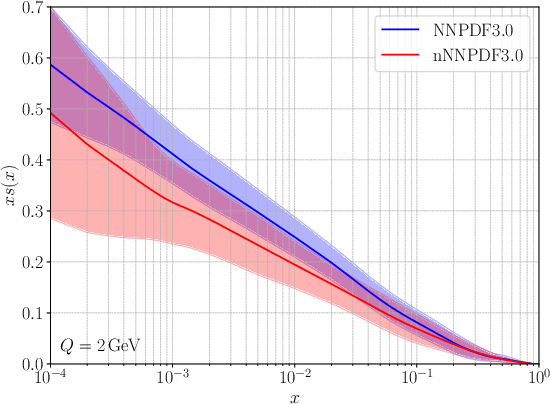
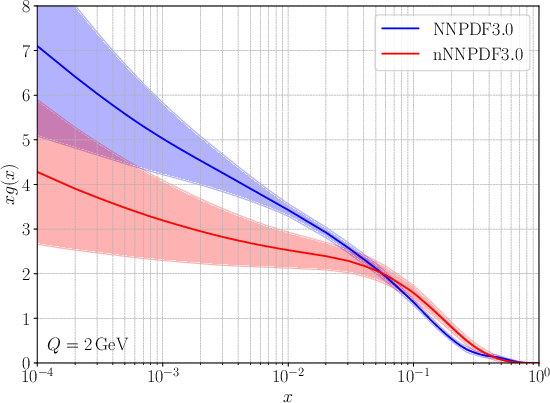
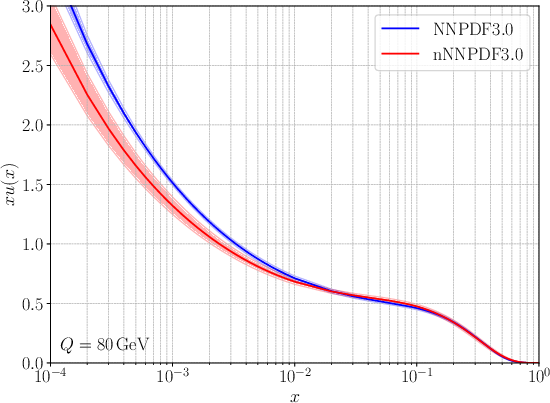
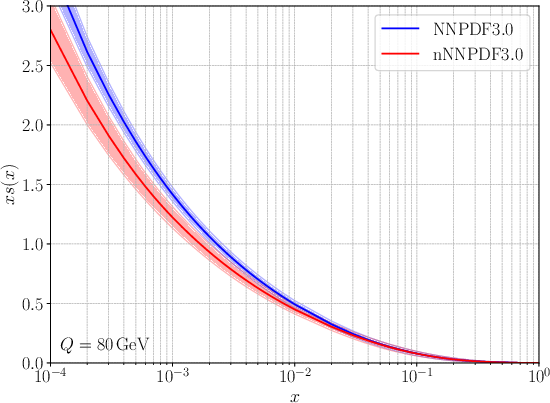
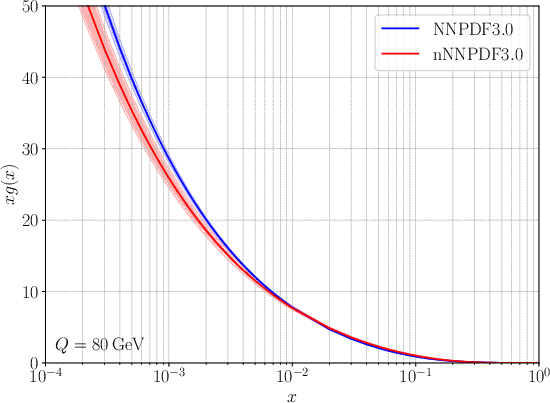
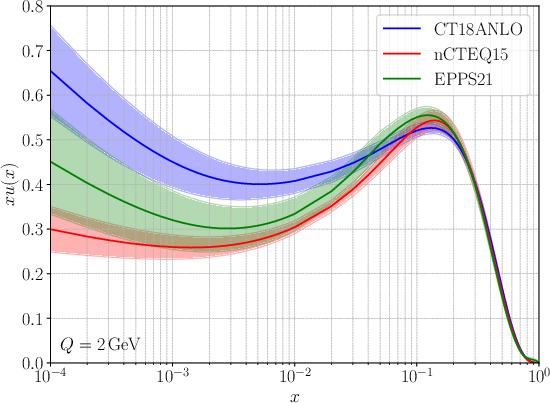
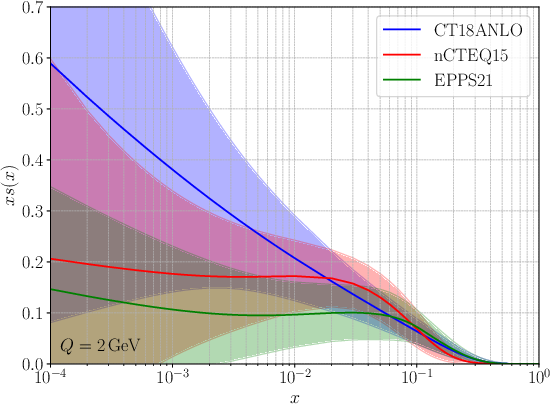
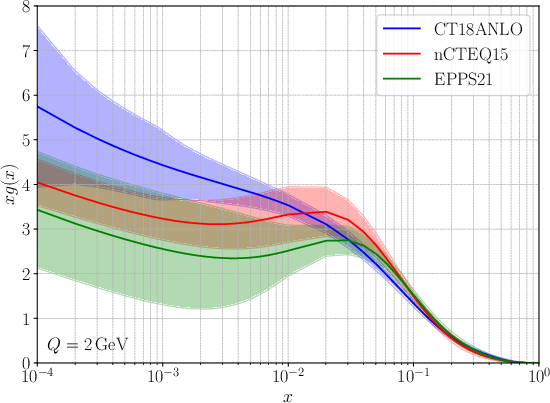
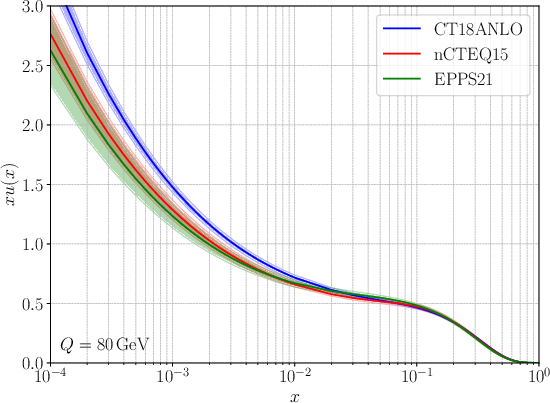
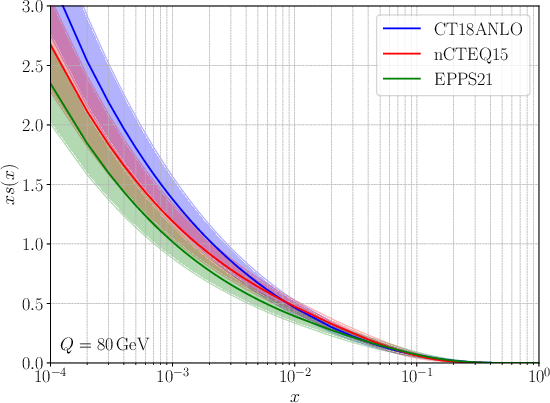
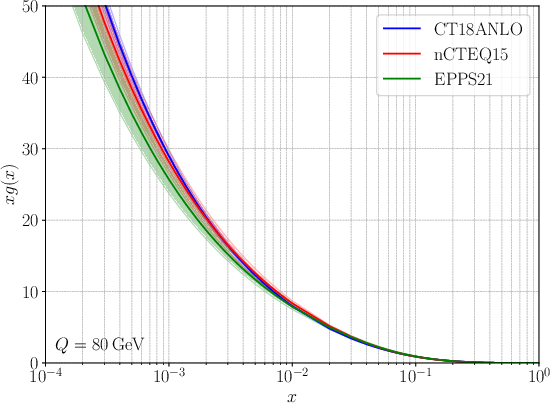
Figure 4: x-weighted PDFs for up, strange, and gluon distributions in tungsten nuclei at Q=2 and $80$ GeV, highlighting differences among global nPDF sets.
Neutrino Sources, Interactions, and Observability
A central contribution of the thesis is the detailed mapping between neutrino source spectra—cosmological to artificial—and the corresponding observable cross sections across energy ranges.
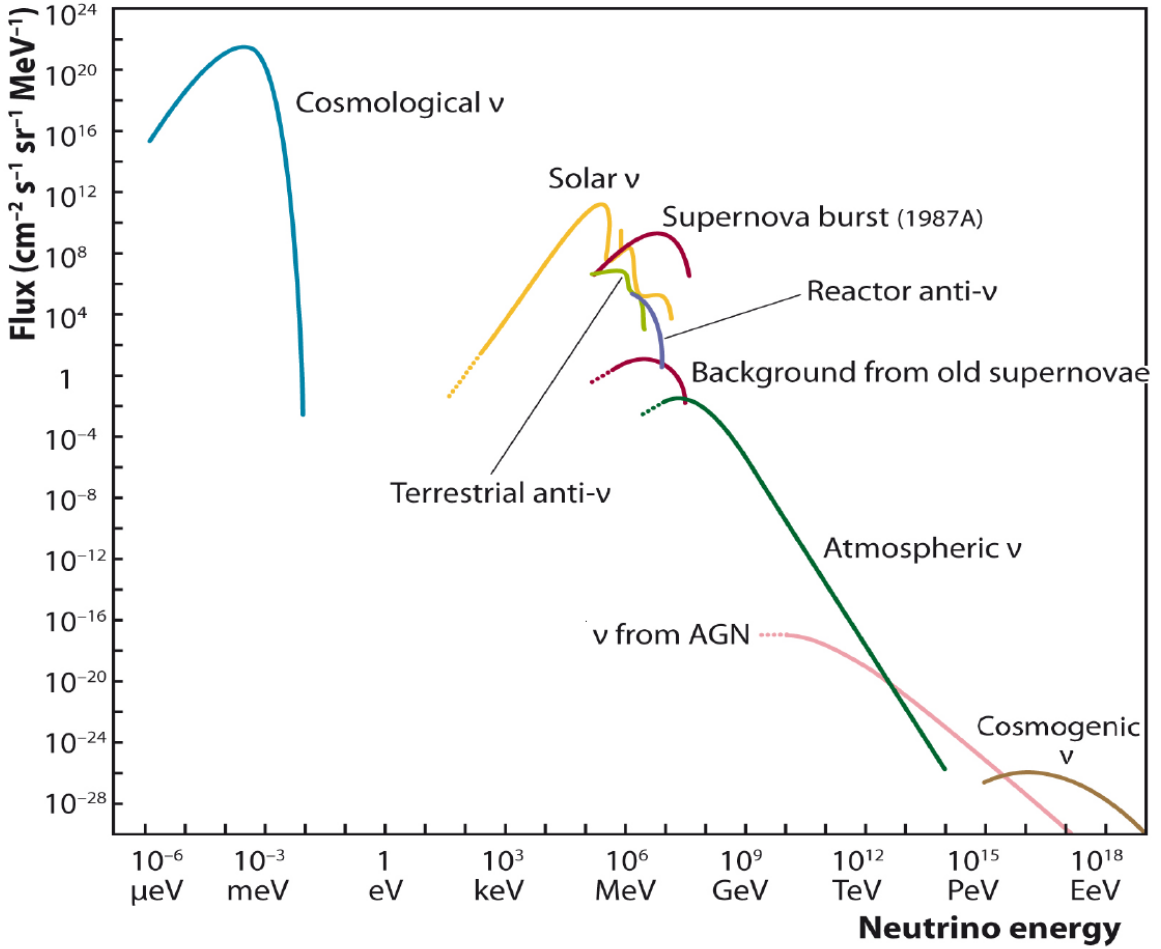
Figure 5: Diffuse neutrino spectra and primary sources, ranging from CMB and geoneutrinos to cosmic accelerators and colliders.
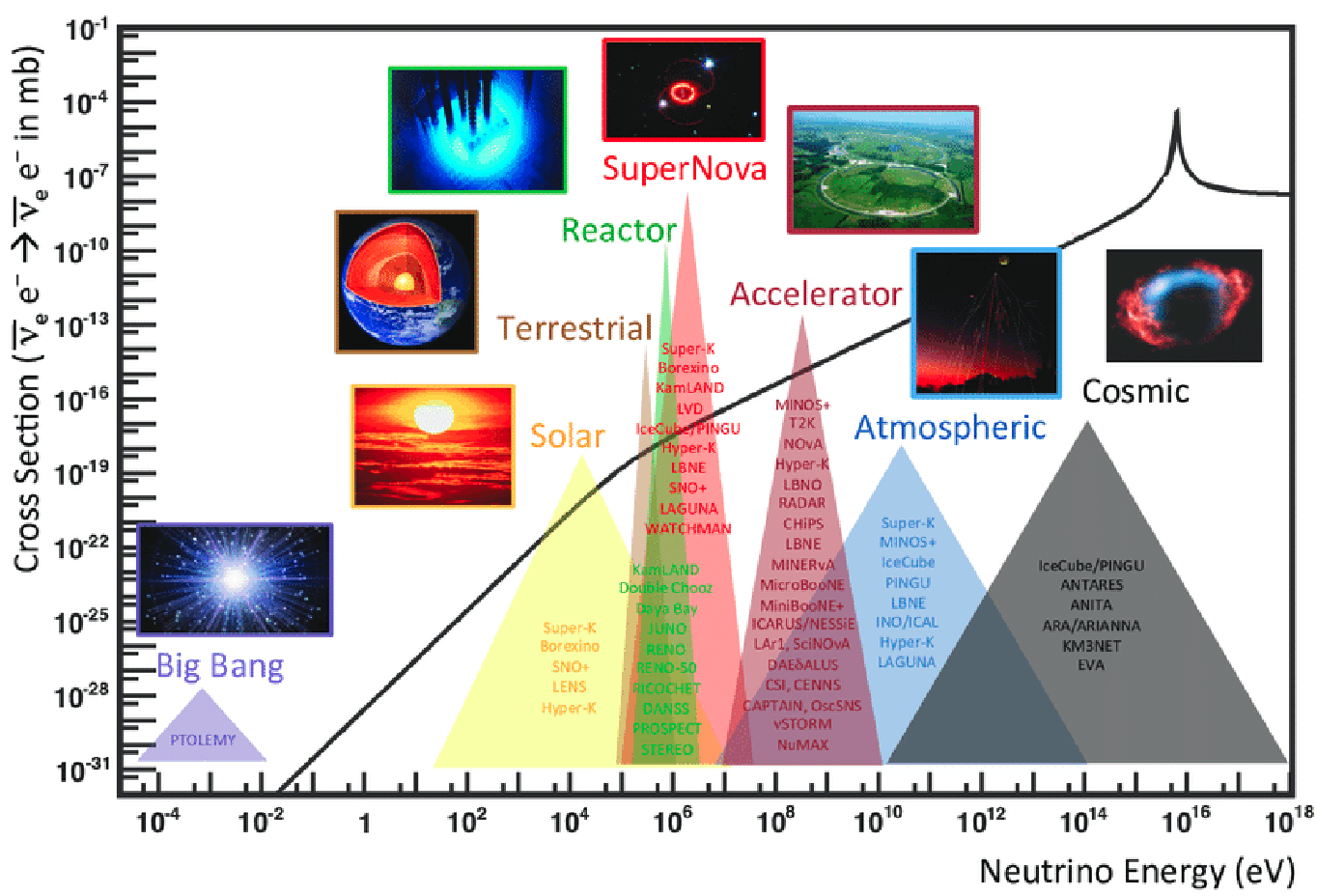
Figure 1: Antineutrino-electron cross sections versus energy, overlaid with physics program coverage of contemporary and planned neutrino experiments.
Attention is paid to the transition from sub-TeV (accelerator and atmospheric neutrinos) to multi-TeV and PeV (astrophysical, cosmogenic, and collider-origin) neutrinos, noting the crucial region where partonic/nuclear input uncertainties begin to dominate.
High-Energy Neutrino Physics at IceCube
Propagation and Earth Attenuation
Neutrino propagation through Earth is modeled via coupled integro-differential transport equations, accounting for both CC/NC interactions and tau regeneration via prompt decay. The author introduces and quantifies the impact of various Earth density models—ranging from uniform to full PREM (Preliminary Reference Earth Model)—on observable transmission coefficients.
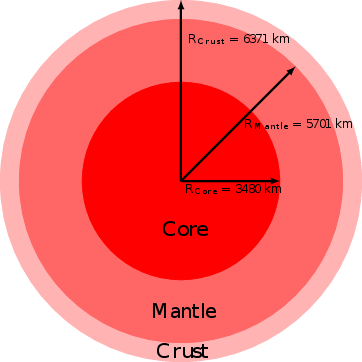
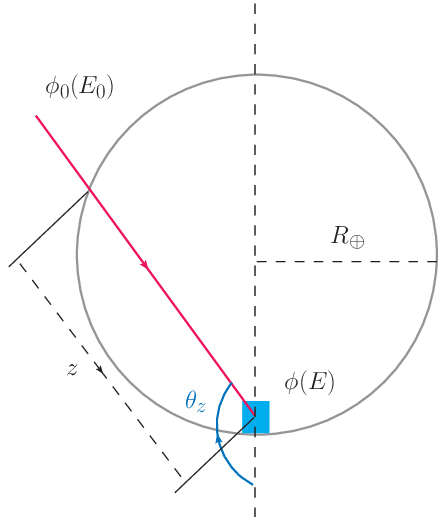
Figure 7: (a) Three-layer schematic of Earth used in propagation modeling. (b) Angular-dependent flux attenuation due to Earth’s absorption.
The cross-comparison reveals that simplified models (e.g., Mantle-Crust) may under- or overestimate attenuation for large chord lengths, especially for tau flavors where regeneration dominates. Differences can reach the same order as the transmission itself in regions traversing the core.
Subleading Processes and Track Topologies
A new quantitative assessment of subleading Standard Model processes contributing to muonic track signatures in IceCube (beyond simple Q20 CC) is presented. These include:
- Tau decay to Q21,
- Heavy flavor (D, B, top) hadron decays,
- W production via Glashow resonance and non-resonant mechanisms.
These processes collectively contribute at least 20% of observable track-like events, a previously underappreciated correction with implications for flux and cross section extraction from HESE data.
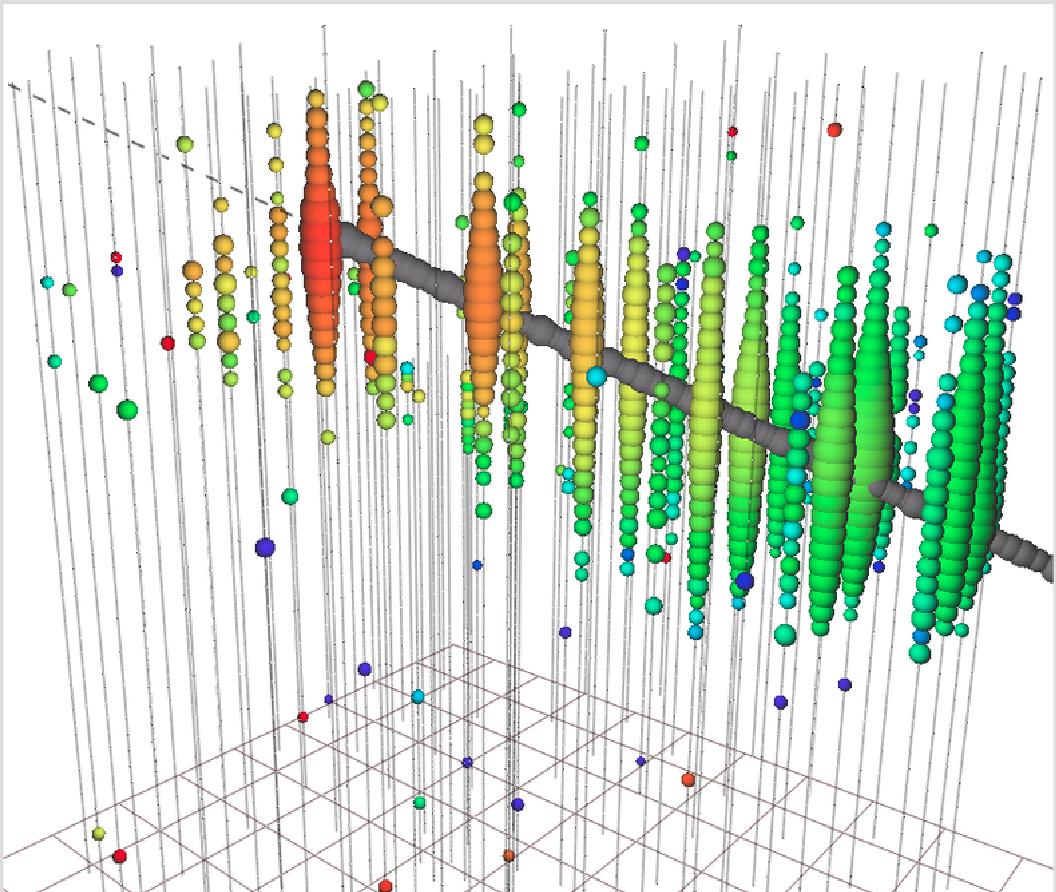
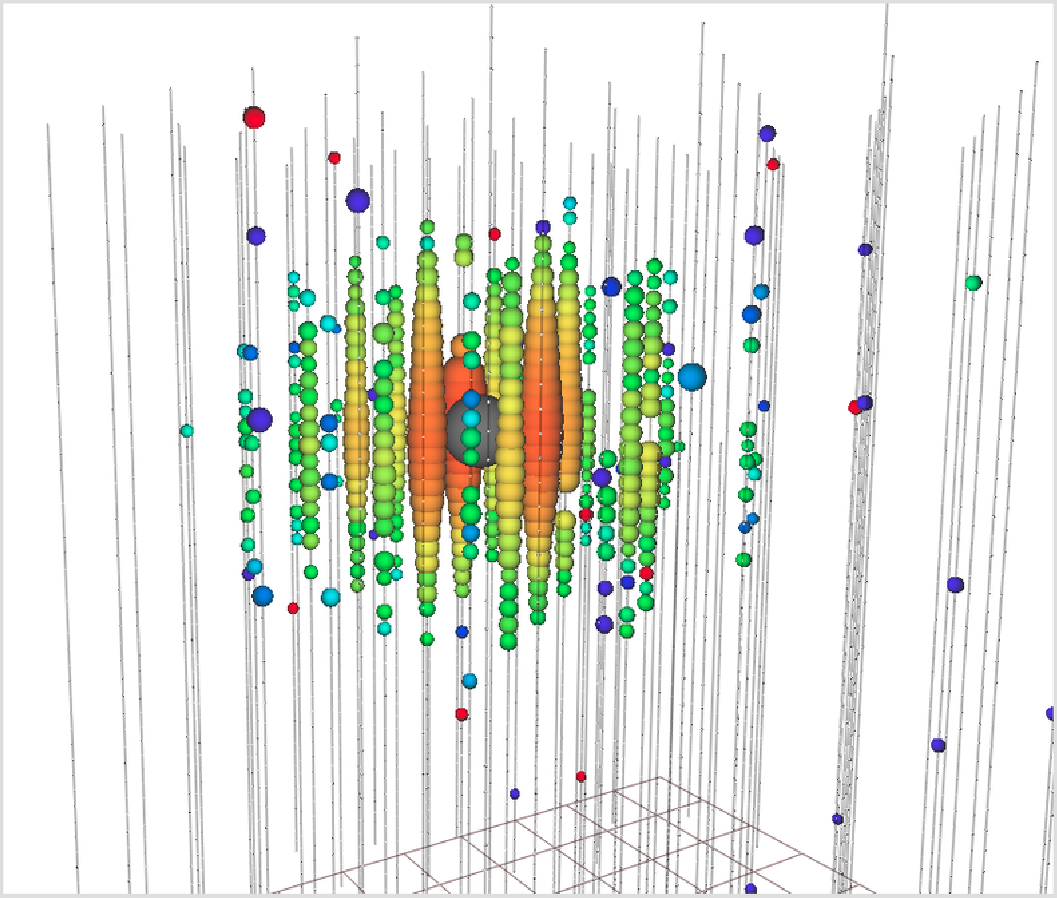
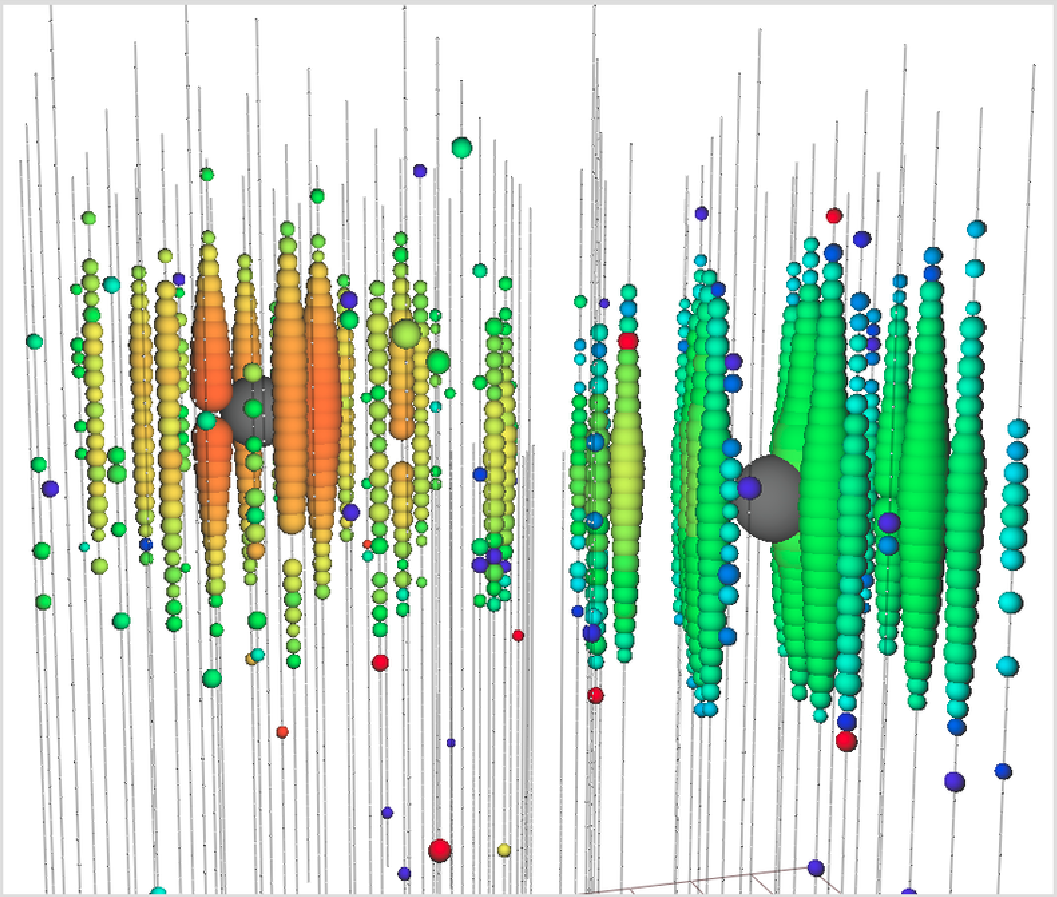
Figure 9: Event topologies at IceCube—(a) tracks, (b) cascades, (c) double cascades.
This subleading-channel contribution is shown to alter best-fit astrophysical flux normalizations, while leaving the spectral index Q22 relatively unaffected.
Probing Beyond-Standard-Model Effects: Q23 Q24 Searches
Utilizing 12-year HESE IceCube data, the thesis assesses the sensitivity to a light Q25 boson associated with gauged Q26 symmetry, including full treatment of astrophysical source redshift distributions, neutrino mass ordering, and resonance absorption in the cosmic neutrino background.
For Q27 MeV and Q28, certain parameter combinations yield a marginal reduction in Q29 compared to the SM, but Akaike criteria disfavor any strong claims. The projected discovery reach of IceCube-Gen2 is explored, highlighting substantial improvement in access to unexplored regions of parameter space.
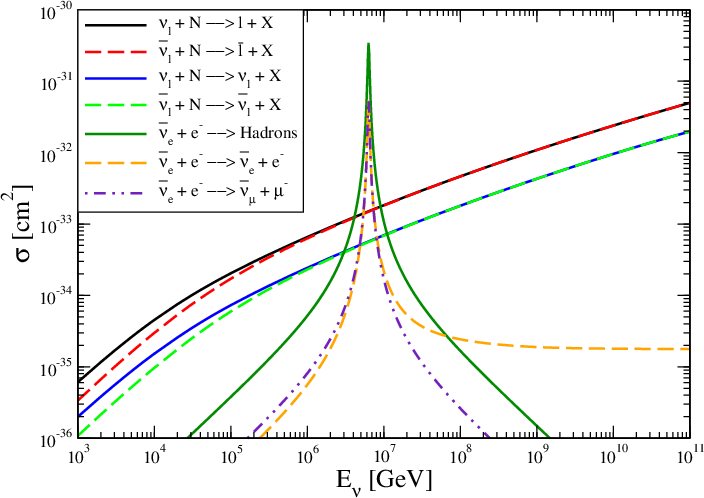
Figure 3: Map of excluded (and sensitive) Q20 mass-coupling regions, with IceCube and projected IceCube-Gen2 reach compared to other experiments and cosmological constraints.
Tau Neutrino DIS and Polarization Effects at the LHC
A critical original analysis is the quantitative treatment of tau lepton polarization in Q21 DIS at LHC energies, with emphasis on the production and kinematic reconstruction in forward (FASERQ22) detectors.
The components of the polarization four-vector Q23 are explicitly computed using NLO structure functions, retaining full Q24 dependence. It is established that at Q25 GeV taus are only Q26 polarized, a correction to commonly used “fully polarized” assumptions in event generators (GENIE, TAUOLA, etc). The author quantifies the impact on observable pion spectra from tau decay, demonstrating that realistic polarization and Q27 structure function effects can shift the differential cross section by up to Q28 in relevant bins.
Muon and Neutrino DIS at LHC Far-Forward Detectors
Simulation and Vertex Selection
POWHEG+Pythia8 is employed to generate both DIS kinematics and hadronization for muon and neutrino beams on tungsten (FASERQ29 and SND@LHC). Realistic emulsion detector selection is imposed, including energy thresholds and minimum charged particle track multiplicity. This is crucial for modeling acceptance at low F1−50 and high F1−51.
Kinematic Coverage and Event Yields
Muon DIS is shown to open sensitivity over F1−52 and F1−53 up to F1−54 GeVF1−55—a region previously untested at high F1−56 in collider environments, complementing the EIC.
Intrinsic Charm and Semi-Inclusive Measurements
Events with reconstructed charm hadrons (via displaced vertices in emulsions and semileptonic decays with FASER spectrometer tracking) are proposed as direct probes of “intrinsic charm” in the proton. Using current global PDF sets (NNPDF4.0, CT18FC), up to a twenty-fold enhancement in event rate over perturbative expectations is predicted for F1−57, for both inclusive and charge-tagged channels.
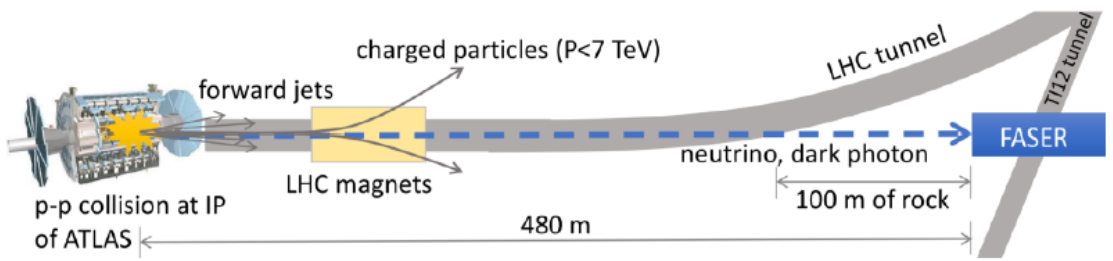
Figure 12: Schematic of the LHC tunnel, with ATLAS and FASER indicated, contextualizing the unique forward acceptance for muon and neutrino-initiated events.
The thesis provides detailed quantification of experimental selection effects—strikingly, stringent track multiplicity cuts (F1−58) severely reduce intrinsic charm sensitivity by removing low-F1−59, high-ντ0 events.
Nuclear PDF Effects and Universality
A detailed comparison is made of predictions using various nPDF sets for both inclusive and charm-tagged rates, across both muon and neutrino beams. The event ratio charm/inclusive is proposed as a sensitive observable for discriminating hadron structure and nuclear effects, with potential to resolve lingering PDF non-universality debates triggered by historical tensions between charged lepton and neutrino nucleus scattering data.
Rare Standard Model Processes: Trident and Glashow Channels
The thesis delivers up-to-date predictions for neutrino and muon "trident" processes—three-lepton production via gauge boson fusion in nuclei—in the LHC forward environment. For FASERντ12 at the FPF, >5ντ2 sensitivity is shown for the first observation of Standard Model neutrino trident at colliders, with >ντ3 signal events projected for certain flavor combinations. Extensions to muonic trident and true muonium production are included, with a realistic assessment of discovery backgrounds.
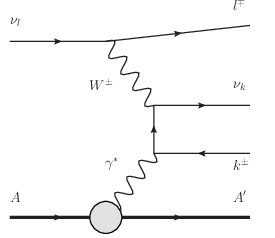
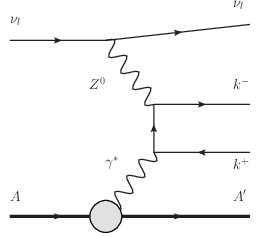
Figure 13: Feynman diagrams for the neutrino trident process via ντ4 and ντ5 exchange.
Additionally, the current and projected reach on the Glashow resonance (6.3 PeV ντ6 annihilation) at IceCube is re-examined, including its sensitivity to flux asymmetries and BSM scenarios.
Broader Implications and Outlook
The body of work clearly demonstrates that forward detector programs at the LHC—especially when combined with UHE data from telescopes like IceCube—are maturing into precision Standard Model laboratories, offering:
- Unique access to tau neutrino interactions, including rare processes (polarization, ντ7, tridents).
- Unparalleled kinematic reach for lepton-nucleus DIS at high ντ8, enabling direct tests of non-perturbative QCD effects (intrinsic charm, EMC).
- Complementary constraints on new physics not available in central detectors, notably for models with flavor-dependent couplings (e.g., ντ9).
- Robust cross-calibration opportunities for nPDF universality, resolving longstanding tensions between neutrino and charged lepton data.
Future improvements, particularly in detector systematics (energy resolution, charm tagging) and reduced modeling uncertainties, are identified as critical for maximally exploiting both current LHC Run 4 and the incoming HL-LHC, as well as next-generation astrophysical observatories (IceCube-Gen2, KM3NeT).
Conclusion
This dissertation delivers a comprehensive, quantitative, and methodologically rigorous program for advancing both the experimental and theoretical boundaries of lepton-nucleus physics at the energy frontier. The results have direct applicability not only for Standard Model precision programs but also for the prospective discovery of rare and BSM processes. Detailed numerical predictions, together with thorough modeling of detector and nuclear structure effects, establish a robust foundation for future global PDF fits, multi-messenger neutrino astrophysics, and the search for new fundamental interactions.
Figure 2: Neutrino spectrum and its principal sources, covering both natural and artificial origins.
Figure 4: Antineutrino-electron cross section as a function of incident energy, with overlaid experimental regimes and characteristic processes.
Figure 5: QCD coupling constant x0 as a function of momentum transfer x1 for diverse processes, showing asymptotic freedom at high energies.
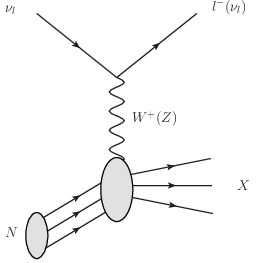
Figure 1: Leading-order Feynman diagram for neutrino-nucleon DIS, serving as the primary mechanism at high energies.

Figure 7: NLO Feynman diagrams contributing to lepton-nucleon DIS, encompassing both real and virtual corrections.
Figure 9: x2-weighted up, strange, and gluon PDFs in tungsten, illustrating uncertainties and differences between nPDF fits at relevant scales.
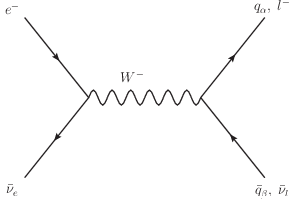
Figure 3: Feynman diagram for Glashow resonance, critical for PeV-scale x3 detection at IceCube.
Figure 12: Feynman diagrams for neutrino trident scattering via x4 and x5 exchange in the nuclear field.
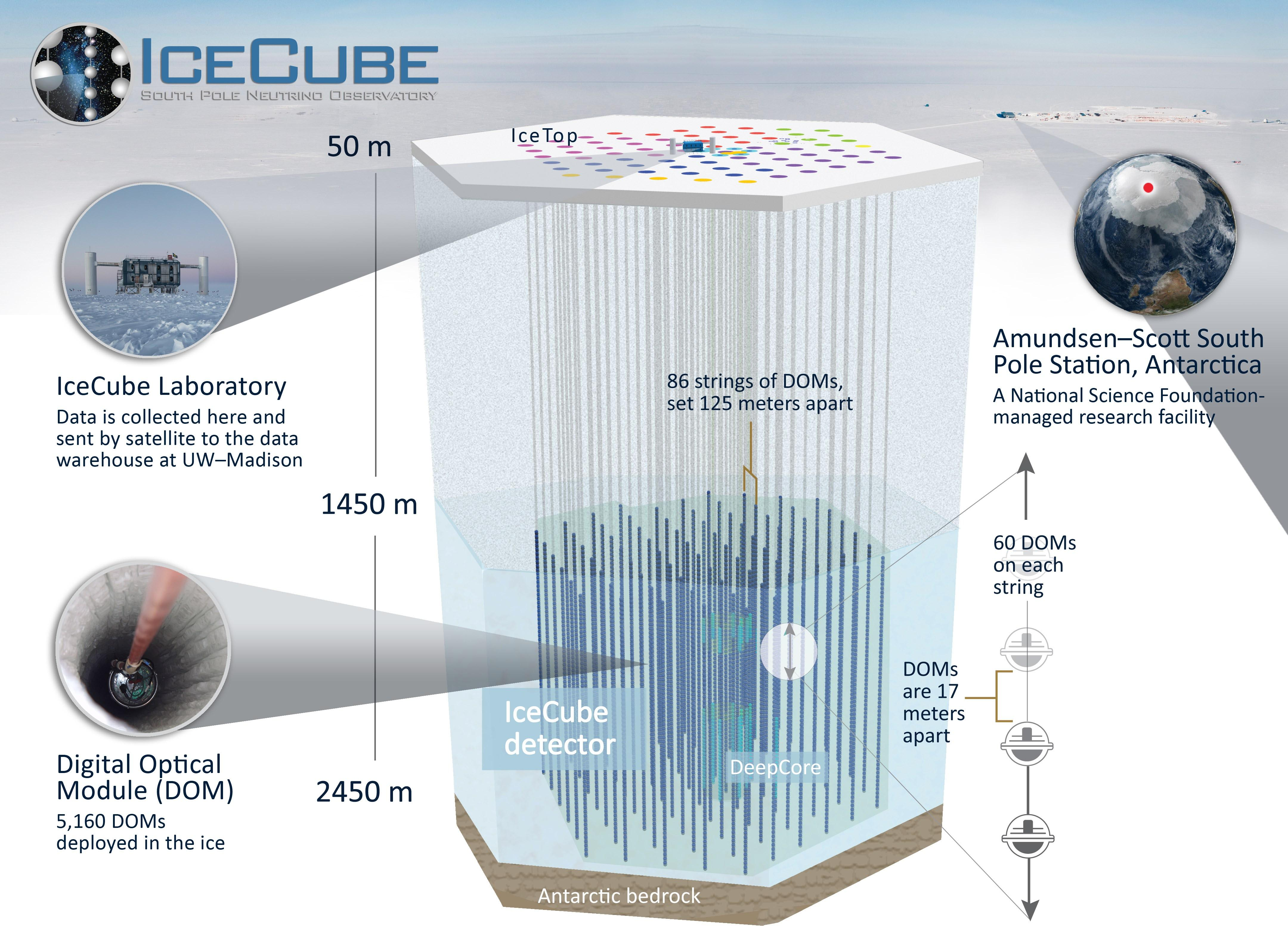
Figure 13: Schematic of the IceCube observatory, indicating the key layout for event topology identification at multi-TeV energies.
Figure 15: Three experimental event topologies at IceCube—tracks, cascades, and double cascades—enabling flavor and process discrimination.
Figure 14: Partial LHC schematic, emphasizing the geometric relation of ATLAS and FASER and the acceptance in the far-forward region.
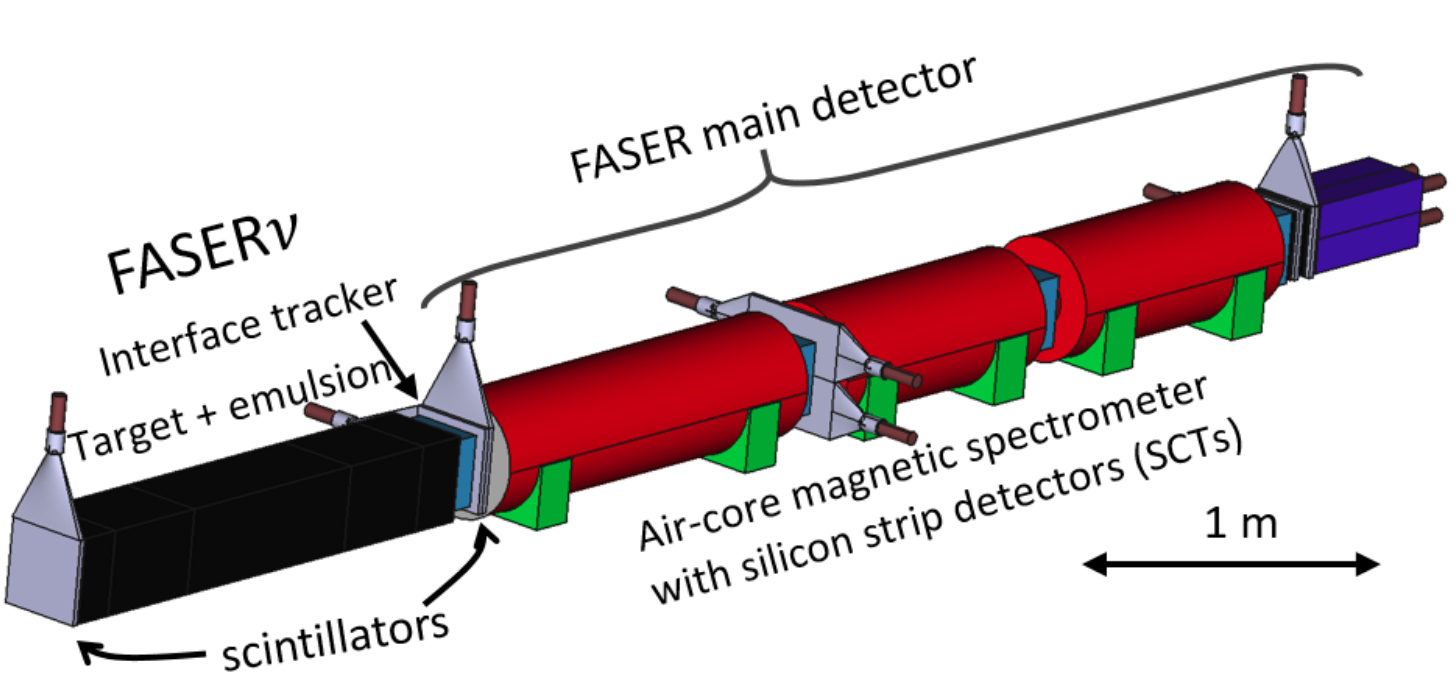
Figure 8: Architecture of the FASER experiment, showing modular emulsion and electronic detection systems.
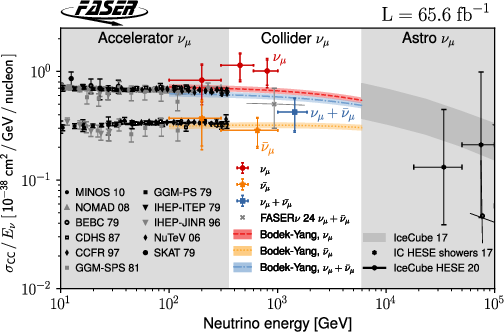
Figure 11: Neutrino-nucleon cross sections as a function of energy from accelerator, collider, and astrophysical experiments, with FASER’s coverage shown.
Figure 16: (a) Schematic Earth density profile, (b) effect of absorption on neutrino fluxes as a function of angle and energy.
Figure 17: Total neutrino cross section on terrestrial targets as a function of energy, showing the relative strength of CC, NC, and Glashow processes.