- The paper introduces a self-organization mechanism that generates a coherent, periodic cavity field to Floquet-dress electronic bands in monolayer TMDs.
- It employs a feedback loop among photon gain, electron injection, and phonon dissipation to achieve a tunable Floquet gap and a significant Hall response.
- A comprehensive microscopic and phenomenological model shows that electrical bias and cavity quality factor critically control band topology and transport properties.
Self-Organization of Floquet Band Geometry in Cavity-Driven Quantum Materials
Floquet Engineering via Self-Generated Cavity Fields
The paper "Self-organized Floquet band geometry in cavity-driven quantum materials" (2606.06579) formulates a new paradigm for Floquet engineering in quantum materials, distinct from conventional schemes reliant on intense external laser fields. The central thesis is that a quantum material, specifically a monolayer transition-metal dichalcogenide (TMD) embedded in a single-mode optical cavity with vertical electrical contacts, can self-organize into a nonequilibrium steady state featuring a coherent, periodic cavity field whose amplitude and frequency are selected dynamically. This emergent field Floquet-dresses the electronic bands and introduces a geometric Hall response, all induced by dc electrical pumping, without direct photo-irradiation.
The architecture leverages cavity quantum electrodynamics, nonlinear gain feedback, and the interplay between electron injection/extraction, phonon dissipation, and cavity backaction to stabilize a dynamical phase characterized by a time-periodic classical field. The self-consistent nature of the cavity-electron steady-state is emphasized: both the photon population and Floquet-band structure arise from a mutual feedback loop driven by electrical bias and cavity loss/gain balance. Figure 1 illustrates the device setup, photon population dynamics, and photo-induced Hall response.

Figure 1: Device schematic and main results, illustrating the cavity-TMD setup, photon gain/loss versus occupation n, and Hall conductivity dependence on bias and cavity quality factor.
Cavity-Induced Floquet Spectrum and Geometric Response
The authors elucidate the mechanism by which the self-consistent cavity field Floquet-dresses the electronic states. The time-periodic field hybridizes valence and conduction bands along a resonance ring in momentum space, opening a gap ΔF∝∣A∣ whose magnitude is controlled by the steady-state cavity photon occupation. The Floquet eigenstates acquire enhanced Berry curvature concentrated near the resonance, modifying both band topology and transport coefficients.
Crucially, the emergent drive is chiral, as time-reversal symmetry is explicitly broken (via magnetic doping or chiral cavity photonics), leading to selection of a single circularly polarized cavity mode. The steady-state Hall conductivity σxy, driven by Berry flux and Floquet-band occupation, shows sharp enhancement above the threshold bias eVz>ℏωc, signifying the onset of a finite Floquet gap and population inversion. Numerical results demonstrate that the Hall response increases both with bias and cavity quality factor, validating the self-organized Floquet engineering approach. Figure 2 shows the induced Floquet spectrum and gap dependence.

Figure 2: Floquet band structure, gain saturation, and steady-state gap ΔF versus cavity Q and bias eVz.
Feedback Mechanisms, Gain Saturation, and Phenomenological Model
The paper provides a detailed phenomenological model clarifying how electronic population dynamics set the nonlinear photon gain function G(n) responsible for field feedback and saturation. Selectively filtered leads provide energy windows for carrier injection/extraction, tailored by bias and contact chemistry. Population inversion near the Floquet resonance drives stimulated emission into the cavity, while photon-assisted Floquet-Umklapp and phonon processes eventually deplete inversion (gain saturation), stabilizing the periodic field.
A patch model of occupations in the inner (filled) and outer (inverted) Floquet bands yields analytic expressions for steady-state conditions. It is shown that gain saturation coincides with the approach to an ideal Floquet topological insulator (FTI) distribution: maximal anomalous Hall response is achieved by depopulating upper Floquet bands, precisely the mechanism underlying lasing saturation. Figure 3 visualizes the phenomenological model, patch occupations, and gap dependence.
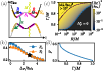
Figure 3: Floquet-band scattering model, occupation versus gap, and steady-state solutions for gap and occupation as functions of key rates.
Microscopic Floquet-Boltzmann Kinetics and Hall Transport
Beyond the patch model, a fully microscopic Floquet-Boltzmann framework is developed. The model incorporates spin-orbit coupling, valley polarization, magnetic doping, electron-phonon scattering, radiative and non-radiative recombination, and filtered lead injection. By solving for the steady occupations of Floquet bands (parameterized by photon number n), the photon gain/loss and Hall conductivity are determined at self-consistency.
Simulations reveal that the momentum-resolved Berry curvature and Floquet band occupation imbalances manifest as large, sharp changes in Hall conductivity, with occupation dramatically suppressed near the resonance ring for strong cavity fields. The dependence on cavity Q and bias ΔF∝∣A∣0 confirms the theoretical predictions for self-organized Floquet topology. Figure 4 presents the microscopic band structure, Berry curvature profiles, Hall response, and steady-state occupations.
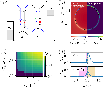
Figure 4: Microscopic Floquet band, Berry curvature and occupation, Hall response dependence, and steady-state momentum occupation.
Experimental Probes and Steady-State Transport Signatures
Multiple experimentally accessible signatures are identified. The in-plane Hall voltage provides a direct probe of Floquet band geometry. Out-of-plane current response to bias quenches demonstrates suppression/enhancement tied to the Floquet gap. Optical conductivity measurements reveal zero-absorption plateaus corresponding to the gap size, observable via probe frequencies. Edge state transport, enhanced by local dielectric engineering of the cavity field, presents the possibility for quantized response if bulk-to-edge scattering is sufficiently slow.
Figure 5 compiles these experimental signatures: bias-quench currents, optical conductivity spectra, and proposed edge transport geometries.

Figure 5: Out-of-plane current quench, optical conductivity versus probe frequency, and engineered edge transport configuration.
Device Power Budget, Efficiency, and Classical Characteristics
The power balance in steady-state operation is analyzed with attention to practical device constraints. The electrical input power is parsed into coherent photon generation, phonon heating, contact dissipation, and leakage. The photon-generation efficiency and field conversion ratio can greatly exceed unity in high-ΔF∝∣A∣1 cavities, contrasting unfavorably with direct external laser pumping which is less efficient at field delivery.
Sharp current-voltage characteristics and cavity quality factor thresholds reflect the build-up of population inversion and self-saturated emission. Heating and cooling requirements are quantified, demonstrating that the cavity approach minimizes dissipation and enables substantial Floquet gaps with manageable thermal loads. Figures 6 and 7 show power budget partitioning, field efficiency, current-voltage behavior, and cavity quality factor dependence.

Figure 6: Power budget breakdown, photon-generation and field conversion efficiencies, and device operating regime.

Figure 7: Current through TMD versus bias and cavity ΔF∝∣A∣2, and the effective cavity quality factor dependence on bias and intrinsic loss.
Implications, Outlook, and Future Directions
The research establishes cavity-driven quantum materials as a route to self-organized Floquet phases with geometric transport, circumventing many limitations of conventional light-driven schemes. The approach achieves sizable Floquet gaps (ΔF∝∣A∣3), large classical field amplitudes (ΔF∝∣A∣4), and efficient power conversion at modest dissipation levels. The feedback-driven steady state selects not only field amplitude, but also band geometry, topology, and transport, unifying dissipation-driven limit-cycle physics with Floquet-engineered phenomena.
Practical implications include on-chip integration of Floquet-engineered transport without high-power optical infrastructure, electrical control of band geometry, device scalability, and tunable edge states. The framework is versatile, applicable to TMDs, Dirac/Weyl systems, and correlated narrow-band materials, and may be extended to multimode or time-crystalline phases.
Key theoretical challenges remain: assessing the role of electronic correlations, noise and fluctuations, mode competition, and detailed dynamics of edge/interface transport. The broader significance is the demonstration that self-organized nonequilibrium phases—stabilized by feedback between light and matter—can realize regimes inaccessible by external driving, opening avenues for novel quantum device architectures, dynamic topological phenomena, and nonequilibrium band geometry control.
Conclusion
This work rigorously establishes electrically driven cavity platforms as an efficient and flexible route to Floquet band structure engineering and geometric transport. By treating the cavity field and electronic steady state on equal footing, the proposed architecture sidesteps the thermodynamic and technical limitations of externally imposed laser fields. The results suggest a promising multi-disciplinary direction combining cavity QED, Floquet physics, and device engineering, with broad implications for future quantum material control.

