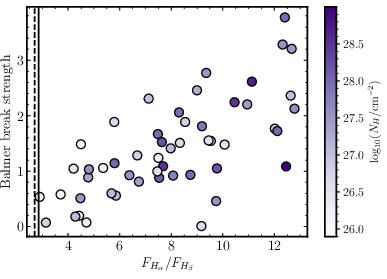
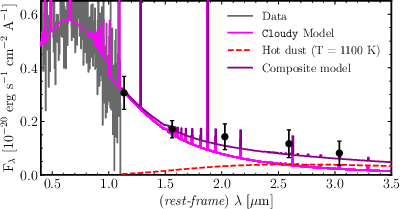
- The paper introduces a quasi-star model utilizing radiative transfer (via Cloudy) to account for unusual SEDs and Balmer features in Little Red Dots.
- It demonstrates that high-density scattering layers produce characteristic Balmer breaks and emission line ratios missed by standard AGN models.
- Findings imply that quasi-star envelopes play a key role in early SMBH growth, influencing early galaxy and black hole coevolution.
The Quasi-Star Model for Little Red Dots: Potential and Challenges
Introduction
This work provides a systematic and quantitative investigation of the quasi-star model as a physical explanation for the peculiar spectral energy distributions (SEDs) of Little Red Dots (LRDs)—a class of compact, red, high-redshift sources revealed by JWST that exhibit V-shaped rest-frame UV/optical SEDs and broad hydrogen emission lines. Motivated by the inability of standard AGN and stellar population models to robustly account for the observed Balmer breaks, red continua, emission line properties, and compact morphologies concurrently, the authors implement a radiative transfer study using the Cloudy code to assess whether LRDs can be understood as late-stage quasi-stars: supermassive black holes (SMBHs) embedded within convective, optically thick, massive gaseous envelopes (2606.06575).
Theoretical Framework: Quasi-Star Model Architecture
The model is based on theoretical constructs originally proposed by Begelman et al. for quasi-stars, with refinements relevant to the LRD context. A central SMBH (MBH∼105−6M⊙) is surrounded by a saturated convective envelope which fully thermalizes accretion disk emission to a photospheric blackbody (BB) spectrum at TBB∼5000K and LBB∼2.5×1044ergs−1. Exterior to this is a dense (nH∼1011cm−3), optically thick (ΔR∼1000AU) scattering layer allowing for collisional ionization and the emergence of emission lines and a strong Balmer break. The ensemble may be surrounded by a diffuse, clumpy medium with properties akin to the broad-line region (BLR) of AGN.
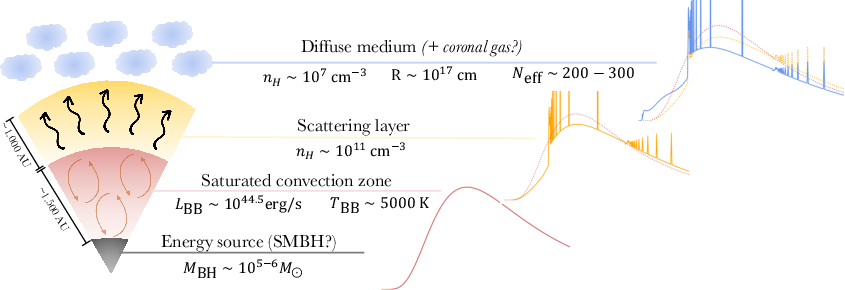
Figure 1: Quasi-star schematic comprising an accreting SMBH, saturated convective shell, reprocessing layer, and clumpy external medium.
This architecture enables the natural emergence of a modified, non-planckian SED, as well as efficient formation of Balmer emission lines and breaks via collisional excitation, a feature unattainable with normal HII region or AGN photoionized gas due to insufficiently high densities.
Radiative Transfer Modeling and Spectral Synthesis
Using Cloudy, the authors calibrate the physical output of this model, simulating the radiative transfer from the innermost convective core through the reprocessing shell and further through diffuse clumpy gas. Key parameters include LBB, TBB, nH, ΔR, and coefficients parameterizing reflected/diffuse cloud emission. The model spectrum is coupled to an FSPS-based young stellar population component representing the LRD's host galaxy, necessary to account for the observed UV continuum.
Model outputs display that:
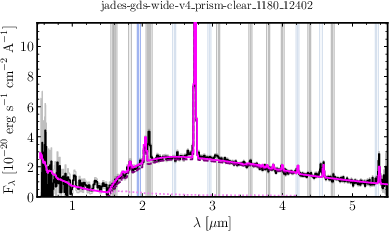
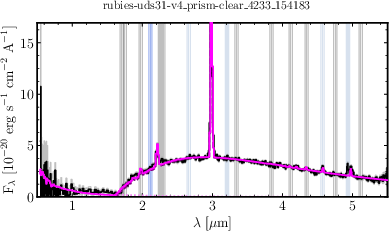
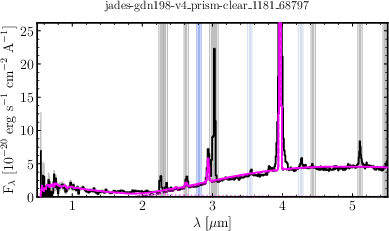
Figure 3: Example LRDs modeled with the quasi-star (scattering+host) fitting, demonstrating close spectral replication.
Application to Observed LRDs
The analysis is performed on a compilation of 95 LRDs at TBB∼5000K1 with high-quality JWST/NIRSpec PRISM spectra [DeGraaff_25b]. The fitting procedure involves varying the quasi-star and host parameters within Cloudy and FSPS grids, constraining fits via TBB∼5000K2 minimization on the spectra with Bayesian weighting. Main findings include:
- Good fits (reduced TBB∼5000K3) for 86/95 LRDs, with effective reproduction of rest-optical SED and Balmer features.
- Characteristic fit parameters: TBB∼5000K4, TBB∼5000K5 K, TBB∼5000K6, TBB∼5000K7 cm, and host masses TBB∼5000K8 with TBB∼5000K9 mag attenuation.
The fits also recover examples where the quasi-star component dominates in the blue-optical regime, sometimes outcompeting the host contribution above the Balmer break.
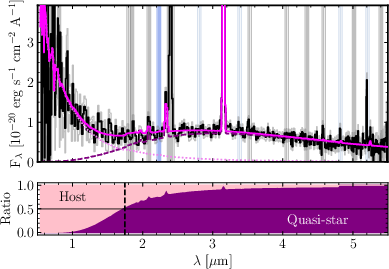
Figure 4: Decomposition of LRD SED into quasi-star and host components revealing cases with quasi-star-dominated blue-optical continuum.
Black Hole Masses, Accretion Regimes, and Model Constraints
Because the emission line broadening is attributed to collisional processes rather than direct virialized motion in the SMBH potential, conventional single-epoch LBB∼2.5×1044ergs−10 estimators are inapplicable. Instead, the model adopts the quasi-star scenario in which the total luminosity nearly equals LBB∼2.5×1044ergs−11, LBB∼2.5×1044ergs−12, and theoretical limits on the stable mass ratio LBB∼2.5×1044ergs−13 (0.1–0.62) [Coughlin_24]. This yields:
- LBB∼2.5×1044ergs−14;
- LBB∼2.5×1044ergs−15–LBB∼2.5×1044ergs−16.
These span a super-Eddington SMBH regime (LBB∼2.5×1044ergs−17–10) and predict LBB∼2.5×1044ergs−18–0.01—significantly in excess of the local LBB∼2.5×1044ergs−19–nH∼1011cm−30 relation [Raines_15], though not as extreme as virial broadening estimates yield for LRDs.
Limitations and Required Model Extensions
Although the model robustly accounts for the continuum, Balmer break, and hydrogen lines, there are observables not captured:
Degeneracy Among Physical Models and Population Diversity
The analysis emphasizes that while the quasi-star scenario explains a large subset of LRDs, observed diversity across the population—such as sources with strong high-ionization lines attributable to direct AGN—cannot be universally accommodated. Complete thermalization in the quasi-star scenario precludes the emergence of such features. The degeneracy with alternative scenarios (black hole star, enshrouded AGN, etc.) indicates that multiple classes of engines, or an evolutionary sequence, may be present among LRDs [Naidu_25, DeGraaff_25b, Ji_25, Madau_26]. Population studies and the inclusion of spatially-resolved and broad-wavelength data will be necessary to further disentangle these classes.
Astrophysical and Cosmological Implications
This work offers a conceptually self-consistent theoretical implementation for rapid SMBH growth at high redshift, circumventing extreme super-Eddington accretion rates through the mediation of a massive quasi-star envelope. These results support the notion that some LRDs trace the late stages of quasi-star or black hole star evolution—potentially key phases in the formation and early growth of supermassive black holes, which is critical for models of SMBH seed formation, cosmic downsizing, and early galaxy–BH coevolution [Begelman_08, Begelman_26, Coughlin_24]. The methodology and results also present robust radiative diagnostics for distinguishing such objects from direct AGN and post-starburst populations.
Conclusion
The paper provides a thorough quantitative validation of the quasi-star model as an explanation for the SED and line features of a substantial subset of LRDs (2606.06575). Through detailed radiative transfer calculations, the authors reproduce the Balmer break, continuum slope, and hydrogen lines observed in these compact sources, with model-inferred properties consistent with quasi-star evolutionary theory. Nevertheless, important observables such as helium line emission and mid-IR signatures require extensions of the model, motivating future computational and observational investigations. Ultimately, the work advances the physical understanding of LRDs, with broad implications for early SMBH growth and feedback, while highlighting the diversity of pathways present in the early universe.
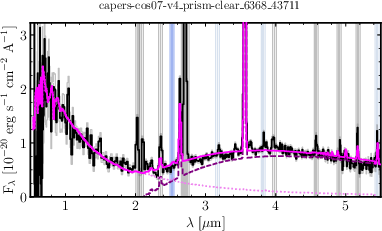
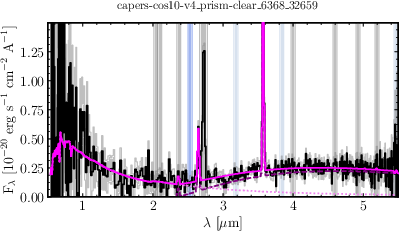
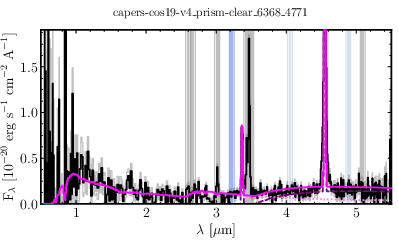
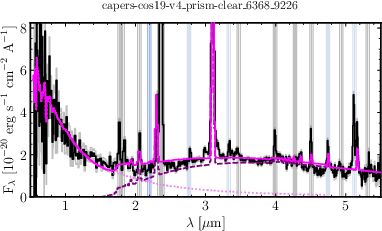
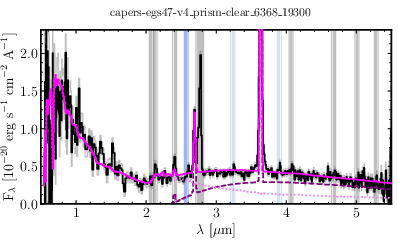
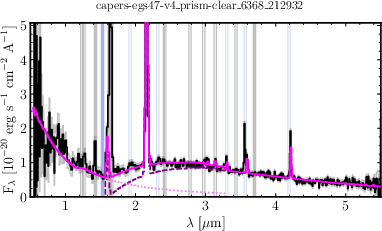
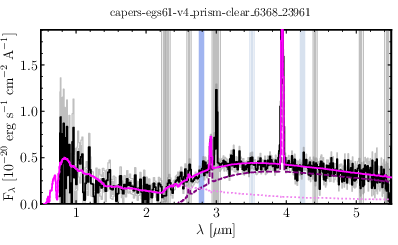
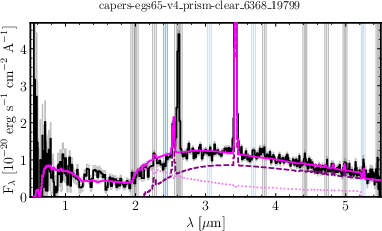
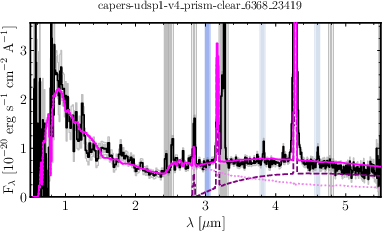
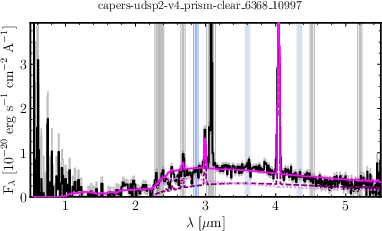
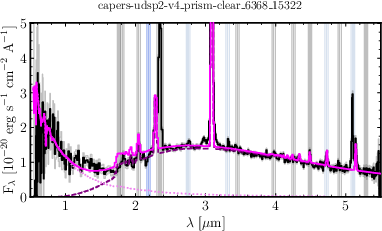
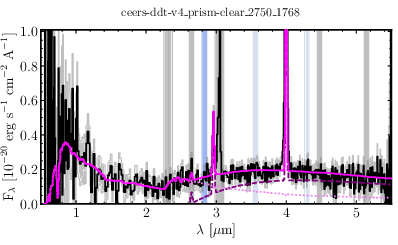
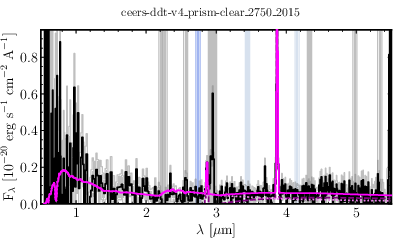
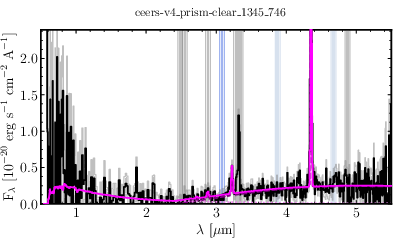
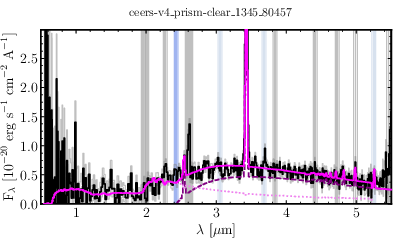
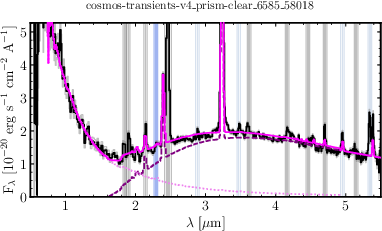
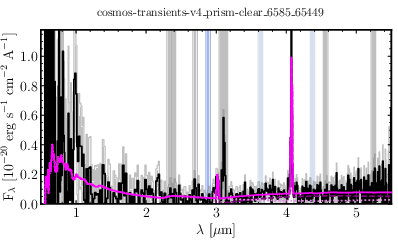
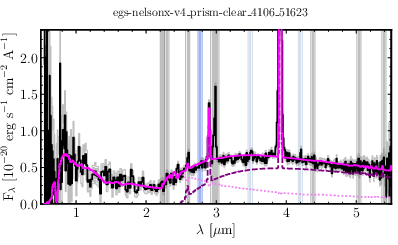
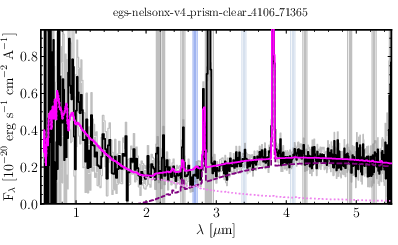
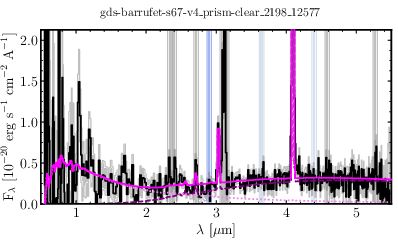
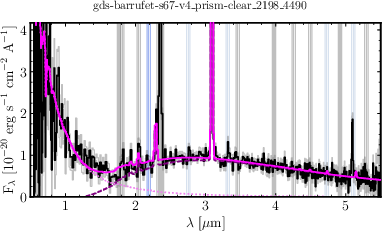
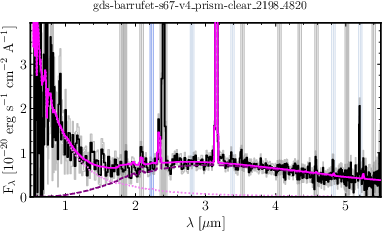
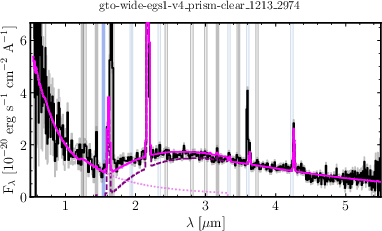
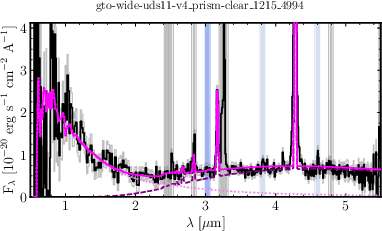
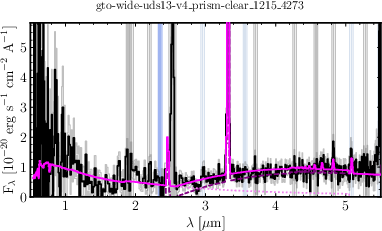
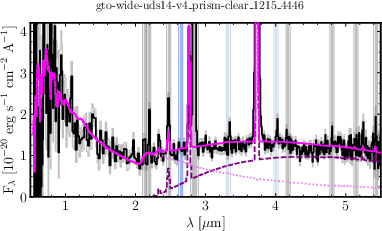
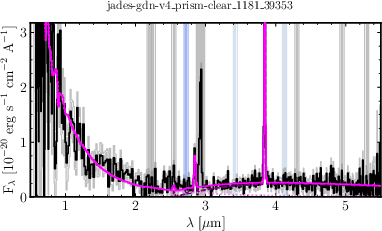
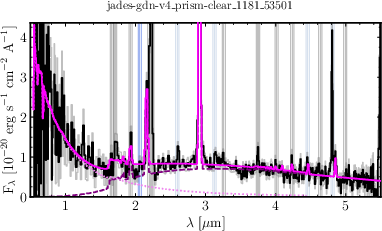
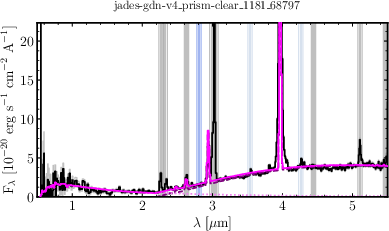
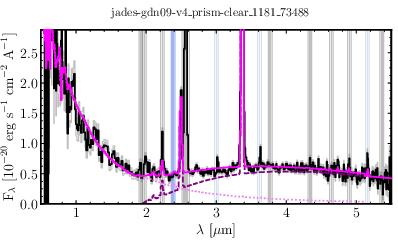
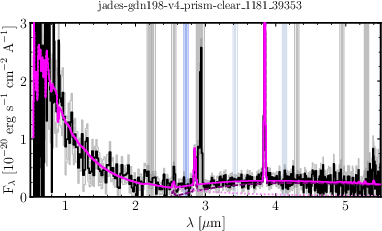
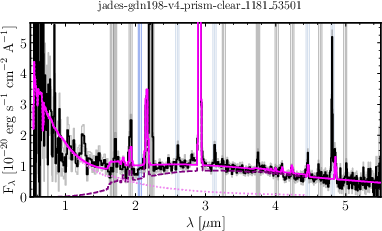
Figure 6: Best-fitting quasi-star model spectra for the full sample of LRDs, demonstrating the applicability across diverse spectral properties.