High-Dimensional Theory of LoRA Fine-Tuning in a Solvable Attention Model
Abstract: We develop a high-dimensional statistical theory of low-rank adaptation (LoRA) in attention models, capturing the interplay between pre-training and fine-tuning. We introduce a solvable framework in which a single-head attention layer is first pre-trained on a data-abundant task and subsequently adapted via a rank-one LoRA update on limited data. In the high-dimensional limit, both stages admit a sharp asymptotic characterization in terms of a finite set of order parameters, yielding explicit predictions for test errors and representation alignment. Our analysis shows that the impact of pre-training on LoRA is summarized by an effective noise term, from which we derive prescriptions for the optimal pre-training procedure. We also demonstrate a regime with a mismatch between the value of the test error and representation quality, and propose an application of our theory to active fine-tuning.
Paper Prompts
Sign up for free to create and run prompts on this paper using GPT-5.
Top Community Prompts
Explain it Like I'm 14
What this paper is about (big picture)
This paper tries to answer a simple, practical question: after you pre-train a big attention model (like a Transformer), how well can you improve it for a new task by only changing a tiny part of it with LoRA (Low-Rank Adaptation)? The authors build a clean, math-based “toy world” where they can calculate clear answers. Their theory predicts test errors, how well the model’s internal representation lines up with the true signal, and how pre-training and fine-tuning interact.
Think of it like this: you first learn a lot about a subject (pre-training), then for a new test you only get to adjust a small dial (LoRA) instead of rewriting the whole book. The paper explains how much that small dial can help, and what from the first phase (pre-training) actually matters most.
The main questions the paper asks
- How does performance after LoRA fine-tuning depend on:
- the amount and quality of pre-training,
- how many fine-tuning examples you have, and
- how strong the LoRA regularization is?
- Can we boil down the impact of pre-training into a simple quantity that predicts fine-tuning success?
- Are “low test error” and “good internal representation” always the same thing?
- Can we choose better fine-tuning examples (active selection) to get more out of LoRA?
How they study the problem (approach in plain terms)
- A simplified model of attention:
- They study a single attention “head” where the big weight matrix is learned during pre-training, then frozen.
- During fine-tuning, they only learn a tiny “rank-one” update (LoRA) — basically a one-directional tweak — which uses much fewer examples.
- A controlled, solvable setting:
- They use synthetic (made-up but realistic) data where the “true answer” is known. This lets them measure precisely how close the model gets.
- They analyze the “high-dimensional” limit (very large model and data sizes). In that limit, randomness averages out and the model’s behavior becomes predictable.
- Reduce the problem to a few key numbers:
- Even though the model is big, they show its behavior can be summarized by a handful of scalars (called order parameters). These numbers capture:
- how strong the pre-trained part is,
- how well it aligns with the true signal,
- how curved or flat the training landscape is (flatness = easier to overfit),
- and how well the LoRA direction lines up with the true new-task direction.
- A helpful analogy:
- Pre-training creates a “map” of the world. LoRA is a small arrow you add to that map to point to a new place. If your map is sharp and mostly correct, you need only a small arrow. If it’s blurry, your small arrow must fight against that blur.
A simple but powerful idea: “effective noise”
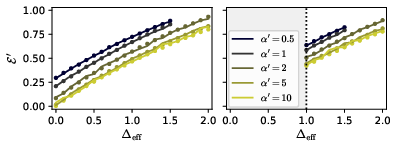
- The paper shows that, for fine-tuning, the entire effect of pre-training can be summarized by an “effective noise” — think of it as how blurry the frozen pre-trained part looks to the LoRA update.
- Lower effective noise means the LoRA update can learn faster and better from fewer examples.
In a simple (linear) version of their setup, this “effective noise” is
where each letter is one of those summary numbers:
- Q, Q0 measure the size (strength) of the pre-trained weights and the true target.
- M measures alignment (how well the pre-trained part lines up with the true target).
- Δ is the data noise (randomness you can’t fix).
Lowering Δeff (by better alignment M or better scaling) makes LoRA fine-tuning work better.
What they found and why it matters
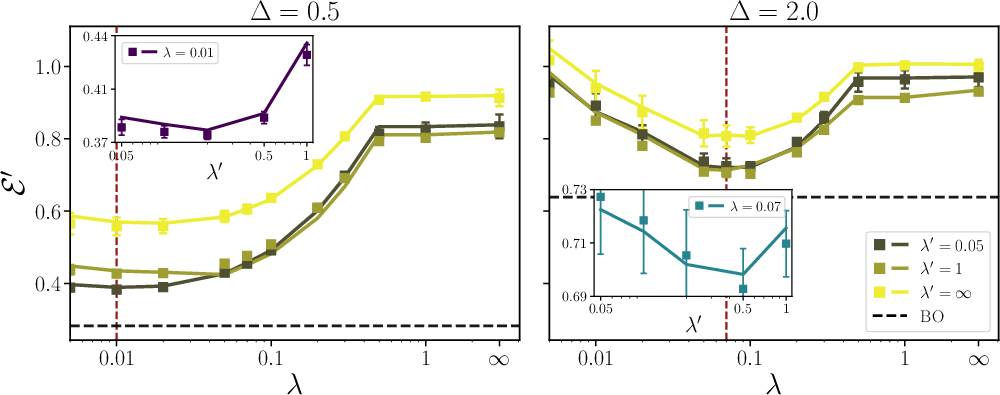
1) LoRA really helps, but pre-training quality sets the ceiling
- If pre-training gives a good, well-aligned representation, the effective noise is smaller, and LoRA needs fewer examples to reach the same accuracy.
- If pre-training is weak or misaligned, LoRA has to fight a lot of “blur,” so it needs more data or achieves worse performance.
2) There’s an “optimal” amount of pre-training regularization
- If you regularize pre-training too much (too cautious), you underfit and don’t learn useful features.
- If you regularize too little (too eager), you overfit and memorize training data.
- The theory predicts where that sweet spot is for best fine-tuning results.
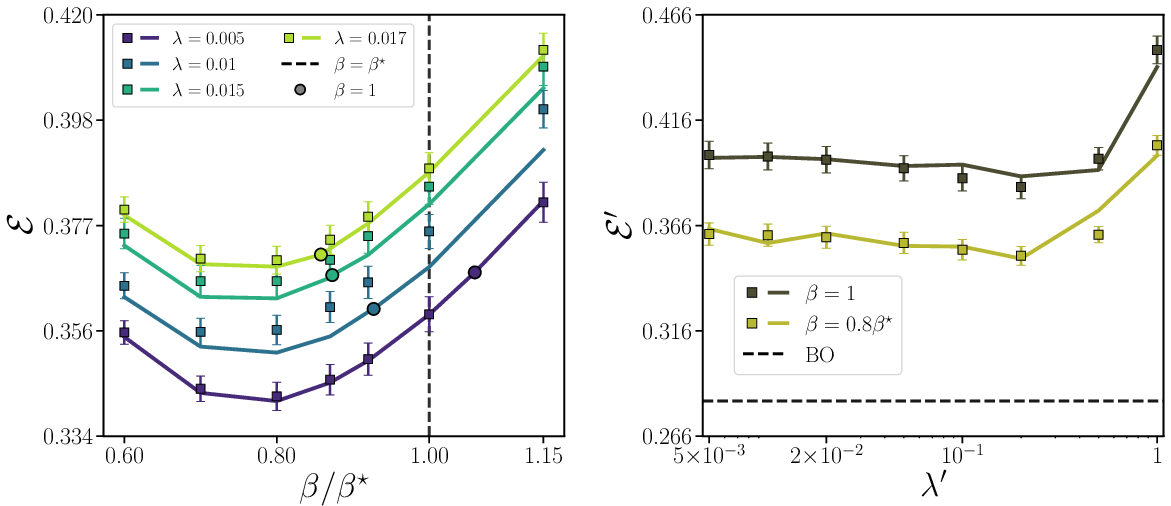
3) A cheap trick: rescale the frozen map
- Sometimes the pre-trained part is pointed in the right direction but has the wrong scale. The paper shows that simply multiplying the frozen part by one well-chosen number (a “temperature” or scale) can improve fine-tuning — without redoing pre-training.
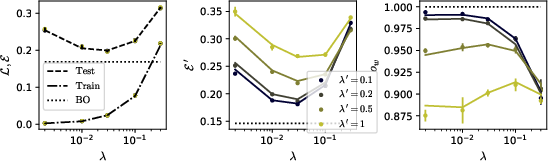
4) Using the same input sequences for fine-tuning can be a double-edged sword
- If you fine-tune on the same inputs used during pre-training, the model can “remember” them. This lowers the effective noise a lot — great for finding the LoRA direction — but can hurt test error because of overfitting.
- This reveals a mismatch: your internal representation can look very “correct” (high overlap with the true direction), but your test error can still be worse. So representation quality and test accuracy are not always the same thing.
5) Active fine-tuning: pick better examples to label
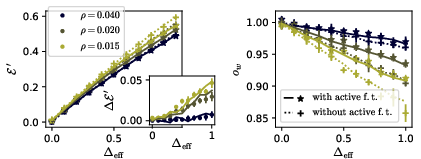
- Suppose you can choose which fine-tuning examples to label from a bigger pool. The theory suggests a simple rule: pick examples where the frozen pre-trained part changes the least (its outputs are most similar). This reduces the nuisance variability (“effective noise”) that LoRA has to fight, making the small update learn the true new direction more easily.
- In tests, this active selection improves both test error and representation alignment, especially when you can only label a small fraction of the pool.
6) The math matches experiments
- They compare their predictions to computer simulations and find very good agreement. They also benchmark against the best-possible performance (“Bayes-optimal”), so they know how close their method can get.
Why this matters (implications)
- Practical guidance:
- Pre-train to reduce effective noise (focus on alignment, not just size).
- Tune regularization for both stages (pre-training and LoRA) to hit the sweet spot.
- Consider a simple rescaling of the frozen part before (or during) LoRA to improve transfer.
- If you can choose which examples to fine-tune on, pick ones that make the frozen part vary less — they are more informative for the tiny LoRA update.
- Caution about metrics:
- A model can have a very “good-looking” internal direction (representation) but still have worse test error if it memorizes training inputs. Don’t rely on a single metric.
- Next steps:
- Extend these ideas to multiple attention heads and higher-rank LoRA (more directions).
- Test how universal the “effective noise” idea is beyond the simplified, Gaussian setting.
- Study learning over time (training dynamics), not just the final solutions.
In short, the paper turns the messy problem of “pre-train big, then tweak small” into a clean picture where one key quantity — effective noise — explains a lot. With that, you can make smarter choices about pre-training, fine-tuning, and even which data to label, to get more out of LoRA with less effort.
Knowledge Gaps
Unresolved gaps and open questions
Below is a single, concrete list of limitations, knowledge gaps, and open questions left by the paper, phrased to guide follow-up research:
- Scope of architecture: analysis is limited to a single-head attention layer with tied keys/queries and identity values plus a rank-one LoRA update; it remains open to extend the theory to untied K/Q, non-identity V, multi-head attention, multi-layer transformers, and higher-rank LoRA, including interactions and competition across heads/updates.
- Rank and bottlenecks: the study assumes κ≥1 (no pre-training bottleneck) and a rank-one LoRA; a systematic treatment of κ<1 (finite-width bottleneck) and its interaction with limited fine-tuning samples, as well as the scaling of performance with LoRA rank r (e.g., sample complexity N′ vs r and diminishing returns), is missing.
- Activation and normalization realism: only softmax and a rescaled identity are considered, with a specific centering term (dataset-level expectation “batch norm”); how results change under practical variants (temperature-scaled softmax, 1/√d scaling, layer normalization, RMSNorm, per-token normalization) is not established.
- Sequence length scaling: the analysis fixes a finite number of tokens T; behavior when T grows with D (long sequences), including concentration, cross-token correlations, and possible new regimes, is unexplored.
- Data model and universality: inputs are i.i.d. Gaussian and the teacher–student match includes additive symmetric Gaussian noise on attention pre-activations; universality beyond Gaussian inputs (e.g., heavy-tailed, correlated, or discrete tokens), non-additive/structured noise (anisotropic, low-rank, heteroskedastic), and mismatched teachers are left unproven.
- Pre-training sample scaling: pre-training assumes N=Θ(D²); the impact of different pre-training scalings (e.g., N=Θ(D), intermediate regimes, or data-limited pre-training) on downstream LoRA performance remains to be characterized.
- Effective-noise mechanism beyond linear σ: the “effective noise” Δ_eff is exact for linear activations and only an approximate summary for softmax; deriving exact mappings, tight bounds, or sufficient conditions under which Δ_eff controls fine-tuning for softmax or other non-linearities is open.
- Stability (replicon) conditions: the characterization relies on a replica-symmetric stability assumption (Eq. (14)); a rigorous derivation of phase boundaries, the consequences of instability (e.g., RS breaking), and the regimes where the current predictions fail, is not provided.
- Optimization dynamics vs ERM: results are for empirical risk minimizers with ℓ₂ regularization; how training dynamics (e.g., SGD, step-size schedules, early stopping, implicit bias) affect transfer, overfitting, and the effective-noise picture is not analyzed.
- Partial overlap between stages: only two extremes are treated for input overlap (e∈{0,1}); a quantitative theory for partial overlap or correlated inputs across stages (fractional reuse, e∈(0,1)) and its precise effect on Δ_eff is missing.
- Practical calibration: the proposed scalar recalibration β is exact only for linear σ; how to generalize, learn, or estimate β for softmax (and estimate Q, M from data without access to teacher parameters) remains open.
- Active fine-tuning beyond the model: the proposed selection strategy uses frozen pre-activations z to pick low-variance examples; theoretical guarantees for softmax, robustness to misspecification and multi-modal z*,χ* distributions, constraints such as class balance/diversity, and extensions to adaptive/iterative selection are not provided.
- Bayes-optimal gap: while Bayes-optimal (BO) benchmarks are derived, the paper does not characterize when ERM attains BO performance, how far it is from BO across regimes, or what algorithmic/regularization choices close that gap.
- Mismatch between test error and representation quality: the paper identifies regimes (with sequence reuse) where minimizing test error conflicts with maximizing overlap o_w; practical diagnostics, metrics, or training objectives that target representation quality (rather than test error) are not developed.
- Order-parameter estimation: prescriptions (e.g., via Δ_eff or β) rely on order parameters (Q, M, etc.) that are not directly observable; statistically efficient estimators and uncertainty quantification for these quantities in finite samples are not provided.
- Finite-size effects and rates: learning-curve predictions are asymptotic; finite-D corrections, rate of convergence, and the minimum D/T at which the theory becomes accurate in practice are not quantified.
- Broader LoRA usage: real systems apply LoRA to multiple matrices (Q, K, V, projections, MLP blocks) and across many layers; how gains accumulate or interfere across layers/blocks, and how to allocate LoRA rank and samples across them, is unaddressed.
- Domain shift and task heterogeneity: the model assumes a shared extensive-rank component W* across stages with a rank-one downstream addition w*; extensions to downstream tasks with misaligned or partially shared structure, or to distributional shifts between pre-training and fine-tuning, are not analyzed.
- Regularization design: only ℓ₂ weight decay is treated; the effects of other regularizers (e.g., sparsity, nuclear norm on LoRA, dropout/LoRA dropout, norm constraints), and their interaction with Δ_eff and sample complexity, remain to be explored.
- Practical compute and noise sources: quantization/low-precision training (e.g., QLoRA), optimizer noise, and hardware-induced perturbations are not modeled; their influence on the effective-noise picture and stability is unknown.
Practical Applications
Immediate Applications
The paper yields several deployable practices that optimize LoRA fine-tuning after attention-based pre-training by exploiting the “effective noise” perspective and simple calibrations.
- Effective-noise–aware pre-training for better LoRA outcomes [Industry, Academia]
- What: Choose pre-training hyperparameters (notably weight decay/regularization λ) to minimize the effective noise seen by LoRA, which the theory summarizes as Δ_eff ≈ Δ/2 + Q0 − 2M + Q (lower is better).
- Sectors: Software (LLMs, vision transformers), speech, recommendation systems.
- Tools/workflows/products:
- A “Pretrain-for-LoRA” tuner that monitors validation proxies for alignment and norm (e.g., correlations between frozen attention pre-activations and downstream targets) to select λ that improves subsequent LoRA sample-efficiency.
- Lightweight probes that estimate how much “frozen attention” explains downstream validation data (proxy for M/Q behavior).
- Assumptions/dependencies:
- Access to attention pre-activations (or logits) and to a small downstream validation set.
- M, Q, Q0 are not directly observable; in practice use empirical proxies (e.g., correlation and norm statistics on a small labeled set).
- Model and data may deviate from the paper’s simplified setting (single head, tied K/Q, Gaussian inputs); the Δ_eff heuristic still guided improvements in experiments.
- One-scalar calibration of frozen attention before LoRA (“scale tuning”) [Industry]
- What: Introduce or tune a single scale β on the frozen attention (or LoRA scaling “alpha”) to reduce Δ_eff without retraining. The theory suggests β* ≈ M/Q; in practice, tune β on downstream validation loss.
- Sectors: Software (LLM adapters), MLOps, on-device personalization.
- Tools/workflows/products:
- An automatic “LoRA scale auto-tuner” that grid-searches a single scalar β/alpha pre-fine-tuning or jointly with LoRA.
- Integrate scale tuning into existing PEFT libraries (e.g., LoRA, QLoRA).
- Assumptions/dependencies:
- Requires access to frozen attention outputs.
- The β* expression is exact for linear attention; for softmax attention, validation-based tuning is recommended.
- Active fine-tuning data selection to reduce labeling cost [Industry, Academia]
- What: From a large unlabeled candidate pool, pick N′ examples whose frozen pre-activations have low variance (e.g., smallest ||σ(z) − σ(0)||). This reduces the nuisance variability the rank-1 LoRA must handle, improving label efficiency and alignment.
- Sectors: Healthcare (clinician labeling), legal/compliance, finance (expert annotation), education (curriculum/item labeling).
- Tools/workflows/products:
- “Active LoRA” sampler: compute frozen attention pre-activations on the pool, rank by norm/distance-to-mean, select the top-N′ for labeling, then fine-tune.
- Combine with class- or cluster-aware constraints to maintain label diversity.
- Assumptions/dependencies:
- Access to a large unlabeled pool and model internals to compute pre-activations.
- Selection rule is derived under synthetic assumptions; in practice, center around the empirical mean and enforce diversity to avoid mode collapse.
- Memorization-aware protocol when reusing sequences between pre-training and fine-tuning [Industry, Academia, Policy]
- What: If fine-tuning reuses pre-training inputs, aggressively fitting pre-training can maximize representation recovery (overlap) but harm test error; choose λ by the intended objective (representation retrieval vs generalization).
- Sectors: Research evaluation, regulated domains (privacy/data leakage concerns).
- Tools/workflows/products:
- Dual-metric dashboards tracking both test error and representation quality proxies (e.g., retrieval, alignment).
- Policy/evaluation checklists that flag reused-sequence regimes and require reporting both metrics.
- Assumptions/dependencies:
- Requires clarity on whether the downstream objective prioritizes generalization (low test error) or accurate recovery of latent structure (high overlap).
- Curvature/flatness diagnostics to mitigate overfitting [Industry]
- What: Use curvature proxies (flatness parameters V, v; approximated by Hessian trace/diagonal or sharpness measures) to detect regimes prone to overfitting during pre-training or LoRA.
- Sectors: MLOps for PEFT, model risk management.
- Tools/workflows/products:
- “Flatness guardrails” that increase regularization or early-stopping when curvature proxies indicate high V/v.
- Assumptions/dependencies:
- Approximations for curvature (e.g., diagonal Fisher, Sharpness-Aware Minimization metrics) stand in for the exact order parameters.
- Sample-size forecasting for LoRA [Industry, Academia]
- What: Translate Δ_eff estimates into rough label-budget targets N′ needed to hit a desired fine-tuning performance.
- Sectors: Program management for labeling, budgeting in enterprise AI.
- Tools/workflows/products:
- A simple estimator that maps current Δ_eff proxies and target error to an N′ recommendation (with confidence intervals from validation).
- On-device cold-start personalization with minimal data [Daily life, Industry]
- What: Rank-1 or low-rank LoRA adapters enable personalized assistants (typing, speech, recommendations) from a handful of interactions; add scale tuning and active selection of user interactions to accelerate adaptation.
- Sectors: Mobile, wearables, smart home, automotive.
- Tools/workflows/products:
- Privacy-preserving on-device PEFT stacks with active selection of user utterances or sessions that stabilize frozen pre-activations.
- Assumptions/dependencies:
- Must protect user data; compute constraints may limit pre-activation analysis—use light proxies (e.g., attention norm thresholds).
- Energy and cost savings via parameter-efficient adaptation [Policy, Industry]
- What: Prefer LoRA over full fine-tuning for downstream tasks; add active data selection to further cut labeling and compute.
- Sectors: Sustainability reporting, procurement.
- Tools/workflows/products:
- Policy templates that codify PEFT-first strategies and require reporting of parameter count, FLOPs, and achieved error.
- Assumptions/dependencies:
- Realized savings depend on infra and deployment constraints (e.g., quantization, memory bandwidth).
Long-Term Applications
These build on the paper’s theory but require further research, scaling, or validation beyond the simplified model.
- Multi-head, higher-rank LoRA and non-Gaussian inputs [Industry, Academia]
- What: Extend Δ_eff-based design to multi-head attention and rank-r LoRA, and test universality beyond Gaussian inputs.
- Sectors: Foundation models across text, vision, speech; robotics policies.
- Tools/workflows/products:
- “Universal LoRA Planner” that estimates cross-head effective noise and allocates rank across heads/tasks.
- Assumptions/dependencies:
- Requires new theory/empirics to confirm stability and accurate order-parameter estimation in realistic regimes.
- Objective shaping for pre-training to directly minimize downstream Δ_eff [Industry, Academia]
- What: Incorporate terms in pre-training losses that improve alignment M relative to norm Q (or surrogate signals), explicitly optimizing for future LoRA.
- Sectors: Foundation model pre-training pipelines.
- Tools/workflows/products:
- Loss regularizers (e.g., representation alignment penalties, scale-normalized objectives) validated to enhance LoRA sample-efficiency.
- Assumptions/dependencies:
- Need reliable, training-time surrogates for M and Q that correlate with downstream Δ_eff.
- Curriculum and RLHF-style active fine-tuning using pre-activation geometry [Industry, Academia]
- What: Iteratively select examples that reduce nuisance variability in frozen attention while maintaining task coverage; extend beyond the static “closest-to-mean” rule.
- Sectors: Instruction tuning, safety alignment, robotics adaptation.
- Tools/workflows/products:
- Closed-loop data selection agents that query labels where frozen pre-activations are poorly conditioned for the current LoRA.
- Assumptions/dependencies:
- Requires online estimation and exploration–exploitation logic; careful diversity constraints to avoid overspecialization.
- Catastrophic forgetting mitigation via effective-noise control [Industry, Academia]
- What: Use Δ_eff and curvature proxies to schedule interleaved rehearsal or regularization that preserves prior tasks while adapting to new ones.
- Sectors: Continual learning in software, robotics, edge AI.
- Tools/workflows/products:
- Continual-PEFT schedulers that regulate rank allocation and scaling across tasks to keep Δ_eff low for past tasks.
- Privacy and compliance frameworks for data reuse [Policy]
- What: Because reused sequences can induce memorization beneficial for representation recovery, provide governance to prevent leakage and ensure proper evaluation.
- Sectors: Healthcare, finance, government.
- Tools/workflows/products:
- Evaluation protocols mandating reporting of reused-input shares, test-vs-overlap trade-offs, and privacy safeguards.
- Sector-specific label-efficiency upgrades [Industry]
- Healthcare: Fine-tune clinical LLMs with few expert labels using active selection; calibrate frozen attention to stabilize adaptation.
- Finance: Adapt to new market regimes with low N′ while controlling overfitting via curvature proxies.
- Education: Build course- or institution-specific tutors with minimal labeled curricula, selecting examples with stable pre-activations.
- Robotics: Adapt policies to new environments using few trials, selecting trajectories with stable attention pre-activations.
- Tools/workflows/products:
- Domain kits that package active selection, scale tuning, and LoRA recipes for each sector.
- Assumptions/dependencies:
- Requires domain-specific constraints (safety, bias, regulations); the attention pre-activation criterion may need customization.
- Standardized estimation of order-parameter proxies [Academia, Industry]
- What: Develop practical estimators for alignment and flatness (proxies for M, Q, V, etc.) that correlate with Δ_eff in real models.
- Sectors: MLOps, benchmarking bodies.
- Tools/workflows/products:
- Open-source libraries to compute and visualize pre-activation statistics, curvature proxies, and Δ_eff surrogates.
- New PEFT architectures that internalize rescaling and noise control [Industry, Academia]
- What: Design adapters with built-in normalization/rescaling to keep M/Q favorable and with objectives that penalize nuisance variability in frozen maps.
- Sectors: All PEFT users (LLMs, ViTs, ASR).
- Tools/workflows/products:
- Next-gen adapters (e.g., scale-aware LoRA, Δ_eff-regularized PEFT) with theoretical guarantees on sample-efficiency.
Cross-cutting assumptions and dependencies
- Theory setting differs from production: single-head attention, tied keys/queries, rank-1 LoRA, synthetic teacher–student data, and high-dimensional limits. Empirical validation is needed for multi-head, higher-rank, real data, and different activations.
- Replicon (stability) conditions and curvature estimates are approximated in practice via sharpness/Fisher proxies.
- Many recommendations require access to model internals (attention logits/pre-activations). If unavailable, use surrogate signals (e.g., gradient norms, layer outputs).
- Active selection should be combined with diversity/coverage constraints to avoid bias and improve robustness under distribution shift.
Glossary
- Active fine-tuning: A sample-selection approach that chooses which examples to label/use during adaptation to improve fine-tuning efficiency and performance. Example: "propose an application of our theory to active fine-tuning."
- Active learning: A paradigm where the learner actively selects the most informative data points to label under a labeling budget. Example: "derive prescriptions for the optimal pre-training procedure. We also demonstrate a regime with a mismatch ... and propose an application of our theory to active fine-tuning." (see also "an idealized active-learning rule for fine-tuning.")
- AIM (Attention-indexed model): A synthetic teacher model that generates targets indexed by attention structures, used here to define a solvable pre-training task. Example: "pre-trained on an extensive-rank attention-indexed (AIM) target"
- Approximate Message Passing (AMP): An iterative inference/optimization framework that admits tractable state-evolution characterizations in high dimensions. Example: "based on well established techniques such as approximate message passing (AMP), Gaussian equivalence theory and replica theory"
- Bayes-optimal (BO): The theoretically best achievable estimator/performance given the data-generating model; used as a benchmark. Example: "we will compare the performances of the trained attention to the Bayes-optimal (BO) performances."
- Batch normalization: The practice of centering (and sometimes scaling) activations using batch statistics to stabilize training. Example: "the term is a batch normalization."
- Catastrophic forgetting: The degradation of performance on previously learned tasks when adapting a model to new tasks. Example: "such as catastrophic forgetting (see App.~\ref{App:catastrophic})."
- Effective noise: A single scalar quantity summarizing residual variability/mismatch from pre-training that impacts fine-tuning performance. Example: "The pre-training part is equivalent to an effective noise with variance"
- Empirical Risk Minimization (ERM): The principle of minimizing average loss over the training data to learn model parameters. Example: "results established for ERM of rank-one attention"
- Free convolution: An operation from free probability that gives the spectral law of sums of (freely) independent random matrices. Example: " the free convolution"
- Free entropy: A replica/statistical-physics potential whose extremum characterizes the macroscopic order parameters of the estimator. Example: "Consider the following free entropy"
- Gaussian equivalence principle: A high-dimensional result allowing replacement of certain quadratic measurements by equivalent Gaussian ones with matching covariance. Example: "We use the Gaussian equivalence principle for centered quadratic measurements of Gaussian data"
- High-dimensional limit: An asymptotic regime where dimensions and sample sizes grow, with fixed ratios, enabling precise limit characterizations. Example: "In the high-dimensional limit, both stages admit a sharp asymptotic characterization"
- Inverse temperature: A scalar scale factor (from statistical physics) used here to rescale frozen representations during recalibration. Example: "Rescaling by an inverse temperature "
- Lazy regime: A training regime where parameters change little and learning is well-approximated by a fixed kernel (NTK) dynamics. Example: "provides an NTK-based analysis that characterizes optimization and generalization in a lazy regime."
- LoRA (Low-rank adaptation): A parameter-efficient fine-tuning method that injects trainable low-rank updates into frozen weight matrices. Example: "low-rank adaptation (LoRA) has become a standard approach"
- Marchenko–Pastur spectral density: The limiting eigenvalue distribution of sample covariance matrices, used to model spectra of learned weights. Example: "Let be the limiting Marchenko-Pastur spectral density of the target "
- Neural Tangent Kernel (NTK): A kernel that captures the linearized training dynamics of overparameterized neural networks. Example: "provides an NTK-based analysis"
- Order parameters: Low-dimensional statistics (e.g., norms, overlaps, curvatures) that summarize the estimator and determine performance in the limit. Example: "Order parameters: in the high-dimensional limit, the observables of the trained attention ... can be solely described in terms of the following scalar order parameters"
- Overlap: A cosine-similarity measure quantifying alignment between learned parameters and ground truth. Example: "cosine similarity (or overlap) between the learned weights and the ground truth"
- Pre-activations: The inputs to the activation function before applying the nonlinearity (e.g., softmax). Example: "let the following be the pre-activations of the target and the trained attention."
- Proximal operator: An optimization mapping that solves a regularized subproblem (here defining effective train-channel updates). Example: "We introduce the proximal operators"
- Replicon condition: A stability criterion ensuring the validity of the replica-symmetric characterization of the solution. Example: "relies on certain stability assumptions called replicon conditions."
- Semi-circle distribution: The Wigner semicircle law describing eigenvalue densities of certain random symmetric matrices. Example: " the semi-circle distribution of radius "
- State evolution: A recursion predicting the macroscopic trajectory/fixed point of AMP or related algorithms/theories. Example: "Solid lines are state-evolution predictions"
- Teacher–student model: A setting where data are generated by a known teacher model and a student model attempts to learn/estimate it. Example: "high-dimensional concentration in teacher--student models"
- Tied keys and queries: An attention architecture variant where the key and query projections share parameters. Example: "we restrict here to tied keys and queries"
- Wigner measurements: Gaussian symmetric matrix measurements modeled by Wigner ensembles used to approximate quadratic forms. Example: "jointly Gaussian Wigner measurements with matching covariance"
Collections
Sign up for free to add this paper to one or more collections.

