Fast gravitational waveform models for quasi-circular coalescences of neutron star--black hole binaries
Published 3 Jun 2026 in gr-qc and astro-ph.HE | (2606.04810v1)
Abstract: We present IMRPhenomXHM_NSBH and SEOBNRv5HM_ROM_NRTidalv3_NSBH, the first two frequency-domain models for gravitational-wave signals from quasi-circular, aligned-spin neutron star--black hole (NSBH) binaries including higher-order modes beyond the dominant quadrupole. We also present IMRPhenomXPHM_NSBH, an extension of the former model to the spin-precessing case. These models incorporate tidal effects in the gravitational-wave phasing and amplitude using a higher-mode extension of the NRTidalv3 model as well as dedicated amplitude models calibrated to numerical relativity (NR) simulations of NSBH mergers. We test the performance and validity of the new models by comparing them to NR simulations and other existing models for these systems. Finally, we perform parameter estimation studies. The new models show clear improvements over their predecessors in analyses of simulated signals, while yielding results consistent with the literature when applied to real events from the GWTC-3 and GWTC-4 catalogs.
The paper pioneers fast, frequency-domain NSBH waveform models that integrate tidal effects and higher harmonics for precise gravitational wave parameter inference.
It employs both phenomenological and EOB-based approaches calibrated with numerical relativity data to ensure robust performance across diverse configurations.
The models achieve computational efficiency and enhanced parameter recovery, facilitating improved astrophysical interpretation of neutron star–black hole mergers.
Fast Frequency-Domain Gravitational Waveform Models for Neutron Star–Black Hole Binaries with Higher Modes and Tides
Introduction and Motivation
The paper "Fast gravitational waveform models for quasi-circular coalescences of neutron star--black hole binaries" (2606.04810) introduces the first frequency-domain (FD) gravitational waveform models for aligned-spin neutron star--black hole (NSBH) binaries incorporating both tidal effects and higher-order harmonics beyond the leading quadrupolar mode. Additionally, an extension to precessing configurations is constructed.
Accurate and computationally efficient waveform models that incorporate all physically relevant effects—tidal interactions, higher harmonics (HMs), spin precession—are critical for the robust parameter estimation (PE) and astrophysical interpretation of gravitational wave (GW) events detected by current and future ground-based observatories. The models introduced and validated in this work directly address several limitations in existing NSBH waveform families, notably the absence of HMs and limited treatment of precession, both of which have discernible impact in asymmetric mass-ratio mergers.
Model Construction
Baseline and Structure
Two waveform families are presented:
IMRPhenomXHM_NSBH (XNSBH): A phenomenological, multitonal, FD model augmented with post-Newtonian (PN) and numerical-relativity (NR) calibrated tidal corrections for both phasing and amplitudes.
SEOBNRv5HM_ROM_NRTidalv3_NSBH (v5HMROM_NSBH): An effective-one-body Reduced Order Model extended to NSBH with HMs and amplitude modifications to capture tidal suppression effects.
There is also an aligned-spin-based extension to precessing systems, IMRPhenomXPHM_NSBH (XPNSBH), leveraging the "twisting-up" procedure to synthesize generic-spin signals by mapping precessional dynamics to the underlying aligned-spin frame.
The models decompose the GW strain as a sum over spin-weighted spherical harmonics, with each harmonic hℓm(f;σ)=Aℓm(f;σ)e−iψℓm(f;σ), and σ the vector of physical parameters. Only m<0 modes are explicitly modeled due to Fourier domain conventions. Phase and amplitude modeling is constructively modular, with different strategies for inspiral, merger, and ringdown.
Phasing
Both XNSBH and v5HMROM_NSBH incorporate the NRTidalv3 phase corrections, recently calibrated to NR for binary neutron star (BNS) and high-mass-ratio systems. The dominant (2,2) phase correction is given analytically, with higher-order mode tidal phasing introduced via a prescribed scaling relation. EOS-dependent spin-quadratic/cubic terms are incorporated up to 3.5PN order. Notably, a Taylor expansion extrapolation is implemented to avoid unphysical behavior (e.g., poles or zero-crossings) in the post-merger regime that arise when extending rational phase models outside calibration.
For XNSBH, the BBH baseline's ringdown frequencies and damping are replaced with NR-calibrated NSBH remnant properties for improved accuracy in the post-merger.
Amplitudes
For both models, the inspiral regime amplitude is based on the BBH baseline supplemented by PN tidal corrections. In the merger-ringdown, amplitude suppression is modeled via NR-calibrated, mode-dependent multiplicative functions.
XNSBH:
The amplitude ratio relative to the BBH case is fitted as a function of mass ratio Q, BH spin, and the NS dimensionless tidal deformability Λ, ensuring proper limiting behavior as Q→∞ and Λ→0.
Multiple NR datasets (SpEC, SACRA, BAM) with hybridization to longer BNS surrogates are used for broad calibration, with collocation frequencies reflecting the (mode-dependent) transition from inspiral to disruption to ringdown.
v5HMROM_NSBH:
Builds on the tidal disruption prescription of v4ROM_NSBH but generalizes it to all included modes via frequency rescaling, using a new set of NR-calibrated parameters for the expansion coefficients.
Precession
XPNSBH incorporates precessional effects through closed-form, orbit-averaged Euler angles obtained via multiple-scale analysis of PN spin equations, twisting up the aligned-spin NSBH waveform. A slower but more accurate prescription via direct integration of PN equations is also made available.
Calibration Data
A comprehensive NR simulation dataset is employed, spanning the dominant (2,2) and key subdominant harmonics up to ℓ=4 in mass ratios σ0, different spins, and EOSs. Hybridization with state-of-the-art inspiral models ensures coverage of all relevant physical regimes.
Model Validation
Waveform Comparison
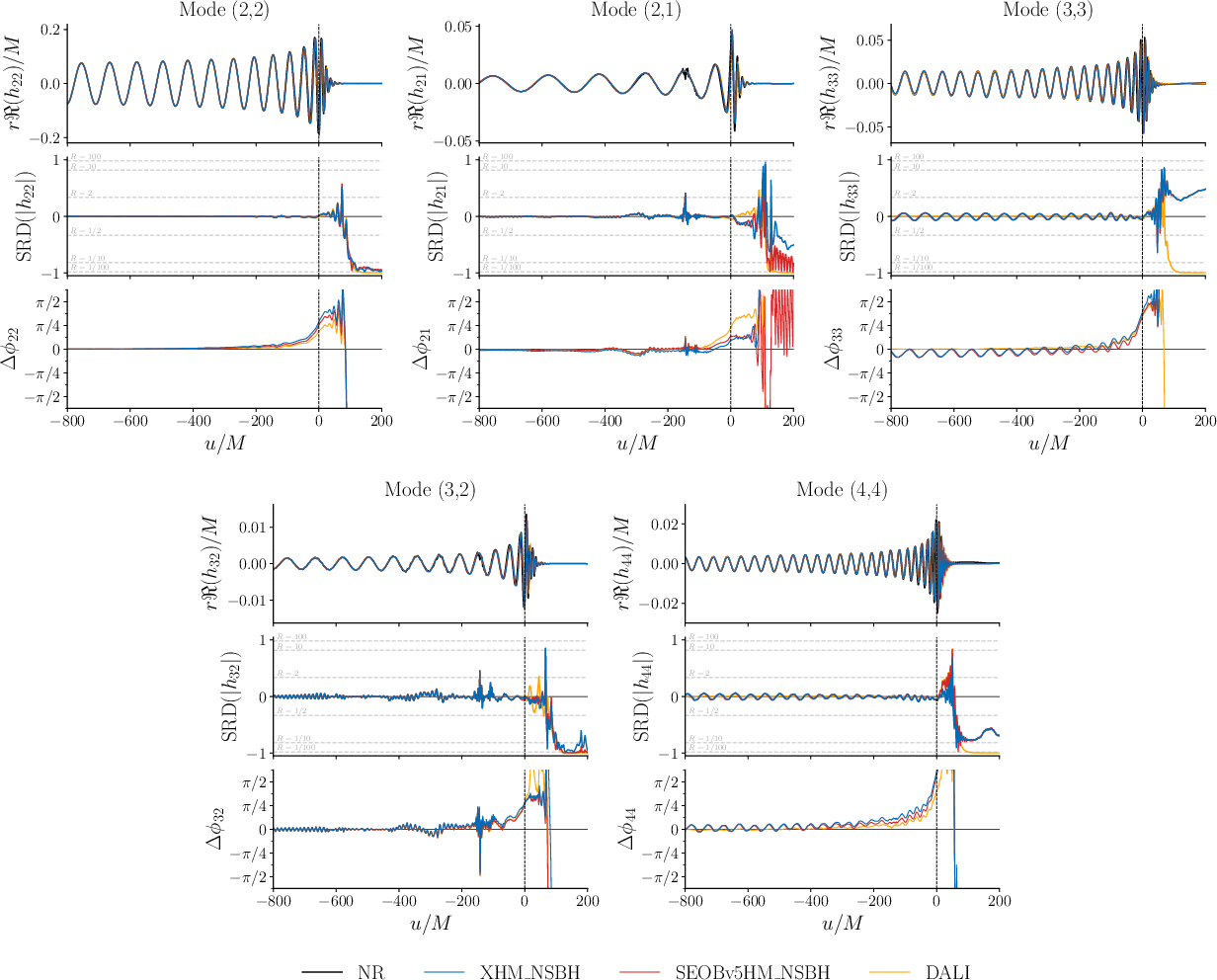
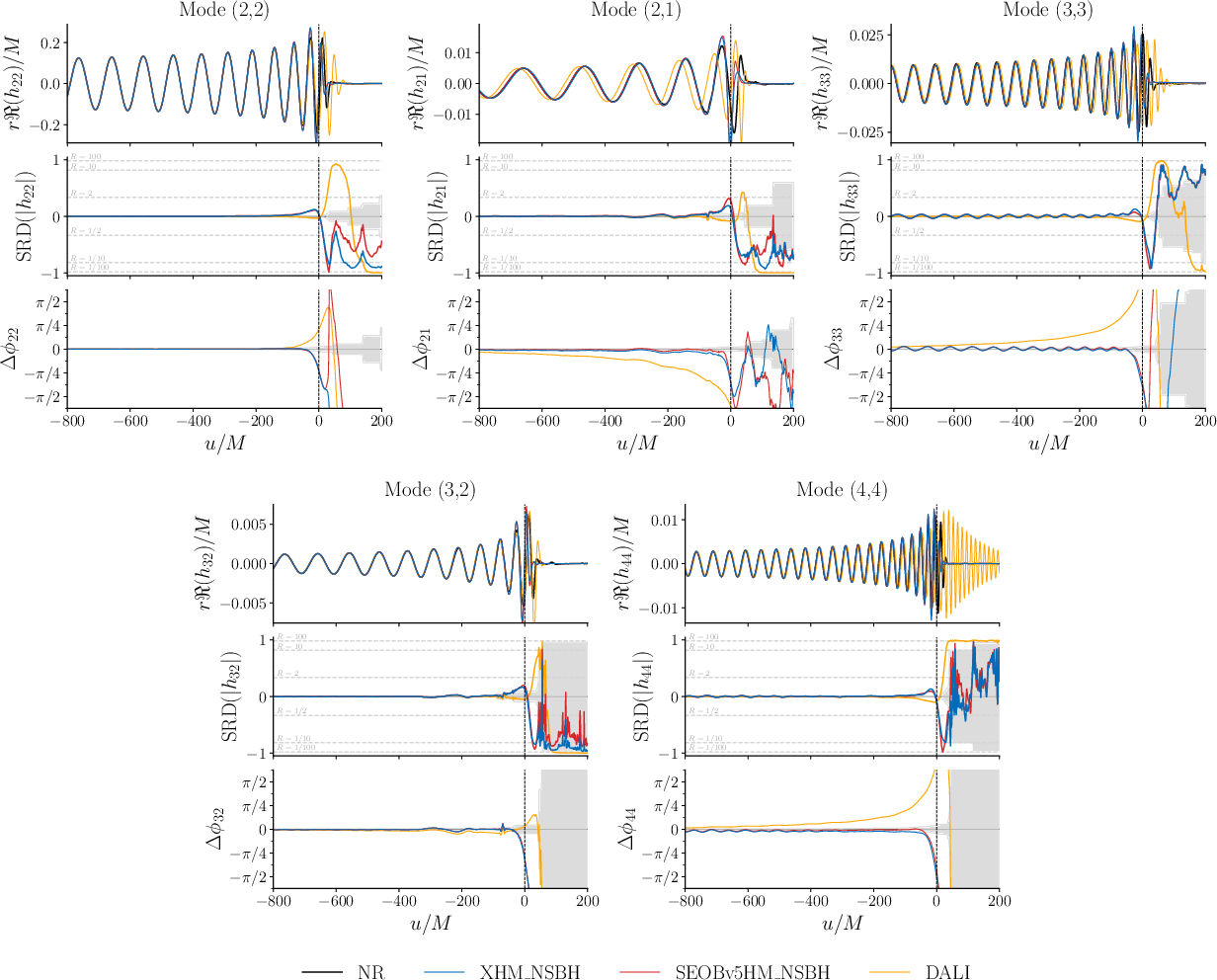
Direct TD comparisons of XNSBH and v5HMROM_NSBH to NR and time-domain TD models (e.g., DALI [Gonzalez et al., 2025]) demonstrate close agreement in both amplitude and phase up to merger for both disruptive and non-disruptive cases (Figures 1, 2).
Figure 1: TD comparison between SXS:BHNS:0001 and the waveforms produced by XNSBH, v5HMROM_NSBH, and DALI, showing agreement up to merger.
Figure 2: TD comparison between SXS:BHNS:0002 and the waveforms produced by XNSBH, v5HMROM_NSBH, and DALI, revealing phase and amplitude discrepancies in the merger for strongly tidal cases.
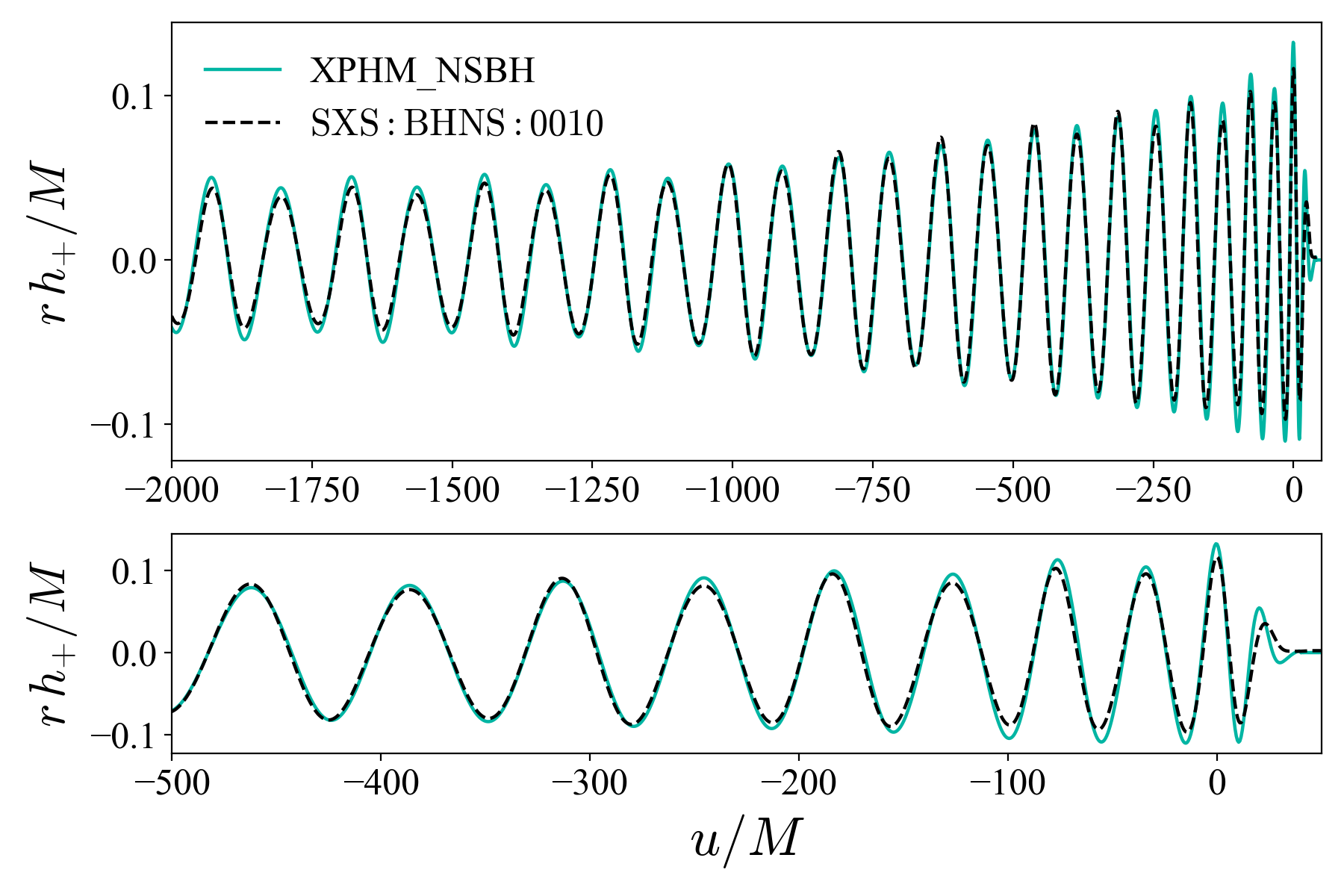
For precessing NR data, XPNSBH closely tracks the NR evolution of the GW polarization (Figure 3).
Figure 3: TD comparison of the plus polarization for the precessing SXS:BHNS:0010 simulation and XPNSBH.
Mismatches
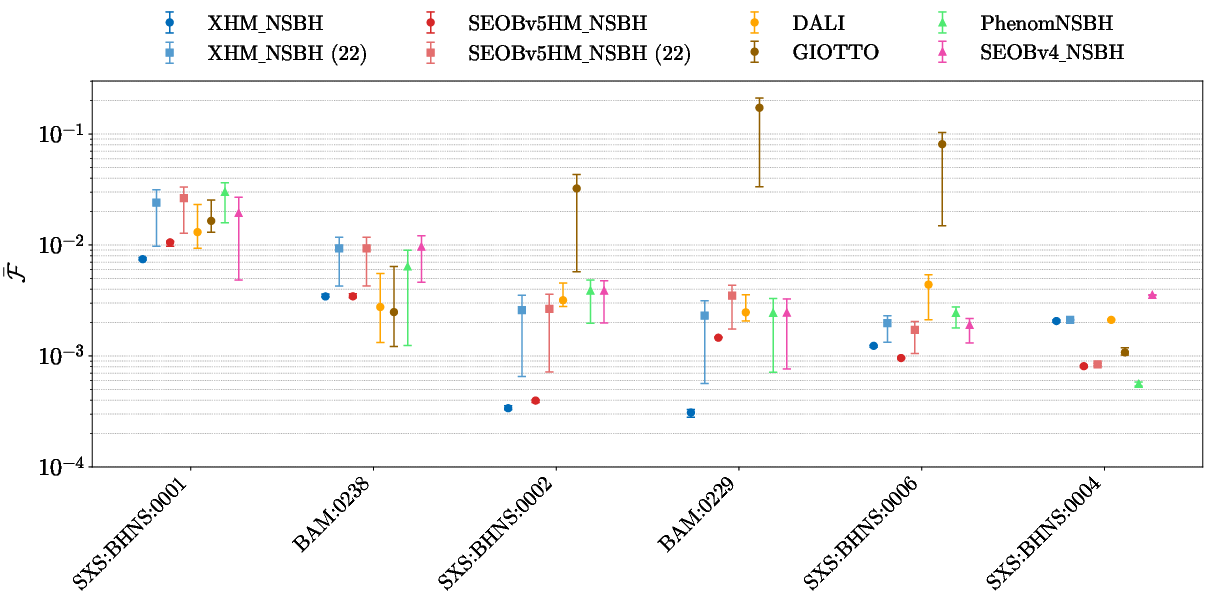
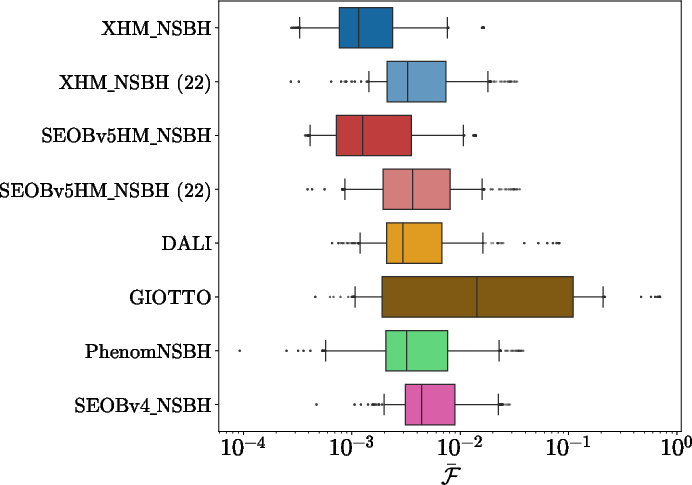
Comprehensive mismatch analyses reveal that XNSBH and v5HMROM_NSBH outperform all quadrupolar-only NSBH models, especially for systems with large mass ratios or aligned spins (Figures 4, 5, 6).
Figure 4: Mismatches between NSBH waveform models and seven NR waveforms, with XNSBH/v5HMROM_NSBH showing the lowest and tightest mismatch distributions, especially as higher modes become significant.
Figure 5: Mismatch distribution box plots over the validation dataset confirm the accuracy and robustness of the new models across system parameters.
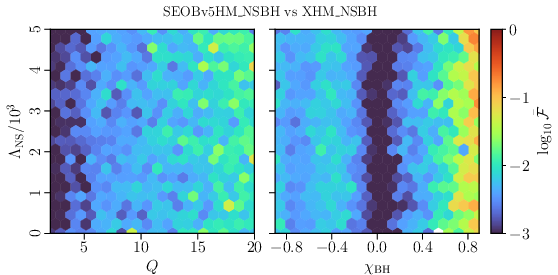
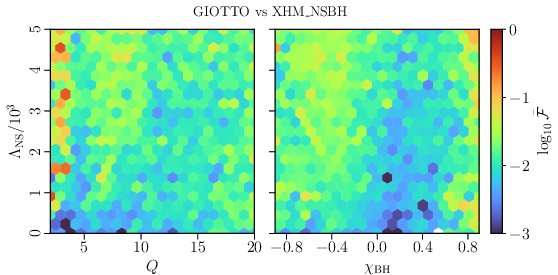
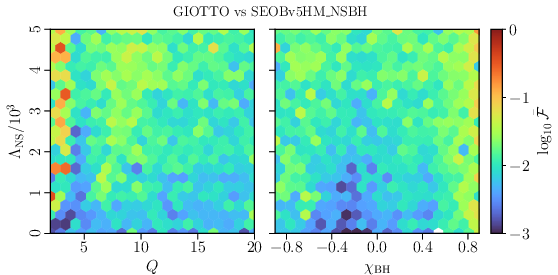
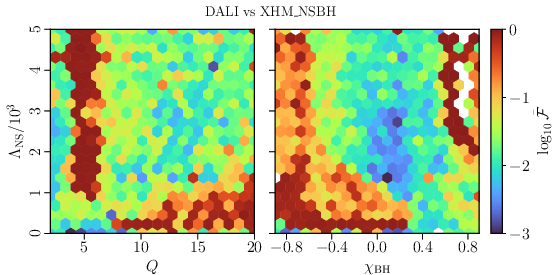
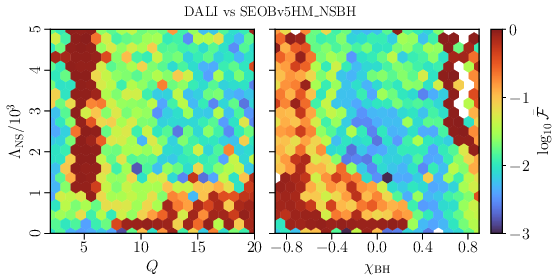
Figure 6: Sampling mismatches as function of mass ratio and tidal deformability over 5000 synthetic configurations, demonstrating broad validity and consistency of XNSBH and v5HMROM_NSBH.
Computational Efficiency
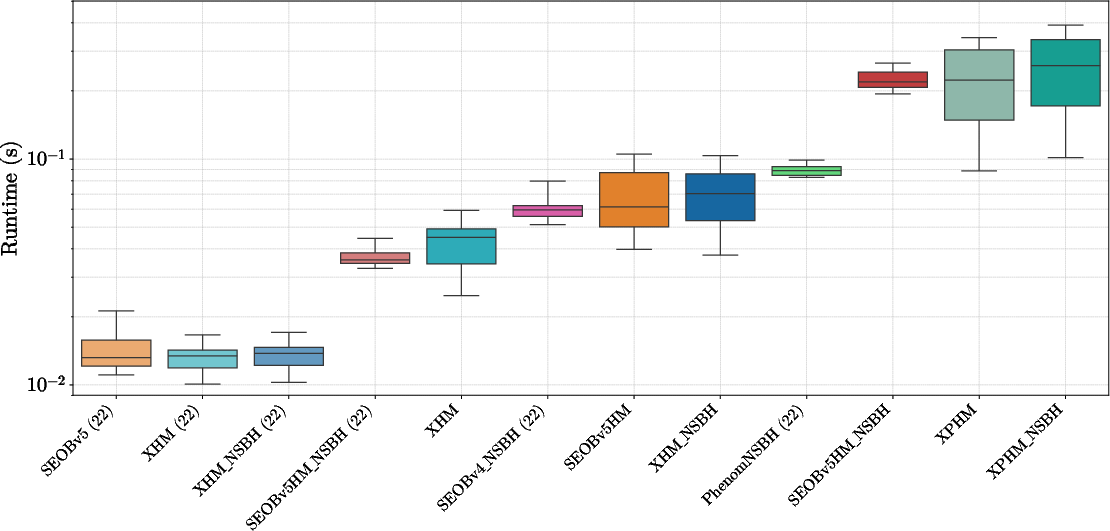
Evaluation times were benchmarked on a large random sample (Figure 7). Both XNSBH and v5HMROM_NSBH are competitive—even when HMs are included—with popular single-mode models, indicating their suitability for production PE studies.
Figure 7: Evaluation time distributions for XNSBH, v5HMROM_NSBH, and XPNSBH are comparable to or better than previous generation quadrupole-only NSBH models.
Parameter Estimation Studies
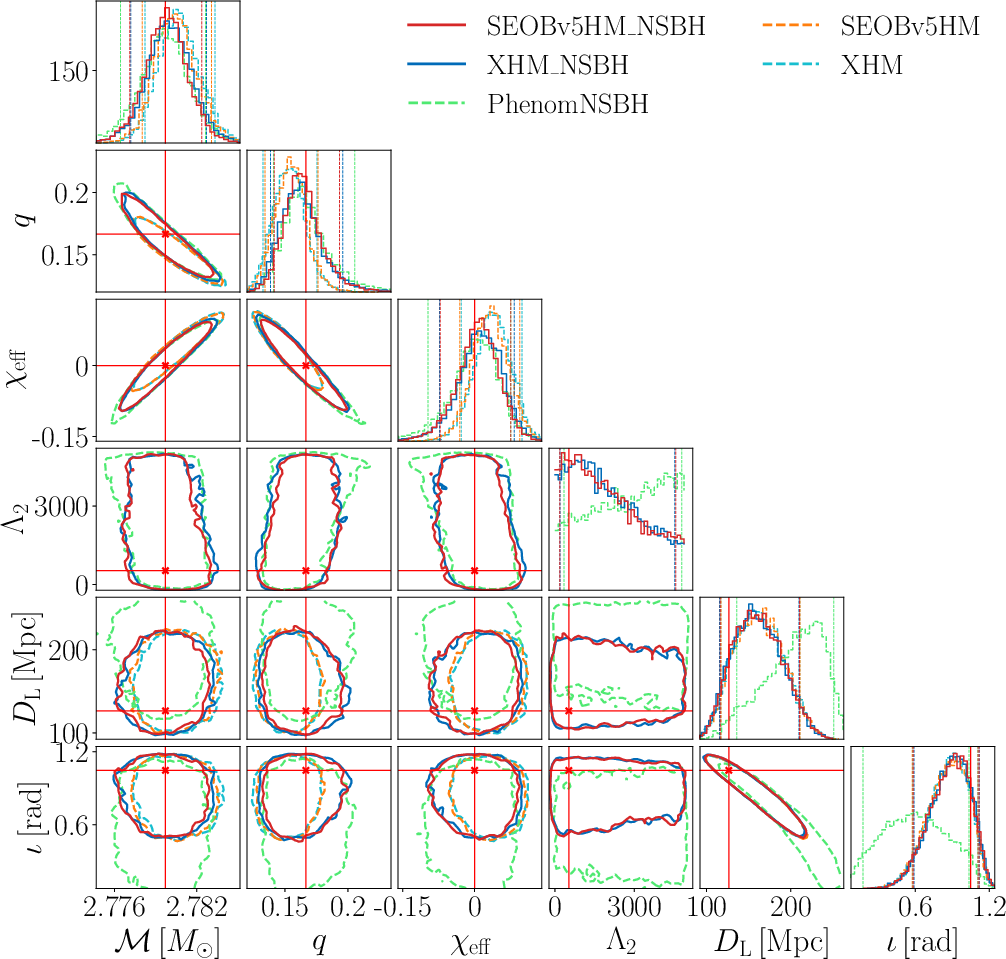
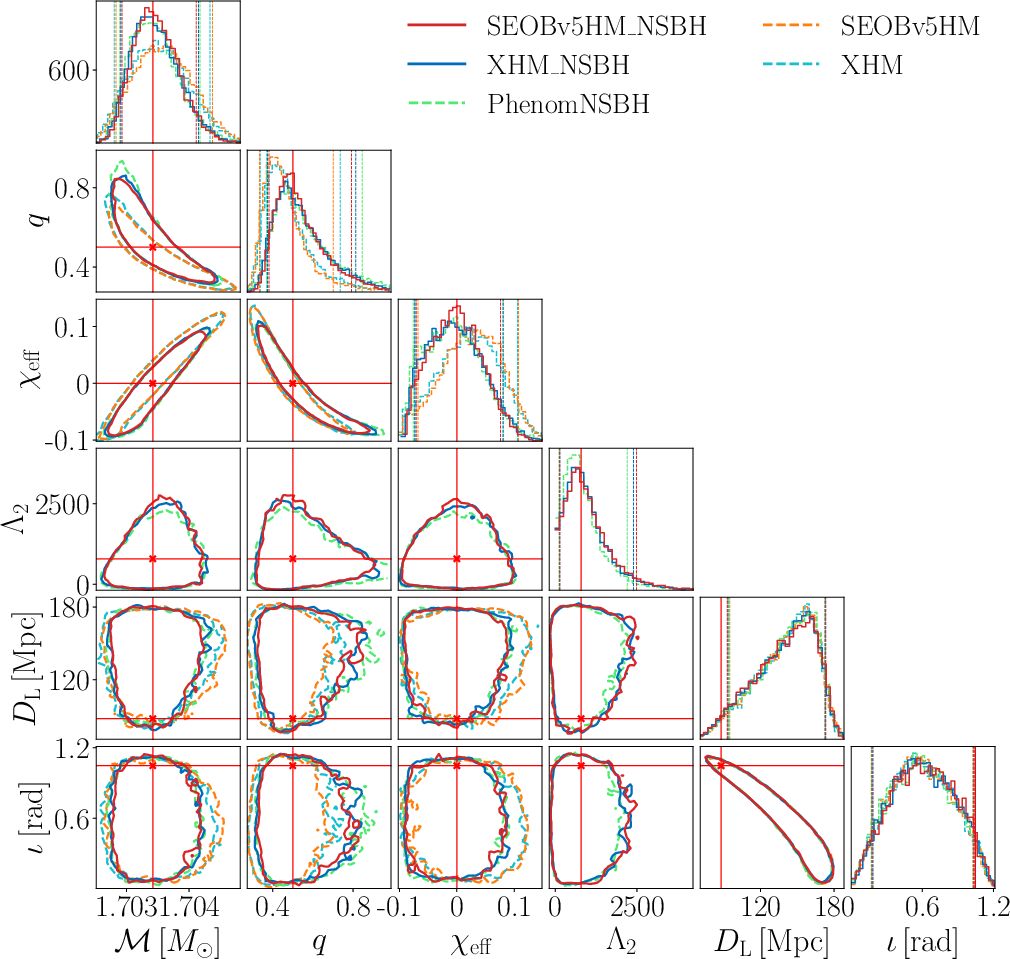
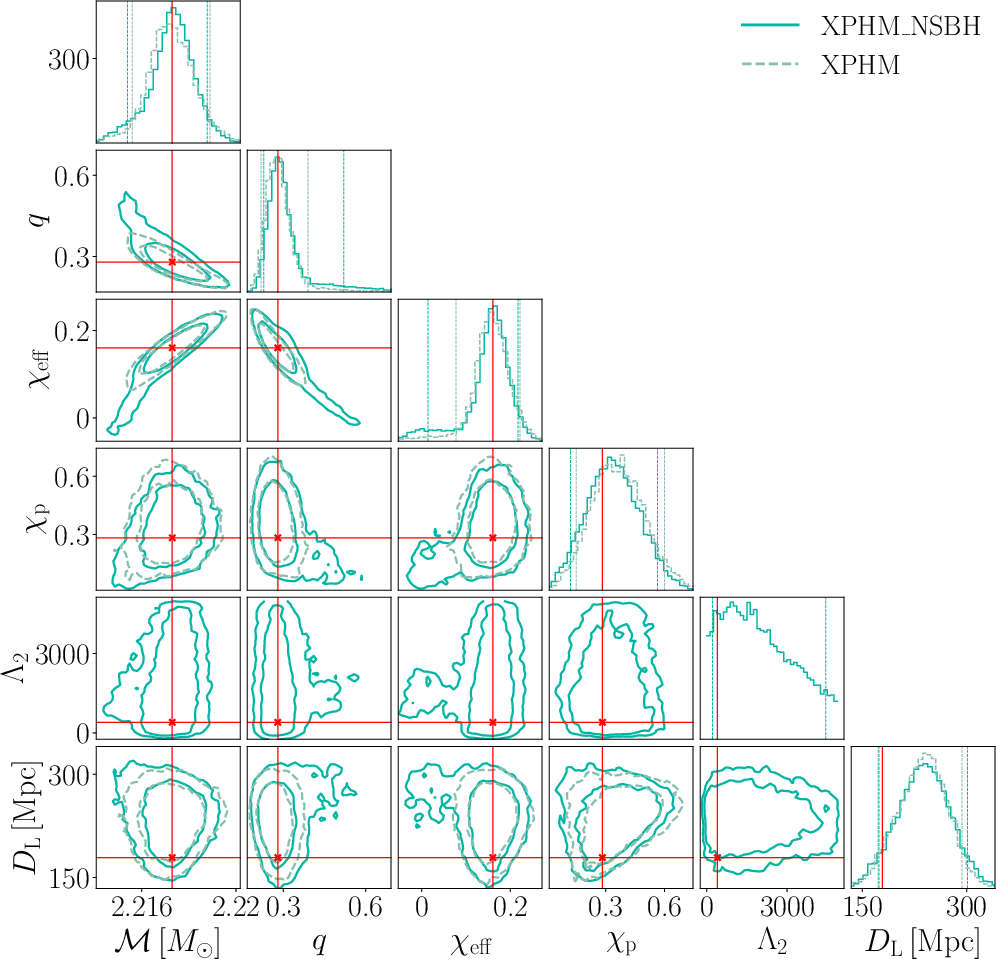
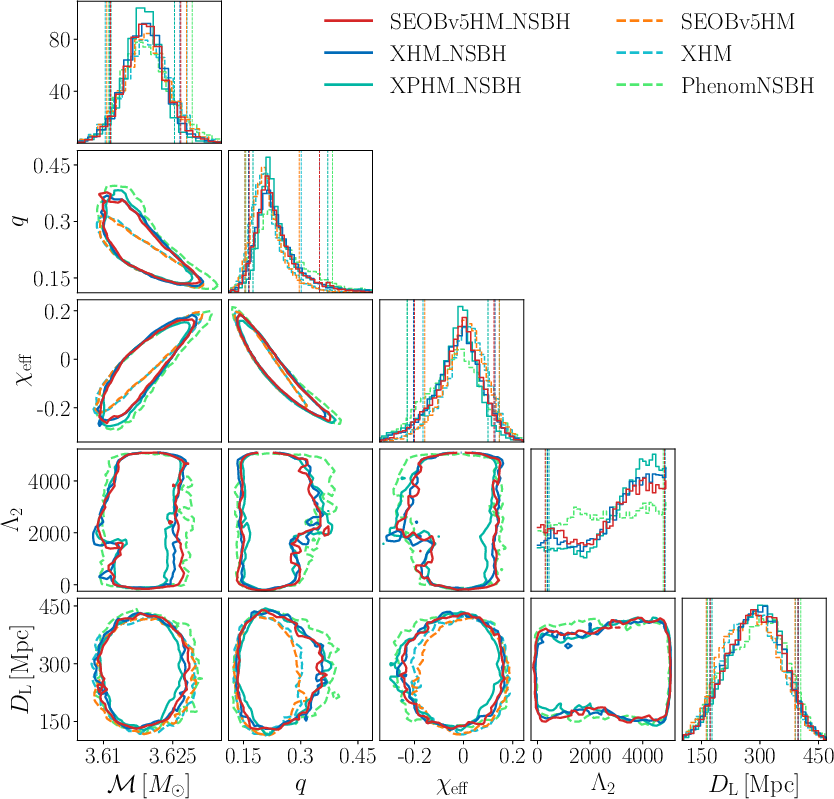
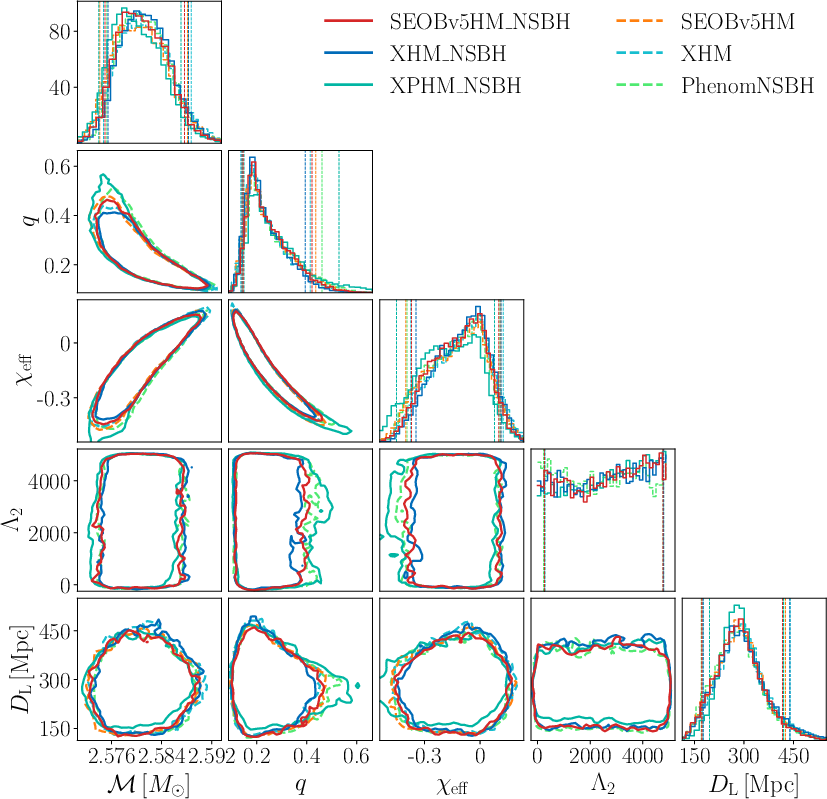
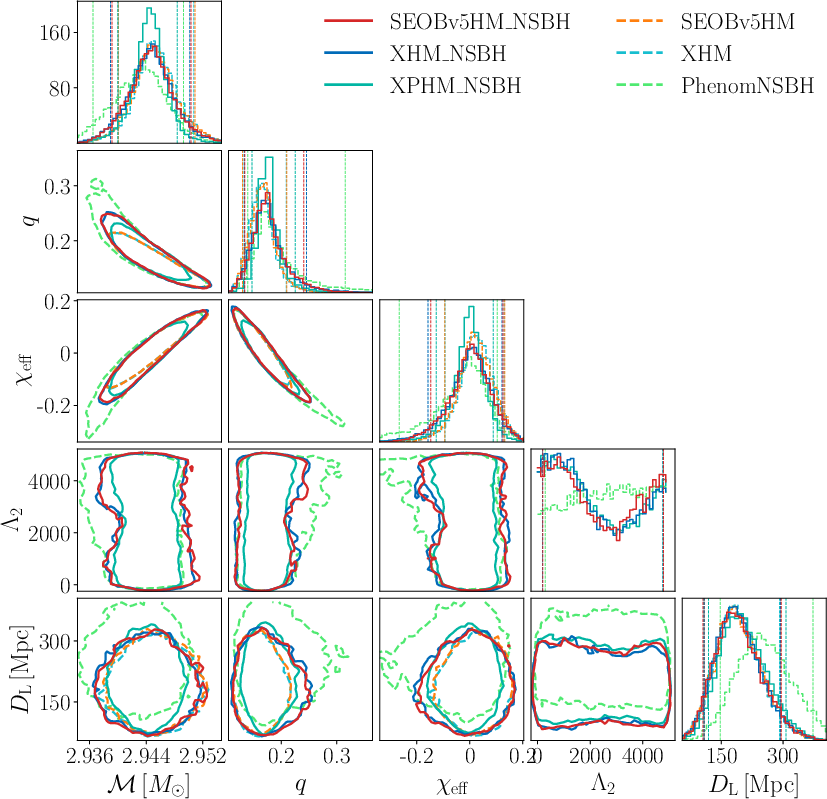
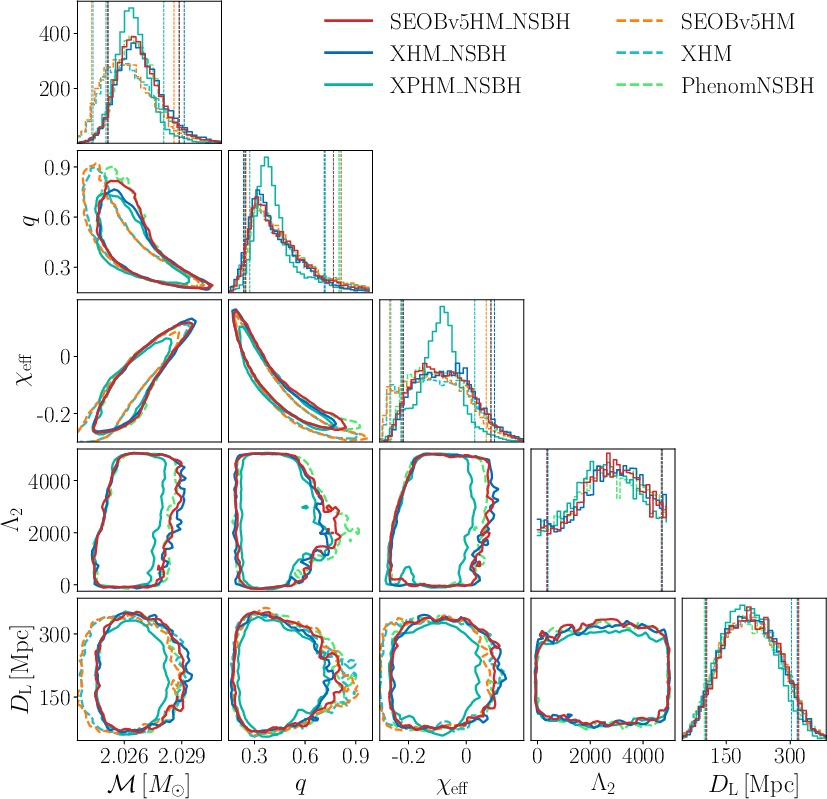
Injection-recovery and real-event analyses demonstrate the practical impact of including HMs and tides on source parameter inference (Figures 10–12).
For high mass ratio (non-disruptive) injections, only models with HMs recover extrinsic parameters accurately; tides only shift the posteriors noticeably in the disruptive regime.
For real events (GW200105, GW200115, GW230518, GW230529), all NSBH waveform models give statistically consistent posteriors. However, credible intervals and trends can shift depending on the inclusion of HMs and tides, with the new models occasionally yielding informative tidal constraints, especially for marginal cases.
Figure 8: Posterior recovery for a non-disruptive high-σ1 injection near σ2, illustrating the impact of HMs.
Figure 9: Posterior recovery for a disruptive (low mass ratio, high tidal deformability) signal, with the tidal deformability parameter credibly recovered by the new models.
Figure 10: Posterior distributions for real NSBH candidates, showing broad model consistency and marginal tidal constraints where expected.
Implications and Future Directions
The introduction of fast, accurate frequency-domain NSBH waveform models with higher modes and tides resolves longstanding modeling gaps in the interpretation of GW signals from asymmetric mergers.
The computational efficiency demonstrated here enables the use of these models in low-latency, high-throughput parameter inference and population studies.
Systematic uncertainties due to incomplete waveform physics are reduced, minimizing bias in population and EOS inference as detector sensitivity improves.
The consistent treatment of HMs, spin, and tides in one framework facilitates multimessenger investigations and the identification of marginal EM-bright or mass gap events for follow-up.
Future developments should aim to incorporate efficient, physically meaningful modeling of orbital eccentricity and further generalize precessional dynamics, as the astrophysical population and the sensitivity of GW detectors increase. The need for robust treatment of all relevant physics—including residual eccentricity and more accurate EOS dependence—will become critical for avoiding systematic parameter estimation errors.
Conclusion
The models XNSBH, v5HMROM_NSBH, and XPNSBH represent a substantial advance in the modeling of quasi-circular, aligned-spin and precessing NSBH GW signals. By combining FD efficiency, systematic NR calibration, tidal/EOS physics, and higher harmonics, they resolve the main shortcomings of previous approaches. These models will be essential for future precision GW astrophysics involving neutron star–black hole coalescences, from low-latency alerts to precision EOS and formation channel inference.
Reference:
"Fast gravitational waveform models for quasi-circular coalescences of neutron star--black hole binaries" (2606.04810)