- The paper introduces a novel MLE method that maps quantum likelihoods to classical Bayesian networks for efficient reconstruction of local Pauli channels.
- It demonstrates a significant reduction in sample complexity, requiring roughly one third the data compared to traditional approaches.
- The improved channel estimation yields more accurate error-mitigated observables, enhancing performance in quantum simulations.
Maximum Likelihood Estimation for Enhanced Pauli Channel Learning in Quantum Error Mitigation
Introduction and Problem Context
Mitigating errors on noisy quantum hardware is a central challenge, particularly for non-fault-tolerant devices. Probabilistic error cancellation (PEC) enables bias-free estimates of physical observables via inversion of characterized noise models. Its main bottleneck is the high sample complexity and classical cost of reconstructing the noise channel, even after restricting to physically motivated sparse, local Pauli-Lindblad channels. Traditional empirical approaches such as Empirical Pauli Fidelities (EPF) discard significant information from measurement data, limiting achievable tomographic precision and inflating resource demands.
This work provides an algorithmic framework for efficiently performing maximum likelihood estimation (MLE) of sparse, local Pauli channels. The core observation is that the likelihood function for product input states and measurements over 1D-local channels reduces to an efficiently-evaluable Bayesian network, admitting exact polynomial-time evaluation. This leads to significantly improved sample complexity and quality of learned noise models, with direct benefits for downstream PEC performance.
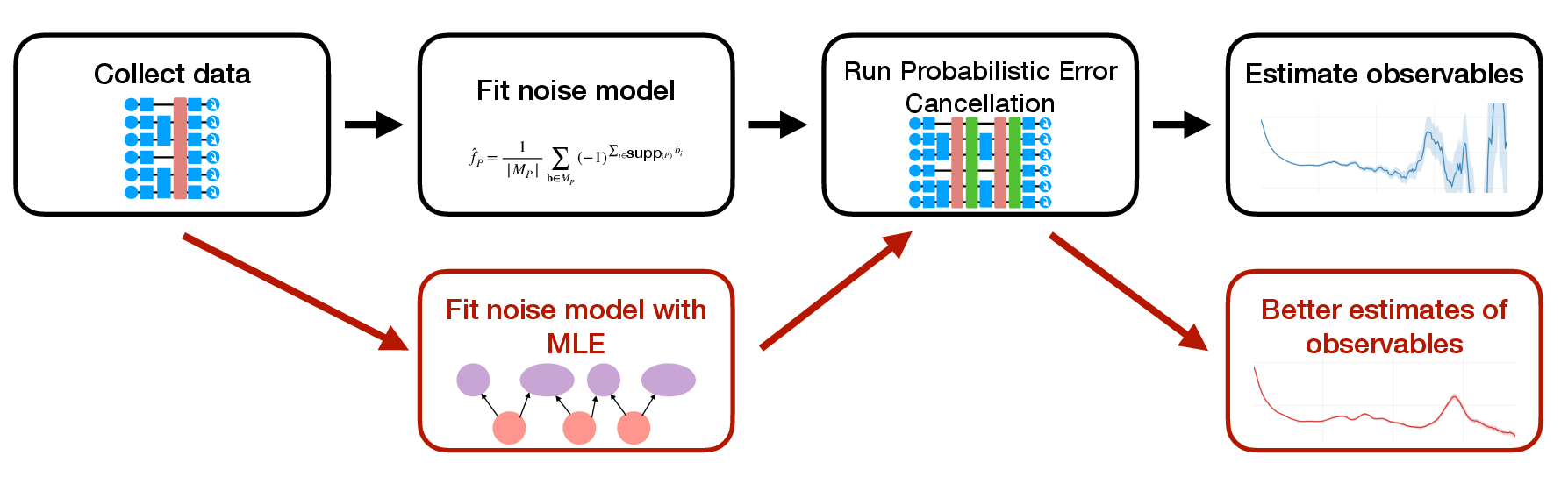
Figure 1: High-level illustration of improved noise model learning by MLE for use in Pauli error cancellation.
Model and Data Acquisition Framework
The physical error channel on n qubits is modeled as a spatially local Pauli-Lindblad channel, parameterized by a polynomial number of generators with associated error probabilities. Pauli twirling is leveraged to enforce a diagonal structure, and terms are constrained to act on adjacent qubits (with extensions discussed).
Measurement data is generated by preparing product eigenstates and measuring in the corresponding Pauli basis, often after action of a layer of entangling (e.g., CZ) gates. For such data, a minimal set of basis settings suffices to ensure identifiability of each local error parameter.
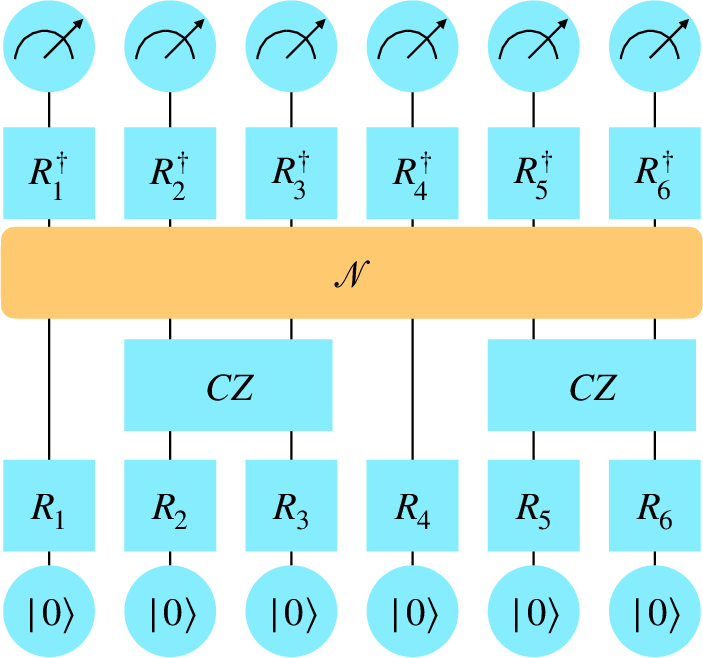
Figure 2: Typical product-state data collection setup for learning gate-based Pauli errors.
Methodological Advances in Likelihood Evaluation
Limitations of EPF
EPF constructs unbiased estimators for Pauli fidelities, but—as proven via explicit counterexamples in the supplement—these are not sufficient statistics, i.e., they do not preserve all available likelihood information in the measurement record. Key aspects of syndrome correlations are lost in EPF averaging, resulting in unnecessary variance and suboptimal channel reconstruction.
Efficient MLE via Probabilistic Graphical Reduction
MLE, while statistically optimal, is generally intractable for large systems due to the exponential size of the Hilbert space and the sum over exponentially many error configurations. The primary contribution of this work is the construction of an exact mapping from the quantum likelihood function for local Pauli-Lindblad circuits to a classical Bayesian network, when the connectivity graph is 1D.
This is achieved by:
- Commuting basis changes and errors in the induced tensor network to isolate local stochastic classical channels (bit-flip mappings).
- Systematically identifying and removing uninformative bits (those prepared and measured in maximally mixed states), and consolidating latent variables corresponding to classically indistinguishable errors.
- Utilizing belief propagation to evaluate the likelihood for the reduced Bayesian network, which ensures polynomial scaling with system size for 1D geometries.
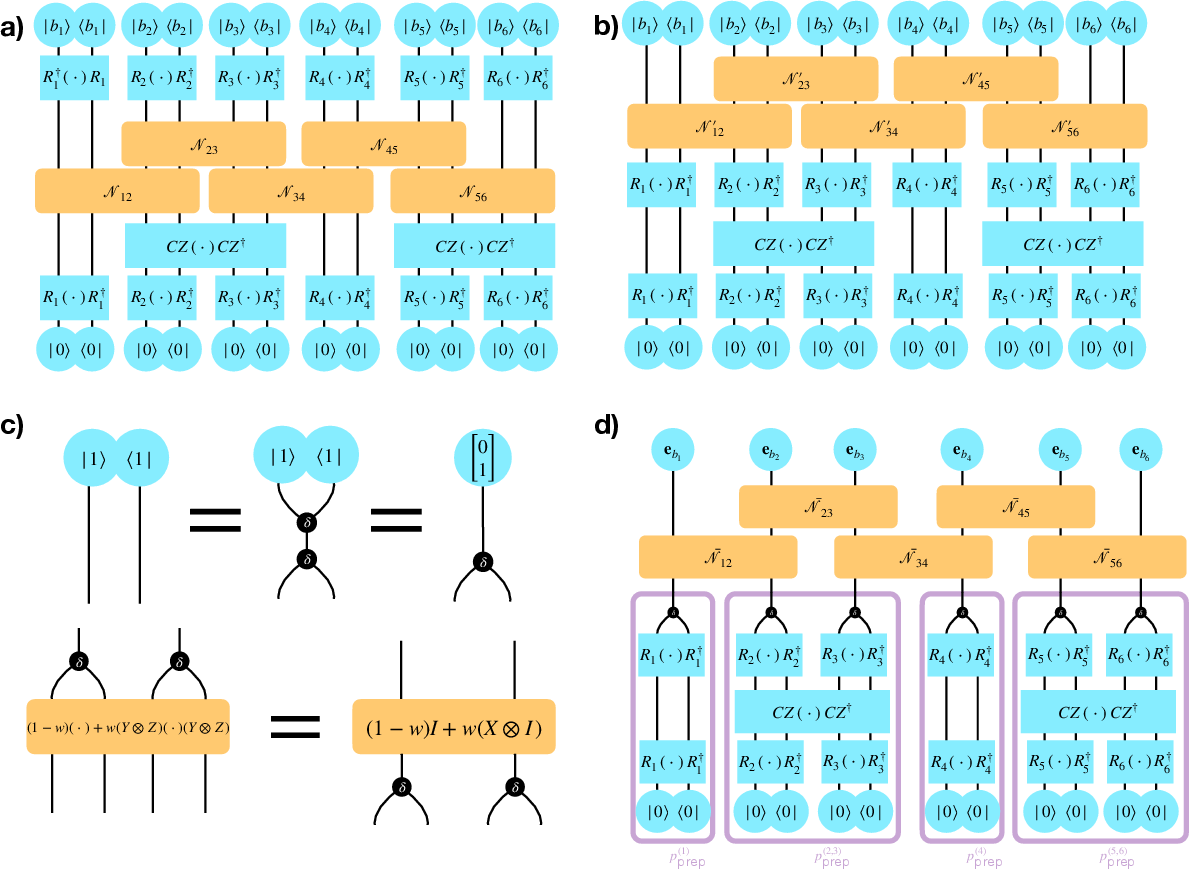
Figure 3: Quantum-to-classical reduction via commutation and mapping to a tensor network encoding a classical probability distribution evolution.
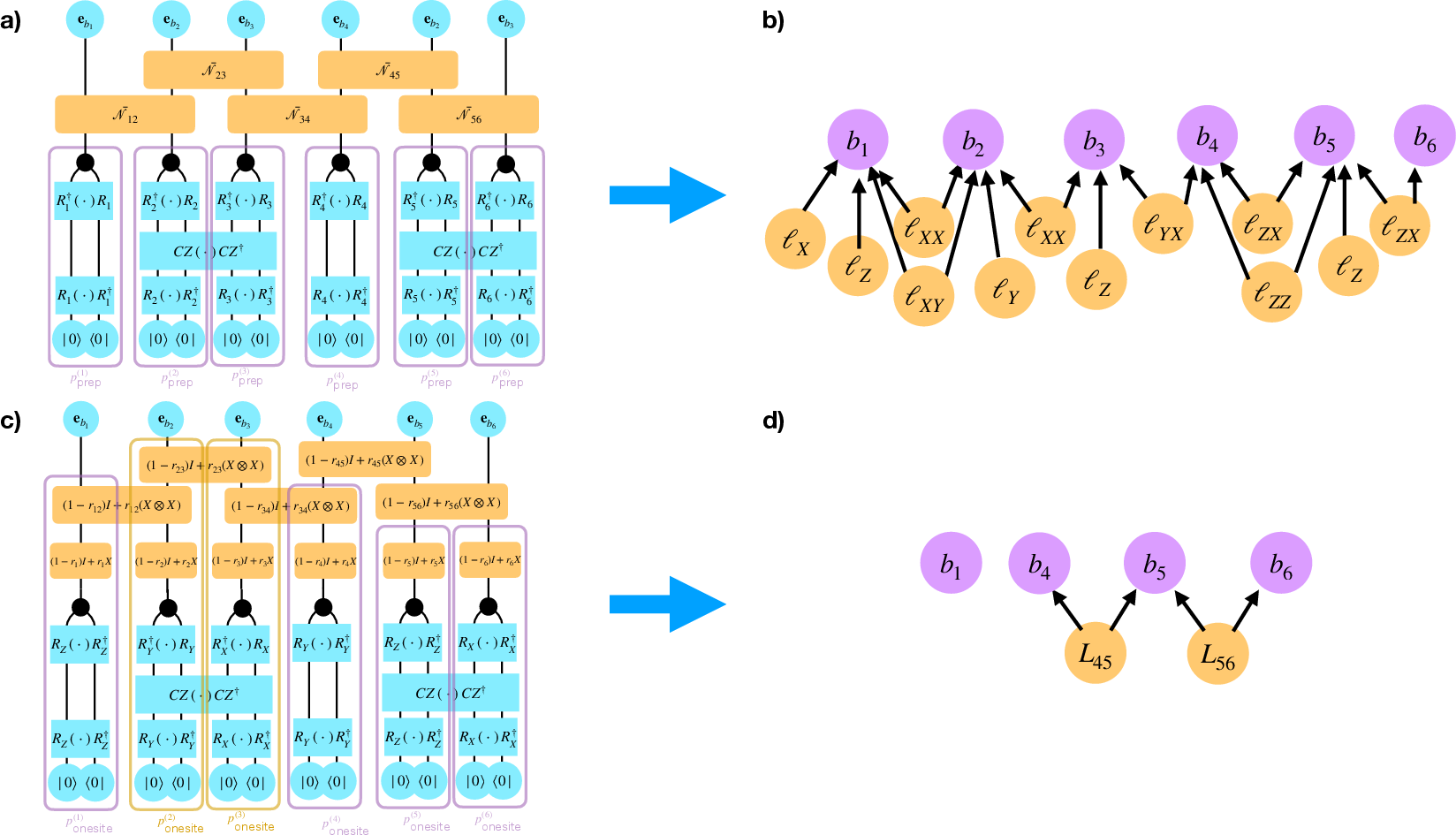
Figure 4: Construction and simplification of the Bayesian network corresponding to circuit, errors, and measurements.
Empirical Results and Numerical Benchmarks
Sample Complexity and Scaling
The MLE-based algorithm demonstrates a substantial reduction in sample complexity: to achieve the same parameter estimation accuracy, MLE requires only approximately one third of the data as EPF, under realistic parameter regimes. This ratio holds independently of system size, given the local structure.
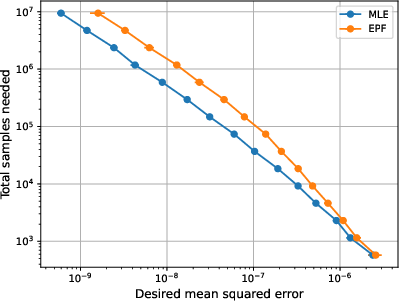
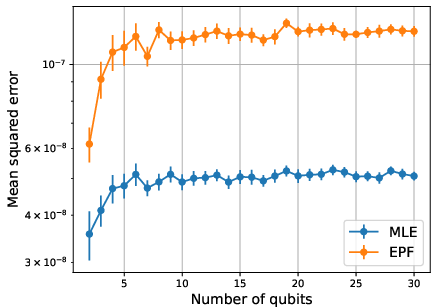
Figure 5: MLE delivers the same estimation fidelity as EPF with roughly three times fewer samples (left panel); sample complexity per parameter is nearly independent of system size (right panel).
Impact on Error-Mitigated Simulation
Superior channel estimation translates into quantitatively better error-mitigated values in practical quantum simulations using PEC. The MLE-learned channel yields error-mitigated observables that remain accurate for longer circuit times and deeper circuits, as underestimation/overestimation in error parameters propagates significantly less in the inversion procedure.
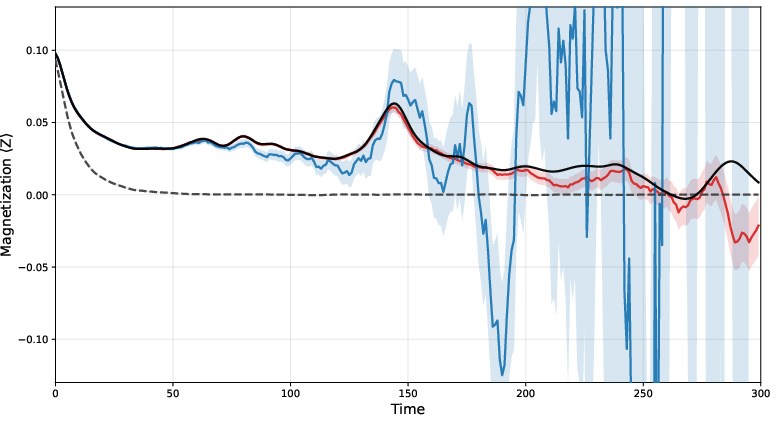
Figure 6: Error-mitigated dynamics for a Trotterized transverse-field Ising model: MLE-fitted noise models achieve significantly prolonged agreement with noiseless evolution.
Extensions: Depth, Measurement Error, General Topologies
Deep Circuit and Cycling Optimization
MLE readily incorporates measurement data from varying circuit depths, including repeated application of noisy circuit layers. The reduction to a Bayesian network is maintained due to the self-inverse property of Clifford (e.g., CZ) gates, and even after cycling, the support of Lindblad terms only grows modestly (to four-site terms).
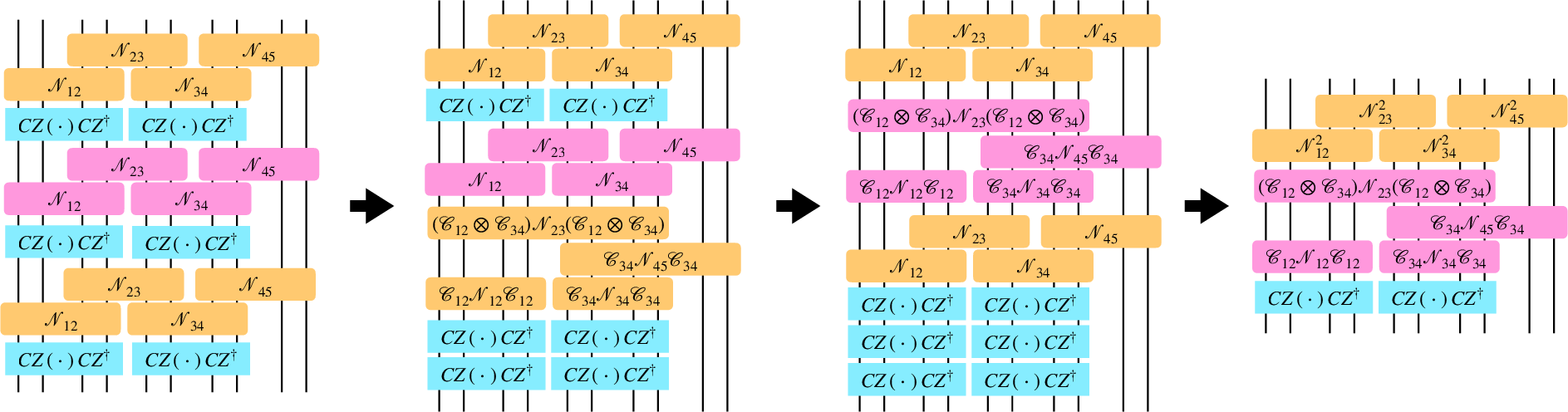
Figure 7: Reduction for repeated (“cycled”) noisy Clifford layers preserves tractability with only a moderate increase in local support.
State Preparation and Measurement (SPAM) Error Estimation
Joint estimation of gate-based and SPAM error parameters is enabled by combining data from different circuit depths, leveraging the MLE’s ability to integrate shot data across multiple experimental conditions. The method achieves high-fidelity estimation for both types of parameters—even when SPAM rates substantially exceed internal gate error rates.
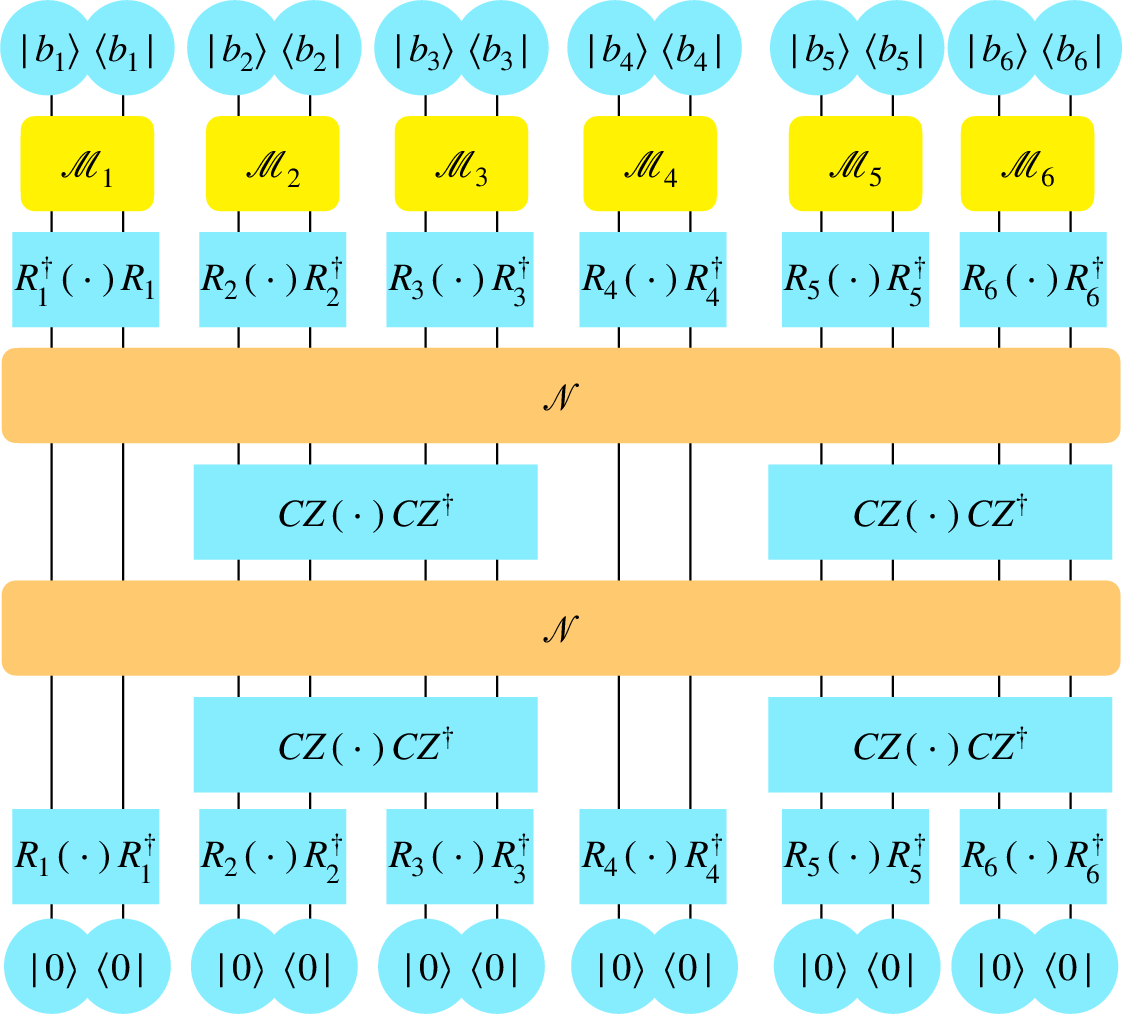
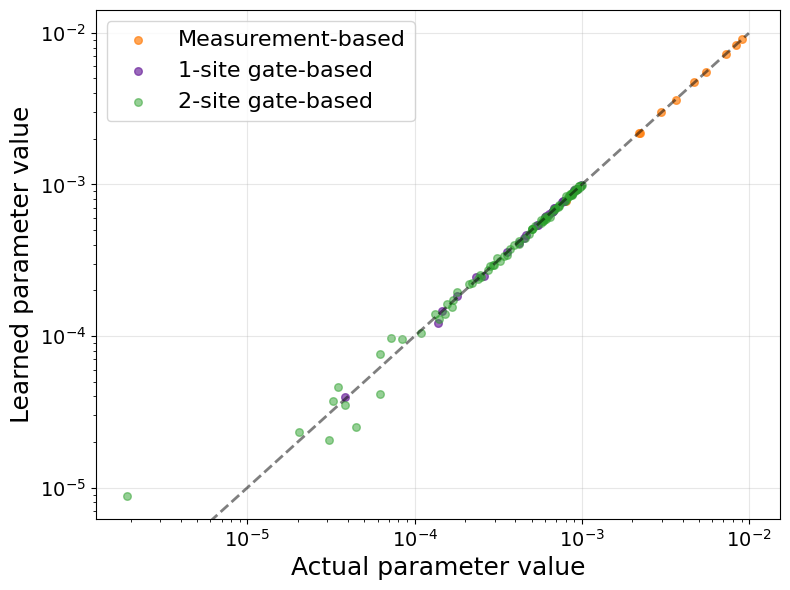
Figure 8: Model includes SPAM errors (a); joint accuracy for both gate and measurement parameters validated via simulated data (b).
Fisher-Optimal Shot Allocation
Analysis of Fisher information matrices allows optimization of shot allocation over circuit depths—crucially, the optimal strategy is to concentrate samples at a single, problem-dependent depth, augmented by a small number of calibrating measurements for SPAM estimation.
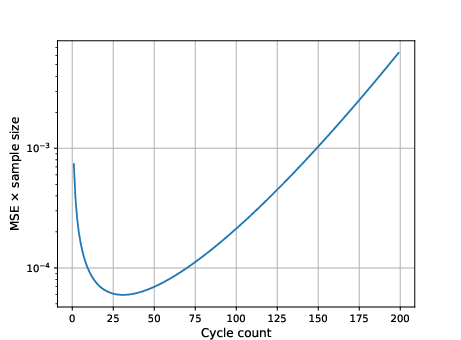
Figure 9: Channel parameter estimation error (asymptotic MSE) as a function of circuit depth at which data is taken.
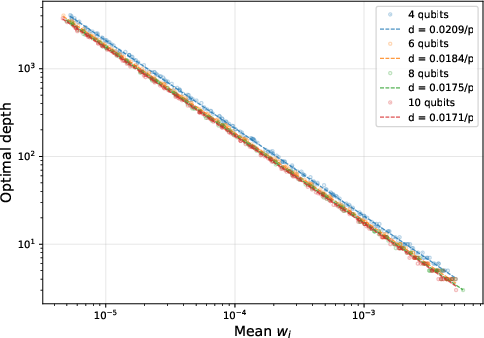
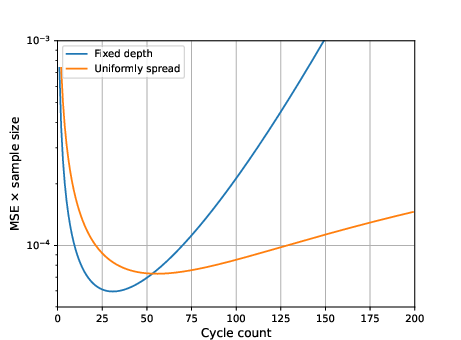
Figure 10: Most informative data collection depth depends on typical error rate; uniform shot allocation is markedly suboptimal.
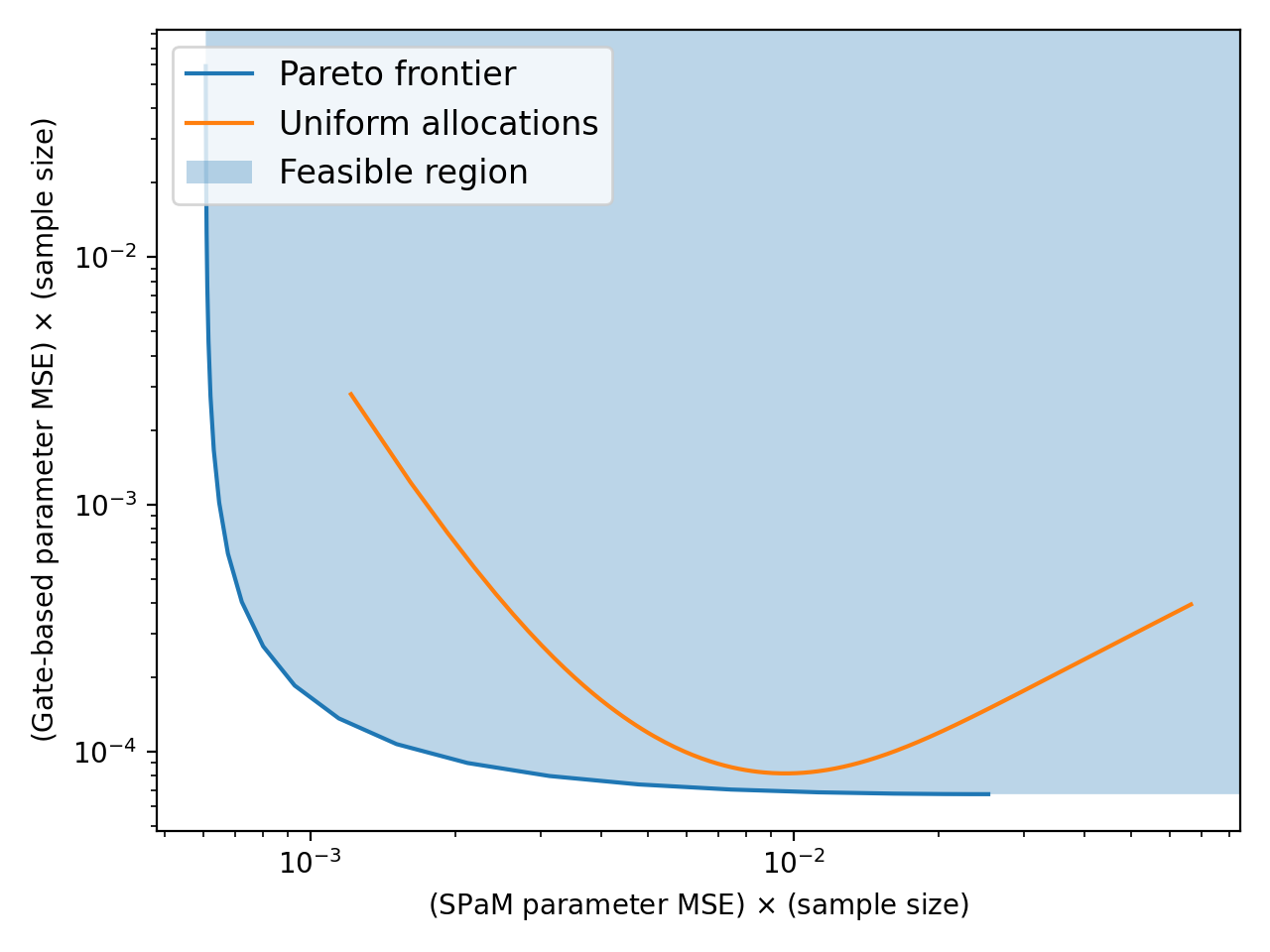
Figure 11: Pareto frontier analysis of shot allocation between SPAM and gate error tomography; standard uniform-shot allocation is off-optimal by an order of magnitude.
Practical and Theoretical Implications
This work substantially advances both the theory and practice of efficient quantum noise characterization. The main practical implication is the immediate reduction in experimental and computational cost for implementations of PEC and related error mitigation techniques using local Pauli channels. The approach natively supports circuit layouts as realized on superconducting devices and is extendable (with caveats) to higher-dimensional topologies via either graph cutting, patching, or approximate belief propagation in loopy graphs (with errors on the order of the local error parameter to appropriate powers).
Theoretically, the results clarify the limitations of traditional summary statistics (such as EPF) and motivate the necessity of full-likelihood approaches for high-precision applications. The analysis quantifies the precise operational gains via MLE and connects quantum channel learning sample complexity to the Fisher information, in agreement with contemporary results in quantum learning theory.
Further directions include extending tensor network representations for efficient likelihood calculation in higher dimensions, adaptive experiment design for further shot savings, robust model selection and pruning, and integration of entangled measurement protocols where hardware allows.
Conclusion
This work establishes an explicit, tractable maximum likelihood framework for Pauli channel learning in 1D-local circuits, yielding provable and practically significant reductions in sample complexity and improved accuracy for error-mitigated quantum computation. The use of graphical model reductions bridges quantum estimation and classical inferential methodologies, opening a spectrum of future research directions in scalable noise learning, adaptive experiment design, and rigorous error mitigation protocol development.

