- The paper introduces TAGR that preemptively repairs input graphs by combining adaptive Gaussian feature-neighborhood construction with topology-aware residual correction.
- It deterministically reweights observed edges, preserving sparsity while effectively mitigating the impact of spurious and missing connections on message passing.
- Experimental results demonstrate that TAGR consistently outperforms baseline GNNs under both edge-addition and edge-deletion regimes, achieving higher stability and accuracy.
Topology-Aware Gaussian Graph Repair for Robust Graph Neural Networks
Motivation and Context
Graph Neural Networks (GNNs) are highly sensitive to the topology of the input graph, as message-passing algorithms depend crucially on neighborhood structures to propagate information. Real-world graphs often exhibit noisy and incomplete structures, where spurious edges facilitate propagation of irrelevant signals, and missing edges prevent semantically-connected nodes from exchanging information. Existing robust GNN methods have typically focused either on denoising (removal of suspicious edges) or learning new graph structures during training, but these approaches ignore or underperform in settings with substantial missing connectivity and often introduce additional optimization overhead.
The paper "Topology-Aware Gaussian Graph Repair for Robust Graph Neural Networks" (2606.03462) introduces Topology-Aware Gaussian Repair (TAGR), a lightweight and modular framework for preemptively repairing the message-passing graph to improve robustness and stability for downstream GNN models. TAGR targets both spurious and missing edges in the observed graph without resorting to dense or computationally expensive structure learning.
Methodology
TAGR constructs a repaired adjacency matrix before GNN training via two orthogonal components: an adaptive Gaussian feature-neighborhood graph, and a topology-aware residual correction of the observed topology.
1. Adaptive Gaussian Feature-Neighborhood Graph:
TAGR identifies, for each node, a sparse set of nearest feature neighbors based on a normalized cosine similarity in attribute space. Using an adaptively scaled Gaussian kernel, it assigns weights to these candidate edges, symmetrized to maintain undirected structure. Only the top-k feature-neighbors per node (excluding pre-existing edges) are retained, keeping the repaired graph sparse.
2. Topology-Aware Residual Reweighting:
Observed edges are not treated as uniformly reliable. For each observed edge, TAGR computes a score from multiple standardized local statistics—including feature similarity, Jaccard neighborhood overlap, count of common neighbors, sum of clustering coefficients, and degree imbalance. This score passes through a tanh-based nonlinearity with clipping, producing a residual weight that softly boosts or reduces the edge's influence. The final reweighted adjacency is the observed adjacency modulated elementwise by these residual multipliers.
3. Final Repaired Graph for Message Passing:
The two components are summed, yielding a sparse weighted adjacency matrix that serves as the input support for arbitrary message-passing architectures. No neural or learned graph generator is required; all computation is deterministic and agnostic to the downstream GNN.
Experimental Results
TAGR was systematically evaluated on Cora, Citeseer, Cora-ML, and Pubmed using node classification with standard train/val/test splits. Three perturbation regimes were studied: clean graphs, random edge addition (noise), and random edge deletion (missing structure). Robustness performance was compared against GCN, GAT, GraphSAGE, and state-of-the-art repair/structure-learning baselines including learned repair (RS-GCN) and structure learning (JNSGSL).
TAGR consistently outperformed unmodified GNN backbones and matched or exceeded alternative graph repair baselines in both edge-addition and edge-deletion regimes, especially under strong structural corruption.
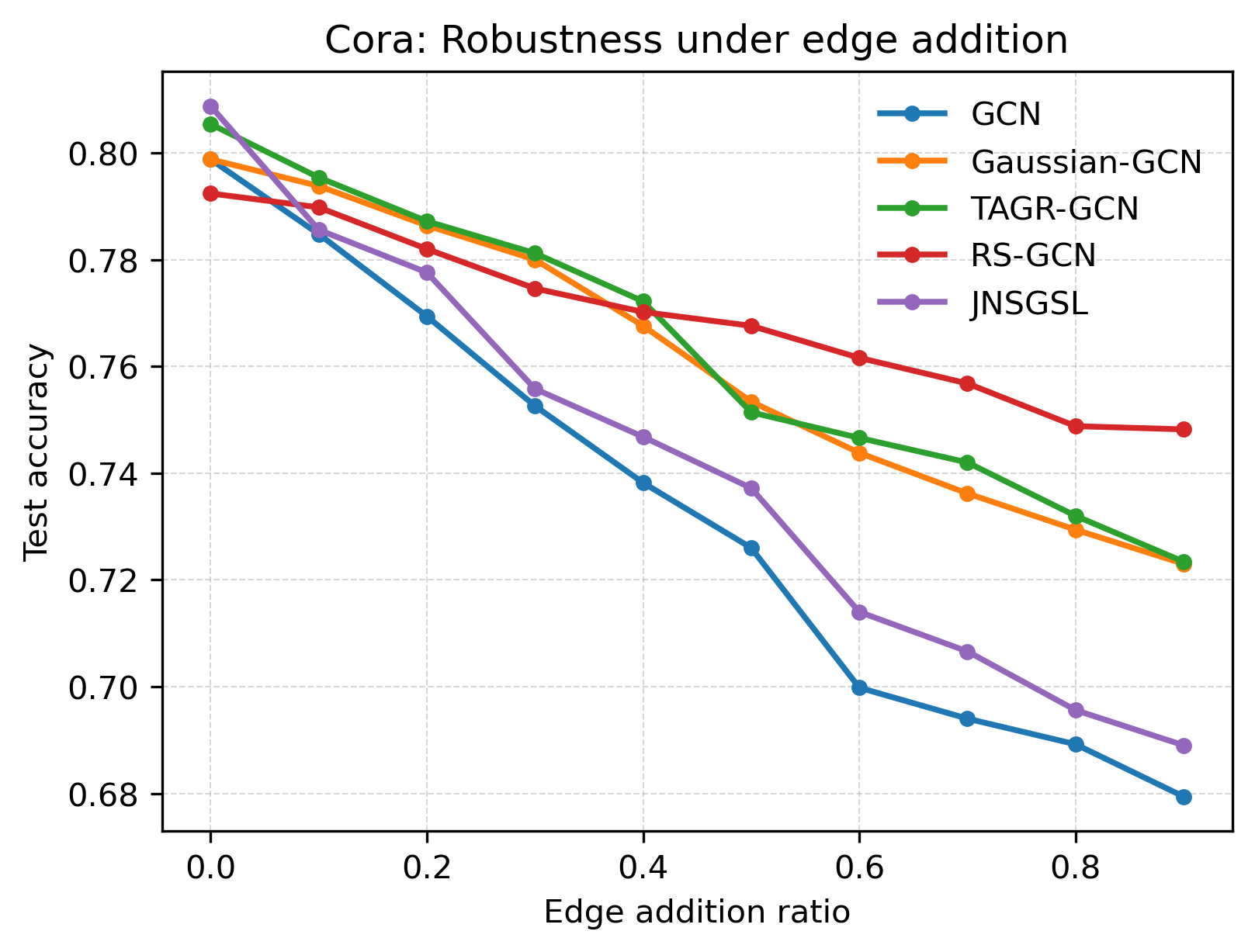
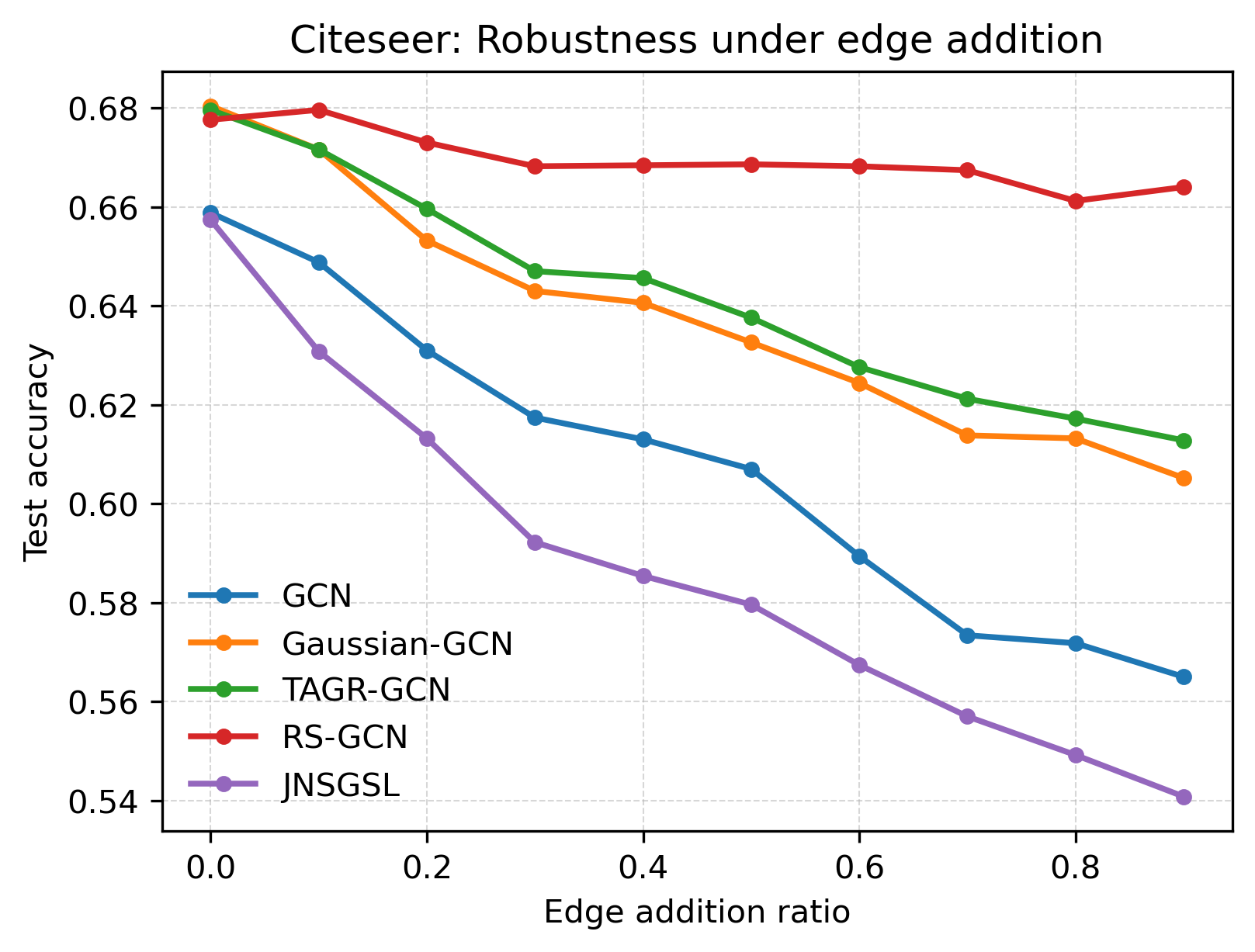
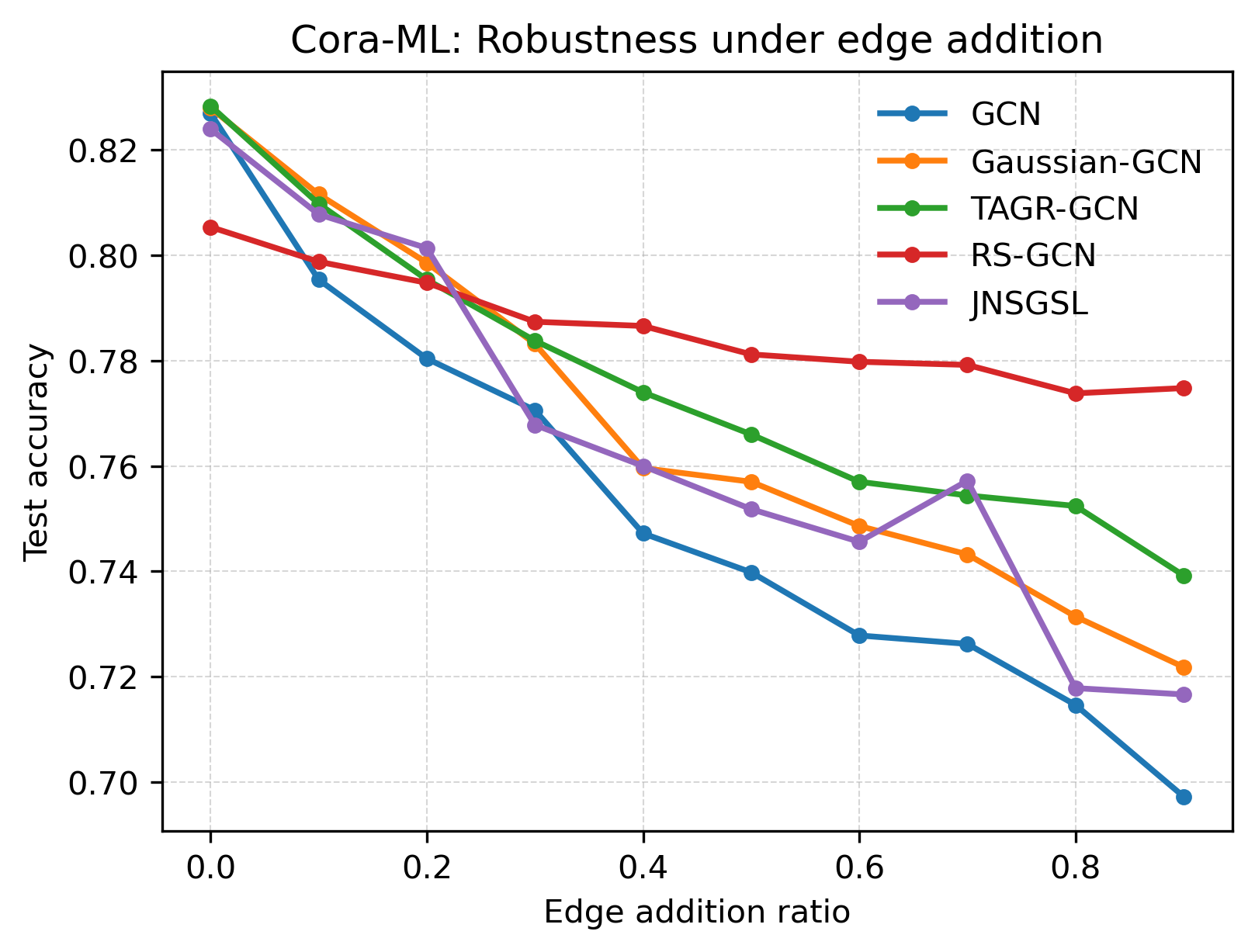
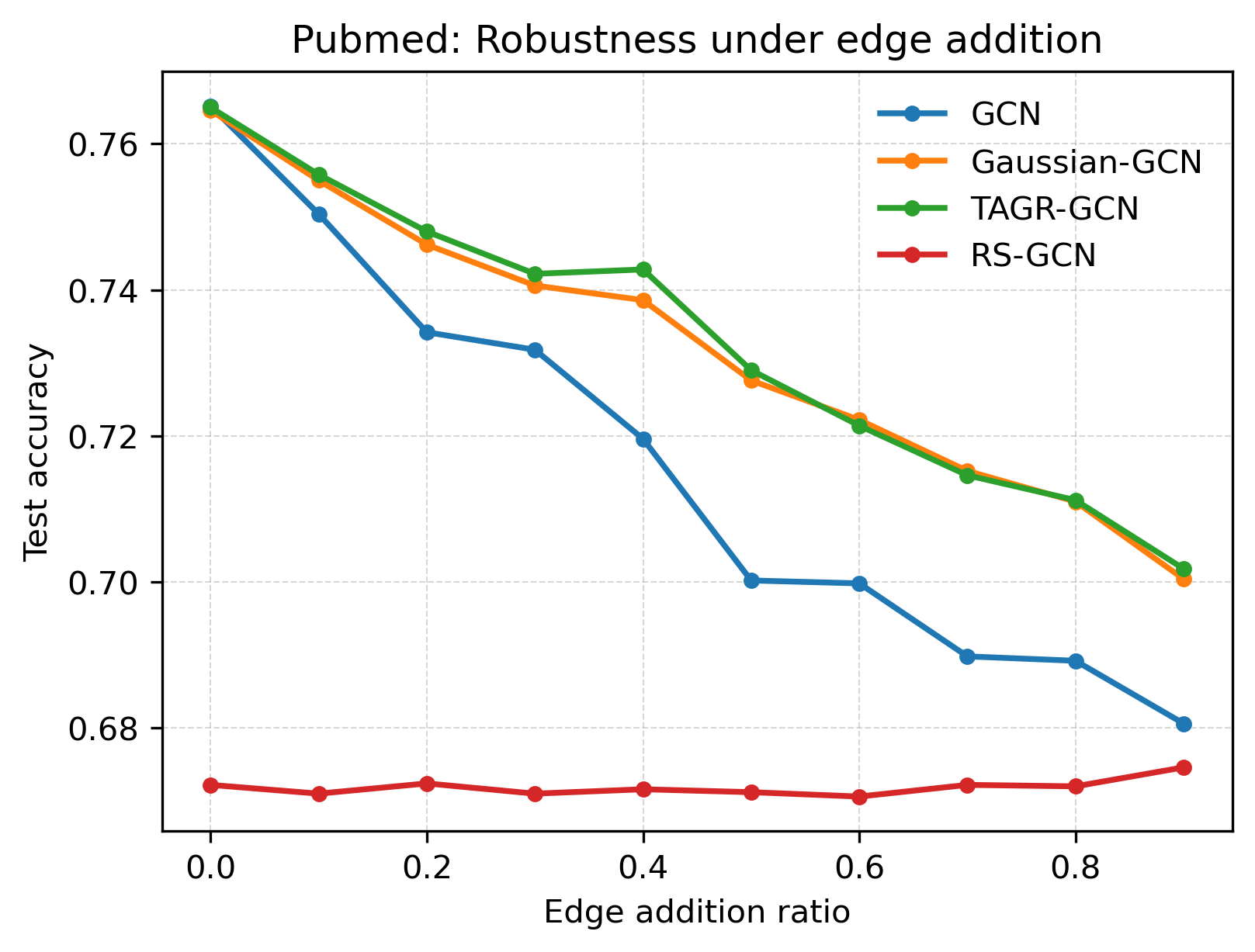
Figure 1: TAGR and Gaussian-GCN remain stable under increasing edge-addition noise, while vanilla GCN degrades rapidly. RS-GCN is particularly competitive on some datasets in high-noise addition settings.
When increasing the ratio of random edge additions, vanilla GCN exhibited rapid degradation, while TAGR-GCN and Gaussian-GCN maintained significantly higher mean accuracy across datasets, confirming strong resistance to spurious message-passing paths. Particularly on Pubmed, TAGR-GCN achieved the highest stability as the proportion of added edges increased.
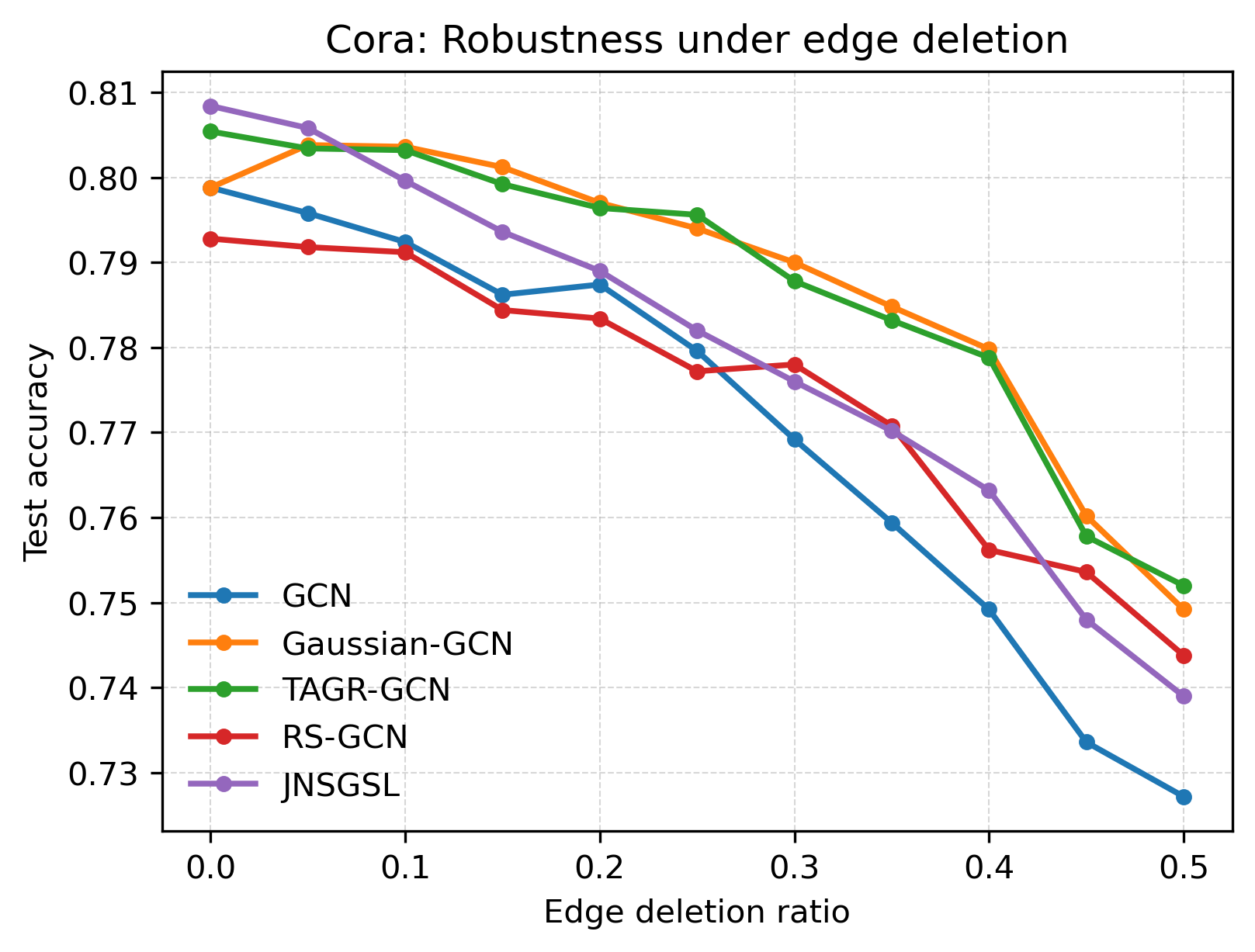
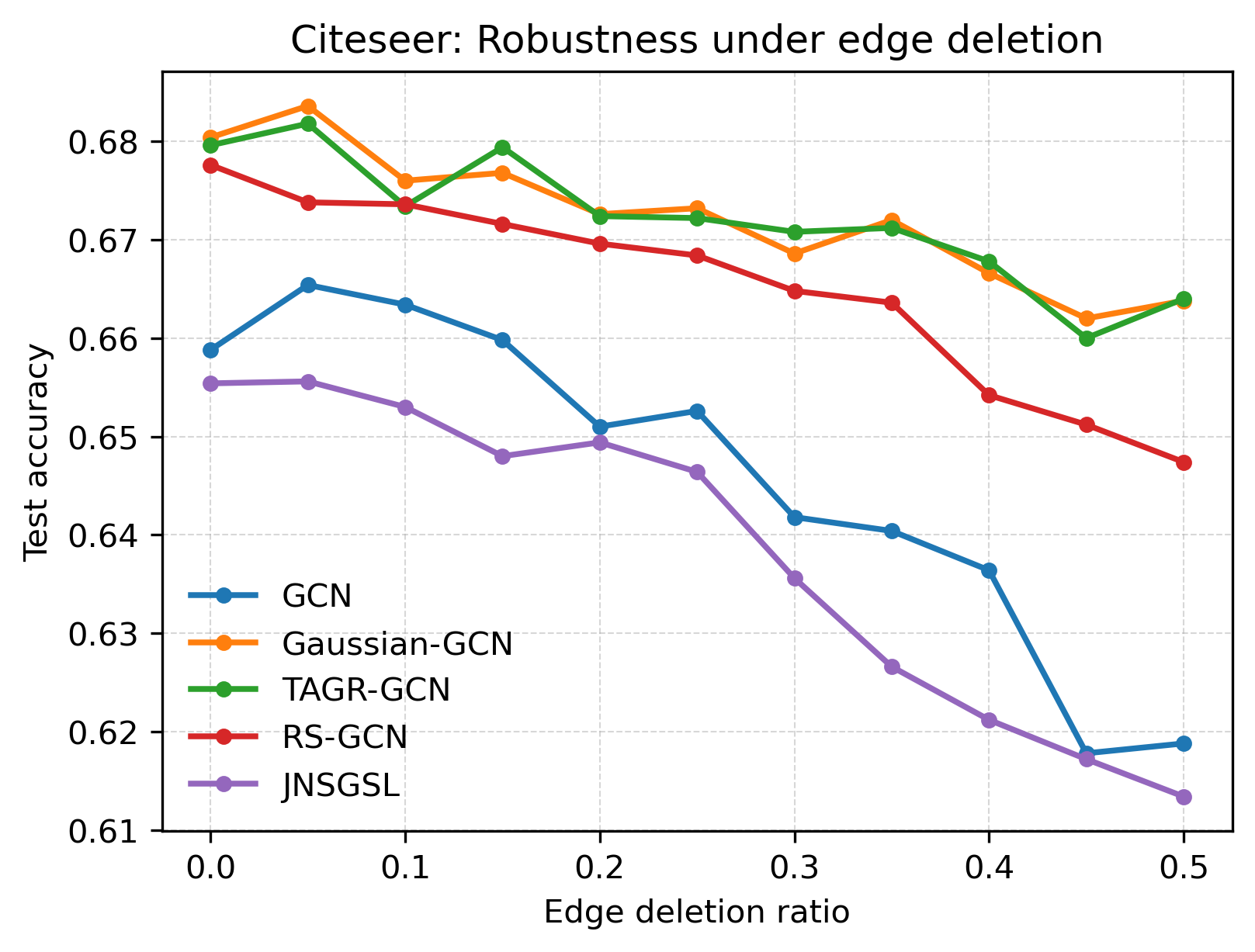
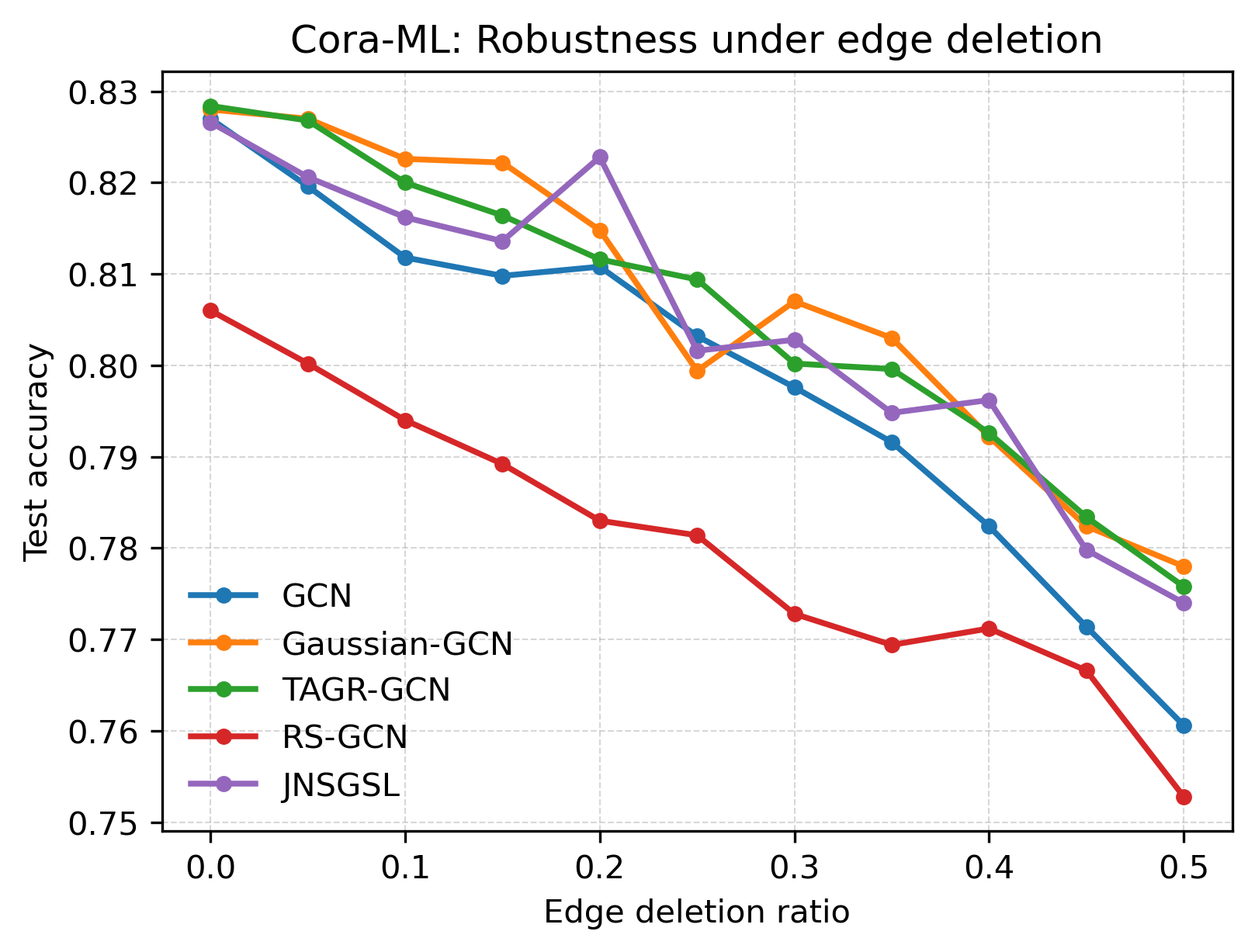
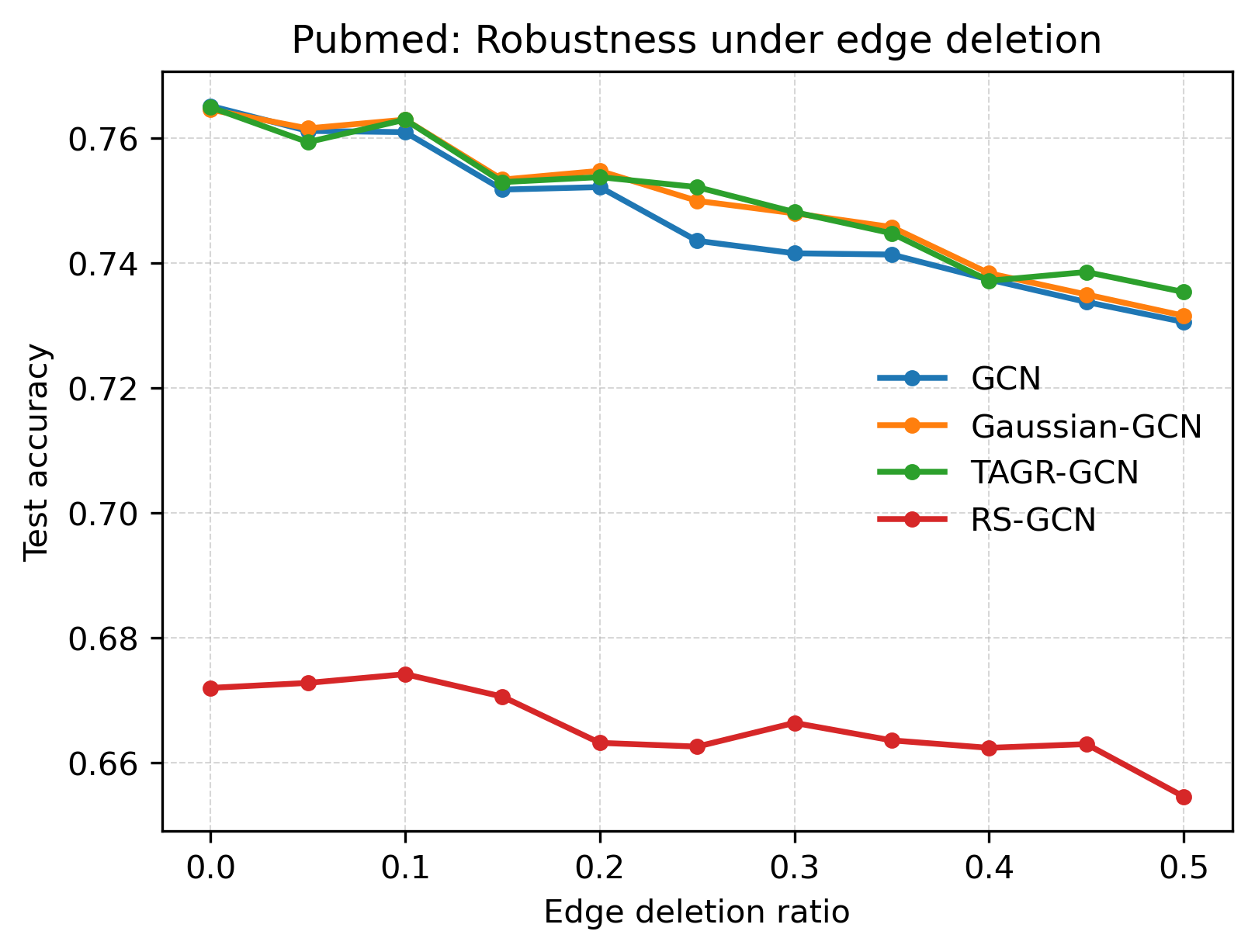
Figure 2: Under edge-deletion, TAGR-GCN and Gaussian-GCN maintain accuracy, indicating effective recovery of propagation paths with feature-based repair.
Similar trends were found under edge deletion. As observed edges were removed, standard GCN performance declined sharply, but TAGR-GCN and Gaussian-GCN again remained significantly above the baseline, especially at higher deletion rates. This demonstrates that feature-driven graph repair successfully recovers missing propagation neighborhoods.
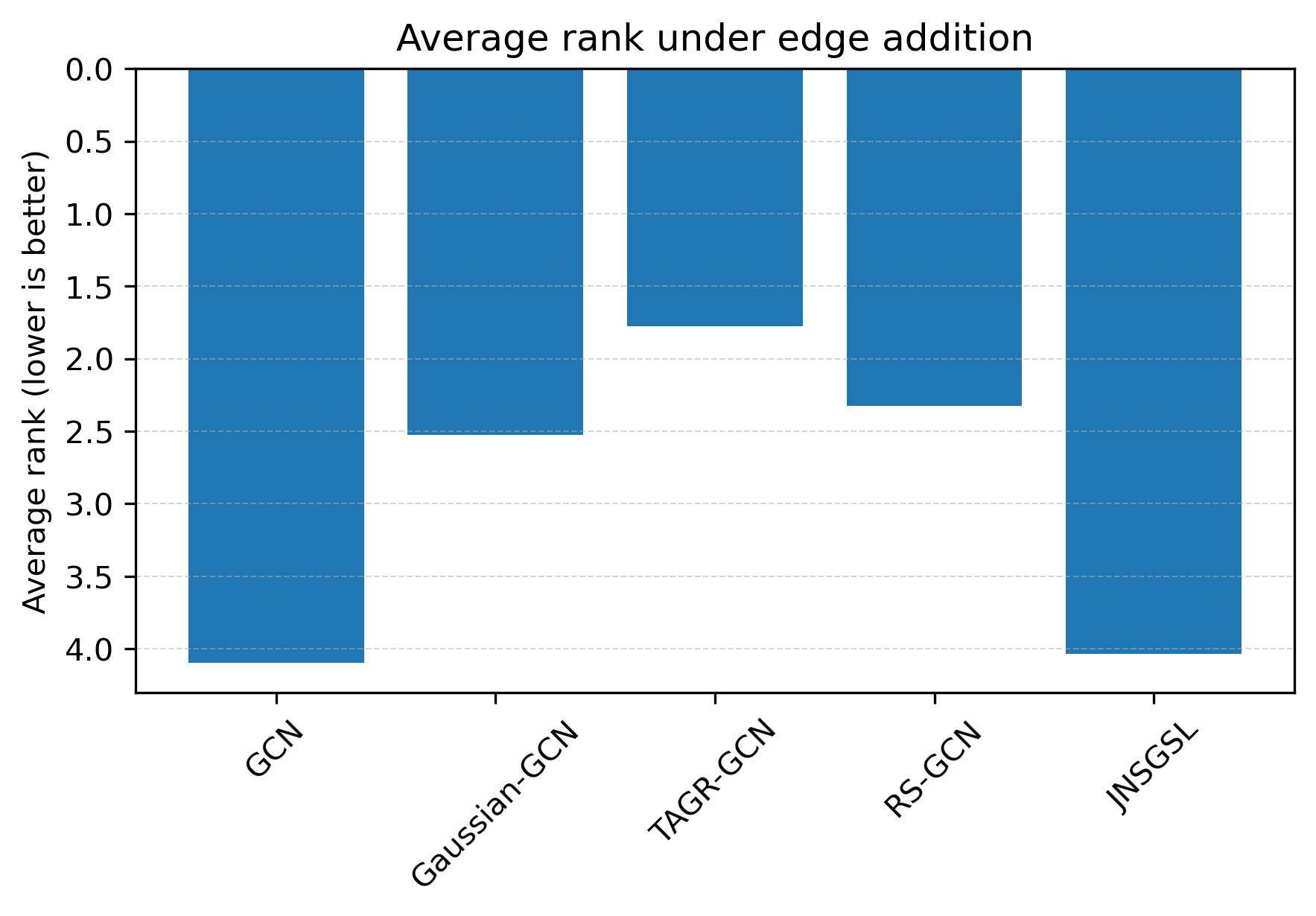
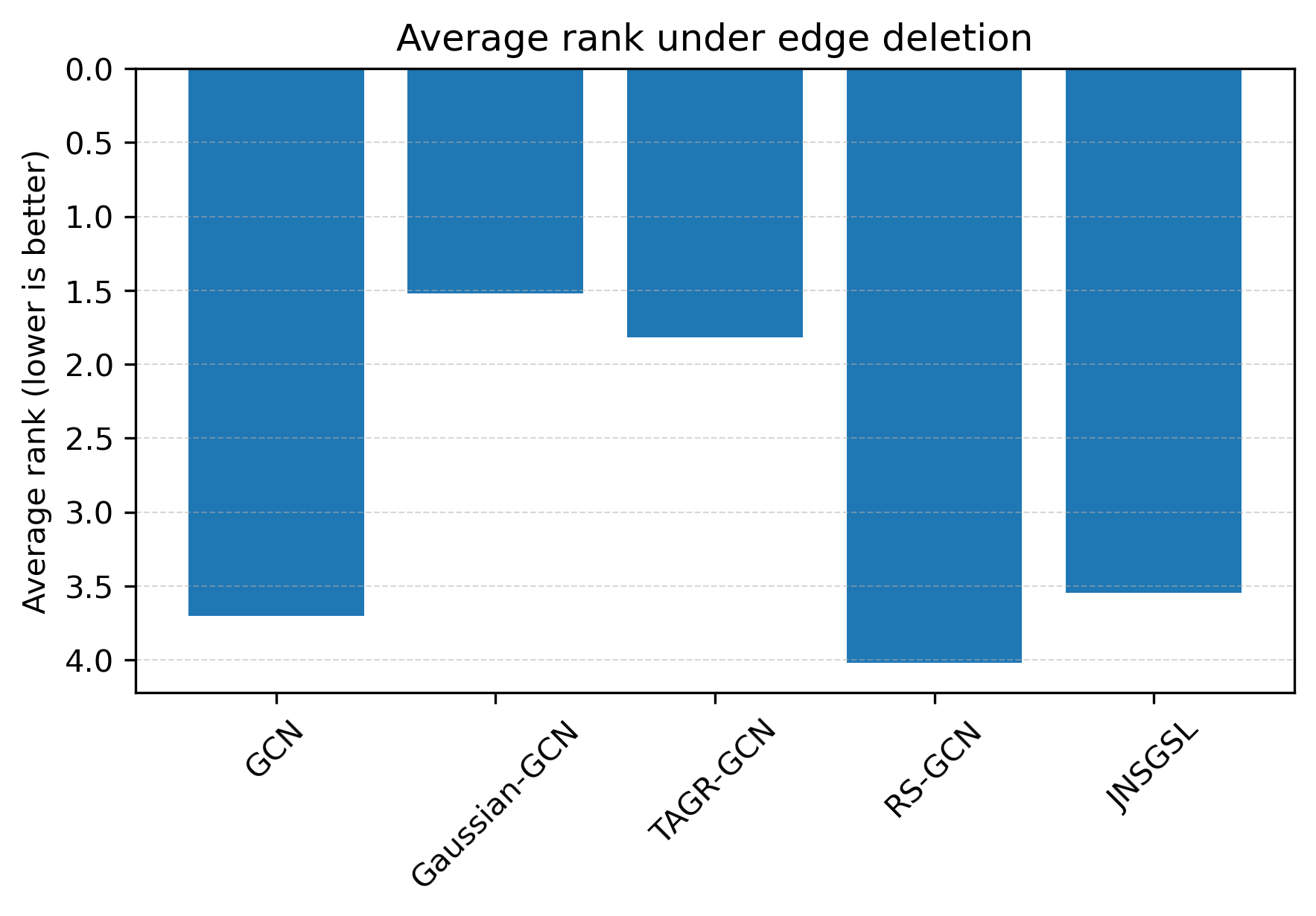
Figure 3: TAGR-GCN achieves the best average rank across all corruption types and perturbation ratios, exhibiting consistent robustness.
TAGR-GCN obtained the best average rank across all datasets and both noise types, outperforming learned repair baselines (RS-GCN) in overall robustness, although learned repair can sometimes be more effective under extreme edge addition.
Mechanistic Analysis
TAGR’s robustness stems from two key mechanisms:
- Feature-based Repair as Dominant Factor: The Gaussian feature-neighborhood graph is the principal source of gains, demonstrated by strong improvements over vanilla GCN—even without the topology-aware residual.
- Topology-aware Residual as Stabilizer—or Active Repairer:
While the residual typically yields modest stability improvements in feature-dominant graphs, analysis on smaller or structure-sensitive graphs (e.g., Cornell) shows it can play a decisive role, substantially increasing accuracy over Gaussian-only repair.
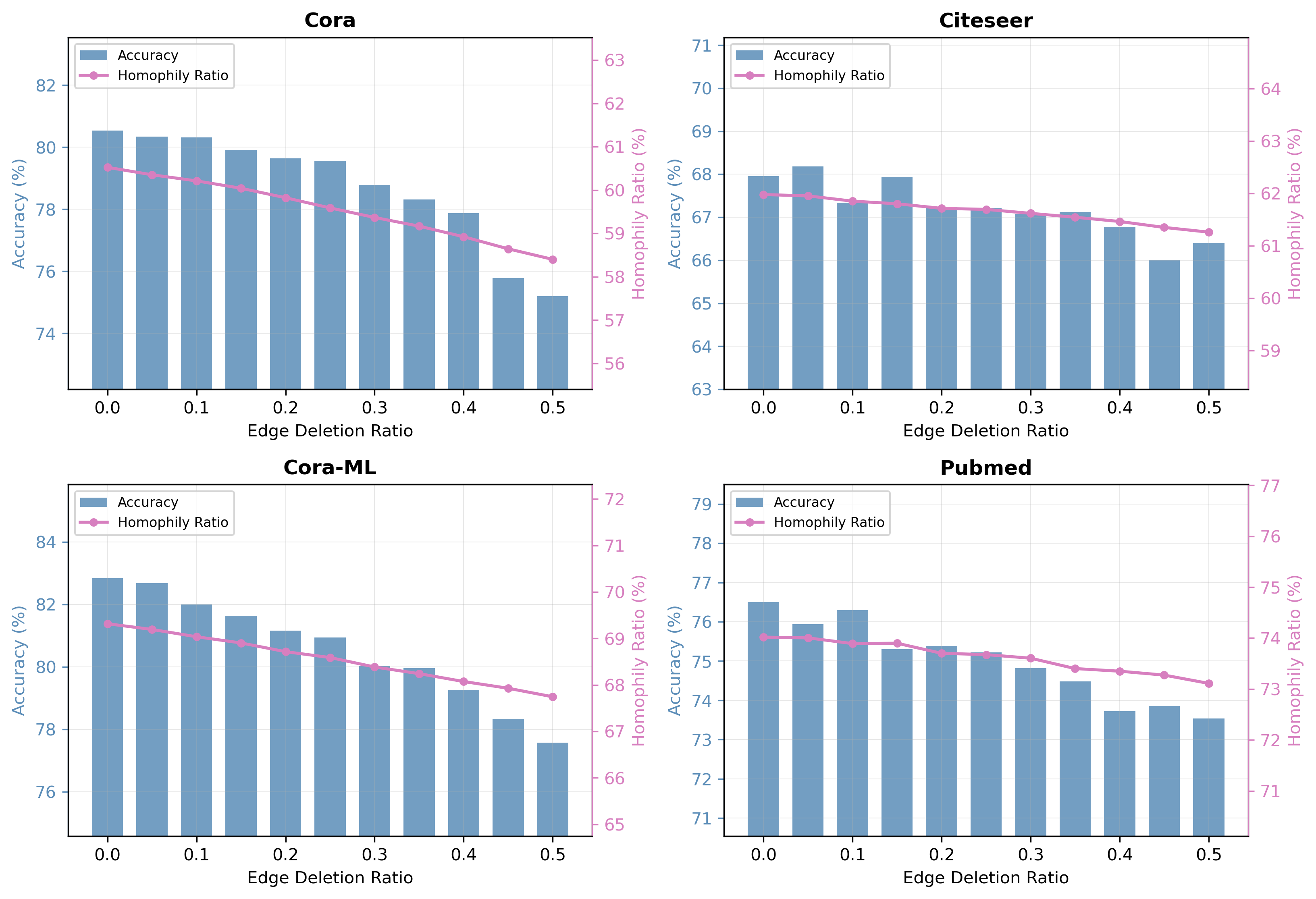
Figure 4: Under edge deletion, TAGR-GCN’s accuracy decreases smoothly, but homophily in the repaired graph remains stable, highlighting resilience via feature-neighborhood restoration.
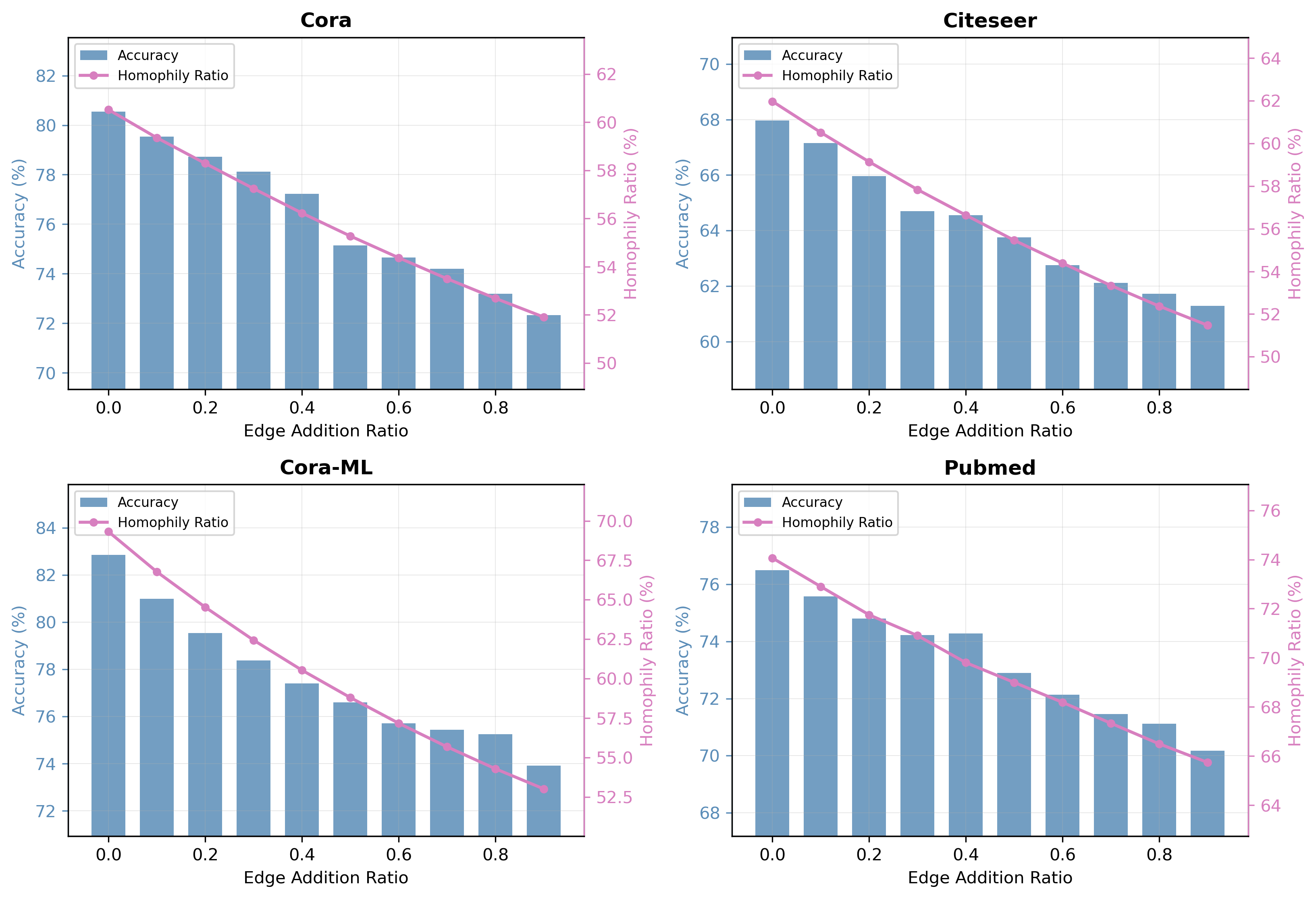
Figure 5: Under edge addition, both test accuracy and homophily drop with spurious edge insertions—spurious inter-class edges remain a significant challenge even after repair.
Homophily analyses further demonstrate that, under deletion, TAGR preserves a high rate of label-consistent edges in the repaired graph. Under noise injection (addition), both the homophily ratio and accuracy decline, underlining the challenge posed by random inter-class connectivity even after repair.
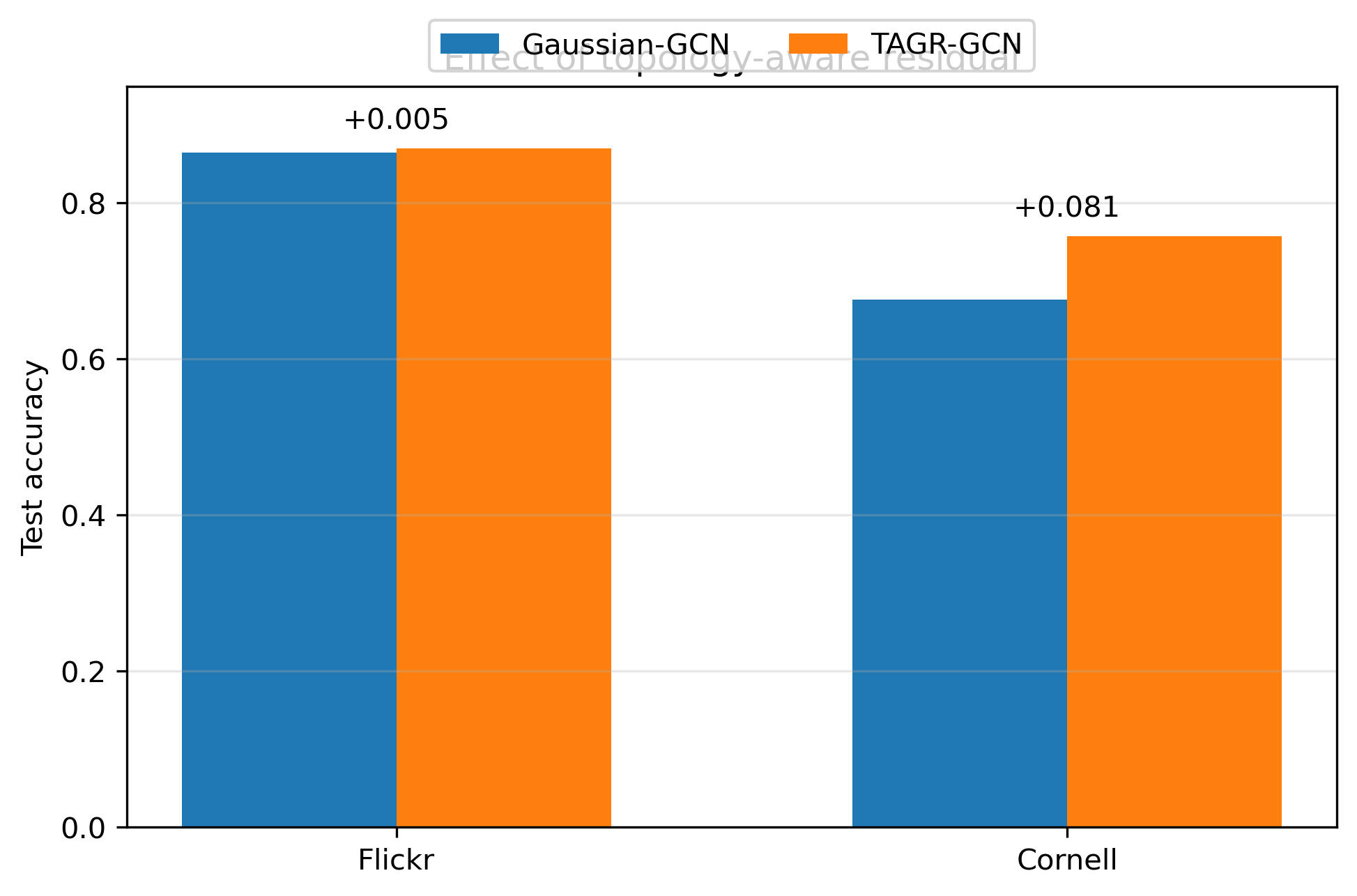
Figure 6: On Flickr and Cornell, TAGR-GCN outperforms Gaussian-GCN by a moderate margin on Flickr and by a large margin on Cornell, evidencing the residual’s impact in structure-sensitive regimes.
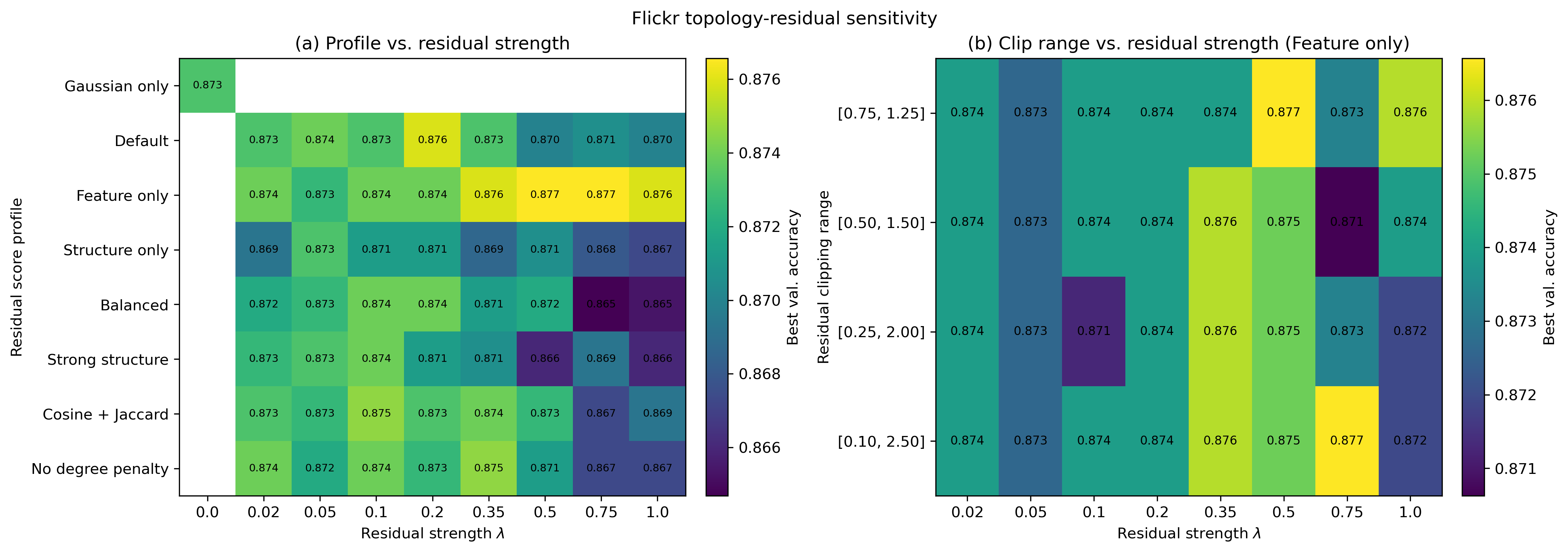
Figure 7: On Flickr, TAGR's validation performance is relatively insensitive to exact residual design; the high-performing region is broad.
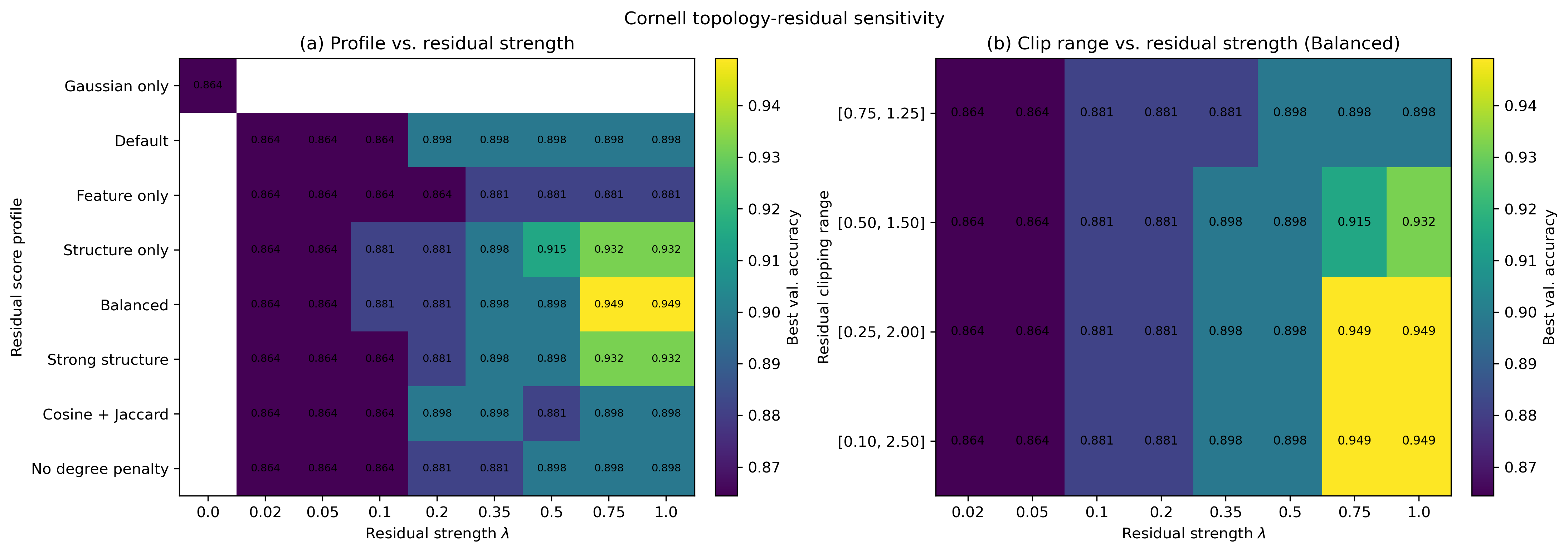
Figure 8: On Cornell, validation performance for TAGR is highly sensitive to residual profile; stronger, broader residuals yield the best results, reflecting the importance of topology-aware signals in small structured graphs.
Theoretical and Practical Implications
TAGR reframes the robustness problem in GNNs as one of pre-training, lightweight graph repair rather than in situ structure learning or aggressive denoising. The framework is compatible with arbitrary GNN architectures and avoids the optimization burdens of bilevel graph-learning models or the risk of overfitting dense learned adjacency matrices. The twin design—feature-driven repair for missing edges and topology-aware weighting for spurious or unreliable edges—offers interpretable and modular improvements to message-passing structure.
Numerical results highlight the nontrivial benefit of even simple, locally-adaptive, and interpretable repair rules. Notably, while learned repair can adapt more aggressively to severe noise regimes, the deterministic and sparse TAGR mechanism matches or exceeds such methods in broad practical settings.
Future implications include a path toward more adaptive repair operators that could exploit task feedback, accommodate feature noise, or extend to temporal, heterogeneous, and inductive graph settings. Integration with pretext tasks or unsupervised structure learning may augment or further target repair strategies.
Conclusion
TAGR delivers a highly effective and efficient approach to graph robustness, combining adaptive feature-based edge addition and topology-aware residual reweighting in a sparse, modular pre-processing step. The method achieves strong robustness across diverse datasets and corruption regimes, substantially improving or matching the performance of learning-intensive baselines. The analysis elucidates the distinct contributions of both feature and structure-driven repair, revealing dataset-dependent dynamics. Overall, TAGR exemplifies the utility of interpretable, carefully engineered repair for reliable GNN message passing, and defines a promising direction for future robust graph learning research.

