- The paper demonstrates that structured graph connectivity in E-I TLNs leads to sequential chaotic oscillations via metastable fixed point transitions.
- It employs analytical graph rules to identify fixed point supports under varied inhibition regimes, distinguishing dynamics on path and cycle graphs.
- The study highlights that variations in inhibitory timescale critically modulate chaos and attractor stability, offering insights into neural sequential processing.
Sequential Chaotic Oscillations in Excitatory-Inhibitory Threshold-Linear Networks
Introduction and Motivation
The study investigates the emergence of sequential chaotic oscillations (SCOs) in excitatory-inhibitory threshold-linear networks (E-I TLNs), a class of piecewise-linear recurrent neural networks where both excitatory and inhibitory nodes interact deterministically through ReLU nonlinearities. The motivation is rooted in biological and theoretical neuroscience, specifically the manifestation of metastable states and sequential dynamics observed in neural ensembles, such as taste-specific transient state transitions in the rat gustatory cortex (Figure 1). Unlike previously proposed mechanisms such as heteroclinic channels that require fine structural tuning, or high-dimensional chaotic itinerancy that leads to irregular, unpredictable transitions, E-I TLNs allow for graph-ordered sequences of metastable attractor ruins under constant input, providing an analytically tractable and structure-governed framework for studying sequential dynamics.
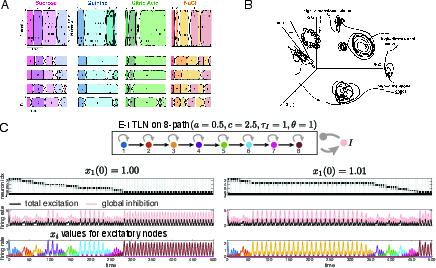
Figure 1: Empirical and computational motivation for sequential chaotic oscillations: taste-specific metastable state sequences in rat cortex, schematic depiction of chaotic itinerancy, and SCOs in an 8-path E-I TLN.
E-I TLNs extend the combinatorial threshold-linear network (CTLN) framework to include an explicit global inhibitory node. The network is constructed from a directed graph on n excitatory populations plus a single inhibitory unit, with connectivity matrix W satisfying Dale's law (Figure 2). Parameters include: excitation strength a>0, inhibition strength c>0, external drive θ>0 (for excitatory units), and inhibitory timescale τI>0. The dynamics are governed by
dtdxi=−xi+[j=1∑nWijxj+WiIxI+θ]+(i=1,…,n) τIdtdxI=−xI+[j=1∑nWIjxj]+
with [⋅]+ denoting the ReLU nonlinearity. The network regimes are classified according to (a,c): weak ($0W0), and strong (W1) inhibition.
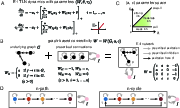
Figure 2: Graph-based E-I TLN definition, connectivity construction from a graph W2, parameter regime partition, and focus on path and cycle graph families.
Fixed Point Structure on Paths and Cycles
The central analysis leverages new and extended graph rules to determine all fixed point supports ("e-supports") of E-I TLNs based on the underlying directed graph W3 and parameters W4. For path graphs ("W5-paths") and cycle graphs ("W6-cycles"):
- Paths:
- Strong inhibition (W7): All nonempty subsets of nodes support fixed points; W8.
- Moderate inhibition (W9): Only the terminal node supports a fixed point (singleton).
- Weak inhibition (a>00): Only the full-support fixed point exists.
- Cycles:
- Strong inhibition: All nonempty subsets support fixed points.
- Moderate inhibition: Only the full-support fixed point exists if a>01.
- Weak inhibition: No fixed point if a>02.
Rigorous criteria for existence and uniqueness of fixed points and their stability follow from nondegeneracy conditions and graph-structural properties established in theorems within the manuscript.
Emergence and Characterization of Sequential Chaotic Oscillations
Dynamics for a>03-Paths
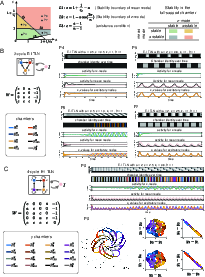
For strong inhibition and sufficiently slow inhibition timescale (a>04 large), singleton fixed points become unstable and support the formation of multiple chaotic attractors (Figure 3). A bifurcation leads to the birth of SCOs: the system trajectory transiently dwells near successive unstable single-node attractor ruins, transitioning in the graph's directed order. Remarkably, the determinism of the graph dictates the sequence, while the dwell times remain irregular and highly sensitive to initial conditions. The E-I oscillatory mechanism provides chaotic, prolonged activation for each node.
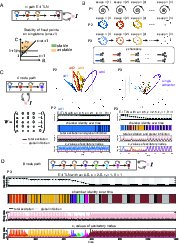
Figure 3: Path-ordered sequential chaotic transitions in strong-inhibition E-I TLNs, with explicit demonstration of emergent attractor structure and chaotic trajectories.
Dynamics for a>05-Cycles
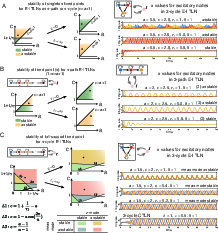
On cycle graphs, the SCO phenomenon extends to high-dimensional chaos involving all a>06 singleton attractor ruins, where transitions occur in a persistent ordered cycle (Figure 4). The transition among attractor ruins is organized by the underlying cycle, with the overall dynamics remaining structurally constrained yet unpredictable in dwell durations.
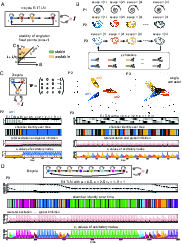
Figure 4: Cycle-ordered SCOs on a>07-cycles, including multiple coexisting chaotic attractors, sequential decay, and cyclic switching as dimension increases.
Attractors around Full-support Fixed Points
Beyond SCOs, E-I TLNs on cycles with unstable full-support fixed points exhibit rich attractor landscapes. A decomposition into a>08-mode (captures excitatory differences) and mean mode (captures total activity) reveals regions supporting:
Effect of Inhibitory Timescale
The inhibitory timescale c>02 critically regulates stability and the possible emergence of chaos:
Theoretical and Practical Implications
The results establish that graph-based E-I TLNs, generated via minimal deterministic nonlinearities (ReLU), can robustly support sequential chaotic dynamics under constant input conditions. This provides a plausible dynamical substrate for sequential metastability and itinerant processes observed in cortical and other neural systems, without recourse to stochastic inputs or high-dimensional chaos for sequence organization. The model provides:
- An explicit mechanism by which underlying connectivity (graph structure) directs sequential order, while chaos governs irregular dwell times.
- Analytical and numerical accessibility: Fixed point existence and stability derive from algebraic graph rules, applicable beyond moderate inhibition (where CTLN theory previously held).
- A bridge between structured, metastable regime transitions and the complexity of natural neural ensemble activity, including weak/transient population oscillations and sequential neural manifolds.
On a practical level, this work suggests that low-dimensional, piecewise-linear networks suffice to recapitulate crucial features of biological sequential dynamics. This opens prospects for the use of E-I TLNs as interpretable modules in computational neuroscience and for the analysis or design of artificial neural circuits exhibiting flexible, yet graph-controlled, sequence generation.
Future Directions
Immediate extensions include:
- Mathematical characterization of the bifurcation structure and Lyapunov exponents associated with SCOs.
- Systematic exploration of larger, more complex graph motifs beyond paths and cycles, to generalize the sequential chaos mechanism to richer, modular network architectures.
- Application to data-driven models, connecting the graph-based theory with experimentally observed sequential population codes and transient oscillatory phenomena across multiple brain regions.
- Analytical study of the impact of noise, heterogeneity, and time-varying inputs.
Conclusion
This study introduces and systematically analyzes sequential chaotic oscillations in graph-based excitatory-inhibitory threshold-linear networks. Through a combination of graph-theoretic fixed point characterization and numerical dynamical systems analysis, it demonstrates that deterministic network structure alone can give rise to graph-ordered, chaotic sequences of metastable states. These findings advance the theoretical understanding of sequential information processing in neural circuits and provide a minimal, analytically tractable framework for studying chaotic itinerancy, metastability, and sequence generation in recurrent networks.