- The paper derives leading higher-derivative corrections to the RN metric using worldline QFT, establishing modifications at order O(GQ²/r⁴).
- It provides both perturbative and all-orders solutions that link higher-derivative couplings with altered thermodynamic properties and extremality bounds.
- Observational implications are explored via black hole shadows, setting constraints on the coupling parameters in line with the weak gravity conjecture.
Higher-Derivative Corrections to Reissner–Nordström Black Holes from Worldline QFT
Introduction and Motivation
Higher-derivative operators in effective field theory (EFT), notably curvature-photon couplings of the form RF2, provide essential corrections to Einstein–Maxwell theory, arising from integrating out massive fields or from string-theoretic α′ expansions. These modifications affect black hole spacetimes with charge, particularly the Reissner–Nordström (RN) solution, by altering their extremality condition, thermodynamics, and electromagnetic response. This work systematically analyzes the corrections induced by general parity-even RF2 and R2 operators on the RN solution, providing both perturbative QFT-based results in the classical (post-Minkowskian) regime and all-orders results via direct solution of the field equations. Benchmark examples include the Drummond-Hathrell (DH) one-loop QED action and the ghost-free, gauge-invariant Horndeski vector-tensor theory.
Worldline Quantum Field Theory and Post-Minkowskian Expansion
The authors utilize the first-quantized worldline formalism to compute classical backgrounds as limits of scattering amplitudes, enabling transparent power counting in ℏ and control over the generation of higher-derivative terms. The static metric and electromagnetic potential sourced by a point charge are reconstructed from worldline diagrams, with black hole parameters mapping to source mass M and charge Q.
The core result is that the leading higher-derivative (RF2) corrections to the RN metric appear at O(GQ2λi/r4) and can be computed efficiently at one-loop in the worldline expansion using form factor parametrizations of the off-shell currents. The three parity-even couplings λ1,2,3 respectively multiply α′0, α′1, and α′2.
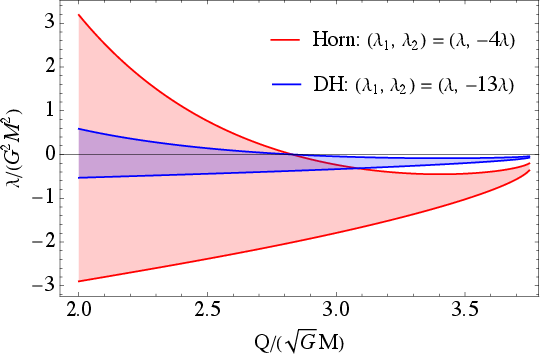
Figure 1: Allowed parameter region for α′3 couplings (α′4) versus α′5 from Sgr A
black hole shadow measurements, shown for Horndeski (red) and Drummond-Hathrell (blue) theories.*
The results for α′6, α′7, and α′8 agree at leading order with previous EFT and amplitude-based approaches. The classical computations, both via worldline QFT and direct solution of higher-derivative-corrected Einstein-Maxwell equations, are explicitly shown to match after suitable gauge transformation to de Donder coordinates.
Structure of the Higher-Derivative Corrections
The general correction to the metric takes the form (specializing to α′9 and omitting higher RF20 and RF21 terms): RF22
The electromagnetic potential receives a
RF23
The RF24 corrections thus modify both the RF25 and higher multipole behavior of the spacetime.
The classical post-Minkowskian results are exact to leading order in the higher-derivative couplings, while all-orders (in RF26) solutions are presented via direct solution of the field equations. Terms proportional to RF27 are shown to be removable at leading order by field redefinitions and do not impact the leading corrections.
Thermodynamics, Extremality, and the Weak Gravity Conjecture
The thermodynamic properties of the corrected black holes are studied in detail. The key findings include:
- The first law of black hole mechanics holds, but the entropy formula acquires a correction:
RF28
(derived both from the first law and the Iyer-Wald formalism).
- The extremality bound (the minimal mass for fixed charge) receives explicit corrections:
RF29
Requiring a non-negative temperature for extremal black holes enforces
R20
which coincides with the weak gravity conjecture (WGC) bound for the class of R21 operators.
- For the Drummond-Hathrell coupling in QED, R22 violate this bound due to negative values, thereby ruling out this theory as an EFT extension consistent with WGC and positive extremal temperature. For the Horndeski case, WGC fixes the sign of R23 in the action. Importantly, the entropy shift at extremality can be negative, so R24 does not coincide with WGC, in contrast to entropy-based arguments in prior work.
Observational Constraints from Black Hole Shadows
The modified spacetime structure alters observable properties, especially the shadow radius, which is now a function of higher-derivative couplings. Leveraging Event Horizon Telescope constraints on Sgr A*, bounds are derived for combinations of R25 as a function of black hole charge, as displayed in Figure 1. For moderate charge, allowed values of R26 are of order unity, representing relatively loose but theory-relevant constraints. For the DH and Horndeski combinations, the admissible region is increasingly restricted as the dimensionless charge increases.
Implications and Outlook
The explicit construction and analysis of higher-derivative black hole backgrounds enable several robust theoretical and phenomenological conclusions:
- Testing the WGC in gravity/EFT: The connection between extremal black hole stability and higher-derivative couplings allows gravity-based probes of UV physics, joining amplitude methods and entropy arguments.
- Breaking of electric-magnetic duality: While the RN solution is duality-invariant, R27 terms generically are not, producing potentially distinct observational signatures for electrically and magnetically charged objects.
- Gravitational wave and black hole shadow probes: Though existing shadow bounds are weak, future multi-messenger observations of lighter black holes or coalescence events could yield competitive or superior bounds on R28 and related operators.
- Rotating black hole generalizations: It is of interest to investigate whether the Newman-Janis construction persists, or is modified, for R29-corrected metrics. The amplitude formalism extended to these setups (see e.g. [Arkani-Hamed et al., (Arkani-Hamed et al., 2019)]) can further clarify this landscape.
Conclusion
This work provides an authoritative and systematic account of higher-derivative corrections to the Reissner–Nordström black hole, incorporating both field theory and amplitude-based methods, computing explicit metrics, thermodynamic properties, and observational signatures induced by general ℏ0 couplings. The results clarify the allowed parameter space, its relation to fundamental theoretical conjectures, and the prospects for future experimental discrimination.