- The paper demonstrates the effectiveness of a convolutional variational autoencoder (CVAE) in identifying low energy excess events through pulse-shape analysis.
- It utilizes simulated and real data to reveal significant pulse-shape deviations, with real signals showing slow pre-pulse components at loss scores above 0.04.
- The CVAE approach enhances CEνNS sensitivity by around 10% and achieves up to 53% LEE rejection, highlighting its potential for rare-event searches.
Pulse-Shape-Driven Anomaly Detection and LEE Discrimination in MINER Sapphire Cryogenic Detectors via Convolutional Variational Autoencoder
Introduction and Background
Low-threshold cryogenic phonon detectors have advanced toward detecting sub-keV events, critically enhancing sensitivity in applications such as CEνNS and rare-event searches. However, these detectors confront a persistent, sharply rising low-energy excess (LEE) background near operational thresholds. LEE, first revealed in solid-state detectors like Ge and CaWO4 in EDELWEISS and CRESST [LEE_CRESST_2019, LEE_EDELWEISS_2019], has since been observed across multiple platforms and materials—showing reproducible behavior after each thermal cycling and resisting association with conventional particle backgrounds, including DM.
The MINER experiment, deployed at Texas A&M using a sapphire (Al2O3) detector, reports LEE at energies ∼200 eV, with increased rates after non-operational warm-up periods (Figure 1). This temporal behavior, combined with mismatch between simulated and observed spectra in the 200–400 eV region, motivates a comprehensive analysis using unsupervised deep-learning techniques capable of capturing waveform-level anomalies without bias from model assumptions.
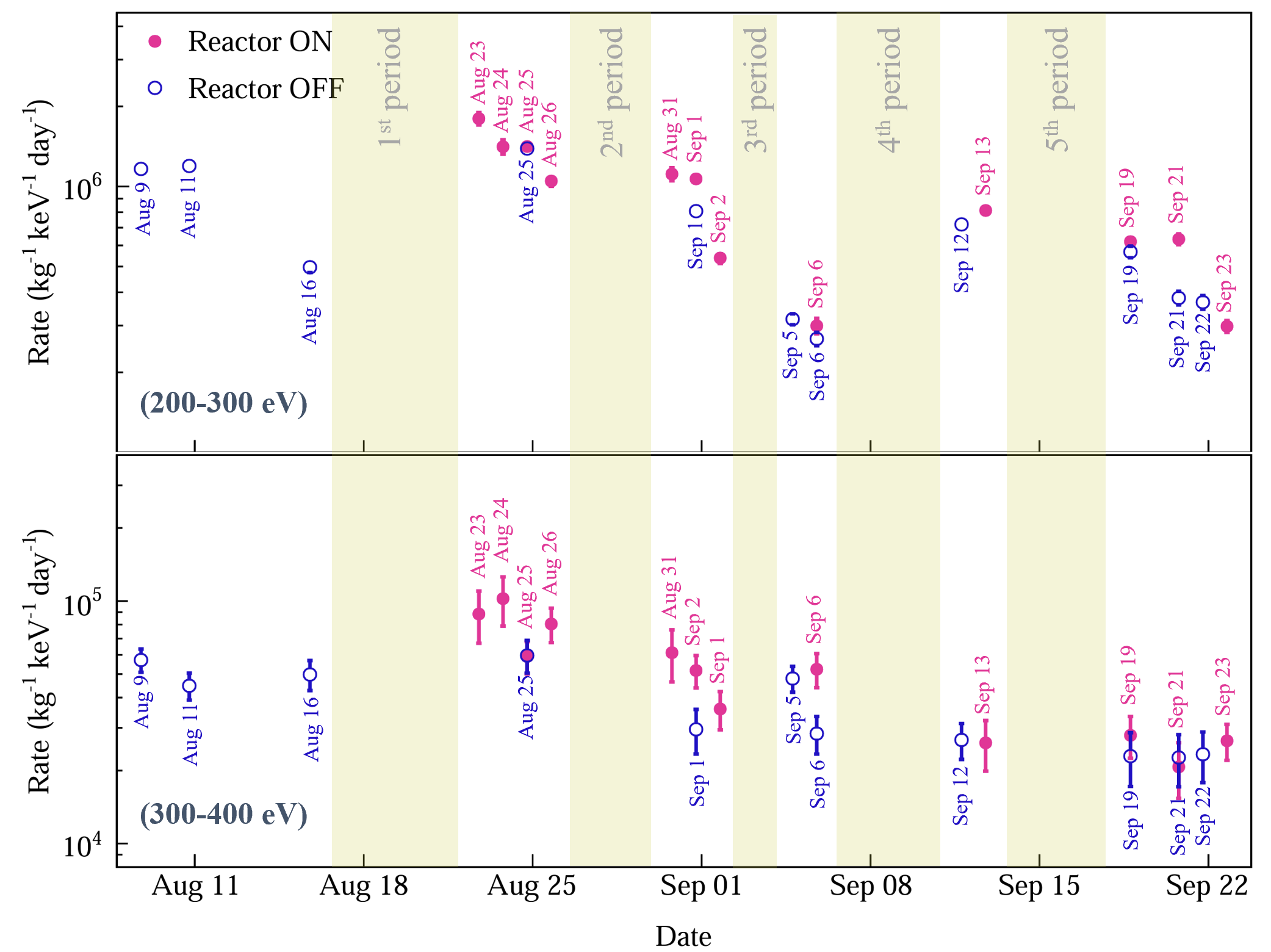
Figure 1: Single-scatter spectrum in the low-energy region, collected over multiple data-taking periods, demonstrating systematic LEE behavior post-warm-ups.
CVAE Architecture and Training
An unsupervised convolutional variational autoencoder (CVAE) framework is utilized to characterize and discriminate LEE events based on pulse-shape deviations. The CVAE is trained on MC-generated ideal signal events—created by injecting detector pulse templates into noise traces selected through rigorous quality criteria (Figure 2).
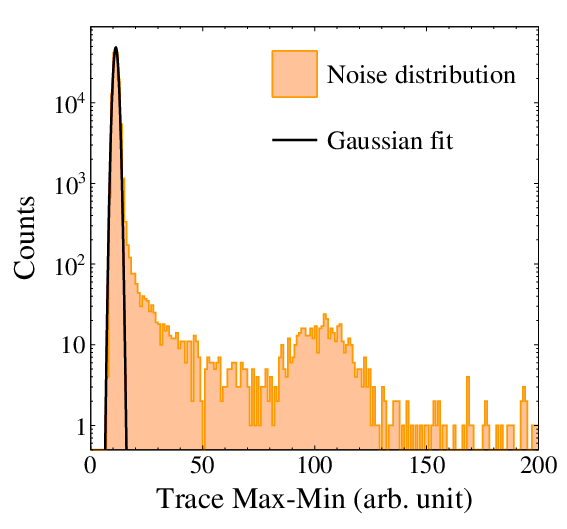
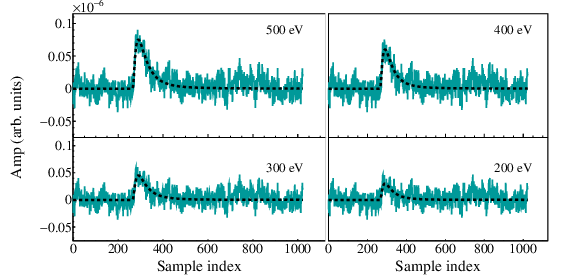
Figure 2: Left: Noise trace selection based on Max–Min distribution; Right: MC-generated pulses compared to ideal pulse templates across energies.
The CVAE architecture comprises encoder and decoder blocks constructed from Conv1D and Leaky ReLU layers, compressing x (pulse of length 1024 samples) into a 256-dimensional latent space parameterized by μ and logσ2, and reconstructing from sampled latent vectors (Figure 3). Training minimizes a composite loss: MSE reconstruction plus KL-divergence regularization, controlled by β=5×10⁻². The loss converges rapidly and generalizes well, as shown by training and validation dynamics over 50 epochs (Figure 4).
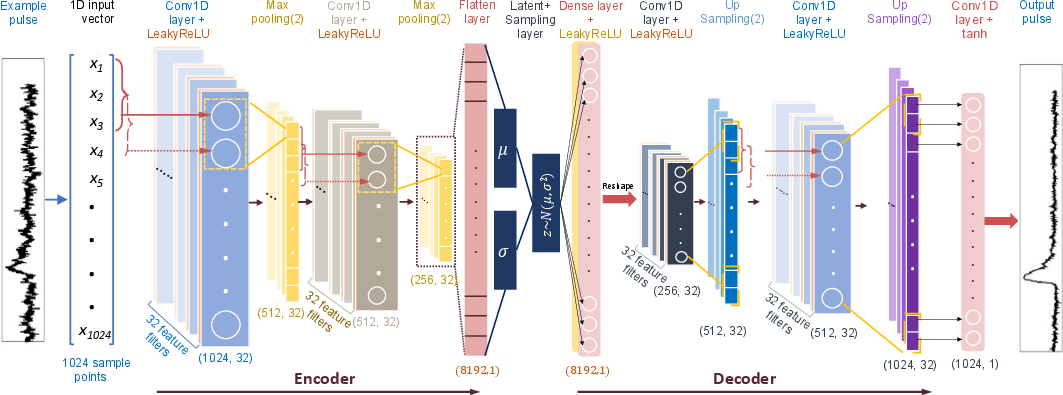
Figure 3: Schematic of CVAE architecture showing encoder, latent space sampling, and decoder for pulse waveform reconstruction.
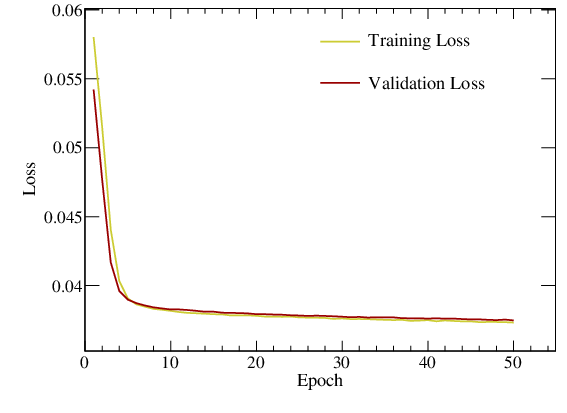
Figure 4: Total loss over training epochs, demonstrating convergence and stability of learning.
Analysis: Loss Score Distributions and Anomaly Template Generation
Upon applying the trained CVAE to real single-scatter events (200–500 eV), the reconstruction loss score distribution for real pulses shows a significant population at higher loss, compared to MC where low loss dominates (Figure 5). This indicates pulse-shape deviation in real data characteristic of LEE.
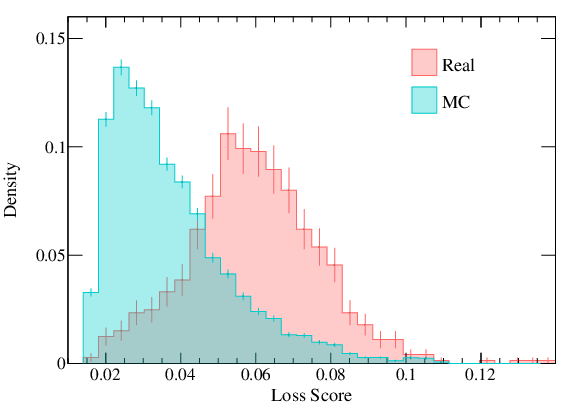
Figure 5: Distribution of CVAE loss scores for MC and real data, highlighting anomalous structure in real pulses.
Templates constructed as averages within loss-score bins reveal that increased loss corresponds to a slow pre-pulse component (Figure 6), raising rise-time relative to MC, especially for loss >0.04. Residual analysis confirms that only real data exhibits these deviations in the specified index range, while MC remains baselined.
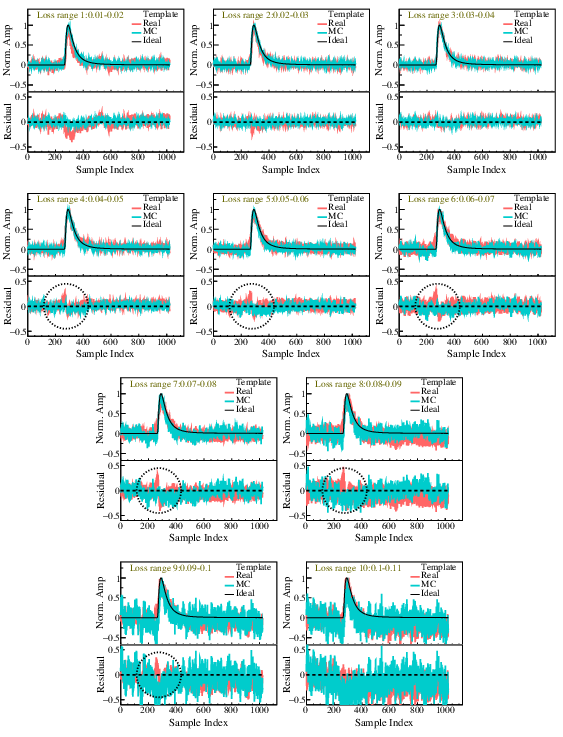
Figure 6: Comparison of real and MC templates across loss score intervals; residuals highlight pronounced LEE-induced deviations.
Rise-Time Estimation via Pulse Filtering
To robustly quantify the rise-time as a discriminant, pulses are processed through four filtering techniques: Savitzky–Golay, Gaussian, Butterworth, and wavelet denoising (Figure 7). Across all filters, rise-time for MC templates remains tightly in 20–40 μs, while real data with high CVAE loss yields rise-times up to three times longer (Figure 8).
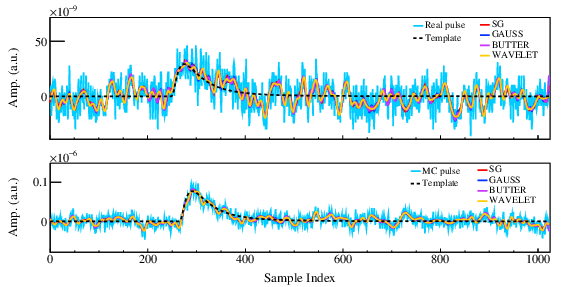
Figure 7: Example of real and MC pulses through various filters, illustrating waveform preservation and noise reduction.
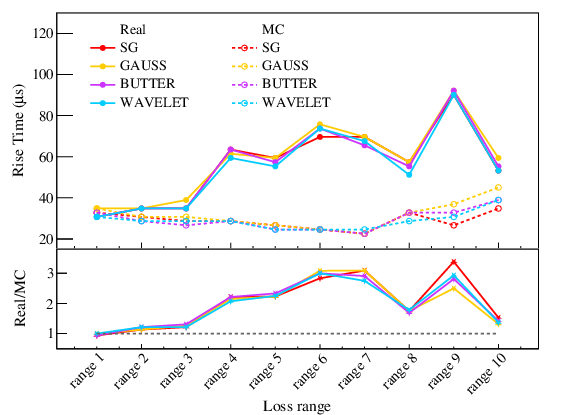
Figure 8: Rise-time distributions and ratios (real/MC) across CVAE loss scores and filter types.
LEE Event Discrimination Pipeline and Spectral Impact
A pipeline is constructed leveraging rise-time as a threshold for LEE discrimination, with receiver operating characteristic (ROC) analysis performed on datasets combining MC and high-loss-score real events (>0.04). The optimal threshold—maximizing the CaWO40 score—provides AUC CaWO410.7 across all filters (Figure 9), indicating moderate discrimination efficacy. The wavelet filter achieves CaWO4253\% LEE rejection at high CaWO43.
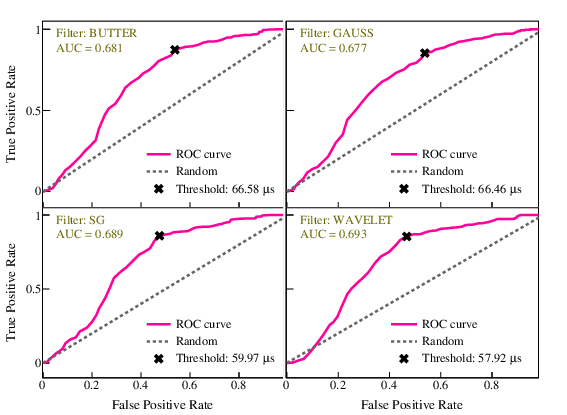
Figure 9: ROC curves for rise-time-based LEE discrimination, showing optimal threshold selection for multiple filters.
Applying the rise-time thresholds to the real dataset yields pronounced suppression of LEE in the energy spectrum, especially in the lowest bins (Figure 10).
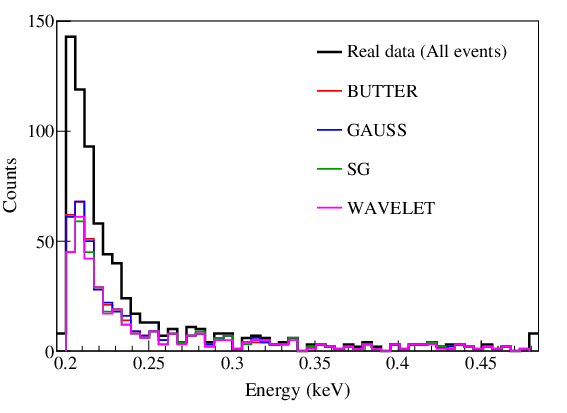
Figure 10: Energy spectra before and after rise-time-based filtering, evidencing LEE suppression effectiveness.
Signal Sensitivity Enhancement
Implementing the rise-time selection (optimally via wavelet filter) reduces background in the critical 200–500 eV ROI, providing a CaWO4410\% improvement in CECaWO45NS significance for MINER at HFIR (Figure 11). Significance in the lowest bin is increased by a factor of CaWO461.4, demonstrating the practical benefit in rare-event searches.
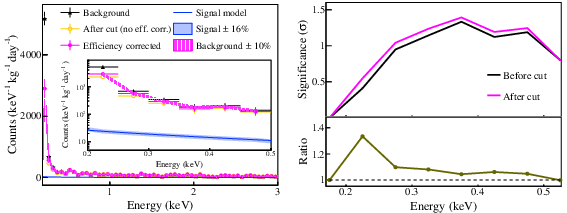
Figure 11: Left: Background and signal models before and after LEE rejection; Right: Bin-wise significance enhancement and corresponding ratios.
Theoretical Implications and Future Prospects
The observed pulse-shape anomalies are consistent with bulk defect or microfracture mechanisms, releasing energy via delayed phonon emission following crystal relaxation post-cooldown [microfracture_LEE, fracture_process]. This scenario explains the temporal regeneration and decay of LEE after thermal cycling. However, a residual LEE remains even after rise-time-based filtering—implying possible surface or sensor-proximal processes, which are not efficiently captured by the slow-component criterion. A dedicated bulk-surface analysis is necessary for comprehensive background understanding.
The CVAE-based approach provides a model-independent, data-driven method for anomaly detection and waveform discrimination, transferable to other cryogenic detector platforms (SuperCDMS, EDELWEISS, NUCLEUS, CRESST) facing similar LEE challenges. This technique augments traditional pulse-shape cuts with robust, unsupervised neural network evaluations, advancing the toolkit for next-generation rare-event searches.
Conclusion
The MINER study demonstrates the utility of unsupervised CVAE pulse-shape analysis in identifying and discriminating LEE events, achieving up to 53\% rejection and enhancing CECaWO47NS sensitivity by CaWO4810\%. The presence of slow pre-pulse components in LEE traces, and their temporal behavior, align with bulk defect/microfracture models. The proposed method is broadly applicable across cryogenic detectors, offering improved background mitigation and enhanced discovery potential. Future directions include refined bulk/surface discrimination, integration with likelihood-based analyses, and extension to new materials and readout technologies.
References:
- "Exploring Low Energy Excess in MINER with sapphire detectors using Convolutional Variational Autoencoder (CVAE)" (2605.31190)
- "Spontaneous generation of athermal phonon bursts within bulk silicon causing excess noise, low energy background events, and quasiparticle poisoning in superconducting sensors" (Chang et al., 22 May 2025)
- "Low-Energy Backgrounds in Solid-State Phonon and Charge Detectors" (Baxter et al., 11 Mar 2025)
- "A semi-supervised approach to dark matter searches in direct detection data with machine learning" (Herrero-Garcia et al., 2021)

