- The paper presents innovations in dense twist defect packing and padding-free patches, boosting planar surface code encoding rates by up to 4.5×.
- It details a hexagonal lattice implementation and twist-based syndrome extraction techniques that reduce physical qubit overhead while maintaining optimal error thresholds.
- The approach supports scalable quantum architectures, enabling practical quantum chemistry simulations with dramatic reductions in resource costs.
Densifying the Planar Surface Code: Architecture and Implications
The paper "A Denser Planar Surface Code" (2605.30455) introduces novel quantum error correction (QEC) primitives and architectural strategies for scalable fault-tolerant quantum computation. By deploying new schemes for the encoding and manipulation of logical qubits in the planar surface code, this work achieves up to a 4.5× improvement in code rate compared to conventional rotated surface code patches. These innovations are validated in realistic circuit-level noise models and are embedded within a comprehensive framework for utility-scale quantum algorithms, especially quantum chemistry applications.
Towards Higher-Density Surface Codes
The surface code is the prevailing topological QEC code due to its high threshold, efficient decoding via minimum-weight perfect matching (MWPM), and feasibility under 2D nearest-neighbor interactions. However, its low encoding rate—a direct consequence of planar boundary conditions—has posed significant resource overheads for applications, especially in "utility-scale" quantum chemistry, which requires hundreds of logical qubits and millions of physical qubits for chemically accurate simulation.
This work addresses these scaling bottlenecks by introducing:
- Padding-free surface code patches using a hexagonal lattice implementation, reducing the bounding box for a distance-d patch from 2(d+1)2 to 2d2 physical qubits.
- Practical, circuit-level realizations of twist defects, enabling non-CSS (e.g., XXYZZ) stabilizers in regular 2D layouts with minimal qubit degree and optimal 6-layer syndrome extraction cycles.
- Yoked, densely-packed twist defect layouts that exploit both spatial and parity-based (iceberg) concatenation, achieving encoding rates up to 4.5 logical qubits per surface code patch footprint.
These developments maintain optimal locality (degree-3 hex connectivity), efficient decodability, and avoidance of distance-reducing hook errors—criteria often unmet by alternative high-rate LDPC, color, or hyperbolic codes.
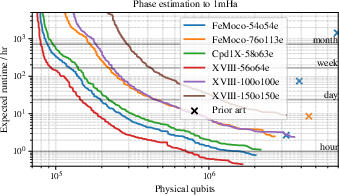
Figure 1: Pareto frontier of physical resources for ground state phase estimation of molecules with ∼100–300 orbitals, showing space-time tradeoffs and order-of-magnitude improvements compared to previous approaches.
The resource implications for representative chemical problems, such as the FeMoco cofactor and ruthenium-based catalysts, are dramatic: chemically accurate ground state estimation is shown feasible in less than a month with 89k noisy superconducting qubits—orders of magnitude smaller than prior art.
Compact Patches and Twist Defect Dense Packing
Compact Padding-Free Surface Code
The work details a compact patch construction where:
- Both X-top and Z-top boundary orientations are realized in a 2d2 bounding box, unlike previous work requiring 2(d+1)2.
- Syndrome extraction cycles alternate between GX and 2(d+1)20 or 2(d+1)21 and 2(d+1)22, circumventing the need for additional layers and complex boundary handling.
- Logical error rates under 2(d+1)23 depolarizing noise appear as 2(d+1)24 for static (2(d+1)25-top) and 2(d+1)26 for dynamic (2(d+1)27-top) configurations, with efficient conversion between orientations for idling or computation.
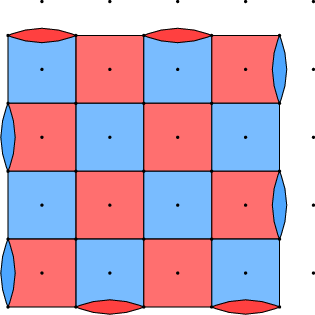
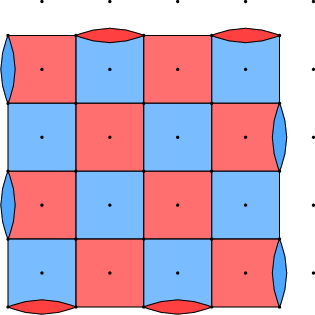
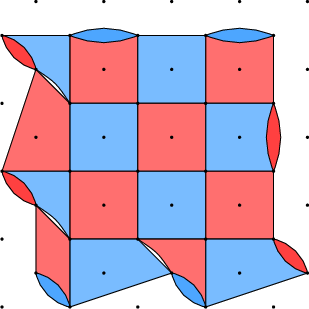
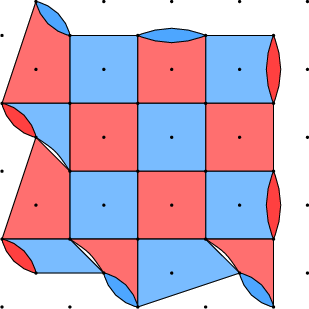
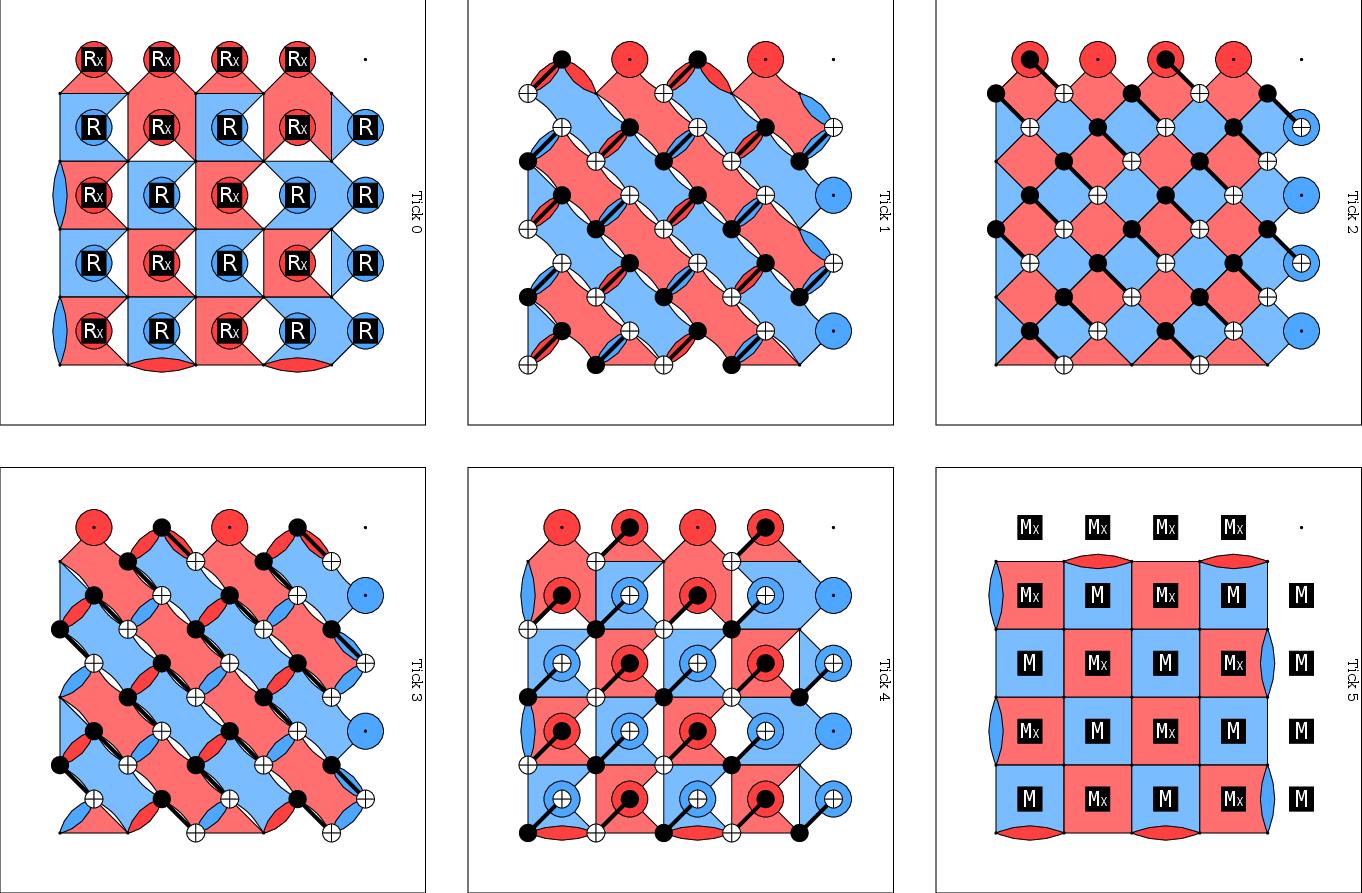
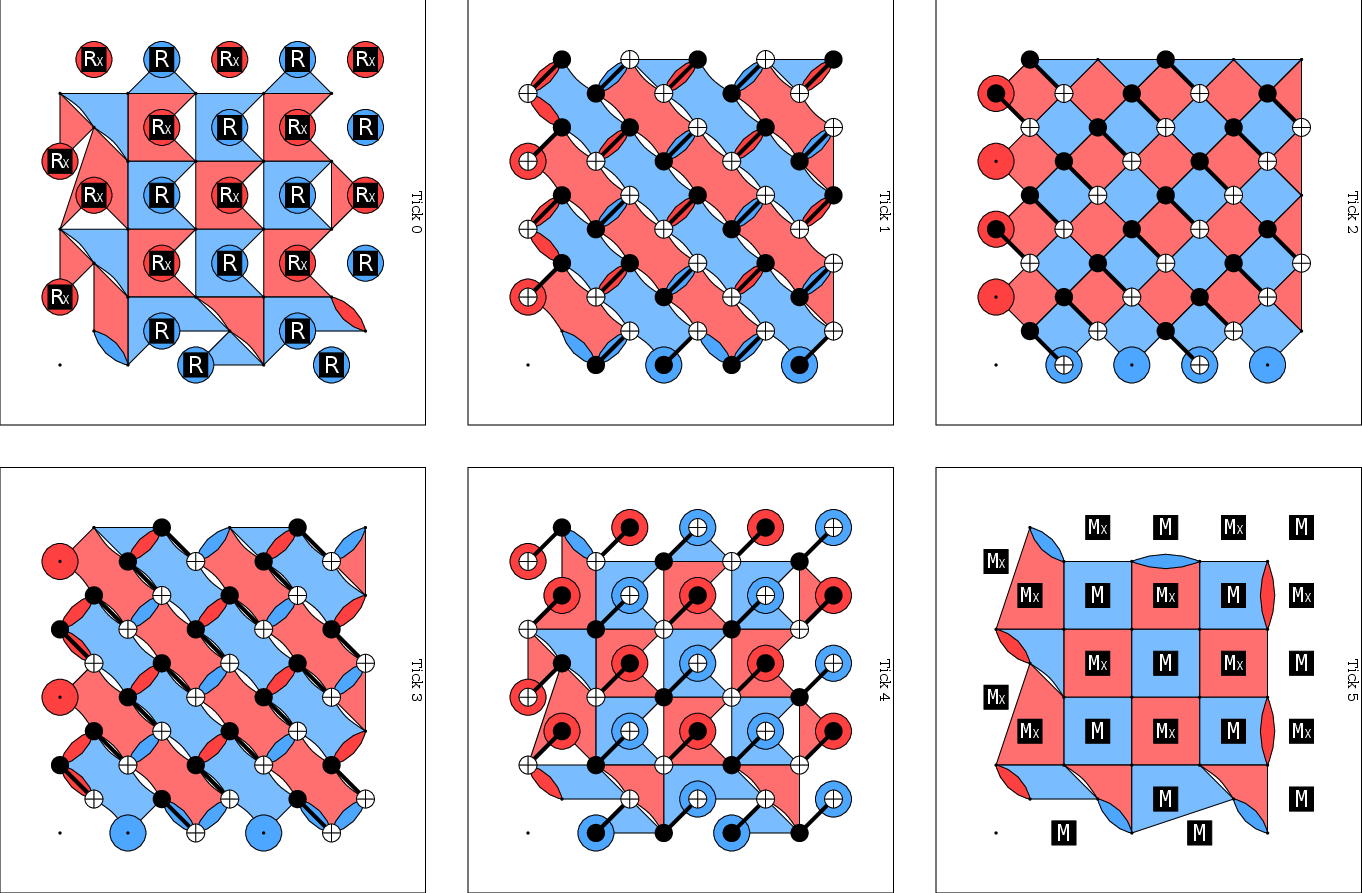
Figure 2: Surface code patch encodings for 2(d+1)28-top and 2(d+1)29-top configurations, demonstrating packed measurement boundaries and optimal qubit utilization.
Optimal Twist Defect Realization
Twist defects—pointlike entities supporting non-CSS stabilizers—unlock higher encoding rates if suitably implemented. The presented approach:
- Implements weight-5 twist stabilizers (2d20) on a regular hex grid using only nearest-neighbor gates, six-layer cycles, and without incurring additional hook-induced distance loss.
- Uses a subsystem code technique with gauge operators to measure high-weight stabilizers efficiently.
- Validates the empirical error scaling for both twist-defect patches and densely-packed arrangements, matching or exceeding singly-encoded patches.
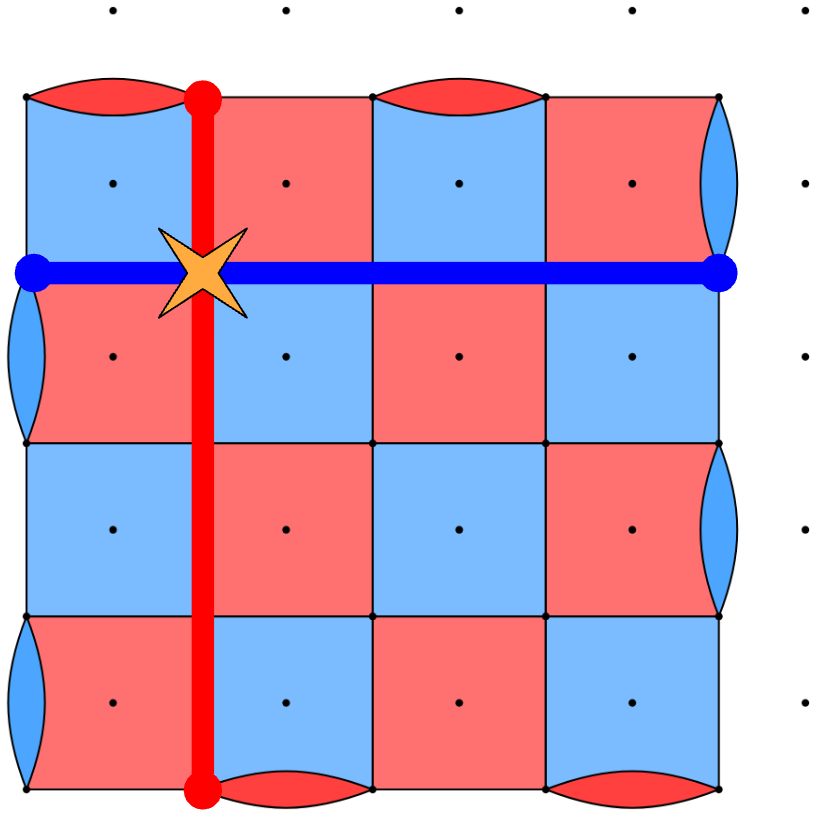
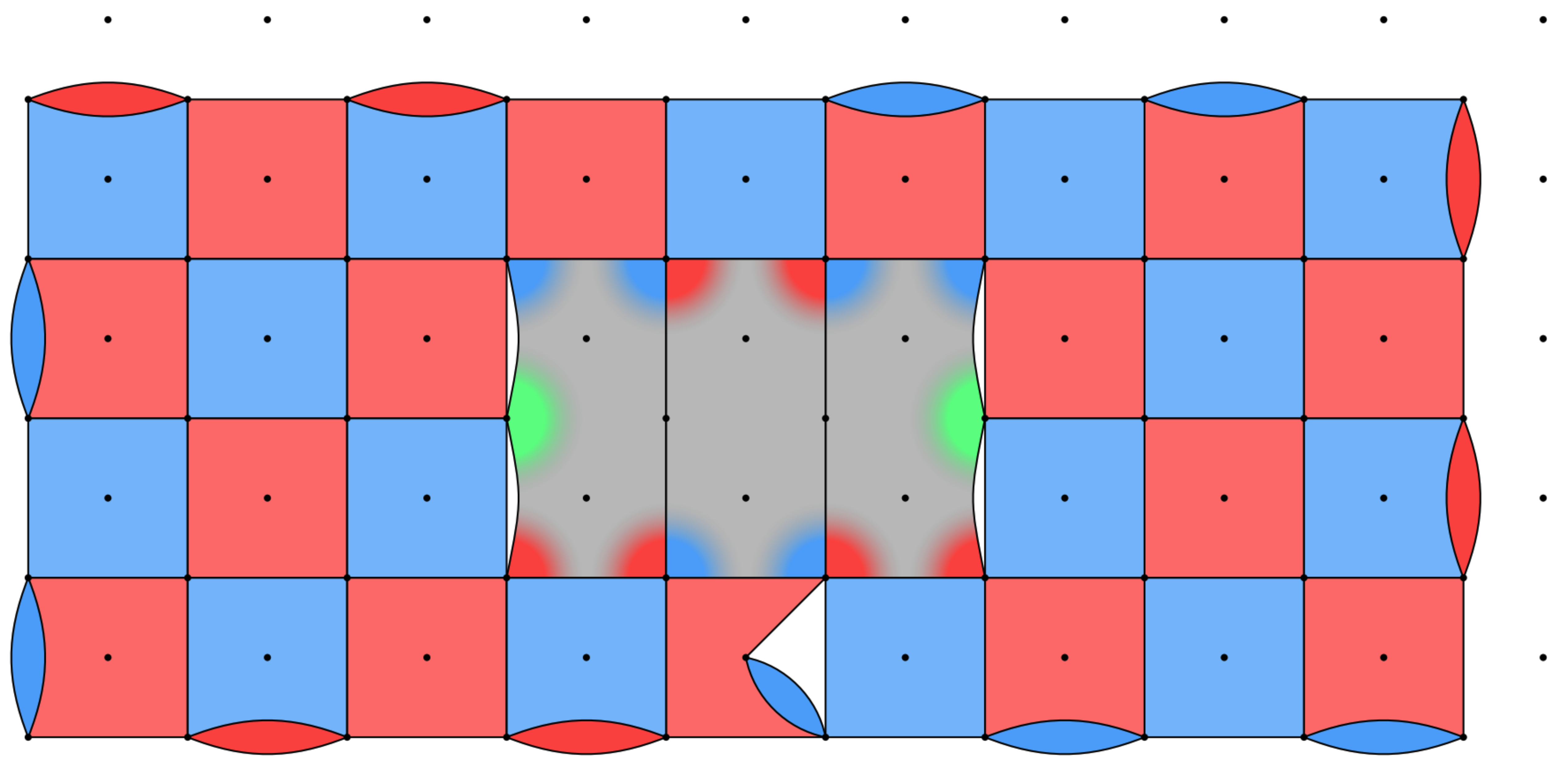
Figure 3: (Left) Standard rotated surface code; (Middle) Three-qubit rectangular patch with twist defects; (Right) Dense grid of twist-defect-encoded logical qubits via boundary merging and yoking.
Three regimes of dense twist packing are illustrated:
- Rectangular three-qubit patches—each patch encodes three logical qubits with the same code distance as a pair of standard patches.
- Dense twist packing grids—merging boundaries asymptotically achieves a factor of two better code rate.
- Iceberg/Parity yoking—columns are concatenated with quantum parity checks, further boosting rate to 4.52d21 and suppressing undetectable correlated errors.
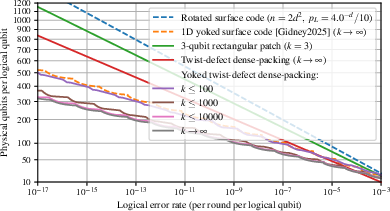
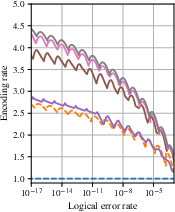
Figure 4: Dense twist-packing layouts showing up to a 2d22 reduction in physical qubits per logical qubit, validated by circuit-level logical error rate simulations.
Lattice Surgery and Computational Architectures
The work enhances the lattice surgery framework in several ways:
- Padding-free protocols: merge/split operations for logical operator measurement are constructed entirely within the compact patch geometry, without increasing space or corner complexity.
- New twist-based surgery primitives: the architecture supports direct or almost in-place 2d23 and 2d24 measurements, paralleling the benefits attributable to twist defects in non-planar codes.
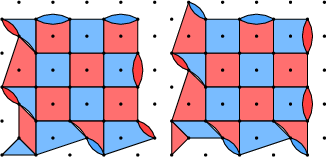
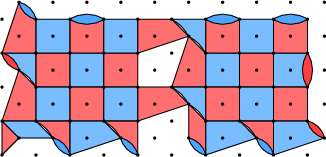
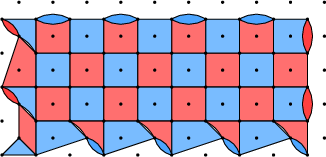
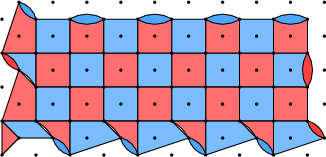
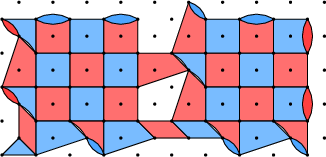
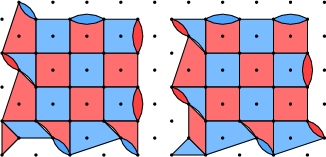
Figure 5: Lattice surgery merge and split operations in compact geometry, enabling universal Clifford gates and dense logical architectures.
Computation is organized into three regions:
- Compute: Fast, flexible region for Clifford and magic-state consumption, optimizing the intersection of surface code cycles and factory production rates.
- Hot Storage: Low-latency, moderate-rate region for rapidly accessed logical qubits, realized using either parity-yoked or slightly wider compact patches.
- Cold Storage: High-density, high-latency qubit banks for logical wavefunctions and ancilla, using yoked dense twist packings.
This architecture is particularly advantageous for algorithms based on block-encoded Hamiltonians, where communication with a large, slow memory is limited: block-encoding of any 2d25-local 2d26-qubit Hamiltonian can be performed with 2d27 quantum communication steps, independent of the number of terms.
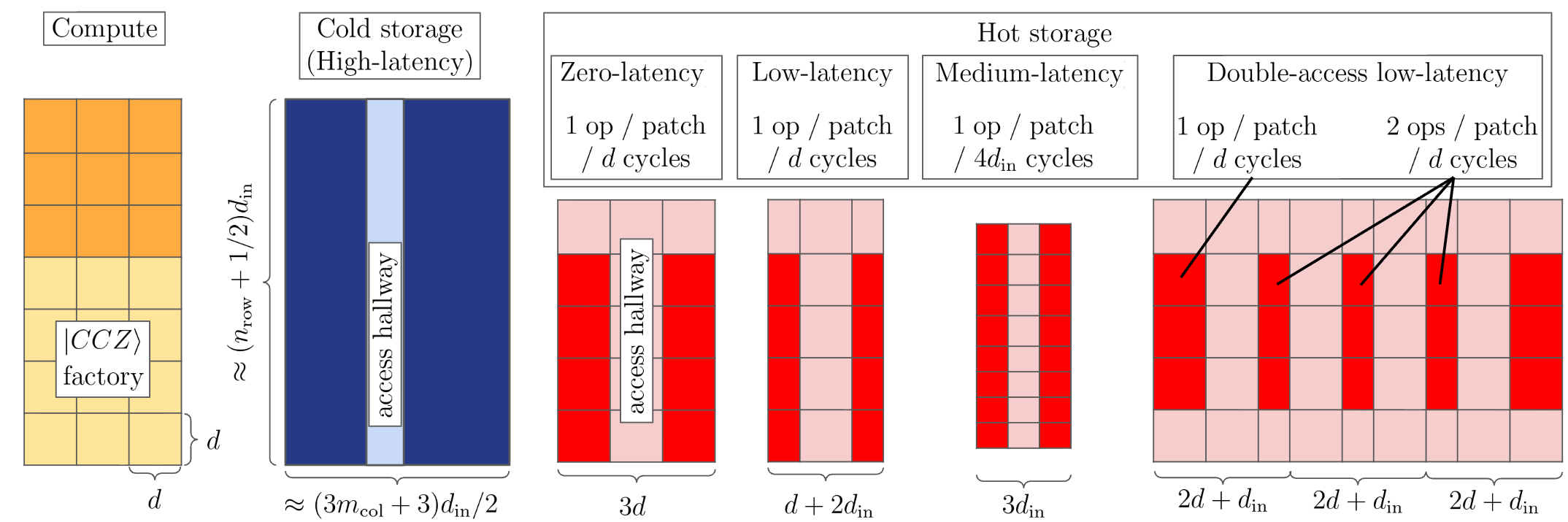
Figure 6: Scalable architecture layout: compute, cold storage, and hot storage, illustrating the spatial organization and per-region patch assignments for 2d28, 2d29.
Benchmarking, Space-Time Tradeoffs, and Quantum Simulation
Simulation benchmarks leverage these dense QEC schemes for large-scale chemistry:
- For FeMoco-54 and Ruthenium-catalysts, code distances up to 27 and logical error rates XXYZZ0 per step are attained via compact or dense-yoked storage, at under XXYZZ1 mega-qubit-hours spacetime costs.
- The architecture supports Pareto-optimized tradeoffs: e.g., the "compact" protocol uses XXYZZ2 fewer physical qubits, while the "efficient" protocol reduces spacetime volume by XXYZZ3 relative to previous Toffoli-minimized designs.
- All estimates are under standard XXYZZ4 depolarizing error models, surface code cycles of XXYZZ5s, and reaction times of XXYZZ6s, matching prevailing superconducting qubit capabilities.
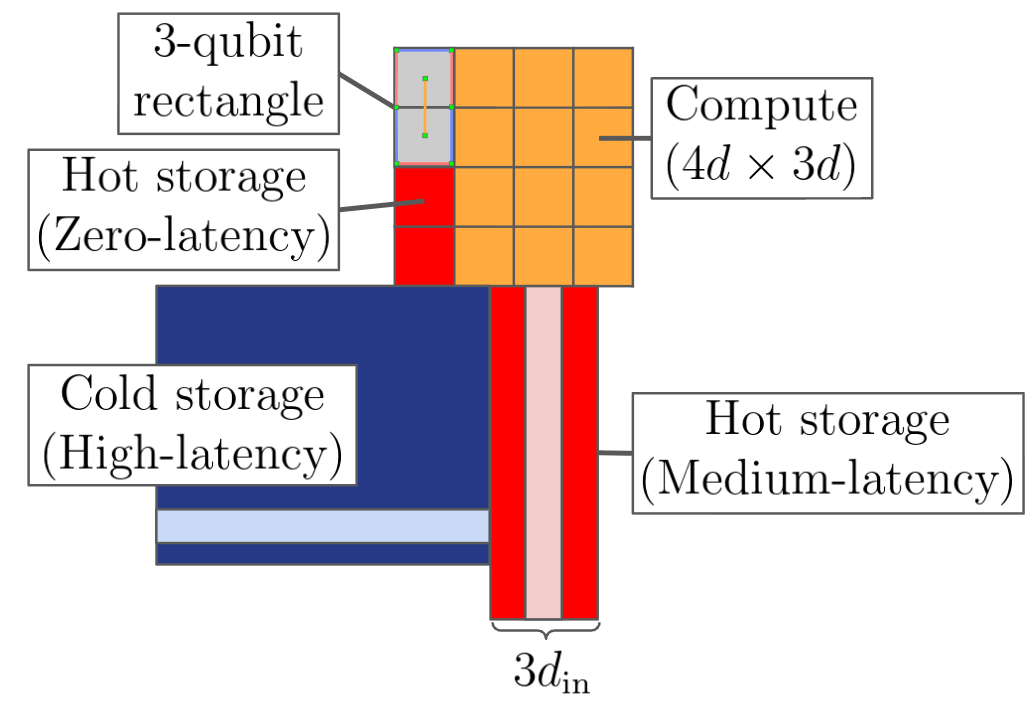
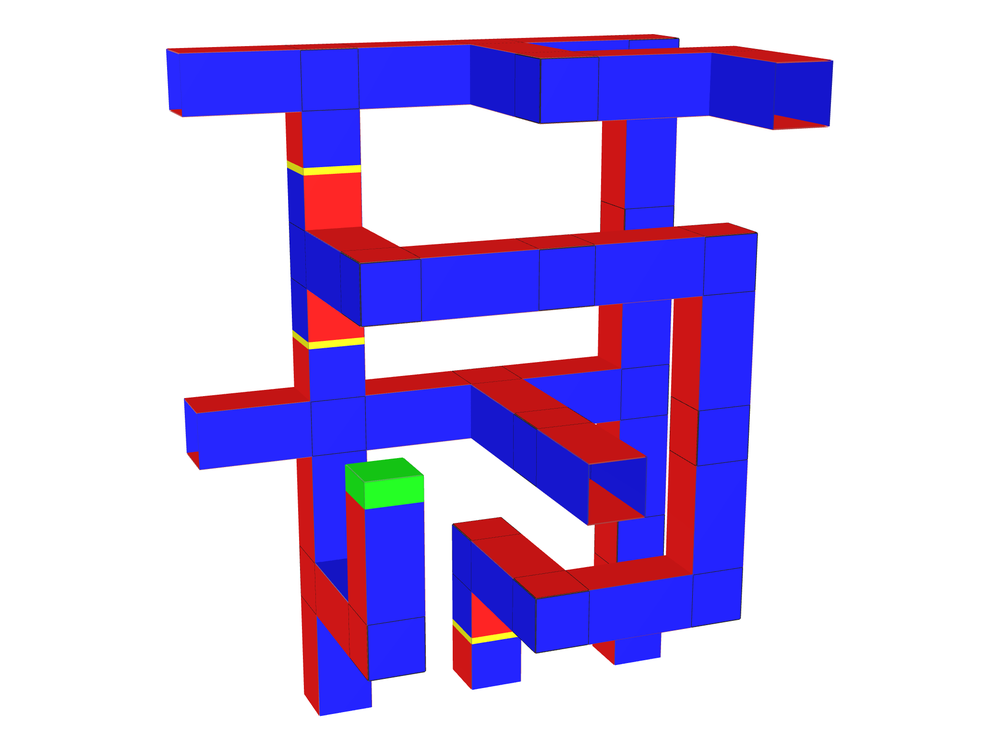
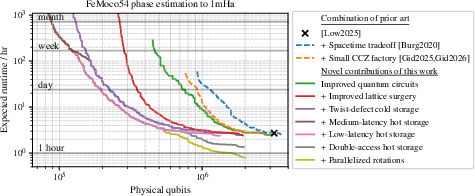
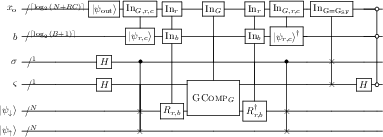
Figure 7: Summary of technical advances, from compact patches and dense twist packing to architectural optimizations and application to electronic structure simulation.
Implications, Open Problems, and Future Directions
This work shifts the bottleneck for utility-scale quantum algorithms from QEC overhead to the actual algorithmic circuit design. Key outcomes and future research avenues include:
- Practical Utility: Chemical calculations of molecules with XXYZZ7 spin-orbitals become accessible within a realistic qubit count for next-generation hardware.
- Composability: The presented techniques are compatible with magic state cultivation, low-latency surface code factories, and can serve as a baseline for evaluating LDPC or color code proposals.
- Frontiers: Open problems remain regarding fully optimal 2D code rates with higher-weight stabilizers, decoding for 2D yoked arrangements, and detailed benchmarking of twist-based surgery in dynamic computation.
- Automation: Current resource estimates and patch layouts are hand-optimized; further advances can be made with automated compilers and versatile scheduling tools.
- Adaptability: As physical error rates decrease (e.g., XXYZZ8), the presented padding-free and dense-packing strategies will remain relevant, possibly shifting the cost balance toward color codes or LDPC in the very long term.
Conclusion
By integrating circuit-level-constrained twist-defect implementations, padding-free patches, and architectural co-design tailored to large-scale quantum algorithms, this work achieves a substantial reduction in the resource requirements for fault-tolerant planar quantum computing. The results provide a robust new baseline for approaching quantum utility in condensed matter simulation and beyond, highlighting the importance of tightly coupled innovation between quantum error correction and algorithmic design.

