- The paper’s main contribution is the explicit computation of free energy expansion coefficients up to the constant term in anisotropic determinantal Coulomb gases.
- It introduces a novel deformation framework using foliation flow and conformal geometric methods to compute variations with respect to anisotropy and singular charge.
- The study links asymptotic analysis with conformal invariants like the Liouville action, enhancing our understanding of non-Hermitian random matrix statistics.
Free Energy Expansion of Determinantal Coulomb Gases in Quadratic Fields with a Point Charge
Overview
The paper "Free energy expansion of determinantal Coulomb gases in the quadratic fields with a point charge" (2605.29594) provides a rigorous analysis of the free energy asymptotics for a determinantal Coulomb gas in the complex plane, subjected to an external quadratic potential with a singular point charge. The paper extends previous results obtained for isotropic cases (τ=0) to the more general anisotropic scenario (τ∈[0,1)). The primary contributions include explicit computation of the free energy expansion coefficients up to and including the constant term, and identification of their geometric and conformal structure, notably the appearance of the Liouville action.
Model Specification and Regimes
The system consists of N particles distributed according to the density:
dPN(z)=ZN(Q)1j<k∏∣zj−zk∣2j∏e−NQ(zj)dA(zj),
where the external potential is:
Q(z)=1−τ21(∣z∣2−τRez2)−2clog∣z−a∣,
with parameters τ∈[0,1) (anisotropy), c≥0 (point charge strength), and a≥0 (charge position). The equilibrium measure is uniform on the droplet KQ, with density 1/(1−τ2).
The structure of the droplet τ∈[0,1)0 depends on the parameters, exhibiting three distinct regimes:
- Regime I (Doubly Connected): The droplet is an ellipse with an excised disk centered at τ∈[0,1)1.
- Regime II (Simply Connected): The droplet is described by the image of τ∈[0,1)2 under a rational conformal map.
- Regime III (Multi-component): The droplet consists of two disjoint simply connected components.
The full characterization and explicit parametrization of these regimes are established using the theory of quadrature domains and algebraic Hele-Shaw flows.
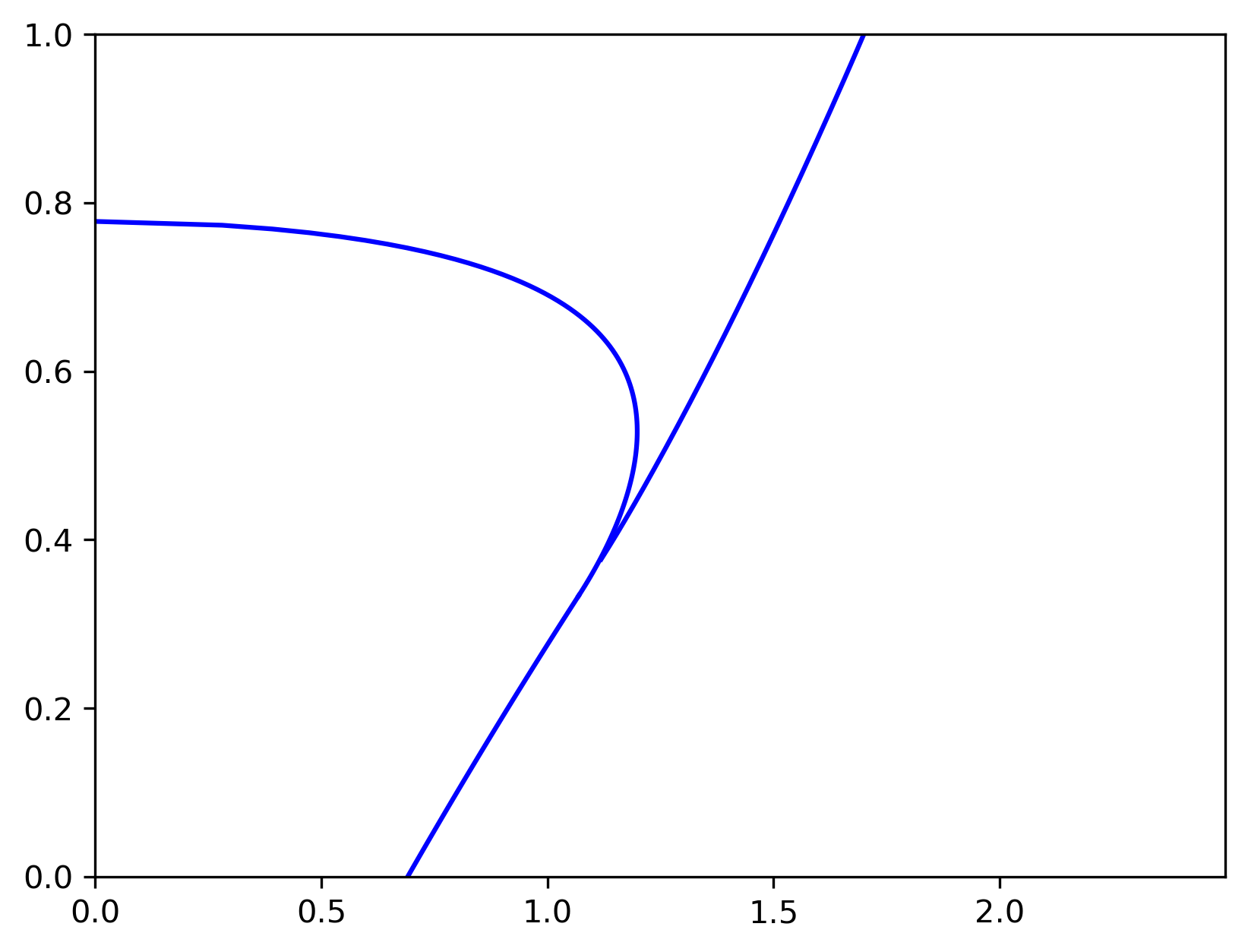
Figure 1: Phase diagram illustrating the topology of the droplet as a function of τ∈[0,1)3 for fixed τ∈[0,1)4, with deformation paths indicated for the computation of free energy variations.
Free Energy Expansion and Explicit Coefficients
The central result is the explicit large-τ∈[0,1)5 expansion of the partition function:
τ∈[0,1)6
where:
- τ∈[0,1)7: weighted logarithmic energy of equilibrium,
- τ∈[0,1)8: Euler characteristic of τ∈[0,1)9,
- N0: Liouville action of the droplet,
- N1: signed curvature along the boundary.
All terms are explicitly computable, with substantial attention to the constant term, which is rigorously identified as the Liouville action, providing a conformally invariant geometric interpretation.
The expansion reflects the influence of both macroscopic and microscopic structure. The leading three terms are universal, while the subleading terms encode droplet topology and local geometry. The constant term admits closed formulae for both simply and doubly connected cases, with deep connections to spectral determinants and conformal field theory.
Methodological Innovations
The analysis leverages a deformation framework: variations of the free energy are computed with respect to both the singularity location (N2) and the anisotropy parameter (N3), and integrated along tailored paths to achieve the required reference configurations. The method circumvents the lack of exact solvability or duality in the anisotropic regime.
Technical advances include:
Connections to Characteristic Polynomial Moments
The partition function ratio also governs moments of characteristic polynomials for the elliptic Ginibre ensemble, specifically:
N4
where N5 is the elliptic potential with N6 deformation. The expansion thus provides precise asymptotics for these moments in the macroscopic regime, linking to Gaussian multiplicative chaos and statistical field theory.
Implications and Extensions
Theoretical
- The explicit appearance of the Liouville action in the constant term anchors the expansion in the landscape of conformal geometry and spectral theory, confirming anticipated connections from physics literature.
- The framework aligns free energy expansions, asymptotics of planar orthogonal polynomials, and conformally invariant functionals, pointing toward a universal structure for determinantal Coulomb gases in algebraic Hele-Shaw fields.
Practical
- The method provides a practical recipe for computing all expansion coefficients, including N7 terms, for a broad class of potentials, enhancing predictive power for non-Hermitian random matrix statistics.
- The deformation approach can be generalized to higher-order corrections and more complicated droplet topologies, provided suitable conformal-geometric data are accessible.
Future Directions
- Extension to multi-component (multi-cut) and critical regimes, including oscillatory structure and Tracy-Widom distribution behavior, requires further development, potentially via Riemann–Hilbert analysis.
- Investigation into the universality of these expansions in more general external fields, and rigorous links to statistical field theory predictions (e.g., Polyakov-Alvarez formula for spectral determinants), are warranted.
- The foliation flow technique in connection with higher-order asymptotics remains an active area, with potential for broader application in spectral analysis and integrable systems.
Conclusion
This paper rigorously establishes the full-order free energy expansion for determinantal Coulomb gases in quadratic fields with a point charge, explicitly unveiling the conformal geometric underpinnings and providing explicit, computable coefficients. The approach synthesizes deformation theory, asymptotic analysis of planar orthogonal polynomials, and conformal invariants to advance understanding of both probabilistic and geometric aspects of non-Hermitian ensembles. The methodology and results set the stage for further exploration into complex droplet topologies, critical phenomena, and their connections to integrable hierarchies and field theoretic invariants.