- The paper introduces a novel local order parameter using one-point fidelity correlators to diagnose strong-to-weak symmetry breaking in quantum matter.
- It demonstrates computational efficiency and a well-defined thermodynamic limit, bridging global and local symmetry diagnostics via rigorous inequalities.
- Numerical and analytical results in systems like CFT ground states and Fermi metals reveal distinct scaling behaviors critical for phase classification.
Local Strong-to-Weak Spontaneous Symmetry Breaking: A Technical Overview
Introduction and Motivation
Spontaneous symmetry breaking (SSB) is central to delineating phases of quantum matter, but in open quantum systems or mixed states, robustness and characterization of symmetry breaking phenomena become fundamentally more involved. This is due to a crucial distinction: strong symmetry, defined as UρU†=ρ together with Uρ∝ρ, can be reduced to weak symmetry when acting on ensembles. This dichotomy has motivated the focus on "strong-to-weak spontaneous symmetry breaking" (SW-SSB), a property extensively relevant for classifying mixed-state phases, protected quantum information, emergent hydrodynamics, and robust quantum memory (2605.28967).
Conventional diagnostics—two-point correlators—are insufficient to probe SW-SSB, as their sensitivity is only to linear averages over the density matrix. Detecting SW-SSB demands nonlinear functionals, typically quantum fidelities, requiring access to the global density matrix ρ and entailing exponential overhead with system size. This research introduces a local notion of SW-SSB using one-point fidelity correlators, making the diagnosis both scalable and well-defined intrinsically in the thermodynamic limit.
Local One-Point Fidelity Correlator: Definition and Properties
The local measure of SW-SSB is formulated in terms of the one-point local fidelity correlator (LFC)
F(ρA;Ox)=F(ρA,OxρAOx†)
where ρA=TrAˉ[ρ] is the reduced density matrix on a finite region A containing x and Ox is a local charged operator. The key parameter is the minimal distance ℓ=dist(x,∂A) between the insertion point and the region boundary.
A state exhibits local SW-SSB if, in the infinite region limit,
∣A∣→∞limF(ρA,OxρAOx†)>0
In contrast to global (two-point) fidelity correlators, this local approach
- Is computationally efficient (Uρ∝ρ0 resources for Uρ∝ρ1-dimensional systems),
- Retains sharply defined meaning in the thermodynamic (Uρ∝ρ2) limit where the global Uρ∝ρ3 ceases to exist,
- Yields a phase diagnostic robust to finite-depth symmetric quantum channels.
(Figure 1)
Figure 1: Schematic of the local fidelity correlator Uρ∝ρ4, probing the response of the local reduced state to symmetry action at a site Uρ∝ρ5.
Universal and Robust Features
Implications of Local SW-SSB
The local SW-SSB order parameter exhibits several universal and robust aspects:
- Implication from Global to Local: Global SW-SSB implies local SW-SSB for any finite region, guaranteed by monotonicity of fidelity (the data processing inequality).
- Conditional Mutual Information (CMI) Obstruction: In strongly symmetric states, nonzero local SW-SSB implies persistent long-range CMI, quantifying a fundamental obstruction to state recovery from local data. This follows from the Fawzi-Renner bound on quantum recoverability.
- Robustness Under Finite-Depth Channels: Local SW-SSB is preserved under application of any finite-depth, strongly symmetric quantum channel, ensuring that the order parameter is intrinsic to the phase and not a sensitive artifact.
(Figure 2)
Figure 2: Tripartition geometry illustrating CMI, with the inability to locally reconstruct global charge information due to SW-SSB.
Distinction Between Local and Global SW-SSB
While global SW-SSB always yields local SW-SSB, the converse need not hold. The paper constructs explicit examples:
- Eigenstate Thermalization Hypothesis (ETH) Eigenstates: Highly excited pure states show locally thermal reduced density matrices (hence robust local SW-SSB), while their global two-point correlators decay exponentially.
- Pseudo-SWSSB States: Ensembles where individual states lack global SW-SSB, but no efficient protocol can distinguish them from states with SW-SSB on polynomial resource budgets, resulting in effective local SW-SSB.
The notion of local indistinguishability emerges as central: physical observables cannot distinguish between different charge sectors within local regions, consistent with the practical and conceptual robustness expected of a phase.
Infinite-Volume Limit and Operator-Algebraic Approach
For infinite systems, the total Hilbert space and global Uρ∝ρ6 are ill-defined. The local SW-SSB order parameter is constructed via a covering sequence of finite regions centered on Uρ∝ρ7, and monotonicity ensures existence and independence from the covering choice:
Uρ∝ρ8
where Uρ∝ρ9 is the state over the quasi-local algebra and ρ0 the local reduced state.
This covering limit is respected only by quantities satisfying the data processing inequality, notably fidelity and the R\'enyi-1 correlator, but not generic R\'enyi-ρ1 or higher-order correlators.
(Figure 3)
Figure 3: Construction of coverings for defining the local order parameter in the infinite system.
Alternate Diagnostics: R\'enyi-1 and Two-Point Local Correlators
The R\'enyi-1 correlator,
ρ2
is shown to be monotonic and equivalent to the one-point fidelity order parameter. Two-point local fidelity and R\'enyi-1 correlators are established to probe the same phases as the one-point version, with rigorous inequalities connecting their scaling behavior.
Averaged inequalities based on Uhlmann's theorem are technically established, ensuring that nonvanishing one-point local fidelity always guarantees a nonvanishing two-point local fidelity for widely separated points.
Numerical and Analytical Results in Physical Systems
The local order parameter allows systematic characterization of scaling in gapless and critical states:
ρ3
with ρ4 the scaling dimension.
ρ5
regardless of spatial dimension ρ6.
- Diffusive Metals (with Disorder):
ρ7
also dimension-independent.
These distinct scalings are nontrivially different from ordinary two-point correlators and illustrate the utility of the local SW-SSB measure as a critical diagnostic.
(Figure 4)
Figure 4: Numerical verification of the ρ8 and ρ9 scalings of the one-point R\'enyi-1 correlator in clean and diffusive Fermi systems, respectively.
Examples: Decohered Ising Models and Random Gaussian States
The formalism is illustrated in explicit models including:
- ZZ-decohered Ising Paramagnets: The transition in local SW-SSB tracks the random-bond Ising model's Nishimori line, and explicit connections between local fidelity and classical defect/partition functions are made.
- Random Gaussian Fermionic States: Realizations with maximal local (but not global) SW-SSB, leveraging ETH-like behavior, are constructed and analyzed.
Order-Disorder Inequalities
A notable analytical result is the order-disorder trade-off:
F(ρA;Ox)=F(ρA,OxρAOx†)0
for F(ρA;Ox)=F(ρA,OxρAOx†)1 symmetry, relating the local SW-SSB order parameter to the expectation value of disorder (string) operators. This provides a quantum generalization of classical order-disorder relations, with practical consequences for phase diagnostics in both pure and mixed states.
Non-Abelian Symmetry Generalization
The local SW-SSB framework is extended to non-Abelian symmetry groups, by considering irreducible representation multiplets and maximizing fidelity over all linear combinations within a multiplet. The phase criterion is then basis-invariant and compatible with Schur's lemma, yielding a robust methodology for diagnosing non-Abelian SW-SSB.
Implications, Open Directions, and Outlook
The local formulation of SW-SSB bridges a gap between robust measurement (theoretical and experimental) and conceptual foundations of symmetry breaking in open quantum systems and mixed-state phases. It provides:
- A scalable, operational diagnostic for (strong-to-weak) phase structure,
- An order parameter amenable to infinite systems and operator-algebraic rigor,
- A unifying perspective capable of distinguishing phases in complex, open, or random environments.
Future directions highlighted in the work include:
- Deeper analogies between SW-SSB and local thermalization,
- Exploring connections to charge scrambling, information spreading, and monitored dynamics,
- Investigating defect interpretations of the local fidelity in critical and non-equilibrium states, and
- Optimizing computational and experimental approaches to detecting SW-SSB in large-scale quantum platforms.
Conclusion
This work establishes a technically precise and scalable approach to the diagnosis of strong-to-weak spontaneous symmetry breaking in both finite and infinite quantum systems. The local fidelity correlator, and its R\'enyi-1 equivalent, provide a robust, practical, and physically meaningful order parameter for phases previously inaccessible due to global resource constraints. As mixed-state and open quantum phases become increasingly central in quantum information science, condensed matter physics, and quantum simulation, these results form an essential component of the modern theory of symmetry in quantum matter.
Reference: F. Divi, L.A. Lessa, C. Wang, "Local Strong-to-Weak Spontaneous Symmetry Breaking" (2605.28967)
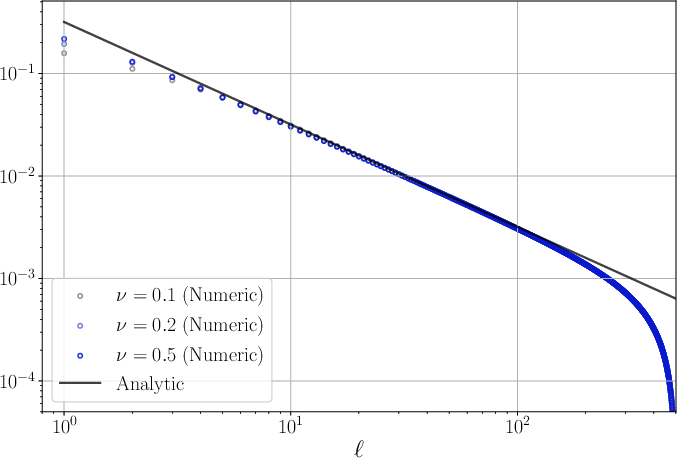
Figure 5: One-point R correlator in physical examples, illustrating distinct scaling behaviors in different quantum phases.

