Nearly tight exponents for off-diagonal Ramsey numbers
Abstract: We construct a new family of $K_s$-free graphs that leads to improved lower bounds for Ramsey numbers across a wide range of parameters. For any fixed $s \ge 4$, we show that the off-diagonal Ramsey numbers satisfy $r(s, k) \ge k{s-2 + o(1)}.$ For $s \ge 6,$ this improves the best known lower bound of the form $r(s, k) \ge k{\frac{s+1}{2} + o(1)}$ which was first established by Spencer in 1977 and has since only seen logarithmic improvements. This nearly matches the best known upper bound which is of the form $r(s, k) \le k{s-1 + o(1)}$ and which is widely believed to give the correct exponent. More generally, we show that if $s, k/s \rightarrow \infty$, then $r(s, k) = \left(\frac{k}{s}\right){(1+o(1)) s},$ where the upper follows from the seminal work of Erdős and Szekeres in 1935. We also obtain improved lower bounds for Ramsey numbers extremely close to the diagonal as well as for diagonal multicolor Ramsey numbers.
Paper Prompts
Sign up for free to create and run prompts on this paper using GPT-5.
Top Community Prompts
Explain it Like I'm 14
Explaining “Nearly tight exponents for off-diagonal Ramsey numbers”
1) What is this paper about? (Big picture)
This paper studies a famous problem in graph theory called Ramsey theory. Imagine a big group of people where some pairs are friends (draw an edge) and others are not. A “clique” of size s is a group of s people where everyone knows each other. An “independent set” of size k is a group of k people where no one knows each other.
The Ramsey number r(s, k) is the smallest number of people you must have to always guarantee you either find:
- a clique of size s, or
- an independent set of size k.
This paper focuses on “off-diagonal” Ramsey numbers, where s is fixed and k grows (so cliques are small but the no-friend group is large). The authors build new examples of graphs to prove that r(s, k) must be quite large. Their results get very close to what experts believe are the true sizes of these numbers.
2) What questions are the authors asking?
In simple terms, they ask:
- How big does a network need to be to force either a small fully connected group (a clique of size s) or a large group with no connections (an independent set of size k)?
- Can we improve the best known “lower bounds” (proofs that r(s, k) is at least this big) for many values of s and k?
- What happens when s grows together with k, or when we color edges with more than two colors (multicolor Ramsey numbers)?
- Can we also improve results when the two sizes are close, like r(s, s + a) (this is “near the diagonal”)?
3) How do they approach the problem? (Ideas explained simply)
The authors construct special graphs that avoid cliques of size s (so-called Ks-free graphs). If you can build such a graph that also avoids big independent sets, you prove a large lower bound: r(s, k) must be bigger than the size of your example.
Key ideas, with friendly analogies:
- Pseudorandom graphs: These are graphs built by strict rules (not by coin flips), but they “look” random in how their edges are spread out. Think of a seating chart carefully designed so that any large group still has a typical number of “friend” connections—no area is too dense or too empty.
- Expander mixing lemma: A tool that says edges are well-distributed across the graph. In plain terms, no big chunk of people can avoid interactions too much.
- Polarity graphs from finite geometry: These are graphs constructed using geometric rules over small number systems (finite fields). You don’t need the details; the point is they give very uniform, well-spread networks that avoid certain patterns.
- Product-like construction: They combine two graphs in a clever way (one records “non-edges,” the other “edges”) to form a directed structure that forbids a certain ordered pattern. This guarantees the final undirected graph has no clique of size s.
- Random sampling: After building a big Ks-free graph, they randomly keep some vertices. Carefully choosing the keep-probability helps ensure the sampled graph still has no clique of size s and is unlikely to contain a big independent set. This translates into strong lower bounds on r(s, k).
In short, they:
- Build a structured, highly uniform graph using geometry.
- Prove it avoids the forbidden structure (no Ks).
- Use counting and “even spread” arguments to show big independent sets are rare.
- Sample to sharpen the bound, turning “rare” into “doesn’t happen.”
4) What are the main results and why do they matter?
Here are the headline results, explained. When we write “≈,” we mean “roughly the size of,” and with we mean a tiny quantity that goes to 0 as k grows.
- For any fixed s ≥ 4:
- They prove a new lower bound: (more precisely, ).
- Why this matters: The long-standing best general lower bound was about , which is much smaller for s ≥ 6. So this is a significant improvement for many s.
- Near-optimal growth when both s and k grow and k is much larger than s:
- They show that if and , then
for any small fixed (and large enough s, k). The classical upper bound is roughly . - Why this matters: This essentially pins down the correct exponential growth in this regime, closing a long-standing gap up to a tiny factor in the exponent.
Close to the diagonal (k = s + a with a small compared to s):
- They improve the best known lower bounds for for all (and even for some smaller a), giving a sharper picture of how r behaves when the two sizes are very close.
- Multicolor Ramsey numbers (edges colored with ℓ colors):
- They prove for fixed ℓ ≥ 3.
- Why this matters: It’s an exponential improvement over previous constructions for every fixed number of colors.
Why “nearly tight exponents”?
- Experts believe the true order for off-diagonal numbers is close to (for fixed s). The best known upper bounds are about .
- This paper raises the lower bound to about , shrinking the gap in the exponent to just about 1, which is a big step forward.
5) Why is this important? (Impact and implications)
- Advances a classic problem: Ramsey numbers are central in combinatorics. Sharpening bounds, especially across many parameters, is hard and valuable.
- New techniques and constructions: The blend of finite geometry, pseudorandomness, and clever counting could be adapted to other problems where we need graphs that avoid certain patterns yet spread edges evenly.
- Near-optimal growth when s and k both grow: Pinning down the exponential rate in that regime gives a clearer global map of the Ramsey landscape.
- Better multicolor and near-diagonal results: These side achievements show the method’s flexibility and promise for further improvements.
- A path toward the conjectured bound: The work supports the belief that should be around (for fixed s) by getting one step away in the exponent. Future refinements of the base constructions may reach the ultimate goal.
Overall, the paper builds powerful, well-behaved example graphs that avoid big cliques and big independent sets at the same time, pushing the known limits of how large r(s, k) must be. It tightens our understanding of Ramsey numbers and opens doors to further breakthroughs.
Knowledge Gaps
Below is a single, focused list of the paper’s outstanding knowledge gaps, limitations, and concrete open questions that future work could address.
- Close the exponent gap for fixed s: For fixed s ≥ 4, the lower bound exponent s−2 still falls short of the widely believed optimal exponent s−1. Identify constructions or techniques that achieve r(s, k) ≥ k{s−1+o(1)} for all fixed s.
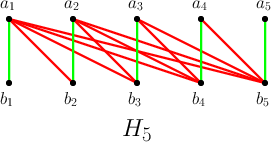
- Strengthen the “H_s-free pair” framework: The main conditional statement (Theorem 2.7) reduces improved Ramsey bounds to finding pairs (F, G) on the same vertex set that are simultaneously dense, spectrally pseudorandom, and H_s-free. Construct such pairs with substantially larger d(G) (e.g., d(G) = Θ(n{1−1/(s−1)})) while keeping λ(G) = O(√d(G)) and maintaining the H_s-freeness, which would push the method to the conjectured exponent s−1.
- Leverage denser polarity/finite-geometry graphs: The denser K_s-free constructions of Bishnoi–Ihringer–Pepe and Mattheus–Pavese give degree d = Θ(n{1−1/(s−1)}) with optimal spectral parameters but apparently do not satisfy the specific bipartite H_s avoidance used here. Determine whether (i) variants of these constructions can be adapted to be H_s-free, or (ii) a different algebraic/polarity-based family exists that is both dense and H_s-free.
- Optimize the forward-independent tuple counting: The counting bound in Lemma 2.6 introduces a threshold w = 4n log n / d(G) and a factor 16k. Improve these constants (e.g., reduce 4 to 2, replace 16k by smaller bases) and/or remove the log overhead by sharper combinatorial or spectral arguments, thereby strengthening the range of k and the final lower bounds.
- Replace spectral-mixing with container or structural methods: Investigate whether hypergraph container techniques or refined structural counting can directly bound i_k(G) (or forward-independent k-tuples in D) more tightly than expander mixing, especially to reduce or eliminate log factors and improve constants.
- Explicit dependencies in the “asymptotically tight” regime: Theorem 1.2 proves r(s, k) ≥ (k/s){(1−δ)s} for s, k/s large, implying r(s, k) = (k/s){(1+o(1))s}. Derive explicit, quantitative dependence of L(δ) and the o(1) term in terms of s and k/s, and tighten the rate at which δ → 0 is admissible.
- Improve bounds for s = 5: For s = 5, the exponent s−2 equals Spencer’s deletion threshold (3). Identify constructions or analyses that strictly beat the exponent 3 for s = 5 (even by o(1)), moving toward s−1 = 4.
- Extend improvements closer to the diagonal for small a: Theorem 1.4 improves r(s, s+a) for a ≥ 5 and a = o(s). Determine whether analogous improvements are possible for fixed small a ∈ {1, 2, 3, 4} and quantify any attainable gains in the constant and second-order terms.
- Tighten second-order terms near the diagonal: The bound r(s, s+a) ≥ (1+o(1)) (s/e) * 2{(s+a−1)/2 − a2/(2s)} leaves open whether the a2/(2s) correction and the prefactor s/e are optimal. Seek matching upper bounds or refined lower bounds that pin down these second-order terms.
- Refine the F2 counting in Section 3: The proof of Lemma 3.1 uses coarse bounds for choices of a_i (e.g., counting by rank sequences with liberal 2p factors). Develop sharper algebraic counting (e.g., using subspace incidence constraints) to improve the near-diagonal constants or exponents.
- Multicolor diagonal gap for large ℓ: Theorem 1.5 shows r(s; ℓ) = Ω(2{(ℓ−1)s/2}), which is far below the best upper bounds for large ℓ (e{−δ s} ℓ{ℓ s}). Devise constructions or methods that yield substantially larger bases in the exponent for growing ℓ, and/or improve upper bounds to narrow the large-ℓ gap.
- Off-diagonal multicolor numbers: The paper addresses diagonal multicolor Ramsey numbers. Extend the method (or develop new ones) to off-diagonal multicolor settings r(s, k; ℓ) and quantify the achievable exponents.
- Derandomization and explicitness: The final K_s-free graph is obtained via random sampling/permutation from the constructed digraph. Provide fully explicit, deterministic constructions achieving comparable bounds (e.g., explicit permutations or vertex subsets) to match the existential results.
- Alternative orientations or product operations: The current “product-like” digraph D uses arcs from F and G in a specific way to ensure T_s-freeness. Systematically study other orientation rules or graph products that preserve H_s-freeness while improving density or spectral parameters.
- Loopless variants and practical adaptations: Many arguments allow loops in G(t, q) and their complements. Construct loopless analogues with equivalent spectral and forbidden-structure properties to streamline applications and potential computational uses.
- Field-size and parameter flexibility: The framework relies on prime powers q (often powers of 2). Explore constructions over other rings/fields or hybrid algebraic-combinatorial methods that loosen the prime-power constraint and optimize q relative to k and s without sacrificing H_s-freeness or spectral properties.
- Breaking the deletion-threshold barrier for K_s: The paper notes the deletion threshold barrier for purely probabilistic methods. Investigate whether “superposition/blow-up” strategies (successful for odd cycle-complete numbers) can be adapted to K_s, possibly in combination with algebraic structures, to push beyond the deletion threshold.
- Unified treatment with r(4, k) methods: Recent progress for r(4, k) leverages Hermitian unitals and containers. Combine those techniques with the present H_s-free product framework to improve exponents/log-factors for s ≥ 5.
- Strengthen expander-mixing corollaries: Lemma 2.5 (Alon–Rödl) bounds |A||B| via spectral parameters when e_G(A, B) = 0. Develop stronger, possibly nonlinear spectral inequalities or use multi-step pseudorandomness to tighten such bounds and thereby reduce η in the conditional framework.
- Quantify constants throughout: Many results hide constants (c_s, implicit o(1), factors 16, 100, etc.). Systematically optimize and publish tight constants and ranges to facilitate practical parameter selection and to reveal where the current approach fundamentally loses power.
Practical Applications
Immediate Applications
The paper introduces concrete constructions and counting techniques for K_s-free graphs with tightly controlled independent-set structure, along with improved asymptotic bounds for off-diagonal and multicolor Ramsey numbers. The following applications can be deployed now, primarily as tools, benchmarks, and workflows that leverage these constructions.
- Academic research and benchmarking (software/algorithms)
- Use case: Generating near–worst-case instances for graph algorithms (e.g., maximum independent set, clique finding, graph coloring, Ramsey-type decision problems).
- What to deploy:
- A generator based on the polarity-graph workflow:
generate_polarity_graph(t, q)to construct G(t, q) over the finite field F_q.F = complement_with_loops(G)andGon the same vertex set.- Build the “product-like” digraph
Dfrom the H_s-free pair(F, G)(edges from(a1, b1)to(a2, b2)ifa1 b2 ∈ E(G)). - From
D, use a random permutation to obtain a K_s-free graphΓwith a provably small number of independent sets of size k (Lemma Ts-free → Ks-free). - Alternatively (simpler), implement the proof-sketch construction: sample N random non-edges
(a_i, b_i)from G(t, q) and join i–j ifa_i b_j ∈ E(G). - Packaged as a CLI/SDK to produce parameterized hard instances for s and k across regimes.
- Sectors: software engineering (algorithmics), academia (theory and experimental CS).
- Assumptions/dependencies: availability of prime powers q; finite field arithmetic; asymptotic guarantees are strongest for large s, k; performance depends on memory/scalability for large graphs.
- Adversarial testbeds for scheduling and coloring heuristics (communications/networking)
- Use case: Stress-testing graph coloring, scheduling, and interference-management heuristics on “hard” interference graphs where no large clique exists (K_s-free) and large independent sets are rare.
- What to deploy:
- A generator that outputs K_s-free, pseudorandom-like graphs calibrated to realistic density (via choice of t, q) to evaluate robustness of scheduling pipelines (e.g., frequency assignment, timeslot allocation).
- Benchmark harness to compare heuristic vs. exact/approx solvers on feasibility and runtime.
- Sectors: wireless networking, operations research, edge computing.
- Assumptions/dependencies: mapping between domain constraints and graph models; the value lies in adversarial testing, not in direct deployment as production topologies.
- SAT/CSP instance generation (software/verification)
- Use case: Creating families of hard SAT/CSP instances encoding Ramsey-type properties (e.g., K_s-free with small independence number) for solver evaluation and competitions.
- What to deploy:
- Encoding workflows that convert the constructed graphs into CNF formulas (e.g., constraints forbidding cliques/independent sets of target sizes).
- Dataset release with scaling in s, k (including near-diagonal and multicolor regimes).
- Sectors: formal verification, solver development.
- Assumptions/dependencies: correctness and efficiency of graph-to-CNF encodings; sufficient instance sizes to exhibit hardness.
- Graph machine learning benchmarks (data science/ML)
- Use case: Training and evaluation datasets for GNNs on combinatorial reasoning tasks (clique detection, MIS, coloring) with controlled hardness.
- What to deploy:
- Curated datasets of K_s-free graphs across regimes (off-diagonal, near-diagonal, multicolor-style partitions).
- Standardized splits and metrics to compare GNN generalization under combinatorial hardness.
- Sectors: ML research, combinatorial optimization via learning.
- Assumptions/dependencies: dataset curation; maintaining diversity in size/density; careful task design to avoid overfitting.
- Teaching modules and reproducible notebooks (education)
- Use case: Demonstrating polarity graphs, expander mixing lemma, container-inspired counting, and Ramsey bounds in advanced courses.
- What to deploy:
- Interactive notebooks implementing G(t, q), the H_s-free product digraph construction, counting “forward independent” tuples, and sampling arguments.
- Visualizations of forbidden structures H_s and T_s-free digraphs.
- Sectors: higher education in mathematics, CS theory.
- Assumptions/dependencies: suitable math libraries for finite fields; didactic scaffolding.
- Multicolor Ramsey benchmarks (combinatorics/algorithms)
- Use case: Testing algorithms for multicolor edge-partitioning and extremal construction search, using improved lower bounds r(s; ℓ) = Ω(2{(ℓ−1)s/2}) as targets.
- What to deploy:
- Construction-driven search tools that attempt to meet or approach the new lower bounds for fixed ℓ by combining polarity-based components.
- Sectors: extremal combinatorics, algorithmic combinatorics.
- Assumptions/dependencies: the constructions offer asymptotic guarantees; practical sizes may be constrained by q and memory.
Long-Term Applications
The paper’s main innovations—nearly-tight exponents for off-diagonal Ramsey numbers, a product-like construction from H_s-free pairs, and improved multicolor and near-diagonal bounds—point to downstream applications contingent on further research, scaling, or domain-specific adaptation.
- Deterministic constructions meeting conjectured optimal exponents (theory → derandomization)
- Potential impact: If the k{s−1+o(1)} lower bound is reached via denser pseudorandom K_s-free graphs (e.g., leveraging stronger polarity-like constructions), we may obtain deterministic, near-optimal “Ramsey-typical” graph families.
- Possible tools/products:
- Libraries of deterministic pseudorandom graphs with prescribed forbidden substructures and spectral guarantees for use in derandomization, pseudorandomness testing, extractors, and hashing.
- Sectors: theoretical CS, cryptography (foundational primitives), randomized algorithm design.
- Dependencies: breakthroughs on denser K_s-free (n, d, λ) graphs or variants that avoid specific bipartite configurations required by the H_s-free framework.
- Coding theory and Tanner graph design (communications/coding)
- Potential impact: The H_s-free pair mechanism and controlled avoidance of small substructures may inspire LDPC/Tanner graphs with fewer trapping/stopping sets, improving iterative decoding behavior.
- Possible tools/products:
- Design heuristics that import “forbidden substructure avoidance” from the H_s-free paradigm into bipartite code graphs, tuned via expander-mixing–style guarantees.
- Sectors: error-correcting codes, storage systems, satellite/wireless communications.
- Dependencies: mapping between forbidden Ramsey configurations and known harmful substructures in Tanner graphs; empirical validation of decoding gains.
- Robust experiment design and combinatorial testing (industry/academia)
- Potential impact: Using finite-geometry–inspired constructions to create block designs that avoid high-order interactions (analogs of “cliques”) while preserving pseudorandom coverage.
- Possible tools/products:
- Libraries that generate test suites/designs with provable guarantees against confounding patterns (e.g., in A/B/n testing or software combinatorial testing).
- Sectors: tech experimentation, quality assurance, pharma (screening designs).
- Dependencies: translating graph-theoretic guarantees into domain-specific design criteria; statistical power analyses.
- Hardness baselines for average-case complexity and cryptographic assumptions (theory/crypto)
- Potential impact: Families of graphs that are K_s-free with few large independent sets could seed average-case hardness conjectures for MIS/clique or serve as baselines for cryptanalytic evaluations of graph-based schemes.
- Possible tools/products:
- Instance distributions for average-case reductions; challenge problems for planted-structure detection.
- Sectors: complexity theory, cryptography.
- Dependencies: rigorous average-case reductions; security analyses resisting specialized algorithms and heuristics.
- Improved network scheduling under adversarial interference (communications/robotics)
- Potential impact: Designing contention graphs that inherently preclude large fully interfering groups (no K_s) while retaining expander-like spread, potentially enabling robust, scalable scheduling policies in adversarial settings.
- Possible tools/products:
- Topology design heuristics that impose Ramsey-theoretic constraints to cap worst-case interference complexes.
- Sectors: wireless mesh, UAV swarms, IoT.
- Dependencies: feasibility of imposing topology constraints; translating K_s-freeness into measurable gains under realistic channel/interference models.
- SAT/CSP theory and solver design (theory/software)
- Potential impact: Ramsey-type constructions inform new phase-transition–like regimes in SAT/CSP that better separate solver capabilities, guiding the design of conflict-learning and heuristics.
- Possible tools/products:
- Generators tied to specific s, k, ℓ regimes for controlled studies of solver behavior and new branching heuristics.
- Sectors: automated reasoning, EDA tools.
- Dependencies: extensive empirical validation; synthesis of problem families at scales relevant to industrial solvers.
- Multicolor partitioning and edge-decomposition frameworks (networks/data)
- Potential impact: Stronger multicolor lower bounds guide expectations and algorithm design for partitioning dense interactions into few “simple” layers (e.g., time/frequency/color channels), clarifying limits of compression.
- Possible tools/products:
- Decision-support tools that warn when partitioning goals are below Ramsey-implied feasibility thresholds.
- Sectors: data center networking, distributed systems.
- Dependencies: modeling fidelity between edge-colorings and resource partitions; domain constraints often break worst-case assumptions.
Cross-cutting assumptions and dependencies
- Mathematical regime and constants:
- Results are asymptotic; practical gains depend on s, k, q being sufficiently large.
- Hidden constants in Ω/Θ may affect small to medium graph sizes.
- Number-theoretic constraints:
- Constructions rely on prime powers q; availability of suitable q impacts granularity and scalability.
- Spectral/pseudorandom parameters:
- Guarantees depend on (n, d, λ)-graph properties and expander-mixing bounds; substitutions with weaker expanders may degrade properties.
- Complexity and tooling:
- Efficient finite field operations and memory handling are required for large instances.
- Container-method–style counting is used analytically; practical generation focuses on the constructive steps (polarity graphs, product digraph, sampling).
- Domain translation:
- Benefits in engineering domains often come through adversarial testing and benchmarking rather than direct deployment of the constructed graphs as real-world topologies.
- Mapping forbidden subgraph properties to domain-specific constraints (e.g., trapping sets, interference complexes) requires additional validation.
Glossary
- -graph: A d-regular n-vertex graph whose adjacency matrix has all nontrivial eigenvalues bounded in absolute value by λ; a standard model of spectral pseudorandomness. "A particularly convenient notion of pseudorandomness is that of so-called -graphs which are -regular, -vertex graphs whose adjacency matrices have all but the largest eigenvalue at most in absolute value."
- blow-up (of a graph): An operation replacing each vertex by an independent set and each edge by a complete bipartite graph between the corresponding sets. "by superimposing blow-ups of random graphs."
- container method: A combinatorial technique that bounds the number and structure of independent sets (or other substructures) by covering them with a small family of “containers.” "the so-called container method; see~\cite{samotij-survey} for an introduction to this powerful technique."
- diagonal Ramsey numbers: The Ramsey numbers r(s, s), i.e., the regime where the two parameters are equal. "the so-called diagonal Ramsey numbers,"
- digraph: A directed graph, possibly used with additional structure like arcs orientation. "For a directed graph, or digraph for short, , we use to denote its set of arcs."
- expander-mixing lemma: A fundamental inequality relating edge counts between vertex subsets in a spectral expander to what is expected in a random graph. "We shall use the well-known expander-mixing lemma."
- first moment method: A probabilistic method using expectation to show the existence (or nonexistence) of structures by Markov’s inequality. "the first moment method achieves the lower bound ."
- forward independent k-tuple: In a digraph, an ordered k-tuple with no arc oriented from an earlier to a later position in the tuple. "we say that a -tuple of vertices is forward independent"
- Gaussian random graphs: Graph models whose construction is based on Gaussian random variables (often used to create correlation structures). "based on Gaussian random graphs,"
- Hermitian unitals: Incidence structures from finite geometry arising from Hermitian curves over finite fields, used to build extremal graphs. "so-called Hermitian unitals from finite geometry"
- -free (graph): A graph that contains no clique of size s. "We construct a new family of -free graphs"
- local lemma: Short for the Lovász Local Lemma; a probabilistic tool guaranteeing the avoidance of many “mostly independent” bad events. "a simple, though slightly tedious, application of the local lemma,"
- multicolor Ramsey number: The minimum n such that any ℓ-coloring of the edges of K_n yields a monochromatic K_s. "For positive integers and , the multicolor Ramsey number is the minimum integer such that any \mbox{-coloring} of the edges of contains a monochromatic clique of size ."
- odd cycle-complete Ramsey numbers: Ramsey-type parameters mixing odd cycles and cliques in two-color settings. "for the so-called odd cycle-complete Ramsey numbers, the deletion threshold has recently been broken by Campos, Jenssen, Michelen, Pfender and Sahasrabudhe~\cite{oddcyclecomplete} by superimposing blow-ups of random graphs."
- off-diagonal Ramsey numbers: The regime r(s, k) with s fixed and k → ∞ (or s ≠ k in general). "the so-called off-diagonal Ramsey numbers."
- polarity (in projective geometry): An incidence-reversing involution of a projective space, used to define edges in polarity graphs. "used a particular polarity to construct -free graphs with a larger density,"
- polarity graphs: Graphs defined from a projective space via a polarity, typically yielding pseudorandom and K_s-free structures. "Our construction is based on the polarity graphs of projective spaces."
- PG(t, q): The finite projective space of dimension t over the field F_q. "Let denote the finite geometry of dimension over the field ."
- pseudorandom graphs: Deterministic graphs mimicking random graphs in edge distribution and other properties, often characterized spectrally. "for an overview of the many results regarding pseudorandom graphs."
- random -free process: A stochastic process that adds edges while avoiding K_s, used to construct sparse K_s-free graphs. "by analyzing the random -free process,"
- Ramsey number: The minimum n such that any n-vertex graph contains either a clique of size s or an independent set of size k. "the Ramsey number is the minimum integer such that any graph on vertices contains a clique of size , which we shall denote by , or an independent set of size ."
- spectral pseudorandomness: Pseudorandomness certified by eigenvalue bounds (small nontrivial spectrum). "and also optimal spectral pseudorandomness."
- transitive tournament : The acyclic orientation of a complete graph on s vertices; a totally ordered tournament. "We denote by the transitive tournament on vertices"
- triangle-free process: The random process adding edges while keeping the graph triangle-free, used to construct sparse triangle-free graphs. "using the triangle-free process."
Collections
Sign up for free to add this paper to one or more collections.