- The paper demonstrates that embedding a differentiable DP-RK45 integrator within a diffusion framework enforces physical constraints to accurately reconstruct chaotic trajectories.
- It reveals that a linear-scheduled physics weighting and joint state-parameter representation enable robust identification across benchmarks including hyperchaotic and stiff systems.
- Experimental results show PIDM-DP achieving significantly lower RMSE and preserving Lyapunov exponents compared to traditional methods under sparse, noisy observations.
Problem Setting and Motivations
PIDM-DP addresses the inverse problem of reconstructing chaotic dynamical system trajectories from sparse, noisy observations—a critical challenge in nonlinear science, exemplified in atmospheric, plasma, and neural systems. Traditional statistical methods and Kalman filters struggle as error amplification due to chaos (the butterfly effect) fundamentally undermines physical validity. Ensemble Kalman Filter (EnKF) techniques, while operationally robust for mildly nonlinear systems, collapse under extreme sparsity and stiffness, suffering from Gaussian approximation failures and ensemble degeneracy. Deep generative models such as LSTMs, Echo State Networks, Neural ODEs, and conventional diffusion models also exhibit Lyapunov collapse: generated trajectories lose chaotic topology and revert to near-periodic behavior, unattached to the physics governing the system.
Methodological Advances
PIDM-DP innovatively embeds a fully differentiable 5th-order Dormand-Prince (DP-RK45) numerical ODE integrator within the reverse denoising Diffusion Probabilistic Model (DDPM) sampling loop. This approach enforces the governing ODE at every denoising step, funneling generated trajectories onto the correct physical manifold.
Key architectural contributions:
- Differentiable DP-RK45 Physics Guidance: PIDM-DP implements an exact, PyTorch-native DP-RK45 integrator, validated to <10−14 error, supplying 5th-order residuals and physics gradients during diffusion.
- Linear-Scheduled Physics Weighting: The physics constraint is scheduled from zero weight under high noise (early diffusion steps) to full strength as trajectories converge toward clean data, resolving catastrophic gradient explosions seen in stiff systems with spectral Jacobian radii up to O(103).
- Safe Autograd Manifold Projection: Adaptive gradient clipping and fallback ensure robust sampling even when numerically singular states are encountered; the process never degrades below pure DDPM performance.
- Joint State-Parameter Representation: System parameters are treated as spatial channels and pooled, enabling implicit identification alongside trajectory reconstruction.
Benchmark Systems and Physical Fidelity
PIDM-DP is evaluated across five benchmarks, representing escalating complexity, coupling, and stiffness:
- 3D Lorenz (Double-scroll butterfly): Canonical chaotic attractor.
- 3D Rössler (Folded-band): Lower Lyapunov exponent, nontrivial geometry.
- 5D Hyperchaotic system
- 20D Lorenz-96 (Atmospheric ring model)
- 3D Rabinovich-Fabrikant (Stiff plasma system): Severe test for numerical and physical fidelity.
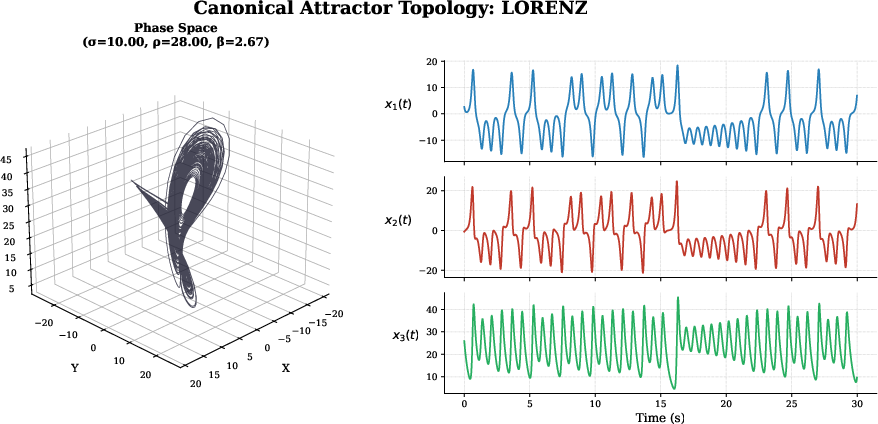
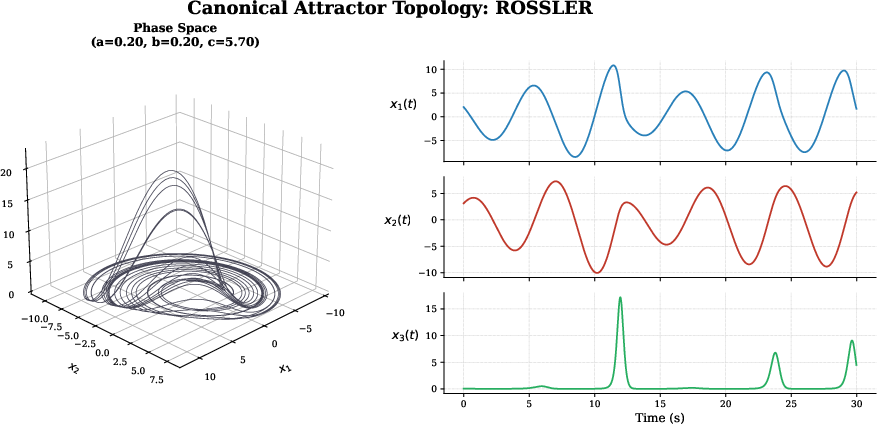
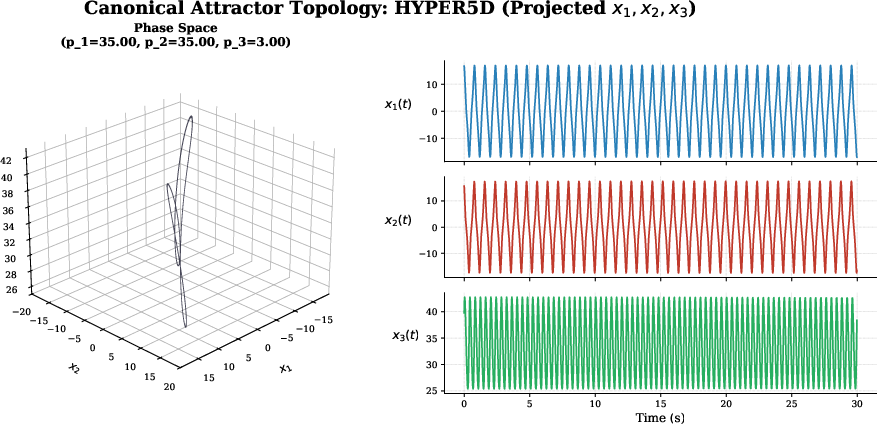
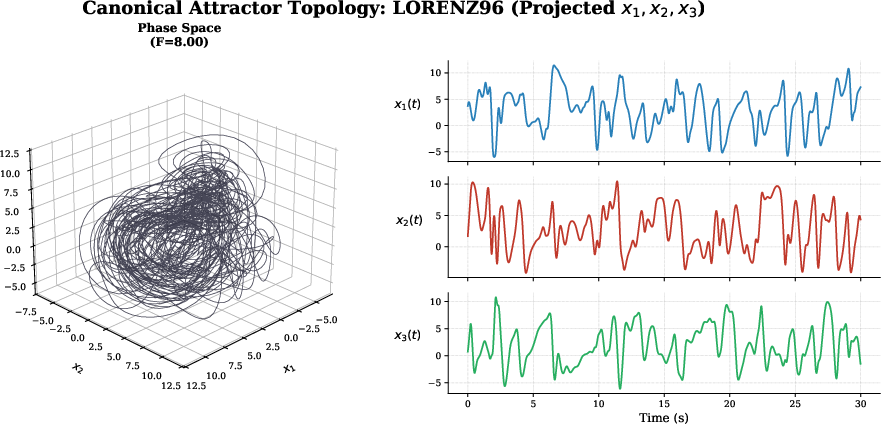
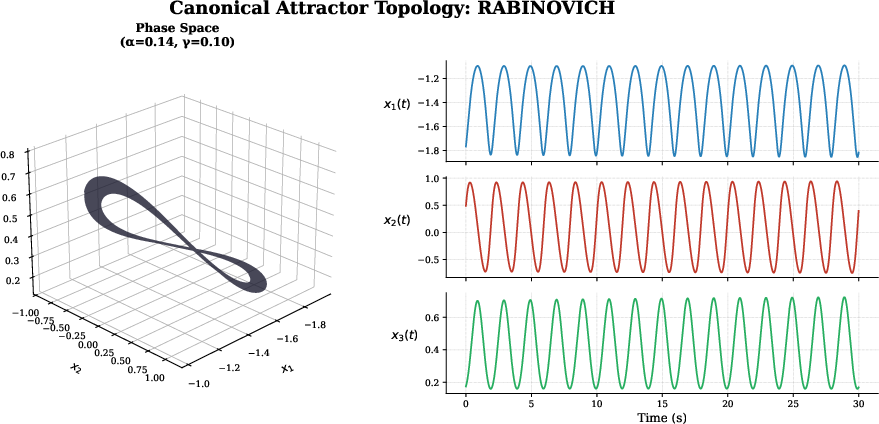
Figure 1: The Lorenz (3D) double-scroll butterfly attractor—representing canonical chaos and phase-space folding.
Experimental Protocol and Baseline Comparison
Tests are conducted at 10% observation density with additive noise (σ=0.05), against EnKF, unconstrained diffusion (Pure AI), score-based CSDI, GRU-ODE, and ESN. Both in-distribution (ID) and out-of-distribution (OOD) regimes probe generalization across bifurcation boundaries.
PIDM-DP achieves lowest mean RMSE across all benchmarks except smooth well-conditioned systems, where EnKF retains advantage due to perfect equation knowledge.
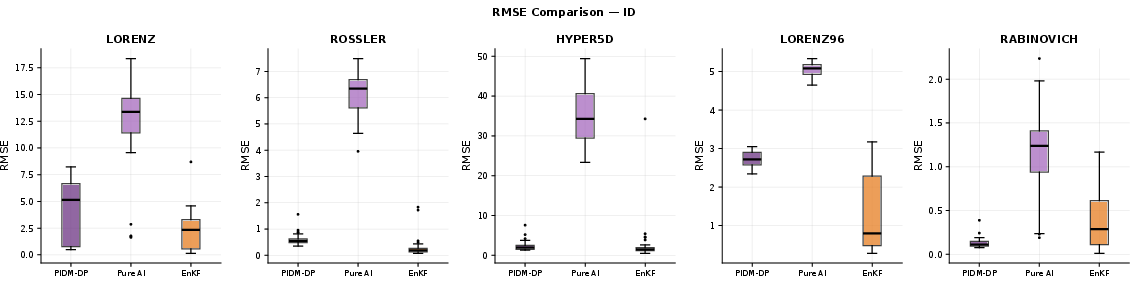
Figure 2: RMSE distributions, ID scenario—PIDM-DP preserves low error and variance across complex systems, while Pure AI is catastrophic on stiff/hyperchaotic cases.
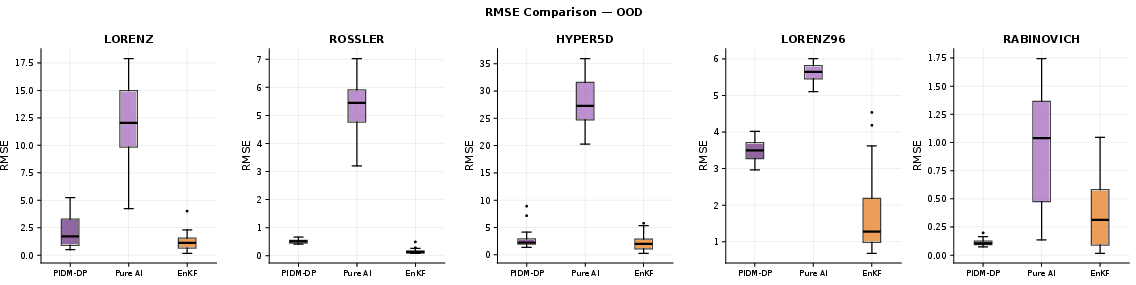
Figure 3: RMSE distributions in OOD—PIDM-DP decisively outperforms EnKF and Pure AI on Rabinovich-Fabrikant, demonstrating robustness across bifurcations.
Physical and Topological Fidelity
Phase-space portrait analysis reveals the unconstrained Pure AI baseline generates trajectories visually plausible but devoid of physical manifold structure, instead mimicking smooth limit cycles. PIDM-DP's physics enforcement guarantees chaotic manifold fidelity and correct fractal geometry, as evidenced by qualitative phase-space reconstruction.
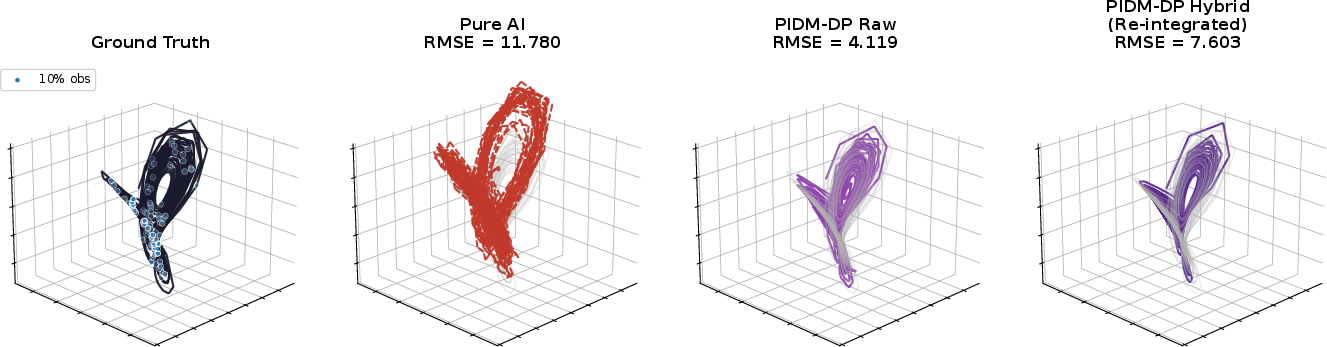
Figure 4: PIDM-DP traces fractal attractors correctly; Pure AI collapses to smooth, non-physical orbits—highlighting manifold-level enforcement.
Lyapunov Exponent Validation
Lyapunov exponent analysis illustrates PIDM-DP's structural preservation. Without guidance, models suffer mode collapse (Rabinovich-Fabrikant: λmaxAI∼0.042), while PIDM-DP achieves near-ground-truth exponents, validating correct local phase-space stretching/folding.
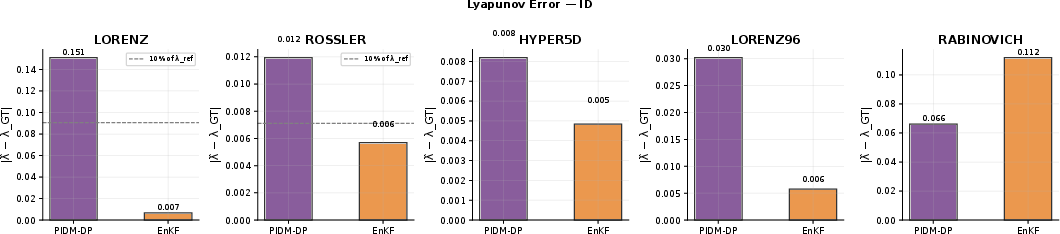
Figure 5: PIDM-DP retains chaotic topology and Lyapunov exponents; Pure AI collapses to near-zero exponents in stiff regimes.
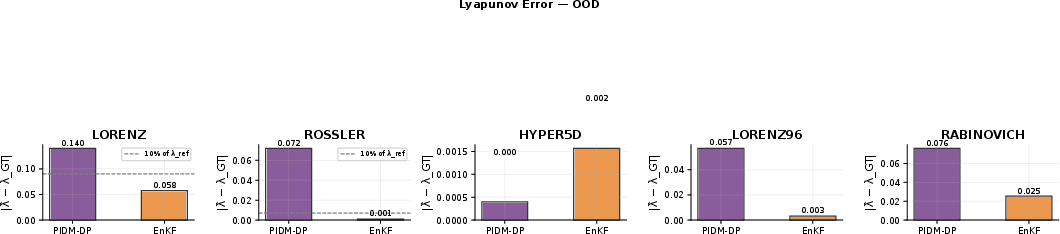
Figure 6: OOD analysis—PIDM-DP maintains Lyapunov fidelity across parameter regimes; gradient schedule ensures robustness to bifurcation.
Ablation and Extended State-of-the-Art Comparison
Physics weight ablation demonstrates that even minimal guidance (λbase=0.5) achieves dramatic manifold adherence. PIDM-DP’s extended comparison with CSDI, GRU-ODE, and ESN reveals order-of-magnitude RMSE improvements, particularly on stiff and hyperchaotic systems (Hyper5D OOD: CSDI $207.7$ vs. PIDM-DP $2.67$).
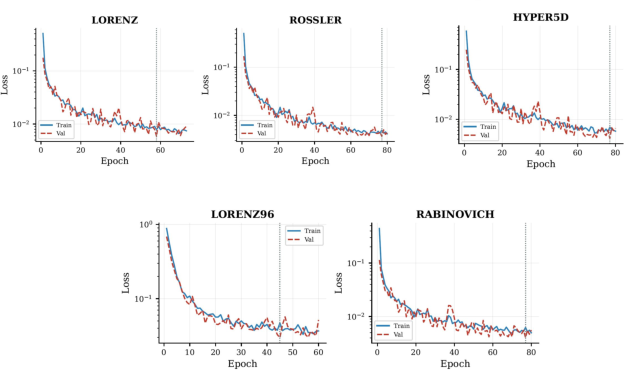
Figure 7: Physics weight ablation—PIDM-DP robustly improves upon Pure AI for all systems; schedule selection straightforward.
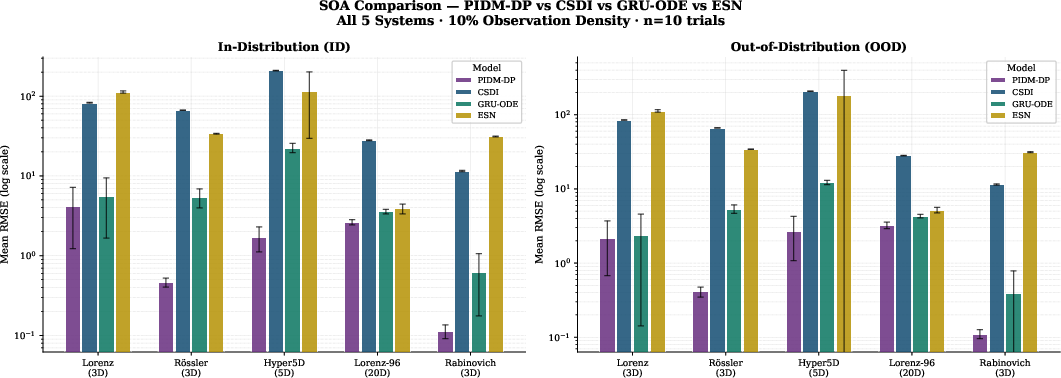
Figure 8: PIDM-DP outperforms all modern baselines in mean RMSE; gaps are largest for chaotic, stiff systems.
Implications, Limitations, and Future Directions
The main finding is that physics guidance is essential—not optional—for reliable chaotic state reconstruction. The constraint is robust even in unseen regimes, confirming generalization across bifurcations and stiffness.
Practical implications: PIDM-DP enables amortized inference and implicit system identification; global bifurcation parameters are recovered with $1$–9% MAPE, even from sparse state observations, whereas local geometric parameters remain uncertain due to chaotic equifinality.
Limitations: PIDM-DP demands prior equation knowledge, with inference time ∼42–O(103)0 s per trajectory—O(103)1 EnKF. Performance on smooth systems remains bounded by EnKF.
Future directions include:
- DDIM-accelerated sampling for real-time deployment,
- ODE/PDE field discovery integration (e.g., SINDy, Neural ODEs),
- Extension to spatio-temporal and non-autonomous systems.
Conclusion
PIDM-DP demonstrates that embedding differentiable physics via DP-RK45 in generative diffusion models enables precise reconstruction of chaotic states and robust implicit system identification under extreme sparsity and stiffness. Performance exceeds statistical and ensemble-based methods, especially on hyperchaotic and stiff systems. This positions physics-informed diffusion as a principled approach for high-fidelity data assimilation and system identification in nonlinear dynamical regimes (2605.26619).