- The paper presents a unified covariant framework that reconstructs static, spherically symmetric teleparallel F(T) solutions coupled with Maxwell fields.
- It derives closed-form solutions in constant and areal radius sectors, revealing modifications to Reissner–Nordström horizons and torsion-induced deformations.
- The invariant classification and stability analysis highlight branches supporting both charged black holes and wormhole-like geometries with effective NEC violation.
Teleparallel F(T) Electromagnetic Static Spherically Symmetric Spacetime Solutions
The paper develops a systematic investigation of static, spherically symmetric (SS) spacetimes within covariant teleparallel F(T) gravity coupled to electromagnetic sources. The teleparallel framework utilizes the tetrad (coframe) h μa and a flat spin connection ω bμa, ensuring local Lorentz invariance and distinguishing inertial from gravitational contributions. This approach circumvents earlier non-covariant formulations that led to spurious constraints and frame-dependent restrictions. Gravity is encoded by torsion—in particular, the torsion scalar T—replacing the Ricci scalar R of General Relativity (GR). Modified teleparallel F(T) theories, where the action depends on a generic function F(T), have found applications in cosmology and alternatives to GR.
Electromagnetic coupling is introduced via Maxwell fields, leading to charged and mixed field configurations far richer than the classical Reissner–Nordström (RN) structure. The covariant Einstein–Maxwell field equations are derived explicitly in the coframe/spin-connection formalism. The antisymmetric sector, arising from Lorentz covariance, strongly restricts admissible electromagnetic field configurations and the associated teleparallel models.
Conservation Laws, Electromagnetic Solutions, and Invariant Classification
The static SS Maxwell sector produces closed-form conservation law solutions for radial electric, radial magnetic, and mixed configurations. The antisymmetric teleparallel field equations enforce nontrivial restrictions, typically precluding transverse electromagnetic modes and imposing constant or radial scaling on electric and magnetic fields.
The paper employs invariant classification methods extended from the Cartan–Karlhede formalism. Fundamental torsion invariants (e.g., TμνρTμνρ, ∇μT∇μT) are used to separate solution classes, avoiding coordinate-dependent ambiguities. The classification organizes admissible teleparallel branches into TEGR (linear), power-law (PL), logarithmic (LOG), exponential (EXP), and composite (COMP) models, each with distinct geometric, scaling, and stability properties.
Exact Solutions: Constant Radius and Areal Radius Branches
Constant Radius (F(T)0) Sector
Closed-form reconstruction techniques are derived for the constant-radius sector, which includes generalized Nariai and Bertotti–Robinson geometries and effective cosmological vacua. Power-law coframe ansatz enable systematic construction of F(T)1 functions compatible with symmetric and antisymmetric constraints. Stability analysis is provided via the ratio F(T)2, showing ghost/tachyon-free regimes linked to exponent F(T)3. The constant-radius solutions effectively absorb electromagnetic energy into the cosmological sector, leading to GR-equivalent or modified vacuum branches.
Areal Radius (F(T)4) Sector and Charged Black Hole-like Solutions
The areal-radius sector is centrally relevant for compact object physics. Modified F(T)5 field equations produce charged solutions generalizing the RN metric, admitting complex horizon structures and torsion-induced deformations.
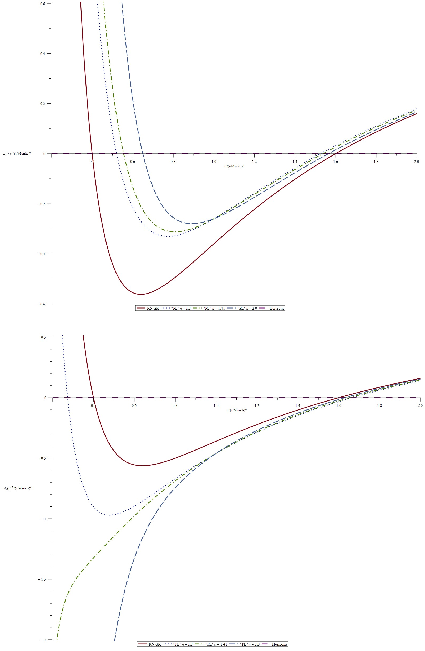
Figure 1: F(T)6 versus F(T)7 for PL F(T)8 with varying exponent F(T)9 and fixed coupling h μa0, illustrating corrections to RN horizon behavior.
Strong numerical results highlight the deformation of horizon locations and causal structure as a function of torsion parameters and the nonlinear form of h μa1. For PL configurations (e.g., h μa2), short-distance torsion corrections shift or regularize horizons depending on h μa3 and h μa4. LOG and EXP sectors modify infrared/asymptotic or strong-field limits, respectively. Multi-scale composite models enable horizon regularization and rich geometric behavior.
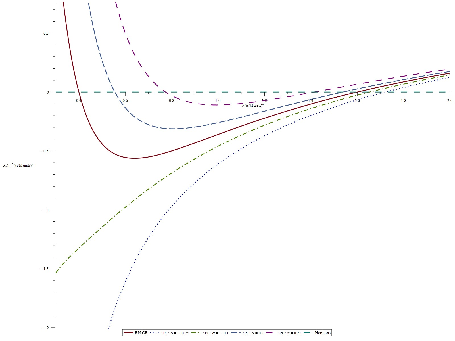
Figure 2: Effect of varying PL coupling h μa5 on the lapse function for fixed exponent h μa6, illustrating horizon displacement and potential regularization.
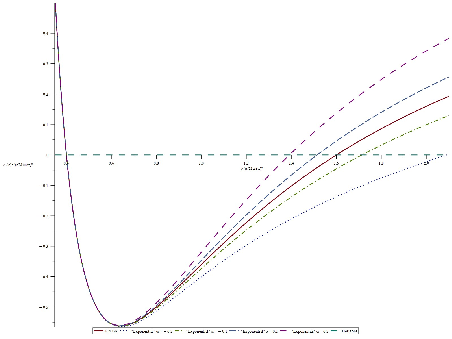
Figure 3: EXP model corrections to the lapse function, showing nontrivial near-core behavior and modification of RN horizon structure.
Multi-scale torsion profiles (Figure 4) clarify the influence of scaling parameters on singularities and regularization.
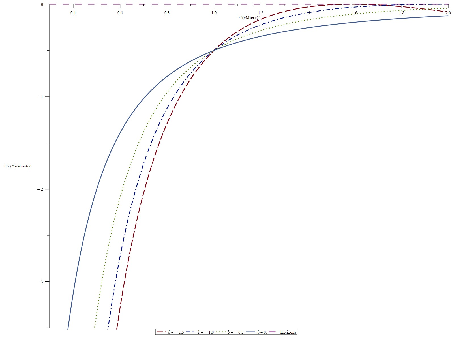
Figure 4: Torsion scalar h μa7 profiles vs. h μa8 for varying h μa9 values, demonstrating the transition between singular, critical, and regularized behavior at the core.
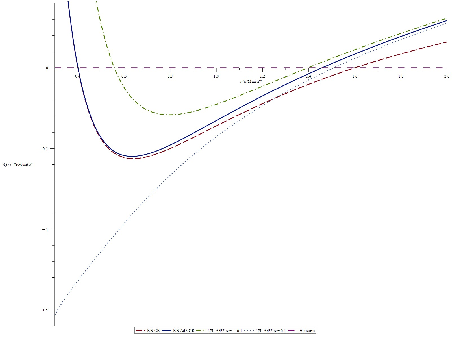
Figure 5: Modified PL lapse functions with negative effective cosmological constant, illustrating RN–AdS asymptotics and teleparallel corrections.
Stability and physical admissibility are governed by positivity conditions on ω bμa0 and ω bμa1, which select parameter regions corresponding to singular, critical, or regularized compact-object structures.
Wormhole-like Branches and NEC Violation Mechanism
The study extends to wormhole-like (WH-like) configurations. Using the Morris–Thorne parametrization, throat conditions are derived and linked to torsion regularity and absence of divergences in higher invariants. The analysis shows that nonlinear ω bμa2 sectors can shift NEC violation requirements from matter to effective torsion, potentially supporting WH-like geometries without exotic matter.
Invariant classification yields a taxonomy of WH-like solutions by functional form of ω bμa3 and NEC violation source. Branch-dependent stability is addressed at both scalar-torsion and throat levels; only restrictive nonlinear ω bμa4 branches simultaneously satisfy regularity, stability, and geometric compatibility.
Implications and Outlook
The results unify the geometric, invariant, and dynamical analysis of static SS compact objects in teleparallel ω bμa5 gravity with electromagnetic fields, encompassing BH-like and WH-like sectors. Teleparallel gravity admits enlarged solution spaces relative to GR, including modified charged compact objects and torsion-supported wormholes.
Practically, these findings have strong implications for strong-field astrophysical tests, BH shadow observations, gravitational lensing, and quasi-normal mode spectra. Theoretically, the approach advances the geometric classification and reconstruction of physically viable teleparallel models, clarifying the intersection of torsion dynamics and electromagnetic sources. NEC violation via torsion offers a route to traversable WH configurations in physically motivated branches.
Future developments include coupled perturbation analysis, explicit traversability and geodesic completeness conditions, and constraints from strong-field observations on teleparallel parameters and torsion signatures.
Conclusion
This work delivers a unified covariant framework for constructing and interpreting static SS electromagnetic solutions within nonlinear teleparallel ω bμa6 gravity. The explicit reconstruction procedure, invariant classification, and stability diagnostics demonstrate the landscape of possible compact-object, cosmological, and regularized strong-field sectors. By clarifying the geometric, electromagnetic, and torsion interplay, the research situates teleparallel modified gravity as a practical extension for strong-field astrophysical applications and theoretical insight beyond General Relativity.

