- The paper introduces a channel-first compilation paradigm that treats quantum channels as primary objects to optimize non-unitary quantum operations.
- It employs ChannelIR and LindFront to systematically convert Lindbladian generators into optimized quantum circuits, achieving up to 99% gate reduction.
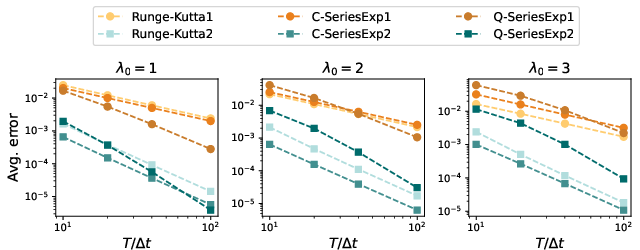
- Empirical evaluations demonstrate that structure-aware optimizations significantly lower circuit latency and gate counts while maintaining simulation accuracy within theoretical bounds.
Detailed Essay: A Compilation Framework for Quantum Simulation of Non-unitary Dynamics
Motivation and Problem Statement
Quantum simulation forms a critical application domain for quantum computing, encompassing both closed-system (unitary) and open-system (non-unitary) dynamics. While established quantum compilation frameworks have successfully supported closed-system algorithms by focusing on reversible unitary circuit representations, the modeling and simulation of open-system dynamics—characterized by quantum channels and Lindbladian generators—has seen rapid algorithmic progress but lacks adequate compiler infrastructure. The abstraction mismatch between current compiler workflows and channel-based quantum algorithms introduces expressiveness gaps, impedes channel-level optimization, and results in significant circuit resource overhead.
The paper "A Compilation Framework for Quantum Simulation of Non-unitary Dynamics" (2605.23358) addresses this gap by proposing and instantiating a channel-first compilation paradigm. Quantum channels, particularly those emerging from open-system models such as Lindbladian evolutions, are treated as first-class compilation objects. This enables explicit representation, algebraic transformations, and structure-preserving optimizations prior to circuit synthesis.
Compilation Framework: ChannelIR and LindFront
The central contribution is the ChannelIR intermediate representation, which encodes quantum channels explicitly in Kraus form with Pauli-sum structures. This design supports symbolic manipulation and rewrite rules, such as elimination of redundant Kraus operators, merging, and phase normalization, fundamentally improving the ability of the compiler to optimize non-unitary transformations.
Pauli-sum atomicity further aligns ChannelIR with block-encoding and LCU-based circuit implementation methods. ChannelIR terms can be lowered to executable quantum circuits systematically using block-encoding synthesis and channel-LCU constructions. Further, the IR accommodates dimension consistency and semantic invariants, providing robustness against algebraic manipulations.
The LindFront frontend performs algorithmic lowering by transforming Lindbladian generators—specified by Hamiltonians and jump operators—into short-time quantum channels in ChannelIR. Both first-order and higher-order expansion strategies are supported, with formal guarantees on simulation accuracy and compatibility with structure-aware compiler passes.
Structure-aware Circuit Optimizations
Naive channel-LCU implementations yield circuits with excessive control overhead, primarily due to multiplexor-style multi-controlled gates. The framework introduces two structure-aware optimization techniques:
- Conditional Flattening (Technique I): Applied at the channel-LCU level, this optimization reduces control arity using ancilla-assisted transformation (unary iteration), substantially decreasing T-gate count while preserving efficient ancilla usage.
- Monotone-control Decomposition (Technique II): Exploits the Pauli-sum algebraic structure maintained within ChannelIR. It heuristically minimizes the total controlled Pauli operation cost by optimizing the assignment of Pauli strings to control addresses and factorizing into monotone-control decompositions. The method enhances block-encoding efficiency and can achieve optimality for highly structured Pauli-sum families.
Empirical Evaluation
Extensive benchmarks demonstrate significant resource reductions. For both Lindbladian-simulation and general channel benchmarks:
Theoretical and Practical Implications
The channel-first compilation paradigm redefines abstraction boundaries in quantum compiler design, enabling direct programming and optimization of open-system algorithms. By leveraging explicit channel/Kraus representations and algebraic rewrite systems, compilers can exploit channel-level structure, minimize circuit resource requirements, and scale to larger non-unitary workloads unobtainable with classical Stinespring dilation.
This abstraction is not limited to open-system dynamics; the underlying block-encoding and LCU formulations can also enhance closed-system simulation via QSVT and related quantum algorithms. The framework's modularity, in expressing both channel-level and Pauli-level structure, accommodates further optimization strategies and specialization for domain-specific quantum workloads.
Future Directions
Key future directions include:
- Extension to hybrid closed/open quantum algorithms, combining Hamiltonian and channel abstractions for broader simulation tasks.
- Integration of structure-aware optimization heuristics with automated circuit synthesis routines, potentially incorporating machine learning approaches for Pauli assignment and control minimization.
- Expansion of ChannelIR to accommodate additional channel representations (e.g., Choi matrices) and deeper interface with analog quantum devices.
- Investigation of quantum error mitigation within channel-level compilation, leveraging explicit modeling of dissipation and decoherence.
Conclusion
The framework delineated in "A Compilation Framework for Quantum Simulation of Non-unitary Dynamics" (2605.23358) advances quantum compiler design for open-system algorithms by introducing a channel-first intermediate representation, a domain-tailored Lindbladian frontend, and high-yield structure-aware circuit optimizations. The empirical and theoretical results establish channel/Kraus-level abstraction and optimization as integral to scalable quantum simulation of non-unitary dynamics, with immediate applicability in state preparation, optimization, and differential equation solving on quantum hardware. The approach is expected to influence both practical compiler implementations and theoretical studies of quantum programming languages, particularly in the context of emerging channel-first quantum algorithms.