- The paper introduces a novel hierarchical rPPG framework that quantizes PPG signals into multi-bit pseudo labels to counter ground-truth noise and improve estimation accuracy.
- The method employs a coarse-to-fine model where low-bit supervision captures global cardiac rhythms and high-bit supervision refines waveform details across diverse datasets.
- The experimental analysis demonstrates that LQ-rPPG outperforms state-of-the-art approaches with fewer parameters and enhanced robustness, making it viable for edge and clinical applications.
LQ-rPPG: A Label-Quantized Coarse-to-Fine Learning Framework for Remote Physiological Measurement
Introduction and Motivation
Remote photoplethysmography (rPPG) leverages optical signals from facial videos to enable non-contact blood volume pulse (BVP) estimation, facilitating remote cardiovascular monitoring via commodity cameras. Previous advancements—spanning 2D/3D CNNs, RNNs, and Transformer/Mamba architectures—have predominantly focused on spatial-temporal representation learning. However, the impact of ground-truth label quality on model robustness and generalization has been underexplored. Contact-based PPG signals, serving as supervision, exhibit multi-scale noise and variability, including intra- and inter-subject waveform distortions, amplitude fluctuations, and motion-induced artifacts, which compromise label consistency and lead to overfitting (Figure 1).
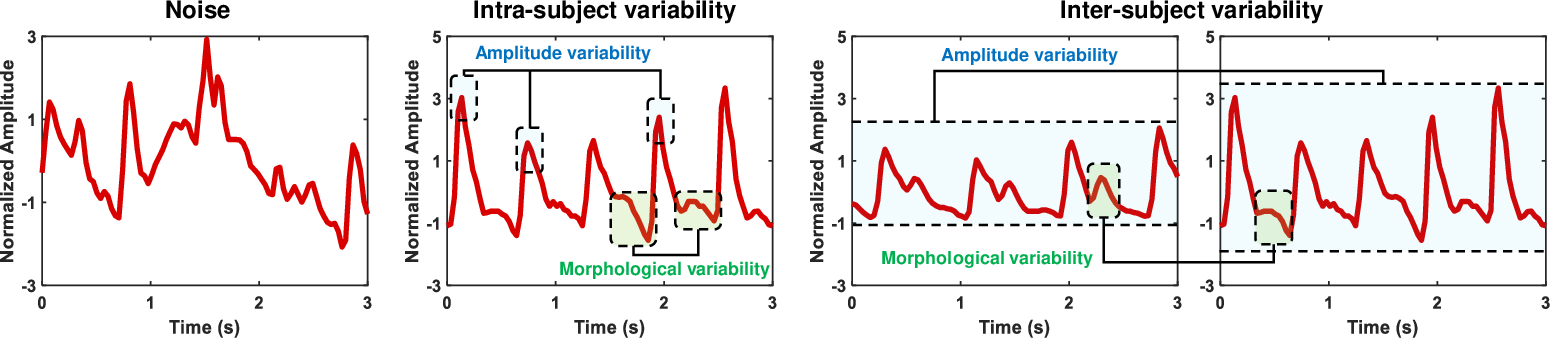
Figure 1: Examples of noise and variability in contact-based PPG signals used as ground truth.
This paper introduces LQ-rPPG, a label-centric paradigm that transforms continuous PPG signals via quantization and hierarchical supervision, structurally mitigating the impact of label noise and variability to facilitate robust and generalizable rPPG learning.
LQ-rPPG Framework
The LQ-rPPG comprises two principal modules: a label quantization (LQ) module and a coarse-to-fine (C2F) rPPG estimation model, tightly integrated via multi-bit pseudo labels.
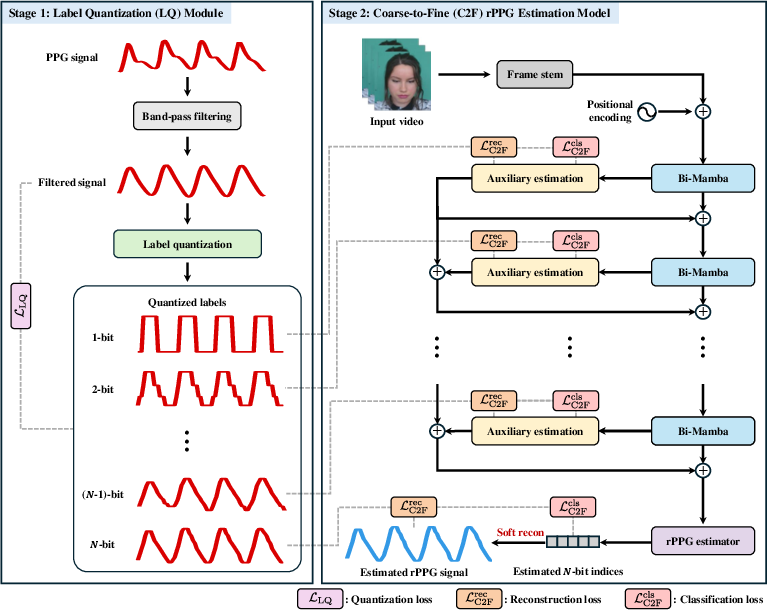
Figure 2: Overview of LQ-rPPG framework with label quantization and hierarchical rPPG estimation.
Label Quantization Module
The LQ module operates on temporally band-pass filtered PPG signals, converting them into multi-resolution discrete pseudo labels (1-5 bits) via adapted dilated convolutional and Bi-Mamba blocks. The quantization encoder produces temporally rich representations, subsequently mapped to codebook entries to yield multi-level label discretizations. The quantization is supervised by a composite loss enforcing signal reconstruction and feature commitment, with temporal and frequency-domain consistency to maximize physiological fidelity and minimize sample-specific variability.
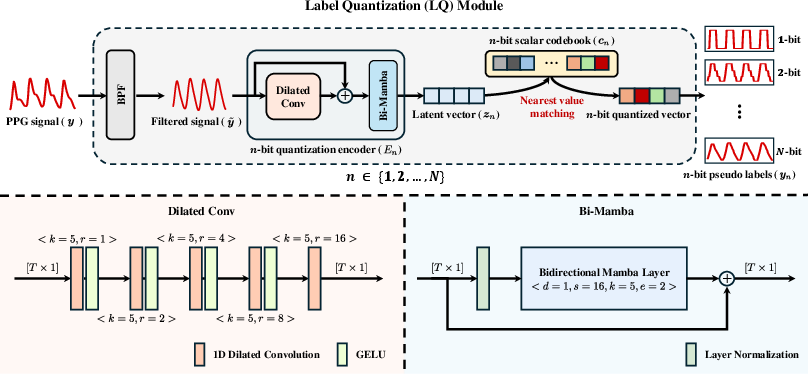
Figure 3: Architecture of the label quantization module, transforming PPG into multi-bit pseudo labels.
Coarse-to-Fine Estimation Model
The C2F model ingests video clips, compresses them via a frame stem, and refines temporal features hierarchically using stacked Bi-Mamba blocks. Each refinement stage adds auxiliary supervision from corresponding bit-level pseudo labels—classification and reconstruction losses—allowing the model to learn stable global cardiac rhythms at low bit-depth, progressively incorporating finer waveform nuances at high bit-depth. The final rPPG estimation leverages 5-bit supervision, balancing resilience to label instability and high-fidelity waveform reconstruction.
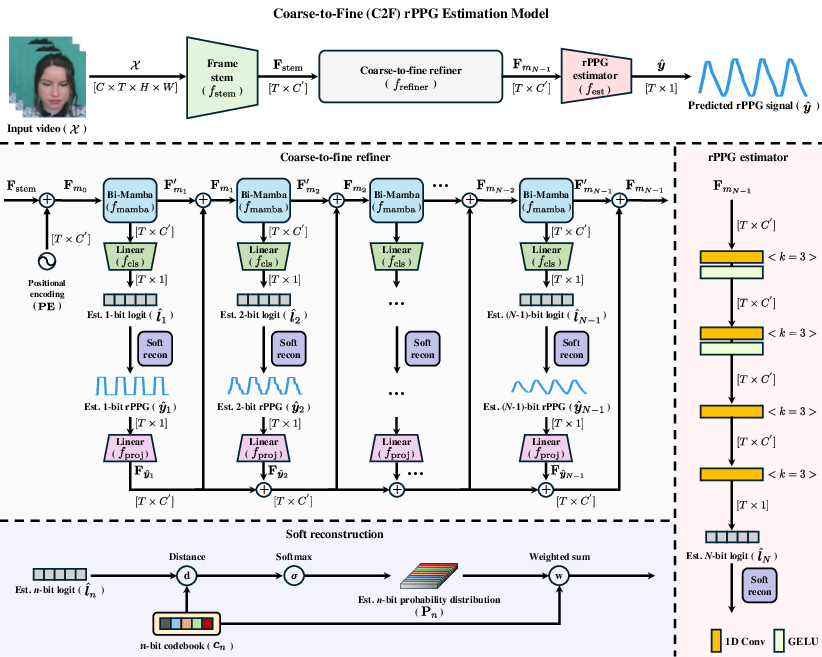
Figure 4: Schematic of coarse-to-fine rPPG estimation model with hierarchical supervision.
Experimental Analysis
Dataset Diversity and Metrics
LQ-rPPG was validated across diverse public datasets—PURE, UBFC, COHFACE, V4V, and MMPD—spanning stable to challenging conditions (motion, illumination, skin tone). Evaluation metrics include HR MAE, RMSE, MAPE, Pearson’s ρ, and HRV metrics (LF, HF, LF/HF power) for both intra- and cross-dataset scenarios.
LQ-rPPG consistently outperforms competing models, especially under domain shift and challenging scenarios. On V4V and MMPD, LQ-rPPG achieves significant reductions in HR MAE/RMSE and improvement in correlation, demonstrating superior resilience to noise and variability—even compared to RhythmMamba and RhythmFormer, which are highly optimized for lightweight deployment. Cross-dataset transfer further evidences superior generalization, with LQ-rPPG maintaining high performance and minimal degradation.
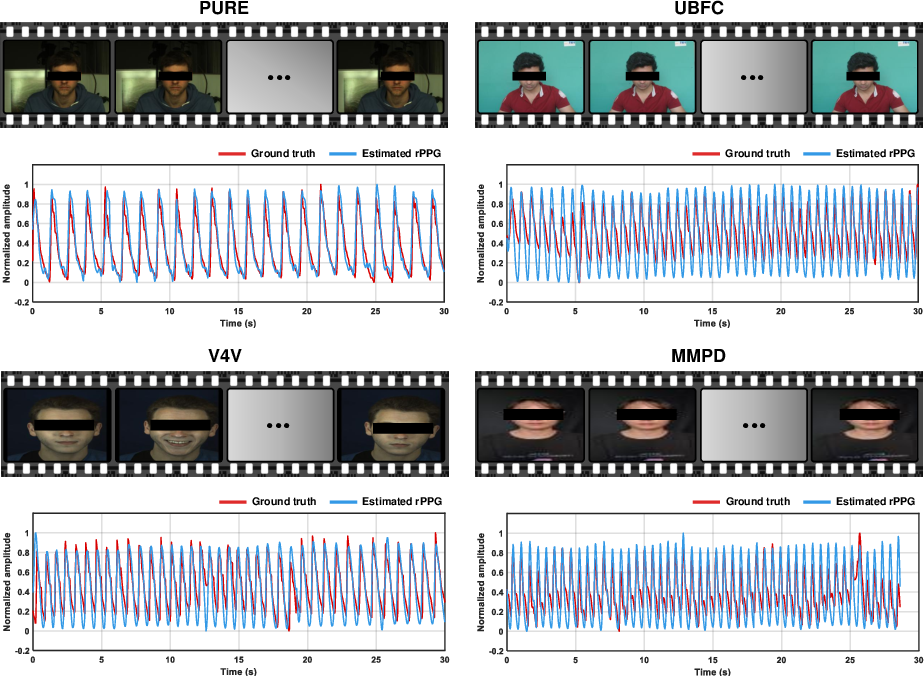
Figure 5: Visualization of rPPG estimation results on multiple datasets.
Statistical tests (Wilcoxon signed-rank) confirm significant improvements versus baselines.
Computational Efficiency
LQ-rPPG achieves 0.13M parameters and 57M MACs, reducing parameter count by 88% and MACs by 29% relative to the most efficient existing Mamba-based models, while throughput increases by 191% (20.35kfps). GPU memory consumption is minimized, confirming suitability for edge deployment.
Robustness to Supervision
Quantization-based learning substantially enhances stability and performance, outperforming band-pass filtering, smoothing, and uncertainty-aware approaches. The hierarchical supervision scheme, validated by ablation studies, is critical: low-bit supervision aids global rhythm extraction, and high-bit enables fidelity. Optimal bit-depth analysis confirms 5-bit quantization as fidelity-saturating, supported by codebook utilization statistics.
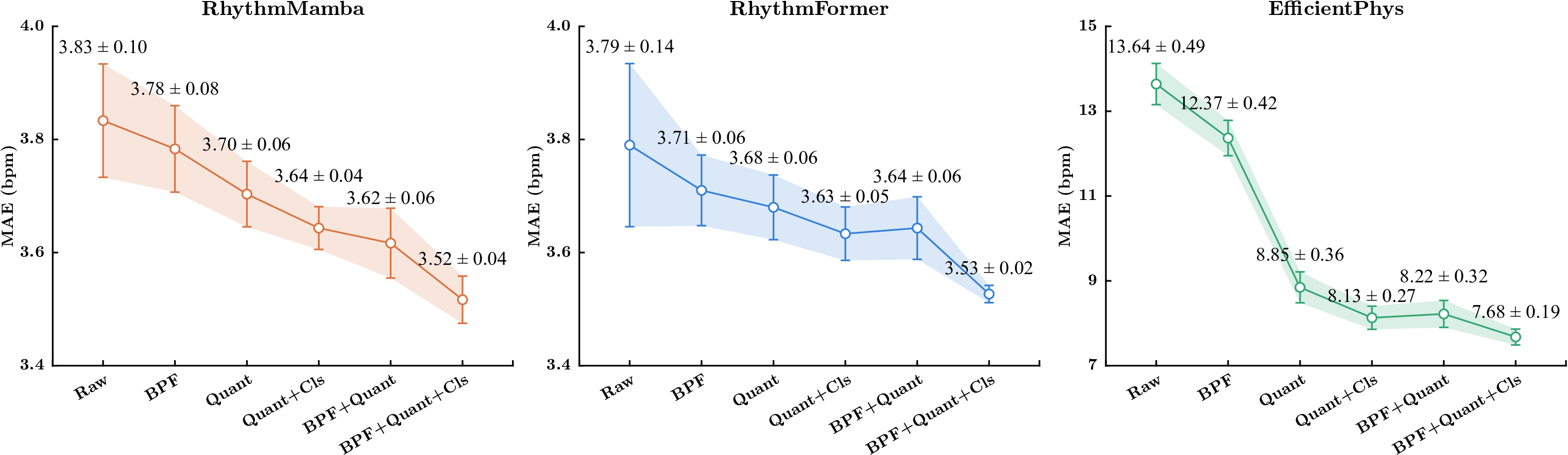
Figure 6: Comparative evaluation of multiple supervision settings on noisy labels.
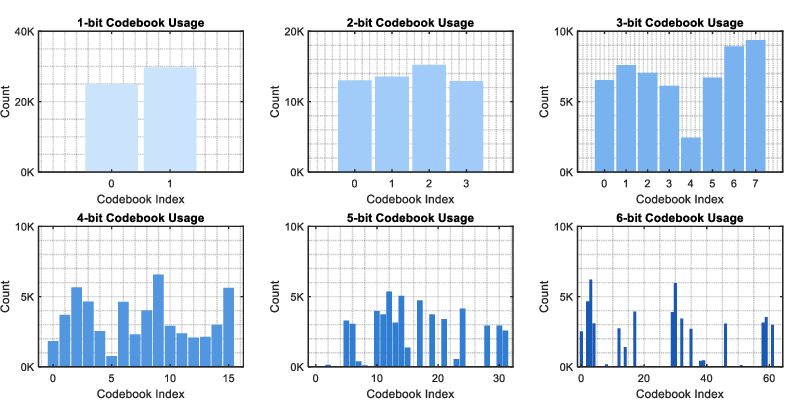
Figure 7: Codebook utilization profiles for quantized pseudo labels.
Loss Function and Training Strategy
The hybrid classification-regression loss achieves optimal balance at λce=1.0, outperforming pure regression or classification objectives. Two-stage training stabilizes intermediate supervision and sharply improves convergence over the end-to-end counterpart.
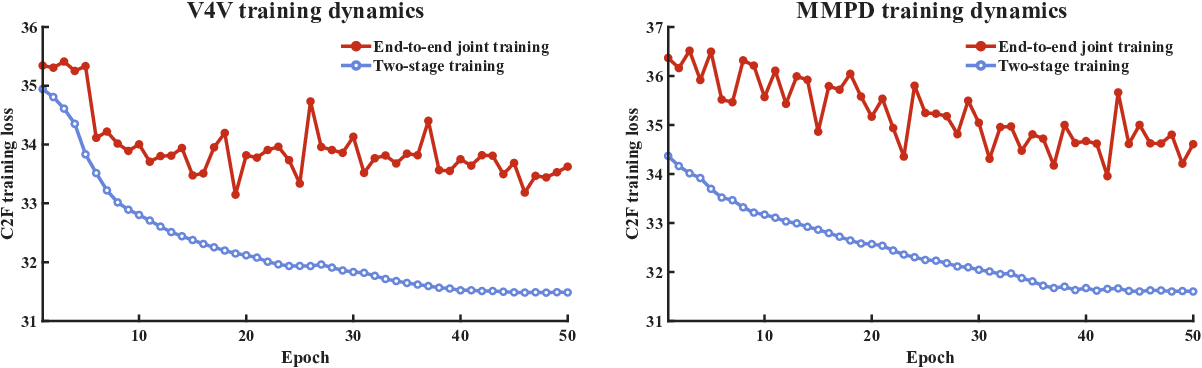
Figure 8: Training loss dynamics for two-stage versus end-to-end optimization.
Failure Modes
Extreme motion scenarios (e.g., walking in MMPD) can disrupt signal periodicity, indicating the need for advanced, input-level artifact correction or stronger spatiotemporal modeling.
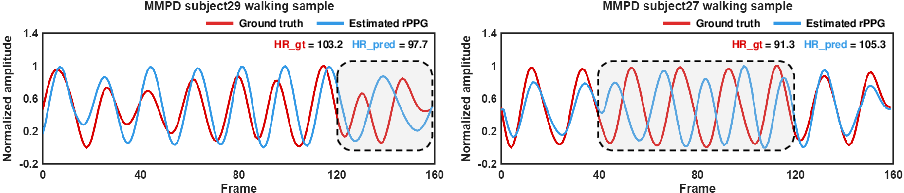
Figure 9: Failure cases in high-motion scenarios highlight limits of supervision-centric approach.
Practical and Theoretical Implications
LQ-rPPG demonstrates that supervision quality—particularly label structure and variability—is a critical axis for robust learning in rPPG and similar continuous signal domains. Hierarchical label quantization and structured guidance alleviate overfitting and generalization bottlenecks, facilitating efficient architectures with strong accuracy and deployment viability. The approach is extensible to other continuous-label tasks with noisy supervision, suggesting broad potential for clinical, mobile, and edge AI applications.
Conclusion
LQ-rPPG establishes a supervision-centric paradigm for rPPG estimation, combining multi-bit label quantization with coarse-to-fine hierarchical learning. Empirical results substantiate strong performance, generalization, and computational efficiency, validating the integration of stability and fidelity in label discretization. Future directions include expanding spatiotemporal modeling capacity and applying label-quantized supervision to other domains with real-world noisy labels.
References
See (2605.23174) for exhaustive citations and code availability.