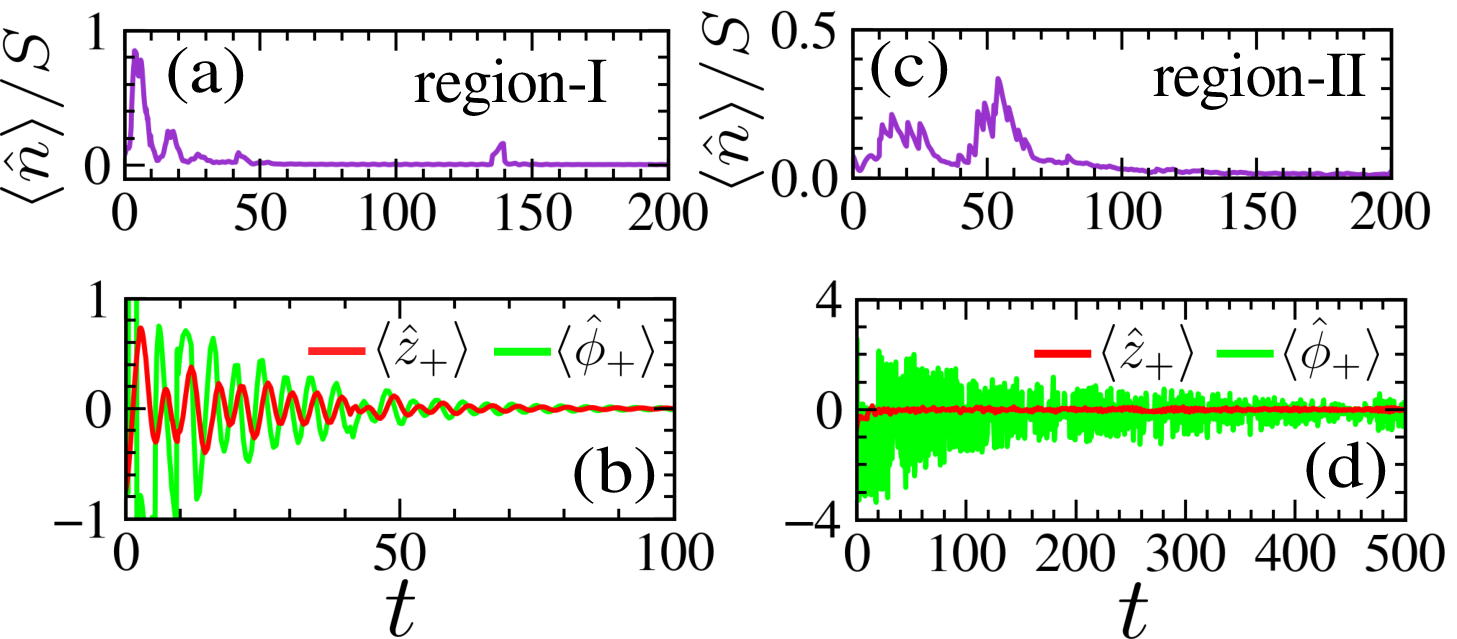
- The paper demonstrates that engineered photon loss via Lindblad dynamics drives the transition from chaos to synchronization in the open coupled‐top Dicke model.
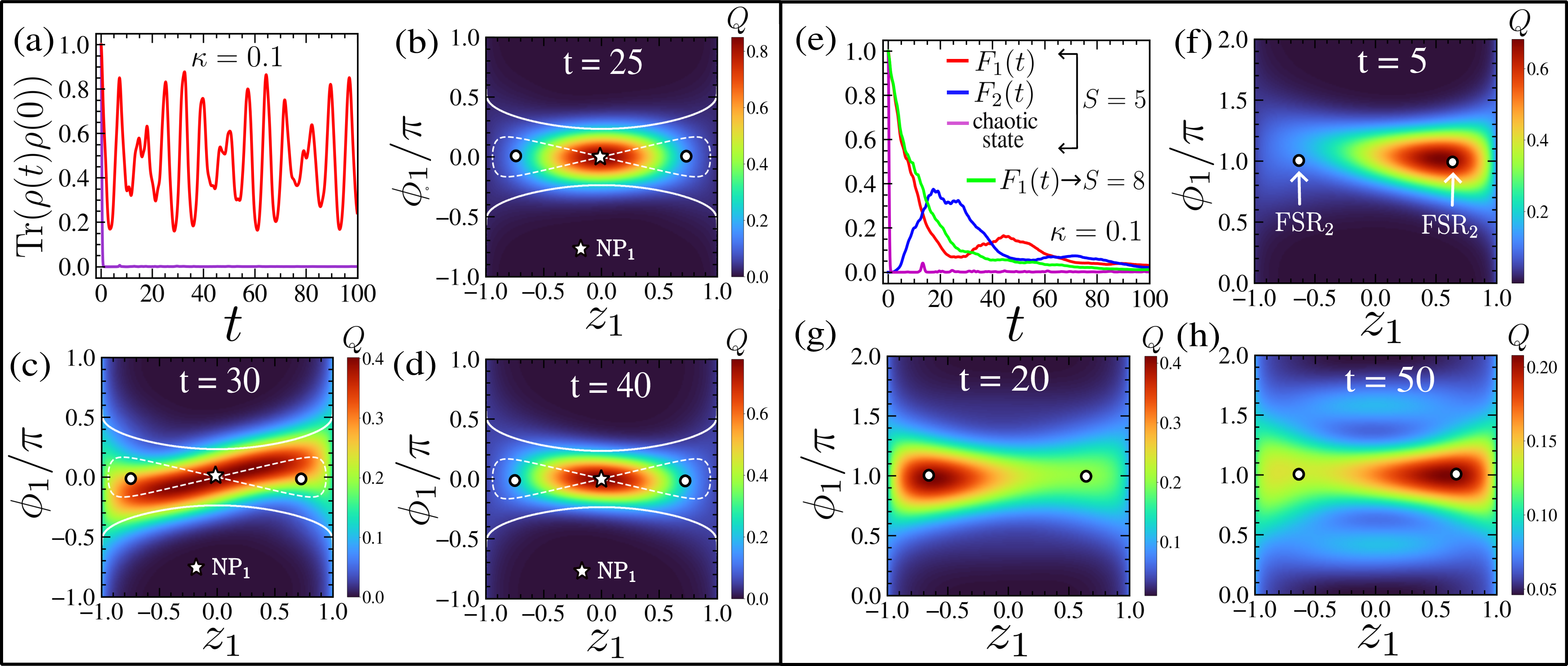
- The paper reveals persistent dissipation-protected quantum scars and chaos-assisted macroscopic tunneling, highlighting distinct survival probabilities and localization phenomena.
- The paper analyzes fixed-point configurations and dynamical regimes, establishing mechanisms for robust quantum state stabilization in cavity QED architectures.
Chaos, Synchronization, and Dissipative Quantum Scarring in the Open Coupled-Top Dicke Model
Model Definition and Physical Realization
The paper introduces the open coupled-top Dicke (OCTD) model, a hybrid quantum system comprising two antiferromagnetically interacting spin-S particles coupled to a single photonic cavity mode with frequency ωc and photon loss rate κ. This construction generalizes the canonical Dicke model by including spin-spin interactions and species degrees of freedom. Experimentally, the model is realized via a two-component Bose-Josephson junction embedded in a lossy optical cavity, effectively mapped to large collective spins using Schwinger boson mapping. Crucially, photon loss is modeled via Lindblad dynamics, resulting in non-unitary evolution and mixed states in the long-time limit (2605.22953).
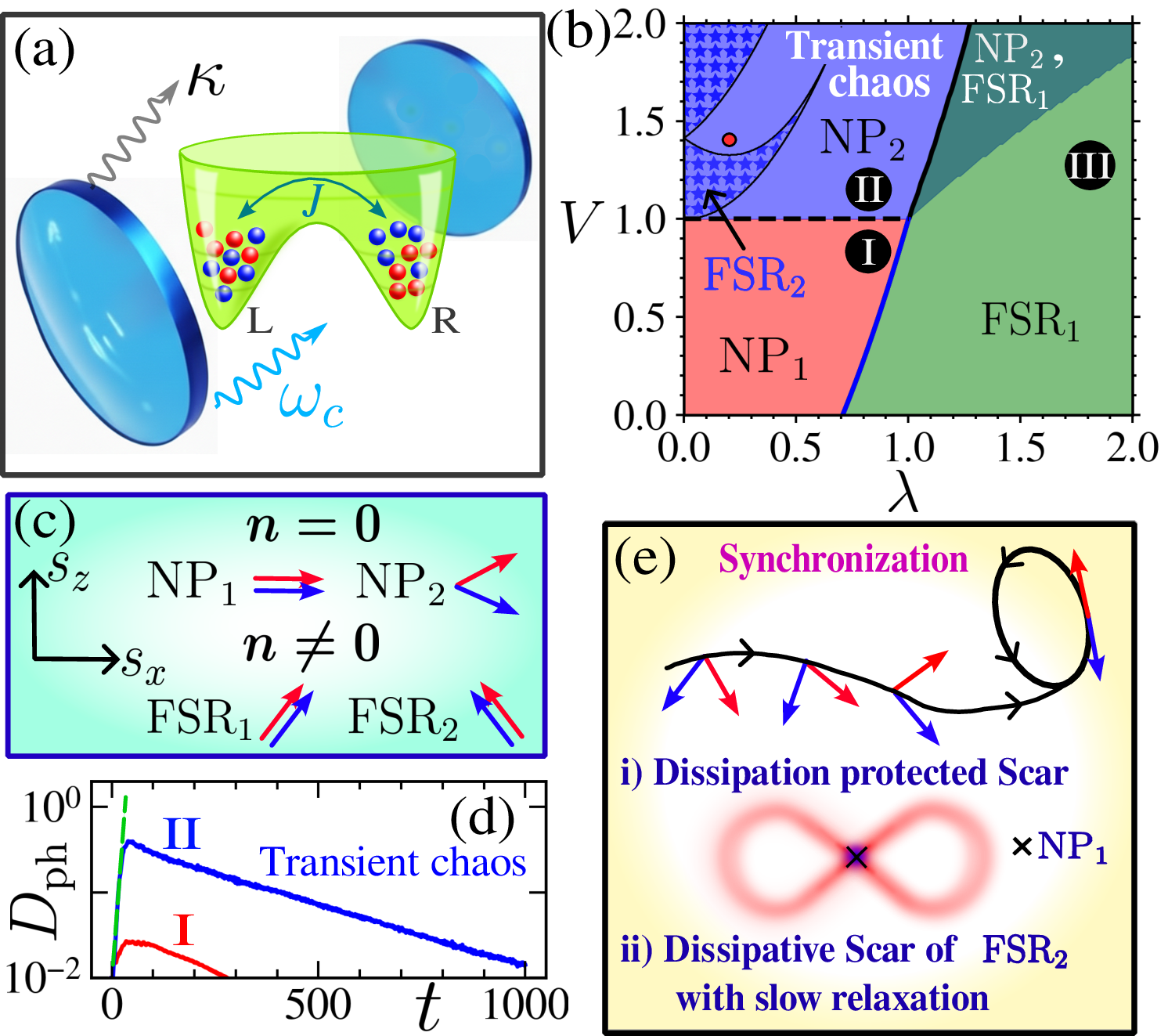
Figure 1: Schematic of the OCTD setup, phase diagram in the λ-V plane for fixed κ, fixed-point configurations, and decorrelator dynamics characterizing transient chaos.
Fixed Points, Dynamical Classes, and Phase Structure
The classical equations of motion admit fixed points corresponding to normal and superradiant phases:
- Normal Phase (NP1, NP2): Both characterized by vanishing photon number (n∗=0), with NP1 exhibiting parallel spins and NPωc0 an antiferromagnetic configuration determined by ωc1. For ωc2 (with ωc3 in the isolated case), NPωc4 experiences a bifurcation, leading to symmetry breaking.
- Ferromagnetic Superradiant (FSRωc5): Nonzero photon occupation with parallel spins, exhibiting symmetry-broken branches.
- Superradiant Excited State (FSRωc6): Phase occurs as an excited state in the isolated system; in open systems, it becomes an unstable fixed point, serving as the locus for dissipative quantum scarring.
Spin-exchange symmetry allows reduction to symmetric and antisymmetric dynamical classes. The antisymmetric class yields a decoherence-free subspace (DFS) with vanishing photon field, structuring regular periodic spin dynamics, and underpinning synchronization. Stability analysis reveals partial attractors: only a subset of modes exhibits decay, while the remainder sustains oscillatory motion at frequencies set by the imaginary parts of the stability matrix eigenvalues.
Dissipation-Induced Synchronization and Transient Chaos
Photon loss dynamically projects the system onto the DFS, enforcing synchronization between spins: the symmetric variables ωc7 and ωc8 decay to zero independent of initial conditions. Two parameter regions emerge:
The photon sector vanishes at late times, decoupling the spin evolution, which then reduces to integrable LMG-type dynamics.
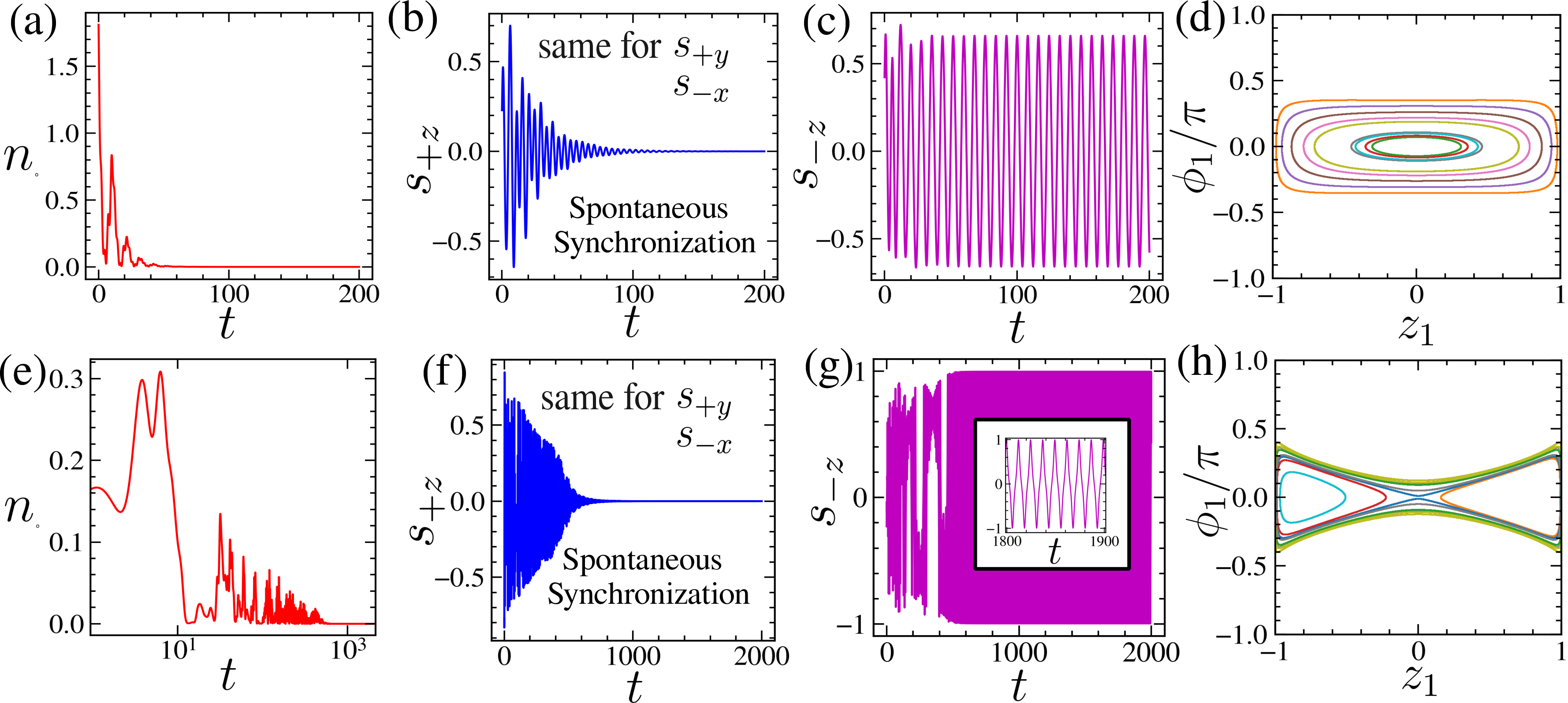
Figure 3: Classical trajectories of photon number and spin observables demonstrate rapid synchronization in region I, but delayed convergence in region II due to transient chaos.
Dissipative Quantum Scarring: Survival and Tunneling Phenomena
The study identifies two categories of dissipative scarring, both originating from unstable fixed points:
The chaos-assisted nature of MQT is established: tunneling is suppressed in the stable regime but enhanced under instability—chaotic mixing facilitates transitions between branches.
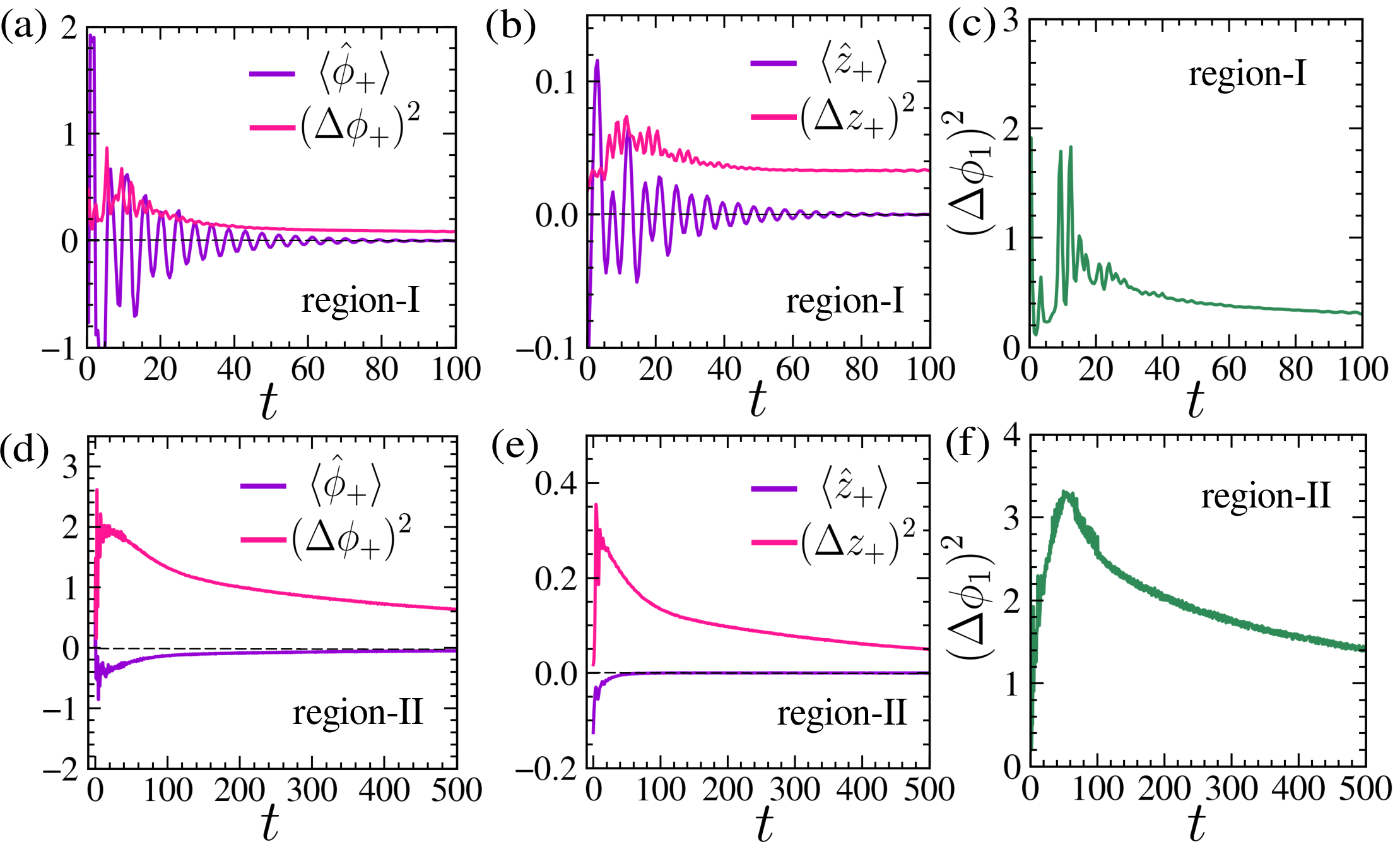
Figure 5: Quantum trajectory ensemble data demonstrating synchronization and phase fluctuation suppression across dynamical regimes.
Additional results highlight that synchronization persists even without explicit spin-spin coupling (κ7), showing robustness of the DFS under dissipation.
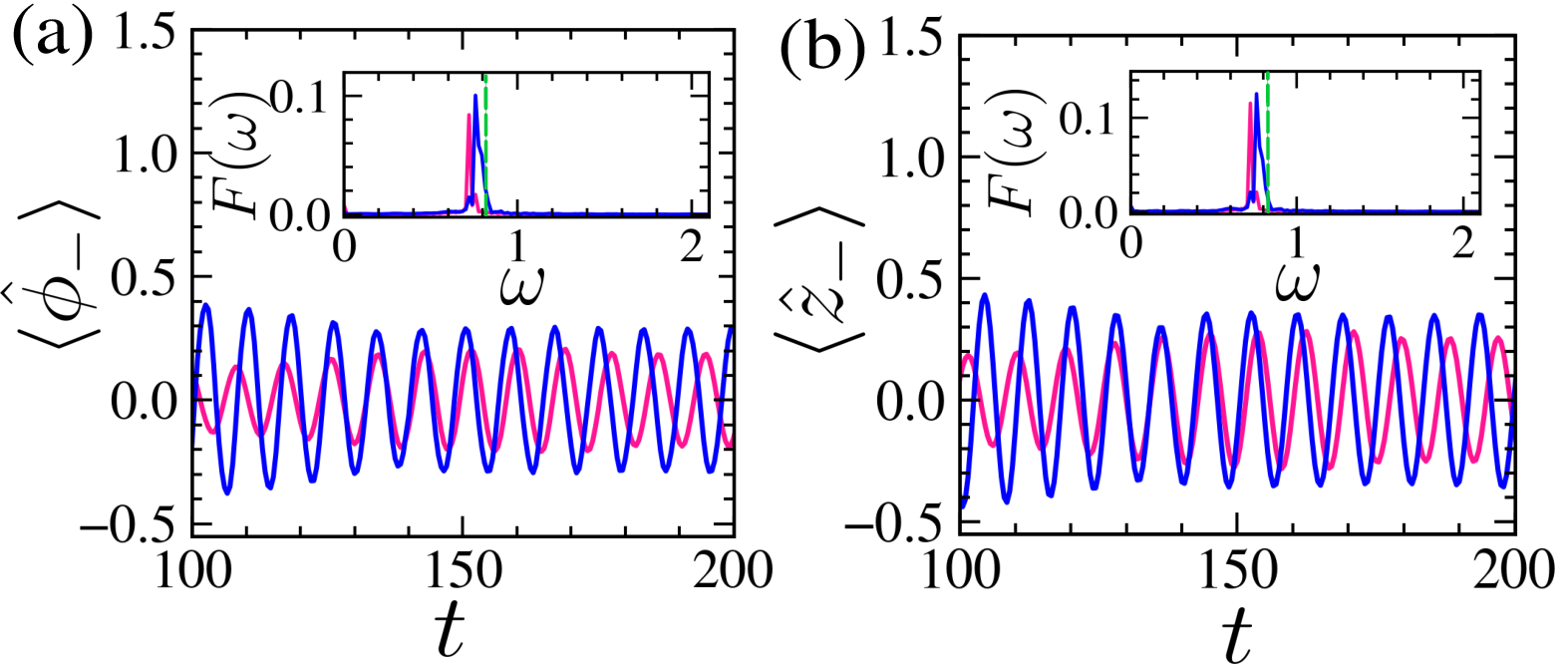
Figure 6: Coherent oscillatory evolution of collective phase and population imbalance in the regular regime, robust under quantum trajectory averaging.
Practical and Theoretical Implications
The OCTD model provides a testbed for probing the effects of engineered dissipation on non-equilibrium quantum phenomena, including quantum scars and information scrambling. Dissipation-induced synchronization offers mechanisms for stabilizing many-body coherence, relevant for large-spin qudit encoding and superradiant cat state generation in quantum computation and error correction. Controlled scrambling and chaos-suppression channels could be harnessed for quantum information processing and cavity QED architectures.
The persistence of certain quantum scars despite mixed steady states in the Lindblad framework challenges extant notions about eigenstate-based scarring, motivating further exploration of dynamical scarring in open systems, and raising questions about the universality of decoherence-free subspaces in many-body settings.
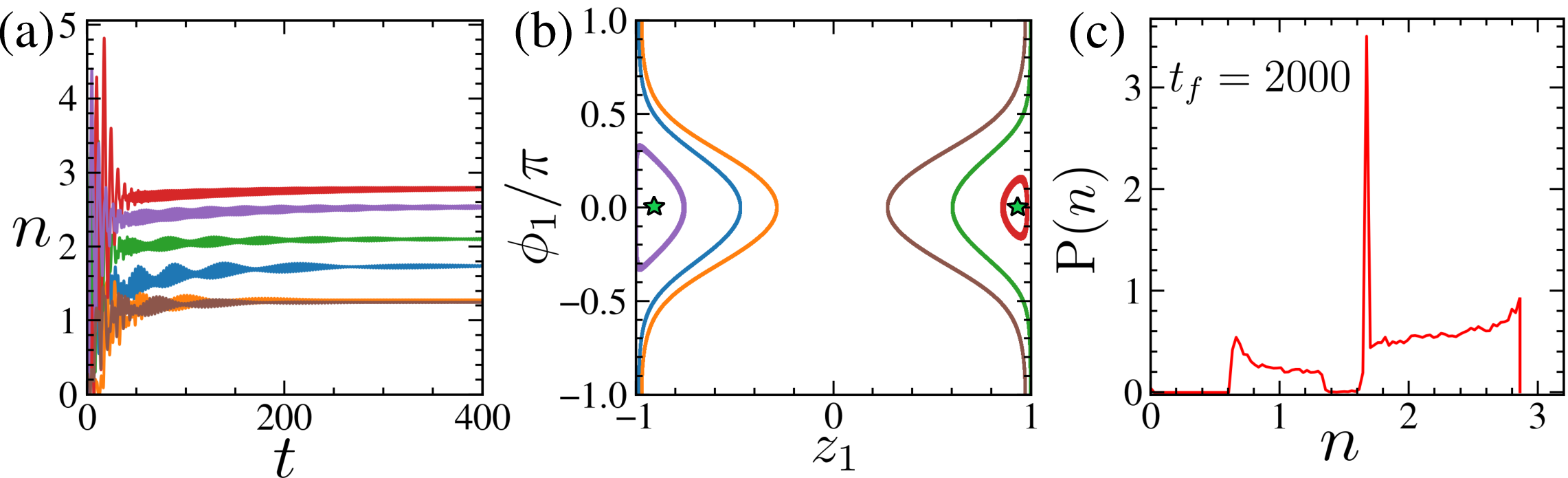
Figure 7: Superradiant phase stationary photon distributions and emergent self-organization in region III, reflecting non-unique attractors sensitive to initial conditions.
Conclusion
This work elucidates the interplay between chaos, dissipation, and synchronization in a generic many-body quantum system. The identification of dissipation-protected quantum scars and chaos-assisted tunneling in open quantum environments establishes novel dynamical mechanisms, with experimental relevance for cavity-coupled bosonic systems and broader implications for quantum control, information, and ergodicity-breaking. Future directions include characterization of scar stability in more complicated open systems and applications of synchronization for robust quantum state engineering (2605.22953).