Star-planet interaction in the Proxima system
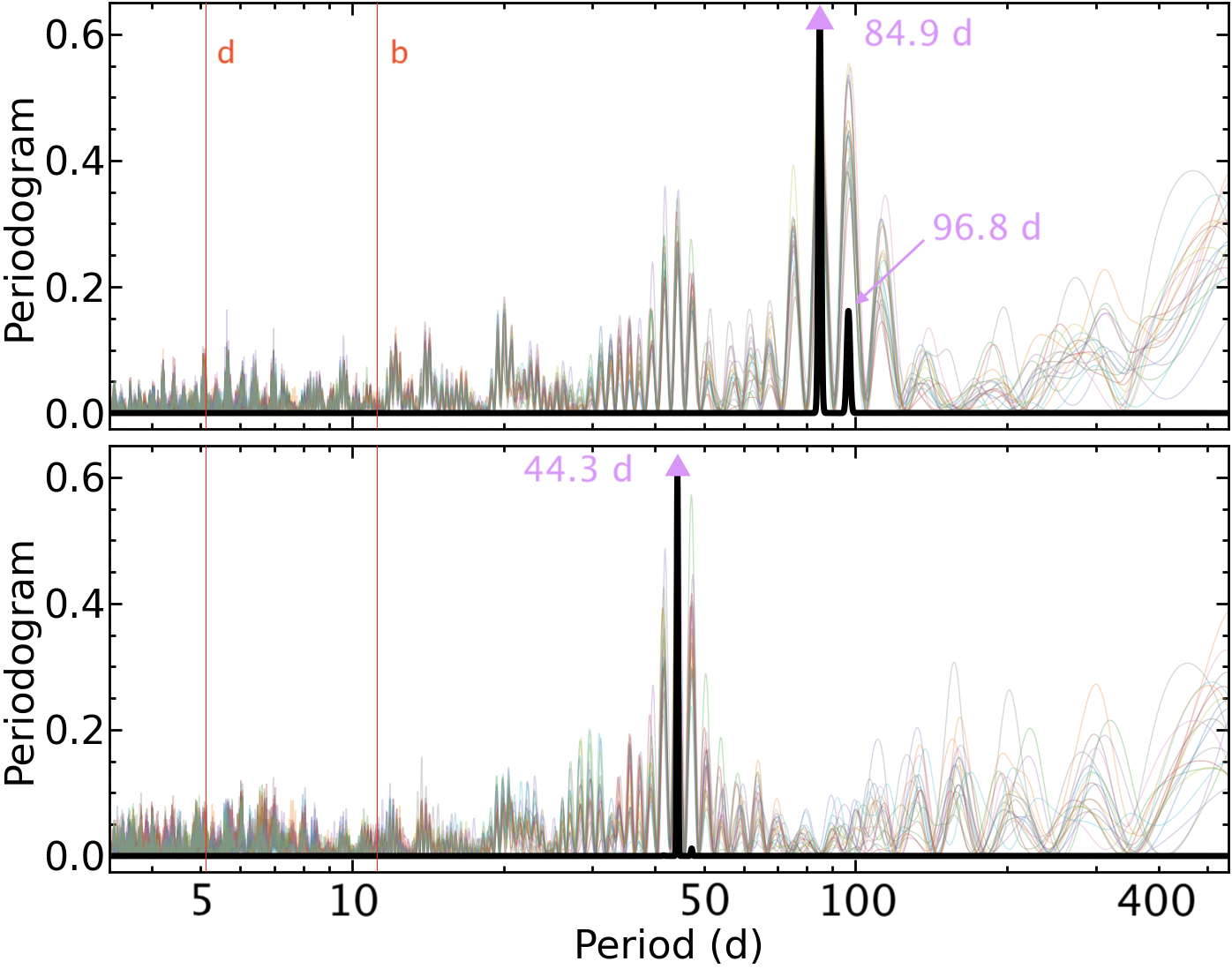
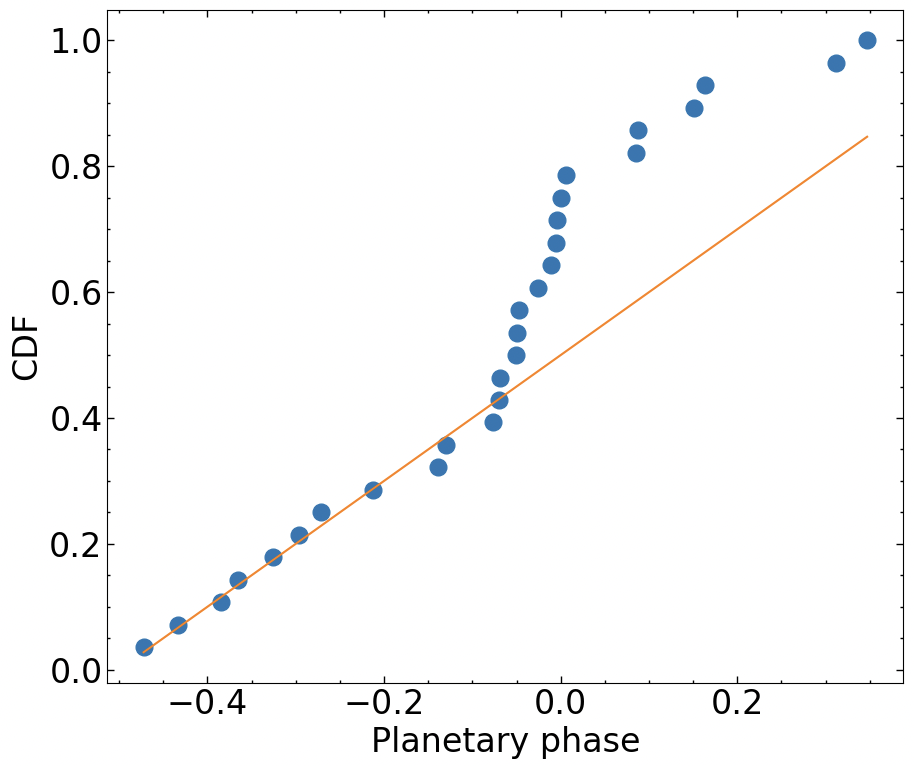
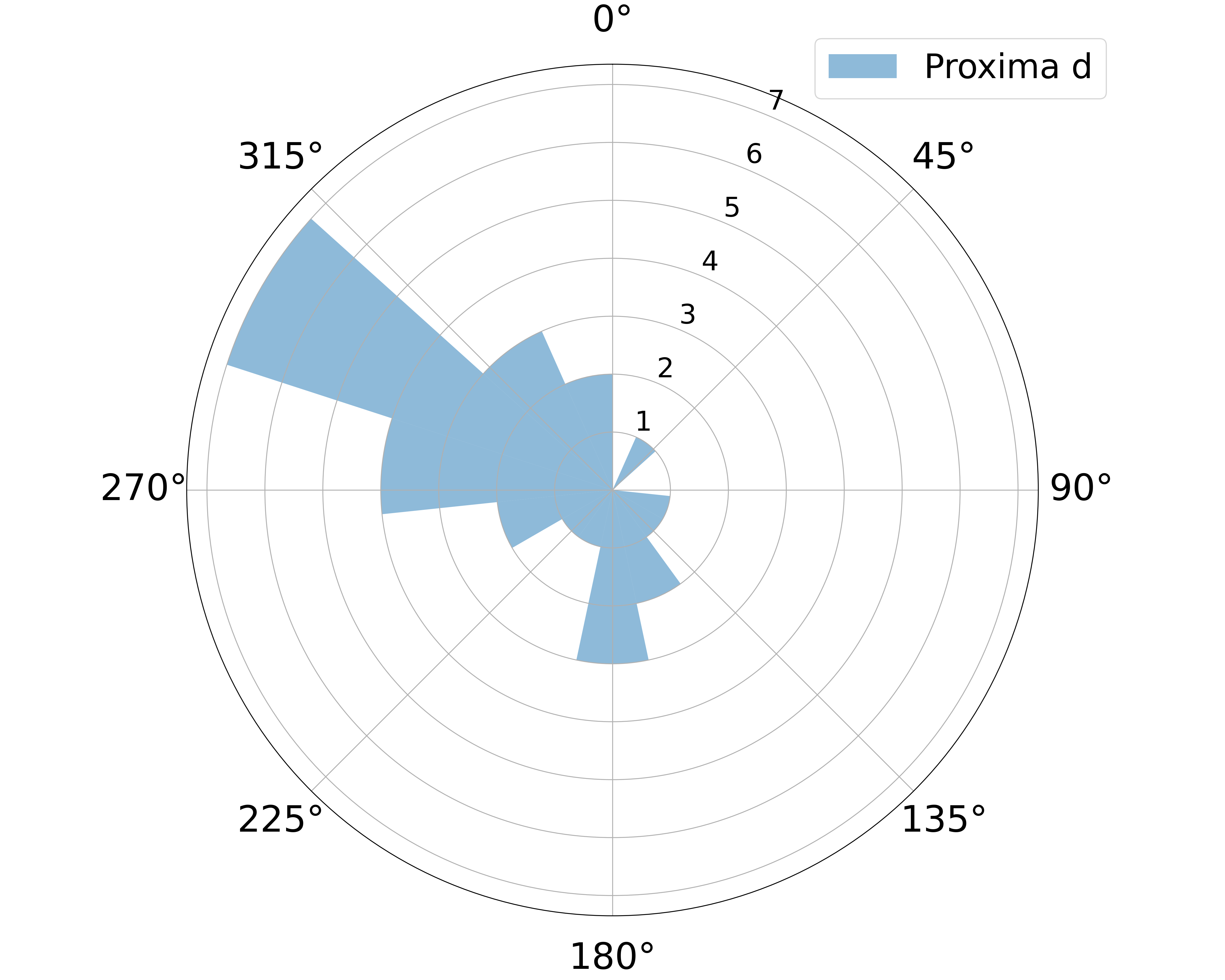
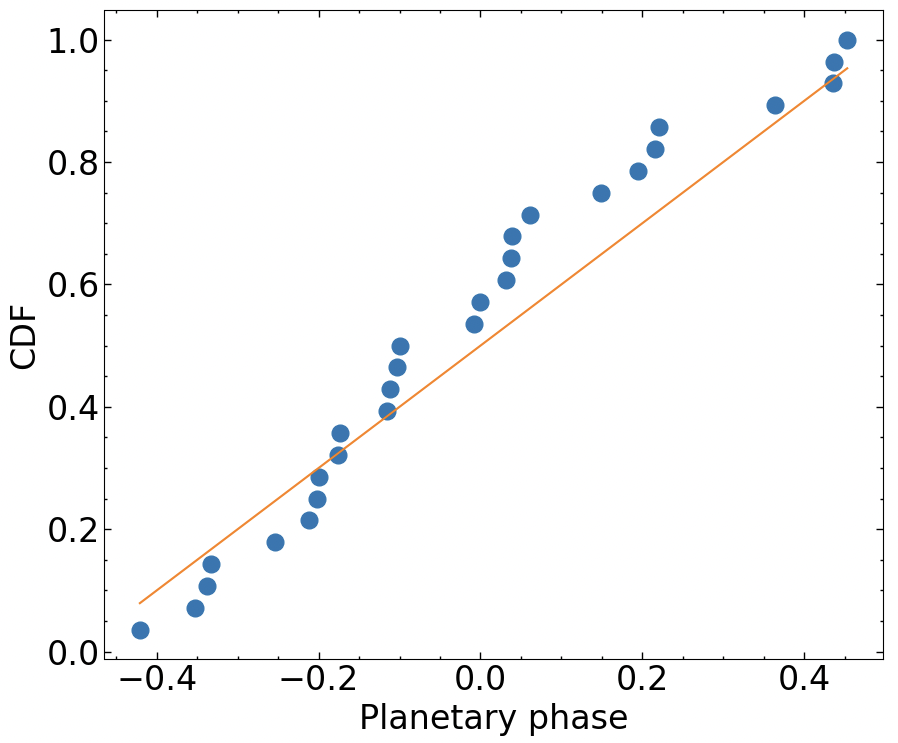
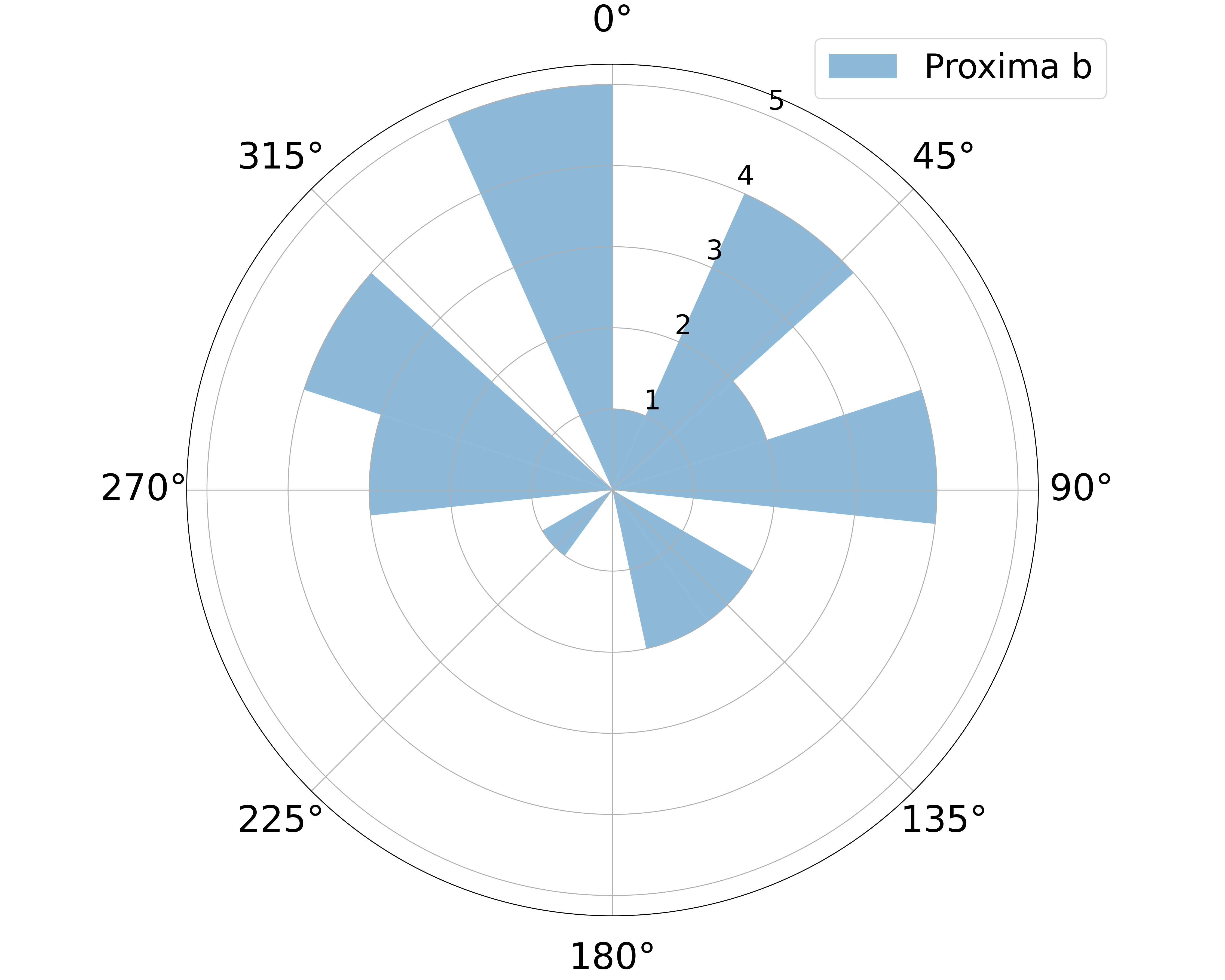
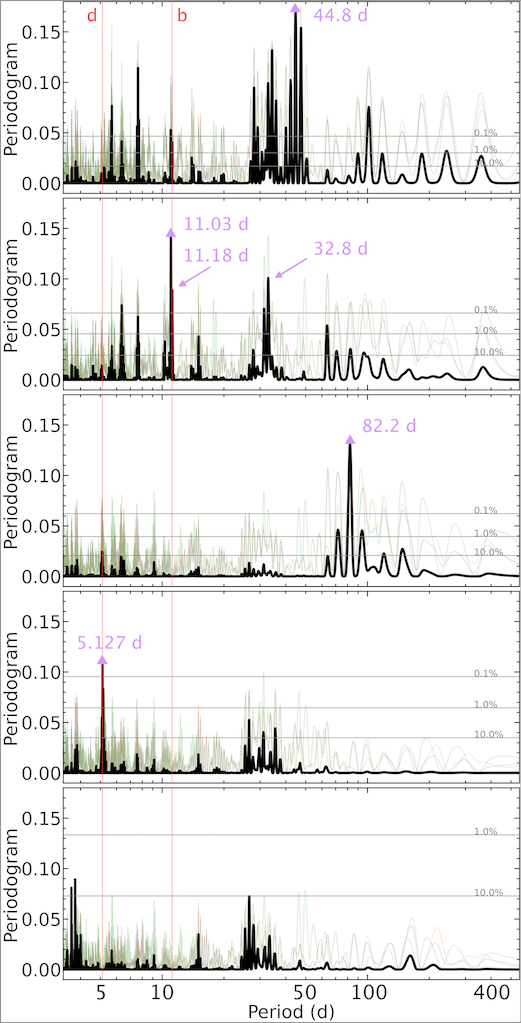
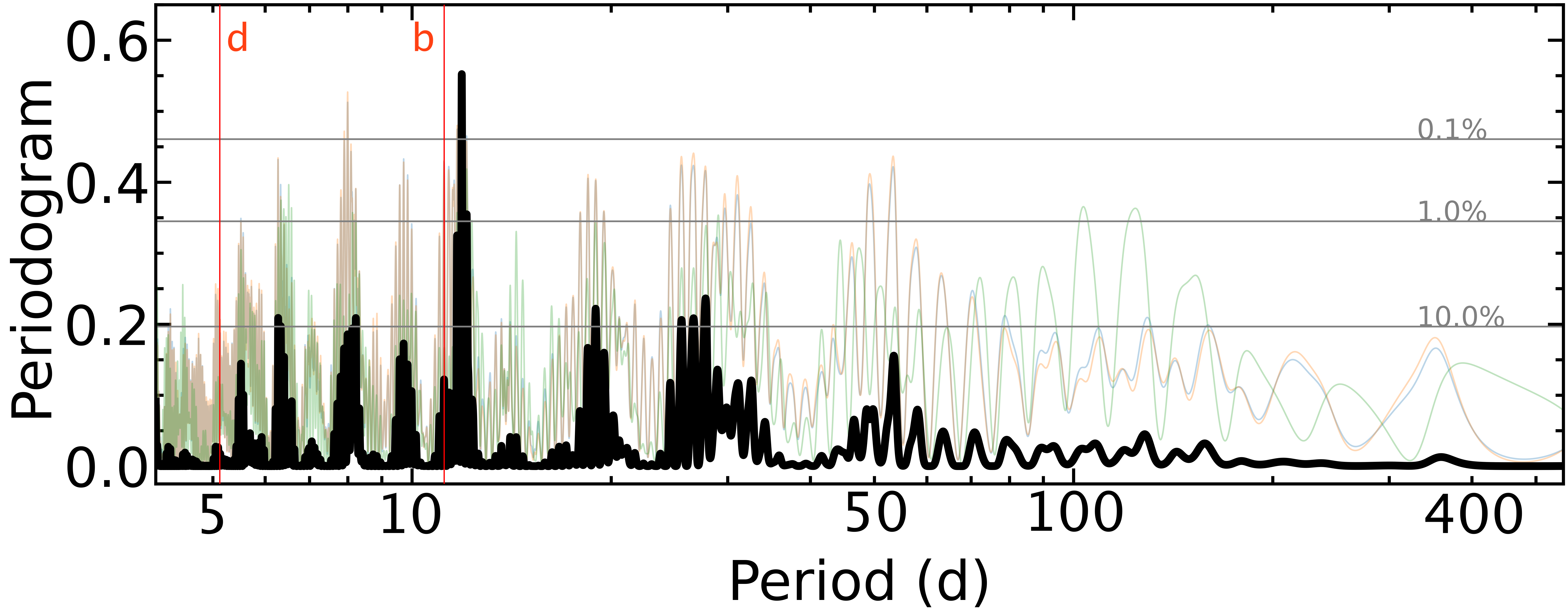
Abstract: (Abridged) We search for evidence of star-planet magnetic interactions in the nearby Proxima Centauri planetary system using high-quality, high-spectral-resolution optical observations. We measure a photospheric stellar rotation period of 84.9 +/- 0.6 d and a half-rotation period of 44.3 +/- 0.2 d, consistent with previous studies. Using FeI absorption and emission lines, we find that Proxima Centauri was flaring during 4.8 +/- 4.7 % of the observing time, with significant statistical evidence (>99.8 %) of flare events likely phase-locked to the inner Mars-mass planet Proxima d. Modeling the star-planet interaction via the helicity-driven reconnection mechanism with the Poynting flux formalism, we estimate a likely polar magnetic field of -16 G for Proxima d (assuming a Mars-sized radius), with a plausible range of 3-280 G accounting for radial and dipolar stellar magnetic field configurations, planetary radii comparable to Mars and Earth, and the observed range of stellar flare intensities. This represents the first such estimate for a terrestrial exoplanet. Evidence for a potential star-planet interaction with the outer, Earth-mass Proxima b arises not from phase-locked flare clustering, but from modulation of flare intensities. Applying a prewhitening analysis to the full time series of combined chromospheric Halpha, NaI D1 and D2, and CaII H &K lines reveals peaks, in order, at half the stellar rotation period, Proxima b's orbital period, the full stellar rotation, and Proxima d's orbital period. All evidence suggests that both planets show magnetic interaction with their host star. Focusing on flaring epochs only, the periodogram of these chromospheric lines shows a peak consistent with the synodic period between half the stellar rotation and the mutual synodic period of Proxima b and d, implying prograde stellar rotation and planetary orbits.
Paper Prompts
Sign up for free to create and run prompts on this paper using GPT-5.
Top Community Prompts
Explain it Like I'm 14
Explaining “Star–planet interaction in the Proxima system” in simple terms
Overview
This paper studies Proxima Centauri, the closest star to the Sun, and its two small nearby planets, Proxima b and Proxima d. The authors look for signs that the planets’ magnetic fields might be interacting with the star’s magnetic field and affecting the star’s flares (sudden bursts of energy). They use very detailed rainbow-like star “fingerprints” called spectra, collected over three years, to see if the timing and strength of flares line up with the planets’ orbits.
Key questions the researchers asked
- Do the planets Proxima b and Proxima d cause any changes in Proxima Centauri’s light or flares as they move around the star?
- Is flare timing linked to the planets’ positions, suggesting a magnetic connection between star and planet?
- If there is a connection, how strong might Proxima d’s magnetic field be?
- What is Proxima Centauri’s rotation period (how long it takes to spin once), and does that affect the flare patterns?
How they did the study
Think of the star’s spectrum like a barcode made of thousands of dark and bright lines, each telling you something about the star’s gases and activity.
- They used a super-precise instrument called ESPRESSO on a big telescope to take 117 high-resolution spectra of Proxima Centauri over three years.
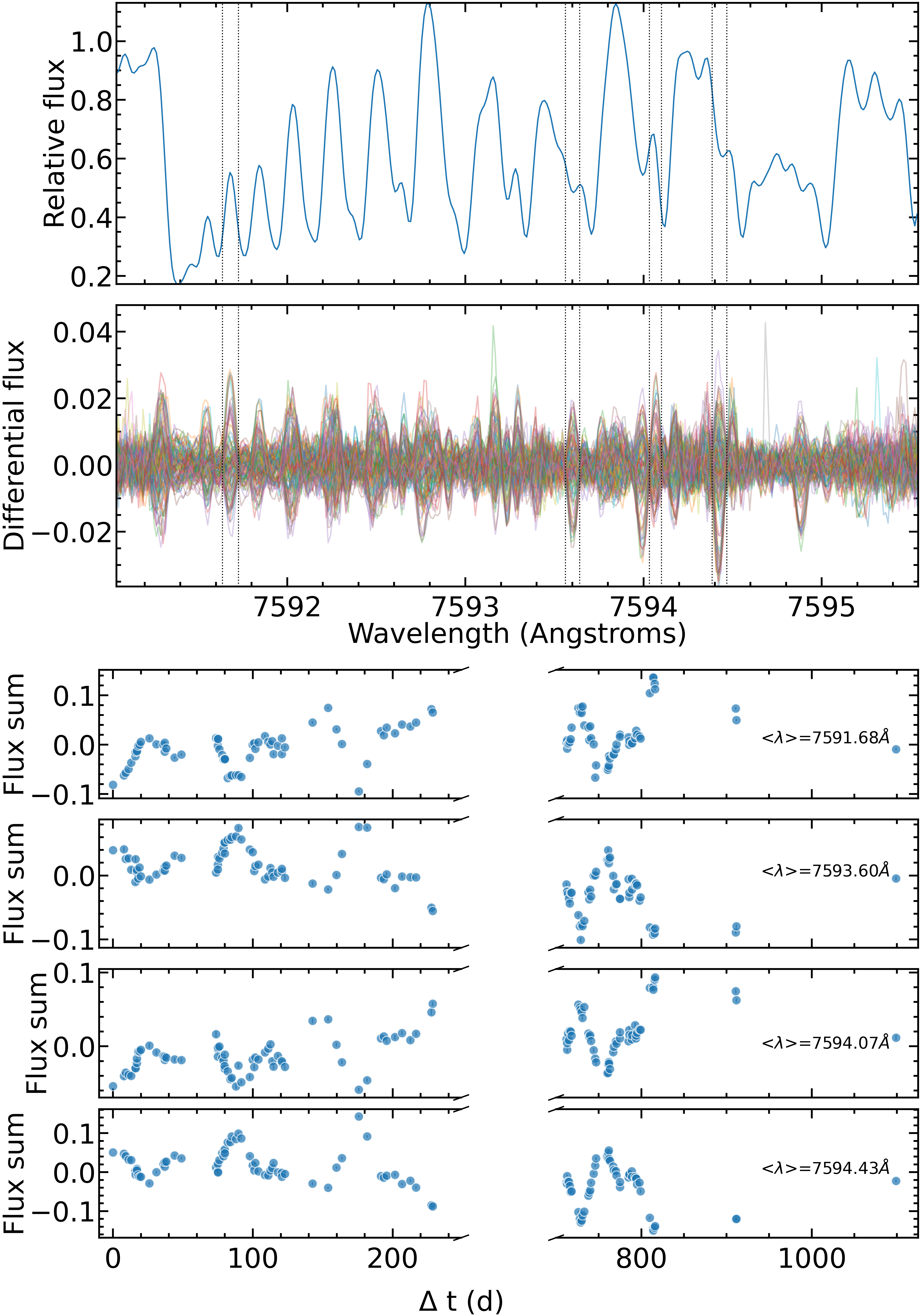
- They built a “reference” spectrum by averaging all the observations, then created “difference” spectra by subtracting each individual spectrum from the reference. This is like a “spot-the-difference” game to highlight changes at specific wavelengths.
- They focused on lines that come from different layers and elements:
- Photospheric lines: from the star’s visible “surface” (like TiO molecules).
- Chromospheric lines: from the hotter layer above the surface (like Hα, sodium Na I, calcium Ca II, helium He I, iron Fe I).
- They made small “light curves” from these lines, which are simple graphs of how the line’s brightness changes over time.
- To find repeating patterns, they used a periodogram (a math tool that finds rhythms in data), similar to finding the beat in a song.
- They removed known patterns (like the star’s rotation) to reveal weaker signals, a bit like taking out a loud drum track to hear the guitar better.
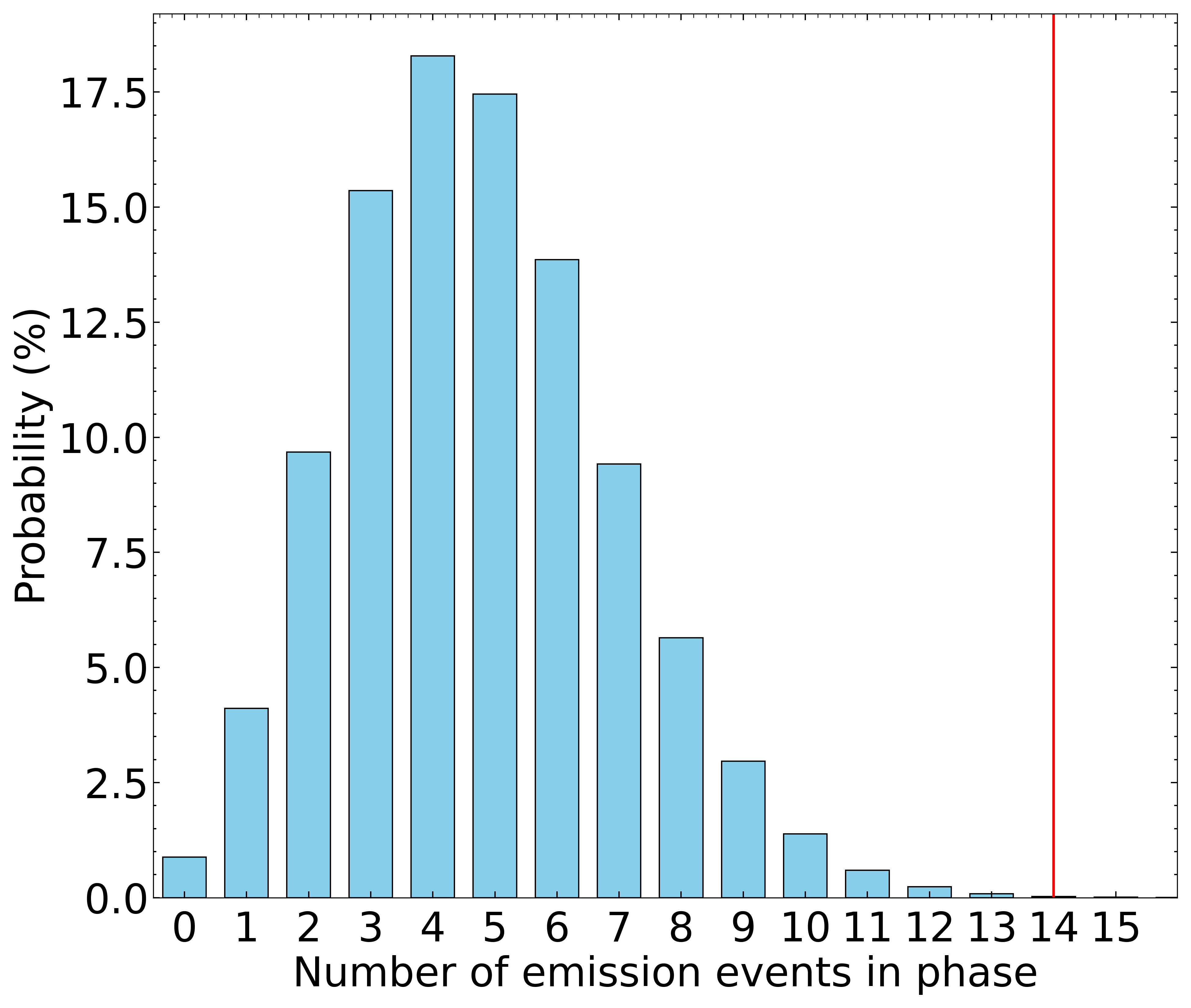
- To test whether flare timings near the planet’s orbital phase were just random or truly linked, they used probability calculations and simulations (Monte Carlo), and a statistical test called Anderson–Darling. These check if the flare timings cluster more than you’d expect by chance.
What they found and why it matters
- Star’s spin: Proxima Centauri rotates once every 84.9 days and also shows a strong pattern near half that time (44.3 days). This confirms previous studies and tells us how spots and active regions move across its surface.
- Planetary nature confirmed: The star’s deeper, photospheric lines did not vary with the 11.1-day or 5.1-day planetary periods. That’s good—it supports that Proxima b and d are real planets, not fake signals caused by the star itself.
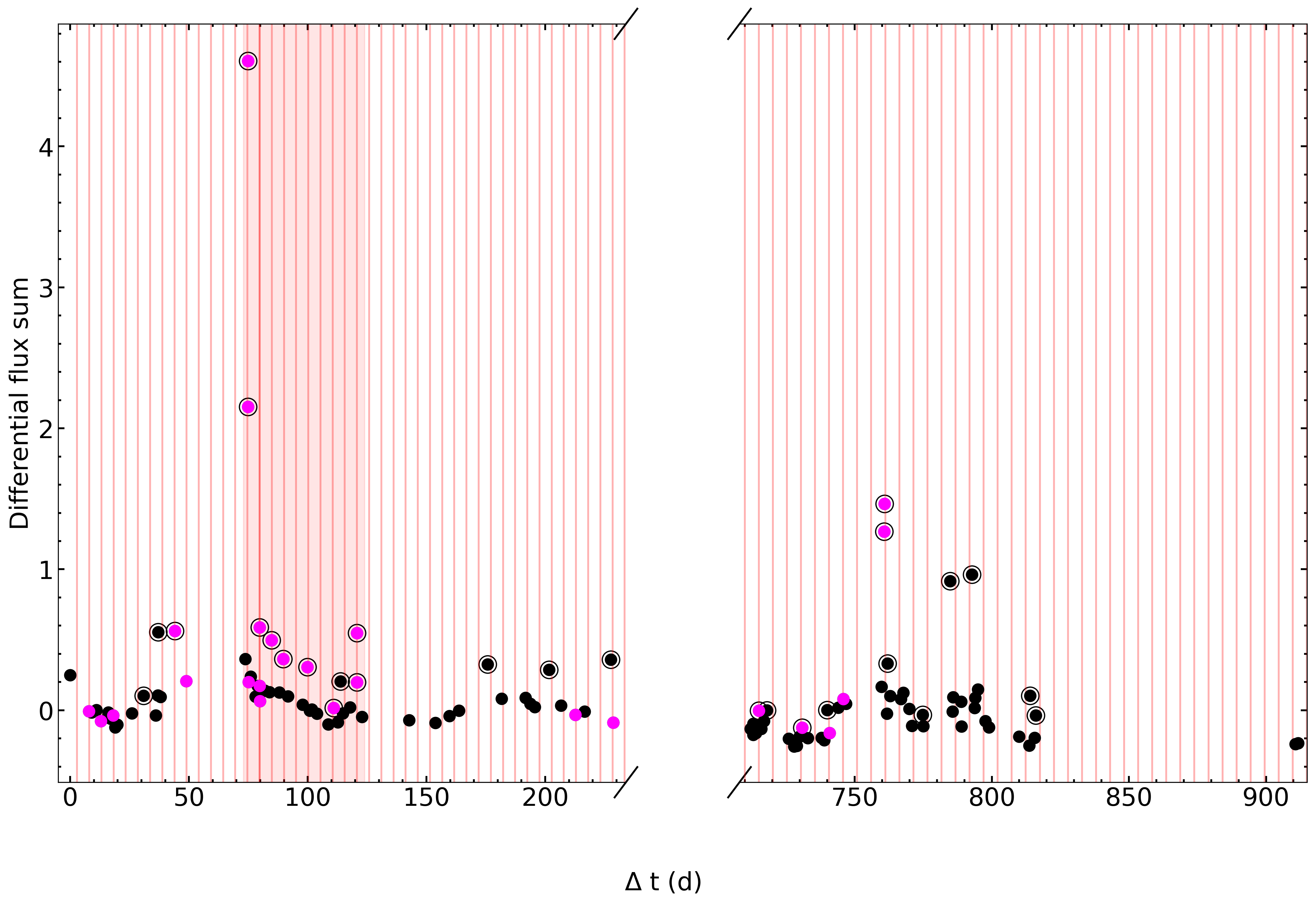
- Flares are common: Using iron (Fe I) lines, they found the star was flaring during about 25% of the observing time. That’s a lot of activity for a small, cool star.
- Proxima d likely triggers flares: Many flares clustered at the same part of Proxima d’s 5.1-day orbit. Statistical tests say this is very unlikely to be random (confidence at about 99.8–99.9%). This suggests a magnetic link: the planet’s magnetic field and the star’s magnetic field connect like invisible “magnetic ropes,” and energy is dumped into the star’s atmosphere when the geometry lines up.
- Proxima b shows signs too: The evidence for Proxima b (the 11.1-day planet) is different. Instead of flare timing clustering, the strength of flares seems modulated. When they combined the signals from several chromospheric lines (Hα, Na I D1/D2, Ca II H/K), they found peaks at:
- Half the star’s rotation,
- Proxima b’s orbital period,
- The full star rotation,
- Proxima d’s orbital period.
- This pattern hints that both planets influence the star’s activity.
- Magnetic field estimate for Proxima d: Using a model of how magnetic energy flows along the star–planet “magnetic loop,” they estimate Proxima d’s polar magnetic field might be around 16 gauss, with a plausible range from about 3 to 280 gauss depending on assumptions. For comparison, Earth’s polar field is about 0.6 gauss, and Jupiter’s is around 50 gauss. This is the first such estimate for a small, rocky exoplanet.
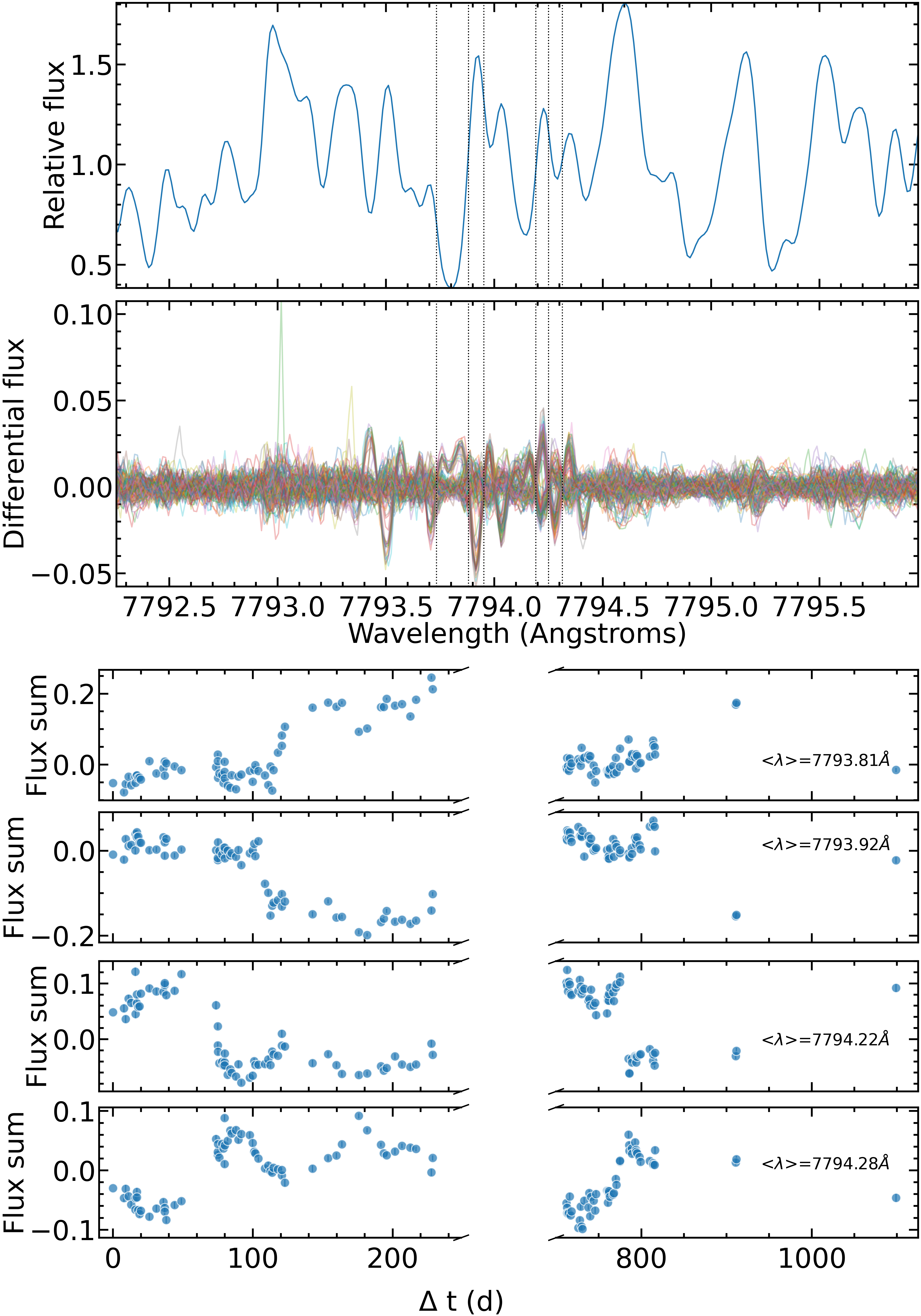
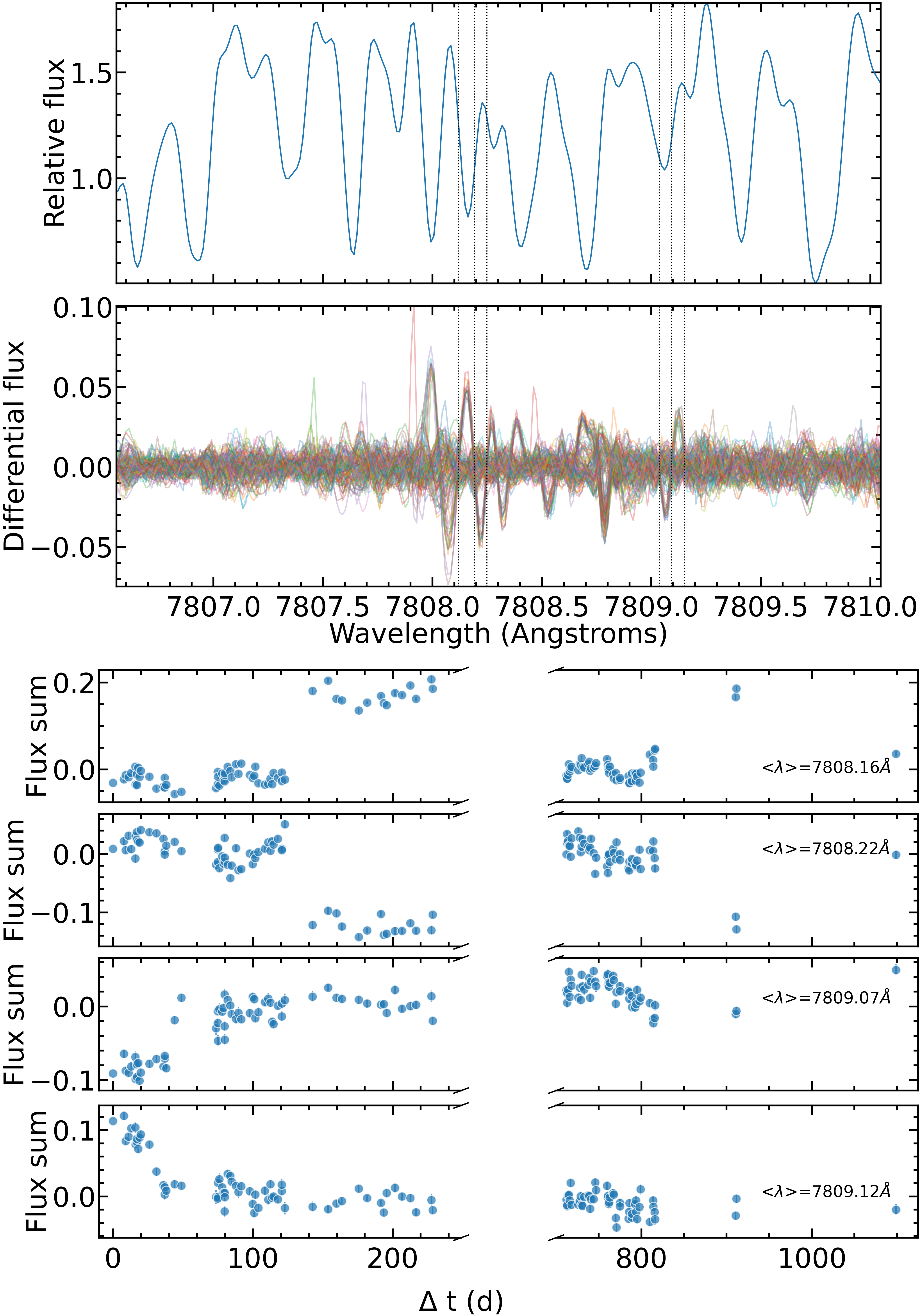
- Extra oddities: They noticed two spectral features around 7794.0 Å and 7808.5 Å that behave differently from the rest, which might be due to unusual atomic or instrumental effects and deserve future study.
- Motion directions: During flare periods, the timing patterns fit with the star and planets moving in the same direction (prograde), based on “synodic” rhythms (how often patterns repeat when two cycles overlap).
What this means for the future
- If rocky planets can trigger their star’s flares through magnetic interactions, it changes how we think about space weather around small stars. This affects whether planets can keep their atmospheres and, ultimately, their habitability.
- A stronger planetary magnetic field is good news for atmospheric protection: it can push back the star’s wind and radiation, potentially helping a planet keep its air.
- Knowing these magnetic connections helps plan future observations, including radio searches for star–planet signals and studies of exoplanet atmospheres.
- Proxima Centauri is our closest exoplanet system, so understanding it acts like a “practice field” for learning how small planets and cool stars behave together.
In short: The study finds solid hints that both Proxima d and Proxima b magnetically interact with Proxima Centauri, likely affecting when and how strongly the star flares. It also gives the first rough estimate of a magnetic field for a small rocky exoplanet, opening a new window on how planets and stars influence each other.
Knowledge Gaps
Knowledge gaps, limitations, and open questions
Below is a concise list of what remains missing, uncertain, or unexplored in the study, framed to guide future work:
- Temporal coverage is uneven (multi-month gaps, one high-cadence window); significance of phase-locked clustering may be disproportionately driven by the 2019 Apr–Jun interval—replication across additional seasons is needed.
- Flare classification relies on empirical Fe I “enhanced emission” thresholds (3σ/5σ) and a local-mean baseline; the sensitivity of results to this choice and to non-stationary flare statistics is not fully quantified.
- Independence of flare events is assumed in binomial tests; correlated flare sequences (sympathetic flaring, active-region trains) could inflate significance—models accounting for temporal clustering (e.g., Hawkes processes) are missing.
- Global trial factors are not reported for multiple tests (species, lines, periodogram scans, phase-window tuning); provide a corrected false-alarm probability that accounts for all trials.
- The adopted ±0.45 d phase tolerance was chosen post hoc from the distribution width; systematic exploration of how this choice affects significance (with a priori criteria) is needed to avoid “look-elsewhere” bias.
- Non-transiting geometry yields uncertain ephemeris phase zero and inferior-conjunction timing; propagate these uncertainties into the phase-clustering significance and repeat with updated RV ephemerides.
- Evidence for Proxima b relies on modulation of flare intensities rather than phase-locked occurrence; this weaker signature requires independent confirmation (e.g., with NIRPS/ESPRESSO seasons not used here) and robust global-FAP accounting.
- No planet-free control star with similar activity and sampling is analyzed; a control sample is needed to calibrate the expected level of apparent phase clustering from stellar activity alone.
- Telluric removal is complicated by TiO/VO blending, and telluric emission lines were not subtracted; quantify residual contamination near key diagnostics (e.g., Na I D) and its impact on indices via injection–recovery tests.
- The “wiggles” correction removes large-scale spectral variations; demonstrate with synthetic injections that chromospheric line variability (including broad wings during flares) is not attenuated.
- Differential normalization by chunks can distort broad features and pseudo-continuum; quantify biases on line indices for Hα and Ca II H&K using forward-modeled M-dwarf spectra.
- Spectra are not flux-calibrated; flare luminosities are inferred by scaling to a single TESS event and assumed durations—derive per-event energies from contemporaneous, flux-calibrated photometry/spectrophotometry to reduce systematic error.
- Line-formation physics of Fe I emission in M-dwarf flares is not modeled; NLTE radiative transfer is needed to relate Fe I indices to flare energy, temperature, and height of formation.
- Inter-species time lags (Hα, He I D3, Na I D, Ca II H&K, Fe I) are not measured; high-cadence, simultaneous spectroscopy should test for systematic delays that could diagnose the interaction mechanism.
- The unusual features at ~7794.0 and ~7808.5 Å remain unidentified; verify their astrophysical vs. instrumental/telluric origin using line lists, comparison stars, and sky frames.
- Photospheric “rhomboid” features are not physically interpreted; modeling (e.g., spot/plage simulations) is needed to connect these patterns to spot evolution and active-longitude geometry.
- The 96.8 d peak is attributed to a 2-year alias, but differential rotation remains plausible; spectropolarimetric mapping across seasons could resolve true rotational shear.
- Long-period activity-cycle signals (~442–510 d) are hinted but not constrained by the baseline; extended monitoring is required to disentangle cycle power from sampling aliases.
- No quantitative upper limits are placed on tidally induced photospheric variability at P_orb or P_orb/2; report sensitivity limits to rule out specific tidal-SPIs.
- Potential contamination by sky emission (e.g., Na D airglow) is acknowledged but unquantified; verify stability in a topocentric frame and subtract sky where possible.
- Radial-velocity shifts, instrumental drift, and barycentric corrections in the differential pipeline are not explicitly validated for narrow 0.05–0.2 Å windows; demonstrate that potential line shifts do not bias the indices.
- Event timing definitions (start/peak/end) for phase folding are not specified; test robustness of clustering to different time markers and to flare-duration weighting.
- The clustering episode (2019 Apr–Jun) could coincide with seasonal changes (airmass, weather, instrument state); assess systematics by comparing with bracketing seasons of similar cadence.
- The planetary radii (especially for Proxima d) are unknown; the inferred B_p range (3–280 G) spans orders of magnitude—radius constraints (e.g., from transit searches or mass–radius priors) are essential to narrow B_p.
- Stellar magnetic field strength and geometry at the epoch are uncertain (200–2000 G; radial vs. dipolar); contemporaneous spectropolarimetry (ZDI) is needed to constrain B_* and topology for SPI modeling.
- The Alfvén radius and stellar wind properties are time-variable; time-dependent MHD simulations anchored to contemporaneous magnetic maps are required to test whether observed flare clustering coincides with sub-/super-Alfvén regime transitions.
- The SPI mechanism is not uniquely identified (Alfvén-wing vs. helicity-driven reconnection); predictive, discriminating observables (e.g., specific phase lags, radio coherency, footpoint drift) should be developed and tested with multiwavelength campaigns.
- The Poynting-flux formalism (Lanza 2013) assumes fixed v_rel and Θ=90°; sensitivity of B_p to wind speed, direction, and orbital obliquity has not been explored—provide a full parameter study with uncertainties.
- The f_AP connectivity factor and B_*(a) scaling (s=2–3) are adopted but unconstrained; constrain s via contemporaneous field topology and evaluate how f_AP uncertainty maps into B_p.
- Active longitudes can produce non-uniform flare phase distributions unrelated to planets; model and subtract stellar-only periodicities before testing for residual planetary phasing.
- Synodic-period inference (implying prograde orbits) is suggestive but could be affected by sampling/aliasing; verify with synthetic data and independent epochs.
- Velocity information (line centroid/width changes) in chromospheric lines is not exploited; use line-shape diagnostics to localize flare footpoints and test for preferred longitudes.
- The candidate outer planet c is ignored; if real, its synodic interactions could modulate activity—update with current RV constraints and test for additional periodicities.
- No simultaneous X-ray/UV/radio coverage is used; multiwavelength campaigns are needed to trace the full energy budget and to test SPI predictions (e.g., coherent radio for sub-Alfvén regimes).
- No cross-target comparison is provided (e.g., similar M5–M6 dwarfs without close-in planets under identical analysis) to establish a baseline of false-positive phase clustering.
- Adaptive integration windows for broadened lines during flares are not used; fixed narrow windows may miss line-wing enhancements—implement adaptive or profile-fitting indices.
- The reference spectrum is a median of all epochs, potentially including flares; construct a flare-free reference to avoid diluting flare contrasts and re-evaluate indices.
Practical Applications
Immediate Applications
The paper’s findings and methods enable several deployable use cases across research, observatories, and data-intensive industries. The following items summarize what can be implemented now, along with sector links, potential tools/workflows, and feasibility constraints.
- Differential spectroscopy and interference (“wiggles”) mitigation pipeline (sectors: astronomy, optical instrumentation, industrial spectroscopy)
- Use case: Package the chunk-based normalization, iterative telluric fitting (via TelFit with per-epoch molecular abundance tuning), long-period “wiggle” suppression via sigma-clipped spline fits, and narrow-band index extraction into a robust processing pipeline for high-resolution spectra (ESPRESSO, HARPS, NIRPS, CRIRES+).
- Potential tools/products/workflows:
- A Python package or ESO Reflex node for “wiggle-safe” differential spectroscopy.
- A module for lab/field spectrometers (environmental monitoring, process analytics, pharma QA) to suppress etalon/fringe patterns and continuum drifts.
- Assumptions/dependencies: Requires high S/N and stable wavelength solutions; “wiggle” characteristics are instrument-specific; care needed not to suppress genuine broad astrophysical signals.
- Joint periodogram and phase-locked event detection toolkit (sectors: astronomy, software/data science)
- Use case: Deploy the joint GLS multiplication across many narrow-band features, bootstrap FAPs, Monte Carlo permutation tests, and Anderson–Darling phase-uniformity testing to detect subtle, phase-locked signals in irregularly sampled time series (e.g., planet-induced flares).
- Potential tools/products/workflows:
- A “phase-locked signal finder” library integrating GLS stacking, prewhitening, and synodic-period search; bindings for Astropy/Lightkurve.
- Jupyter templates for end-to-end significance testing (binomial, AD test, permutation).
- Assumptions/dependencies: Requires sufficient cadence and feature multiplicity; robust handling of aliasing and window functions; domain-appropriate priors for multiple-testing corrections.
- Observation scheduling optimization for star–planet interaction searches (sectors: observatories/mission ops)
- Use case: Prioritize high-cadence observations around predicted sub-planetary phases (±τ window) to maximize detection of planet-modulated flares and intensity clustering.
- Potential tools/products/workflows:
- A “phase-aware” scheduler plugin that ingests ephemerides and proposes optimal nights/blocks; cross-facility triggers for simultaneous optical/radio campaigns.
- Assumptions/dependencies: Accurate ephemerides and phase windows; coordination across facilities; weather/seasonal aliasing management.
- RV planet validation aid via photospheric-line invariance (sectors: astronomy)
- Use case: Integrate “no variability at planet periods” in photospheric lines into RV vetting pipelines to strengthen planetary interpretations vs. activity-induced signals.
- Potential tools/products/workflows:
- A vetting checklist and automated report that quantifies lack of photospheric periodicities at candidate orbital periods.
- Assumptions/dependencies: High-resolution spectra; stable line lists and repeatable line-shape metrics; activity indicators tracked in parallel.
- First-order exoplanet magnetism estimator for terrestrial planets (sectors: academia)
- Use case: Apply the Poynting-flux helicity-driven reconnection formalism to estimate order-of-magnitude planetary polar magnetic fields from flare luminosities and stellar field geometry.
- Potential tools/products/workflows:
- A calculator/notebook that ingests stellar B-field, flare luminosity, geometry (radial/dipolar), and planet radius priors to output Bp ranges and fAP (connected-area fraction).
- Assumptions/dependencies: Sensitive to uncertain stellar field strengths/geometry and planet radii (non-transiters); observational flare energetics and cadence drive error bars.
- Cross-instrument data fusion templates (ESPRESSO + TESS/CHEOPS) for flare contextualization (sectors: observatories/academia)
- Use case: Standardize alignment of high-res spectroscopic flare diagnostics (Hα/Na I/Ca II/Fe I) with space-based photometry to separate intrinsic vs. phase-locked activity.
- Potential tools/products/workflows:
- Reusable pipelines aligning barycentric times, cross-band flare timing, and energy scaling.
- Assumptions/dependencies: Overlapping windows are limited; photometric saturation/clipping in strong flares; consistent flux calibration across bands.
- Educational and citizen-science modules on stellar rotation and flares (sectors: education/outreach)
- Use case: Classroom/citizen projects reproducing rotation period recovery and flare occurrence statistics from public light curves, connecting to exoplanet habitability.
- Potential tools/products/workflows:
- Annotated datasets and step-by-step notebooks; phased flare histograms and AD test demonstrations.
- Assumptions/dependencies: Simplified datasets for non-expert use; careful communication of uncertainties.
- Industrial spectroscopy enhancement via “ESPRESSO-style” preprocessing (sectors: environmental monitoring, manufacturing QA)
- Use case: Transfer the chunk normalization and fringe suppression workflow to fiber-coupled spectrometers experiencing variable continuum and interference, improving limit-of-detection and repeatability.
- Potential tools/products/workflows:
- SDK or firmware option on OEM spectrometers; QA dashboards tracking residuals after fringe correction.
- Assumptions/dependencies: Adaptations to different optical trains and illumination stability; validation on ground-truth standards.
Long-Term Applications
Several outcomes require further research, broader datasets, or new infrastructure before becoming practical at scale.
- Exoplanet magnetometry at population scale (sectors: astronomy, radio astronomy)
- Use case: Systematically infer magnetic fields of terrestrial exoplanets by combining optical flare modulation with low-frequency radio detections (sub-Alfvénic emission) and spectropolarimetry.
- Potential tools/products/workflows:
- Multiwavelength “SPI-Mag” campaigns with LOFAR/NGVLA/SKA + ELT-class spectrographs; Bayesian inference frameworks combining optical/radio/Zeeman-Doppler constraints.
- Assumptions/dependencies: Stable, multi-epoch coverage; improved stellar field maps; confirmed emission mechanisms; next-gen sensitivity.
- Phase-aware, closed-loop, multi-facility scheduling (sectors: observatories/mission ops)
- Use case: A networked scheduler that increases cadence as systems approach predicted synodic phases and triggers cross-band follow-ups in real time.
- Potential tools/products/workflows:
- Brokers integrating ephemerides, weather, and facility availability; alert standards for SPI candidates.
- Assumptions/dependencies: Interoperability across facilities; accurate and updated ephemerides; automated data quality checks.
- Hardware mitigation of coudé-train interference (“wiggles”) (sectors: optical instrumentation)
- Use case: Redesign optics/fiber feeds and coatings to suppress long-period etalon-like interference at the source, complementing software removal.
- Potential tools/products/workflows:
- Anti-fringing coatings, fiber agitation schemes, path-length scrambling; calibration lamps tailored to identify/remove interference modes.
- Assumptions/dependencies: Instrument redesign cycles; on-sky validation; cost/complexity trade-offs.
- Habitability and atmospheric-erosion models informed by SPI (sectors: academia, policy/roadmapping)
- Use case: Incorporate empirically constrained SPI-driven flare rates and planetary B-fields into M-dwarf atmosphere escape and surface radiation models to refine target prioritization for life-search missions.
- Potential tools/products/workflows:
- Community models linking SPI energetics to magnetopause sizes and escape fluxes; decision frameworks for ELT/JWST/ARIEL/LUVOIR-like target lists.
- Assumptions/dependencies: Better constraints on coronal density, Alfvén radii variability, and flare energy distributions; validated scaling to different stars.
- Discovery and standardization of new chromospheric/atmospheric diagnostics (sectors: astronomy)
- Use case: Follow-up and identification of the unusual 7794.0 and 7808.5 Å features; potential new indices for activity or SPI.
- Potential tools/products/workflows:
- Line-identification campaigns (lab data, spectral synthesis), updates to line databases (e.g., VALD/NIST), new activity index definitions.
- Assumptions/dependencies: High S/N spectroscopy across activity states; laboratory wavelength data; theoretical modeling.
- Generalized phase-locked anomaly detection for irregularly sampled data (sectors: energy, finance, IoT/industry 4.0)
- Use case: Adapt the paper’s joint-periodogram + phase-clustering + permutation-test framework to detect event clustering around known drivers (e.g., grid oscillations tied to market cycles or mechanical rotations).
- Potential tools/products/workflows:
- Domain-specific libraries integrating GLS-like models with event-phase CDF testing; dashboards for phase stability monitoring.
- Assumptions/dependencies: Careful domain mapping (non-sinusoidal drivers, confounders); validation on labeled datasets; interpretability requirements.
- Interstellar probe environment characterization (sectors: aerospace/mission design)
- Use case: Use SPI-informed space-weather baselines around Proxima for long-term planning of interstellar probe trajectories, communications, and shielding.
- Potential tools/products/workflows:
- Environment models combining stellar cycles, SPI flare modulation, and wind regimes; risk models for probe electronics and sails.
- Assumptions/dependencies: Decadal monitoring to capture cycles; improved stellar wind modeling; technology maturation (sails, comms).
- Policy and data standards for SPI science (sectors: agencies, observatories)
- Use case: Establish best practices for cadence, multiwavelength coordination, and open data formats to enable reproducible SPI detection and meta-analysis.
- Potential tools/products/workflows:
- SPI-specific data schemas (time stamps, phase references, line-index metadata), scheduling guidelines emphasizing phase coverage, funding calls for coordinated campaigns.
- Assumptions/dependencies: Community consensus; integration with existing archives and VO protocols.
- End-to-end SPI simulation suites (sectors: academia/software)
- Use case: Develop validated MHD + radiative transfer pipelines that predict flare triggering, energetics, and spectral signatures under varying field geometries, comparing against observations to invert for planetary properties.
- Potential tools/products/workflows:
- Open-source SPI simulators with plug-in stellar/planet parameters; inversion workflows to estimate Bp, fAP, and energy budgets.
- Assumptions/dependencies: Computational cost; calibration against benchmark systems; better constraints on coronal and wind parameters.
Notes on feasibility across applications:
- Many science-facing applications hinge on accurate stellar magnetic field maps, improved ephemerides (especially for non-transiting planets), and sustained high-cadence coverage to overcome aliasing.
- Inference of exoplanetary magnetic fields remains order-of-magnitude due to uncertainties in stellar field strength/geometry, flare energetics, and unknown planetary radii; robust priors and multiwavelength data reduce this uncertainty.
- Transferring methods to industry requires adaptation to domain-specific noise/interference sources and validation against standards.
Glossary
- Alfvén radius: The distance from a star where the stellar wind speed equals the Alfvén speed, marking a transition in magnetic coupling conditions. "The Alfv " en radius of Proxima Centauri is estimated to be 25 R"
- Alfvén wing: A current-carrying, field-aligned structure formed by sub-Alfvénic interaction between a planetary obstacle and a magnetized flow, channeling energy along magnetic field lines. "an Alfv " en wing could trigger multiple nanoflares"
- Anderson--Darling test: A statistical test that evaluates whether a sample comes from a specified distribution, with high sensitivity to tails; here used to test uniformity in phase. "we also applied the Anderson--Darling test to the ESPRESSO enhanced iron emission data"
- barycentric velocity: The velocity of the observer relative to the Solar System’s center of mass; used to distinguish astrophysical signals from Earth-origin effects. "because they shift with the barycentric velocity."
- binomial probability mass function: The probability of observing a given number of successes in a fixed number of independent Bernoulli trials; used to assess flare-phase coincidences. "The binomial probability mass function:"
- bootstrap method: A resampling technique for estimating uncertainties or significance by repeatedly sampling with replacement from the data. "were computed using a bootstrap method, by generating 5,000 synthetic datasets"
- chromospheric: Pertaining to a star’s chromosphere, a layer above the photosphere characterized by specific emission lines and activity. "photospheric and chromospheric atomic and molecular features"
- coudé train optics: A fixed optical path in a telescope feeding a stationary instrument; can introduce instrumental interference patterns in spectra. "arise from the coud " e train optics"
- cross-correlation functions (CCFs): Functions formed by cross-correlating observed spectra with a template to extract average line profiles and kinematic information. "full-width at half-maximum (FWHM) of the cross-correlation functions (CCFs)"
- cumulative distribution function (CDF): A function giving the probability that a variable is less than or equal to a value; here used to assess phase distributions of events. "the cumulative distribution function (CDF) of the phase-folded emission data is consistent with a uniform distribution"
- differential spectroscopy: A technique where individual spectra are compared to a reference spectrum to isolate variability and subtle features. "Our analysis is based on the differential spectroscopy technique."
- dipolar (magnetic field configuration): A magnetic field topology resembling a dipole, with field strength falling off as the inverse cube of distance. "radial and dipolar stellar magnetic field configurations"
- Echelle spectrograph: A high-dispersion spectrograph using an echelle grating to achieve high spectral resolution across wide wavelength ranges. "Echelle SPectrograph for Rocky Exoplanets and Stable Spectroscopic Observations (ESPRESSO; \citealt{pepe21})"
- False Alarm Probabilities (FAPs): The probabilities that apparent periodic signals arise by chance rather than representing true periodicity. "The False Alarm Probabilities (FAPs) at 0.1.\%, 1\,\%, and 10\,\%~levels for the joint periodograms were computed"
- flare star: A star that exhibits frequent, sudden increases in brightness due to magnetic reconnection events. "Proxima Centauri is magnetically active and a well-known flare star"
- full-width at half-maximum (FWHM): The width of a spectral feature measured between the points where its intensity is half the maximum, characterizing line broadening. "full-width at half-maximum (FWHM) of the cross-correlation functions (CCFs)"
- Generalized Lomb–Scargle (GLS) periodogram: A method to detect and characterize periodic signals in unevenly sampled time series, extending the classical Lomb–Scargle approach. "Generalized LombâScargle (GLS; \citealt{zechmeister09}) periodograms"
- habitable zone: The range of distances from a star where conditions could allow liquid water on a planetary surface. "located within the stellar habitable zone"
- helicity-driven reconnection: A magnetic reconnection mechanism powered by the twist (helicity) of magnetic field lines, enabling energy release. "via the helicity-driven reconnection mechanism with the Poynting flux formalism"
- inferior conjunction: The orbital configuration when a planet lies between the observer and its star. "corresponding to the inferior conjunction from the radial velocity solution of \citet{mascareno25}"
- magnetohydrodynamic simulations: Numerical models that treat plasma as a conducting fluid governed by both fluid dynamics and electromagnetic equations. "Magnetohydrodynamic simulations further predict that Proxima b and d are subject to strong and variable stellar wind pressures"
- magnetopause: The boundary separating a planet’s magnetosphere from the external stellar wind or magnetic field. "may host a magnetopause large enough to shield its surface from the stellar wind"
- magnetospheric interaction: Coupling between a planet’s magnetosphere and its host star’s wind or magnetic field, potentially driving observable emissions. "capable of magnetospheric interaction with its host star"
- Monte Carlo simulations: Computational experiments that use random sampling to estimate statistical properties or probabilities. "we performed Monte Carlo simulations with 10 trials"
- orbital ephemeris: A set of parameters that predict the position and phase of an orbiting body as a function of time. "uncertainties in the orbital ephemeris"
- photospheric: Related to the photosphere, the visible surface layer of a star from which most light is emitted. "reflects the photospheric rotation of Proxima Centauri."
- poloidal (magnetic field): The component of a magnetic field that lies in meridional planes (from pole to pole), as opposed to toroidal. "predominantly poloidal and moderately axisymmetric magnetic field of Proxima Centauri"
- Poynting flux: The rate of electromagnetic energy transfer per unit area carried by electromagnetic fields. "Poynting flux formalism"
- prewhitening analysis: The procedure of removing known periodic components from a time series to search for additional signals. "Applying a prewhitening analysis to the full time series"
- pseudo-continuum: An apparent continuum created by the blending of numerous spectral lines, especially in cool star spectra. "depending on whether the feature traces the pseudo-continuum"
- radial velocity: The component of an object’s velocity along the line of sight, commonly measured via Doppler shifts in spectra. "precise radial velocity monitoring led to the detection of the 5.1-d Proxima d"
- rhomboid structures: Distinctive diamond-shaped patterns of spectral variability identified in the differential spectra of this study. "rhomboid structures appear throughout."
- sigma-clipped spline fit: An iterative fitting technique that excludes outliers beyond a chosen sigma threshold while modeling data with a spline. "we applied an iterative sigma-clipped spline fit to correct the large-amplitude component"
- spectral window: The effective sampling function of a time series that shapes how true periodicities appear in periodograms, including aliases. "the spectral window of the ESPRESSO time series"
- sub-Alfvénic regime: A flow condition where the speed is below the local Alfvén speed, allowing strong magnetic coupling and wave propagation upstream. "whether Proxima b resides in the sub- or super-Alfv " enic regime"
- synodic period: The time between successive alignments (conjunctions) of two orbiting bodies as seen by an observer. "a peak consistent with the synodic period between half the stellar rotation and the mutual synodic period of Proxima b and d"
- telluric absorption: Absorption features in astronomical spectra caused by molecules in Earth’s atmosphere (e.g., H2O, O2). "corrected for telluric absorption from HO and O"
- titanium oxide (TiO) and vanadium oxide (VO): Molecules that produce strong molecular band absorption in cool-star (M-dwarf) optical spectra. "dominated by strong TiO and VO molecular absorption features"
Collections
Sign up for free to add this paper to one or more collections.