- The paper introduces a novel architecture that leverages intrinsic illumination priors for robust low-light image enhancement.
- It incorporates physics-guided augmentation, dual-branch restoration, and memory-based detail recovery, yielding improved SSIM and PSNR across benchmarks.
- Experimental results demonstrate superior structural detail, natural color fidelity, and effective handling of challenging noise and degradation.
InterLight: Leveraging Intrinsic Illumination Priors for Low-Light Image Enhancement
Introduction
Low-Light Image Enhancement (LLIE) remains a critical problem in low-level vision due to the compounded challenges posed by noise, low contrast, color distortions, and significant structural loss under insufficient illumination. Classical methods based on hand-crafted or simple physics-inspired priors lack robustness to complex scene variations. Deep learning-based methods, especially variants of Retinex decomposition, have achieved notable success but often neglect illumination priors intrinsic to low-light conditions, resulting in artifacts, over-enhancement, or inconsistent color restoration. Addressing these limitations, "InterLight" introduces a full-stack architecture rooted in the systematic mining and operationalization of intrinsic illumination priors, integrating physics-aware data augmentations, scene-adaptive degradation modeling, and luminance-gated memory retrieval to drive restoration.
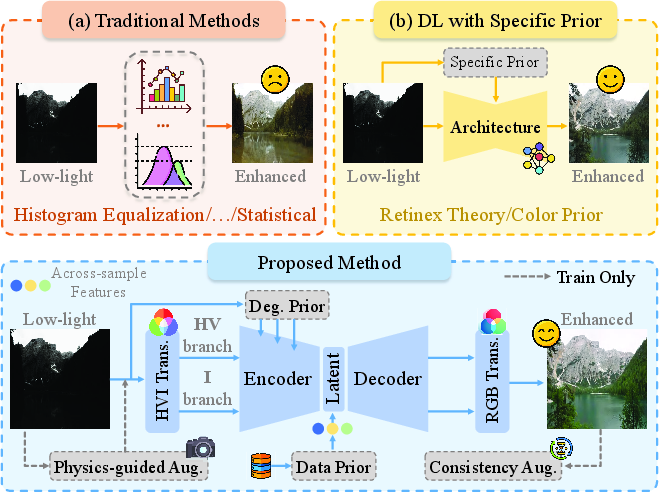
Figure 1: Comparison of InterLight with existing approaches, highlighting improved coherence and consistency in enhanced results.
Methodology
Illumination-Aware Enhancement Pipeline
InterLight abandons the black-box image-to-image learning paradigm by explicitly modeling illumination response at multiple stages. The pipeline comprises the following stages:
- Physics-Guided Augmentation (PGA): This module simulates the physical variations of image acquisition by applying mild, channel-wise Gamma corrections. Importantly, a smoothstep-based gating suppresses augmentation in noise-dominated dark regions, resulting in realistic sensor-level perturbations while preserving structural integrity.
- Latent Degradation Estimator (LDE) & Adaptive Degradation Prior Generation (ADPG): LDE encodes each augmented sample’s latent illumination condition into a global prompt vector via a learned dictionary of representative degradation bases. This prompt provides both global and spatial guidance, conditioning chrominance restoration on the input's specific degradation statistics.
- Horizontal/Vertical-Intensity (HVI) Color Space Transformation: Integration of the HVI color space yields robust separation of chrominance and illumination, especially in regions with unreliable signal, enhancing disentanglement and reducing cross-channel contamination.
- Dual-Branch Network: Disentangled features flow through illumination (I) and chrominance (HV) branches, restored by dedicated encoder-decoders. Prompt-aware feature fusion modulates chrominance estimation conditioned on the degradation prompt.
- Luminance-Gated Intrinsic Memory (LGIM): A dynamic memory bank learns both channel and patch-level restoration features. Gated by local brightness, the LGIM module selectively injects hallucinated details only in visually impoverished regions, minimizing distortion in well-lit areas.
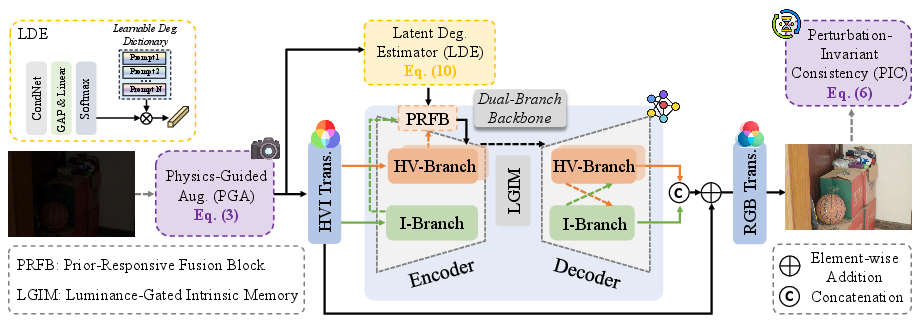
Figure 2: Schematic overview of InterLight architecture, illustrating data augmentation, degradation prompt extraction, HVI transform, dual-branch restoration, memory compensation, and inverse HVI fusion.
Training Strategy
Optimization leverages a compound loss incorporating pixelwise and perceptual metrics across both RGB and HVI representations. Novel self-supervised Perturbation-Invariant Consistency (PIC) regularizes the model to enforce stable, illumination-invariant feature extraction despite synthetic perturbations. Training supervises both the memory-free baseline and the memory-enhanced outputs, ensuring robust convergence and strong generalization.
Experimental Results
Quantitative Benchmarks
Comprehensive evaluation across LOL-v1, LOL-v2-Real, LOL-v2-Syn, SICE, SID, and LSRW-Huawei datasets demonstrates consistent improvement over leading state-of-the-art methods. Key results include:
- On LOL-v1, InterLight achieves the highest SSIM (0.862) and second-highest PSNR (24.78 dB), outperforming recent methods such as CIDNet and Retinexformer by up to 0.97 dB PSNR and 0.007 SSIM.
- On LOL-v2-Real, InterLight secures both the leading PSNR (24.06 dB) and SSIM (0.866).
- For extreme scenarios (SID, SICE), it outperforms competitors in PSNR, with a significant margin over flow-based and Retinex-based models.
These empirical gains are attributed to the effective exploitation of intrinsic priors, dynamic sample-specific prompt guidance, and luminance-aware memory retrieval, especially evident in challenging real and synthetic settings.
Visual Comparison
Qualitative results indicate that InterLight surpasses previous methods in reconstructing fine structural details, maintaining natural chromaticity, and avoiding color shifts and artifacts. In Figure 3, restoration is less prone to over-brightening, oversaturation, or spatial inconsistency compared to leading baselines.
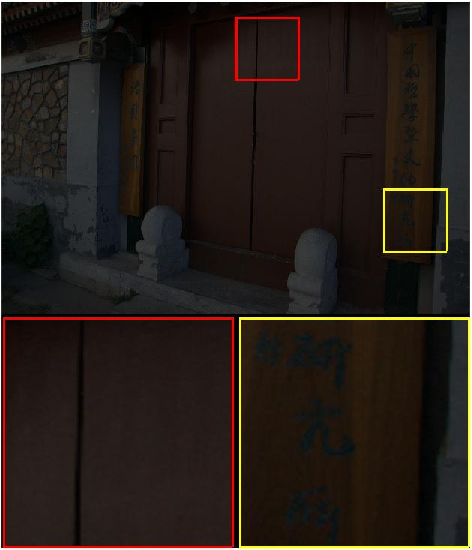
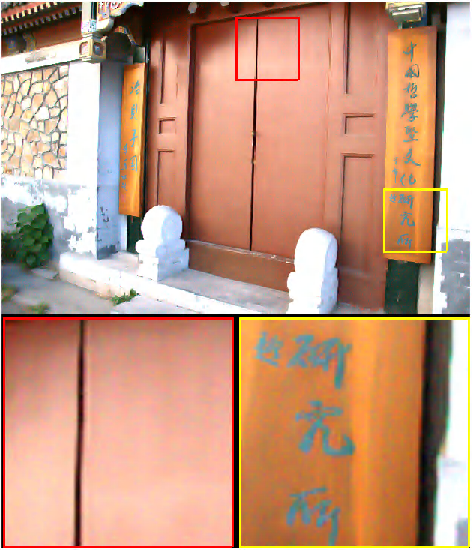
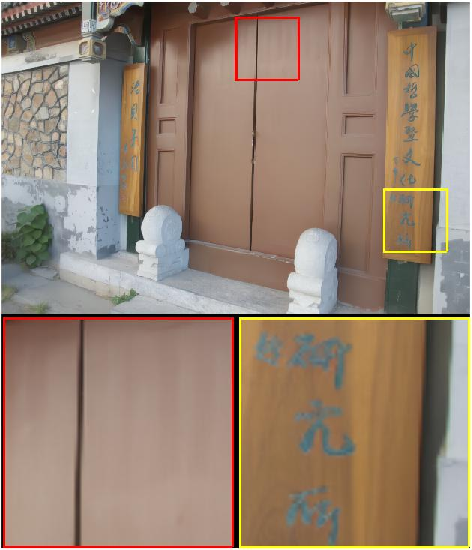
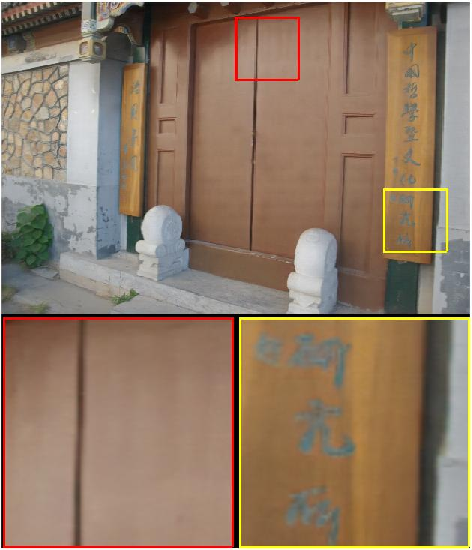
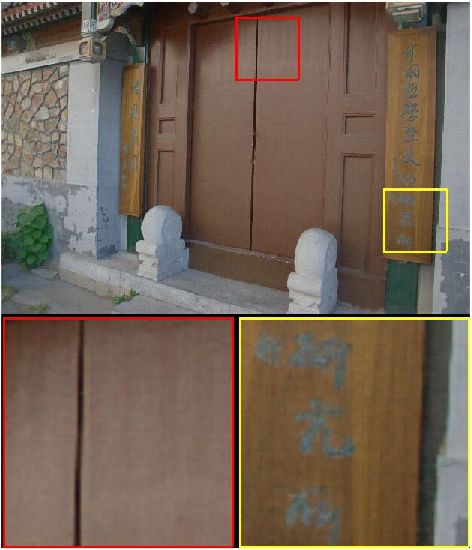
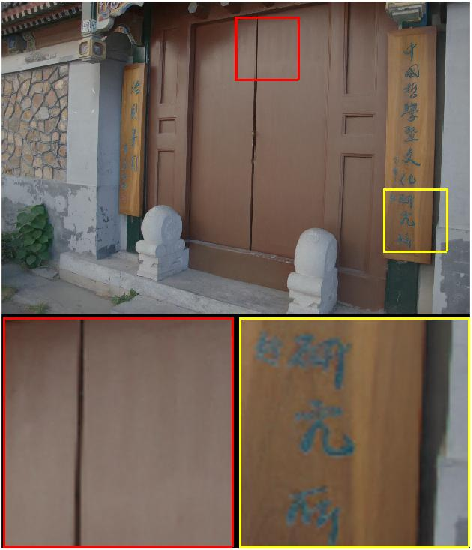
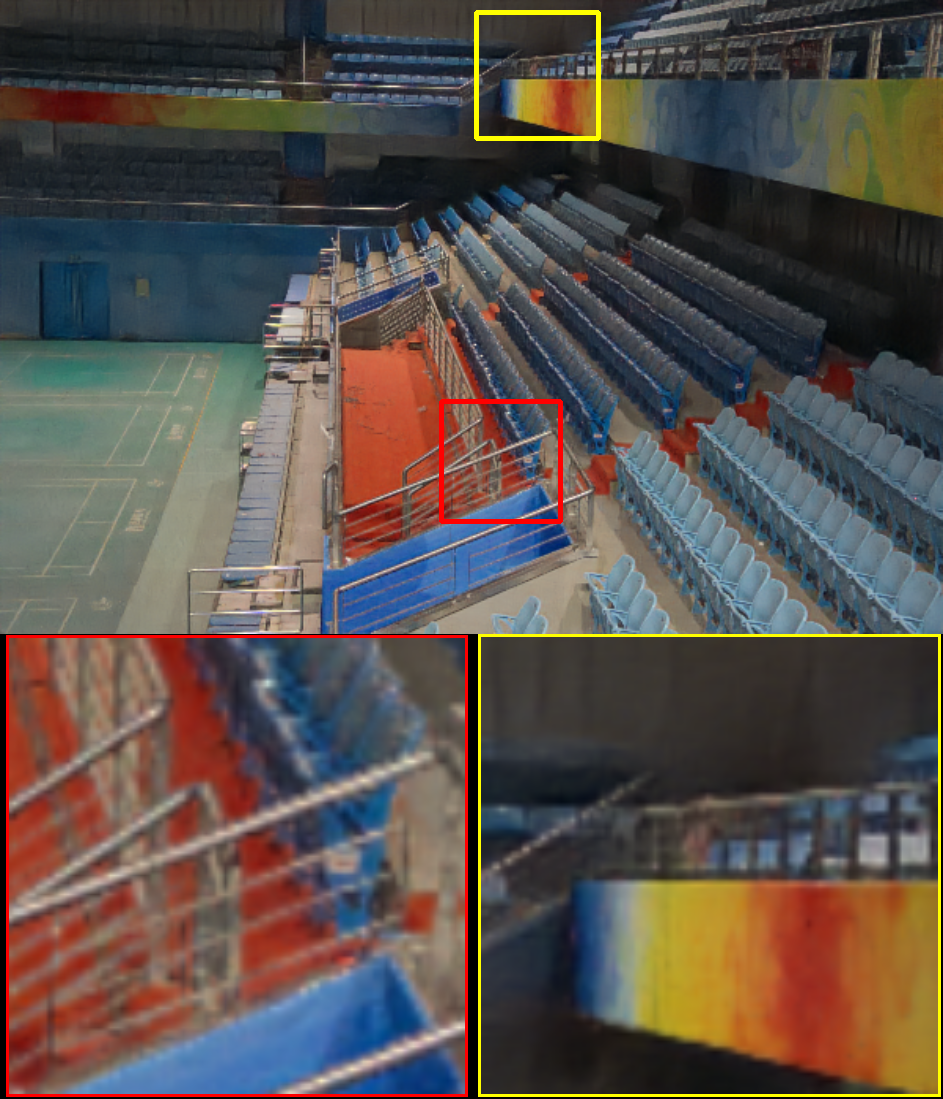
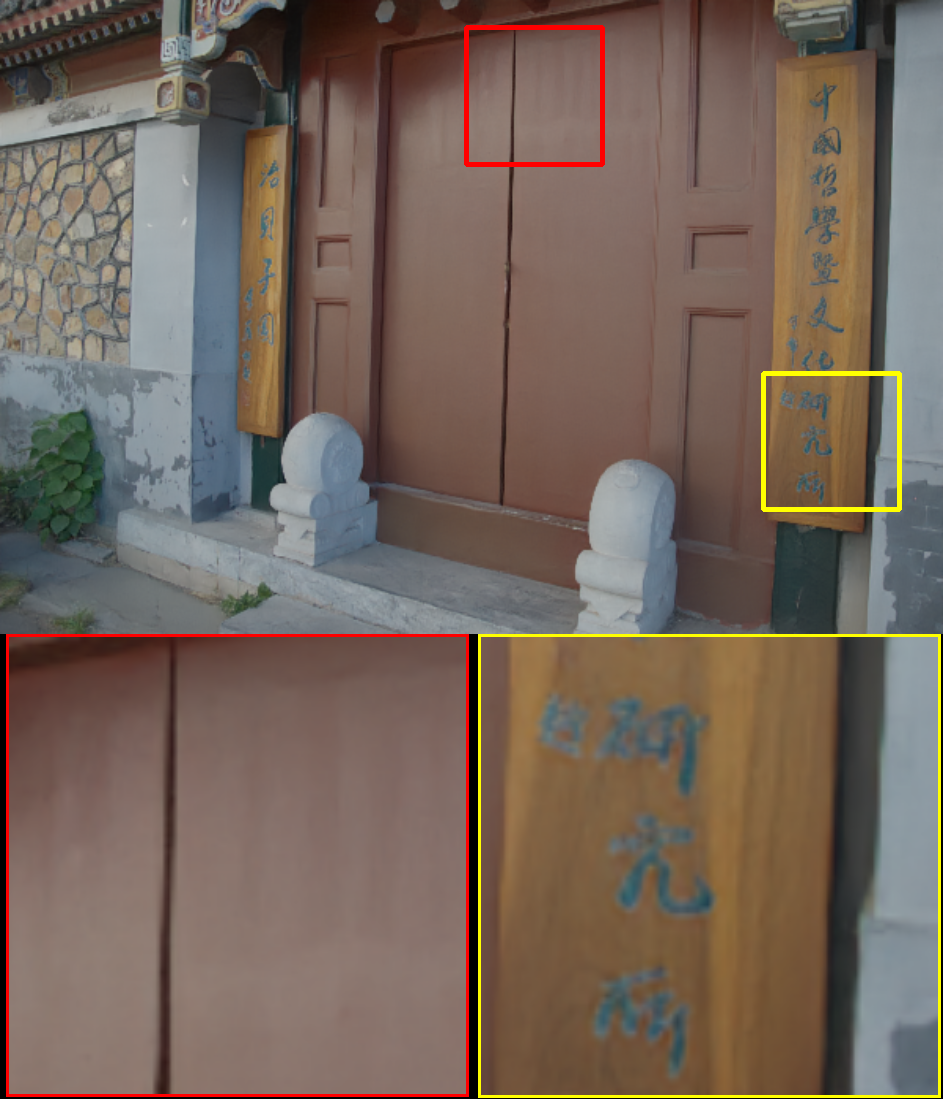
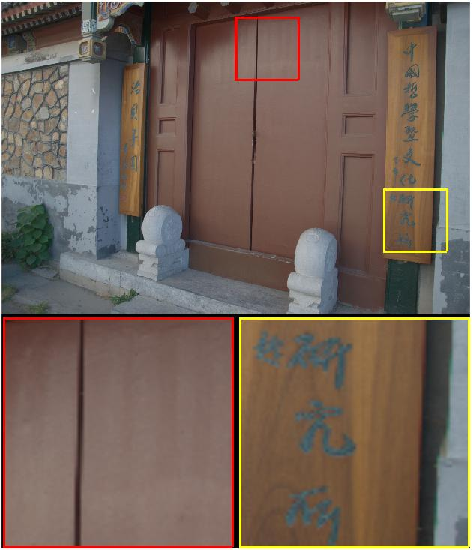
Figure 3: Visual comparison on LOL-v1 and LOL-v2-Real sets, demonstrating superior detail recovery and luminance stability by InterLight.
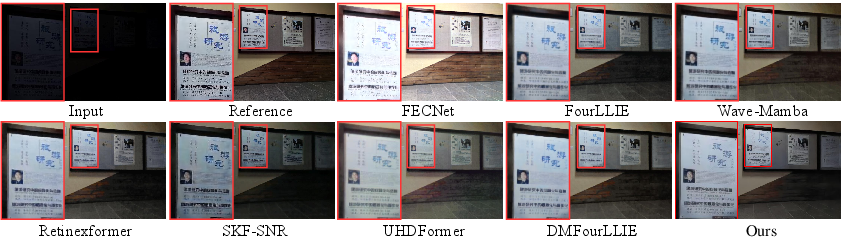
Figure 4: LSRW-Huawei results showing that fine details in challenging dark regions are more realistically restored with InterLight.
Ablation Study
Ablation across the principal modules verifies their complementary contributions. Adaptive Degradation Prior Generation (ADPG) yields a +0.75 dB PSNR gain; Luminance-Gated Intrinsic Memory (LGIM) adds +0.81 dB; physics-consistent data expansion confers +0.41 dB. The full pipeline aggregates to a 1.32 dB improvement over a plain backbone, confirming the structural necessity of each component.
Discussion
InterLight’s architectural and algorithmic principles support both practical and theoretical advances:
- Generalization: Physics-driven augmentation and self-supervised regularization directly target cross-domain robustness, minimizing overfitting to empirical illumination distributions.
- Sample-Aware Restoration: Prompt-based modulation and luminance-gated retrieval establish a context-to-action mapping that is adaptive per image, a capability critical for deployment in uncontrolled real-world imaging scenarios.
- Computational Considerations: While InterLight introduces moderate complexity due to the dual-branch design and internal memory, it remains tractable compared to recent transformer- or diffusion-based SOTA models, balancing performance and efficiency.
Implications and Future Work
Practical adoption of InterLight is facilitated by its data efficiency, cross-sensor adaptation, and robustness in the absence of extra supervision or semantic priors. The design motivates avenues for:
- Model Compression and Acceleration: Reducing the redundancy in dual-branch architectures and memory lookup for deployment on edge devices or real-time applications.
- Extension to Video: Incorporating temporal coherence and multi-frame priors by extending prompt and memory operations to the spatiotemporal domain for video LLIE.
- More Sophisticated Physics Modeling: Replacing linear sensor models with nonlinear, context-sensitive noise and degradation synthesis for improved realism in extremely adverse conditions.
Conclusion
InterLight delivers a rigorous, illumination-prior-driven framework for low-light image enhancement, integrating physics-inspired augmentation, adaptive degradation modeling, and context-aware memory retrieval. The method achieves consistent state-of-the-art performance across diverse datasets and conditions, evidenced by both objective and visual metrics. While computationally non-trivial, its design underlines the importance of explicit prior modeling and adaptive, interpretable restoration over undifferentiated deep enhancement. Future work will consider extending the paradigm to more generalized restoration scenarios, including temporal consistency and lightweight inference.
Reference: "InterLight: Leveraging Intrinsic Illumination Priors for Low-Light Image Enhancement" (2605.19982)

