- The paper demonstrates that bound entangled states can function as faithful probes in AAQPT by satisfying the invertibility of the realigned operator.
- It details a parametric construction of bound entangled states with a strictly positive realignment spectrum and enhanced CCNR violation.
- The study reveals that local filtering operations can degrade probe state faithfulness, highlighting a trade-off in optimizing quantum process tomography.
Ancilla-Assisted Quantum Process Tomography Using Bound Entangled States
Introduction and Motivation
The paper "Ancilla Assisted Quantum Process Tomography using Bound entangled states" (2605.19182) explores the utility of bound entangled states in Ancilla-Assisted Quantum Process Tomography (AAQPT), directly addressing the open question posed by Lu et al. regarding the potential role of such states as faithful probes for quantum process reconstruction. Traditionally, AAQPT leverages bipartite quantum states to reconstruct unknown quantum channels via the Choi-Jamiolkowski isomorphism, with faithfulness—defined through the invertibility of the realigned operator—being a key operational requirement. While maximally entangled states are preferred due to their optimality, certain separable mixed states (e.g., Werner or isotropic states) have also been proven useful. The paper establishes that contrary to previous belief, there exist bound entangled states which satisfy the faithfulness criterion and can reliably serve as probes in AAQPT, thus broadening the operational landscape of bound entanglement in quantum information processing.
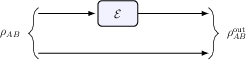
Figure 1: Schematic depiction of AAQPT utilizing a bipartite probe state for channel characterization via joint system-ancilla measurements.
Construction of Faithful Bound Entangled Probes
The principal technical contribution is the explicit construction of a parametric family of bound entangled states in d⊗d dimensions (d≥4), which possess invertible realignment maps and fulfill the faithfulness condition for AAQPT. These states are constructed via linear combinations of the identity, flip operator, and rank-one perturbations involving maximally entangled vectors, following the method established by Cariello. For small positive perturbations, the resulting states exhibit positivity under partial transposition (PPT) and nonzero Schmidt number, confirming their bound entanglement.
The paper also presents a concrete example, the ρCCNR state in C4⊗C4, which attains maximal CCNR violation among all PPT entangled states in that dimension. The full spectrum of its realigned operator is strictly positive, confirming its faithfulness. Quantitatively, ∥R(ρCCNR)∥tr=1.5, which exceeds the separability bound and certifies entanglement via CCNR.
Effect of Local Operations and Filtering
The implications of local filtering and SLOCC operations on AAQPT probe states are rigorously analyzed. Although such operations can enhance operational quantities (e.g., teleportation fidelity), they typically induce rank reduction in the realigned operator, destroying faithfulness and rendering the state unsuitable for AAQPT. Specifically, while unitary operations preserve the trace norm and rank, nonunitary filtering can elevate the CCNR norm but inevitably compromise the invertibility essential for tomographic reconstruction.
In the case of filtered Werner states, despite improved teleportation properties, the introduction of zero singular values in the realigned operator eliminates faithfulness. This underscores a fundamental distinction between requirements for entanglement activation and AAQPT efficiency.
The paper systematically compares the faithfulness and operational efficacy of bound entangled probes against separable states. It establishes that the optimal separable isotropic probe achieves a faithfulness measure F(ρiso)=0.1 for d=4, while both the bound entangled ρCCNR state and maximally entangled Werner state reach F=0.1667. Thus, bound entangled states provide a distinct operational advantage over full rank mixed separable states, equaling the performance of pure maximally entangled Werner states for AAQPT in relevant dimensions. The trace norm of the realignment, which encodes the total correlation strength, is also systematically higher for the bound entangled probes.
Numerical Construction in Low Dimensions
The paper presents a 3⊗3 PPT entangled state, optimized numerically for maximal CCNR violation while maintaining faithfulness. All singular values of its realigned operator are strictly positive; its CCNR trace norm of d≥40 certifies entanglement and provides yet another low-dimensional example of a bound entangled probe suitable for AAQPT. The numerical procedure utilizes semidefinite programming and dual representations of the trace norm, though the complexity escalates rapidly with increased dimension.
Implications and Future Directions
The results fundamentally expand the application domain of bound entangled states by demonstrating their utility in AAQPT. Practically, this establishes new pathways for robust quantum process characterization without requiring pure maximally entangled states, which may be resource-intensive or experimentally challenging.
Theoretically, the work motivates further exploration of analytic bounds for CCNR violation within PPT entangled states and the complete classification of bound entangled states that possess maximal operator Schmidt rank. The intersection of entanglement measures, CCNR criterion, and tomographic faithfulness remains fertile ground for investigation. Experimentally, future studies could focus on scalable implementations of AAQPT using bound entangled probes, potentially reducing requirements on state purity in process verification platforms.
Conclusion
The paper resolves a key open question by proving that bound entangled states can function as faithful probes for AAQPT, and that they outperform full-rank separable states in faithfulness and operational efficacy. Local filtering, while advantageous for some tasks, is generally counterproductive for AAQPT due to faithfulness degradation. Future work should target analytical generalizations for higher-dimensional systems and experimental demonstrations of the approach. This research solidifies the practical relevance of bound entangled states in quantum information processing and process tomography.