- The paper introduces an MCTS-driven approach to discover high-performance data encoding circuits for quantum-classical neural networks.
- It analyzes metrics like effective rank, entanglement, and Fourier spectral features to predict encoding utility and reduce computational cost.
- Empirical results on BreastMNIST and PneumoniaMNIST show that automated encodings outperform standard quantum and classical models.
Automated Data Encoding Circuit Discovery for Quantum-Classical Neural Networks via MCTS
Introduction
The paper "Discovering Data Encoding Strategies for Quantum-Classical Neural Networks Using Monte Carlo Tree Search" (2605.18540) addresses a fundamental challenge in the design of quantum-classical convolutional neural networks (QCCNNs): the selection and optimization of data encoding circuits. Specifically, the work studies the impact of automated encoding circuit discovery using Monte Carlo Tree Search (MCTS), decoupled from variational circuit training, and probes which properties of encoding circuits are predictive of successful downstream classification.
The inquiry is situated at the intersection of quantum architecture search and empirical quantum machine learning (QML). The authors' twofold focus is (1) leveraging reinforcement-based search to systematically construct high-quality, fixed encoding circuits for QCCNNs, and (2) analyzing diverse metrics—entanglement capability, Fourier spectral features, and effective rank of the resulting quantum feature maps—for their predictive value regarding encoding utility. Notably, the paper restricts itself to a non-variational quantum block, thus isolating the encoding effect and enabling clearer attribution of performance gains.
Key empirical results are reported on the BreastMNIST and PneumoniaMNIST imaging datasets. The architecture is compared, both in intrinsic performance and representational quality, to classical models and conventional quantum encoding baselines.
The QCCNN architecture in this study comprises a classical fully-connected classifier atop a quantum feature extraction network built around fixed, dataset-specific encoding circuits. Unlike typical hybrid quantum models, it omits any trainable quantum parameters, relying wholly on the structure and action of the data encoding block.
Encoding is implemented by mapping image patches (e.g., 2×2) onto qubit registers through parameterized rotation gates (RX, RY, RZ) and entangling gates (RZZ, CNOT, Hadamard). Each patch region is processed independently, with patch data values scaled and injected as gate parameters.
To efficiently explore the combinatorially vast encoding space, the authors employ MCTS with a progressive widening technique. This treats circuit construction as a sequential decision process—each node is a unique circuit, and actions correspond to gate additions, removals, or replacements sampled from a pre-defined pool. UCT (Upper Confidence bounds applied to Trees) governs the selection phase, valuing high-performing encodings while balancing search breadth. Importantly, each newly proposed circuit is evaluated by training only the classical layer, and its ROC-AUC on the validation set is used as the reward signal.
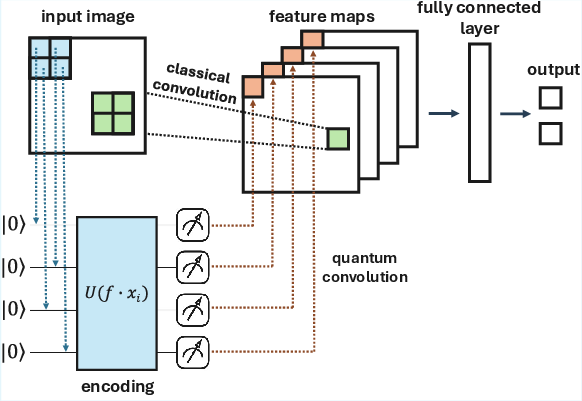
Figure 1: Architecture schematic of the QCCNN (right) and classical CNN (left) for the 2×2 patch size showing corresponding structural elements.
MCTS-generated encoding circuits achieve demonstrably superior performance to hand-crafted or common baseline encoding strategies across evaluation metrics. For example, in BreastMNIST, MCTS circuits outperform RX, RY angle encoding and higher-order methods—irrespective of the number of data re-uploading layers.
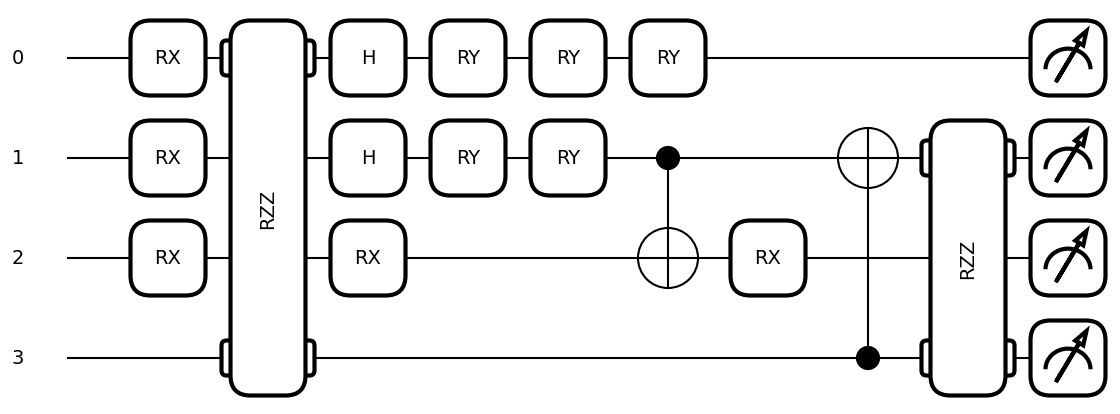
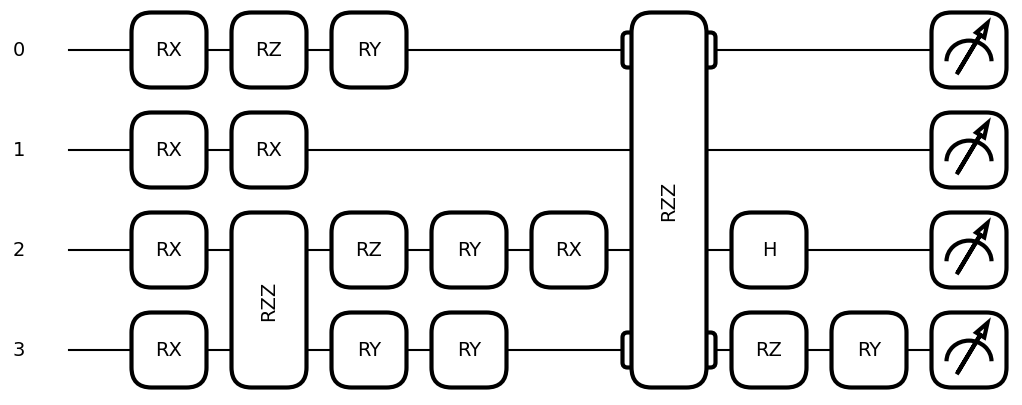
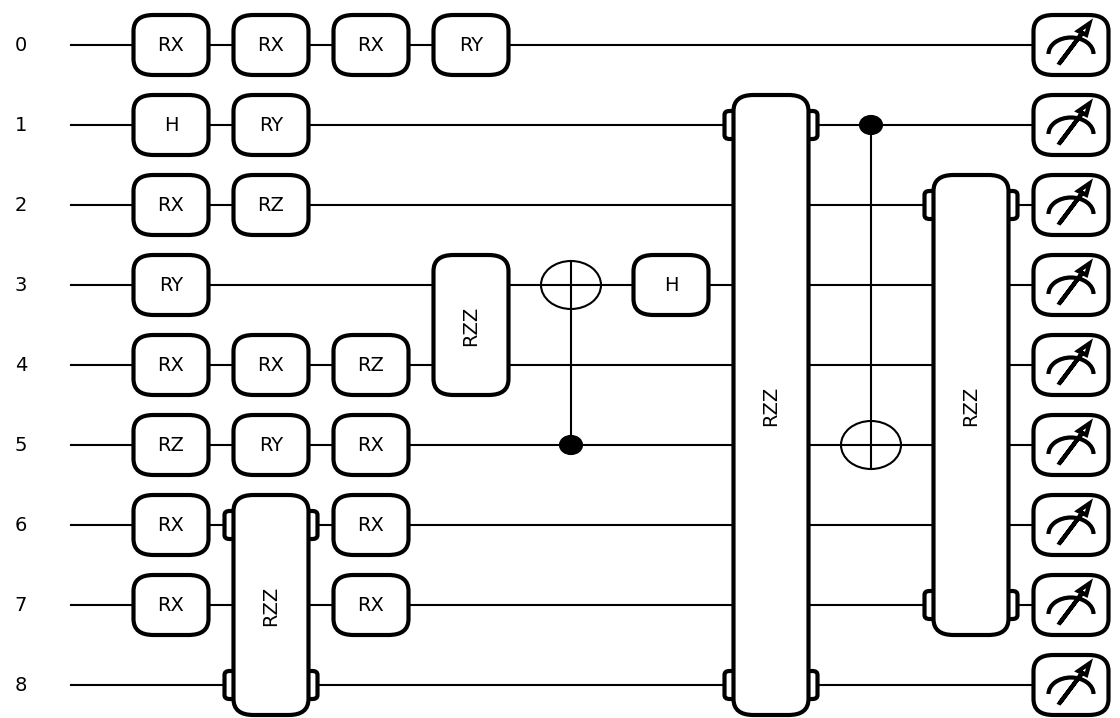
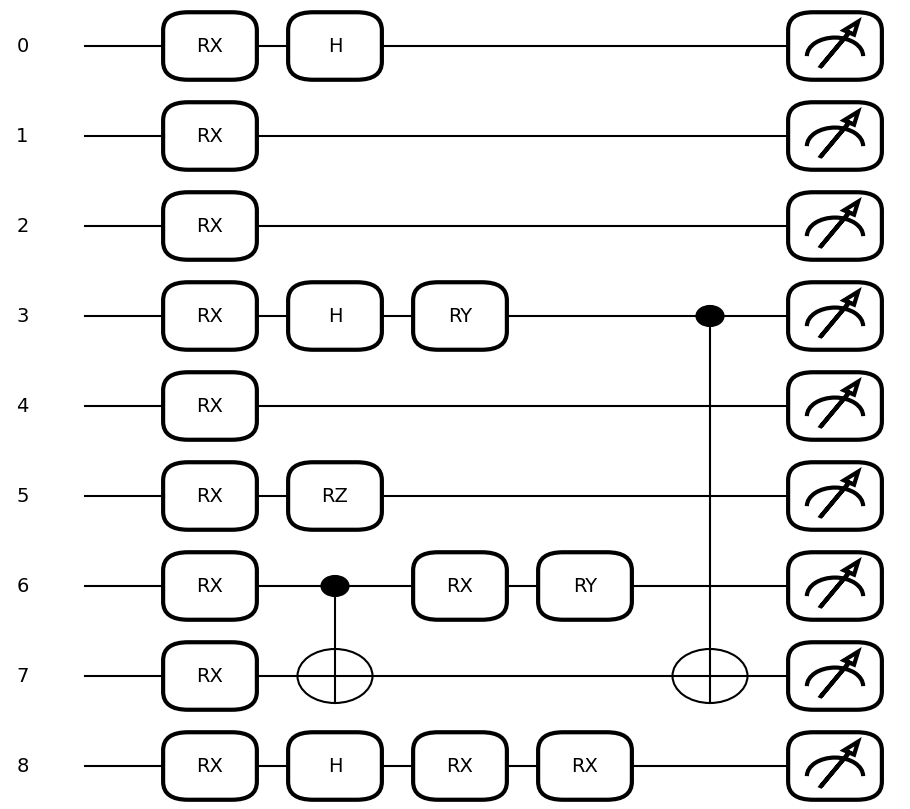
Figure 2: MCTS-derived 2×2 encoding circuit schematic for BreastMNIST, as identified through the search process.
The superiority of MCTS-discovered encodings holds against both quantum and classical competitors. When compared to fully connected (FC) and simple CNN models of matched parameter budgets, QCCNNs with MCTS-derived encodings reproducibly achieve the highest or near-highest validation AUC and accuracy, particularly for 2×2-sized encodings. On the PneumoniaMNIST dataset, quantum encodings substantially outperform classical baselines. On BreastMNIST, QCCNNs achieve parity or modest improvements over fully connected architectures, indicating task-dependence in achievable quantum-classical separation.
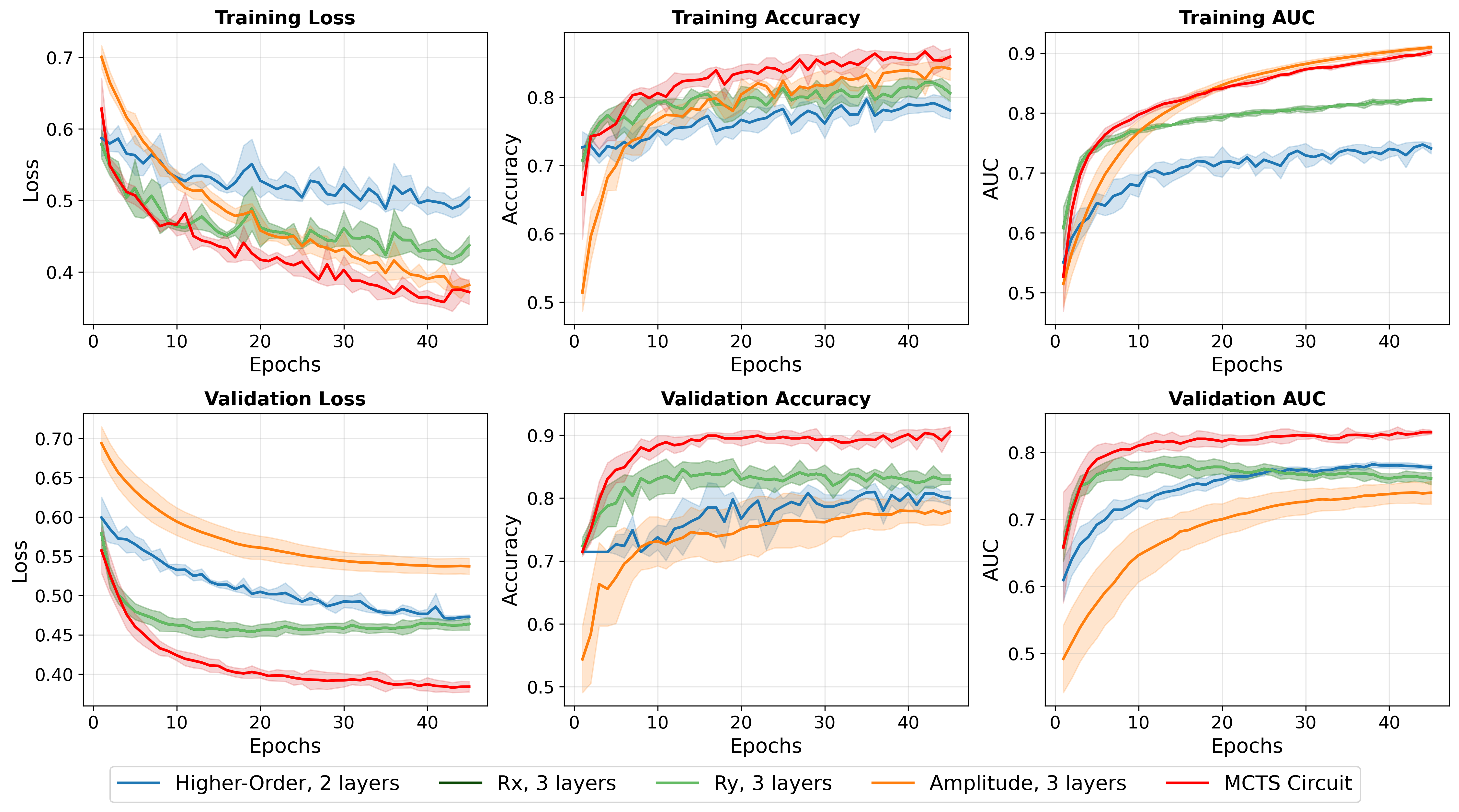
Figure 3: Performance comparison of MCTS-optimized 2×2 encoding, angle encodings, and higher-order encodings on BreastMNIST (mean and standard deviation over five runs).
Finally, the transfer of discovered encodings across image resolutions is studied by applying circuits optimized for 28×28 images to 128×128 images without further tuning. While the relative performance ordering among encodings is preserved, classical CNNs regain dominance at higher resolution due to their retrainable convolutional layers, suggesting limited transferability and the importance of architecture search at the target scale.
Correlation Analysis of Encoding Circuit Metrics
To avoid costly full evaluations for each candidate encoding, the authors analyze several metrics for their predictive value:
- Entanglement capability (Meyer-Wallach Q measure) displays, at best, moderate and inconsistent correlation with classification performance. Peak AUCs do not necessarily arise from circuits with maximal entanglement.
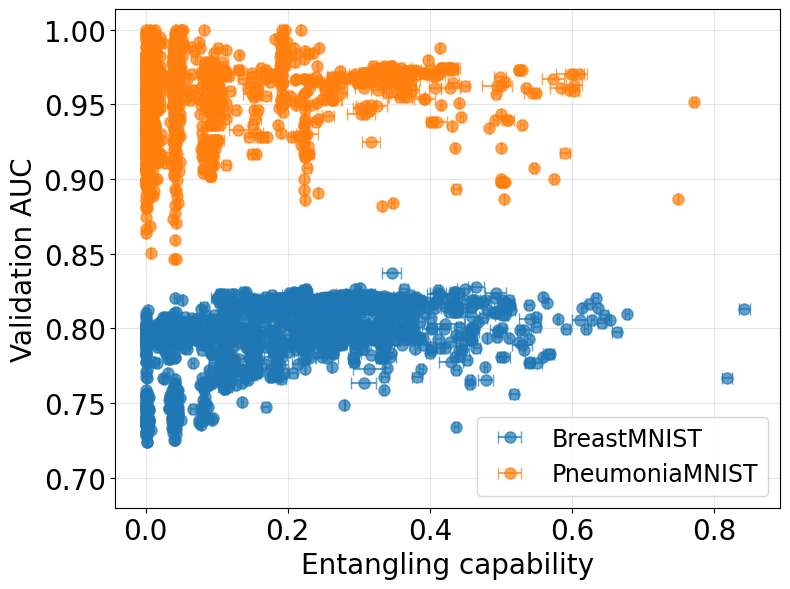
Figure 4: Entanglement capability versus validation AUC across encodings; shows weak or inconsistent correlation for both datasets.
- Fourier spectral features of the encoded quantum states, extracted by real fast Fourier transform of circuit outputs, are largely non-informative in the non-variational (encoding-only) case. High- and low-performing encodings show similar distributions of dominant coefficients.
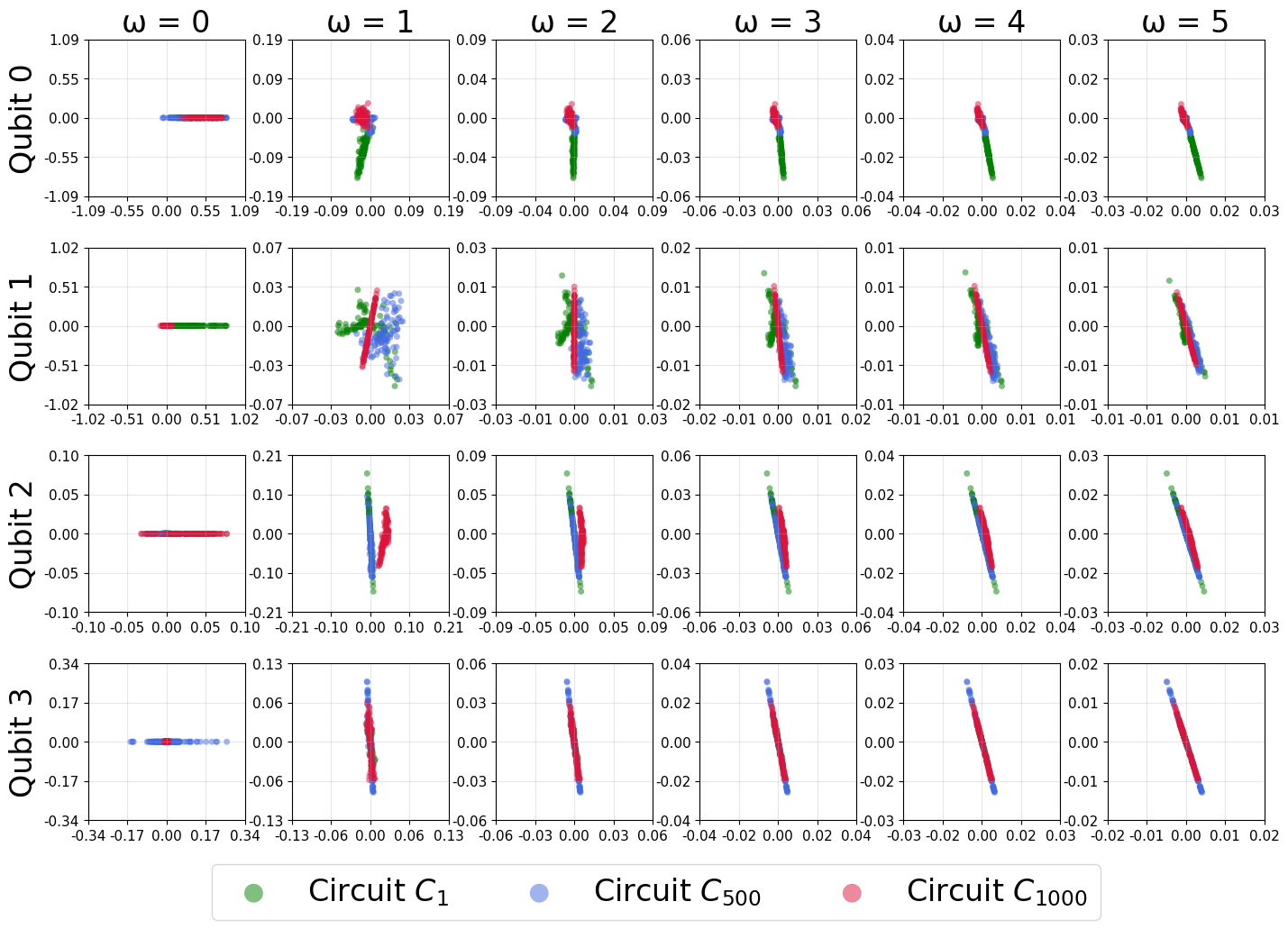
Figure 5: Empirical Fourier coefficient distributions (complex plane) for high, medium, and low performing circuits in BreastMNIST.
- Normalized effective rank of the quantum feature map (diversity of encoded representations as measured by the entropy of singular value distributions) is highly correlated with validation AUC (BreastMNIST r=0.87, PneumoniaMNIST r=0.82). The effective rank both discriminates well between poor and good encodings and serves as an efficient pre-filter for candidate rejection, achieving computational savings of 35–50% in the search process without loss of top-tier candidates.
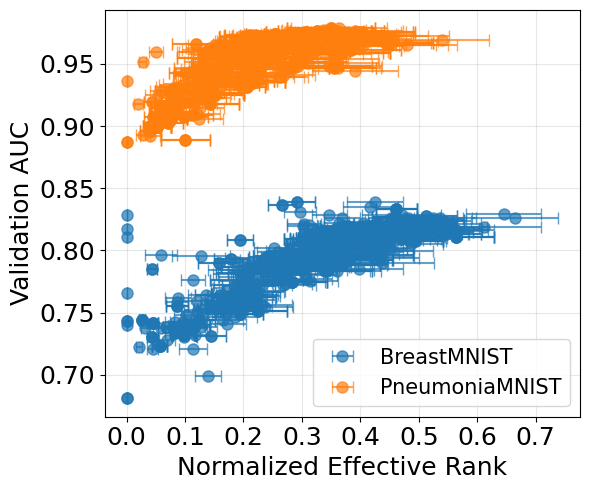
Figure 6: Normalized effective rank versus validation AUC; strong positive correlation demonstrates metric’s predictive capacity for encoding quality.
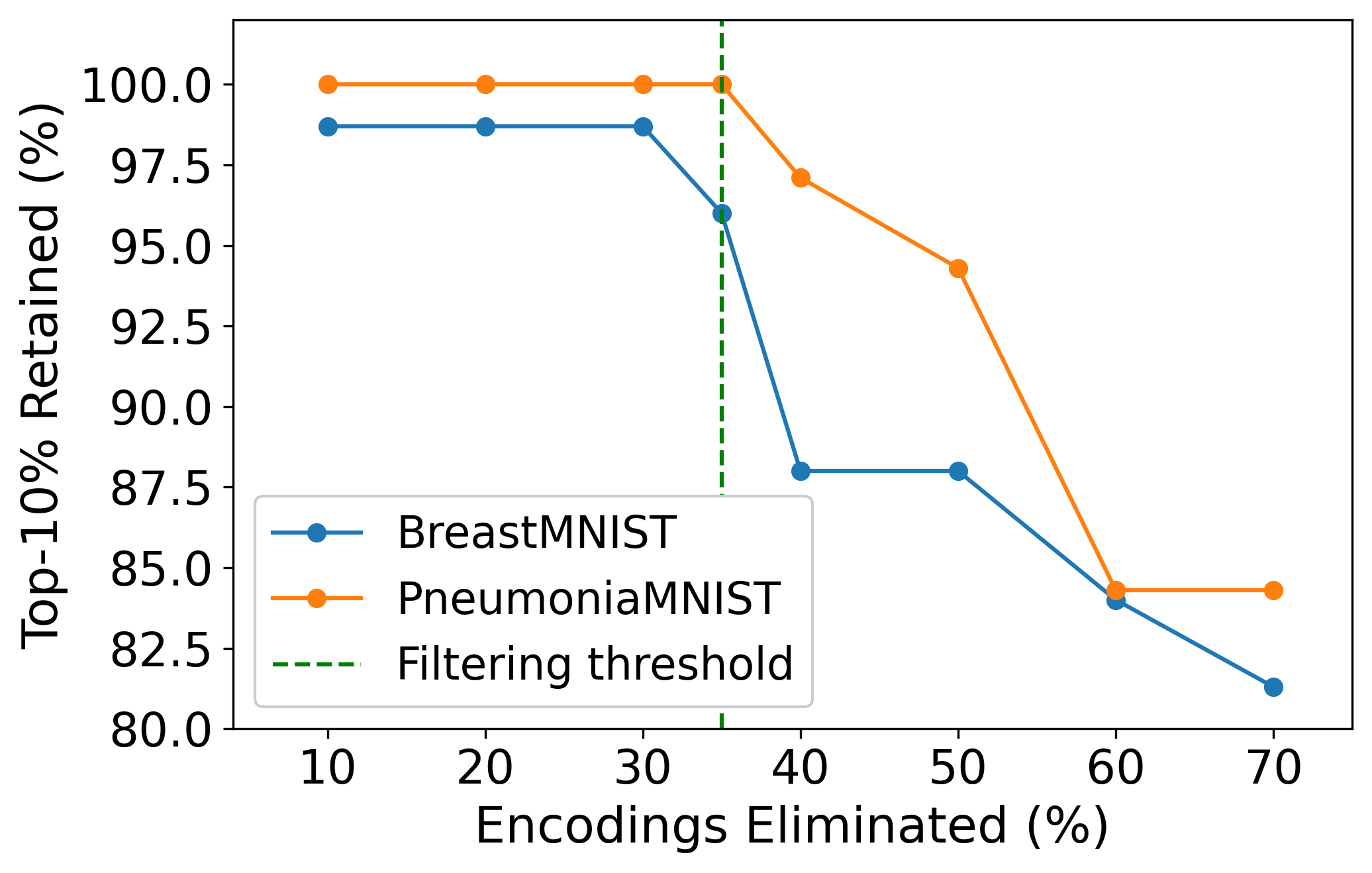
Figure 7: Fraction of top-10% true encodings retained as bottom x% (by effective rank) are filtered, supporting high recall at thresholds around 35%.
Effective rank only loses utility among the very best encodings, where it cannot rank-order the top few circuits.
Practical and Theoretical Implications
This work provides compelling evidence that the performance of QCCNNs in small-sample regimes can be substantially elevated via systematic, automated search for data encoding circuits, independent of quantum circuit trainability. It further establishes the effective rank metric as a powerful, data-driven filter to accelerate search by early candidate rejection.
These findings carry several practical implications:
- Encoding structure, rather than circuit entanglement or spectral spread, is the primary driver of model efficacy in the non-variational regime studied.
- Efficient quantum architecture search is feasible with simple metrics, supporting scalability to broader quantum model search.
- Current quantum encoding advantages do not lie in non-simulatable regimes: MCTS shows no bias towards highly entangling, classically hard circuits, inviting further investigation into quantum-classical feature map simulatability.
- Transferability of circuits across resolutions is limited, motivating resolution- or domain-specific search runs.
Theoretically, this reinforces the hypothesis that representational diversity ("feature map diversity") is a more crucial determinant of classification success in QML models than formal quantum properties in hybrid NISQ architectures.
Limitations and Future Directions
The work is conducted under noiseless simulation and on only two binary medical imaging datasets, using minimal classical post-processing. Key future directions include evaluation on multi-class, higher-dimensional, and larger-scale datasets; integration with noisier quantum hardware; meta-learning for metric thresholds; and theory-driven search for genuinely non-classically simulatable encodings that could yield quantum advantage. The architecture-centric approach may be extended to richer classical-quantum hybrids by co-optimizing over both encoding and classical blocks.
Conclusion
This study demonstrates that MCTS-driven search enables the discovery of highly performant quantum data encoding circuits for QCCNNs, outperforming standard baseline encodings and, in several cases, classical models. The effective rank of the quantum feature map is validated as a cost-efficient, robust predictor and filter for candidate encodings, dramatically reducing search computational cost. The methodology and findings inform both the practice of automated quantum ML model design and the broader understanding of what properties of quantum encodings are functionally relevant for hybrid quantum-classical systems.

