- The paper presents derivations of scattering cross sections, absorption rates, and greybody factors using a partial wave expansion in low-frequency regimes for Lorentz-violating charged black holes.
- Analytical methods applied to both bumblebee and Kalb-Ramond models reveal that increasing LV parameters and electric charge suppress scalar field transmission and absorption.
- The findings provide quantitative predictions linking Lorentz symmetry breaking effects with observable black hole properties, setting a foundation for further numerical and phenomenological studies.
Scattering, Absorption, and Greybody Factor of Scalar Particles by Lorentz-Violating Charged Black Holes
Overview
The paper "Scattering, absorption and greybody factor of scalar particles by Lorentz-violating charged black holes" (2605.17647) presents a systematic study of electromagnetic wave scattering, absorption, and greybody factors for massless scalar fields interacting with electrically charged black holes formulated within spontaneous Lorentz symmetry breaking frameworks. Specifically, two paradigmatic models are considered: the bumblebee model, featuring a vector field with a nonzero vacuum expectation value (VEV), and the Kalb-Ramond (KR) model, based on a self-interacting antisymmetric tensor field. Employing the partial wave expansion and analytical methods suited for the low-frequency regime, this work derives explicit expressions for differential scattering cross sections, absorption cross sections, and greybody factors—allowing for quantitative characterization of how spontaneous Lorentz violation (LV) and electric charge modify black hole observables.
Theoretical Setting
Lorentz-Violating Black Hole Solutions
Two gravity models are analyzed, each giving rise to charged black hole geometries with distinct metric deformations induced by symmetry-breaking fields:
- Bumblebee Gravity: The static spherically symmetric metric is parameterized by the LV parameter l (related to the VEV of the bumblebee field) and electric charge Q. The metric functions A(r) and B(r) generalize the Reissner–Nordstr\"om geometry, with horizons determined by both mass M and LV corrections.
- Kalb-Ramond Gravity: Here, the metric involves an LV parameter γ (from the KR field VEV), again modifying the standard charged black hole geometry, with electric charge Q and mass M retained. The solutions recover standard general relativity in the absence of LV (l=0, γ=0).
Both metrics maintain asymptotic flatness and have modified event/Cauchy horizons, explicitly encoded in Q0 or Q1.
Scalar Field Dynamics and Analytical Techniques
A minimally coupled real massless scalar field is used as a probe, neglecting backreaction. The Klein-Gordon equation is derived in curved spacetime and solved using separation of variables. The radial equation is recast as a Schrödinger-type equation, permitting a partial wave expansion. In the low-frequency limit (Q2), analytic approximations and power-series expansions in Q3 are employed, yielding closed-form solutions for scattering phase shifts and cross sections. The Born approximation and series truncation strategies are adopted to handle poor convergence near Q4 in the partial wave sum.
Results: Scattering, Absorption, and Greybody Factors
Scattering Cross Section and Absorption
For both models, explicit expressions for the phase shifts and resulting cross sections are derived. Strong numerical results indicate:
- In the bumblebee model, the scattering cross-section Q5 increases with LV parameter Q6 and decreases with electric charge Q7.
- In the Kalb-Ramond model, cross sections decrease with increasing Q8 and Q9.
- The absorption cross section A(r)0 mirrors these dependencies, with LV parameters acting as reflective agents and electric charge further suppressing absorption.
Greybody Factor Analysis
Greybody factors quantify the deviation from the Planck spectrum due to spacetime curvature around the horizon, directly linking microscopic field propagation to observable macroscopic thermodynamics. Employing the analytical sechA(r)1 bound, the dependence on the LV parameters and electric charge is established:
- Transmission probability (greybody factor) decreases as A(r)2 or A(r)3 and A(r)4 increase; this trend is visualized for both models, with transmission allowed only for sufficiently high incident frequencies.
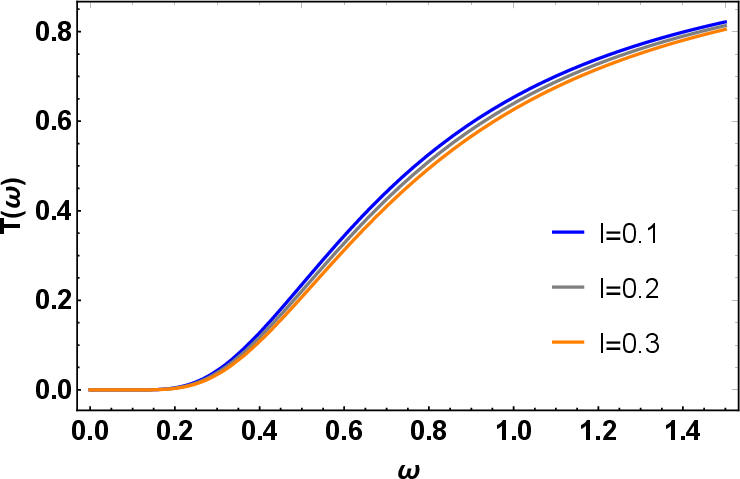
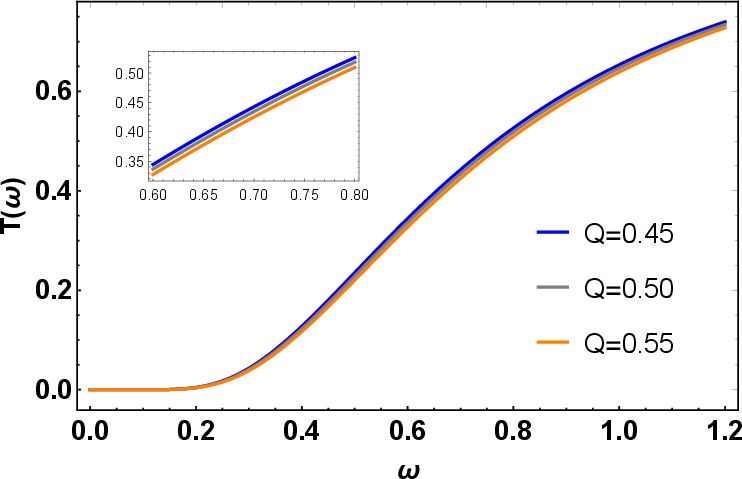
Figure 1: The greybody factor for solution 1 (bumblebee) as a function of frequency, highlighting suppression for higher A(r)5.
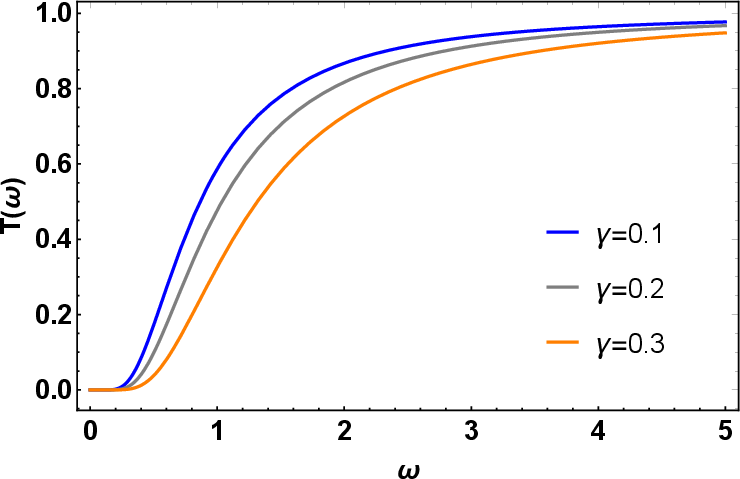
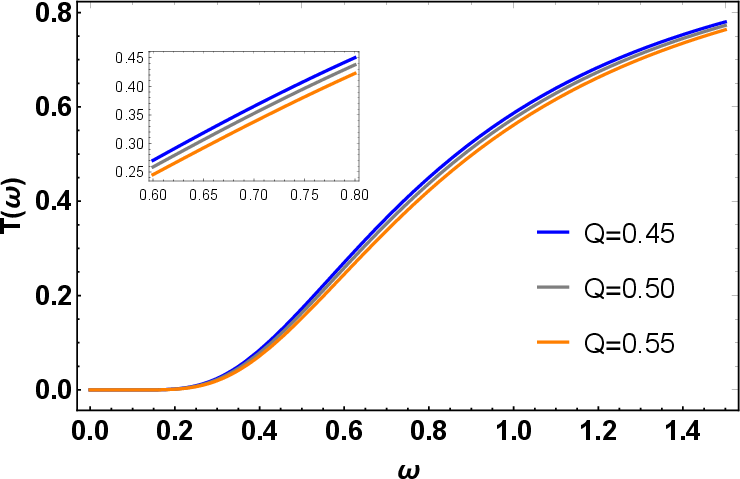
Figure 2: The greybody factor for solution 2 (Kalb-Ramond) shows similar suppression when A(r)6 increases, underscoring LV effects.
A quantitative comparison reveals that the amplitude of the greybody factor for the bumblebee model exceeds that for the Kalb-Ramond model for comparable LV parameter values.
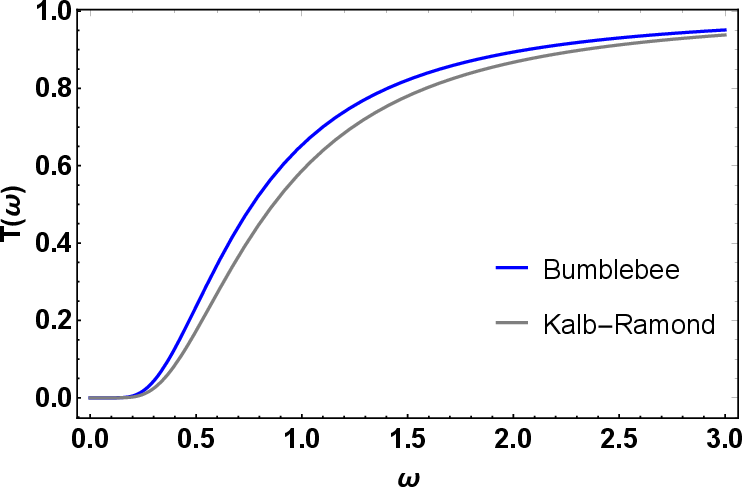
Figure 3: Comparison between the greybody factor for the bumblebee (A(r)7) and the Kalb-Ramond (A(r)8) models.
Absorption Cross Section: Frequency and Parameter Dependence
The absorption cross section as a function of frequency is displayed for varying LV parameters and electric charge:
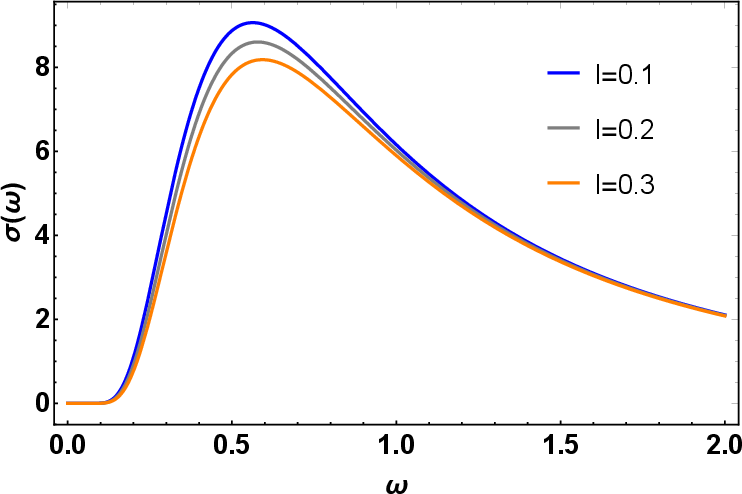
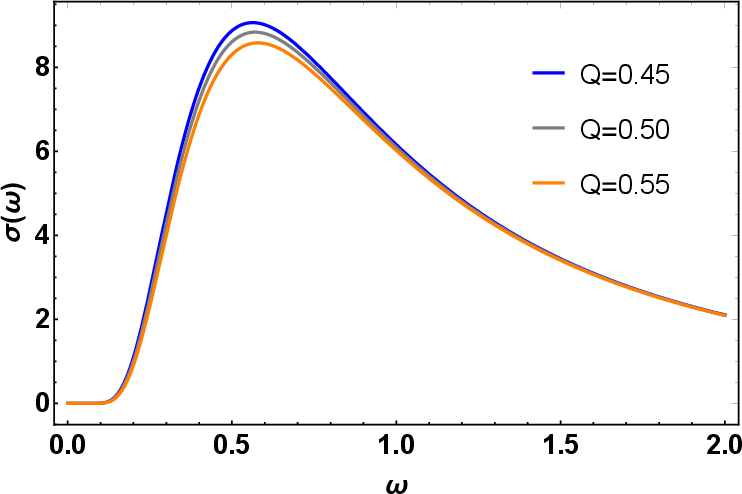
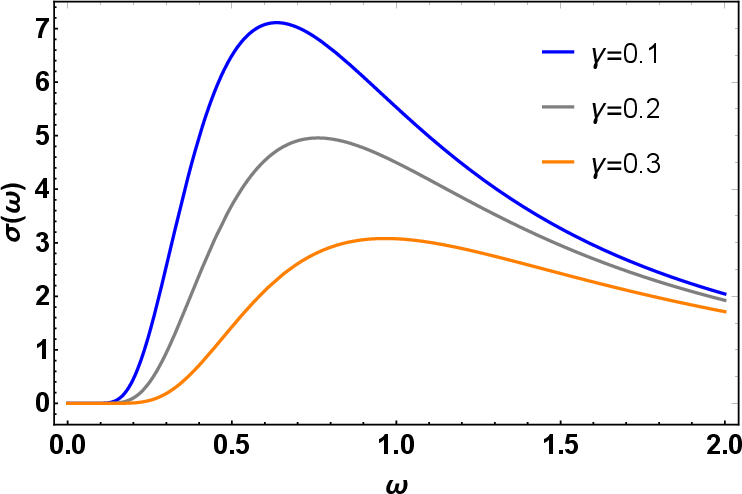
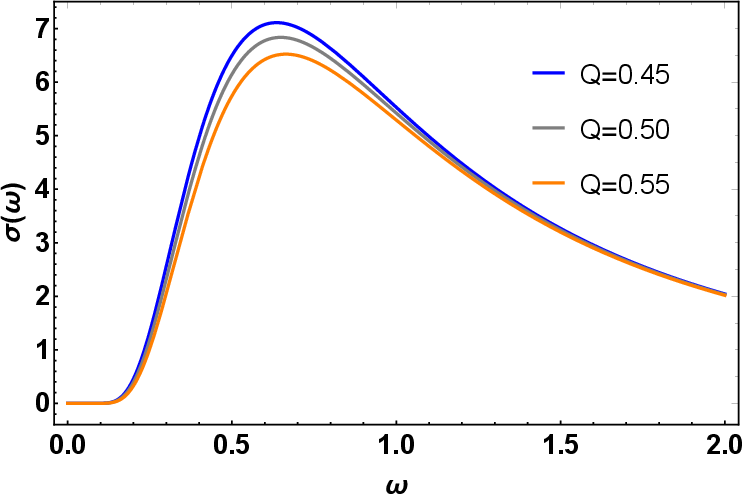
Figure 4: Absorption cross section for solution 1—the effects of increasing A(r)9 (a) and B(r)0 (b); similar trends for Kalb-Ramond with varying B(r)1 and B(r)2 (c), (d).
For both models, increased LV and electric charge parameters result in lower peak absorption, with a frequency shift in the onset and maxima. The bumblebee model consistently exhibits lower absorption compared to the Kalb-Ramond model for the same parameter values.
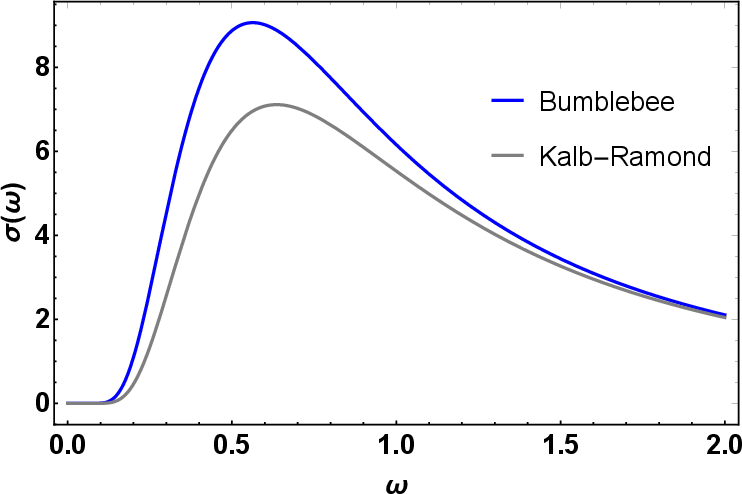
Figure 5: Comparative absorption cross section for bumblebee (B(r)3) and Kalb-Ramond (B(r)4) models.
Practical and Theoretical Implications
The analysis, constrained to the perturbative regime of low-frequency and small LV parameters, provides reliable leading-order predictions. Substantially, the findings imply:
- LV effects act to increase the effective curvature around black holes, impeding energy transmission and suppressing both scattering and absorption in a manner distinguishable from standard GR.
- These modifications manifest in observable quantities (e.g., electromagnetic energy flux, Hawking radiation distortions) and are phenomenologically relevant for high-precision black hole measurements—such as those undertaken by EHT, LIGO, Virgo, and future missions.
- Numerical extensions are necessary for intermediate/high frequencies or larger LV parameters. Quasinormal mode analysis and continued-fraction techniques will further clarify the impact of spontaneous Lorentz symmetry breaking on gravitational wave emission and black hole ringdown.
Conclusion
This work rigorously characterizes how spontaneous Lorentz symmetry breaking, via vector and antisymmetric tensor fields, alters the fundamental scattering, absorption, and greybody properties of electrically charged black holes. Explicit analytical results confirm that LV parameters act as reflective agents, damping both scalar wave transmission and absorption, with electric charge further suppressing these effects. Distinctions between the behavior of bumblebee and Kalb-Ramond models are quantitatively assessed, providing a framework for phenomenological constraints and for future theoretical developments in gravitation. Prospective directions include numerical refinement, extension to higher spins, and observational implications across the spectrum of astrophysical black hole phenomena.

