- The paper introduces EchoSR, a novel lightweight SR model combining dense large-kernel convolutions, hierarchical context disentanglement, and cascaded multi-scale fusion.
- It achieves higher PSNR, SSIM, and perceptual quality with lower memory usage and latency compared to CNN-, Transformer-, and Mamba-based methods on standard benchmarks.
- The architecture scales from lightweight to tiny models, enabling practical edge deployment and potential adaptation to tasks like denoising, deblurring, and video SR.
EchoSR: Contextually Efficient Lightweight Image Super-Resolution
Motivation and Architectural Innovations
EchoSR introduces a novel lightweight super-resolution framework that addresses the persistent challenge of achieving high-fidelity reconstructions while maintaining computational efficiency in resource-constrained environments. Conventional methods either rely on CNNs, which are restricted in receptive field expansion and global context modeling, or Transformers and SSMs, which exhibit quadratic and linear complexity but are frequently impractical due to significant memory and operator overhead. EchoSR circumvents these limitations by combining dense large-kernel convolutions, hierarchical context disentanglement, and a cascaded multi-scale fusion strategy.
The context-harnessing strategy decouples feature extraction into three parallel branches targeting local, multi-scale, and global information integration. Local aggregation utilizes channel expansion coupled with group convolutions to efficiently preserve fine-grained details. Multi-scale receptive field expansion (MRFE) employs direct depthwise convolutions with 5×5, 11×11, and 17×17 kernels, capturing structural information across hierarchical spatial ranges while mitigating sparse sampling artifacts. The global context prior (GCP) branch leverages pooling followed by convolution and upsampling, providing efficient modulation of global structural priors without the computational cost of self-attention.
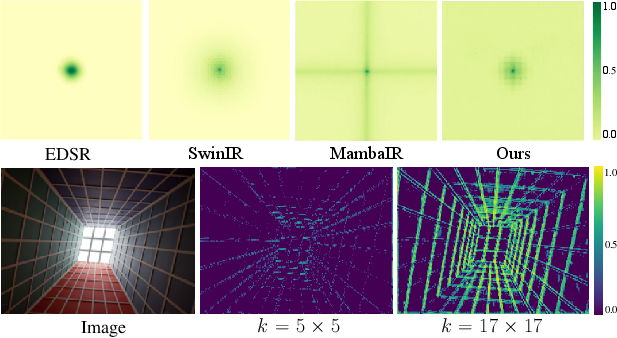
Figure 1: Visualization of the effective receptive field (ERF) (top) and the feature maps of different kernel sizes (bottom).
Hierarchical Fusion: Cross-Scale Overlapping Fusion Block
EchoSR moves beyond mere concatenation-based feature fusion by introducing the Cross-scale Overlapping Fusion Block (COFB), an architectural element that systematically integrates fine and coarse spatial cues. COFB deploys a cascaded depthwise convolution sequence with 7×7 and 15×15 kernels, applied in a small-to-large order, to construct overlapping receptive fields. This arrangement ensures that local details are aggregated prior to context propagation, achieving spatial structural rectification and harmonizing transitions between scales.
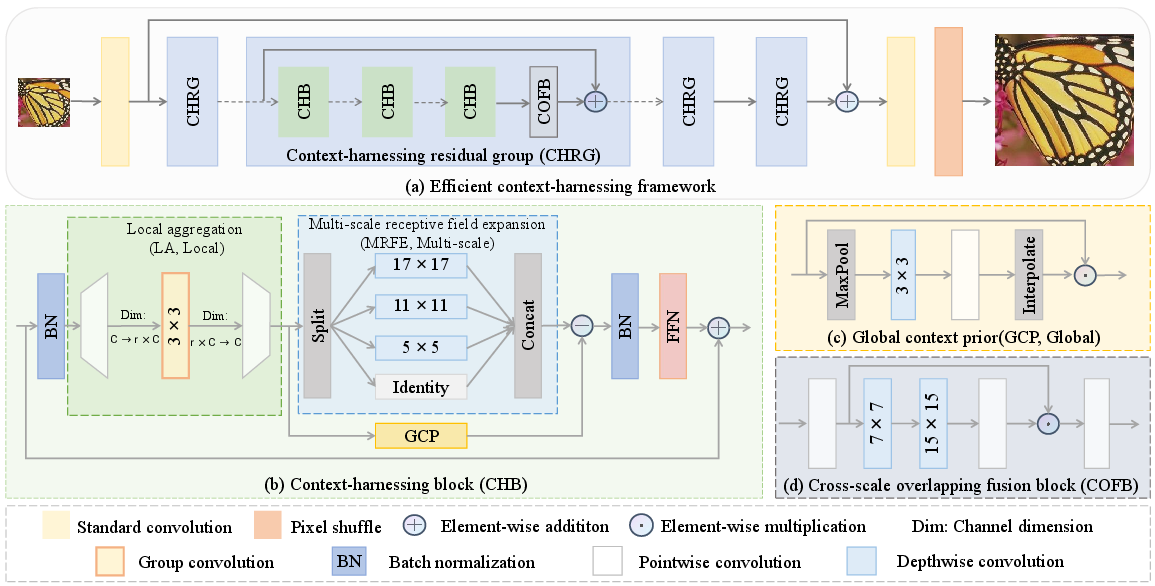
Figure 2: Overview of the EchoSR architecture where parallel extraction and cross-scale fusion ensure comprehensive context modeling.
Quantitative analysis of ERF dynamics confirms that the 7→15 cascade expands the high-contribution area ratio while avoiding structural dissipation associated with reversed or single-kernel baselines.
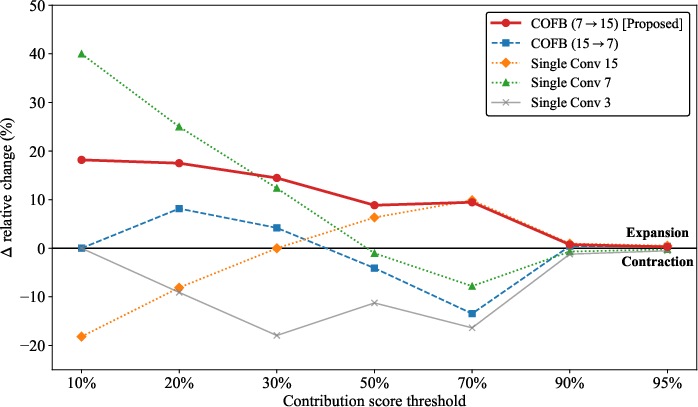
Figure 3: Relative percentage changes across ERF contribution thresholds show stable constructive expansion with the 7→15 COFB sequence.
EchoSR demonstrates consistent superiority over previous lightweight SR models (CNN-based, Transformer-based, and Mamba-based) across standard and real-world benchmarks. On Urban100, Manga109, Set5, Set14, and B100, EchoSR achieves higher PSNR and SSIM than all compared baselines, with notable gains on structurally complex datasets. For ×2/×3/×4 upscaling, EchoSR exhibits clear numerical dominance and improved perceptual similarity as measured by LPIPS.
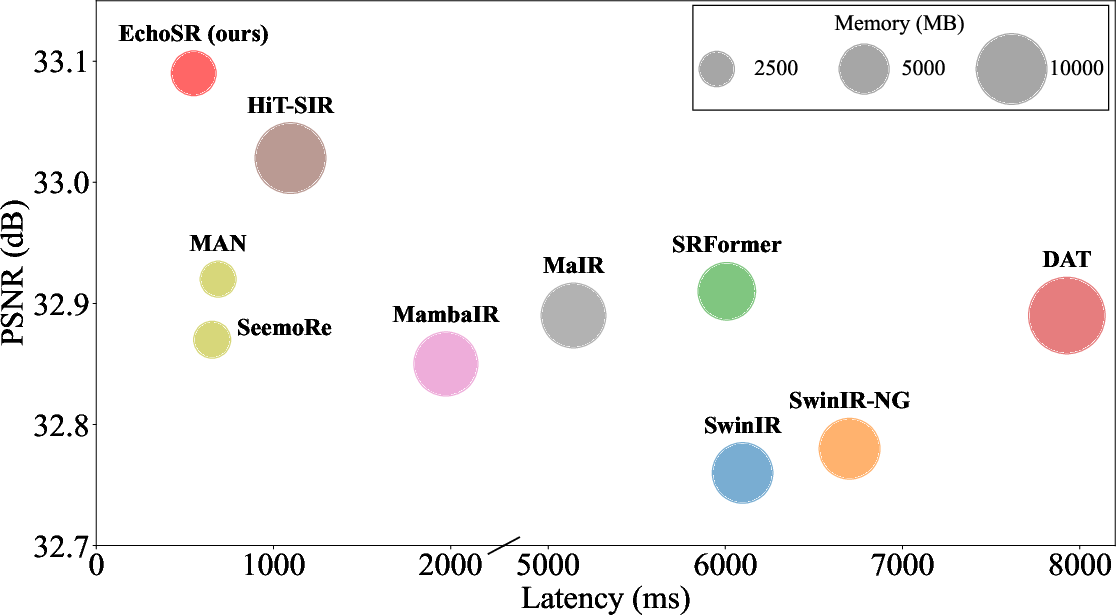
Figure 4: EchoSR achieves optimal trade-off among performance, memory consumption, and latency on Urban100 (1024×1024).
Memory usage and inference latency evaluations demonstrate EchoSR’s architectural efficiency, especially against Transformer variants suffering from OOM errors and Mamba-based models constrained by hardware primitives.
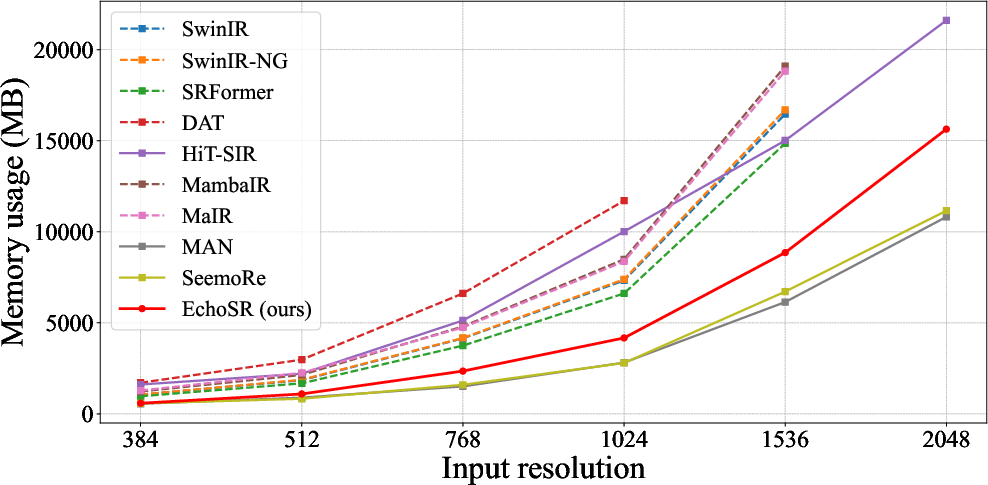
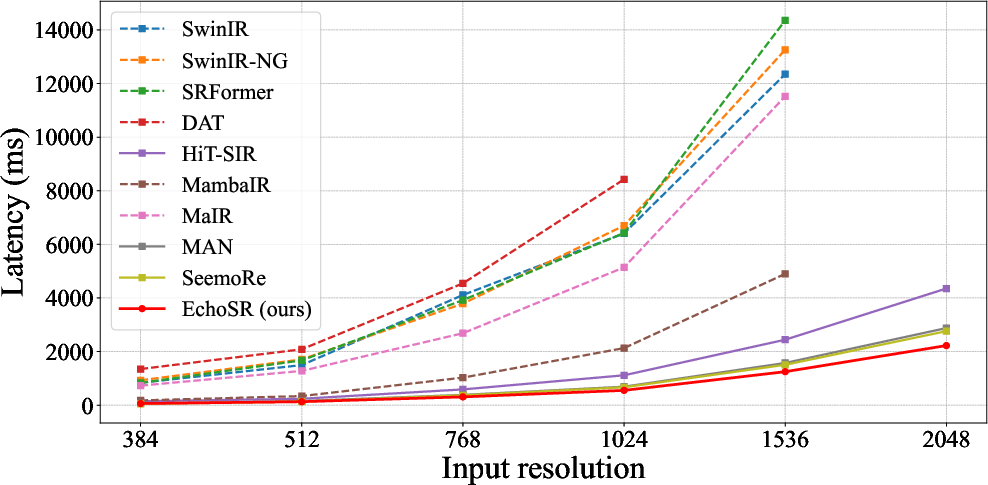
Figure 5: Peak GPU memory usage (left) and inference latency (right), EchoSR maintains competitive efficiency under high-resolution loads.
EchoSR-lite further validates the framework’s scalability; even in the tiny regime (<250K parameters), the method outperforms recent distillation and shuffle-based models both quantitatively and qualitatively.
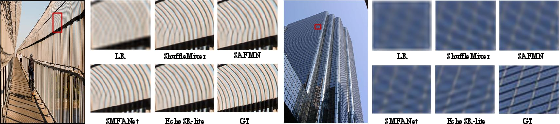
Figure 6: EchoSR-lite restores structural details better than SOTA tiny methods on Urban100 (11×110 SR).
Visual comparisons underline EchoSR’s advantage: sharper edge recovery, minimal texture hallucination, and suppressed artifacts. Pixel-wise error maps confirm minimal residuals and high structural fidelity.
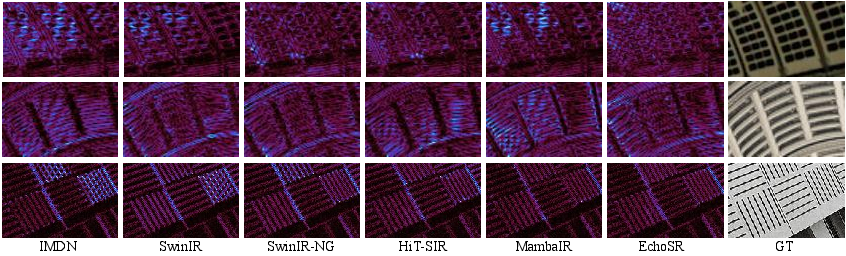
Figure 7: EchoSR’s residual maps exhibit minimal error, reflecting faithful structure restoration without hallucinations.
Effective receptive field analyses reveal a concentrated, expansive ERF, indicating maximally utilized spatial context compared to cruciform or scattered patterns in competing architectures.

Figure 8: ERF visualization demonstrates EchoSR’s broad and coherent spatial modeling capacity.
Ablations and Module Rationales
Systematic ablation studies deconstruct EchoSR’s composite modules. Removing local aggregation, multi-scale branch diversity, or group convolutions yields marked performance degradation, confirming the necessity for coordinated hierarchical modeling. Kernel configuration experiments confirm that the multi-scale design (11×111) delivers optimal balance: narrowly spaced kernels limit diversity, widely spaced kernels lose intermediate representations, strip or dilated convolutions underperform in 2D spatial fidelity.
Activation map visualizations show that each MRFE branch specializes in fine-grained or global cues, and COFB selectively enhances structural activations post-fusion.
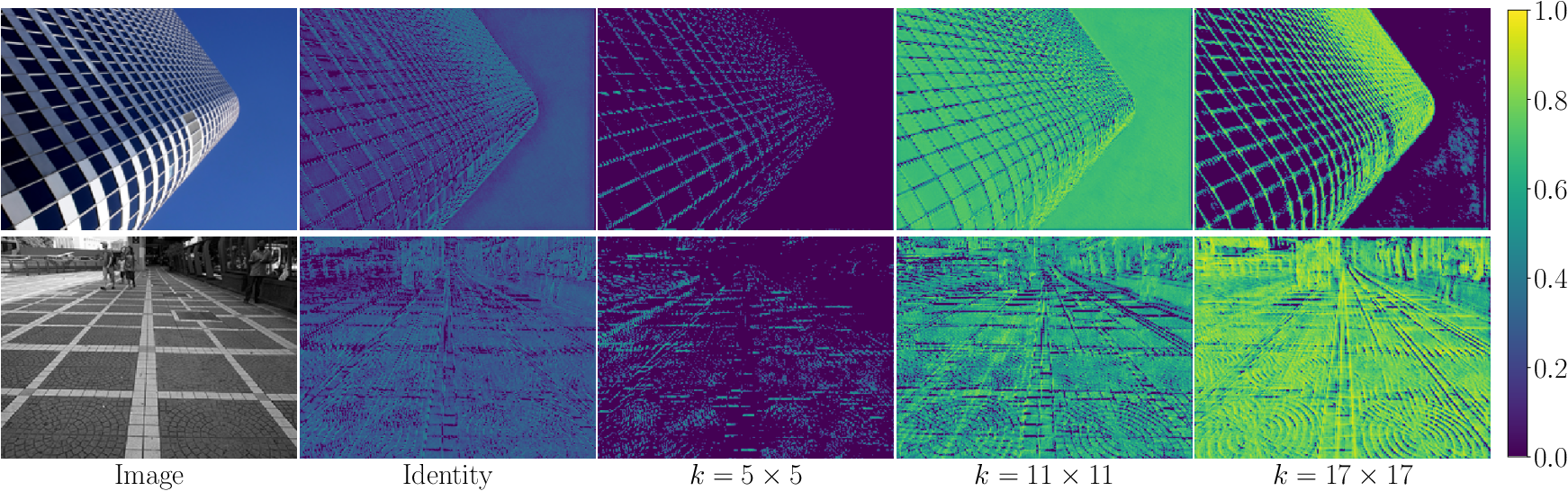
Figure 9: MRFE module branches specialize in different spatial features, supporting fine and coarse contextual modeling.
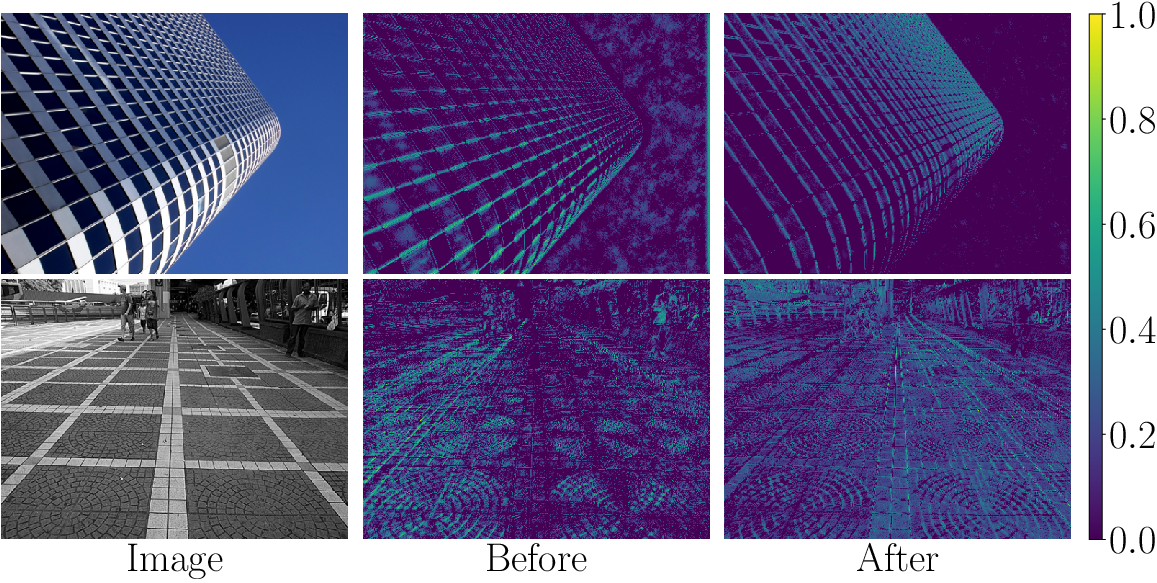
Figure 10: COFB module activation maps concentrate responses on structural information, balancing local-global fusion.
Implications, Practical Deployment, and Extensions
EchoSR’s architectural approach achieves a strong trade-off between fidelity and efficiency, supporting practical deployment in edge environments and real-world scenarios. The method scales robustly from lightweight to tiny models, and the context-harnessing paradigm generalizes to arbitrary input resolutions without excessive memory fragmentation. Theoretical implications highlight the effectiveness of large-kernel CNNs in low-level vision tasks when equipped with systematic multi-scale and hierarchical fusion mechanics.
The authors propose extending context harnessing mechanisms to image denoising, deblurring, and video SR, as well as further structural re-parameterization for latency and memory optimization on mobile/edge devices.
Conclusion
EchoSR establishes a new standard for lightweight image super-resolution, achieving superior reconstruction quality, structural fidelity, and operational efficiency via unified context harnessing and structured cross-scale fusion (2605.17470). The delineation of local, multi-scale, and global feature learning, combined with overlapping fusion, validates the value of large-kernel CNNs with principled design strategies. Future research directions involve adapting context harnessing to broader low-level vision domains and further optimizing for real-time and edge deployment.