- The paper demonstrates that quantum measurement and the uncertainty principle compel an intrinsic entropy cost, reinforcing the Second Law.
- The methodology integrates classical thermodynamics and quantum stochasticity using Gaussian state analysis and Lindblad-type dissipation.
- The results refute informational loopholes by showing that entropy generation arises from physical measurement processes, not just epistemic interpretations.
Maxwell's Demon and the Quantum Foundations of the Second Law
Historical Context and The Demon Challenge
Maxwell's Demon originates from a thought experiment conceived by J. C. Maxwell in 1867, exposing an apparent loophole in the Second Law of Thermodynamics. The Second Law posits that the entropy of an isolated system spontaneously tends toward a maximum, typically inducing equilibrium in macroscopic variables such as temperature and pressure. Maxwell suggested a hypothetical observer—later dubbed "the Demon"—capable of manipulating gas molecules at the microscopic level to reverse natural entropy increase. By selectively opening and closing a partition, the Demon could hypothetically segregate fast and slow molecules, locally decreasing entropy without explicit energy input.
This intellectual challenge initiated sustained scrutiny of the Second Law, motivating reformulations and critical examination of the statistical basis of thermodynamics. The epistemic interpretation of statistical ensembles—probabilities representing merely observer ignorance—left open the possibility of a Demon with full access to microstates, rendering the Second Law only statistically valid and apparently violable.
Statistical Mechanics and Stochasticity
Boltzmann's H-Theorem extended Maxwell's statistical insights via the introduction of an entropy measure S=−k∑ipilnpi, showing that for a closed system undergoing stochastic microstate transitions, entropy monotonically increases until equilibrium is achieved. However, Boltzmann's derivation, reliant on the Stoßzahlansatz (SZA)—the assumption of molecular chaos—was criticized for lacking grounding in classical deterministic mechanics. Loschmidt's reversibility objection underscored the theoretical symmetry: deterministic laws permit entropy-reducing evolutions equally as plausible as entropy-increasing ones.
Burbury and others recognized that intrinsic randomness, not explicit time-asymmetry, is essential for irreversibility. No deterministic classical theory can justify entropy increase except empirically. Thus, the Second Law's statistical character—is it epistemic or ontological?—remains central to the Demon debate.
Quantum Indeterminism: Foundational Irreversibility
Empirical phenomena such as Brownian motion and spontaneous emission reveal genuine stochasticity at the quantum level. Einstein's analyses of Brownian motion and the quantum nature of radiation established indeterministic processes outside classical explanatory scope. Fermi's Golden Rule, with decay rates governed by quantum amplitudes and the Born Rule, exemplifies intrinsic irreversibility and discontinuous "quantum jumps" unaccounted for by unitary evolution alone.
The essential role of quantum stochasticity provides an ontological basis for the SZA: microstate transitions are fundamentally Markovian, not mere artifacts of observer ignorance or epistemic uncertainty. Lindblad-type dissipation corroborates this foundation, yielding entropy increases in complex quantum systems and establishing an arrow of time.
Efforts to defeat Maxwell's Demon have centered on measurement and informational constraints. Szilard's engine crystallized this by considering a single molecule in a partitioned box, manipulated via measurement to extract work. Szilard argued—without rigorous physical justification—that measurement must incur an entropy cost, preserving the Second Law.
Brillouin extended this by associating measurement with energy injection, hence entropy production. Later, Bennett reframed the argument in computational terms, positing that the Demon could perform entropy-neutral measurements, but would eventually require memory erasure, necessarily dissipative per Landauer's Principle.
However, this computational approach, widely adopted, was critiqued for lack of universality and potential circularity; invoking Landauer's Principle as a physical law without independent proof, or merely restating the Second Law, leads to conceptual ambiguities. Epistemic interpretations of information and entropy underlie such approaches, obscuring the quantum mechanical basis for measurement-induced entropy.
Quantum Measurement and the Uncertainty Principle
The essay advances a decisive refutation of the Demon grounded in quantum mechanics, specifically the Heisenberg Uncertainty Principle (HUP). Real molecules are quantum systems: any attempt to localize a molecule (reduce position uncertainty) inevitably increases its momentum uncertainty, which physically corresponds to entropy increase.
Given a wavefunction ψ(x) localized via measurement, the entropy associated with momentum S=kI(p) (where I(p) is the Shannon entropy of the momentum distribution) necessarily increases as position uncertainty decreases. For the Szilard engine, quantitative analysis using Gaussian states yields ΔS=kln2, the canonical Landauer bound, but derived directly from quantum information-theoretic uncertainty, not computational or epistemic arguments.
Further, measurement of velocity (as in Maxwell's original scenario) increases position uncertainty to the point that molecules cannot be physically manipulated or sorted, thereby rendering the Demon's sorting impossible. The entropy cost arises from quantum measurement itself—an ontological, not epistemic, effect.
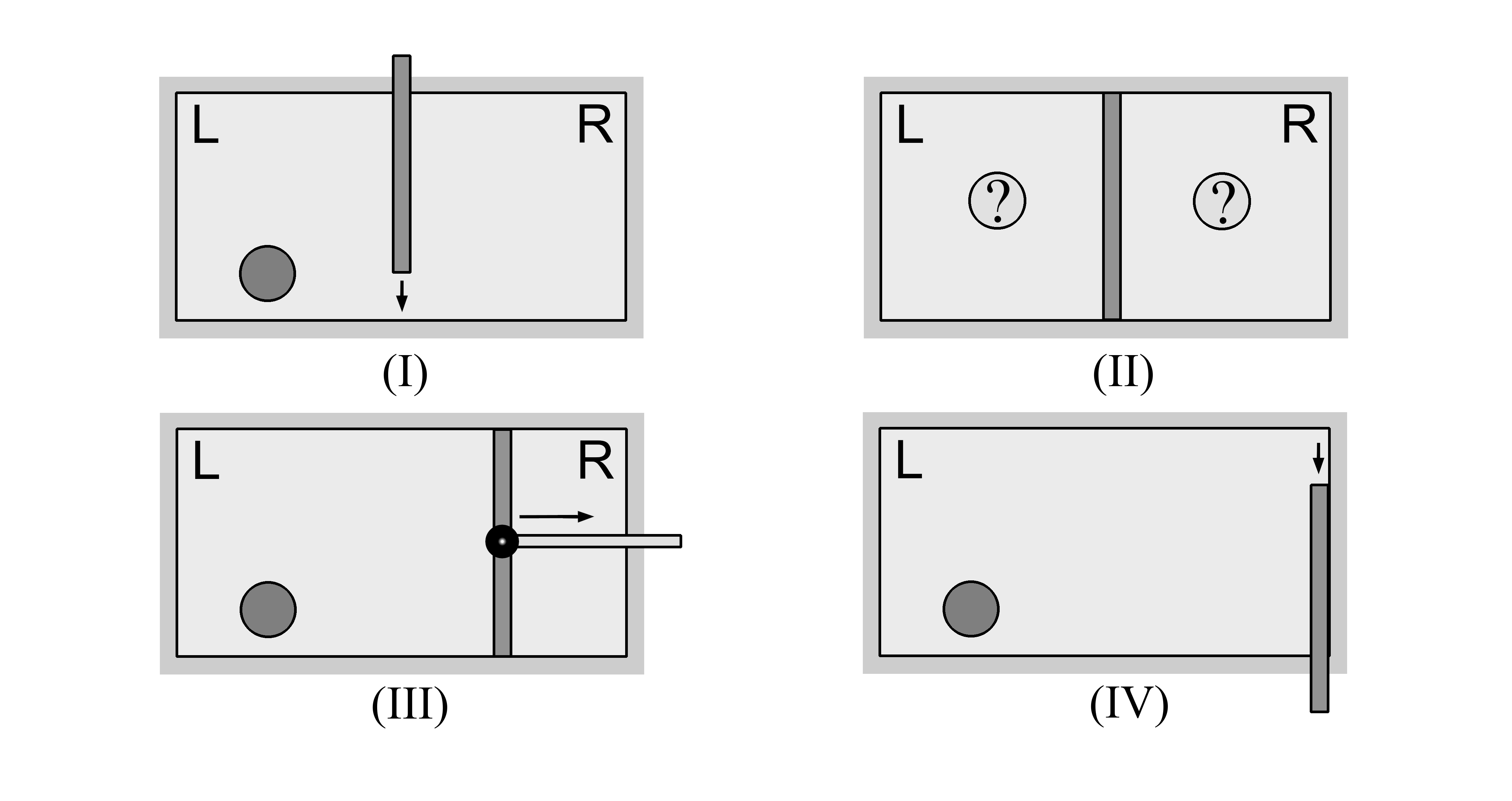
Figure 1: The basic Szilard Engine setup illustrates partitioning of the chamber to reduce position uncertainty, incurring quantum entropy cost.
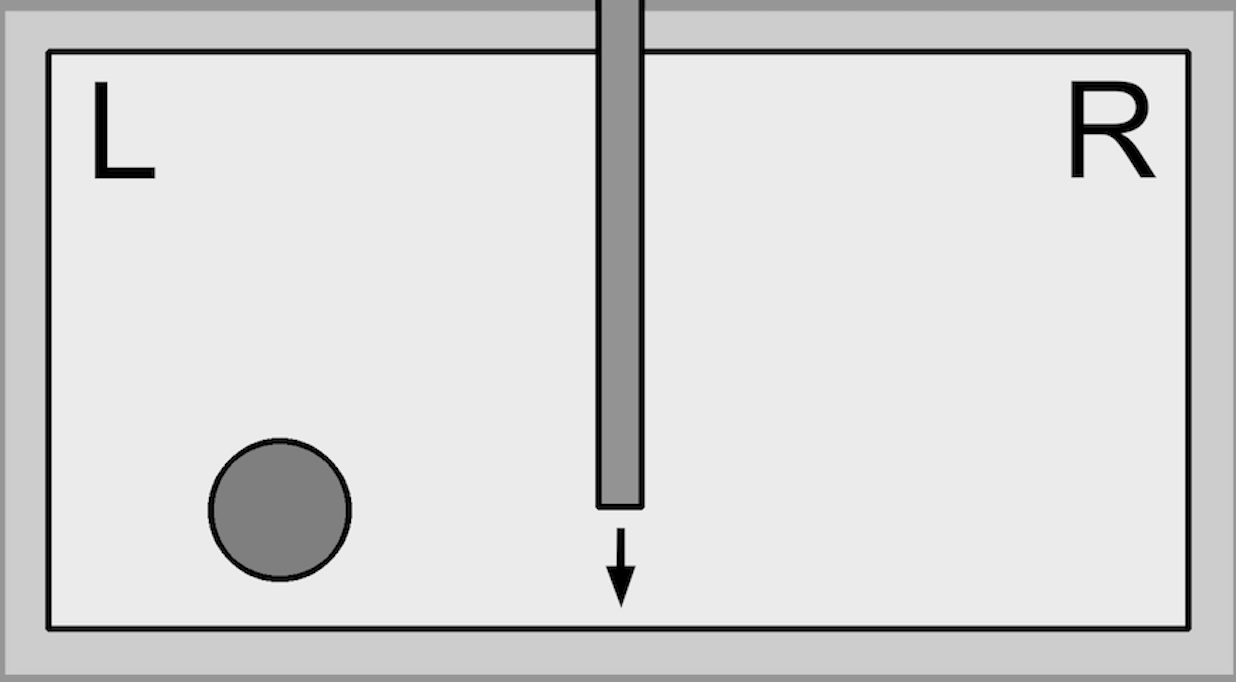
Figure 2: Classical depiction of a localized gas molecule, which fails under quantum treatment due to HUP constraints.
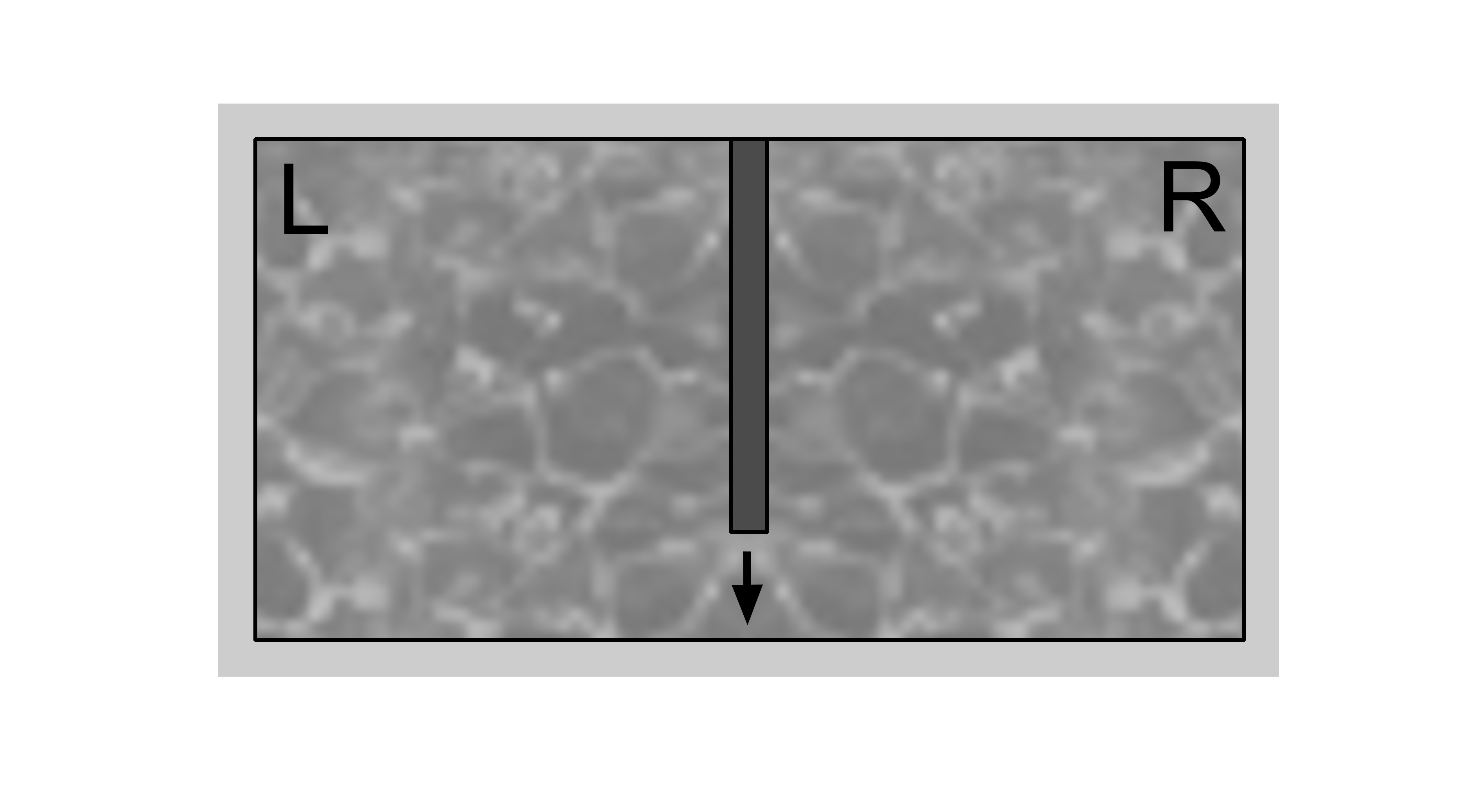
Figure 3: Quantum depiction of a molecule—delocalized state—highlighting the inextricable position-momentum uncertainty consistent with the Second Law.
Implications, Contradictions, and Theoretical Developments
The core numerical result—entropy increase matching Landauer's bound derived from quantum uncertainty—directly addresses the main claims of computational approaches (e.g., Bennett, Hemmo and Shenker). The essay asserts that physical measurement, not epistemic knowledge or memory erasure, is the relevant entropy-generating process.
This perspective invalidates the epistemic loophole exploited by the Demon and provides a physically rigorous foundation for the Second Law. It rescues Landauer's Principle as a quantum measurement phenomenon, decoupled from classical computation, and refutes claims that Demons could operate without entropy costs.
Furthermore, this analysis suggests future theoretical work should focus on quantum stochasticity and information-theoretic uncertainty as the basis for thermodynamic irreversibility, eschewing information theory frameworks reliant on classical or epistemic assumptions. Quantum statistical mechanics, with ontological randomness and measurement-induced entropy, is the appropriate framework for resolving challenges to the Second Law.
Conclusion
Maxwell's Demon's challenge illustrates the depth of ambiguity in classical statistical mechanics and the Second Law. The quantum mechanical formulation—with ontological stochasticity and the Heisenberg Uncertainty Principle—provides a robust foundation, decisively defeating the Demon via measurement-induced entropy costs, independent of epistemic or computational considerations. The Second Law thus emerges as a consequence of quantum indeterminism and information-theoretic uncertainty, guiding future developments in foundational thermodynamics and quantum statistical physics.