- The paper introduces a symmetric convolution method that extends the CLT framework to bosonic quantum channels.
- It rigorously proves convergence in trace norm to a centered Gaussian channel under specific moment conditions.
- The work provides practical lower bounds on energy-constrained quantum capacity, informing the design of quantum communication protocols.
Central Limit Theorem for Bosonic Quantum Channels: An Authoritative Summary
Introduction and Motivation
The Central Limit Theorem (CLT) is foundational in classical probability, asserting that normalized sums of i.i.d. random variables converge to a Gaussian distribution under mild moment constraints. In quantum settings, the Cushen–Hudson quantum CLT (qCLT) extended this limit result to bosonic quantum states, establishing convergence to Gaussian states under analogous conditions. The present paper introduces a significant generalization: an extension of the CLT framework to bosonic quantum channels, providing a unification of the classical CLT, the quantum state CLT, and channel-theoretic perspectives in continuous-variable quantum information.
The core construction involves sandwiching n copies of a bosonic channel N with n-mode beam splitter unitaries, defining a symmetric convolution operation for quantum channels. This approach relies exclusively on passive operations and establishes a convergence to a well-characterized Gaussian channel, which the authors term the Gaussification of N.
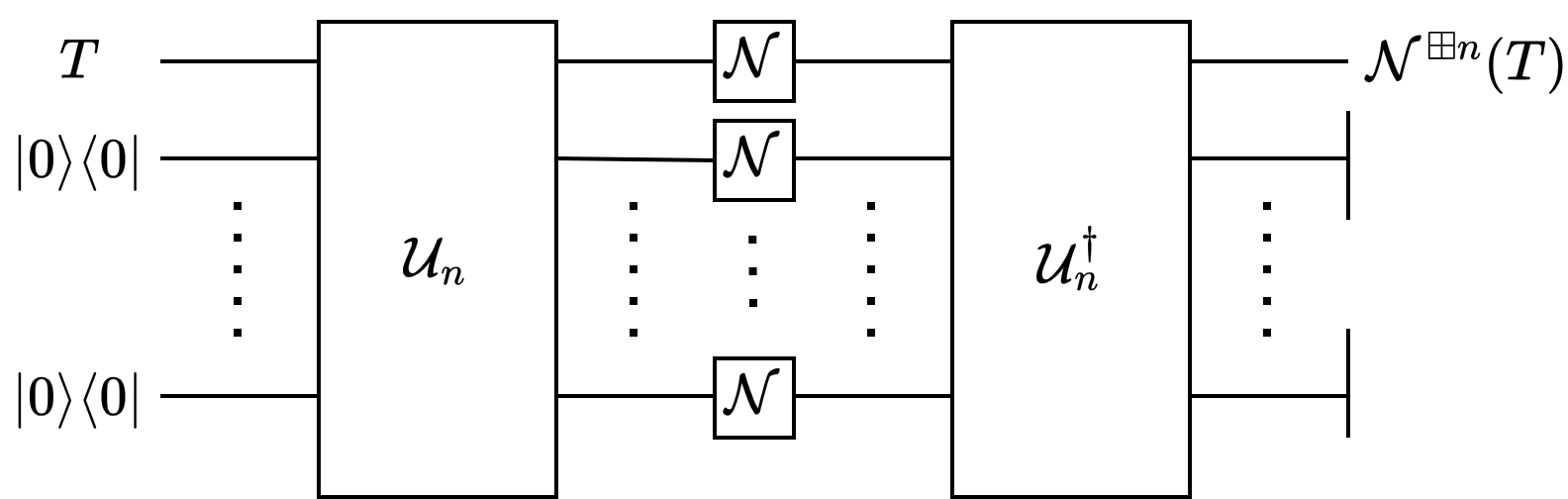
Figure 1: Symmetric convolution of channel N with itself.
Mathematical Formalism and Main Theorem
Let N denote a centered single-mode bosonic quantum channel, specified as a linear, completely positive, trace-preserving map on the trace-class operators of the Hilbert space H≅L2(R). The n-fold symmetric convolution N⊞n is constructed via:
N⊞n(T)=Tr¬1[UnN⊗n(Un†(T⊗∣0⟩⟨0∣⊗n−1)Un)Un†]
where N0 is the N1-mode beam splitter and the trace is over all but the first mode.
Crucially, for linear bosonic channels characterized by a scaling function N2 and a linear transformation N3, this operation preserves linearity, updating the scaling function via N4 and maintaining N5.
The main result is a channel-level quantum CLT:
Theorem (qCLT for Bosonic Quantum Channels):
If N6 is a centered bosonic channel with N7 of finite second moment and N8 of finite first moment, then N9 converges (in trace norm, strongly) to a centered Gaussian channel n0 whose covariance matrix and displacement action are obtained via explicit formulas involving the moments of n1. In short, repeated symmetric convolution of any suitably regular channel produces a limiting Gaussian channel.
This result unifies the classical CLT, the classical-to-quantum channel example (e.g., additive-noise channels), and the quantum state Cushen–Hudson CLT as limiting cases within a singular operator framework.
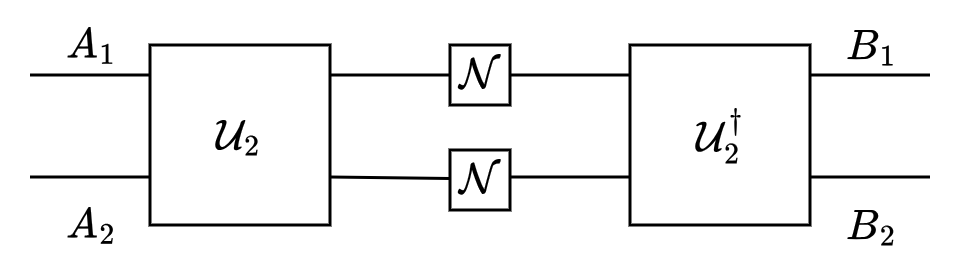
Figure 2: Extension of the 2-fold symmetric convolution.
Examples and Structural Implications
Several illustrative cases demonstrate the scope:
- Additive-noise channels: Convolve to channels with Gaussian noise, thus recovering the classical CLT.
- Replacement channels: Symmetric convolution of replacer channels yields the CLT for quantum states.
- Preservation of Gaussianity: Centered Gaussian channels are invariant under symmetric convolution, mirroring the stability of the Gaussian distribution under addition.
The authors also show that the convolution operation is no-signalling for linear channels and support a quantum generalization of the Kac–Bernstein theorem: a channel that remains product under certain channel-convolution constructions must itself be Gaussian.
Applications: Uncertainty Relations and Channel Capacities
From the qCLT for channels, one derives necessary uncertainty relations for all physical bosonic channels. The limiting Gaussian channel parameters must obey
n2
where n3 are the parameters of the Gaussification, constraining the allowable noise structure of any quantum bosonic channel.
A further direct application is in evaluating the energy-constrained quantum capacity. The main claim is that the energy-constrained quantum capacity n4 of a linear, even bosonic channel n5 is lower-bounded by that of its Gaussian counterpart n6:
n7
This lower bound leverages the channel CLT and the superadditivity of coherent information for tensor powers of n8, showing that unphysical or highly non-Gaussian noise cannot enhance energy-constrained capacity beyond that of Gaussian channels. Yet, this bound is restricted in generality: there exist nonlinear channels where the capacity of the Gaussification exceeds that of the original channel.
Technical Insights
The proof strategy elegantly leverages the behavior of characteristic functions of quantum states and the moment/cumulant structure in the operator algebra. The convergence analysis employs Taylor expansions in the regime of coherent states with small amplitude and relies on the density of coherent states for trace-class operator spaces. The structural stability of linear and Gaussian channels under symmetric convolution is analytically established at the level of the channel's characteristic function and operator moments.
Implications and Future Directions
From a theoretical perspective, this work cements the operational extremality of Gaussian channels within continuous-variable quantum information. It offers a unified lens through which classical, quantum state, and quantum channel central limit phenomena are understood as manifestations of a single deep symmetry: Gaussianity as a universal attractor under symmetrized convolution.
Practically, the results inform the design of quantum communication protocols with bounded energy, suggesting that, under broad noise classes, the Gaussian approximation offers both lower bounds on capacity and tight uncertainty constraints. The symmetric convolution framework could influence error filtration and bosonic channel simulation, as well as provide new tools for analyzing entropic inequalities and functional inequalities in infinite-dimensional systems.
In terms of future work, one open avenue is characterizing extensions to multimode, non-centered, and nonlinear bosonic channels, as well as exploring further operational consequences in the context of quantum thermodynamics and resource theories.
Conclusion
The extension of the Central Limit Theorem to bosonic quantum channels advances both probabilistic and operator-algebraic understanding in quantum information theory. The symmetric convolution construction not only recovers known CLT results but also yields new uncertainty relations and capacity bounds, rigorously establishing Gaussian channels as extremal for a range of operational tasks in continuous-variable systems. The framework's generality and the strength of its limiting claims suggest broad applicability to the analysis of quantum noise and the capacities of quantum communication networks.