- The paper presents a deployable perception module that fuses LiDAR and camera data via a transformer architecture for 3D object detection.
- It utilizes attention-based explainability and calibrated uncertainty quantification, validated with perturbation analysis and robust training techniques.
- Real-world deployment on a prototype vehicle demonstrates enhanced robustness and transparent sensor auditability for safety-critical applications.
Trustworthy and Explainable AI for Perception in Autonomous Vehicles: From Architecture to Prototype Deployment
Introduction
Autonomous driving systems hinge on accurate, robust perception across heterogeneous sensor modalities. However, deep neural networks used for multi-modal 3D scene understanding are inherently opaque, complicating their certification for safety-critical tasks and impeding effective auditability and human oversight. This work introduces a comprehensive perception module integrating robust training, calibrated uncertainty quantification, attention-based explainability, and structured documentation, substantiated by both quantitative evaluation and real-world prototype deployment. The approach specifically targets the gap between high-level “Trustworthy AI” principles and concrete system realizations in the context of autonomous vehicle perception.
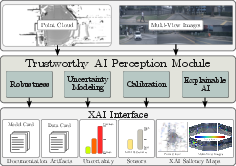
Figure 1: The proposed perception module integrates robust training, calibrated uncertainty quantification, explainability, and an XAI interface for transparent monitoring and auditability.
Methodological Framework and System Integration
The Trustworthy AI perception module leverages a transformer-based 3D object detector, which ingests fused LiDAR point clouds and multi-view camera images. The architecture tokenizes both modalities and processes them with cross-attention between sensor tokens and object queries, yielding 3D bounding box predictions augmented with uncertainty scores.
Three key modules define the approach:
- Attention-based Explainability: Cross-attention matrices from the transformer decoder are used to derive real-time, modality-disentangled saliency maps, revealing the causal influence of input regions on detection outcomes. Attention aggregation across layers and heads yields an interpretable, single-channel explanation, providing both per-detection sensor contribution scores and visual overlays of influential regions.
- Calibrated Uncertainty Quantification: An additional prediction head regresses per-parameter variances for each bounding box, utilizing deployment-amenable Gaussian and von Mises models for centroid and orientation respectively. Post-hoc calibration techniques such as temperature and Platt scaling are applied to both classification confidences and regression uncertainties.
- Robustness Enhancement: The training regimen incorporates masked-modal training, randomly suppressing sensor modalities to discourage over-reliance and facilitate graceful degradation in the presence of sensor dropout or adverse conditions.
The XAI Interface is a critical element, surfacing model documentation (Model/Data Cards), saliency maps, and calibrated uncertainty in a unified monitoring dashboard.
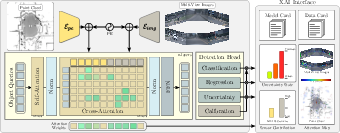
Figure 2: Method overview showing extraction of camera and LiDAR tokens, cross-attention with object queries, and the information routed to the XAI interface.
Explainability: Faithful and Deployable Saliency via Attention
The architecture’s attention mechanisms directly connect the model's internal state to explainable outcomes. Cross-attention, aggregated layerwise and across heads, forms the basis of real-time saliency extraction, which is then repartitioned per sensor and mapped back to BEV and image coordinates as modality-specific explanation maps.
The faithfulness of these explanations is rigorously assessed by perturbation analysis: systematic masking of high-attention (positive) or low-attention (negative) regions in the input, with subsequent measurement of performance degradation. The proposed mean-fused attention maps demonstrate greater causal alignment than Grad-CAM, max-fusion, and random/last-layer baselines, yielding higher sensitivity under positive perturbation (lower AUC) and robustness under negative perturbation (higher AUC).
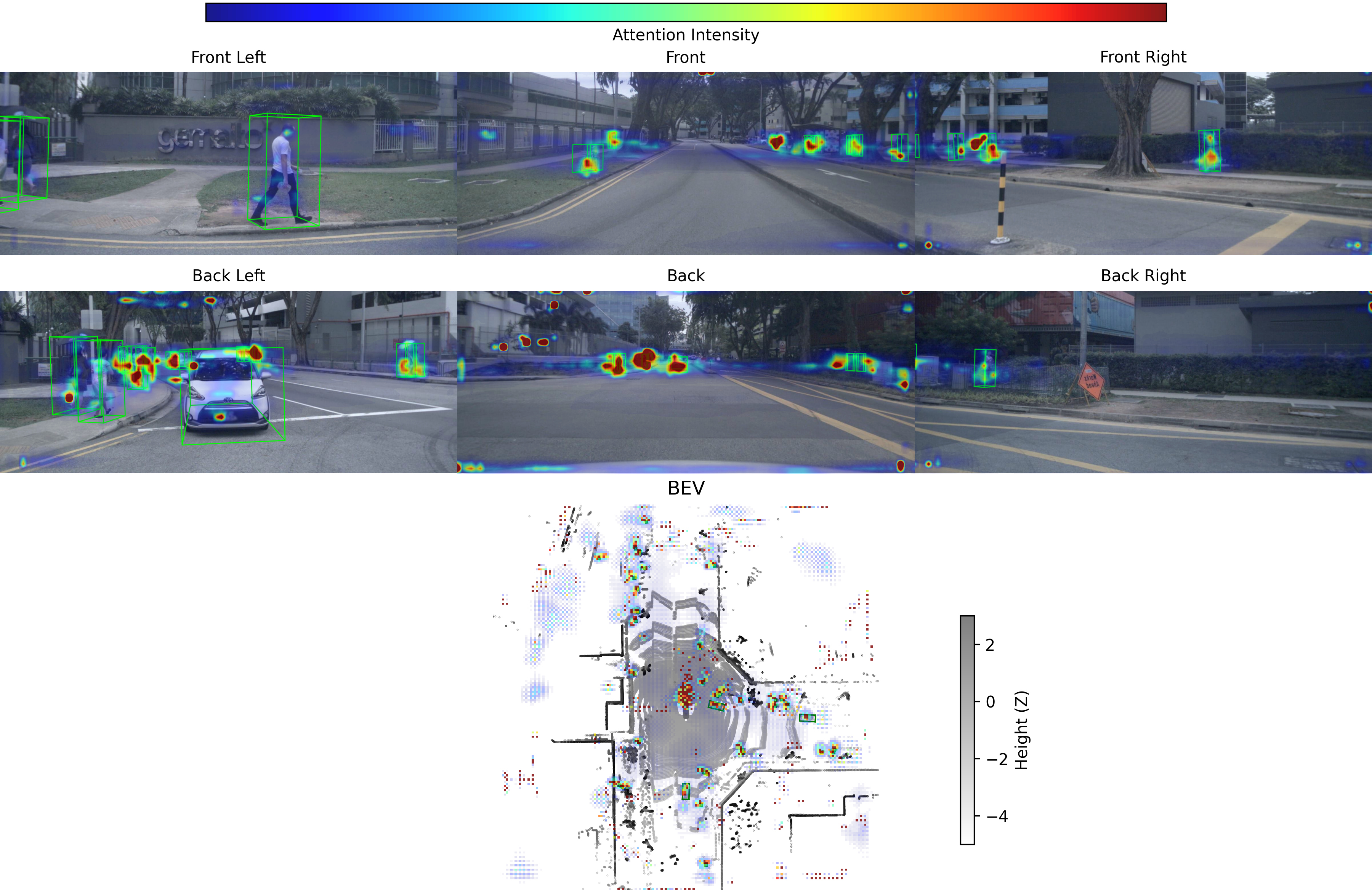
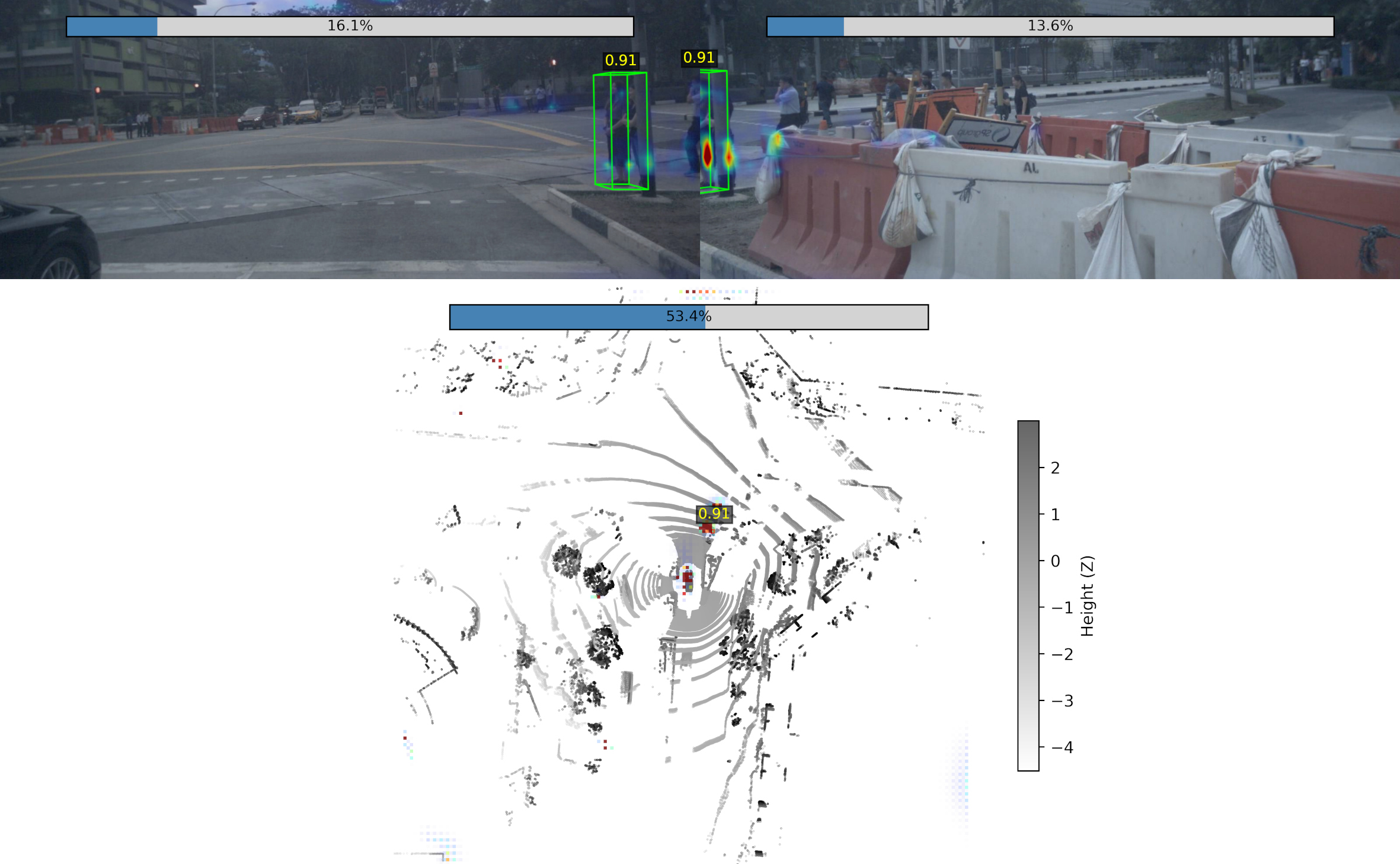
Figure 3: Visual examples of attention-based saliency maps across cameras and LiDAR, highlighting critical regions per detection for both modalities.
Robustness Analysis
Robustness is quantified against the MultiCorrupt benchmark, which introduces a matrix of realistic sensor corruptions—adverse weather, packet loss, misalignments—on top of nuScenes data. Masked-modal training is shown to significantly enhance the relative resistance ability (mRRA) of the detection model across a breadth of corruptions compared to non-robust or unimodal baselines, outperforming leading contemporary architectures including BEVFusion and SparseFusion.
Uncertainty Quantification and Calibration
Predictive uncertainty is key for downstream risk assessment and human-machine collaboration. The module’s uncertainty head regresses per-parameter variances, and post-hoc temperature or Platt scaling yields well-calibrated probability outputs. Comprehensive calibration evaluation utilizes metrics such as Detection Expected Calibration Error (D-ECE) for classification and Miscalibration Area (MCA) for centroids and angles, with calibrated models reducing overconfidence and underconfidence phenomena without impairing raw accuracy. Platt scaling achieves best-in-class D-ECE scores; temperature scaling reliably improves MCA for regression.
Documentation: Model Cards and Data Cards
The module incorporates structured, standardized documentation (Model Card and Data Card) directly in the XAI Interface, detailing architecture, training protocol, intended use, dataset characteristics, annotation scheme, and known biases or limitations. This explicit traceability supports regulatory alignment (e.g., EU AI Act) and operational transparency for developers, authorities, and operators.
Real-world Prototype Deployment
The complete system is demonstrated in a research vehicle (“karl”), using live LiDAR input for real-time 3D detection. The XAI interface is embedded in the vehicle dashboard and as a ROS2 visualization plugin, enabling operators to monitor attention-based explanations, sensor contributions, and the current uncertainty state for each detection, alongside accessible model and dataset documentation.

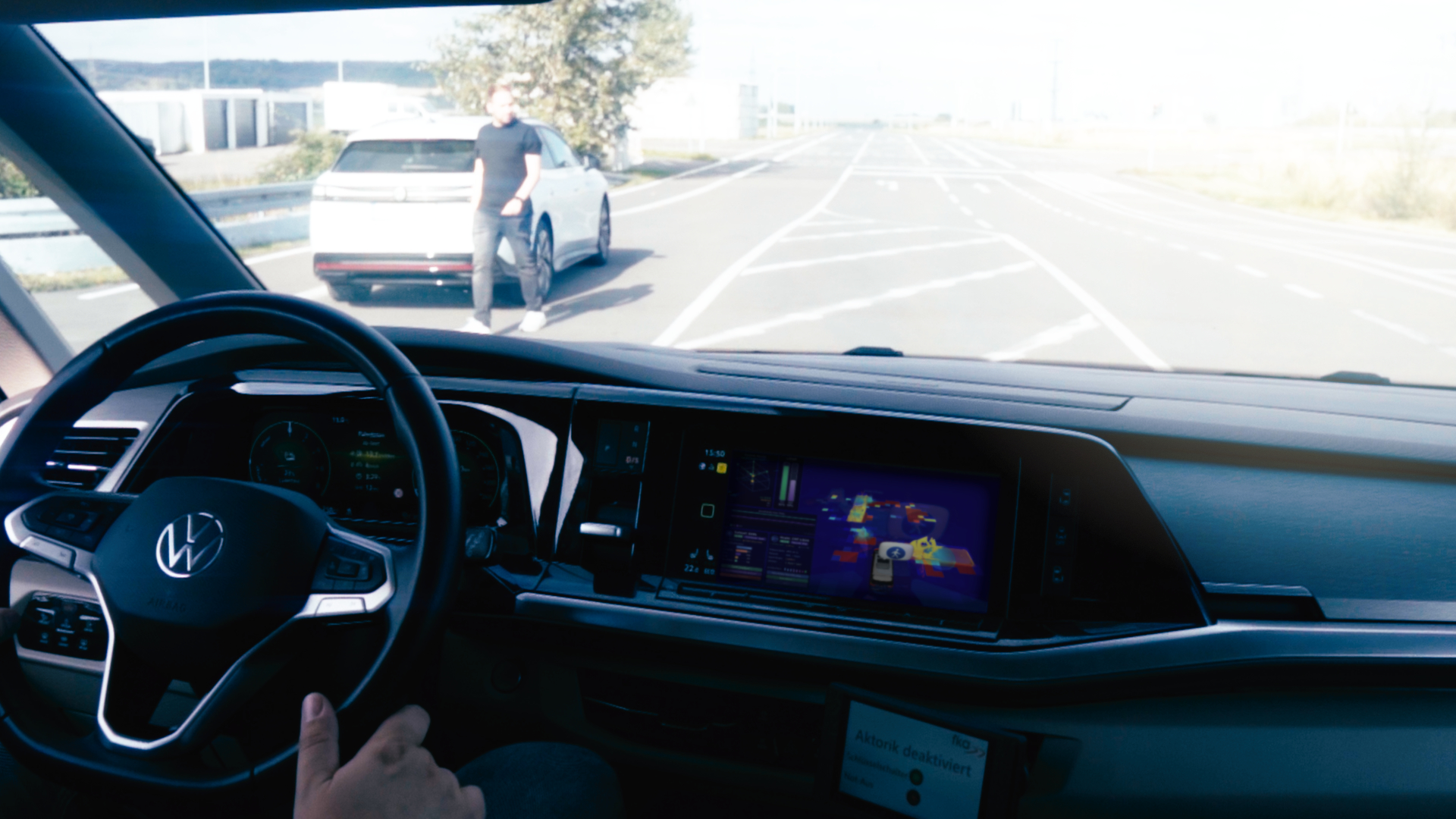
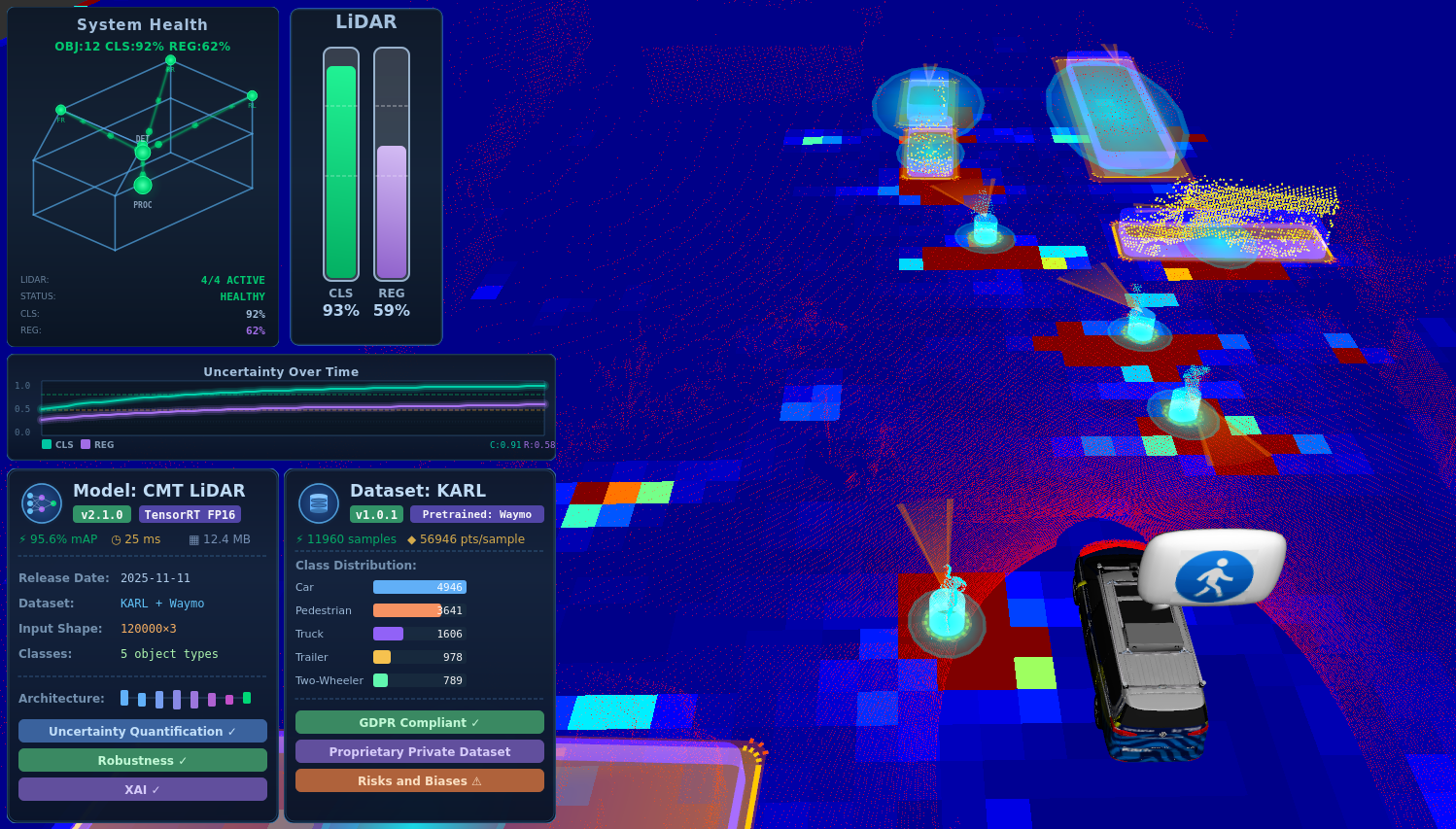
Figure 4: Automated research vehicle (“karl”) used for on-vehicle evaluation and deployment of the trustworthy perception stack.
Practical and Theoretical Implications
This work operationalizes abstract trustworthy AI principles in a form directly amenable to certification and deployment in AD. Practically, robust and explainable perception modules facilitate compliance with safety standards (ISO 26262, ISO 21448/SOTIF), augment debugging and continuous audit, and support human-AI interaction under uncertainty. Theoretically, the evaluation framework—especially causal faithfulness via perturbation and explicit calibration metrics—sets a precedent for future XAI assessment regimes. The embodied documentation approach responds to emerging governance and risk-management mandates.
Future Directions
The present prototype’s multi-modal (LiDAR/camera) robustness remains to be validated in full scale on-vehicle tests. An identified extension involves integrating LLM-based XAI interaction to enable richer, dynamic explanations in operator dialogues, further bridging the human-model interpretability gap.
Conclusion
This work delineates a concrete, deployable Trustworthy AI perception architecture for autonomous driving, interweaving robust transformer-based fusion, attention-aligned explainability, uncertainty quantification, and systematic documentation. Evidence is provided for superior robustness, faithful causal explanations, and calibrated predictive distributions, with live demonstration in a vehicular context. The integration of these elements into production-grade perception stacks is a tractable pathway for advancing both the reliability and auditability of safety-critical AI systems.